
Gap Financing Tools for Affordable Housing A presentation
Gap Financing Tools for Affordable Housing A presentation to the Virginia Housing Coalition Housing Credit Conference September 5, 2013 VHC 1 Sept 2013

APAH: A Non-Profit Affordable Housing Developer • Owns 1, 117 rental homes at 13 properties valued at $200 M • Award-winning, innovative • Founded in 1989 • Led by Arlingtonians: Staff & Board • Most properties funded by: • LIHTC • VHDA Financing • Arlington County Gap Financing • Low Cost Land Acquisition 2
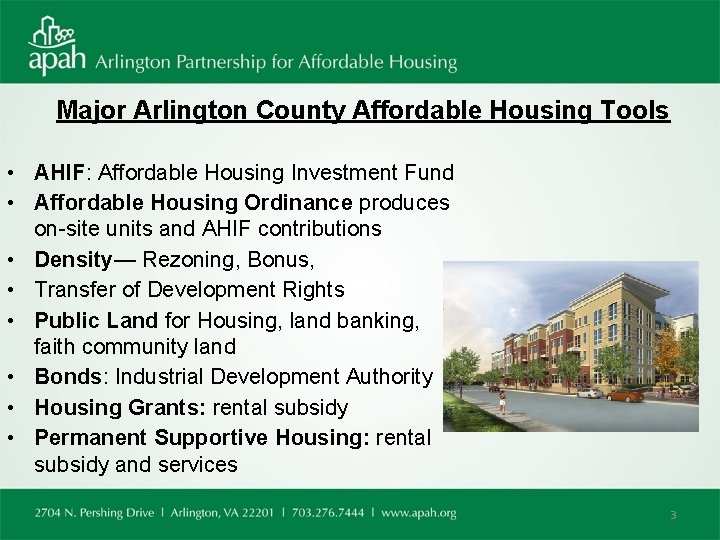
Major Arlington County Affordable Housing Tools • AHIF: Affordable Housing Investment Fund • Affordable Housing Ordinance produces on-site units and AHIF contributions • Density— Rezoning, Bonus, • Transfer of Development Rights • Public Land for Housing, land banking, faith community land • Bonds: Industrial Development Authority • Housing Grants: rental subsidy • Permanent Supportive Housing: rental subsidy and services 3
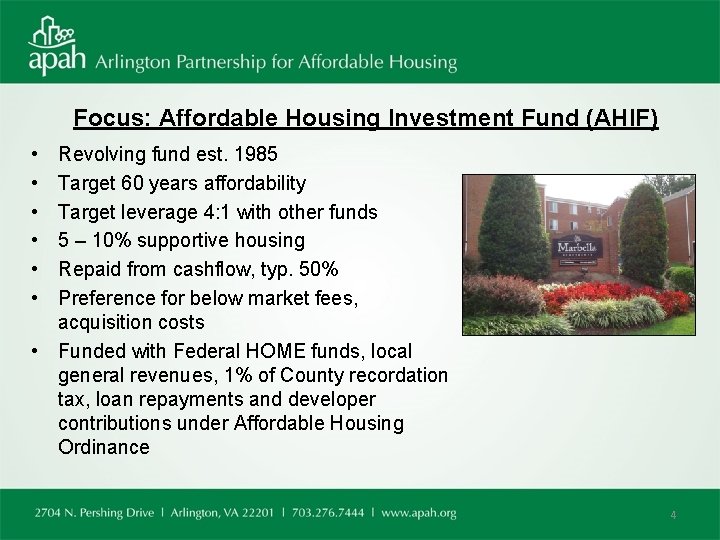
Focus: Affordable Housing Investment Fund (AHIF) • • • Revolving fund est. 1985 Target 60 years affordability Target leverage 4: 1 with other funds 5 – 10% supportive housing Repaid from cashflow, typ. 50% Preference for below market fees, acquisition costs • Funded with Federal HOME funds, local general revenues, 1% of County recordation tax, loan repayments and developer contributions under Affordable Housing Ordinance 4
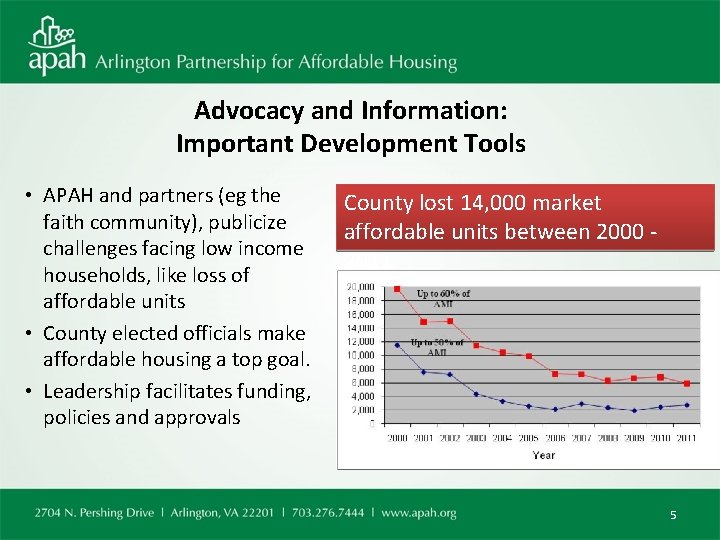
Advocacy and Information: Important Development Tools • APAH and partners (eg the faith community), publicize challenges facing low income households, like loss of affordable units • County elected officials make affordable housing a top goal. • Leadership facilitates funding, policies and approvals County lost 14, 000 market affordable units between 2000 2011 5

Federal Affordable Housing Tools • HOME Investment Partnership Program • Pass Thru To States/Localities • $2 B/year • 25% Local Match • Build or renovate, 20 yr term • Part of Consolidated Plan • Section 8 Rental Subsidy • Community Development Block Grants (CDBG)—housing & services for low income 6
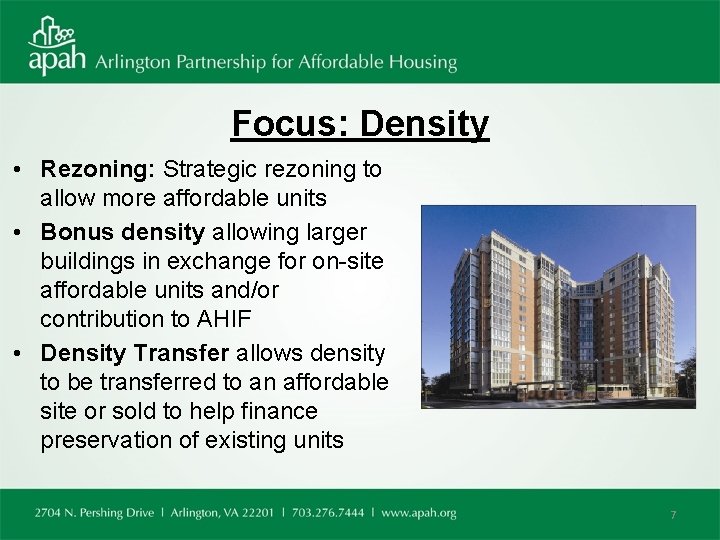
Focus: Density • Rezoning: Strategic rezoning to allow more affordable units • Bonus density allowing larger buildings in exchange for on-site affordable units and/or contribution to AHIF • Density Transfer allows density to be transferred to an affordable site or sold to help finance preservation of existing units 7
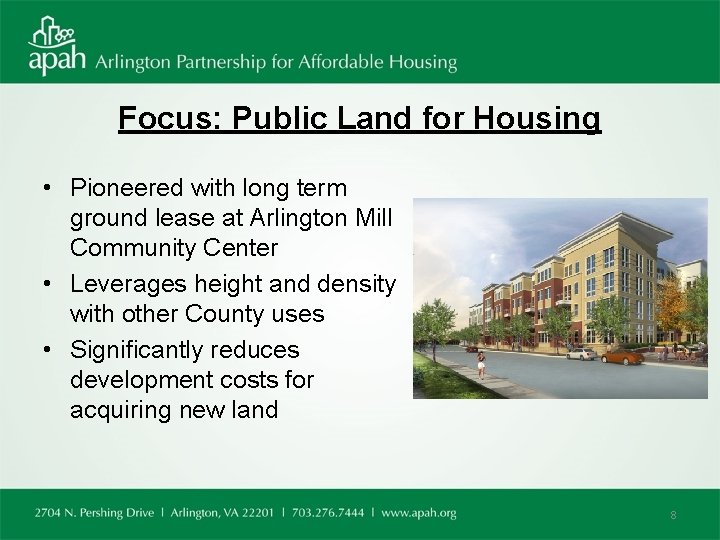
Focus: Public Land for Housing • Pioneered with long term ground lease at Arlington Mill Community Center • Leverages height and density with other County uses • Significantly reduces development costs for acquiring new land 8
Fairfax County 2014 Funding • $5 million in Housing Blueprint funds • Focus: Extremely low incomes, particularly homeless or disabled (20% of units serve at or below 30%AMI); Low income working families (60% of units serve at or below 50% AMI); and Moderate income workforce (20% of the units serve between 51%AMI and 100%AMI) • Leverage other sources such as private equity and financing and Low. Income Housing Tax Credits (LIHTC) 9
Alexandria Housing Opportunities Fund • Development and preservation of affordable rental and sales housing. • Priority to City-certified Community Housing Development Organizations (CHDOs). • Leverage funding from all available sources--fill gaps. • Low interest loans or grants serving below 60% of the area’s median income. • May cover feasibility analysis; pre-development activities; housing preservation; and development costs. 10
Prince William County Funding • $500, 000 in CDBG Funds awarded competitively to non-profit organizations • Maximum award $225, 000 • Public service grants at 100%/50%/25% annually • Repayable loan at zero interest or deferred appreciation 11
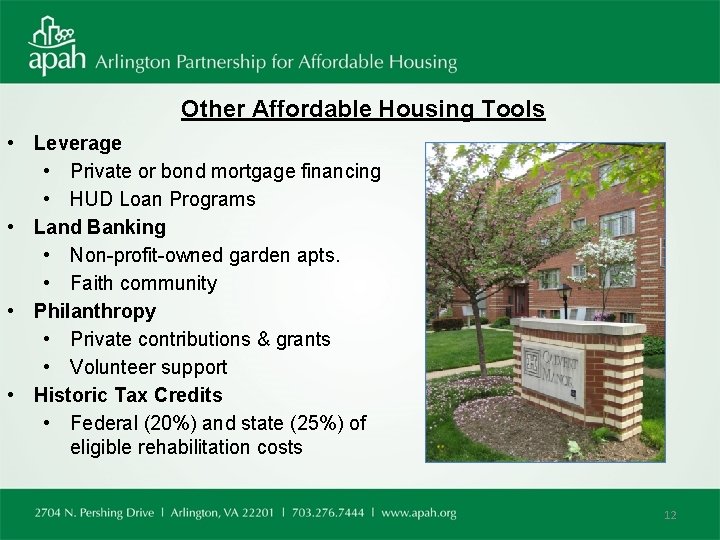
Other Affordable Housing Tools • Leverage • Private or bond mortgage financing • HUD Loan Programs • Land Banking • Non-profit-owned garden apts. • Faith community • Philanthropy • Private contributions & grants • Volunteer support • Historic Tax Credits • Federal (20%) and state (25%) of eligible rehabilitation costs 12
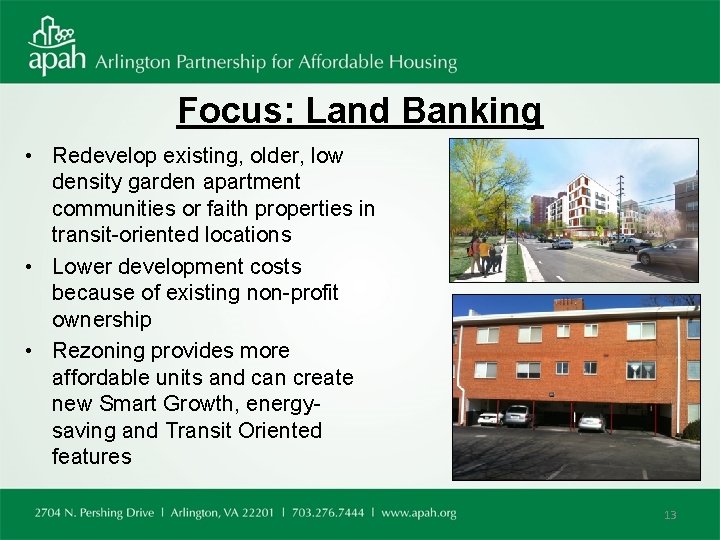
Focus: Land Banking • Redevelop existing, older, low density garden apartment communities or faith properties in transit-oriented locations • Lower development costs because of existing non-profit ownership • Rezoning provides more affordable units and can create new Smart Growth, energysaving and Transit Oriented features 13
Our Vision A diverse and inclusive, transit-oriented, sustainable community that welcomes and values all residents. Our Role Marry best practices in affordable housing finance and development with a deep commitment to the local community to advocate, preserve, and build affordable housing. Nina Janopaul, APAH President/CEO 703 -276 -7444 (w) 14
- Slides: 14