
GANGS Methodology Required Materials Active discussion Easel Pad
- Slides: 30
GANGS
Methodology: Required Materials: Active discussion Easel Pad Case Study Role Play Participant Manual Notepad for each participant Pens & Pencils GANGS Duration: 3 hours
GANGS Learning Objectives • To learn about gang culture. • To learn about risk factors for gang involvement. • To learn the reasons adolescents join gangs. • Understand treatment models for gang involved adolescents. • To understand community-based interventions.
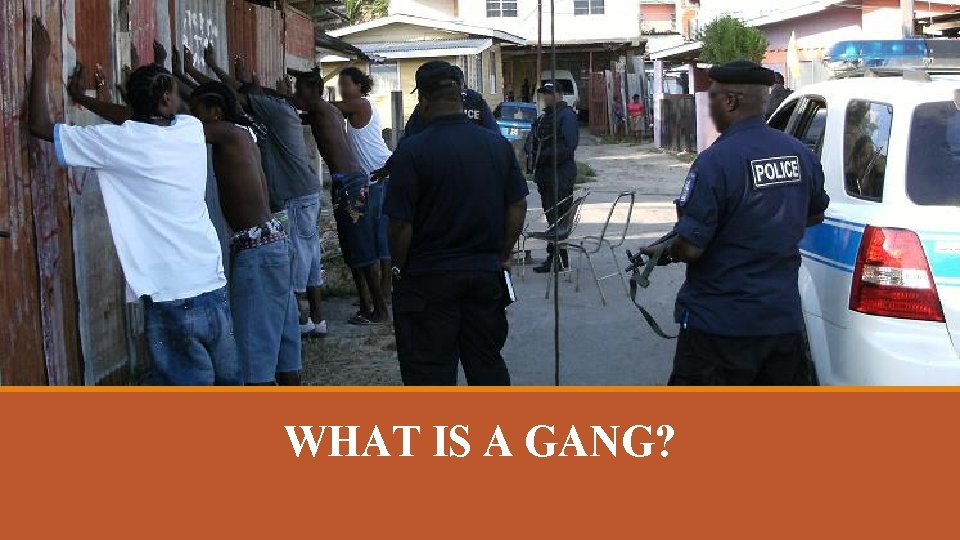
WHAT IS A GANG?
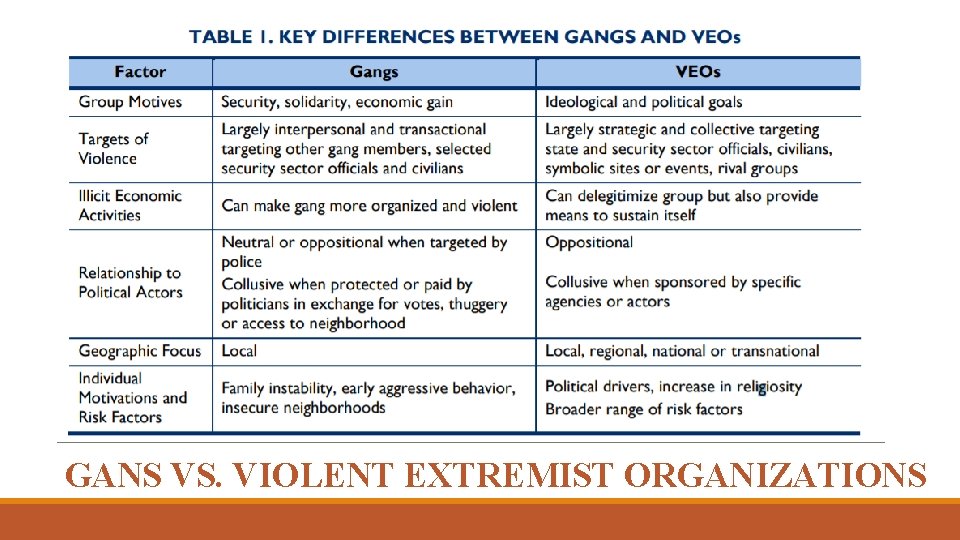
GANS VS. VIOLENT EXTREMIST ORGANIZATIONS
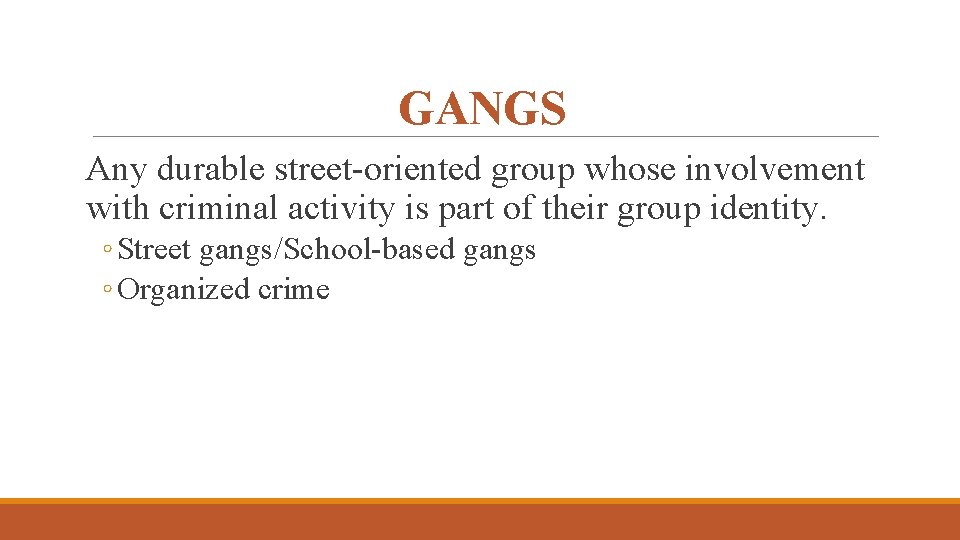
GANGS Any durable street-oriented group whose involvement with criminal activity is part of their group identity. ◦ Street gangs/School-based gangs ◦ Organized crime
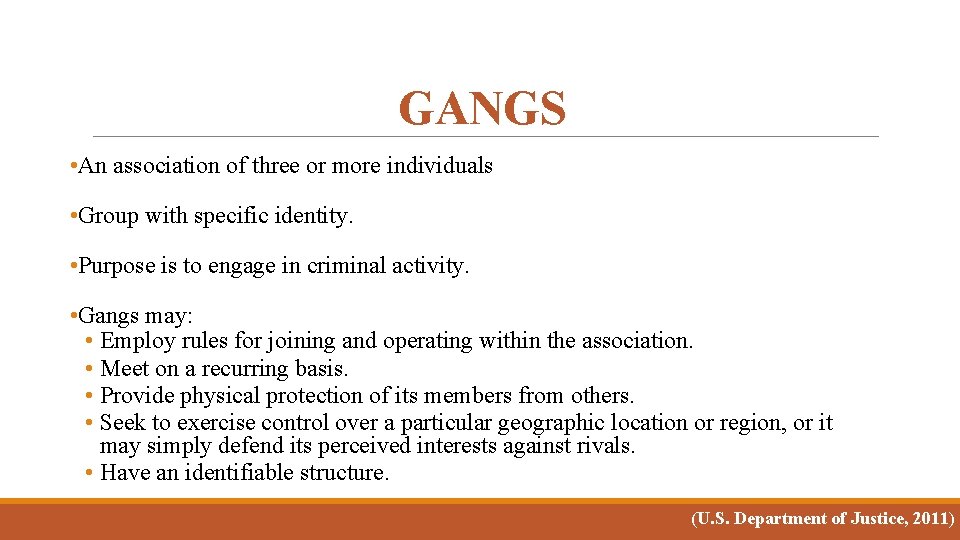
GANGS • An association of three or more individuals • Group with specific identity. • Purpose is to engage in criminal activity. • Gangs may: • Employ rules for joining and operating within the association. • Meet on a recurring basis. • Provide physical protection of its members from others. • Seek to exercise control over a particular geographic location or region, or it may simply defend its perceived interests against rivals. • Have an identifiable structure. (U. S. Department of Justice, 2011)
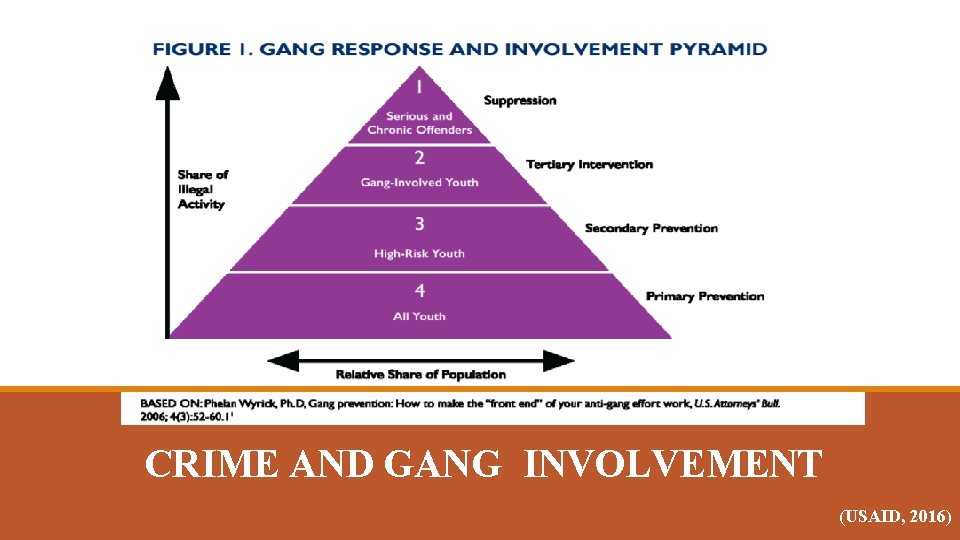
CRIME AND GANG INVOLVEMENT (USAID, 2016)
ADOLESCENT VIOLENCE • Adolescent violence has a gender dimension. • Violence among pre-adolescents is a growing concern. • School violence has escalated. • Adolescent violence is often a response to the threat and fear of victimization. • Adolescent violence is closely associated with community violence. • Adolescent victimization by peers and adults creates an environment for more violence. (Gibson, 2016: UNDP, 2010)
WHO ARE GANG MEMEBRS? Brainstorm in your group the characteristics you believe correspond to those individuals who join and participate in gangs.
WHO JOINS GANGS? • Recruits generally range in age from 12 to 15 years • Most members are boys, but 10 percent of all gang members are girls • Certain risk factors increase the likelihood of gang involvement (U. S. Department of Justice, 2010)
WHY JOIN A GANG? • Friendship • Protection or safety • Make money • Family member in gang (Katz, Choate and Fox, 2010)
RISK FACTORS • Individual and Personal Attributes • Family Demographics • Relational • Community • Society (U. S. Department of Justice, 2010)
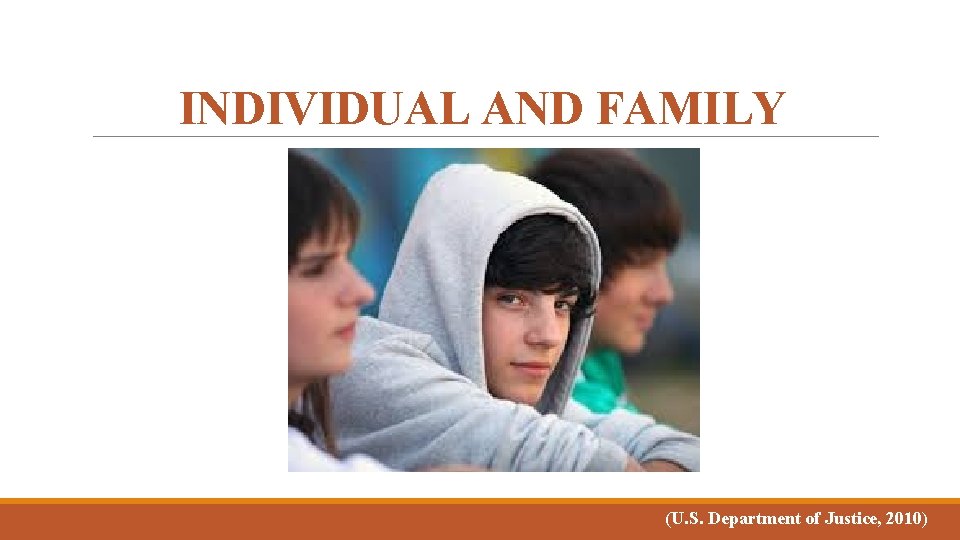
INDIVIDUAL AND FAMILY (U. S. Department of Justice, 2010)
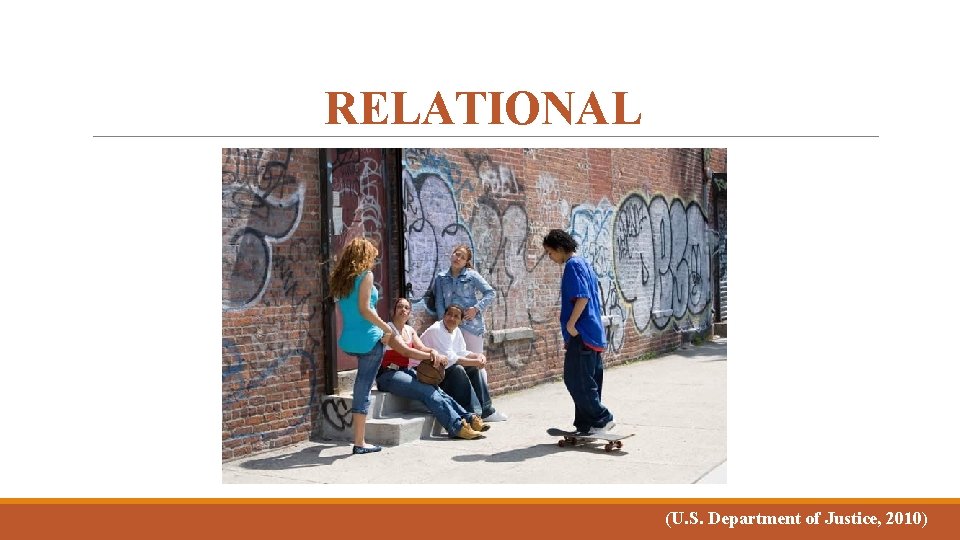
RELATIONAL (U. S. Department of Justice, 2010)
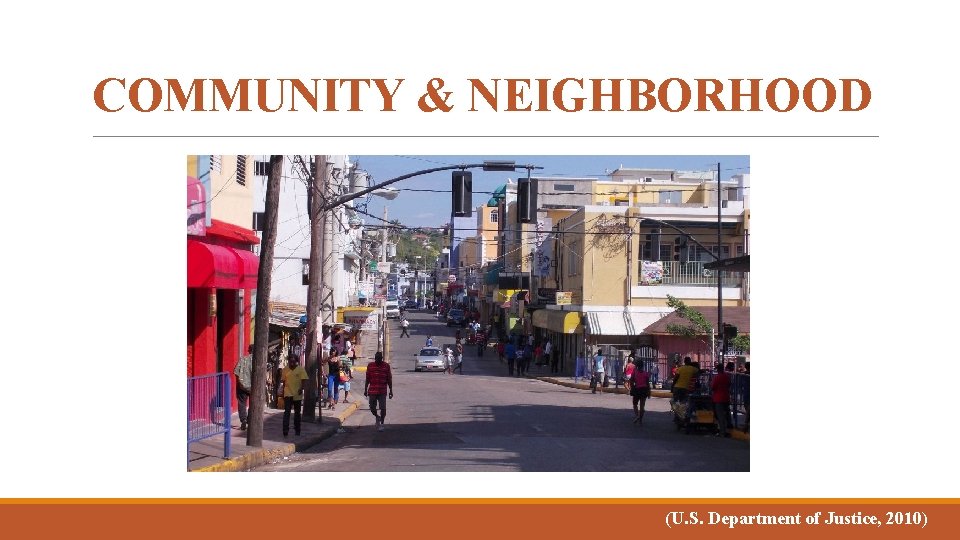
COMMUNITY & NEIGHBORHOOD (U. S. Department of Justice, 2010)
SOCIETY (U. S. Department of Justice, 2010)
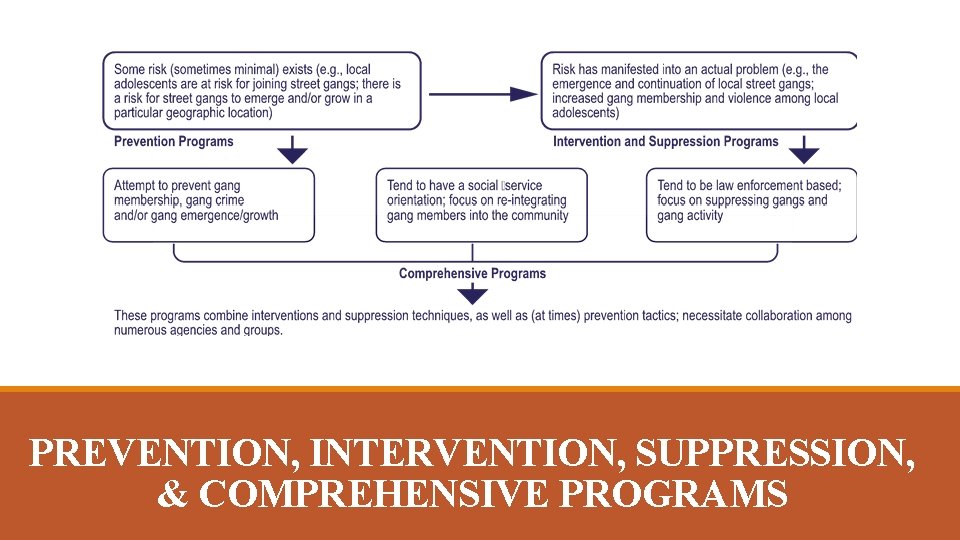
RESPONDING TO A GAND PROBLEM • Prevention • Primary and secondary • Intervention • Suppression • Reentry (National Gang Center, 2020)
PREVENTION, INTERVENTION, SUPPRESSION, & COMPREHENSIVE PROGRAMS
COMPREHENSIVE GANG STRATEGY l. Community l. Provision l. Social l. Gang mobilization of academic, economic & social opportunities intervention suppression l. Organizational change & development (National Gang Center, 2020)
RESILIENCY In the context of exposure to significant adversity, resilience is both the capacity of individuals to navigate their way to the psychological, social, cultural, and physical resources that sustain their well-being, and their capacity individually and collectively to negotiate for these resources to be provided in culturally meaningful ways. (Resilience Research Centre, 2020)
REDUCING RISK = ENHANCING RESILIENCY • Two-pronged approach • Address structural issues that predispose adolescents to act violently and make them susceptible to victimization • Equip adolescents with enhanced skills and abilities to prevent and reverse trends towards crime and violence (UNDP, 2014)
REDUCING RISK = ENHANCING RESILIENCY • Violence prevention as part of social development • Principle of inclusivity • Integrated planning and programs • Coordination and partnerships • Strengthened police-adolescent relationships • Provision of specific alternatives for offenders and school drop-outs (UNDP, 2014)
REDUCING RISK = ENHANCING RESILIENCY • Develop programs to promote “pro-social” behavior • Structured voluntary community service • Support family stability • Adolescent-friendly spaces (UNDP, 2014)
REDUCING RISK = ENHANCING RESILIENCY • Institutionalization of adolescents should be last resort • Adolescent diversion programs • Review legislation • Systematic evaluation of mental health needs among institutionalized adolescents (UNDP, 2014)
REDUCING RISK = ENHANCING RESILIENCY • Develop system to monitor youth development indicators, for the design and implementation of programs • Creation of youth development index • Longitudinal study on youth development (UNDP, 2014)
REDUCING GANG VIOLENCE • Establish surveillance systems • Improve training of law enforcement • Monitor impact of existing gang legislation • Adopt a balanced approach • Develop plans to help gang members to exit from gangs • Establish a rigorous research agenda on the causes of street gangs (UNDP, 2014)
EXTRACTION & EXITING ISSUES • Very serious and can be dangerous • Must be done by trained and talented people • Requires a process and extensive networking • Must include family, faith and community based resources as well as law enforcement • Highly individualized and confidential strategies (UNDP, 2014)
WHAT YOU NEED TO KNOW • Know the current recruitment methods. • Know current initiation rituals. • Identify areas where gangs could gain an appearance of power and control. • Differentiate various levels of affiliation and involvement.
CLOSING THOUGHTS • There is no single clear solution to preventing or reducing gang activity. • Adolescents do not join gangs for life. • More girls are joining gangs and engaging in violent delinquent behavior. • Adolescent gang members come from a variety of backgrounds. • A comprehensive approach, using prevention, suppression and intervention strategies will be most effective.