
GANDHIYAN PHILOSOPY AGGI MARY ANTO B ED SOCIAL
GANDHIYAN PHILOSOPY AGGI MARY ANTO B. ED SOCIAL SCIENCE 2015 -2017 BATCH ST. THOMAS COLLEGE OFTEACHER EDUC PALA
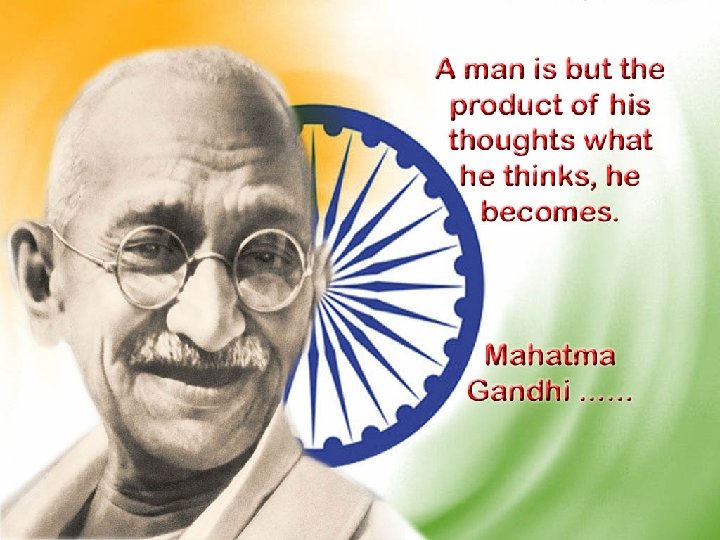
OBJECTIVES OF THE STUDY v To illustrate the great personality of Mahatma Gandhi. v To explain Gandhism and its special features. v To explore thoughts and ideologies of Gandhi. v To assess the relevance of Gandhian thoughts in this era.
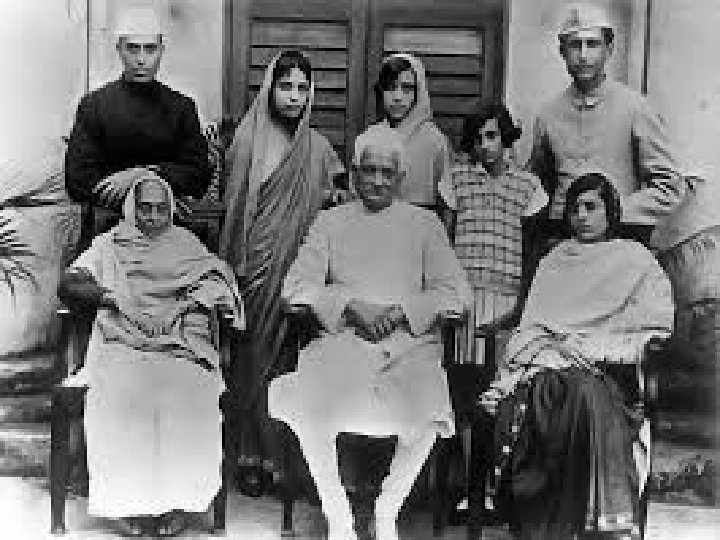
ABOUT GANDHI � Mohandas Karamchand Gandhi (2 October 1869 – 30 January 1948) was the preeminent leader of the Indian independence movement in British-ruled India. � Employing nonviolent civil disobedience, Gandhi led India to independence and inspired movements for civil rights and freedom across the world. � The honorific Mahatma "high-souled", applied to him first in 1914 in South Africa, —is now used worldwide. He is also called Bapu , endearment for "father", papa"in India.
� Gandhi was a great leader , thinker, preacher, nationalist, internationalist and an enlightened soul. � Many people consider him as the greatest and noblest personality of the 20 th century. � People saw him a crusader for freedom.
� Mohandas Karamchand Gandhi was born on October 2, 1869 to a Hindu Modh Baniya family in Porbandar (also known as Sudamapuri), a coastal town on the Kathiawar Peninsula and then part of the small princely state of Porbandar in the Kathiawar Agency of the Indian Empire. � His father, Karamchand Uttamchand Gandhi (1822– 1885), served as the divan (chief minister) of Porbandar state. � Further information- watch video:
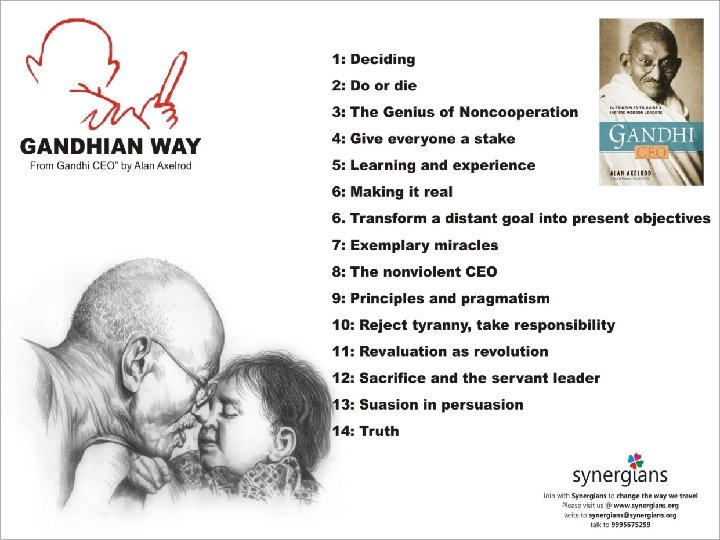
GANDHISM It is a body of ideas and principles that describes the inspiration, vision and the lifework of Mahatma Gandhi. � It is particularly associated with his contributions to the idea of nonviolent resistance, sometimes also called civil resistance. � The two pillers of "Gandhism" were truth and nonviolence. � The term "Gandhism" also encompasses what Gandhi's ideas, words and actions mean to people around the world, and how they used them for
� Gandhism also permeates into the realm of the individual human being, non-political and nonsocial. A Gandhian can mean either an individual who follows, or a specific philosophy which is attributed to, Gandhism. � Eminent scholar, Professor Ramjee Singh has called Gandhi the Bodhisattva of the twentieth century
� However Gandhi did not approve of 'Gandhism', as Gandhi explained: There is no such thing as "Gandhism, " and I do not want to leave any sect after me. I do not claim to have originated any new principle or doctrine. I have simply tried in my own way to apply the eternal truths to our daily life and problems. . . The opinions I have formed and the conclusions I have arrived at are not final. I may change them tomorrow. I have nothing new to teach the world. Truth and non-violence are as old as the hills. [2]
� Gandhi’s ideas and ideals form a school of thought , a distinct philosophy of life and is known as Gandhism. � It not merely a political creed. it is a message and a philosophy of life. � It is not a belief but an actual life practice.
VISION ON POLITICS AND RELIGION Ø It is only a path way to the service of god. Ø Politics with out religion is a death trap, because it kills the soul. Ø By religion he meant observances of higher religious values truth, ahimsa, love, compassion, non- possession, non attachment in one’s own life.
THEORY OF NON - VIOLENCE {AHIMSA} q Gandhi was the apostolate of non – violence. q Ahimsa means avoiding injury to anything on earth in thought, word or deed. q Means extending love to all living creatures and even to he nature. q Ahimsa and truth are the two sides of the same coin. q Ahimsa is the means and truth is the end.
THEORY OF SATHYAGRHA � Literally means firm with truth. � It is the exercise of the purest soul force against all injustice , oppression and exploitation. � It is based on theory of self suffering. � It is a method of solving conflicts through self suffering and sacrifice.
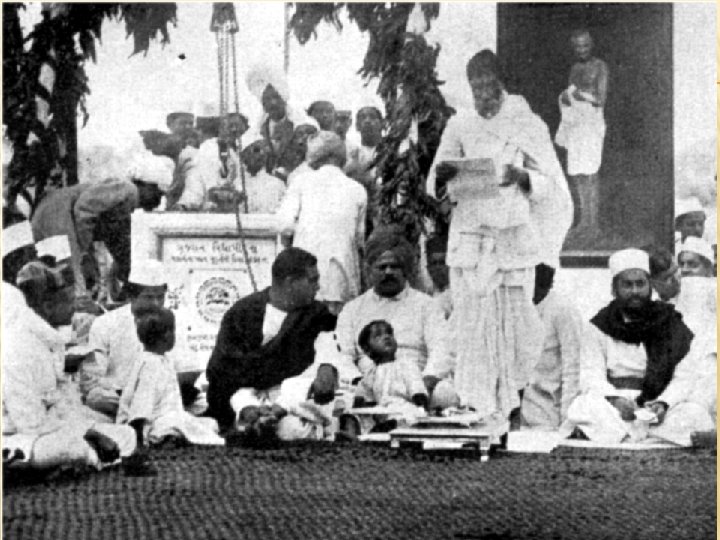
TECHNIQUES OF SATHYAGRHA v Non co-operation People should non co-operate with those who are doing injustice or oppression. v Civil resistance Disobey cruel and in unjust laws. Carry on the struggle till unjust law is replaced. v Fasting It must be spiritually disciplined and true to its cause.
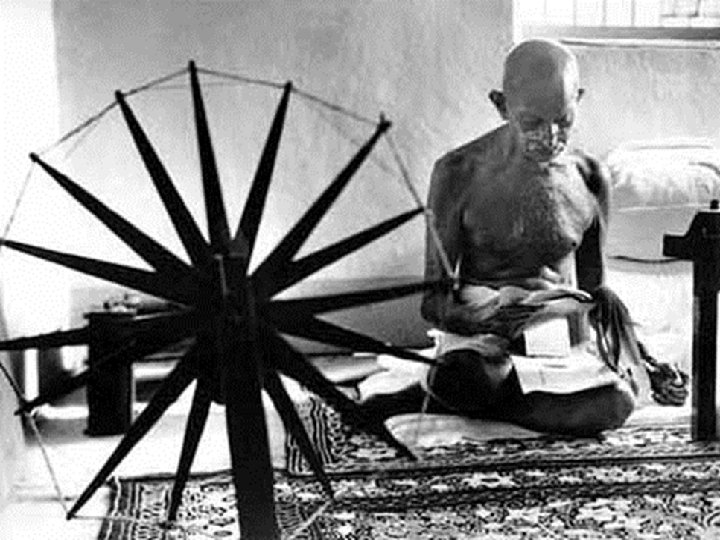

v Strike Strong weapon for workers against industrialists. Strike should only aim at getting their rights and equal status. v Hijrat If a person cannot tolerate injustice of the oppressor and also feels that he has not the power to become a good satyagrahi, for him, the best method was that of Hijrat or ‘leaving one’s ancestral place’.
IDEA OF TRUSTEESHIP � Gandhi wanted to transform the system of capitalism. He, there fore suggested the idea of trusteeship. It does not exclude legislative regulation of property by the state. The character of production will be determined by social necessity and not by personal whims or greed.

CONCEPT OF IDEAL SOCIETY � It is a democracy with out state. � In such a society there is no relationship of command obedience, superior or inferior. � There will be no capitalism and no exploitation of man. � No institution of state , like jails, police and courts etc. � Society based on non-violence. � Society based on the principle of free labour and non-possession.
Gandhi's 11 Vows Ahimsa Nonviolence Satya Truth Asteya Non Stealing Brahmacharya Self Discipline Aparigraha Non-Possession Sharirshrama
CONCLUSION � Gandhism represents an original thought based on truth and non-violence. � Gandhi had used it to mobilize the masses of India to drive English from the subcontinent with a moral crusade instead of an armed rebellion, prayers instead of machine gun fire, disdainful silence instead of the fracas of terrorists bombs. � Gandhism may be still worth recalling as a source of strength , a beacon of light for guidance and not the least, as a warning.
REFERENCES � � � � Fischer, Louis. The Essential Gandhi: An Anthology of His Writings on His Life, Work, and Ideas. Vintage: New York, 2002. (reprint edition) ISBN 1 -4000 -3050 -1 Jack, Homer (1956). The Gandhi Reader: A Sourcebook of His Life and Writings. . Grove Press. ISBN 0 -8021 -3161 -1. External link in |title= (help) Hardiman, David. Gandhi in His Time and Ours: The Global Legacy of His Ideas (2004) ISBN 0 -231 -13114 -3 Narayan, Shriman (1970). Relevance of Gandhian economics. Navajivan Publishing House. ASIN B 0006 CDLA 8. Pani, Narendar (2002). Inclusive Economics: Gandhian Method and Contemporary Policy. Sage Publications Pvt. Ltd. ISBN 978 -0 -76199580 -7. Sharma, R. (1997). Gandhian economics. Deep and Deep Publications Pvt. Ltd. ISBN 978 -81 -7100 -986 -2. Weber, Thomas (2006). Gandhi, Gandhism and the Gandhians. Roli Books Pvt. Ltd. ISBN 81 -7436 -468 -4. Mashelkar, Ramesh (2010). Timeless Inspirator-Reliving Gandhi [2]. Sakal Papers Ltd. ISBN 978 -93 -8057 -148 -5. External link
- Slides: 26