
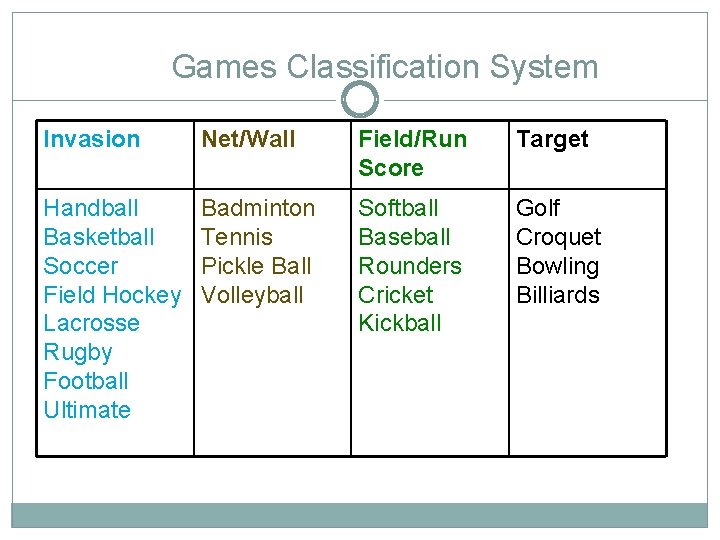
Games Classification System Invasion NetWall FieldRun Score Target
- Slides: 25
Games Classification System Invasion Net/Wall Field/Run Score Target Handball Basketball Soccer Field Hockey Lacrosse Rugby Football Ultimate Badminton Tennis Pickle Ball Volleyball Softball Baseball Rounders Cricket Kickball Golf Croquet Bowling Billiards
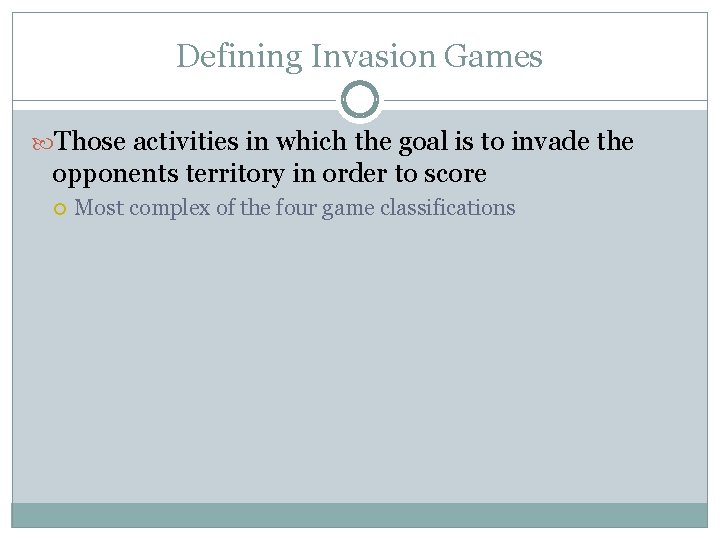
Defining Invasion Games Those activities in which the goal is to invade the opponents territory in order to score Most complex of the four game classifications
Q&A You are planning a 7 th grade basketball unit, what will be the lesson focus for each day? Be sure to include days for game play. 1. 2. 3. 4. 5. 6. 7. 8.
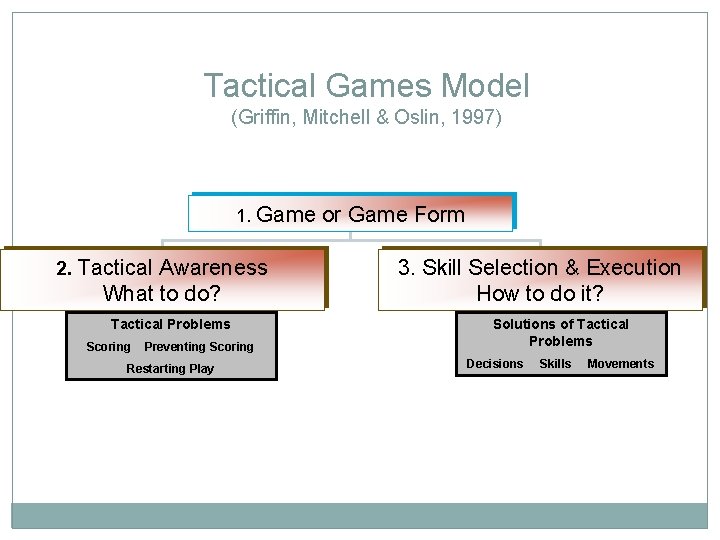
Tactical Games Model
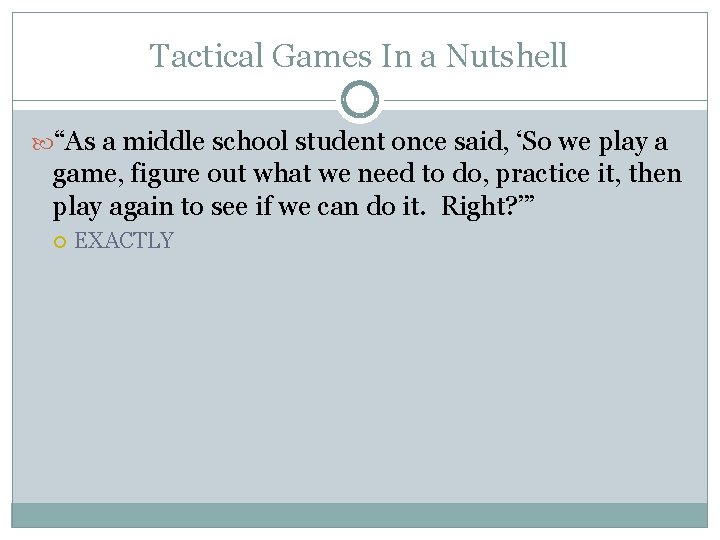
Tactical Games In a Nutshell “As a middle school student once said, ‘So we play a game, figure out what we need to do, practice it, then play again to see if we can do it. Right? ’” EXACTLY
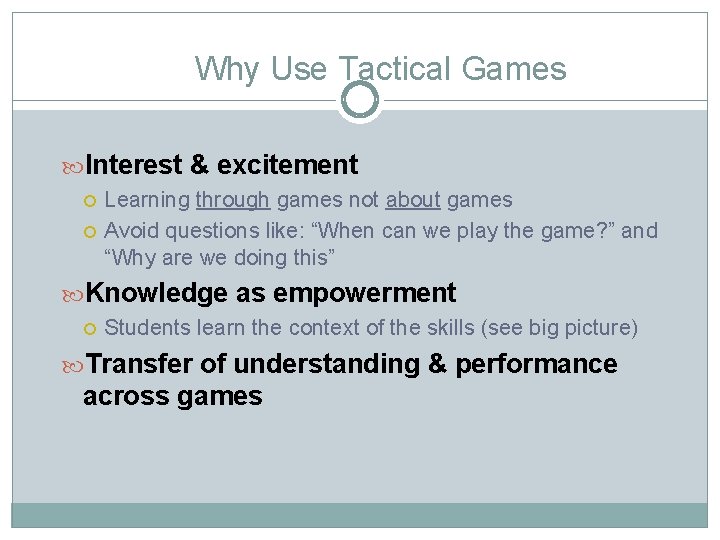
Why Use Tactical Games Interest & excitement Learning through games not about games Avoid questions like: “When can we play the game? ” and “Why are we doing this” Knowledge as empowerment Students learn the context of the skills (see big picture) Transfer of understanding & performance across games
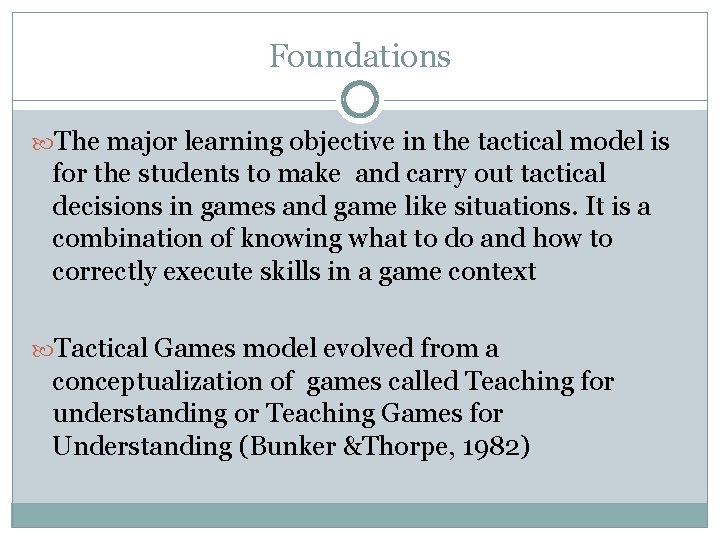
Foundations The major learning objective in the tactical model is for the students to make and carry out tactical decisions in games and game like situations. It is a combination of knowing what to do and how to correctly execute skills in a game context Tactical Games model evolved from a conceptualization of games called Teaching for understanding or Teaching Games for Understanding (Bunker &Thorpe, 1982)
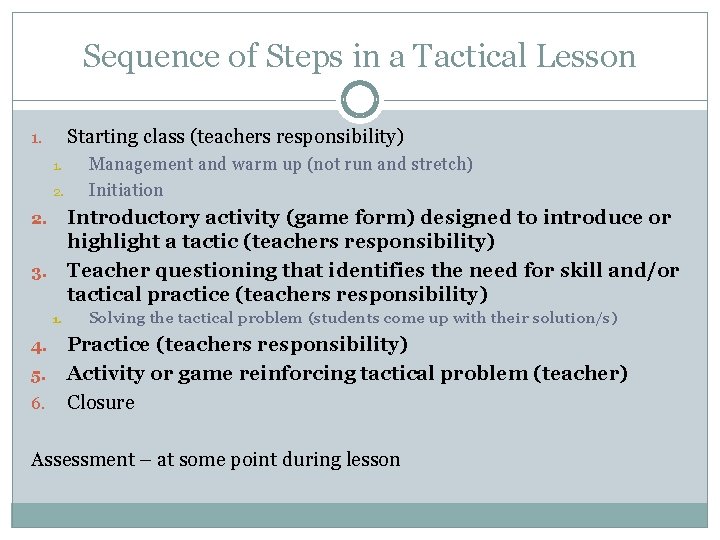
Sequence of Steps in a Tactical Lesson Starting class (teachers responsibility) 1. 1. 2. Management and warm up (not run and stretch) Initiation Introductory activity (game form) designed to introduce or highlight a tactic (teachers responsibility) 3. Teacher questioning that identifies the need for skill and/or tactical practice (teachers responsibility) 2. 1. Solving the tactical problem (students come up with their solution/s) Practice (teachers responsibility) 5. Activity or game reinforcing tactical problem (teacher) 6. Closure 4. Assessment – at some point during lesson
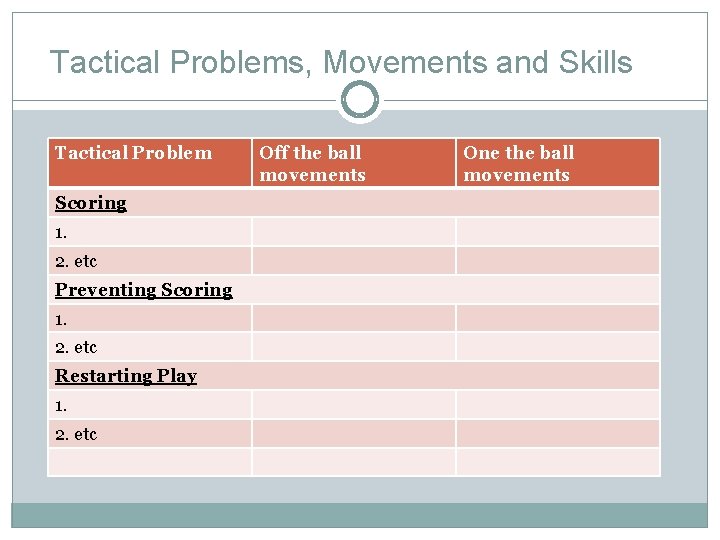
Tactical Games Model (Griffin, Mitchell & Oslin, 1997) 1. Game 2. Tactical Awareness What to do? Tactical Problems Scoring Preventing Scoring Restarting Play or Game Form 3. Skill Selection & Execution How to do it? Solutions of Tactical Problems Decisions Skills Movements
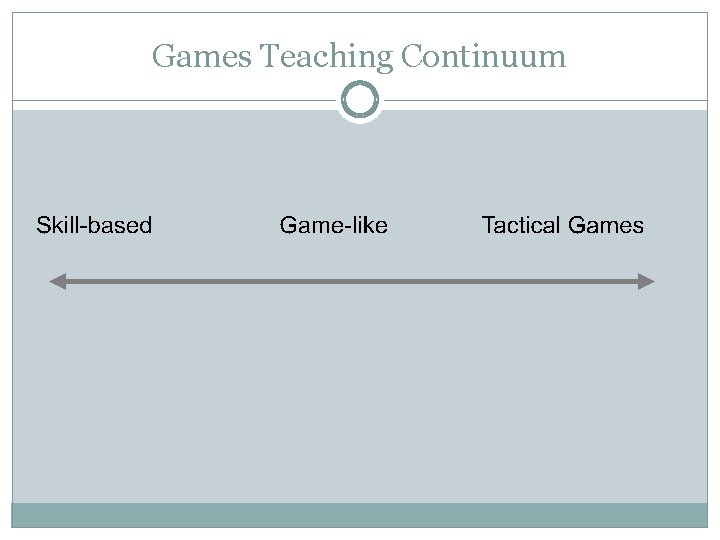
Games Teaching Continuum
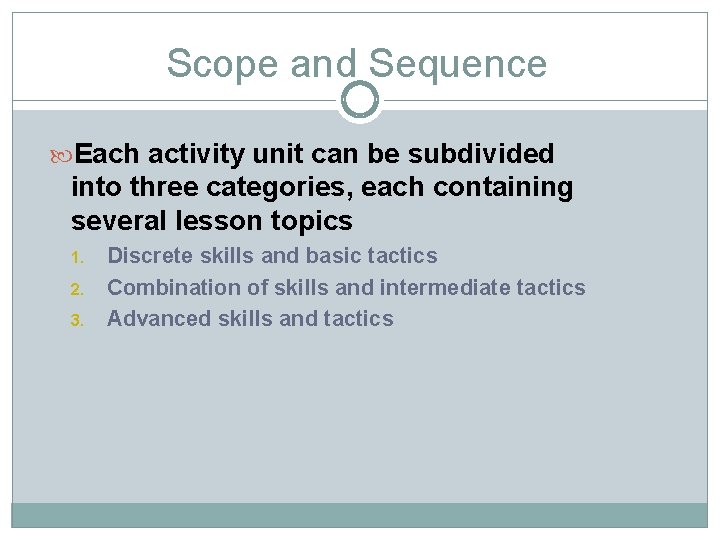
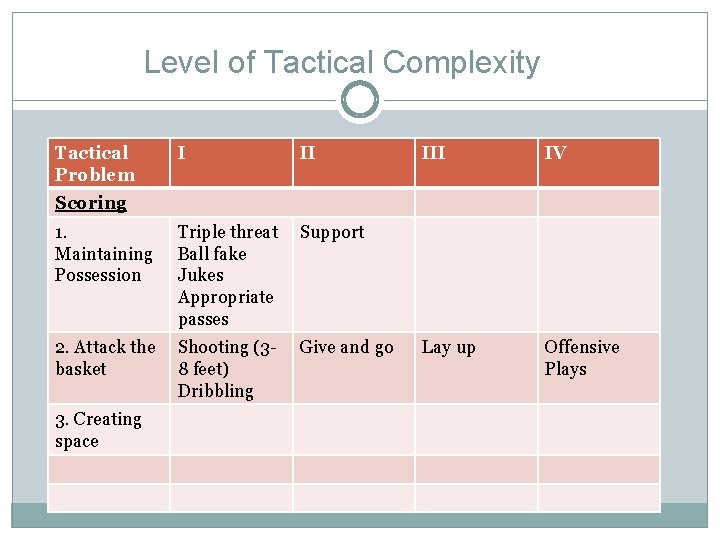
Scope and Sequence Each activity unit can be subdivided into three categories, each containing several lesson topics 1. 2. 3. Discrete skills and basic tactics Combination of skills and intermediate tactics Advanced skills and tactics
Tactical Transfer Games share the same tactical problems within a classification Soccer, basketball, lacrosse What are some examples?
Tactical Problems, Movements and Skills Tactical Problem Scoring 1. 2. etc Preventing Scoring 1. 2. etc Restarting Play 1. 2. etc Off the ball movements One the ball movements
Level of Tactical Complexity Tactical Problem I II 1. Maintaining Possession Triple threat Ball fake Jukes Appropriate passes Support 2. Attack the basket Shooting (38 feet) Dribbling Give and go III IV Lay up Offensive Plays Scoring 3. Creating space
Alternative Format Combining tactical problems table and level of tactical complexity table Scope and sequence example for basketball
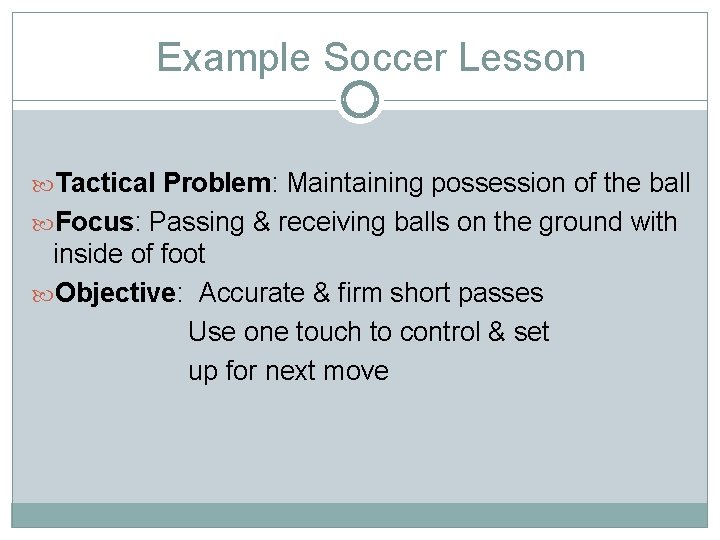
Example Soccer Lesson Tactical Problem: Maintaining possession of the ball Focus: Passing & receiving balls on the ground with inside of foot Objective: Accurate & firm short passes Use one touch to control & set up for next move
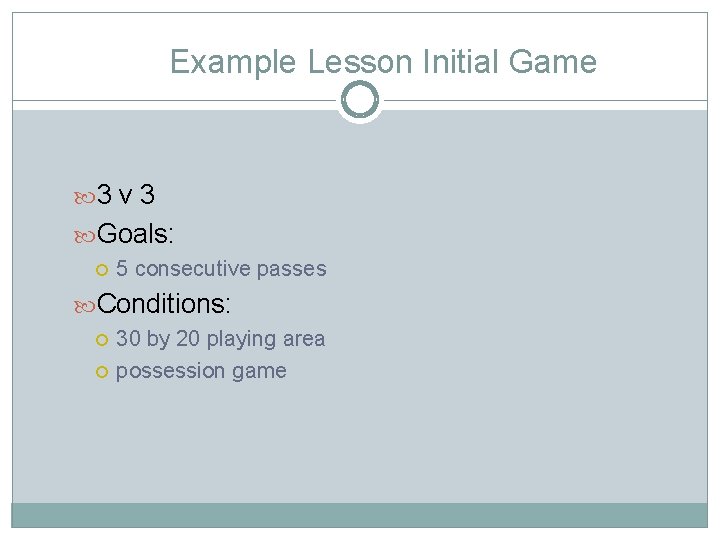
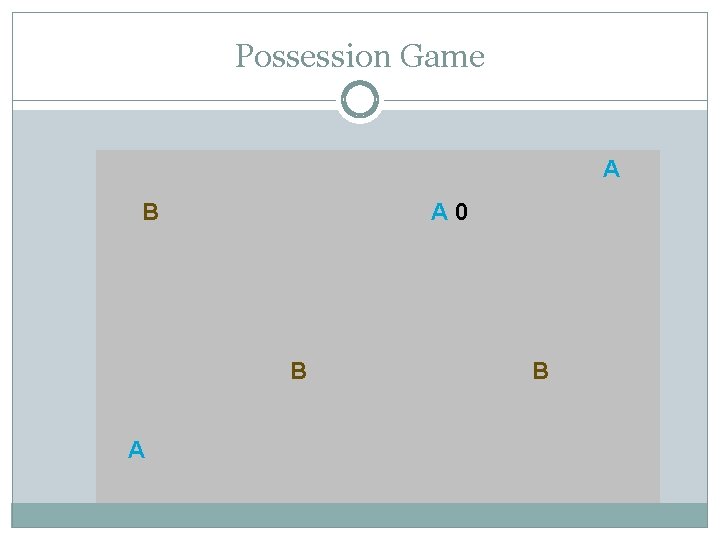
Example Lesson Initial Game 3 v 3 Goals: 5 consecutive passes Conditions: 30 by 20 playing area possession game
Possession Game A B A 0 B A B
Example Lesson Q&A What is the goal here? How can your team keep the ball?
Example Lesson Situated Practice Partner (or triad) practice approximately 10’ apart pass & control (stationary & moving) Goals- One touch to control & set up for the next pass Firm & accurate passing with inside of both feet
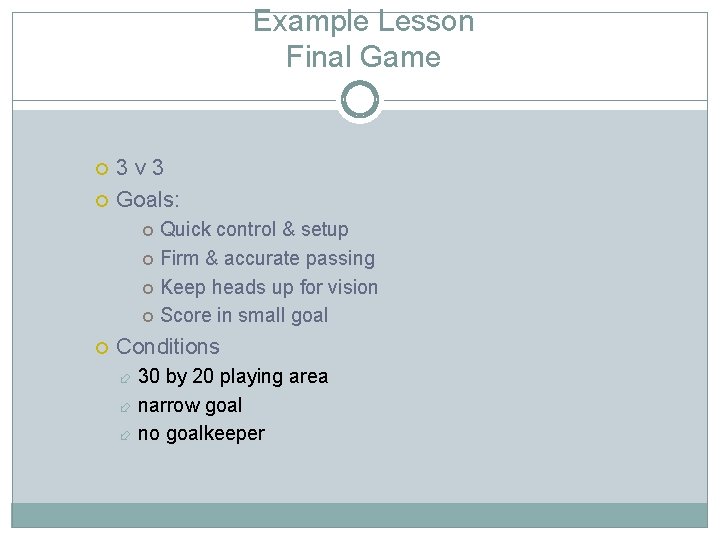
Example Lesson Final Game 3 v 3 Goals: Quick control & setup Firm & accurate passing Keep heads up for vision Score in small goal Conditions 30 by 20 playing area narrow goal no goalkeeper
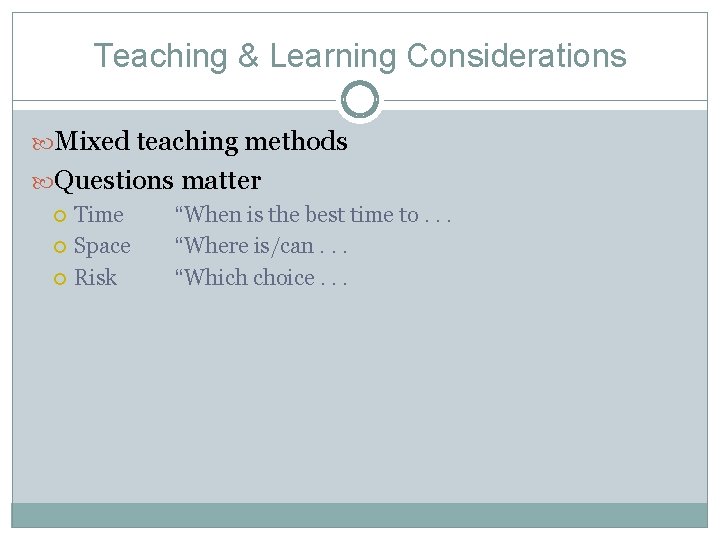
Teaching & Learning Considerations Mixed teaching methods Questions matter Time Space Risk “When is the best time to. . . “Where is/can. . . “Which choice. . .
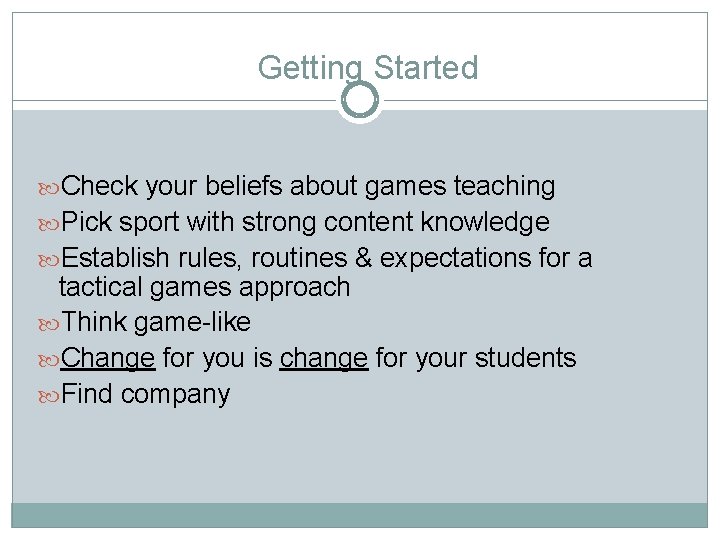
Getting Started Check your beliefs about games teaching Pick sport with strong content knowledge Establish rules, routines & expectations for a tactical games approach Think game-like Change for you is change for your students Find company
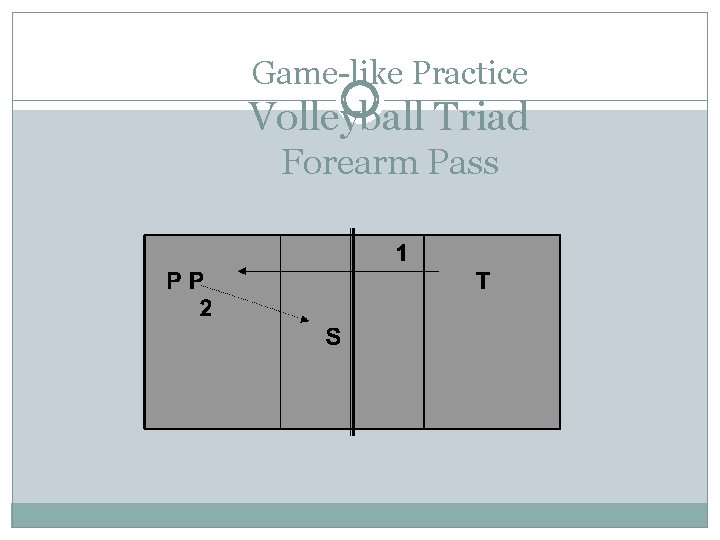
Game-like Practice Volleyball Triad Forearm Pass
Griffin http: //ksa. sports. re. kr/common/download. php