
Game Management Communication and Teamwork Overview Game Management

![Teamwork Pre-Game • Field Coverage [C, Lead, Trail] • Shared areas & double whistles](https://slidetodoc.com/presentation_image_h/7751f6b5d074c22f21968973f5df5b9f/image-19.jpg "Teamwork Pre-Game • Field Coverage [C, Lead, Trail] • Shared areas & double whistles")

- Slides: 22
Game Management, Communication and Teamwork
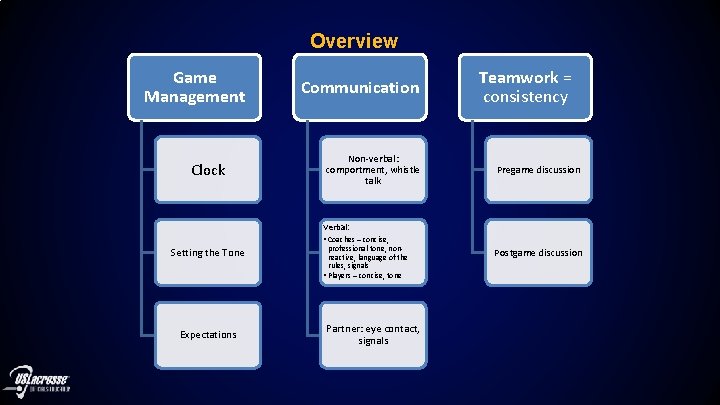
Overview Game Management Clock Communication Non-verbal: comportment, whistle talk Teamwork = consistency Pregame discussion Verbal: • Coaches – concise, Setting the Tone Expectations professional tone, nonreactive, language of the rules, signals • Players – concise, tone Partner: eye contact, signals Postgame discussion
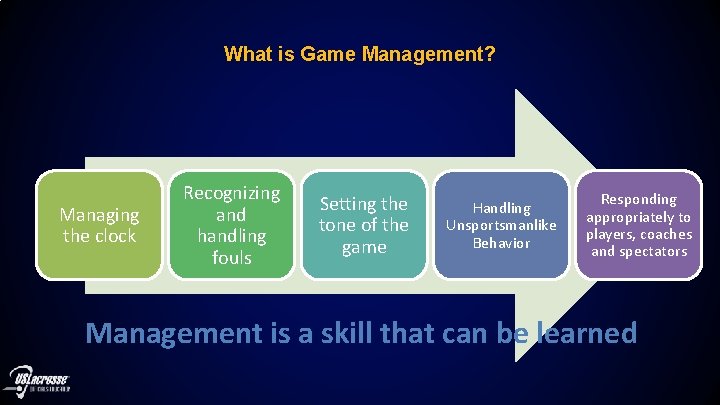
What is Game Management? Managing the clock Recognizing and handling fouls Setting the tone of the game Handling Unsportsmanlike Behavior Responding appropriately to players, coaches and spectators Management is a skill that can be learned
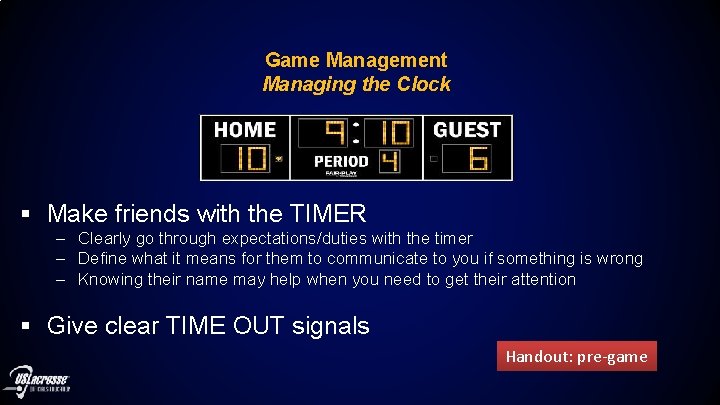
Game Management Managing the Clock § Make friends with the TIMER – Clearly go through expectations/duties with the timer – Define what it means for them to communicate to you if something is wrong – Knowing their name may help when you need to get their attention § Give clear TIME OUT signals Handout: pre-game
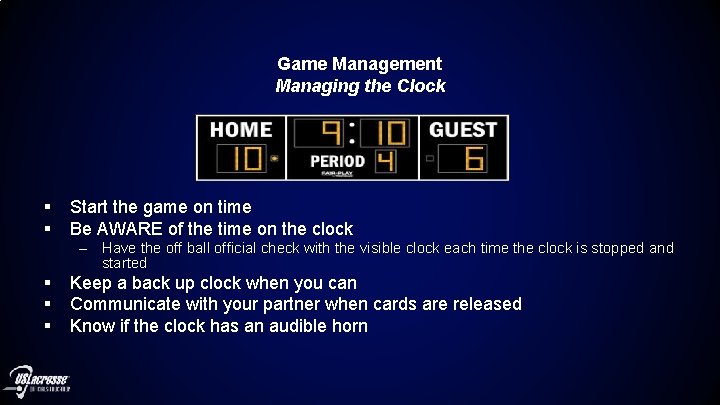
Game Management Managing the Clock § § Start the game on time Be AWARE of the time on the clock – Have the off ball official check with the visible clock each time the clock is stopped and started § § § Keep a back up clock when you can Communicate with your partner when cards are released Know if the clock has an audible horn
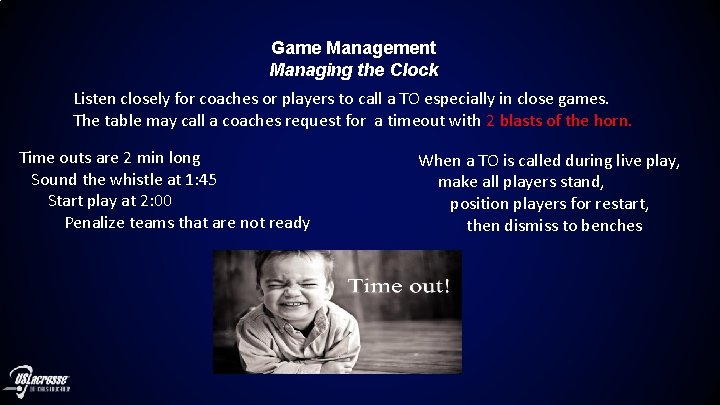
Game Management Managing the Clock Listen closely for coaches or players to call a TO especially in close games. The table may call a coaches request for a timeout with 2 blasts of the horn. Time outs are 2 min long Sound the whistle at 1: 45 Start play at 2: 00 Penalize teams that are not ready When a TO is called during live play, make all players stand, position players for restart, then dismiss to benches
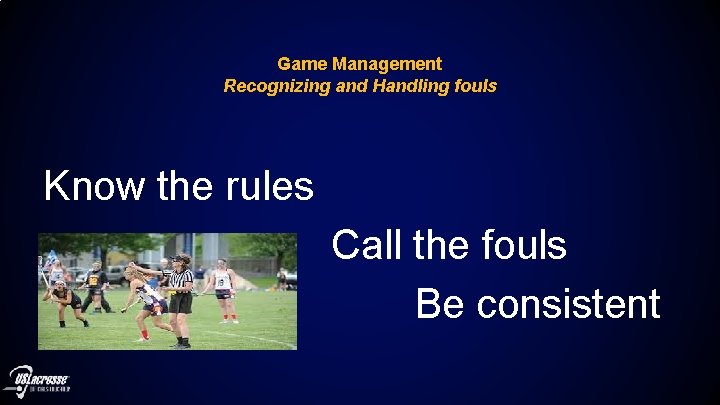
Game Management Recognizing and Handling fouls Know the rules Call the fouls Be consistent
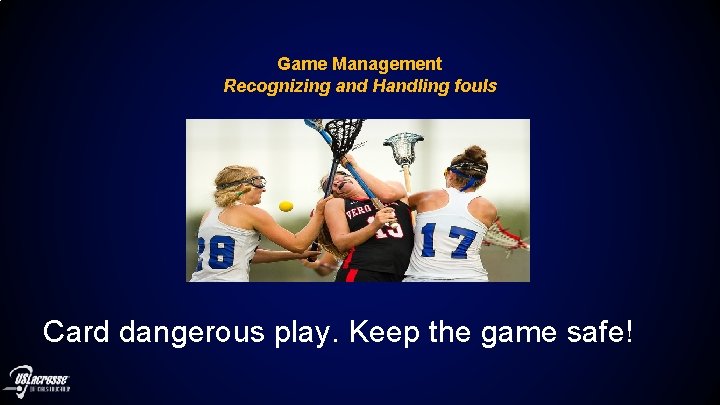
Game Management Recognizing and Handling fouls Card dangerous play. Keep the game safe!
Game Management Setting the Tone of the Game Be prepared for anything as soon as the game starts Make the calls in the midfield rather than hold for advantage Call the game tight early Address the coaches’ questions
Game Management Setting the Tone of the Game Communicate spatial expectations: § Demand 4 meters of space on foul set ups § Have all players “STAND” on 8 m set ups so you can clear them properly § Move players off lines (draw) § Address creeping early in the game § Penalize when needed – use your GREEN card
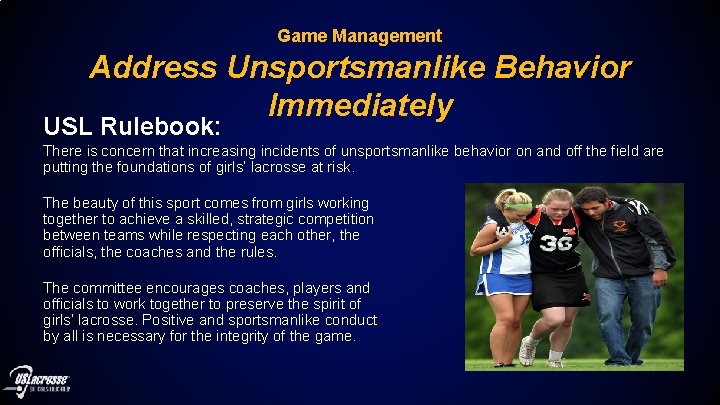
Game Management Address Unsportsmanlike Behavior Immediately USL Rulebook: There is concern that increasing incidents of unsportsmanlike behavior on and off the field are putting the foundations of girls’ lacrosse at risk. The beauty of this sport comes from girls working together to achieve a skilled, strategic competition between teams while respecting each other, the officials, the coaches and the rules. The committee encourages coaches, players and officials to work together to preserve the spirit of girls’ lacrosse. Positive and sportsmanlike conduct by all is necessary for the integrity of the game.
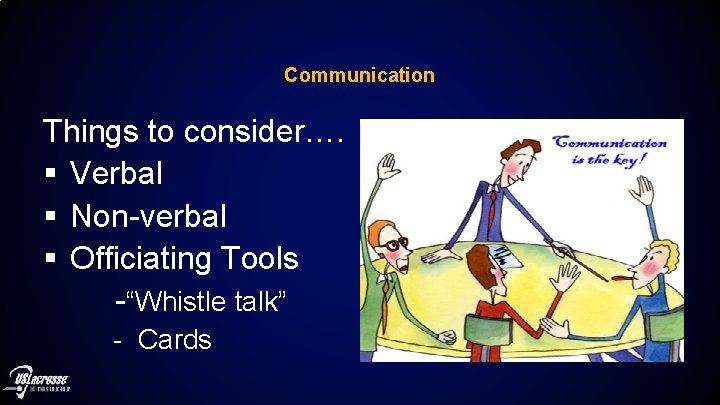
Communication Things to consider…. § Verbal § Non-verbal § Officiating Tools -“Whistle talk” - Cards
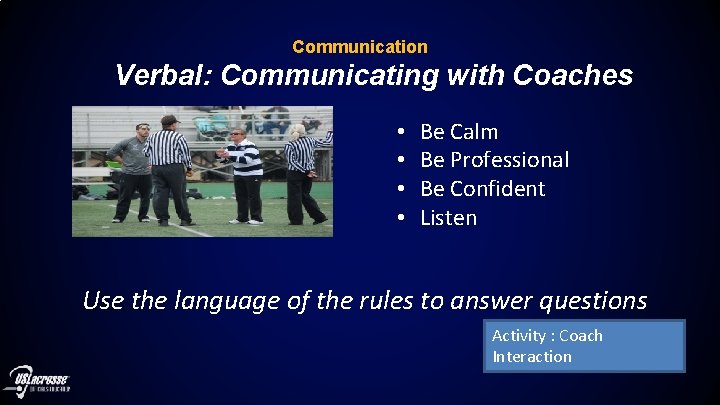
Communication Verbal: Communicating with Coaches • • Be Calm Be Professional Be Confident Listen Use the language of the rules to answer questions Activity : Coach Interaction
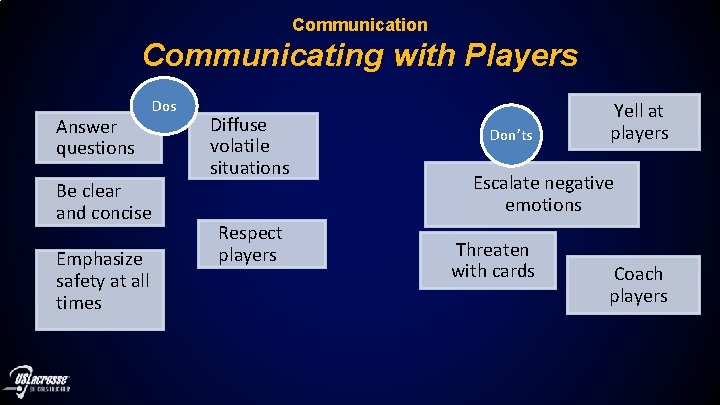
Communication Communicating with Players Answer questions Be clear and concise Emphasize safety at all times Dos Diffuse volatile situations Respect players Don’ts Yell at players Escalate negative emotions Threaten with cards Coach players
Communication Non-verbal NON –VERBAL COMMUNICATION Body language SPEAKS volumes! SPEAKS LOUDLY
Communication Non-verbal Whistle Talk § Loud and bold for BIG fouls § Short and sweet for restarts, boundaries Cards • USE them • Big whistle to stop clock, efficient mechanics
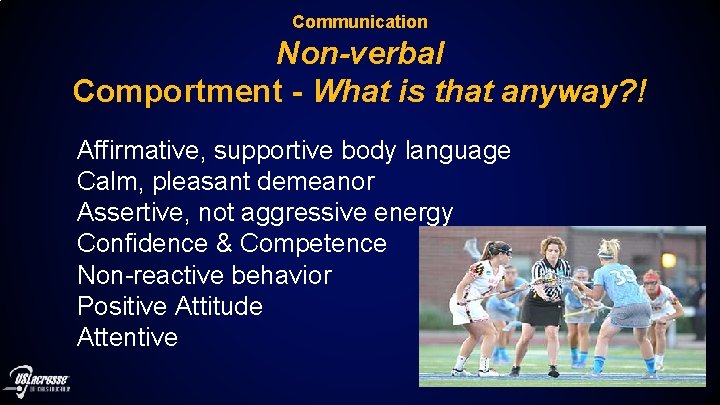
Communication Non-verbal Comportment - What is that anyway? ! Affirmative, supportive body language Calm, pleasant demeanor Assertive, not aggressive energy Confidence & Competence Non-reactive behavior Positive Attitude Attentive
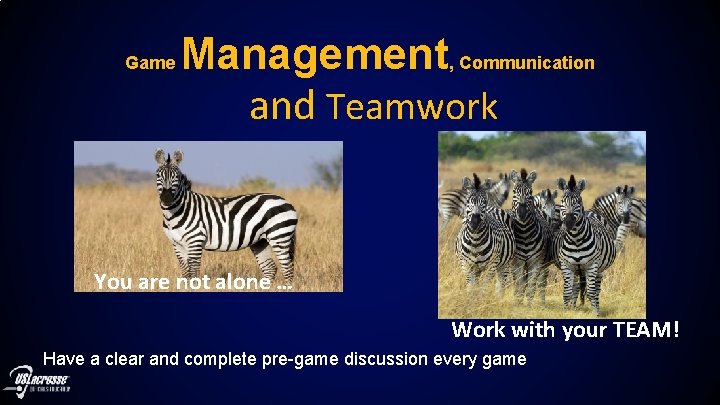
Game Management, Communication and Teamwork You are not alone … Work with your TEAM! Have a clear and complete pre-game discussion every game
Teamwork Pre-Game • Field Coverage [C, Lead, Trail] • Shared areas & double whistles • False starts on the 8 m arc • Restraining Line: calls, set ups hand-offs • Draw responsibilities, [counting] • Warnings, clock management • New rules, unusual situations, etc. , etc.
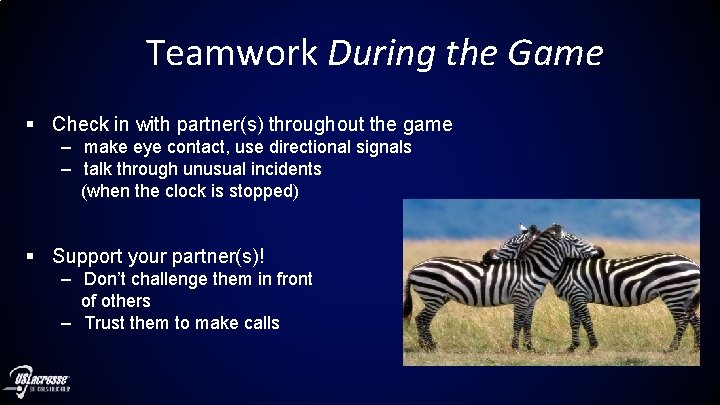
Teamwork During the Game § Check in with partner(s) throughout the game – make eye contact, use directional signals – talk through unusual incidents (when the clock is stopped) § Support your partner(s)! – Don’t challenge them in front of others – Trust them to make calls
Teamwork Post Game § Leave the field together § Post game discussion ütalk through unusual incidents üwhat could you (as a team) have done better? üwhat could you personally have done better?
Game Management, Communication and Teamwork…one final note: