
GALLSTONE DISEASE Prof Dr Ahmet Dobrucal Cerrahpaa Tp
GALLSTONE DISEASE Prof. Dr. Ahmet Dobrucalı İÜ. Cerrahpaşa Tıp Fakültesi Gastroenteroloji Bilim Dalı
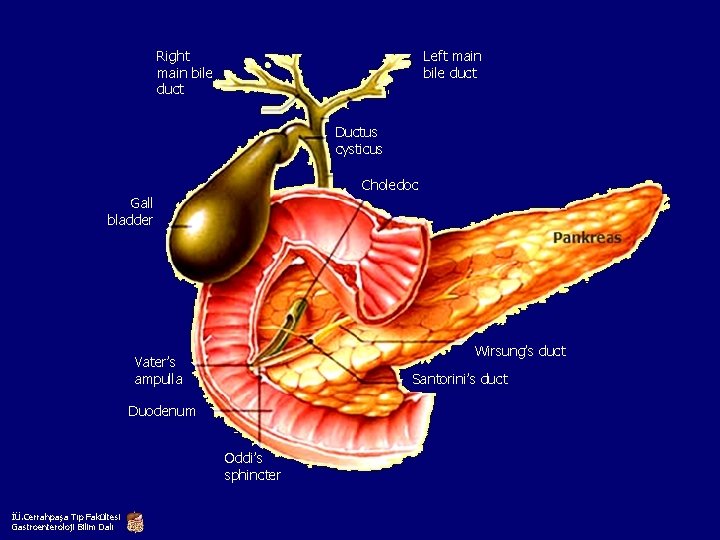
Right main bile duct Left main bile duct Ductus cysticus Choledoc Gall bladder Wirsung’s duct Vater’s ampulla Santorini’s duct Duodenum Oddi’s sphincter İÜ. Cerrahpaşa Tıp Fakültesi Gastroenteroloji Bilim Dalı
Incidence • 10 -15% of adults in western societies have gallstones (F/M: 2). • 30% of women in their sixties and 50% of women and men in their eighties have bile sludge (or gallstone). • Pregnancy (especially multiparity) is a wellknown risk factor for gallstone development. - It is usually onset in 2. and 3. trimestr and asymptomatic. - Cholcystitis is the second most common reason for surgery in pregnancy after acute appendicitis. - In postpartum period, ¼ of women have bile sludge and 5% have gallstone. During the first five years after the delivery, women have high risk for gall stone formation. İÜ. Cerrahpaşa Tıp Fakültesi Gastroenteroloji Bilim Dalı
Nomenclature • Gallstones ---------- Cholecystolithiasis • Bile duct stones -------- Choledocholithiasis • Gallbladder inflammation -------- Cholecystitis • Bile duct inflammation -------- Cholangitis • Gallbladder inflammation with gallstone ------- Calculous cholecystitis • Gallbladder inflammation without gallstone ----- Acalculous cholecystitis İÜ. Cerrahpaşa Tıp Fakültesi Gastroenteroloji Bilim Dalı
• According to stone type: - Cholesterol stones - Pigment stones • According to stone localization; - Cholecystolithiasis - Choledocholithiasis • According to clinical presentation: - Asymptomatic - Acute - Chronic - Complicated bilestone disease İÜ. Cerrahpaşa Tıp Fakültesi Gastroenteroloji Bilim Dalı
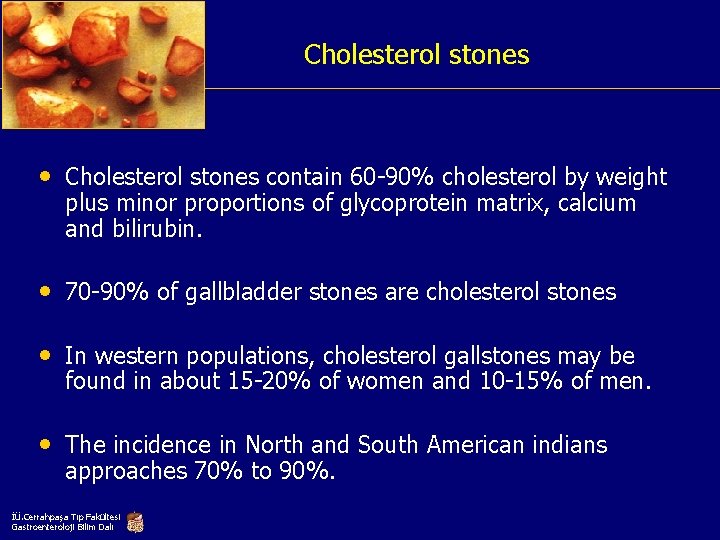
Cholesterol stones • Cholesterol stones contain 60 -90% cholesterol by weight plus minor proportions of glycoprotein matrix, calcium and bilirubin. • 70 -90% of gallbladder stones are cholesterol stones • In western populations, cholesterol gallstones may be found in about 15 -20% of women and 10 -15% of men. • The incidence in North and South American indians approaches 70% to 90%. İÜ. Cerrahpaşa Tıp Fakültesi Gastroenteroloji Bilim Dalı
Risk factors for development of cholesterol stones • • • Aging (>70) Female gender (x 2 -3) Multiparity Obezity Rapid weight lose Etnisity (70% of young Pima Indian women and 50% of scandinavian women over 50) • Chronic gallbladdder stasis • Medications (Ceftriaxone, oral contraseptive, octreotide and ve cholestyramine ) • Hypertrigliseridemia • Diseases of the terminal ileum (Crohn’s disease, terminal ileum resection more than 80 -100 cm) İÜ. Cerrahpaşa Tıp Fakültesi Gastroenteroloji Bilim Dalı
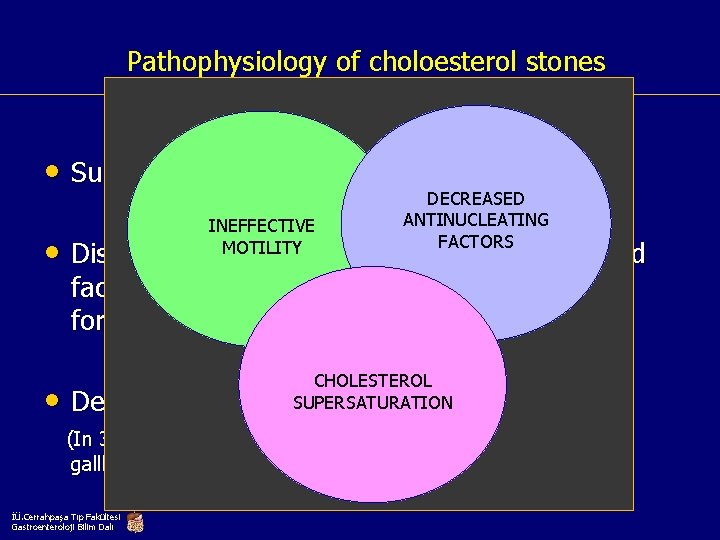
Pathophysiology of choloesterol stones • Supersaturation of bile with cholesterol INEFFECTIVE MOTILITY DECREASED ANTINUCLEATING FACTORS • Distorbed balance between the preventive and facilitative factors of nucleation in chrystal formation • Defective CHOLESTEROL SUPERSATURATION gallbladder emptying (In 30 -40% of patients with gallstone disease have delayed gallbladder emptying) İÜ. Cerrahpaşa Tıp Fakültesi Gastroenteroloji Bilim Dalı
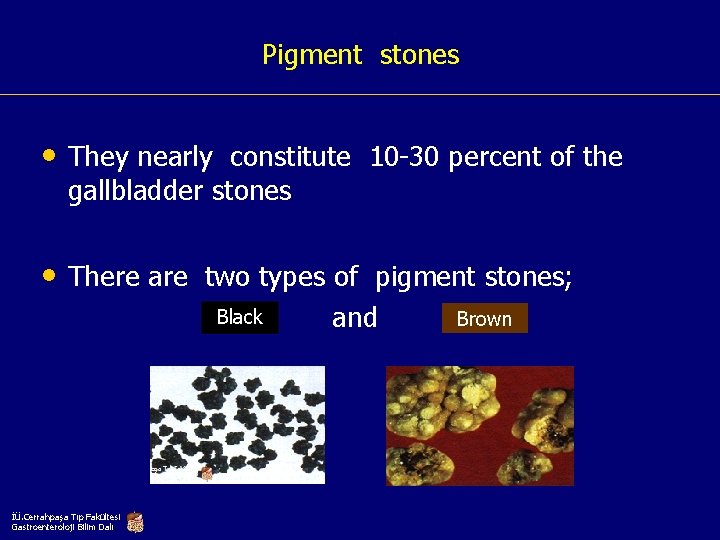
Pigment stones • They nearly constitute 10 -30 percent of the gallbladder stones • There are two types of pigment stones; Black İÜ. Cerrahpaşa Tıp Fakültesi Gastroenteroloji Bilim Dalı and Brown

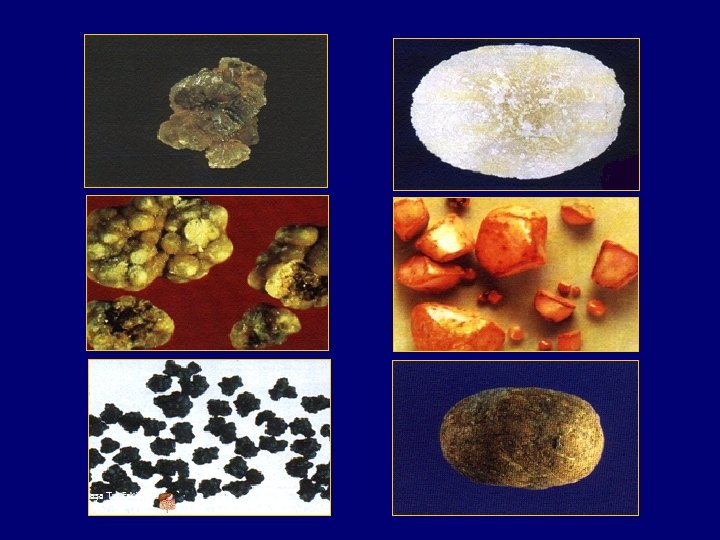
Pigment stones Black stones Brown stones Primary location Gallbladder Bile ducts Frequency 20% of gallbladder stones 50% of bile duct stones Morphology Small, hard, black, round or irregular Small to large, brown, softer Content Calcium bilirubinate polymer and other salts, less than 10% cholesterol Calcium bilirubinate, fatty acids, 10 -30% cholesterol Setting Mostly idiopathic Increasing age Cirrhosis (Alcoholic) Chronic hemolysis Chronic stasis and infection Strictures Biliary parasites İÜ. Cerrahpaşa Tıp Fakültesi Gastroenteroloji Bilim Dalı
Risc factors in pigment stones formation • • • Chronic haemolysis Alcoholic cirrhosis Advanced age Terminal ileum disease, resection or bypass Biliary infection Bile duct stenosis Duodenal diverticula Chronic gall bladder stasis Truncal vagotomy Hyperparathyroidism Primary biliary cirrhosis İÜ. Cerrahpaşa Tıp Fakültesi Gastroenteroloji Bilim Dalı >90%

İÜ. Cerrahpaşa Tıp Fakültesi Gastroenteroloji Bilim Dalı
Clinic • Asymptomatic cholelithiasis • Acute calculous cholecystitis • Chronic calculous cholecystitis • Acute or chronic acalculous cholecystitis İÜ. Cerrahpaşa Tıp Fakültesi Gastroenteroloji Bilim Dalı
Asymptomatic cholecystolithiasis • 80% of gallstones are asymptomatic over the long term. • The probability of developing symptomatic disease 15% at ten years and 18% at twenty years. Acute cholecystitis and other severe events are an initial occurence in only 3% of patients. • Once gallstones have been identified, their relation to nonspesific dyspeptic symptoms and food intolerence becomes problematic. İÜ. Cerrahpaşa Tıp Fakültesi Gastroenteroloji Bilim Dalı
Acute calculous cholecystitis • Most commonly occurs in the presence of gallbladder stones. • There is a gradually increasing pain in the right upper quadrant and/ or epigastrium. Pain may radiate to right shoulder and back. Usually it is not a colic. • Nausea and vomiting usually occur. Mild to moderate fever with chill may present. • Jaundice is occasionally present as a result of local hepatic inflammation or ductal edema. It should raise suspicion for concurrent bile duct stones. İÜ. Cerrahpaşa Tıp Fakültesi Gastroenteroloji Bilim Dalı
• Laboratory studies supportive but nonspesific. • A moderate leukocytosis and CRP elevation are usually Mildwithout elevation of amylase and liver enzymes ar • present. Gallstones cholecystitis may produce pain caused • often seen, but marked elevation prompt by intermittent obstruction of should the cystic duct by a evaluation for duct stones. stone. Usually begins abrubtly after a fatty meal and resolves gradually within 3 hours. Prolonged pain (>3 h) should rise suspicion of with a complication as Hyperbilirubinemi associated elevated serumsuch alkalen cholecystitis, and cholangitis or pancreatitis. phosphatase GGT indicates the presence of a duct stone and/or cholangitis. • High serum amylase levels (>500 U) should rise suspicion of a biliary pancreatitis. İÜ. Cerrahpaşa Tıp Fakültesi Gastroenteroloji Bilim Dalı
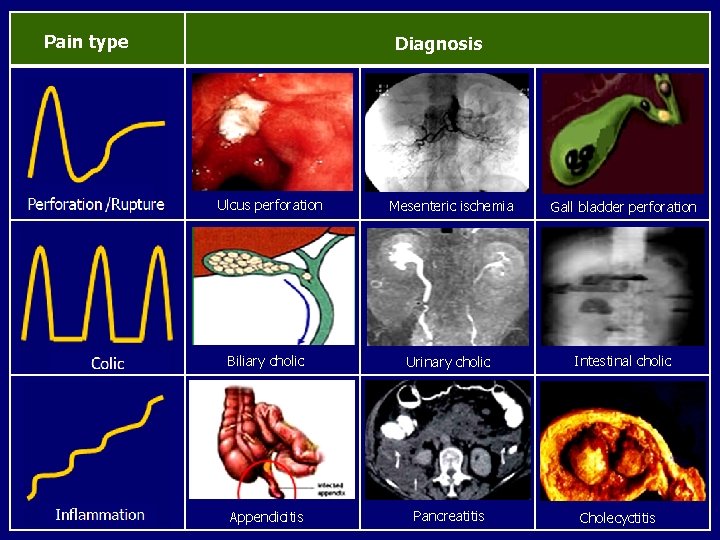
Pain type Diagnosis Ulcus perforation Mesenteric ischemia Gall bladder perforation Biliary cholic Urinary cholic Intestinal cholic Appendicitis Pancreatitis Cholecyctitis
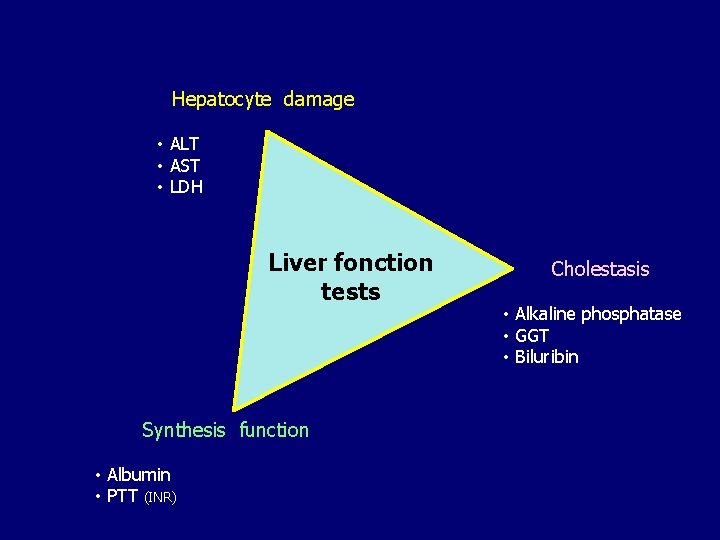
Hepatocyte damage • ALT • AST • LDH Liver fonction tests Synthesis function • Albumin • PTT (INR) Cholestasis • Alkaline phosphatase • GGT • Biluribin
• Atypical presentations that occur particularly in elderly and debilitated patients include painless jaundice or leukocytosis and fever of unknown origin. !!! İÜ. Cerrahpaşa Tıp Fakültesi Gastroenteroloji Bilim Dalı
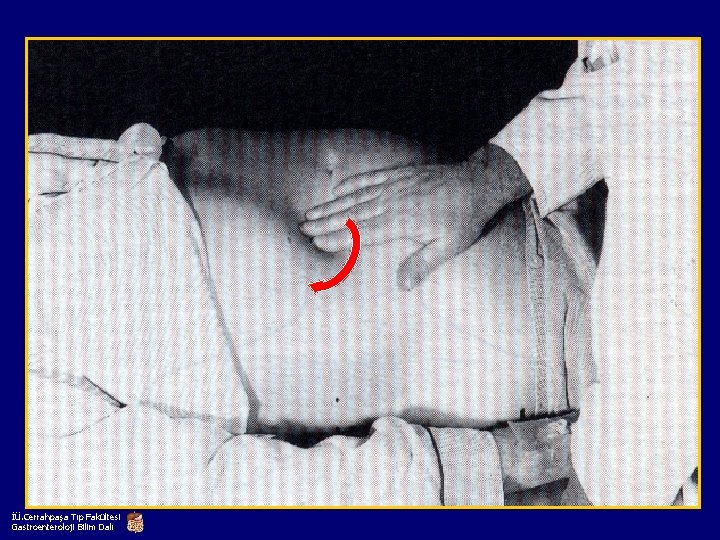
• Murphy’s sign is usually positive in physical examination. Murphy ’s sign is the presence of tenderness and respiratory guarding during palpation of the right upper quadrant. • Up to one-third of patients may have a palpable gallbladder (Hydrops vesicalis) Gallbladder may not be palpable in the patients with chronic cholecystitis and gallbladder cancer. İÜ. Cerrahpaşa Tıp Fakültesi Gastroenteroloji Bilim Dalı

John B Murphy (1857 -1916) Murphy İÜ. Cerrahpaşa Tıp Fakültesi Gastroenteroloji Bilim Dalı 22
İÜ. Cerrahpaşa Tıp Fakültesi Gastroenteroloji Bilim Dalı
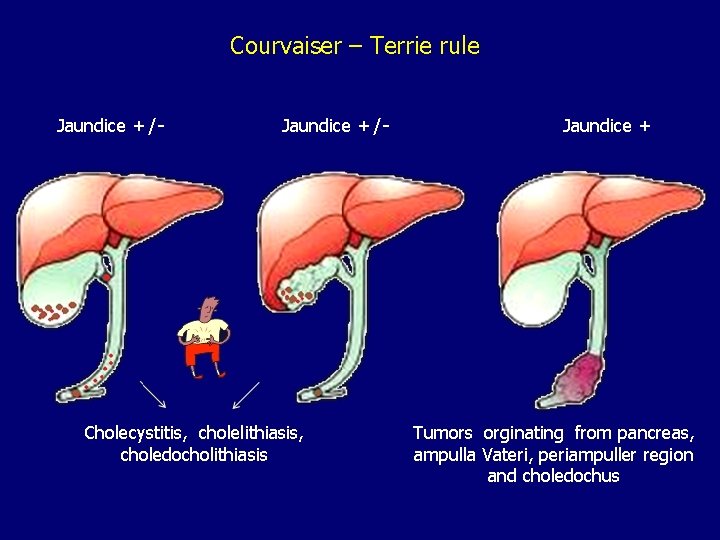
Courvaiser – Terrie rule Jaundice +/- Cholecystitis, cholelithiasis, choledocholithiasis Jaundice + Tumors orginating from pancreas, ampulla Vateri, periampuller region and choledochus
Chronic calculous cholecystitis • Most commonly occurs in the presence of chronic gallbladder stones. • Usually presents as recurrent episodes of biliary pain. This is a rapidly developing steady epigastric or right upper quadrant pain, typically lasting from 15 minutes to 6 hours. Pain may radiate to chest, neck, shoulder and back. • Sweating, nausea and womiting may be associated symptoms • During acute episode, physical examination may be normal or may show mild or remarkable right upper quadrant tenderness. Between episodes the examination is normal. Murphy’s sign usually negative. Rough percussion may be helpful. • A mild to moderate leukocytosis and mild elevations in liver and pancreas enzymes and CRP may present. İÜ. Cerrahpaşa Tıp Fakültesi Gastroenteroloji Bilim Dalı
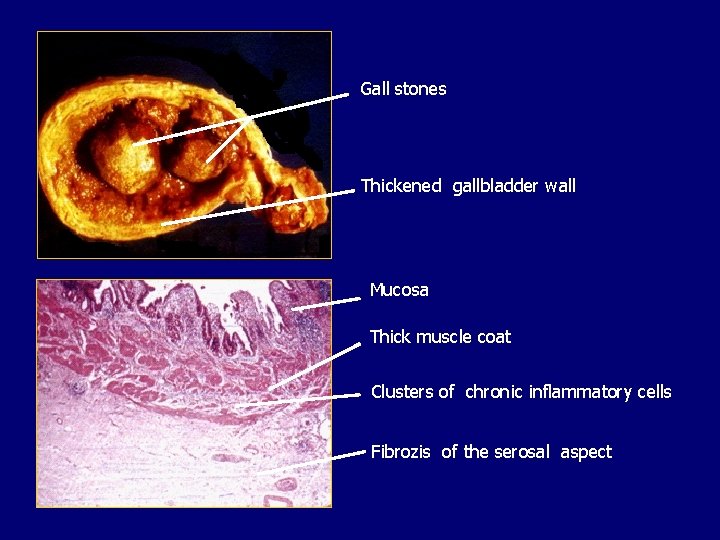
Gall stones Thickened gallbladder wall Mucosa Thick muscle coat Clusters of chronic inflammatory cells Fibrozis of the serosal aspect

Biliary colic Acute cholecystitis Persistent obstruction Stone impaction Gallbladder spasm Edematous and acutely inflamaed gallbladder Mucosal secretion Ischemia, necrosis Galbladder distention (pain) Chronic cholecystitis Occasionally, scarred occludede cystic duct Smal contracted gallbladder with thickened scarred mucosa
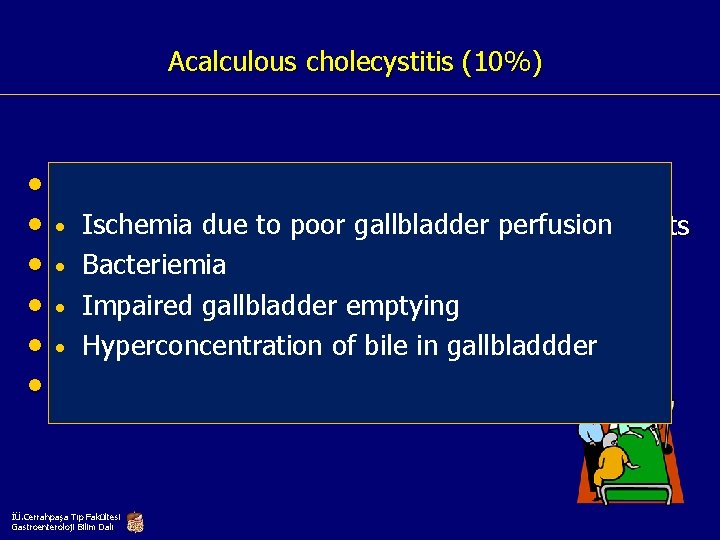
Acalculous cholecystitis (10%) • Trauma, major surgeries and AMI etc. • Ischemia duehospitalization to poor gallbladder perfusion • Long standing in intensive care units • Bacteriemia • Long standing parenteral feeding • Impaired gallbladder • Chronic narcotic abuse emptying • Hyperconcentration of bile in gallbladdder • Sepsis • Bile sludge in gallbladder İÜ. Cerrahpaşa Tıp Fakültesi Gastroenteroloji Bilim Dalı
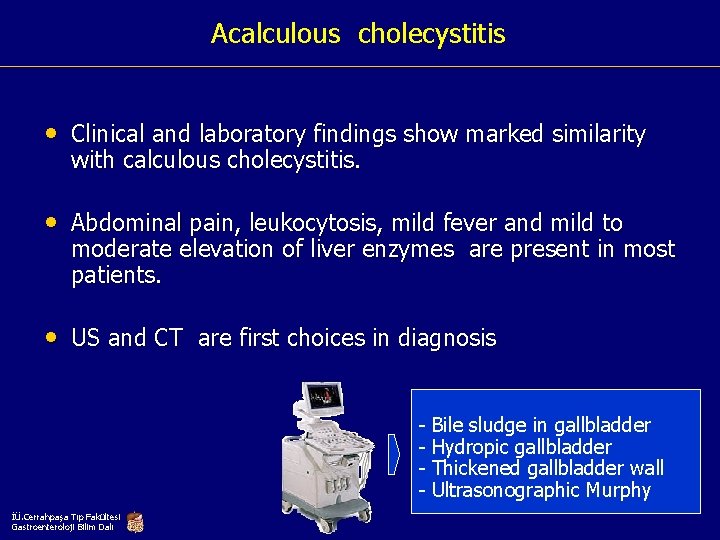
Acalculous cholecystitis • Clinical and laboratory findings show marked similarity with calculous cholecystitis. • Abdominal pain, leukocytosis, mild fever and mild to moderate elevation of liver enzymes are present in most patients. • US and CT are first choices in diagnosis İÜ. Cerrahpaşa Tıp Fakültesi Gastroenteroloji Bilim Dalı Bile sludge in gallbladder Hydropic gallbladder Thickened gallbladder wall Ultrasonographic Murphy
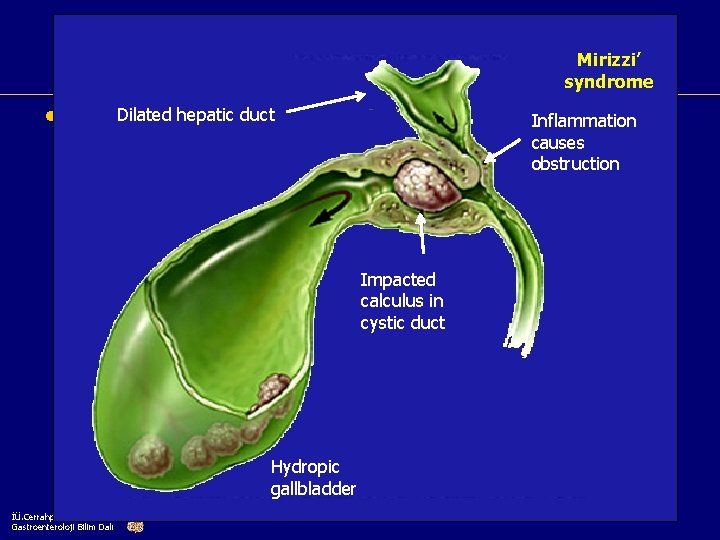
Complications of gallstones Mirizzi’ syndrome hepatic duct may develop in 10% of • Some. Dilated complications patients Inflammation with gallstone disease; -Pancreatitis - Perforation Impacted - Cholecystoenteric fistula calculus in - Bilestone ileus cystic duct - Emphysematous cholecystitis - Sepsis - Mirizzi’s syndrome - Porcellain gallbladder Hydropic gallbladder İÜ. Cerrahpaşa Tıp Fakültesi Gastroenteroloji Bilim Dalı causes obstruction

Biliary pancreatitis Gallbladder Main bile ducts Choledoc Pancreas Duodenum Impacted bile stones in ampulla İÜ. Cerrahpaşa Tıp Fakültesi Gastroenteroloji Bilim Dalı 31
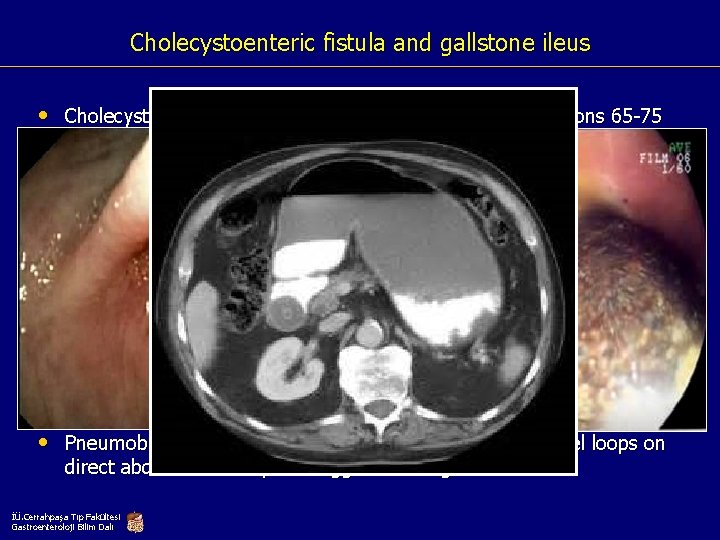
Cholecystoenteric fistula and gallstone ileus • Cholecystoenteric fistulas (CEF) are typically seen in persons 65 -75 years of age. • The most common location of CEF is duodenum (Bouveret’s syndrome) followed by the colon, stomach and jejunum. • The most common site of gallstone impaction is in the terminal ileum or ileocecal valve. • Many patients with gallstone ileus may have serious concomitant medical ilness. Delayed diagnosis leads to high mortality rate (50%). • Pneumobilia (air in the biliary tree) and dilated small bowel loops on direct abdominal X-ray are suggestive for gallstone ileus. İÜ. Cerrahpaşa Tıp Fakültesi Gastroenteroloji Bilim Dalı
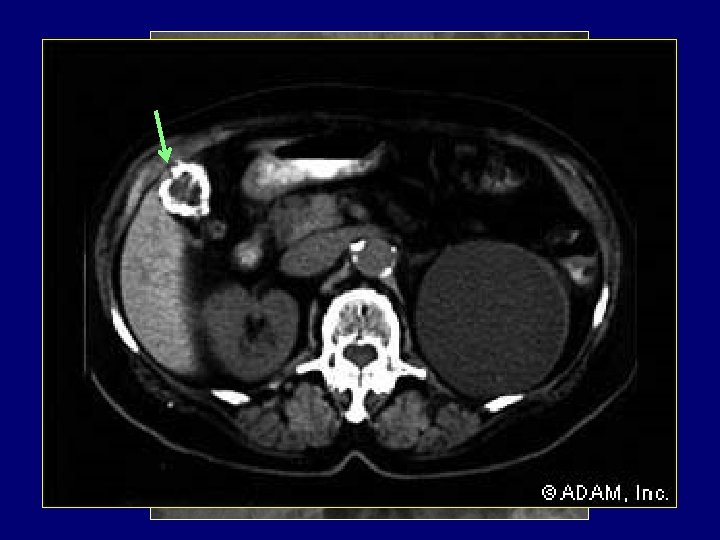
Porcellain gallbladder (PG) • PG is defined as intramural calcification of the gallbladdder. It is not a complication of gallstones. • It is associated with an increased risk of gallbladder carcinoma which can occur in 20% of patients. • Development of cancer depends on the pattern of gallbladder wall calcification. Selective mucosal calcification causes significant cancer risk. • Patients are usually asymptomatic and laboratory test are normal. • Prophylactic cholecytectomy is indicated to prevent gallbladder carcinoma İÜ. Cerrahpaşa Tıp Fakültesi Gastroenteroloji Bilim Dalı
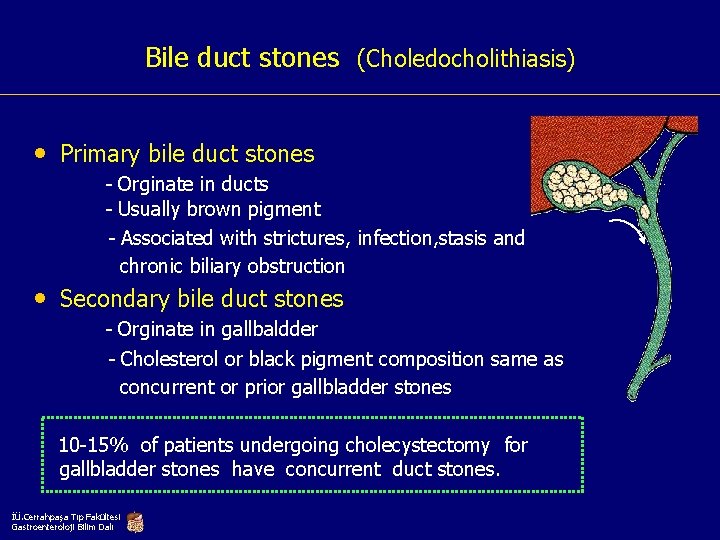
Bile duct stones (Choledocholithiasis) • Primary bile duct stones - Orginate in ducts - Usually brown pigment - Associated with strictures, infection, stasis and chronic biliary obstruction • Secondary bile duct stones - Orginate in gallbaldder - Cholesterol or black pigment composition same as concurrent or prior gallbladder stones 10 -15% of patients undergoing cholecystectomy for gallbladder stones have concurrent duct stones. İÜ. Cerrahpaşa Tıp Fakültesi Gastroenteroloji Bilim Dalı
Clinical presentation • Symptoms vary from chronic asymptomatic to recurrent biliary colic, jaundice or cholangitis. An acute biliary pancreatitis may be a first symtom of formerly asymptomatic duct stone or sludge. Right upper quadrant pain + fever + Jaundice Charco‘ s triad. It is a typical finding for cholangitis İÜ. Cerrahpaşa Tıp Fakültesi Gastroenteroloji Bilim Dalı
• Associated jaundice and laboratory abnormalities may follow a fluctuating course. Serum bilirubin, alkaline phosphatase are less marked than fixed malignant obstruction. In chronic cases, an elevated alkaline phosphatase may be the only indicator of biliary obstruction. • In the case of an acute cholangitis, transaminases may reach marked elevations of 500 U/ml or more with a rapid decline over 2 -3 days after therapy. • Causative organisms are most commonly enterobacteriacea (E. Coli, Klesbsiella spp. ), streptococcus or anaerobic organisms. • Physical examination may show right upper quadrant tenderness and gallbladder may be palpabl (hydropic). Rough percussion of right hypochondrium is allways positive. İÜ. Cerrahpaşa Tıp Fakültesi Gastroenteroloji Bilim Dalı
Complications of bile duct stones • Recurring biliary colic and jaundice attacks • Pancreatitis • Acute pyogenic cholangitis (Liver abbcess, portal vein thrombosis, hepatic vein thorombosis, sepsis, DIC, acute renal failure) Reynold’s pentad; Fever + Jaundice + Pain + Hypotension + Letargy • • • Chronic cholangitis and stricture formation Secondary biliary cirrhosis Cholangiocarcinoma İÜ. Cerrahpaşa Tıp Fakültesi Gastroenteroloji Bilim Dalı

Diagnosis of gallstone disease Dr. Büşra • Direct abdominal x-ray • Ultrasonography Dr. Burak • Cholesintigraphy • CT • MRCP • ERCP İÜ. Cerrahpaşa Tıp Fakültesi Gastroenteroloji Bilim Dalı Dr. Furkan Dr. Selim Dr. Enginar
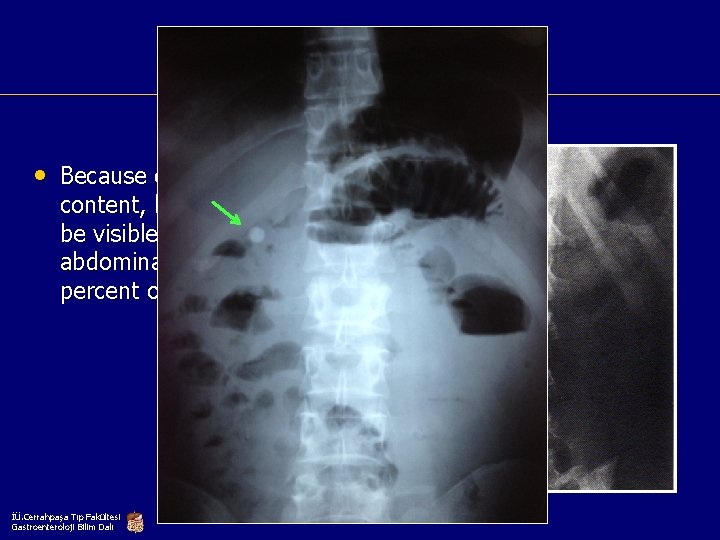
Direcy abdominal graphy • Because of calcium content, bile stones may be visible on direct abdominal X-ray in 10 -15 percent of patients. İÜ. Cerrahpaşa Tıp Fakültesi Gastroenteroloji Bilim Dalı
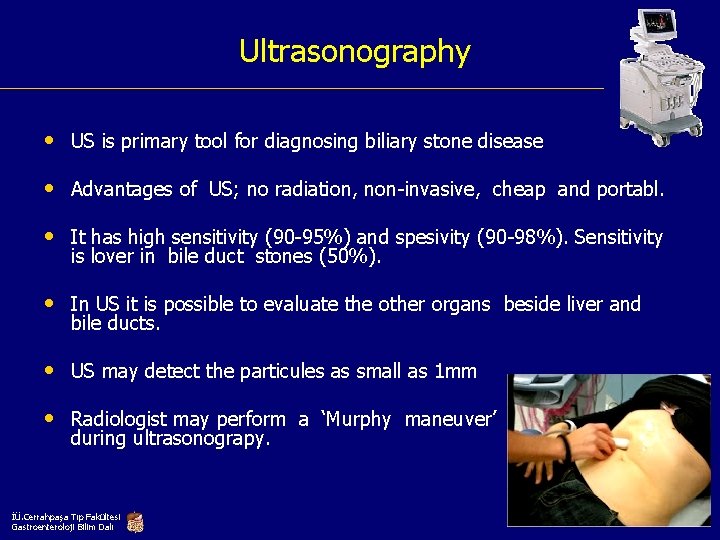
Ultrasonography • US is primary tool for diagnosing biliary stone disease • Advantages of US; no radiation, non-invasive, cheap and portabl. • It has high sensitivity (90 -95%) and spesivity (90 -98%). Sensitivity is lover in bile duct stones (50%). • In US it is possible to evaluate the other organs beside liver and bile ducts. • US may detect the particules as small as 1 mm • Radiologist may perform a ‘Murphy maneuver’ during ultrasonograpy. İÜ. Cerrahpaşa Tıp Fakültesi Gastroenteroloji Bilim Dalı
Ultrasonographic findings of acute cholecystitis • Presence of gallstone in gallbladder • Thickening of gallbladder wall (>4 mm) (Portal hypertension, ascites, hypoalbuminemia, heart failure ) • Pericholecystic fluid accumulation • Positive Murphy test during ultrasonography İÜ. Cerrahpaşa Tıp Fakültesi Gastroenteroloji Bilim Dalı
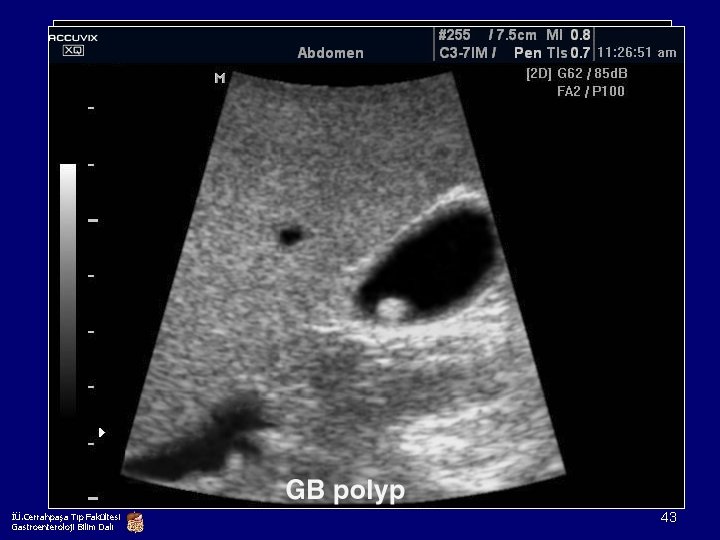
İÜ. Cerrahpaşa Tıp Fakültesi Gastroenteroloji Bilim Dalı 43
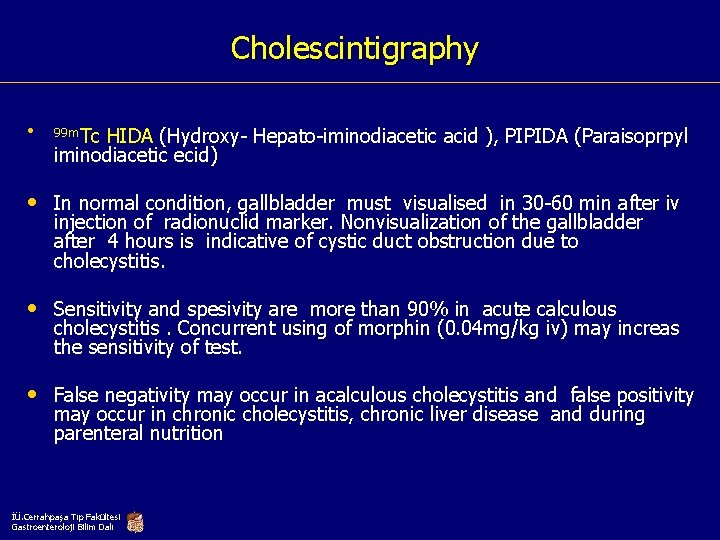
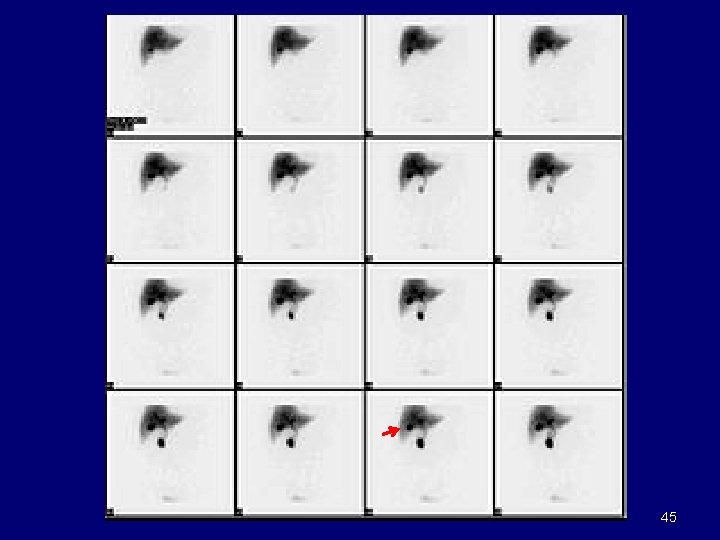
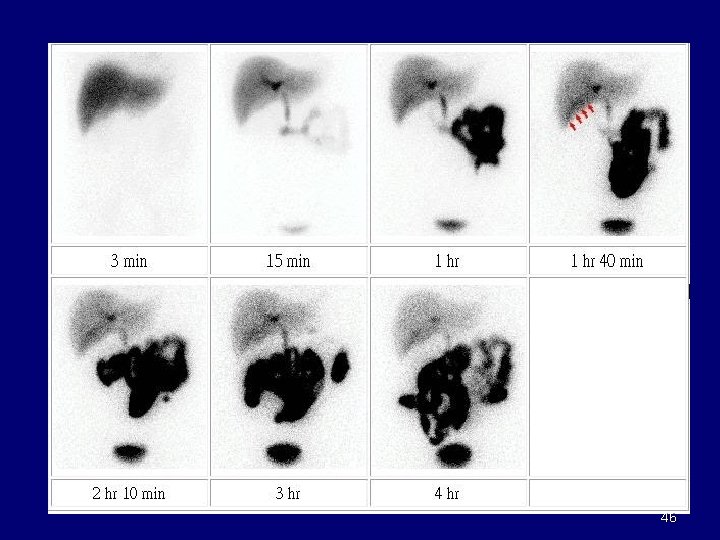
Cholescintigraphy • 99 m. Tc HIDA (Hydroxy- Hepato-iminodiacetic acid ), PIPIDA (Paraisoprpyl iminodiacetic ecid) • In normal condition, gallbladder must visualised in 30 -60 min after iv injection of radionuclid marker. Nonvisualization of the gallbladder after 4 hours is indicative of cystic duct obstruction due to cholecystitis. • Sensitivity and spesivity are more than 90% in acute calculous cholecystitis. Concurrent using of morphin (0. 04 mg/kg iv) may increas the sensitivity of test. • False negativity may occur in acalculous cholecystitis and false positivity may occur in chronic cholecystitis, chronic liver disease and during parenteral nutrition İÜ. Cerrahpaşa Tıp Fakültesi Gastroenteroloji Bilim Dalı
45
46
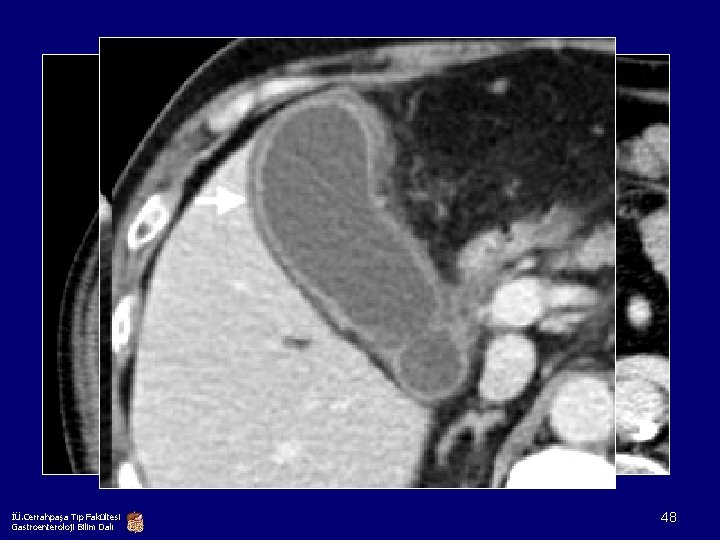
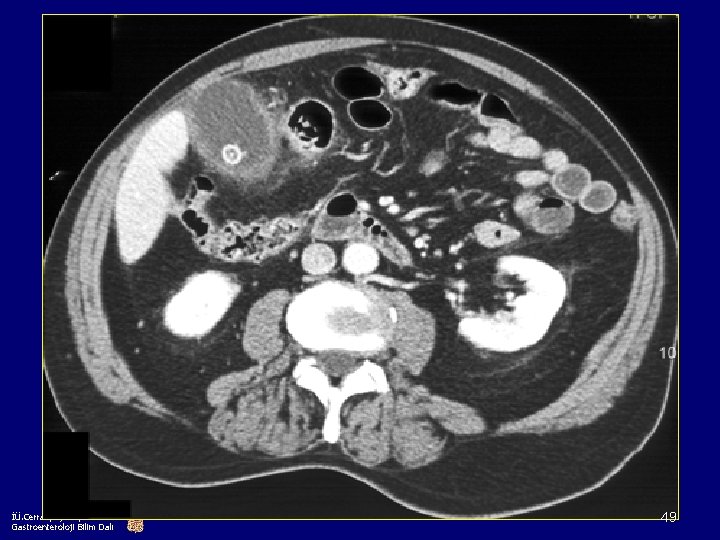
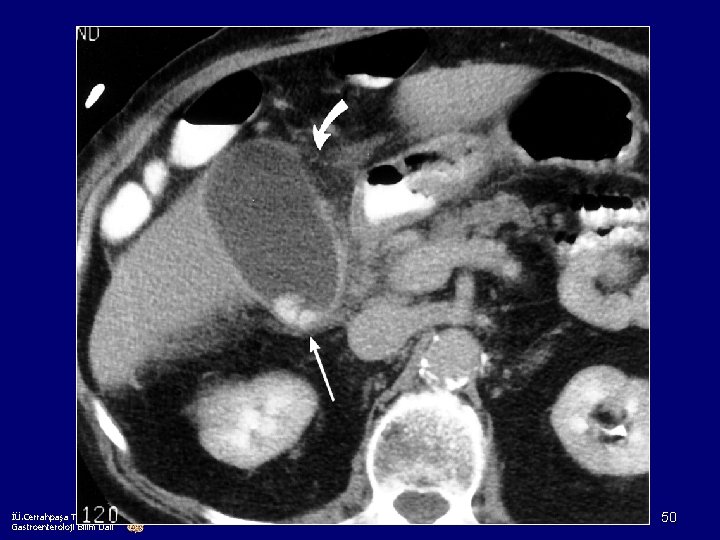
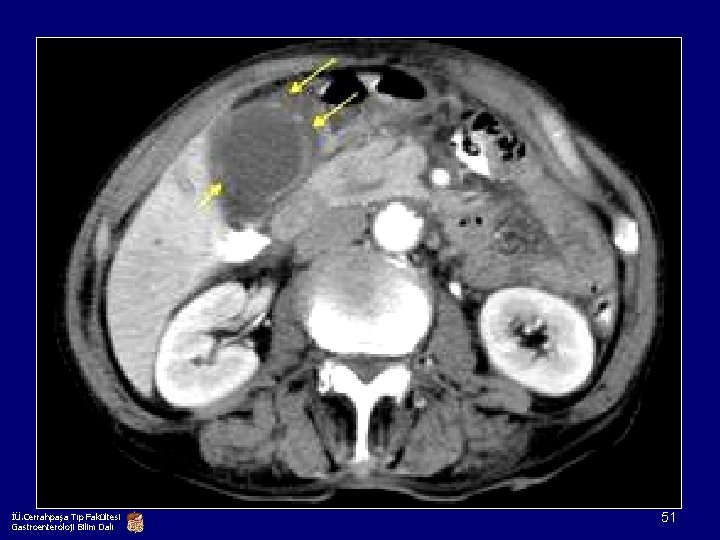
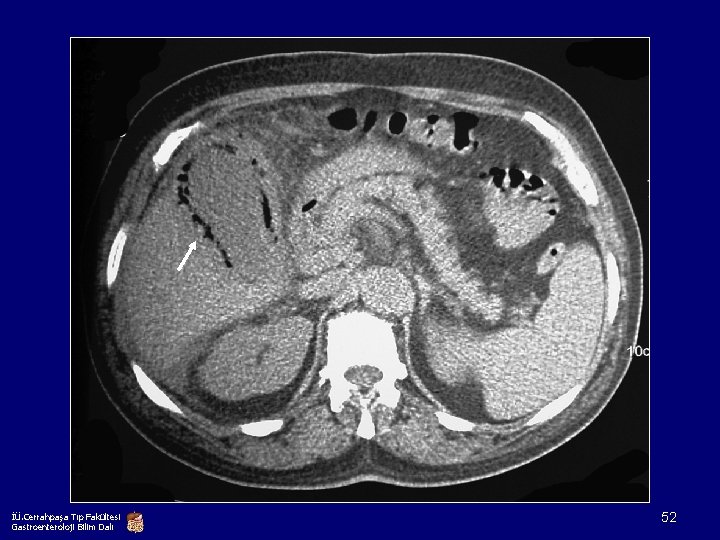
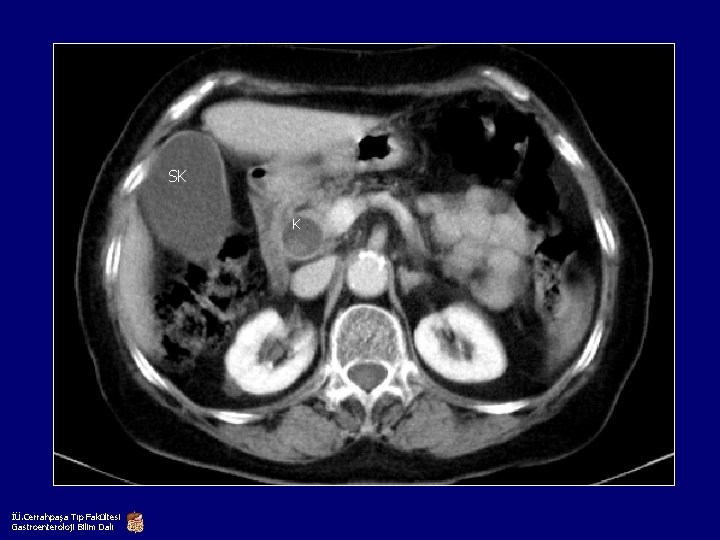
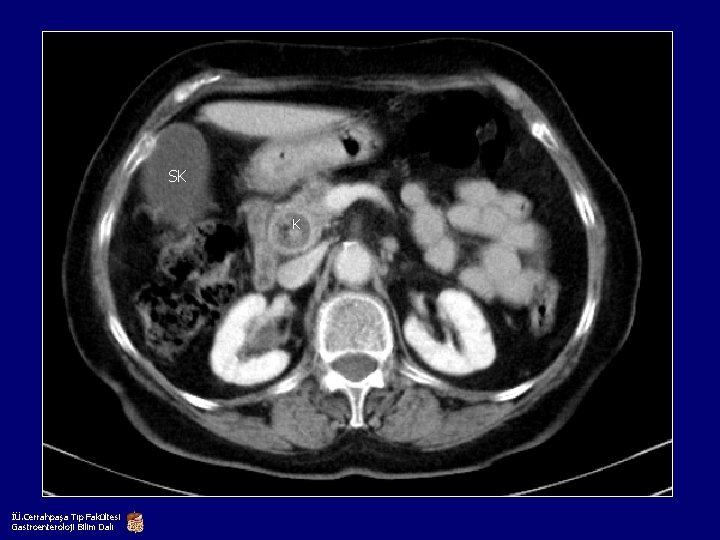
C T (Computed tomography) • CT has little role in the diagnosis of cholelithiasis because many stones are isodence with bile and therefore not identified. • Bile stones look as hyperecogen particules on CT. Gallbladder thickening, pericholecystic fluid collections, free air and abscess may seen. • Main disadvantages of CT; Expensive, radiation and nonportabl • During the evaluation of fever, jaundice or atypical abdominal pain CT often provides the first indication for evaluating of complications in acute cholecystitis. İÜ. Cerrahpaşa Tıp Fakültesi Gastroenteroloji Bilim Dalı
İÜ. Cerrahpaşa Tıp Fakültesi Gastroenteroloji Bilim Dalı 48
İÜ. Cerrahpaşa Tıp Fakültesi Gastroenteroloji Bilim Dalı 49
İÜ. Cerrahpaşa Tıp Fakültesi Gastroenteroloji Bilim Dalı 50
İÜ. Cerrahpaşa Tıp Fakültesi Gastroenteroloji Bilim Dalı 51
İÜ. Cerrahpaşa Tıp Fakültesi Gastroenteroloji Bilim Dalı 52
SK K İÜ. Cerrahpaşa Tıp Fakültesi Gastroenteroloji Bilim Dalı
SK K İÜ. Cerrahpaşa Tıp Fakültesi Gastroenteroloji Bilim Dalı
MRCP (Magnetic resonance cholangiopancreatografi) • MRCP is not a primary diagnostic tool for diagnosis of bile stones. It is more useful for the evaluation of bile ducts rather than gallbladder. • Sensitivity of MRCP in detecting of bile duct stones is over 90%. Sensitivity is lover in the presence of small duct stones (<5 mm). • MRCP is generally the test of choice when the suspicion for choledocholithiasis is low or intermediate • Advantage: No radiation Disadvantage: Expensive , clostrofobia ! İÜ. Cerrahpaşa Tıp Fakültesi Gastroenteroloji Bilim Dalı
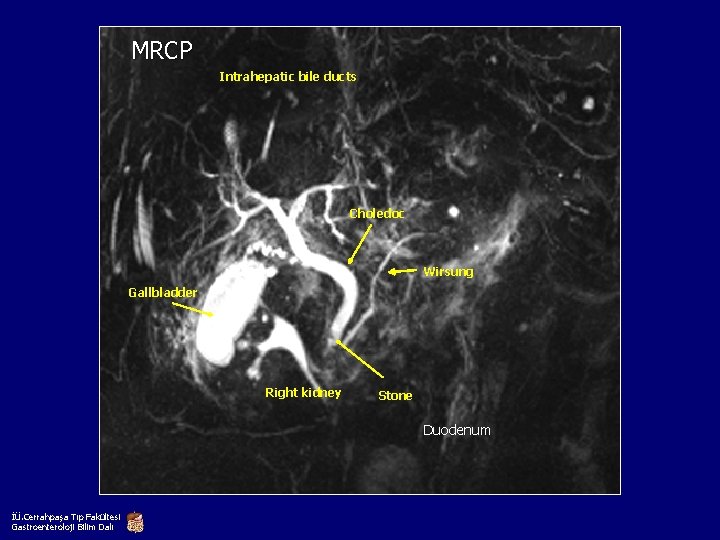
MRCP Intrahepatic bile ducts Choledoc Wirsung Gallbladder Right kidney Stone Duodenum İÜ. Cerrahpaşa Tıp Fakültesi Gastroenteroloji Bilim Dalı
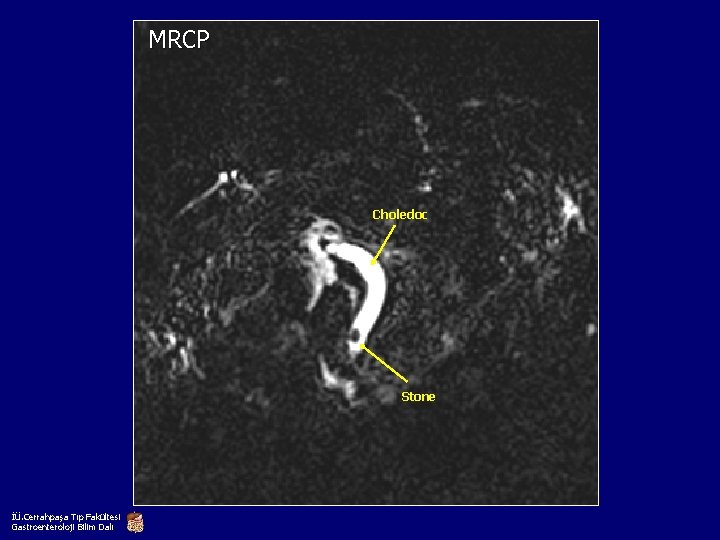
MRCP Choledoc Stone İÜ. Cerrahpaşa Tıp Fakültesi Gastroenteroloji Bilim Dalı
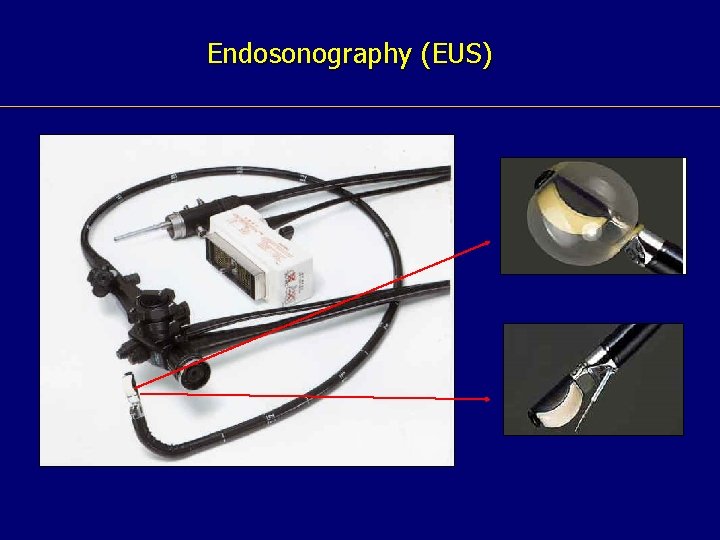
Endosonography (EUS)
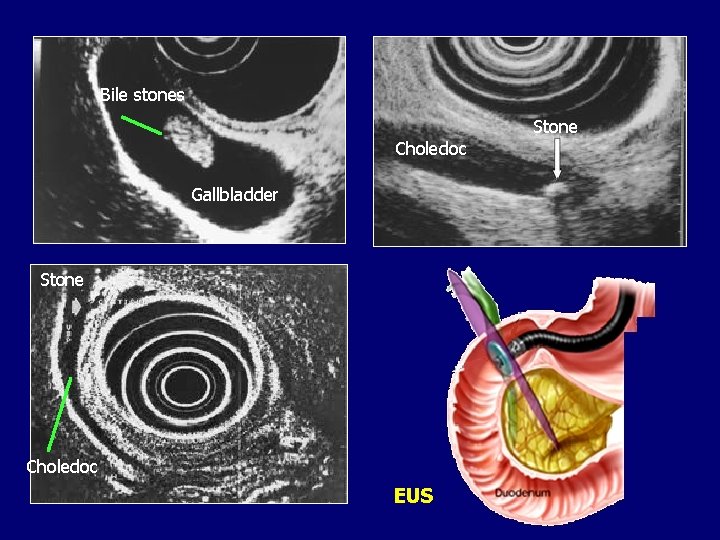
Bile stones Stone Choledoc Gallbladder Stone Choledoc EUS
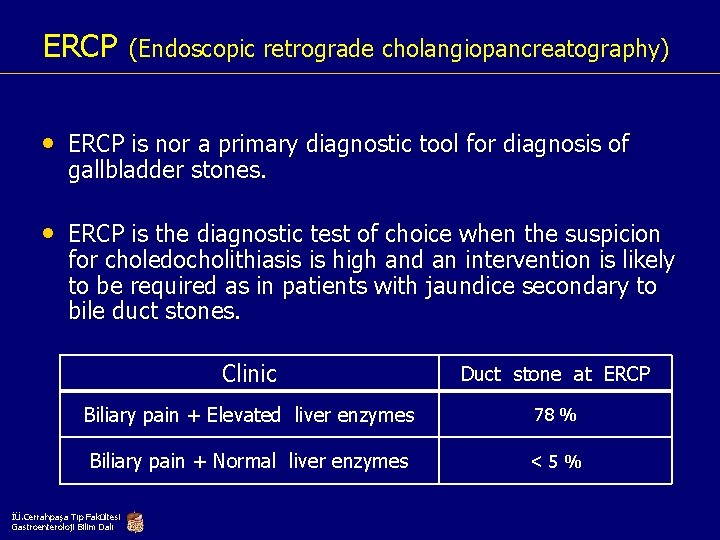
ERCP (Endoscopic retrograde cholangiopancreatography) • ERCP is nor a primary diagnostic tool for diagnosis of gallbladder stones. • ERCP is the diagnostic test of choice when the suspicion for choledocholithiasis is high and an intervention is likely to be required as in patients with jaundice secondary to bile duct stones. Clinic Duct stone at ERCP Biliary pain + Elevated liver enzymes 78 % Biliary pain + Normal liver enzymes <5% İÜ. Cerrahpaşa Tıp Fakültesi Gastroenteroloji Bilim Dalı
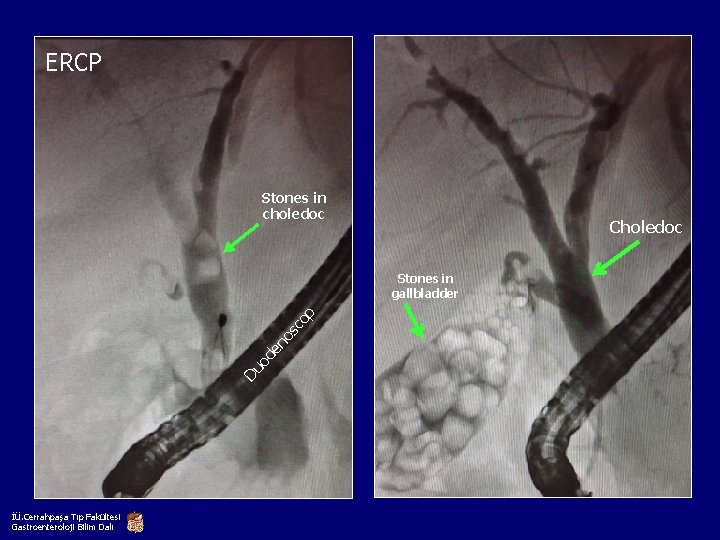
ERCP Stones in choledoc Choledoc Du od e no sc op Stones in gallbladder İÜ. Cerrahpaşa Tıp Fakültesi Gastroenteroloji Bilim Dalı
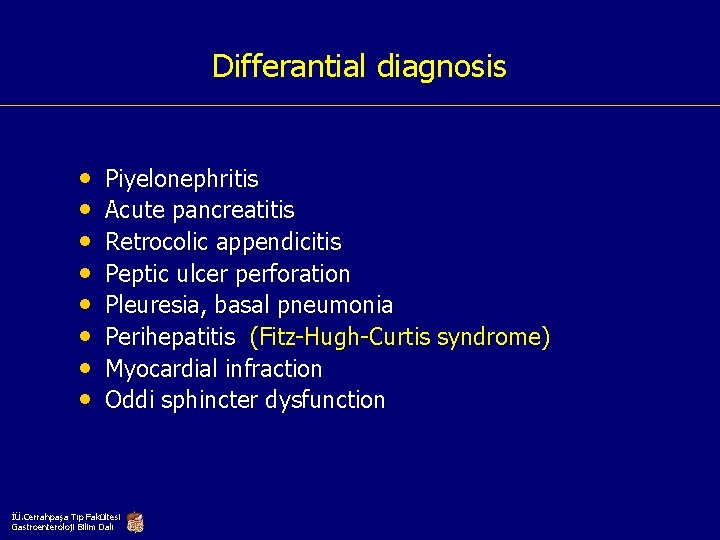
Differantial diagnosis • • Piyelonephritis Acute pancreatitis Retrocolic appendicitis Peptic ulcer perforation Pleuresia, basal pneumonia Perihepatitis (Fitz-Hugh-Curtis syndrome) Myocardial infraction Oddi sphincter dysfunction İÜ. Cerrahpaşa Tıp Fakültesi Gastroenteroloji Bilim Dalı
Treatment of gall stone disease • Indications of proflactic cholecystectomy in incidentally diagnosed patients with gall bladder stones: - Porcellain gall bladder - Gall bladder polyps larger than 10 mm - Salmonella portors (especially in food sector workers) - Diabetes mellitus - Sickle cell anemia İÜ. Cerrahpaşa Tıp Fakültesi Gastroenteroloji Bilim Dalı 63
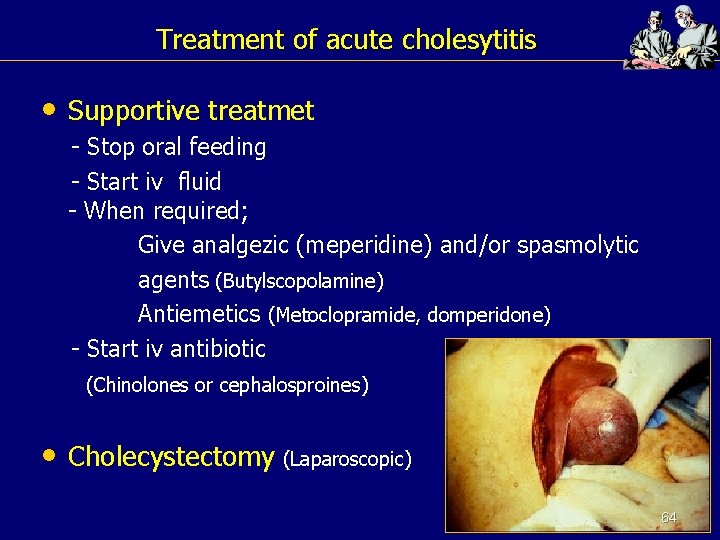
Treatment of acute cholesytitis • Supportive treatmet - Stop oral feeding - Start iv fluid - When required; Give analgezic (meperidine) and/or spasmolytic agents (Butylscopolamine) Antiemetics (Metoclopramide, domperidone) - Start iv antibiotic (Chinolones or cephalosproines) • Cholecystectomy (Laparoscopic) 64
Medical treatment of gall bladder stones • Oral bile salt therapy (UDCA) • ECSWL (Extracorpereal shoch wave lithotripsy) • RCD (Rapid contact dissolution with solvent) Gall bladdder irrigation with MTBE (3 -10 ml methy tertier buthyl ether) through a catheter placed percutaneusly or with ERCP in to the gall bladder. Procedure usually takes 1 -4 days. İÜ. Cerrahpaşa Tıp Fakültesi Gastroenteroloji Bilim Dalı 65
Oral bile salt therapy - UDCA (Ursodeoxycholic acid) (10 -15 mg/kg/d) - It works for dissolving of choleterol stones in gall bladder. UDCA - The patients with floating stones smaller than 15 mm and good gall bladder function are more favourable for dissolving therapy. - Decreases the cholesterol synthesis in heaptocytes - Dissolving usually occurs within 6 -24’th moths of therapy in 3080% of patients with small stones (<15 mm) -Decreases the cholesterol excretion from the liver - Stone dissolving usually takes long and cholesterol saturation in time bile(1 mm/month) - Dissolving and stone size should be controlled at 6’th months of therapy by USthe cholesterol absorption from small -Decreases intestines - Stone recurrens occurs in 50% of patients in a period of 5 years after UDCA therapy. - Diarrhea and transaminase elevation are the most common side effects of UDCA therapy 66
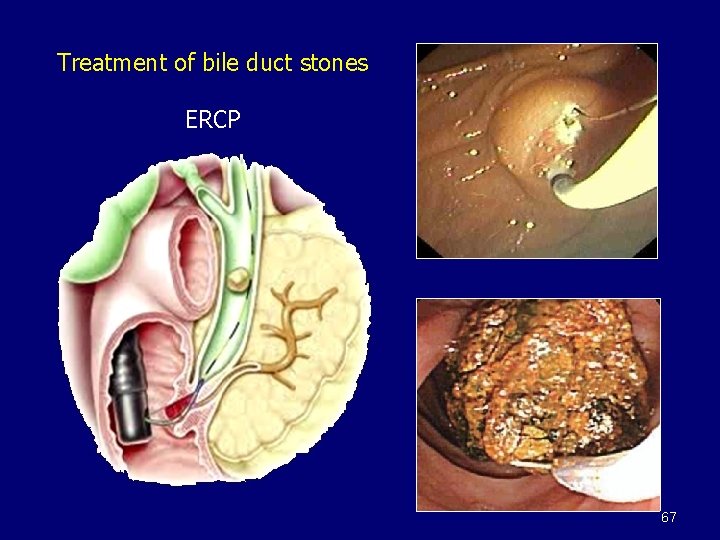
Treatment of bile duct stones ERCP 67
68
- Slides: 68