
Gallery Walk Instructions Please take some time and






- Slides: 44
Gallery Walk Instructions Please take some time and share your input and ideas, responding to the questions posted around the room. Please write down your answers on the post-it notes provided and stick them on the corresponding sheets. © All rights reserved. No utilization or reproduction of this material is allowed without the written permission of CSH.
Discovering Your Role in Disrupting Racial Inequity
Gallery Walk Debrief Introduce concept Present feedback learned from the listening sessions © All rights reserved. No utilization or reproduction of this material is allowed without the written permission of CSH.
Welcome, Introductions, Objectives Phylicia Adams, Stonington Housing Authority Tashmia Bryant, CCEH Fionnuala Darby-Hudgens, CT Fair Housing Center Jessica Park, CSH Monique Price-Taylor, CSH © All rights reserved. No utilization or reproduction of this material is allowed without the written permission of CSH.
Equity in Practice Guidelines • “Try On” • Experience Discomfort • Move up, Move up • Be aware of Intent & Impact • Practice Both/And thinking • Notice Content AND © All rights reserved. No utilization or reproduction of this material is allowed without the written permission of CSH.
CT Collaborative for Race Equity © All rights reserved. No utilization or reproduction of this material is allowed without the written permission of CSH.
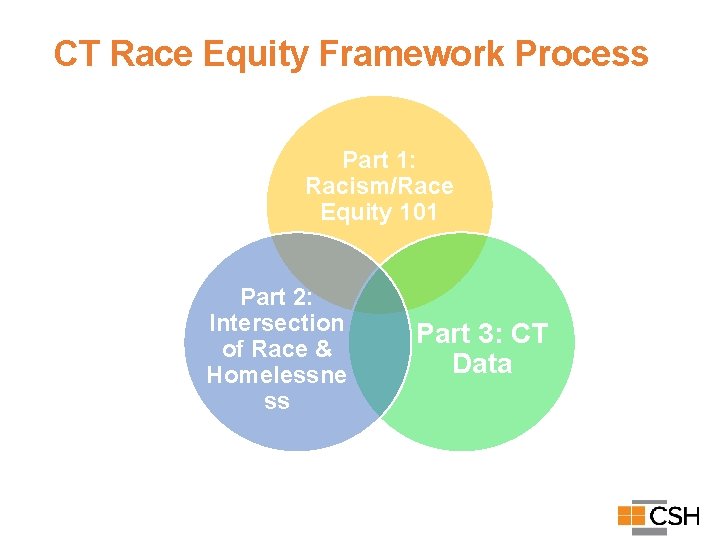
CT Race Equity Framework Process Part 1: Racism/Race Equity 101 Part 2: Intersection of Race & Homelessne ss Part 3: CT Data
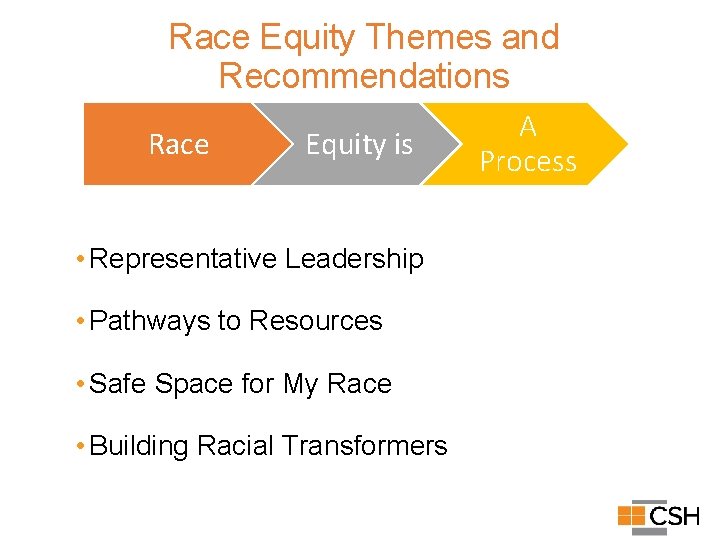
Race Equity Themes and Recommendations Race Equity is • Representative Leadership • Pathways to Resources • Safe Space for My Race • Building Racial Transformers A Process
Setting the Stage How racism is evident in policies, practices, and systems © All rights reserved. No utilization or reproduction of this material is allowed without the written permission of CSH.
Housing Discrimination & Housing Policy @ctfairhousing Fionnuala Darby-Hudgens, MPA September 2019
About Us The mission of the Connecticut Fair Housing Center is to ensure that all people have equal access to housing opportunities in Connecticut. Because housing discrimination disproportionately affects people with low incomes, the Center focuses on the intersection of poverty and housing discrimination. The Center also assists Connecticut homeowners who have been hardest by the nation’s ongoing foreclosure crisis.
Federal & State Fair Housing Act In order to make sure everyone has equal access to housing, Congress passed the Fair Housing Act of 1968. It prohibits discrimination concerning the rental, sale or financing of housing because of you’re your membership in a protected class. Connecticut has protected vulnerable members of our communities by enacting additional state-wide fair housing laws.
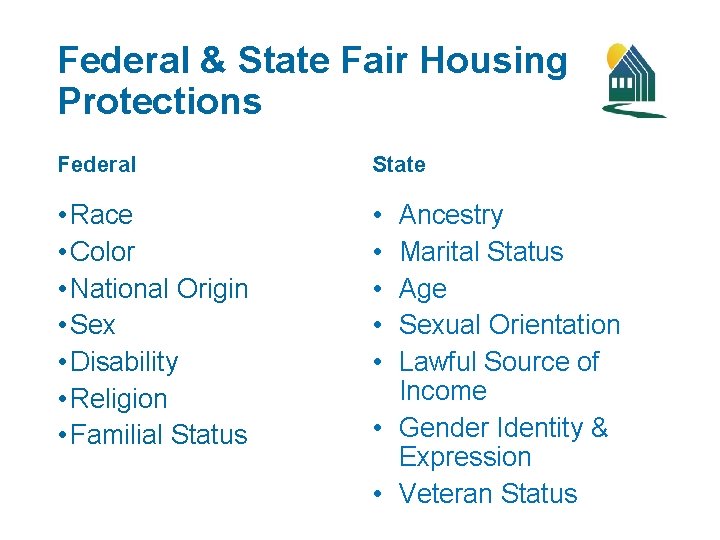
Federal & State Fair Housing Protections Federal State • Race • Color • National Origin • Sex • Disability • Religion • Familial Status • • • Ancestry Marital Status Age Sexual Orientation Lawful Source of Income • Gender Identity & Expression • Veteran Status
What is housing discrimination?
Identifying Housing Discrimination • Misrepresenting the availability of housing • Refusal to rent or sell • Discrimination in terms and conditions • Discriminatory advertising • Use of threats or coercion • Discrimination with a smile
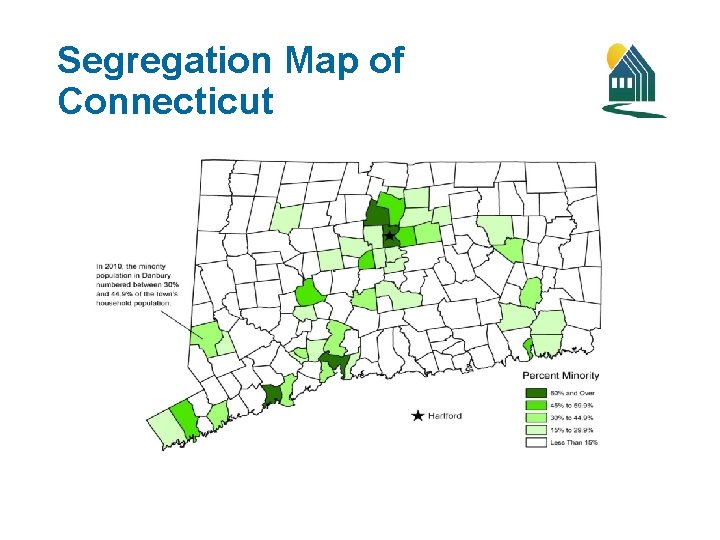
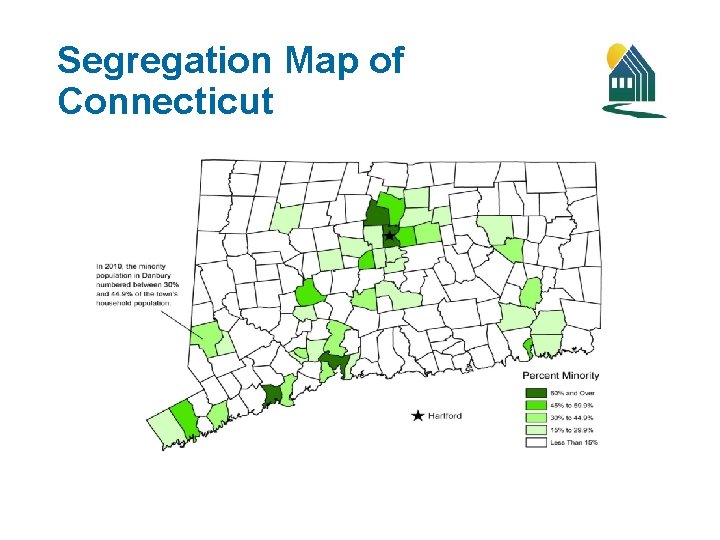
Housing Discrimination • Housing discrimination is still a problem, fair housing groups across the country receive more than 25, 000 calls every year alleging housing discrimination • CFHC receives over 1, 500 calls a year • The United States and Connecticut remain highly segregated 67% of State’s population of color lives in 8% of Connecticut’s towns
Segregation Map of Connecticut
How did we get here?
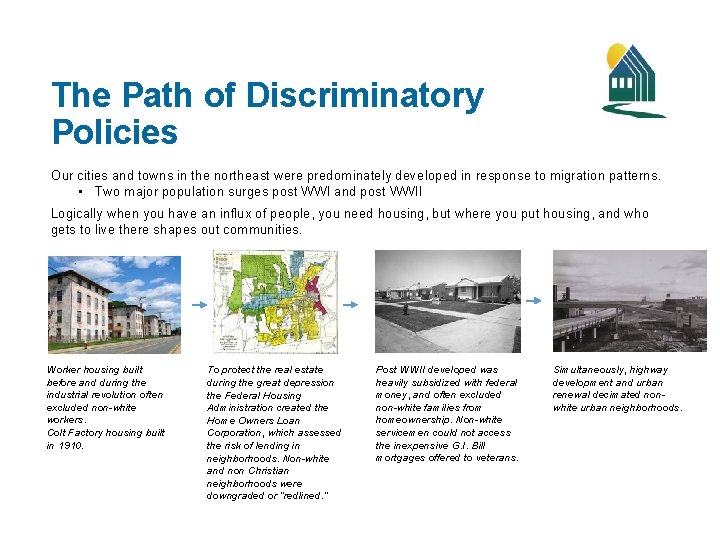
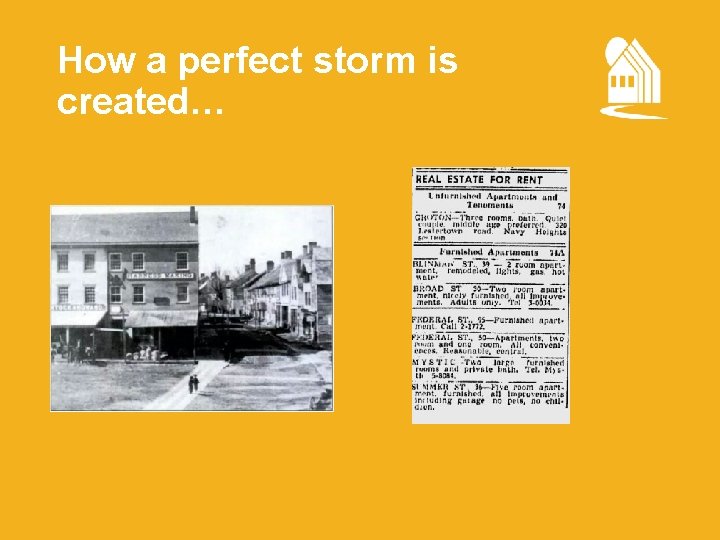
The Path of Discriminatory Policies Our cities and towns in the northeast were predominately developed in response to migration patterns. • Two major population surges post WWI and post WWII Logically when you have an influx of people, you need housing, but where you put housing, and who gets to live there shapes out communities. Worker housing built before and during the industrial revolution often excluded non-white workers. Colt Factory housing built in 1910. To protect the real estate during the great depression the Federal Housing Administration created the Home Owners Loan Corporation, which assessed the risk of lending in neighborhoods. Non-white and non Christian neighborhoods were downgraded or “redlined. ” Post WWII developed was heavily subsidized with federal money, and often excluded non-white families from homeownership. Non-white servicemen could not access the inexpensive G. I. Bill mortgages offered to veterans. Simultaneously, highway development and urban renewal decimated nonwhite urban neighborhoods.
How a perfect storm is created…
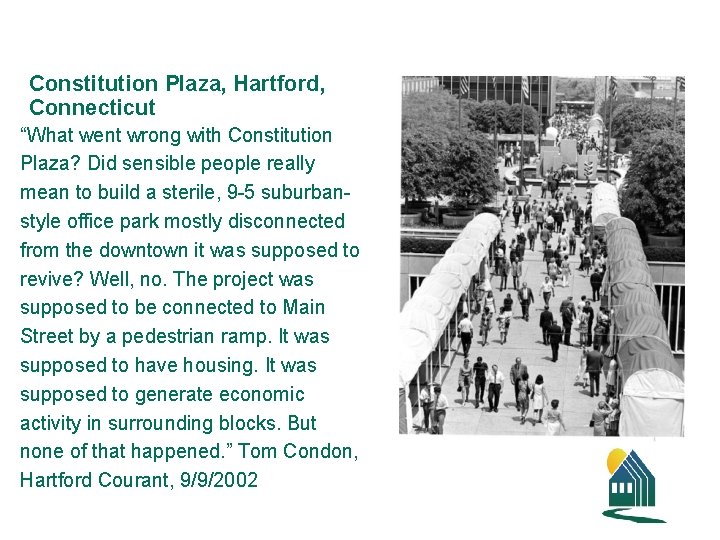
Constitution Plaza, Hartford, Connecticut “What went wrong with Constitution Plaza? Did sensible people really mean to build a sterile, 9 -5 suburbanstyle office park mostly disconnected from the downtown it was supposed to revive? Well, no. The project was supposed to be connected to Main Street by a pedestrian ramp. It was supposed to have housing. It was supposed to generate economic activity in surrounding blocks. But none of that happened. ” Tom Condon, Hartford Courant, 9/9/2002
We built our segregated environment with decades of discriminatory policy.
Segregation Map of Connecticut
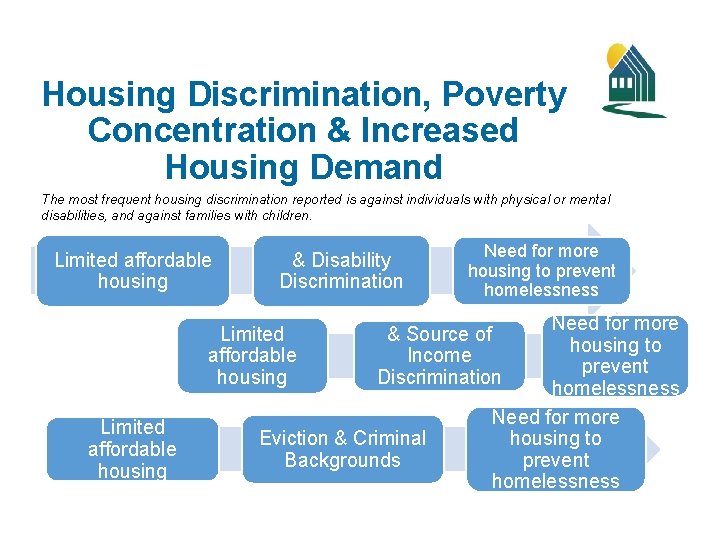
Housing Discrimination, Poverty Concentration & Increased Housing Demand The most frequent housing discrimination reported is against individuals with physical or mental disabilities, and against families with children. Limited affordable housing & Disability Discrimination Limited affordable housing Need for more housing to prevent homelessness & Source of Income Discrimination Eviction & Criminal Backgrounds
What can we do?
Racial Disparities in Housing and Homelessness Tashmia Bryant Training and Technical Assistance Coordinator
System Level
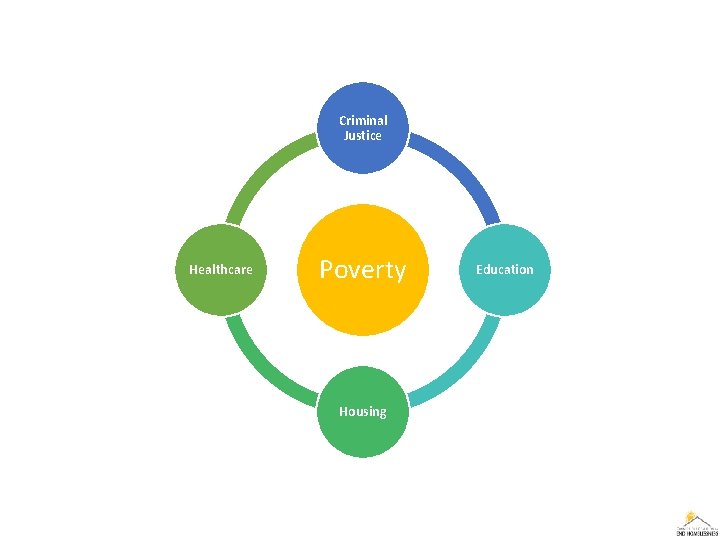
Criminal Justice Healthcare Poverty Housing Education
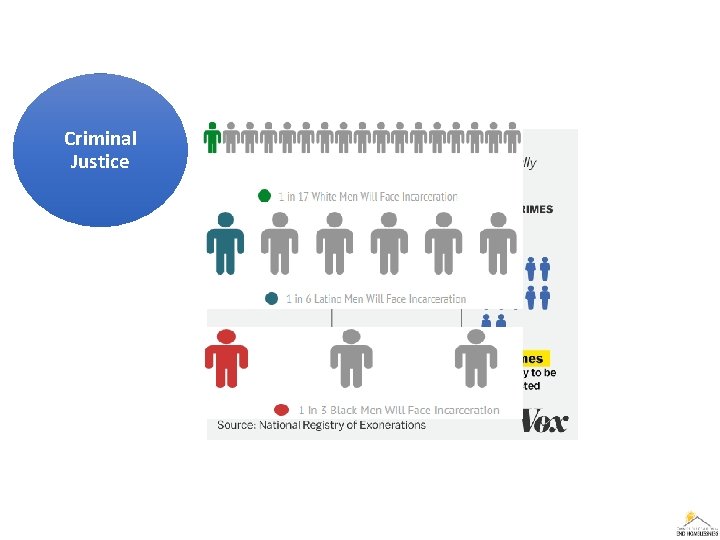
Criminal Justice
Deprivation as a Result of Stigma • A criminal record can reduce the likelihood of a callback or job offer by nearly 50 percent. • Only 55% of formerly incarcerated people (FIP) are able to obtain a job the first year after incarceration • 13 % of Black men have lost their right to vote, which is 7 x the national average • A survey study found that 43% of property managers would reject someone with a criminal record
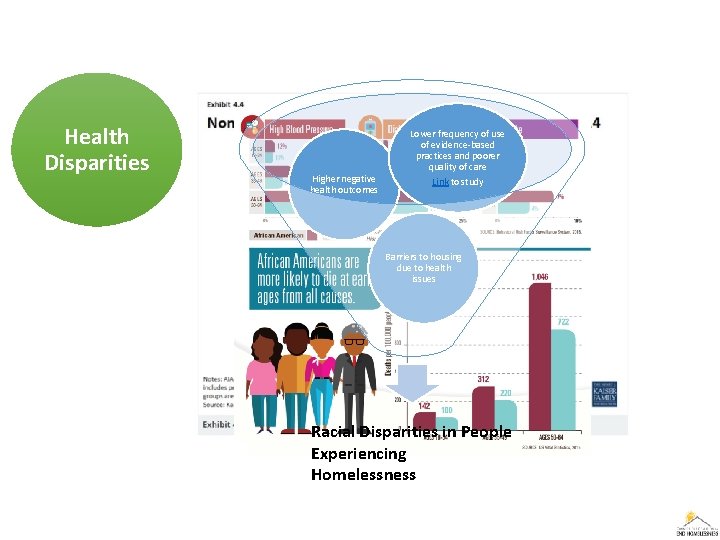
Health Disparities Lower frequency of use of evidence-based practices and poorer quality of care Higher negative health outcomes Link to study Barriers to housing due to health issues Racial Disparities in People Experiencing Homelessness
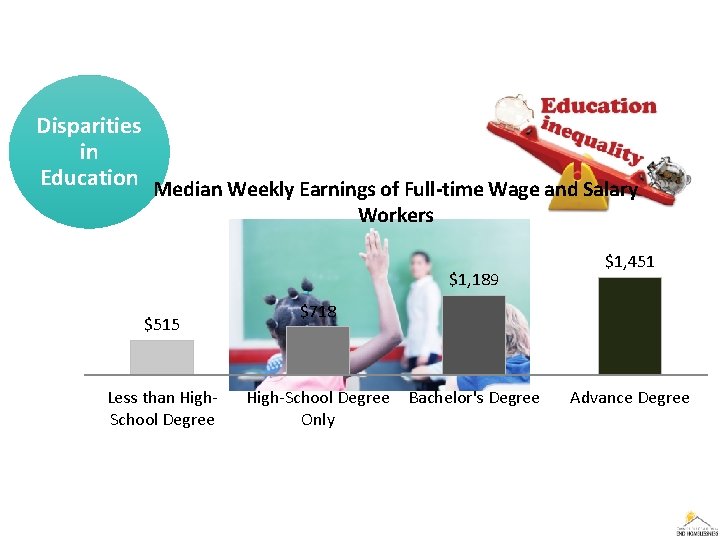
Disparities in Education Median Weekly Earnings of Full-time Wage and Salary Workers $1, 189 $515 Less than High. School Degree $1, 451 $718 High-School Degree Bachelor's Degree Only Advance Degree
Organization Level
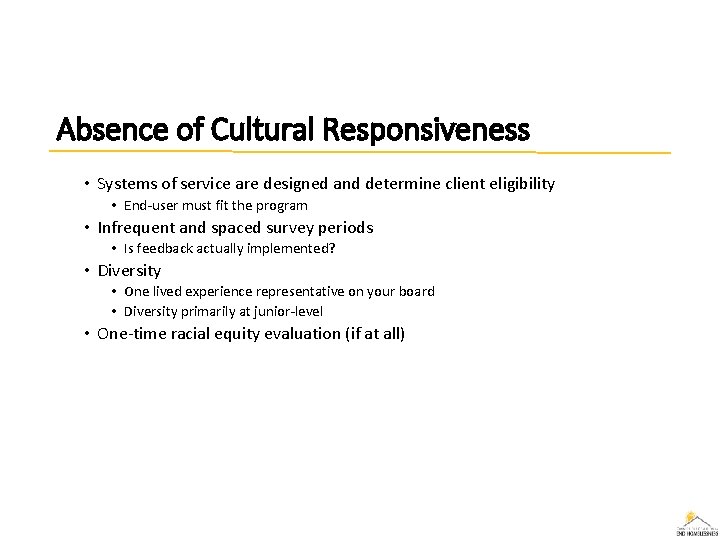
Absence of Cultural Responsiveness • Systems of service are designed and determine client eligibility • End-user must fit the program • Infrequent and spaced survey periods • Is feedback actually implemented? • Diversity • One lived experience representative on your board • Diversity primarily at junior-level • One-time racial equity evaluation (if at all)
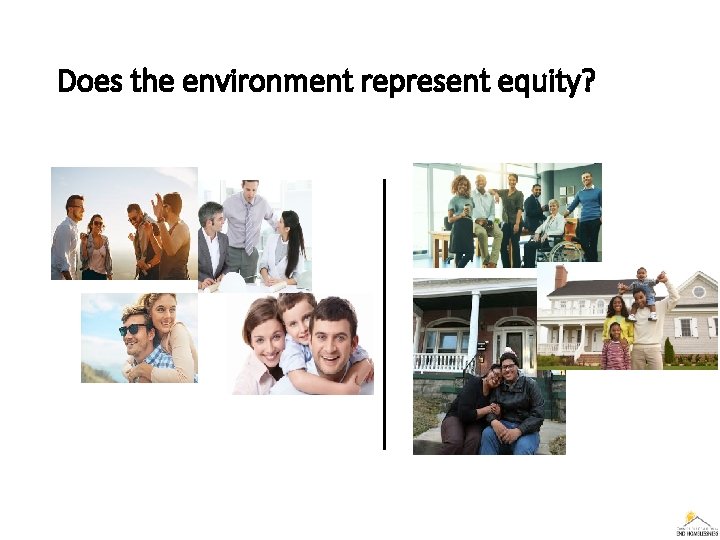
Does the environment represent equity?
Individual Level
Bias • Explicit Bias • “Explicit bias” refers to the attitudes and beliefs we have about a person or group on a conscious level. • Implicit Bias • Attitudes towards people or associate stereotypes with them without our conscious knowledge • Interpersonal and Intrapersonal Implicit Bias test: https: //implicit. harvard. edu/implicit/
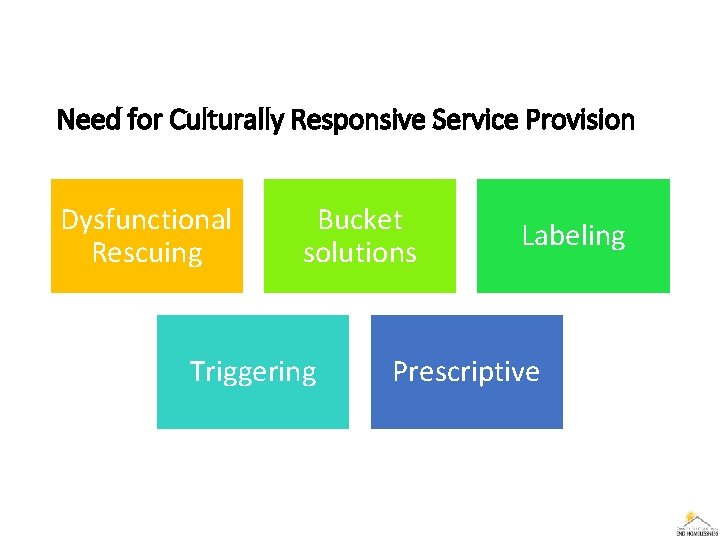
Need for Culturally Responsive Service Provision Dysfunctional Rescuing Bucket solutions Triggering Labeling Prescriptive
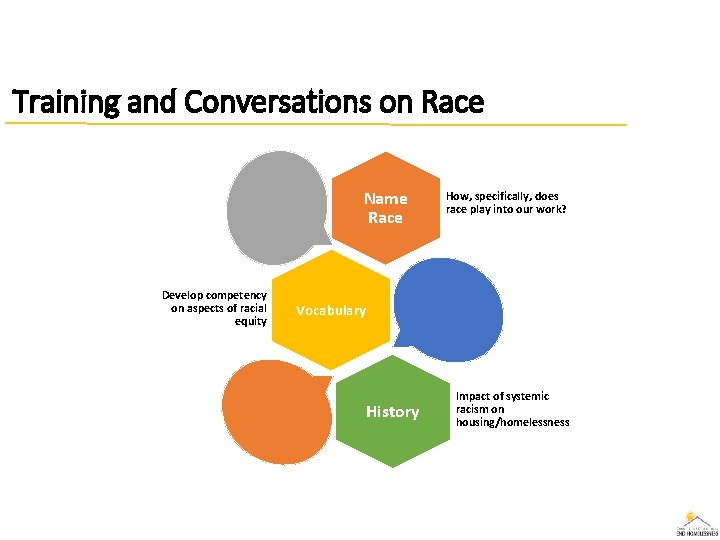
Training and Conversations on Race Name Race Develop competency on aspects of racial equity How, specifically, does race play into our work? Vocabulary History Impact of systemic racism on housing/homelessness
Understanding Your Role and Strategies to Act © All rights reserved. No utilization or reproduction of this material is allowed without the written permission of CSH.
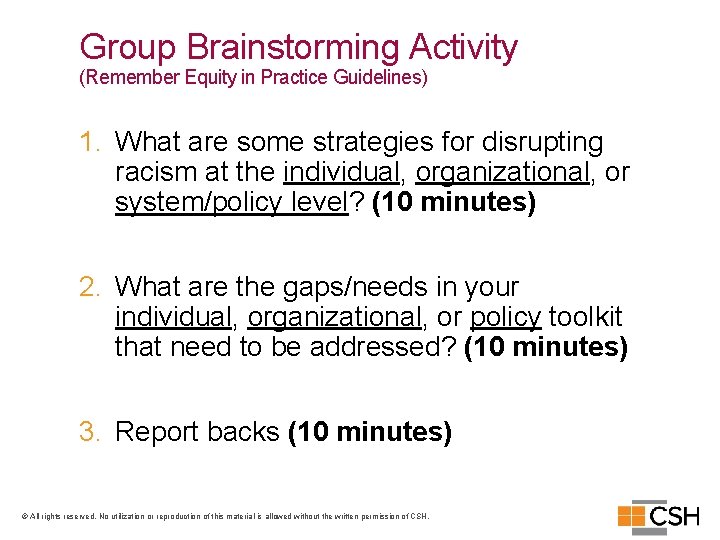
Group Brainstorming Activity (Remember Equity in Practice Guidelines) 1. What are some strategies for disrupting racism at the individual, organizational, or system/policy level? (10 minutes) 2. What are the gaps/needs in your individual, organizational, or policy toolkit that need to be addressed? (10 minutes) 3. Report backs (10 minutes) © All rights reserved. No utilization or reproduction of this material is allowed without the written permission of CSH.
Let’s Reflect What is 1 way you are committing to disrupt racial inequity moving forward? © All rights reserved. No utilization or reproduction of this material is allowed without the written permission of CSH.
Contact Information Phylicia Adams Executive Director Stonington Housing Authority padams@stoningtonha. org Fionnuala Darby-Hudgens Director of Operations CT Fair Housing Center finn@ctfairhousing. org Kyle Barrette Program Manager CSH kyle. barrette@csh. org Tashmia Bryant Training & Technical Assistance Coordinator CCEH Tbryant@cceh. org Jessica Park Program Manager Monique Price-Taylor Program Manager CSH jessica. park@csh. org CSH monique. price@csh. org © All rights reserved. No utilization or reproduction of this material is allowed without the written permission of CSH.
© All rights reserved. No utilization or reproduction of this material is allowed without the written permission of CSH.