
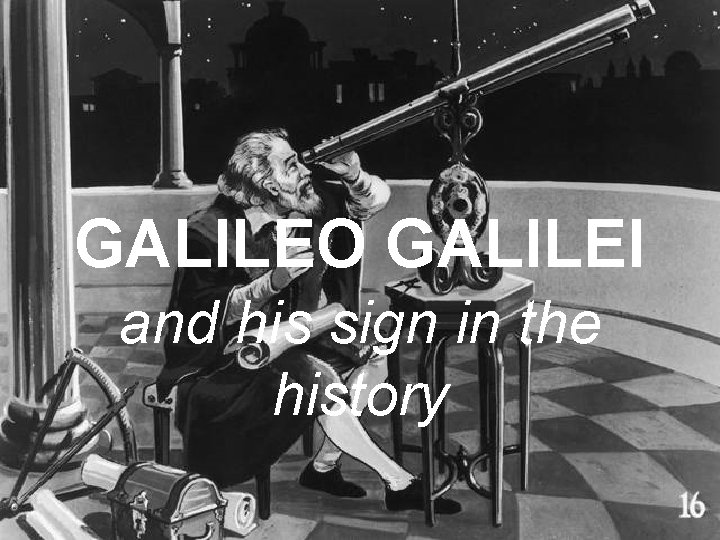
GALILEO GALILEI and his sign in the history
- Slides: 8
GALILEO GALILEI and his sign in the history
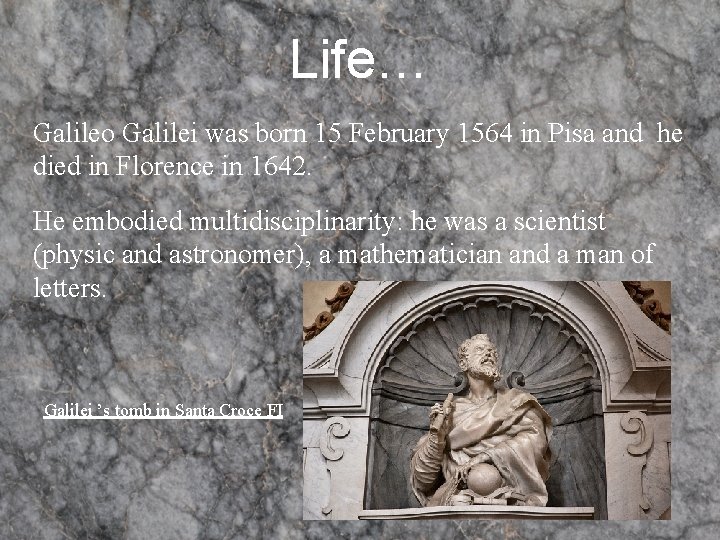
Life… Galileo Galilei was born 15 February 1564 in Pisa and he died in Florence in 1642. He embodied multidisciplinarity: he was a scientist (physic and astronomer), a mathematician and a man of letters. Galilei ’s tomb in Santa Croce FI
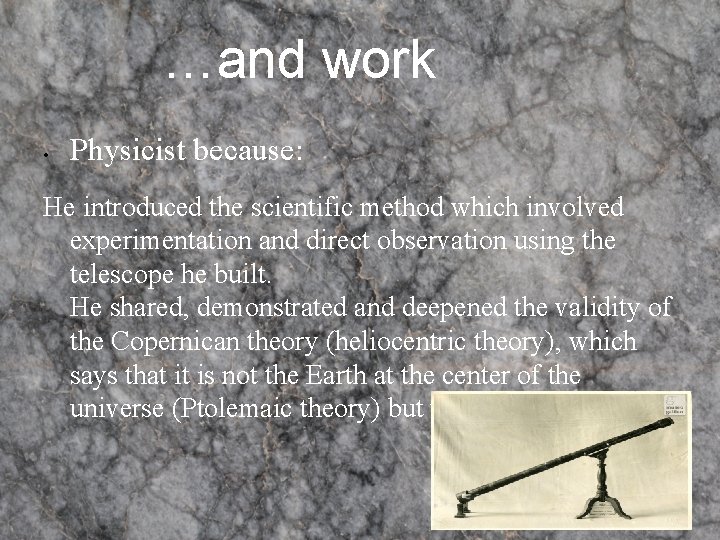
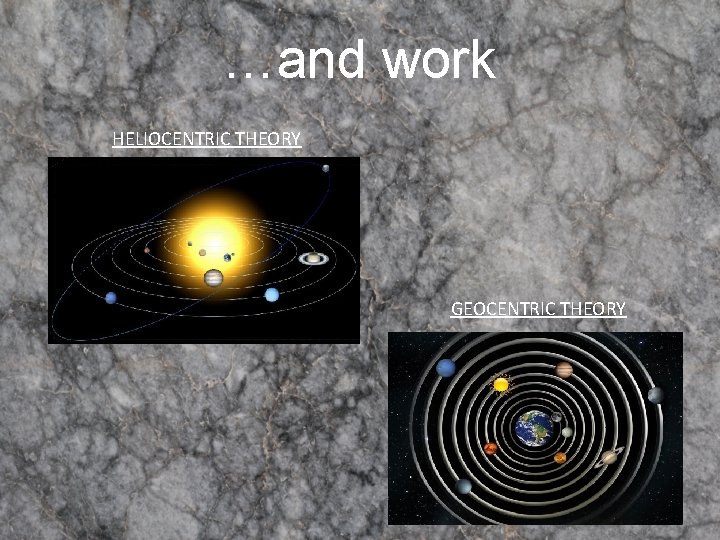
…and work • Physicist because: He introduced the scientific method which involved experimentation and direct observation using the telescope he built. He shared, demonstrated and deepened the validity of the Copernican theory (heliocentric theory), which says that it is not the Earth at the center of the universe (Ptolemaic theory) but the Sun.
…and work HELIOCENTRIC THEORY GEOCENTRIC THEORY
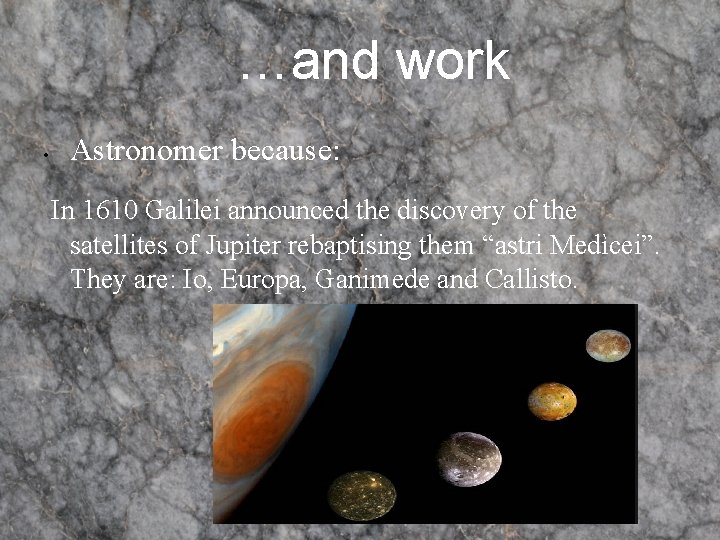
…and work • Astronomer because: In 1610 Galilei announced the discovery of the satellites of Jupiter rebaptising them “astri Medìcei”. They are: Io, Europa, Ganimede and Callisto.
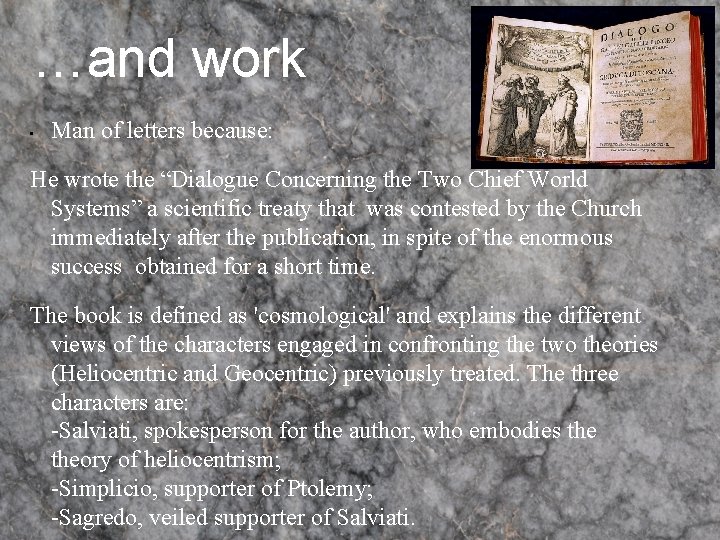
…and work • Man of letters because: He wrote the “Dialogue Concerning the Two Chief World Systems” a scientific treaty that was contested by the Church immediately after the publication, in spite of the enormous success obtained for a short time. The book is defined as 'cosmological' and explains the different views of the characters engaged in confronting the two theories (Heliocentric and Geocentric) previously treated. The three characters are: -Salviati, spokesperson for the author, who embodies theory of heliocentrism; -Simplicio, supporter of Ptolemy; -Sagredo, veiled supporter of Salviati.
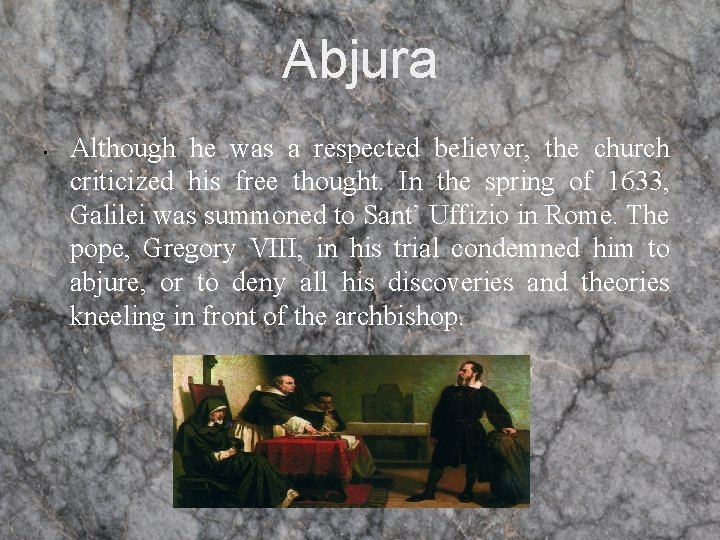
Abjura • Although he was a respected believer, the church criticized his free thought. In the spring of 1633, Galilei was summoned to Sant’ Uffizio in Rome. The pope, Gregory VIII, in his trial condemned him to abjure, or to deny all his discoveries and theories kneeling in front of the archbishop.
THE END A care by: La Sala Noemi Sacco Gaja Tolentino Valentina