
Galaxy evolution in group environments The role of




- Slides: 21
Galaxy evolution in group environments: The role of preprocessing Gandhali Joshi Ph. D Committee Meeting 6 July 2017
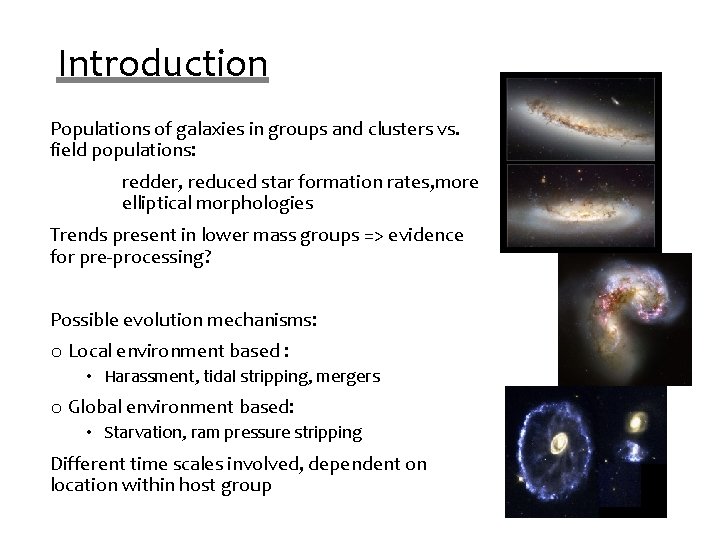
Introduction Populations of galaxies in groups and clusters vs. field populations: redder, reduced star formation rates, more elliptical morphologies Trends present in lower mass groups => evidence for pre-processing? Possible evolution mechanisms: o Local environment based : • Harassment, tidal stripping, mergers o Global environment based: • Starvation, ram pressure stripping Different time scales involved, dependent on location within host group
Aim • Understand what are the various processes of galaxy evolution in groups with a focus on mass loss and star formation quenching • Establish the degree and importance of preprocessing
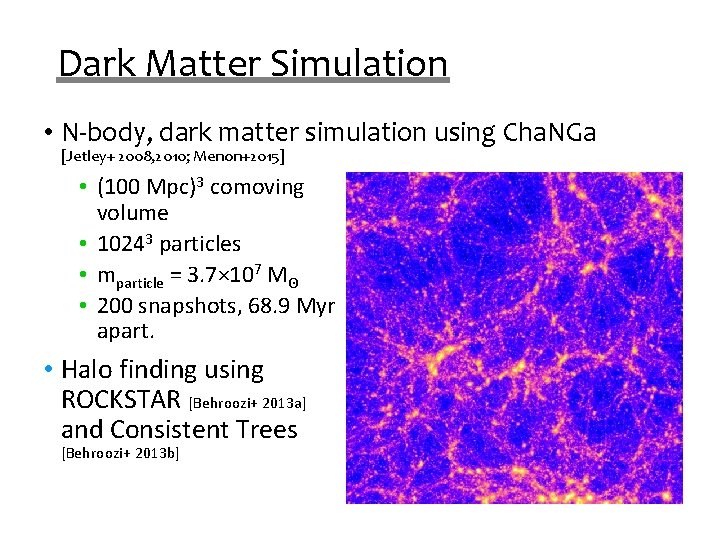
Dark Matter Simulation • N-body, dark matter simulation using Cha. NGa [Jetley+ 2008, 2010; Menon+2015] • (100 Mpc)3 comoving volume • 10243 particles • mparticle = 3. 7× 10⁷ Mʘ • 200 snapshots, 68. 9 Myr apart. • Halo finding using ROCKSTAR [Behroozi+ 2013 a] and Consistent Trees [Behroozi+ 2013 b]
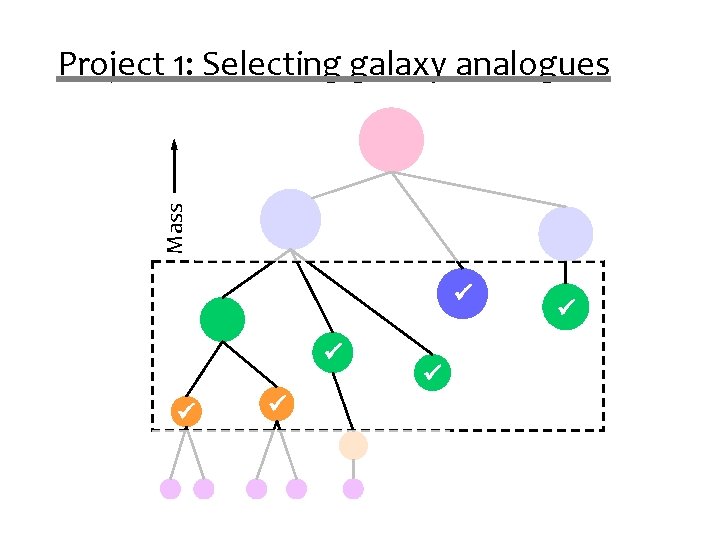
Mass Project 1: Selecting galaxy analogues
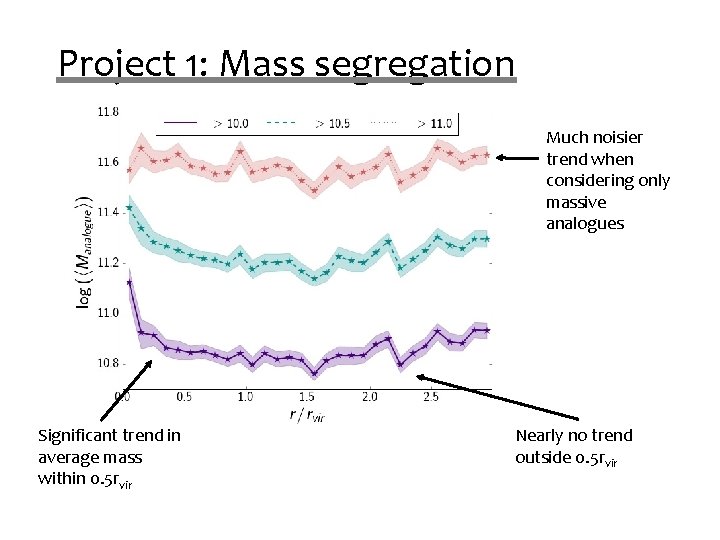
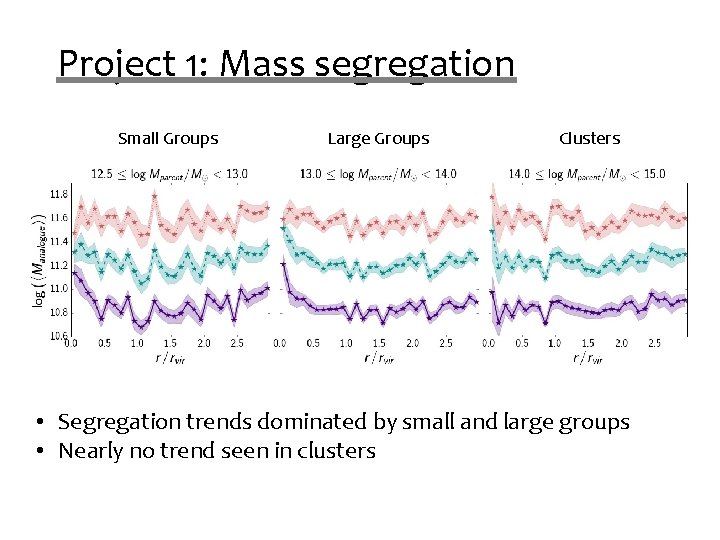
Project 1: Mass segregation Much noisier trend when considering only massive analogues Significant trend in average mass within 0. 5 rvir Nearly no trend outside 0. 5 rvir
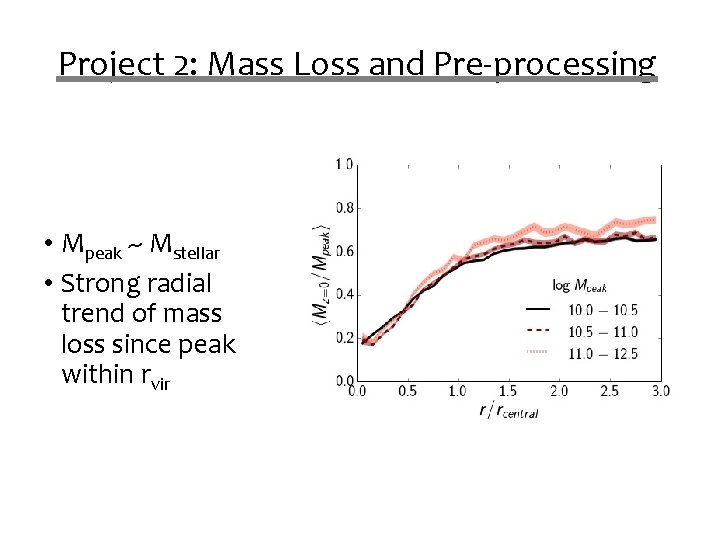
Project 2: Mass Loss and Pre-processing • Mpeak ~ Mstellar • Strong radial trend of mass loss since peak within rvir
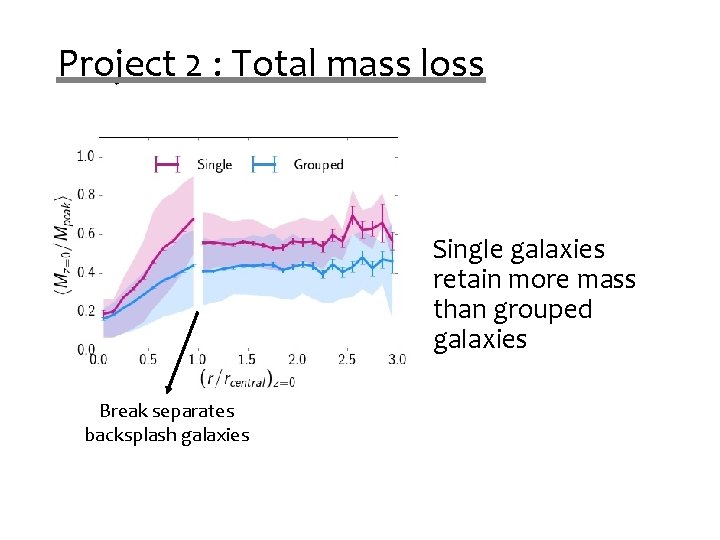
Project 2 : Total mass loss Single galaxies retain more mass than grouped galaxies Break separates backsplash galaxies
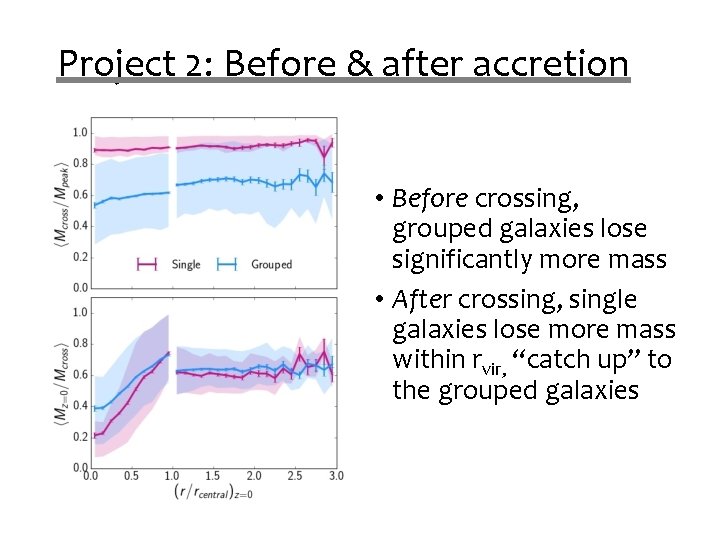
Project 2: Before & after accretion • Before crossing, grouped galaxies lose significantly more mass • After crossing, single galaxies lose more mass within rvir, “catch up” to the grouped galaxies
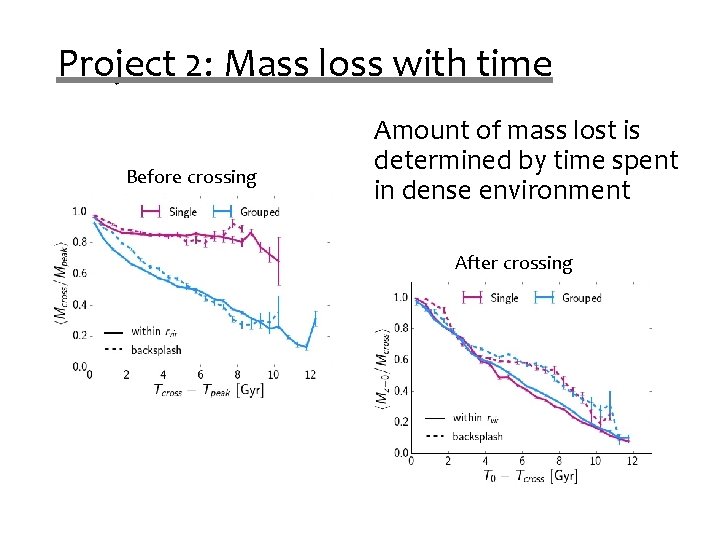
Project 2: Mass loss with time Before crossing Amount of mass lost is determined by time spent in dense environment After crossing
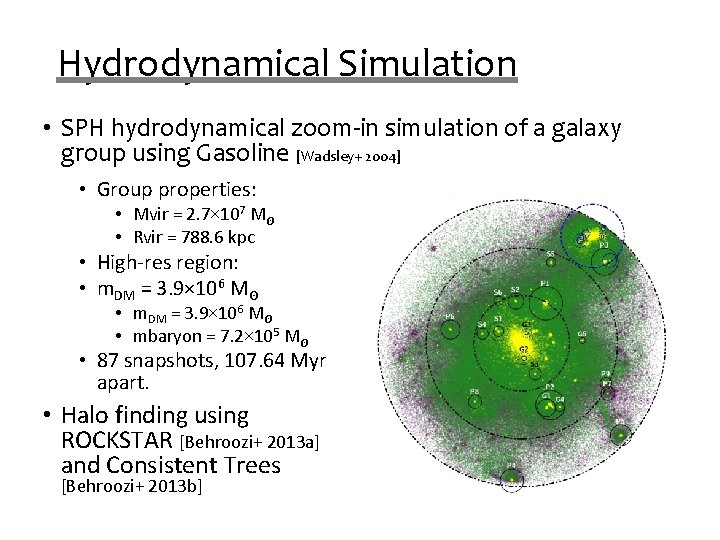
Hydrodynamical Simulation • SPH hydrodynamical zoom-in simulation of a galaxy group using Gasoline [Wadsley+ 2004] • Group properties: • Mvir = 2. 7× 10⁷ Mʘ • Rvir = 788. 6 kpc • High-res region: • m. DM = 3. 9× 10⁶ Mʘ • mbaryon = 7. 2× 10⁵ Mʘ • 87 snapshots, 107. 64 Myr apart. • Halo finding using ROCKSTAR [Behroozi+ 2013 a] and Consistent Trees [Behroozi+ 2013 b]
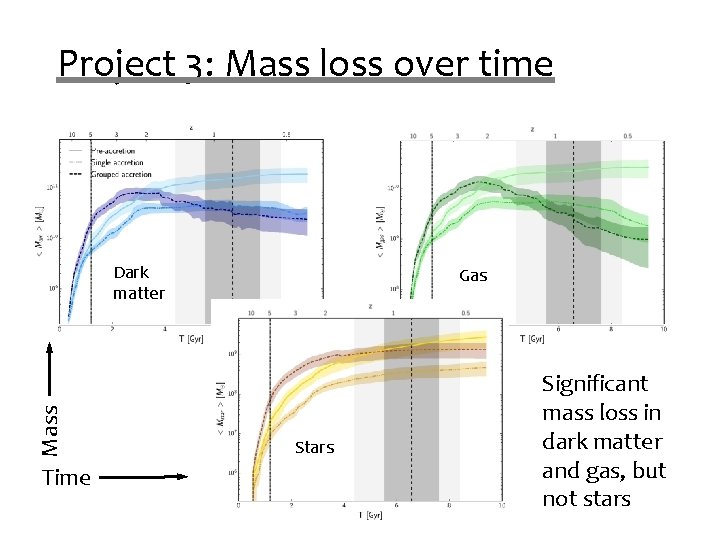
Project 3: Mass loss over time Mass Dark matter Time Gas Stars Significant mass loss in dark matter and gas, but not stars
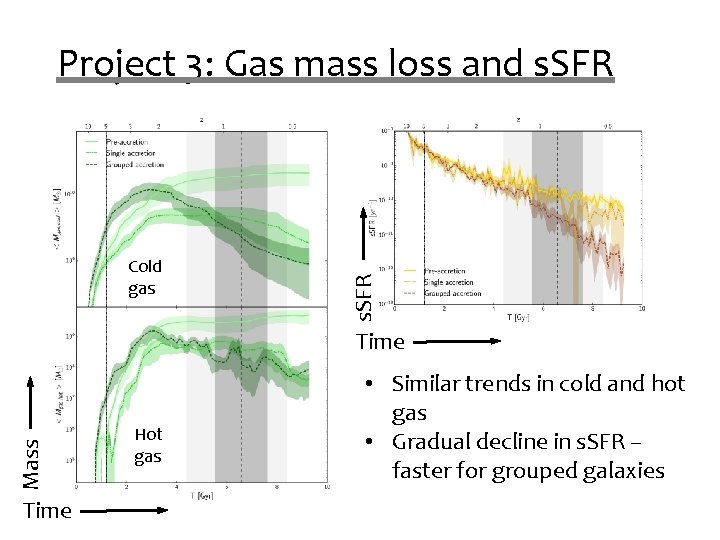
Cold gas s. SFR Project 3: Gas mass loss and s. SFR Mass Time Hot gas • Similar trends in cold and hot gas • Gradual decline in s. SFR – faster for grouped galaxies
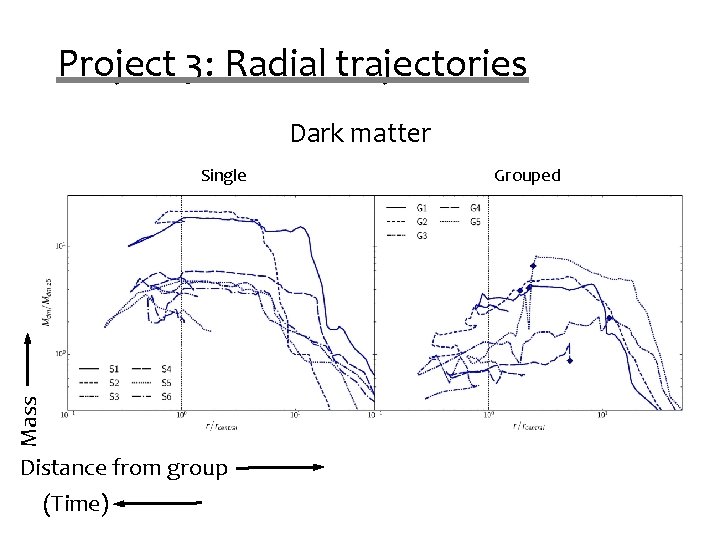
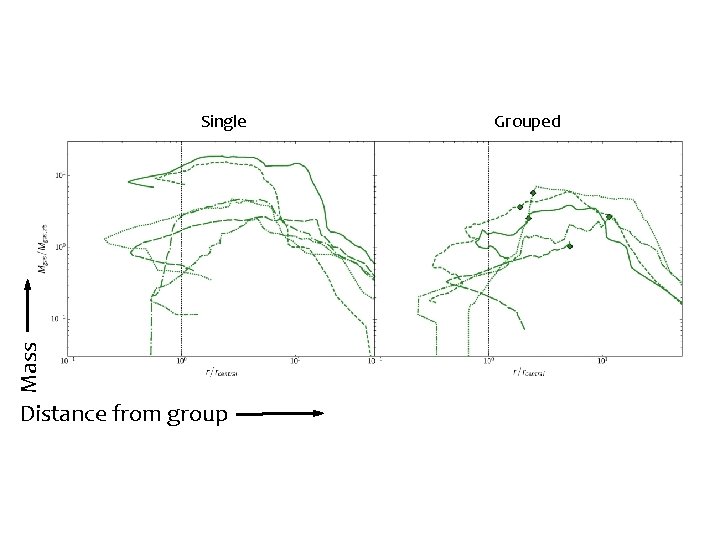
Project 3: Radial trajectories Dark matter Mass Single Distance from group (Time) Grouped
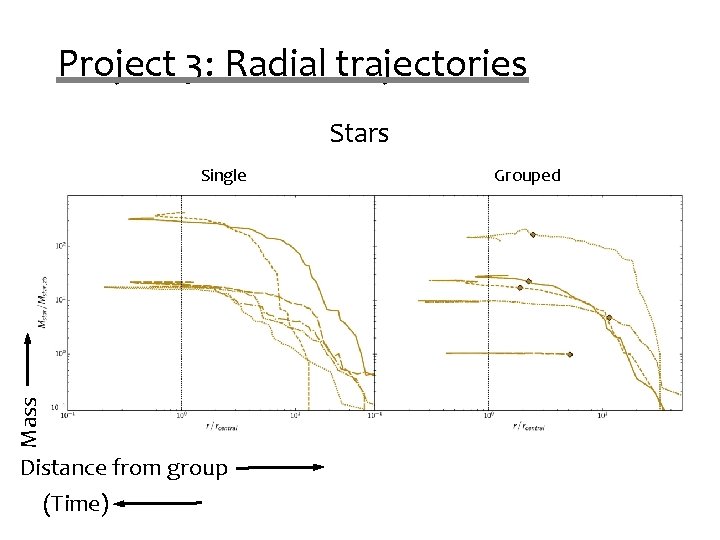
Project 3: Radial trajectories Stars Mass Single Distance from group (Time) Grouped
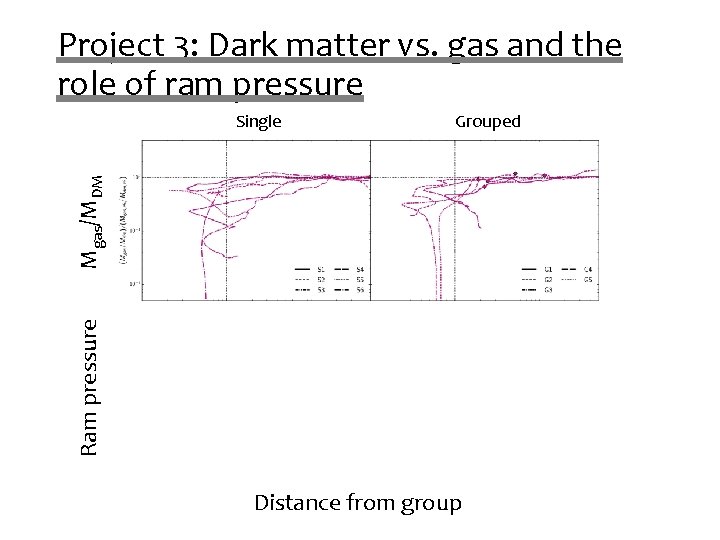
Project 3: Dark matter vs. gas and the role of ram pressure Grouped Ram pressure Mgas/MDM Single Distance from group
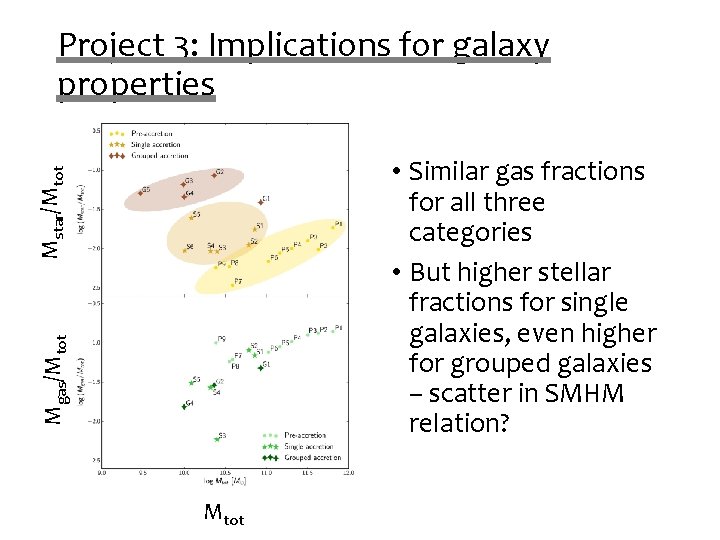
Project 3: Implications for galaxy properties Mgas/Mtot Mstar/Mtot • Similar gas fractions for all three categories • But higher stellar fractions for single galaxies, even higher for grouped galaxies – scatter in SMHM relation? Mtot
Timeline • Currently: Completing final science chapter • By July 14: Complete thesis draft • By July 21: Initiate defense process • By Aug 4: Submit thesis • Sep 15: Defense
Extra slides
Project 1: Mass segregation Small Groups Large Groups Clusters • Segregation trends dominated by small and large groups • Nearly no trend seen in clusters
Mass Single Distance from group Grouped