
GAINING INDEPENDENCE IN SPELLING How to support students

- Slides: 42
GAINING INDEPENDENCE IN SPELLING How to support students in their quests for spelling independence.
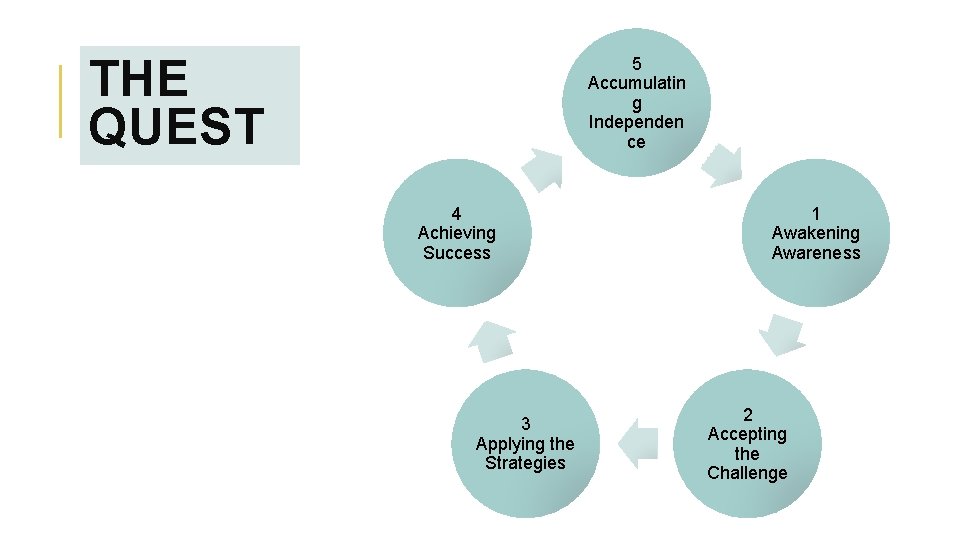
THE QUEST 5 Accumulatin g Independen ce 4 Achieving Success 3 Applying the Strategies 1 Awakening Awareness 2 Accepting the Challenge
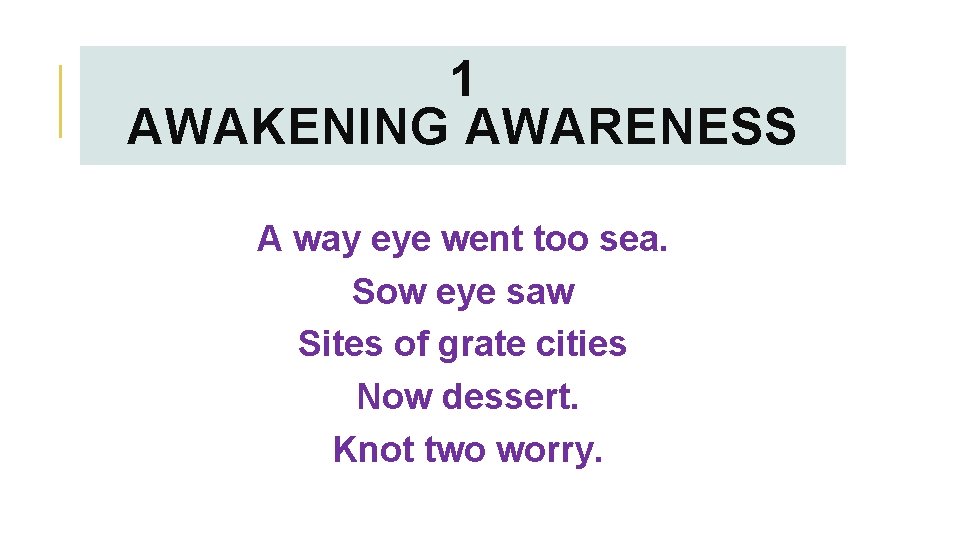
1 AWAKENING AWARENESS A way eye went too sea. Sow eye saw Sites of grate cities Now dessert. Knot two worry.
YOUR TURN: CREATE YOUR POEM OF HOMOPHONES 1. Pick a theme. 2. Make a list of homophones. 3. Write a poem using your words. 4. Substitute homophones into your poem. 5. Edit and publish. 6. Share with the class.
SPELLING LIST Word List http: //www. susancanthony. com/bk/pdf/sampage/swlist. pdf SA Modern Cursive http: //www. sacsa. edu. au/ATT/%7 BE 80110984029 -4 F 31 -B 7804 A 2 B 2 C 19 BF 7 C%7 D/Handwriting. pdf
SPELLING LISTS – 10 WORDS PER WEEK A variety of words should be included: • engaging • mundane • everyday • student selections • frequently used
2 ACCEPTING THE CHALLENGE First test Comparison for future tests
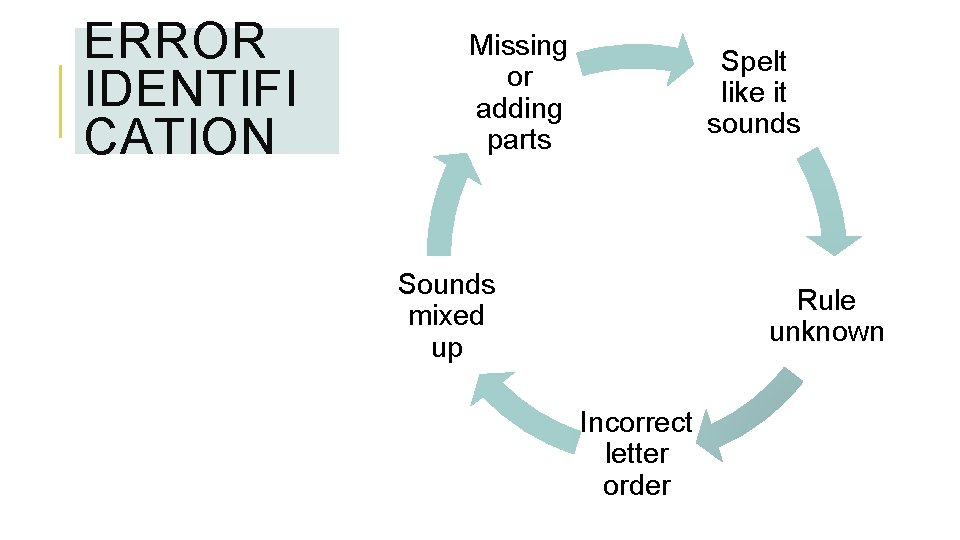
ERROR IDENTIFI CATION Missing or adding parts Spelt like it sounds Sounds mixed up Rule unknown Incorrect letter order
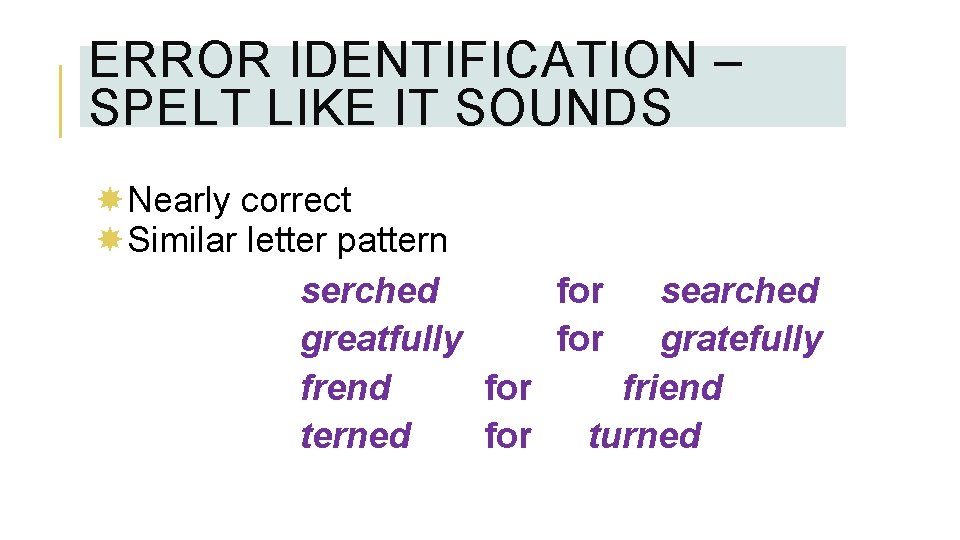
ERROR IDENTIFICATION – SPELT LIKE IT SOUNDS Nearly correct Similar letter pattern serched for searched greatfully for gratefully frend for friend terned for turned
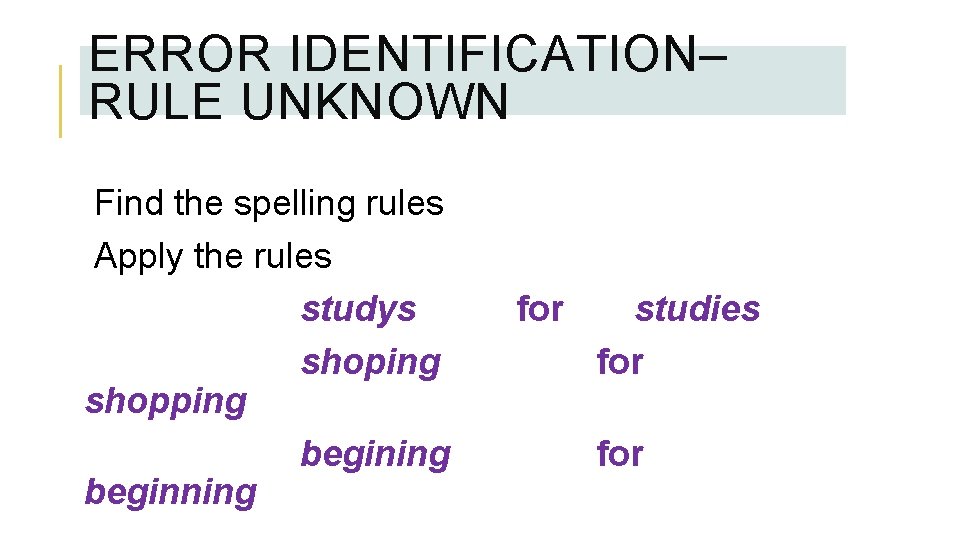
ERROR IDENTIFICATION– RULE UNKNOWN Find the spelling rules Apply the rules studys shoping shopping beginning for studies for
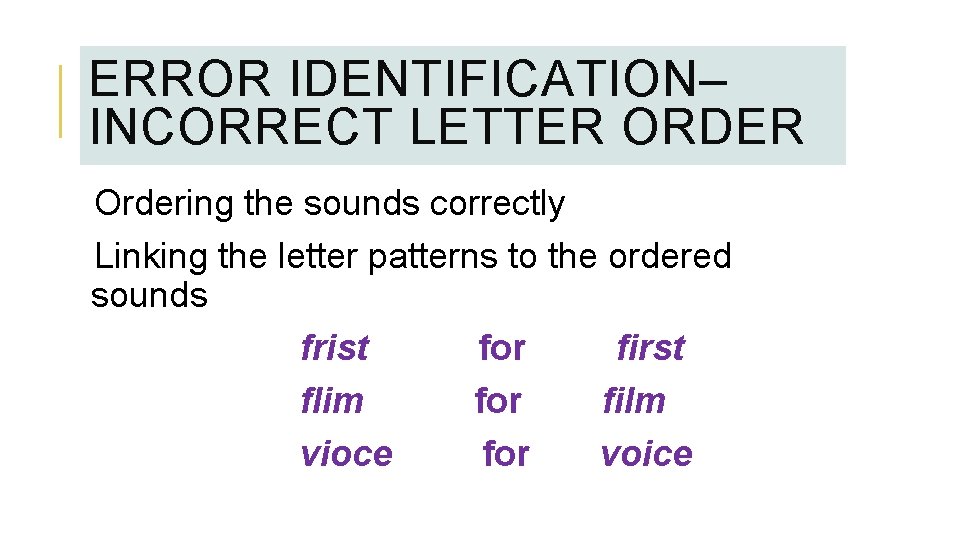
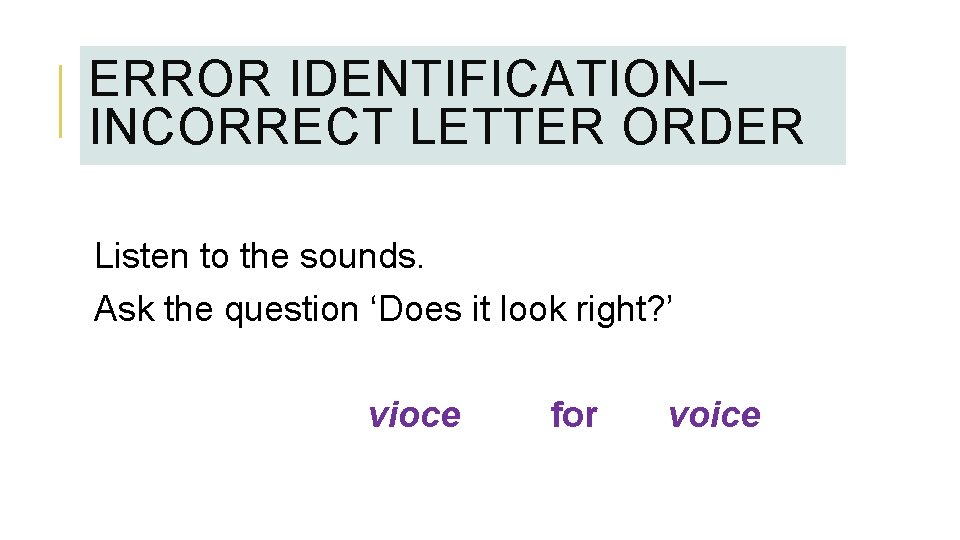
ERROR IDENTIFICATION– INCORRECT LETTER ORDER Ordering the sounds correctly Linking the letter patterns to the ordered sounds frist for first flim for film vioce for voice
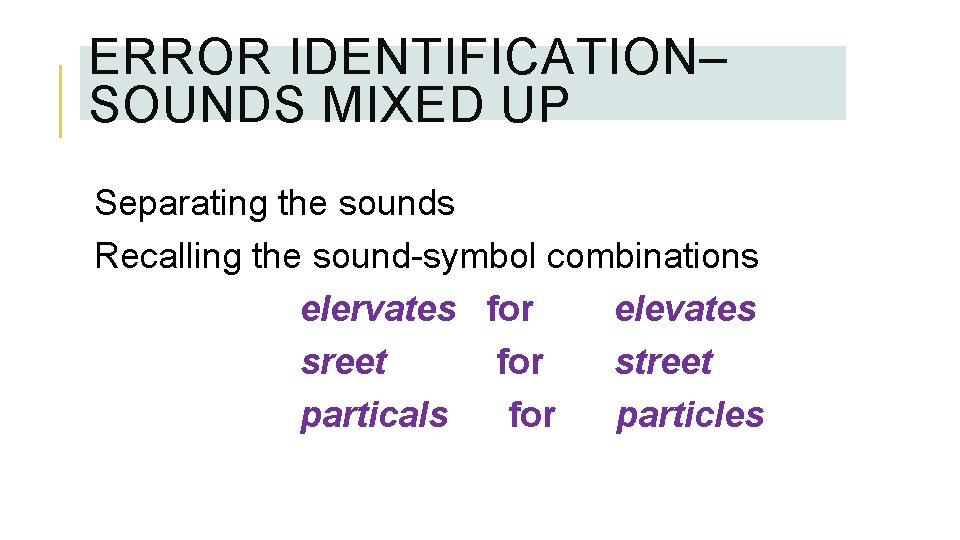
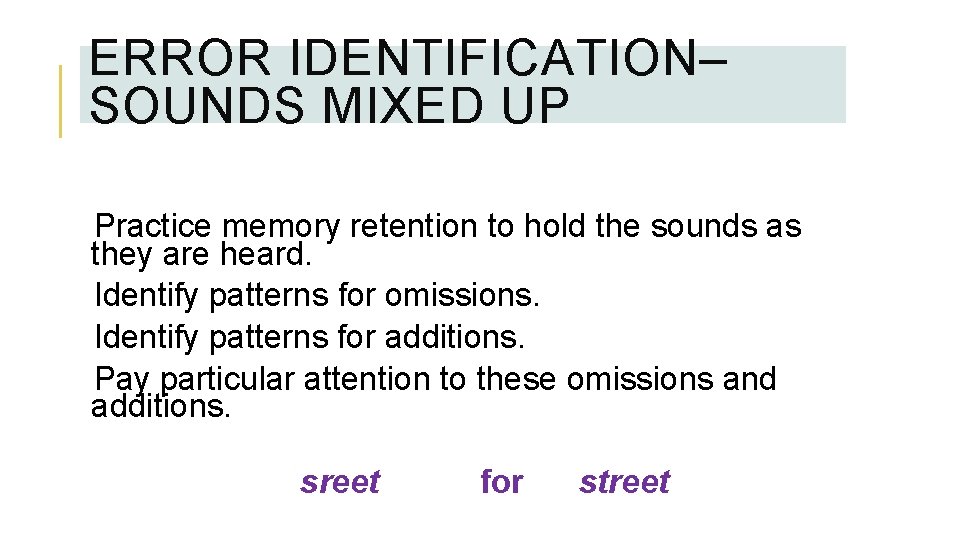
ERROR IDENTIFICATION– SOUNDS MIXED UP Separating the sounds Recalling the sound-symbol combinations elervates for elevates sreet for street particals for particles
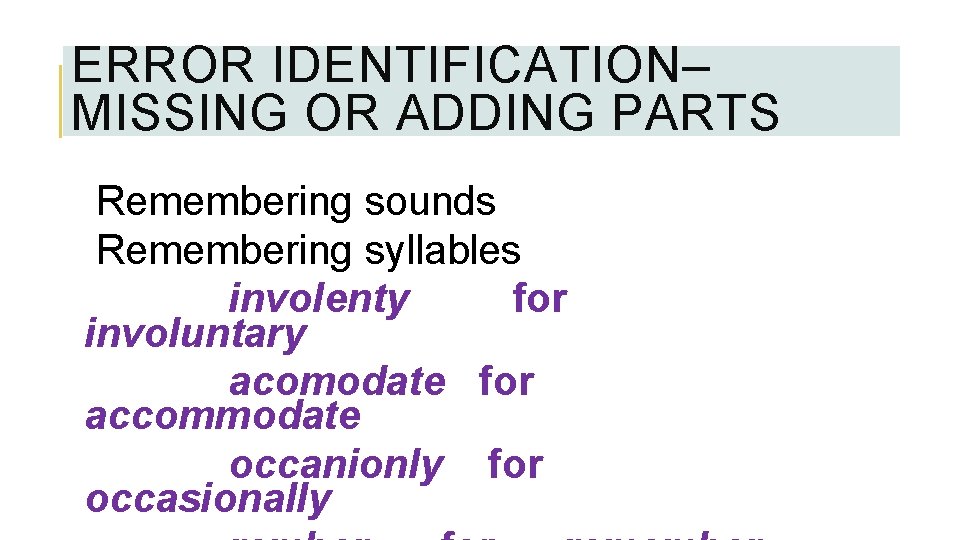
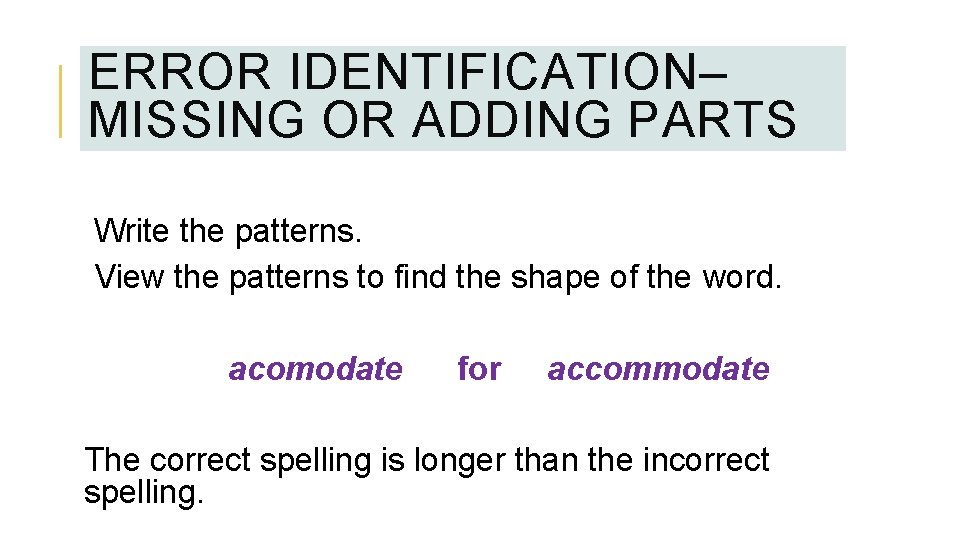
ERROR IDENTIFICATION– MISSING OR ADDING PARTS Remembering sounds Remembering syllables involenty for involuntary acomodate for accommodate occanionly for occasionally
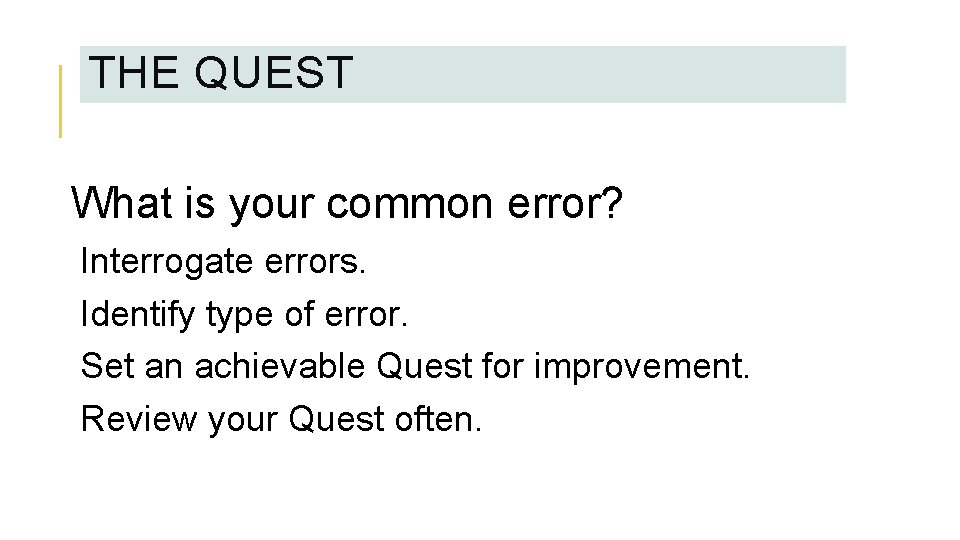
THE QUEST What is your common error? Interrogate errors. Identify type of error. Set an achievable Quest for improvement. Review your Quest often.
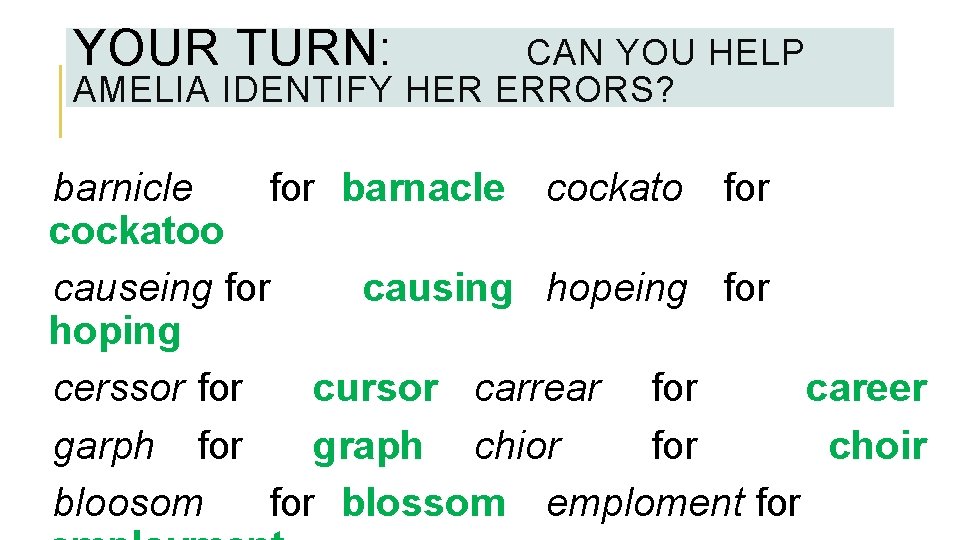
YOUR TURN: CAN YOU HELP AMELIA IDENTIFY HER ERRORS? barnicle for barnacle cockato for cockatoo causeing for causing hopeing for hoping cerssor for cursor carrear for career garph for graph chior for choir bloosom for blossom emploment for
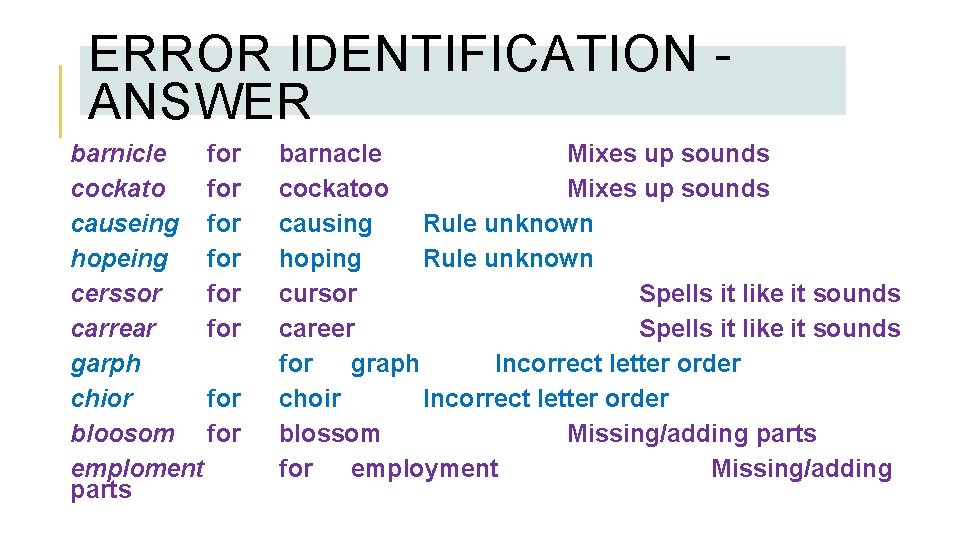
ERROR IDENTIFICATION ANSWER barnicle for cockato for causeing for hopeing for cerssor for carrear for garph chior for bloosom for emploment parts barnacle Mixes up sounds cockatoo Mixes up sounds causing Rule unknown hoping Rule unknown cursor Spells it like it sounds career Spells it like it sounds for graph Incorrect letter order choir Incorrect letter order blossom Missing/adding parts for employment Missing/adding
3 APPLYING THE STRATEGIES Find an activity for each type of error. Use the activities to learn weekly spelling lists. Apply the activities in your writing to improve your spelling.
ERROR IDENTIFICATION – SPELT LIKE IT SOUNDS Speech uses sounds. Writing uses letters. Letters represent the sounds. Before writing you must: carefully say all the sounds and parts of the word write one letter for each sound. Exception – some sounds are represented by a combination of letters.
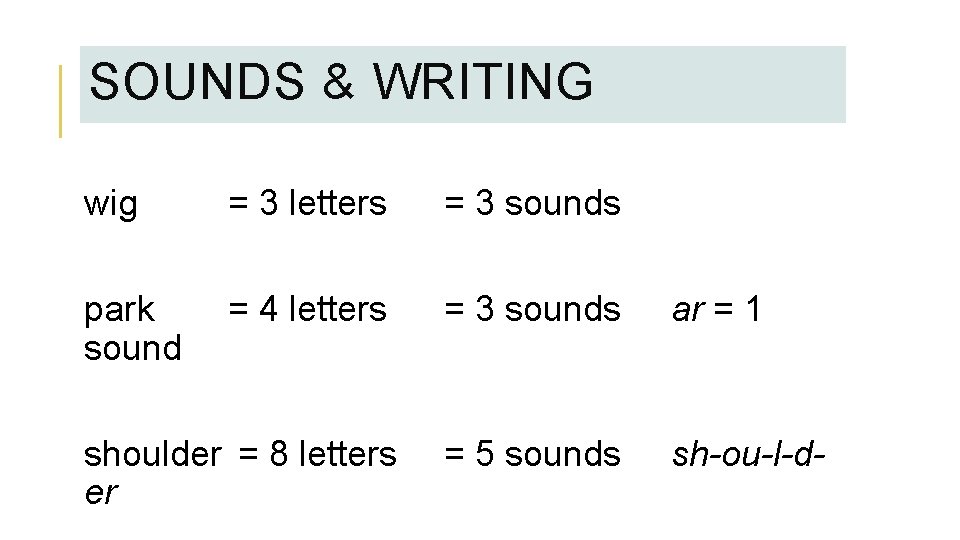
SOUNDS & WRITING wig = 3 letters = 3 sounds park sound = 4 letters = 3 sounds ar = 1 shoulder = 8 letters er = 5 sounds sh-ou-l-d-
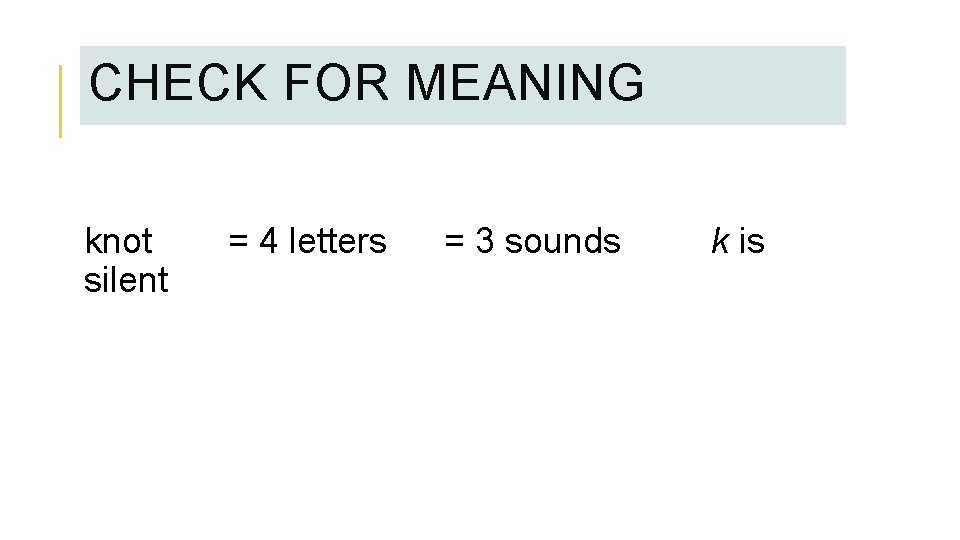
CHECK FOR MEANING knot silent = 4 letters = 3 sounds k is
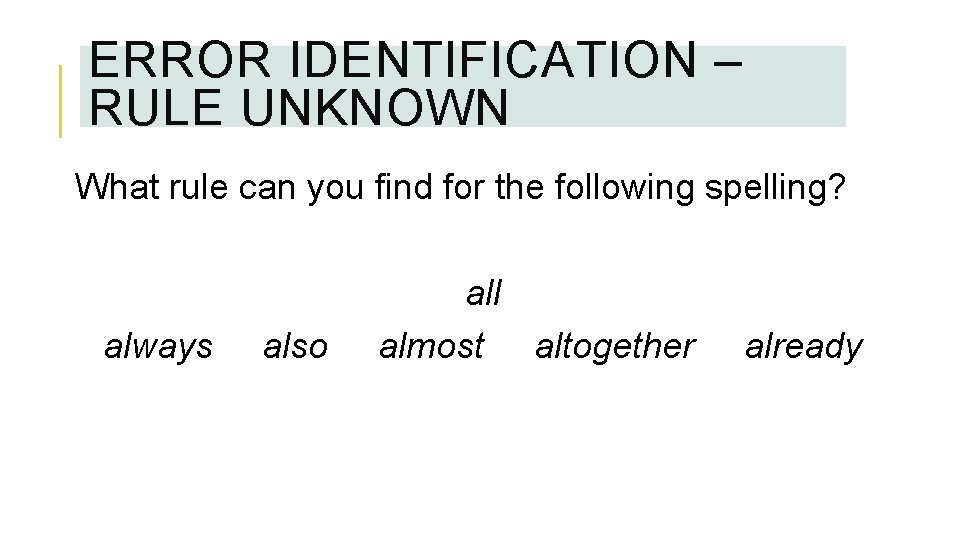
ERROR IDENTIFICATION – RULE UNKNOWN What rule can you find for the following spelling? always also all almost altogether already
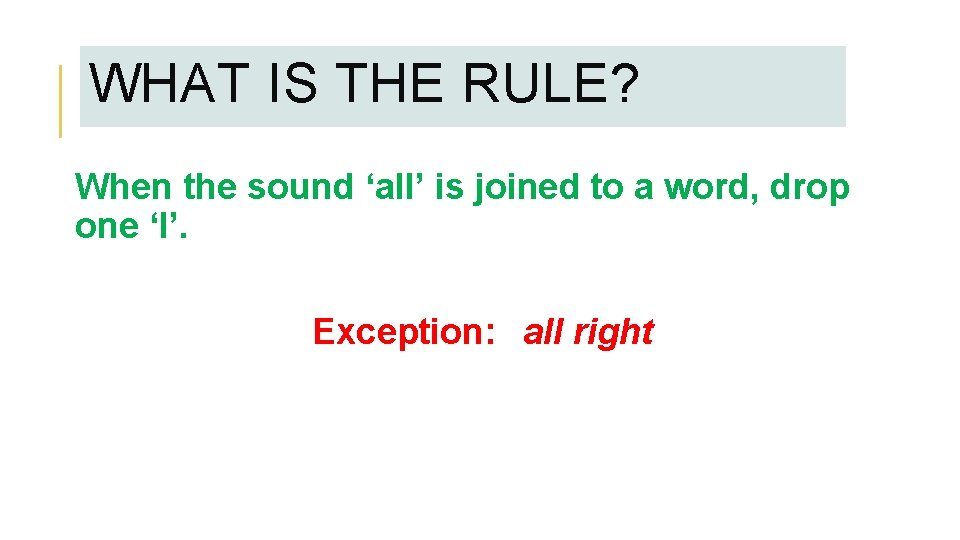
WHAT IS THE RULE? When the sound ‘all’ is joined to a word, drop one ‘l’. Exception: all right
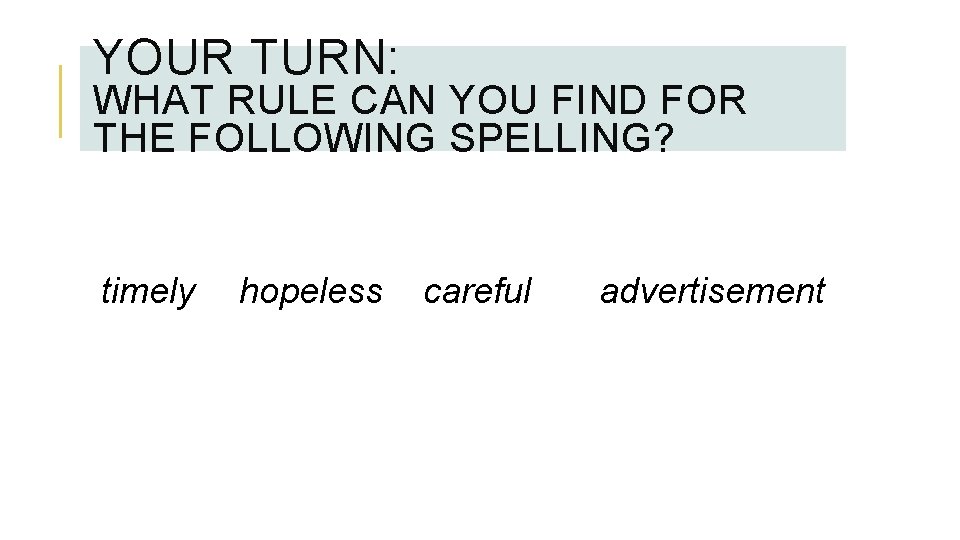
YOUR TURN: WHAT RULE CAN YOU FIND FOR THE FOLLOWING SPELLING? timely hopeless careful advertisement
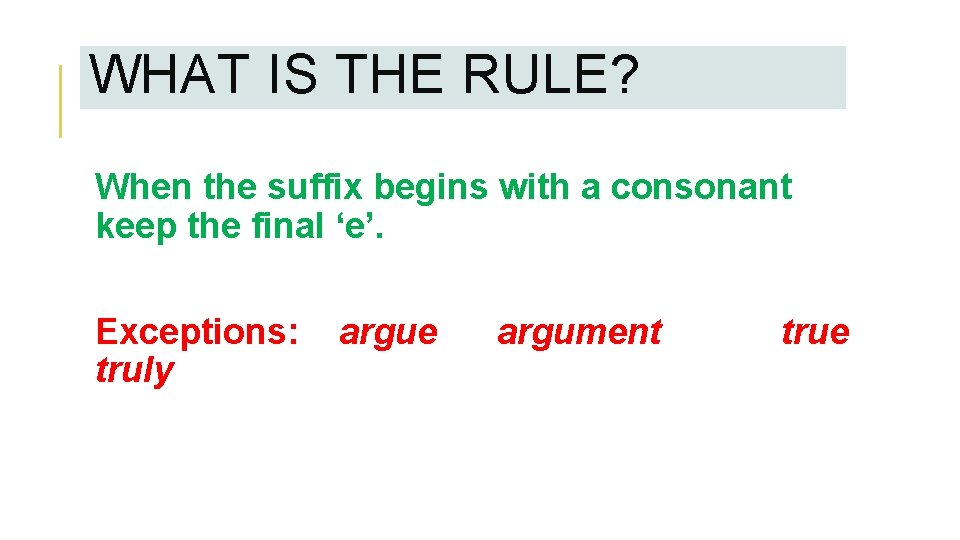
WHAT IS THE RULE? When the suffix begins with a consonant keep the final ‘e’. Exceptions: truly argue argument true
ERROR IDENTIFICATION– INCORRECT LETTER ORDER Listen to the sounds. Ask the question ‘Does it look right? ’ vioce for voice
ERROR IDENTIFICATION– SOUNDS MIXED UP Practice memory retention to hold the sounds as they are heard. Identify patterns for omissions. Identify patterns for additions. Pay particular attention to these omissions and additions. sreet for street
ERROR IDENTIFICATION– MISSING OR ADDING PARTS Write the patterns. View the patterns to find the shape of the word. acomodate for accommodate The correct spelling is longer than the incorrect spelling.
4 ACHIEVING SUCCESS Personalize the strategy.
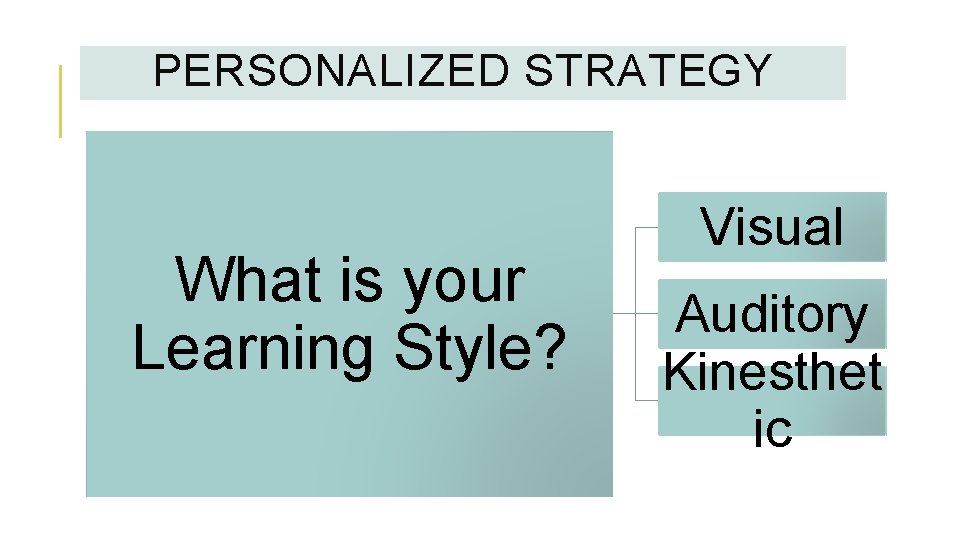
PERSONALIZED STRATEGY What is your Learning Style? Visual Auditory Kinesthet ic
ONLINE LEARNING STYLE TEST http: //vark-learn. com/the-vark-questionnaire/
STRATEGIES FOR LEARNING STYLES Apply the suggested strategies.
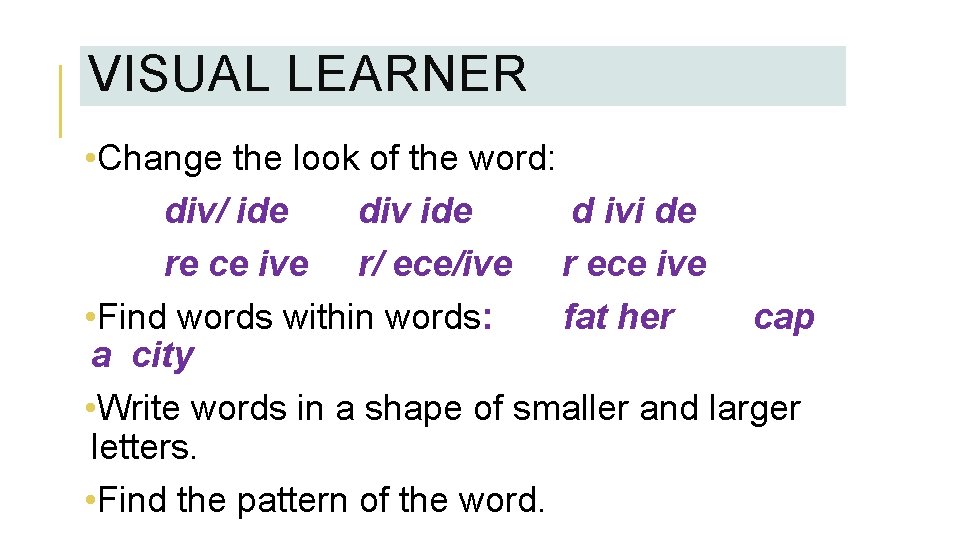
VISUAL LEARNER • Change the look of the word: div/ ide div ide d ivi de re ce ive r/ ece/ive r ece ive • Find words within words: fat her cap a city • Write words in a shape of smaller and larger letters. • Find the pattern of the word.
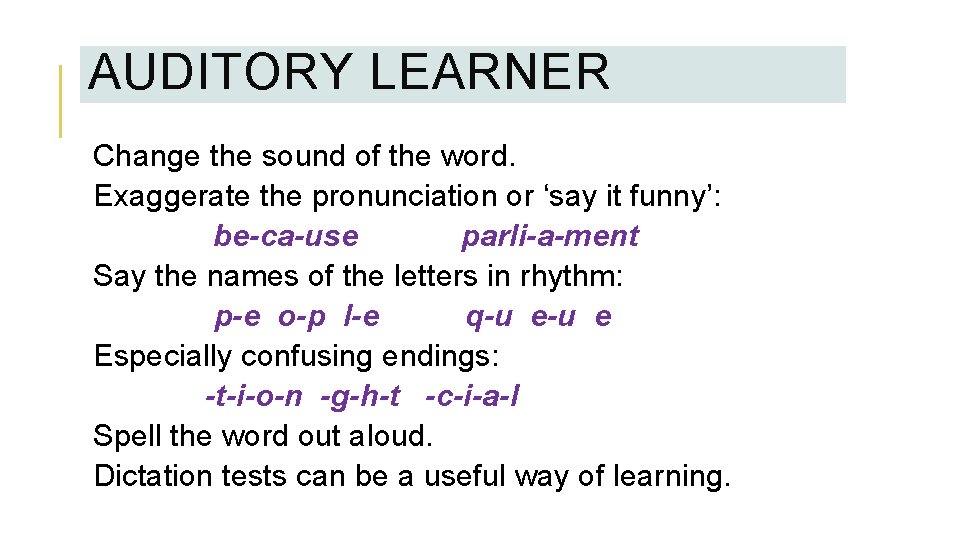
AUDITORY LEARNER Change the sound of the word. Exaggerate the pronunciation or ‘say it funny’: be-ca-use parli-a-ment Say the names of the letters in rhythm: p-e o-p l-e q-u e Especially confusing endings: -t-i-o-n -g-h-t -c-i-a-l Spell the word out aloud. Dictation tests can be a useful way of learning.
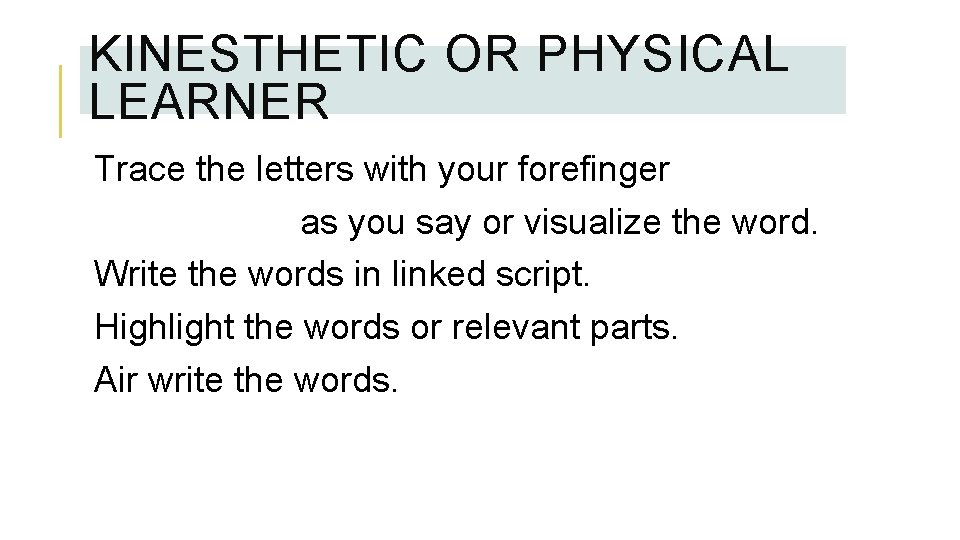
KINESTHETIC OR PHYSICAL LEARNER Trace the letters with your forefinger as you say or visualize the word. Write the words in linked script. Highlight the words or relevant parts. Air write the words.
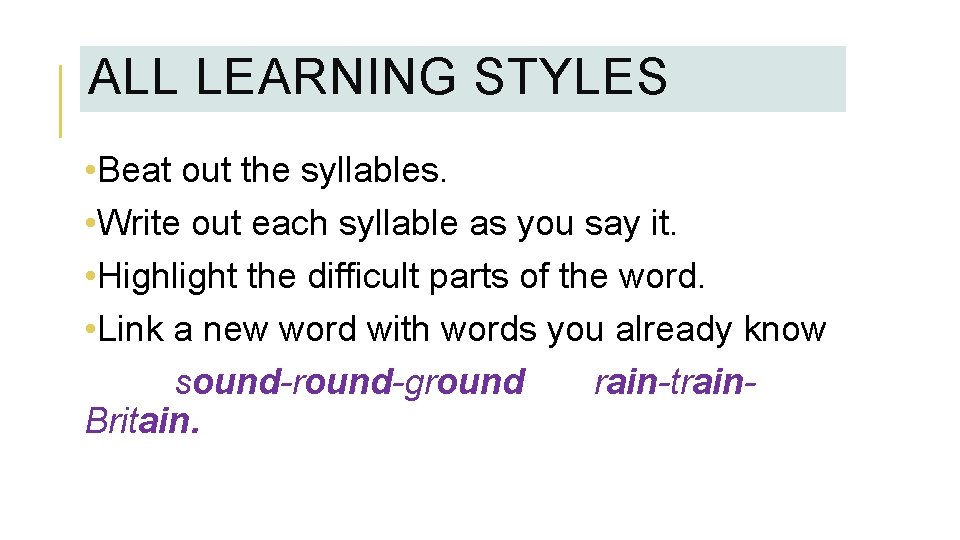
ALL LEARNING STYLES • Beat out the syllables. • Write out each syllable as you say it. • Highlight the difficult parts of the word. • Link a new word with words you already know sound-round-ground rain-train. Britain.
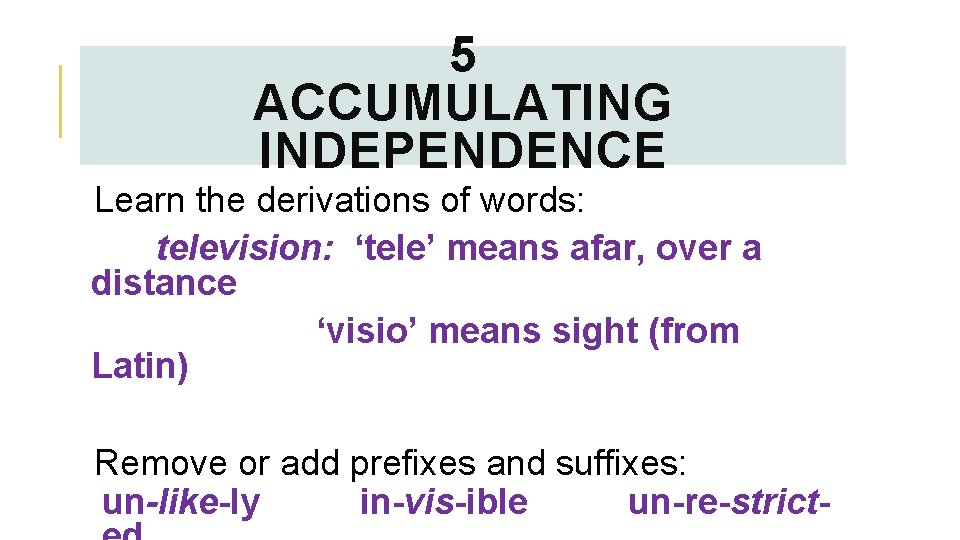
5 ACCUMULATING INDEPENDENCE Learn the derivations of words: television: ‘tele’ means afar, over a distance ‘visio’ means sight (from Latin) Remove or add prefixes and suffixes: un-like-ly in-vis-ible un-re-strict-
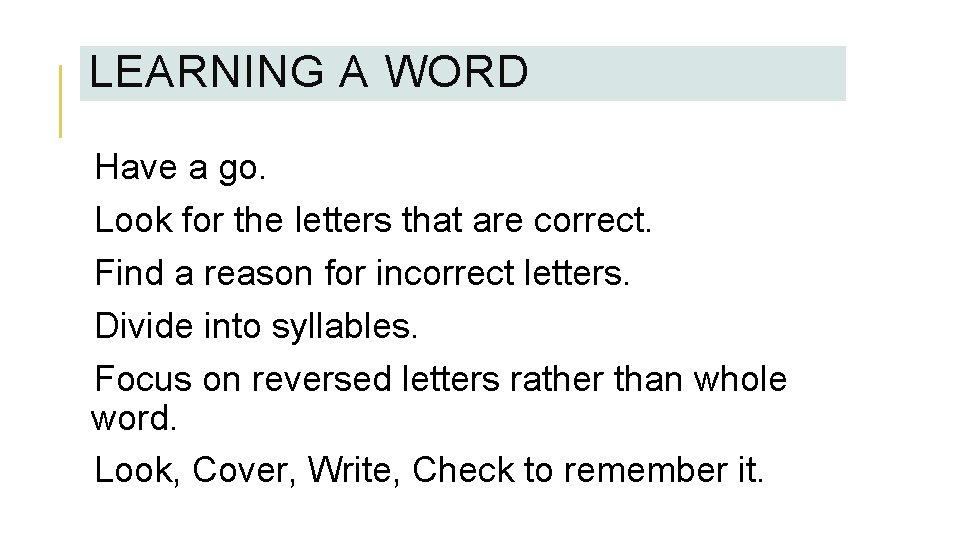
LEARNING A WORD Have a go. Look for the letters that are correct. Find a reason for incorrect letters. Divide into syllables. Focus on reversed letters rather than whole word. Look, Cover, Write, Check to remember it.
MONITORING PROGRESS Count the words that are right; not the words that are wrong. Learn one or two words well, rather than failing to learn ten or twenty. Use the strategies that have been successful for you.
PROOF READING Read through your work. Underline any words you are not sure about. Think about those words. Use the strategies you have learnt. Try alternative spellings. Choose the spelling which looks right. Check it.
OTHER ACTIVITIES • Writing Corner • Craft Activities • Reading • Word Puzzles • Number Plate Games • Word Games • Jokes & Riddles • Mnemonics
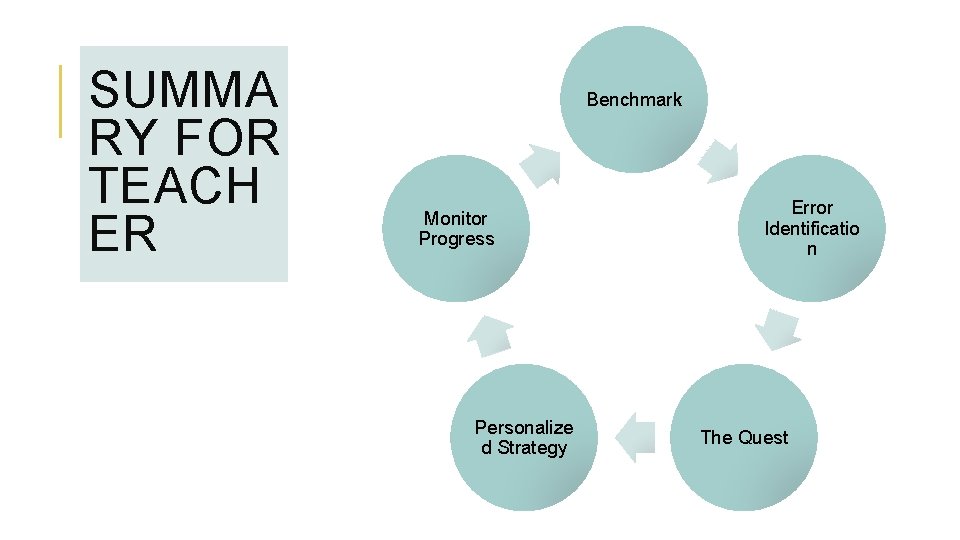
SUMMA RY FOR TEACH ER Benchmark Monitor Progress Personalize d Strategy Error Identificatio n The Quest
REFERENCES First Steps Spelling Developmental Continuum, Education Department of Western Australia, 1999, Rigby Heinemann First Steps Spelling Resource Book, Education Department of Western Australia, 1999, Rigby Heinemann Spelling: from beginnings to proficiency, Department for Education and Child Development SA, 2011, Government of South Australia The Great Australian Spelling Book, Macquarie Dictionary, 2015, Macquarie Dictionary Publishers http: //www. sacsa. edu. au/ATT/%7 BE 8011098 -4029 -4 F 31 -B 7804 A 2 B 2 C 19 BF 7 C%7 D/Handwriting. pdf http: //www. susancanthony. com/bk/-pdf/sampage/swlist. pdf