
Gage RR Estimating measurement components Gage capability and
Gage R&R Estimating measurement components Gage capability and acceptability measures Prof. Tom Kuczek, Purdue Univ. 1
Terms and Definitions • Repeatability refers to the measurement variation obtained when one person repeatedly measures the same item with the same gage. • Reproducibility refers to the variation due to different operators using the same gage measuring the same item. 2
Estimated Common Cause Our estimate of Common Cause Variation, which is the variance of the actual product measurement, is actually the sum of three components: • The true product variation. • Variation due to different operators (reproducibility). • Variance of measurement equipment error (repeatability). 3
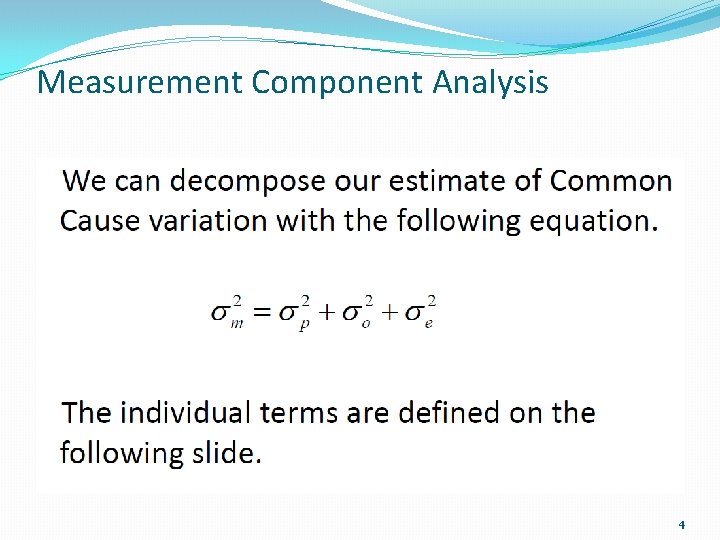
Measurement Component Analysis 4
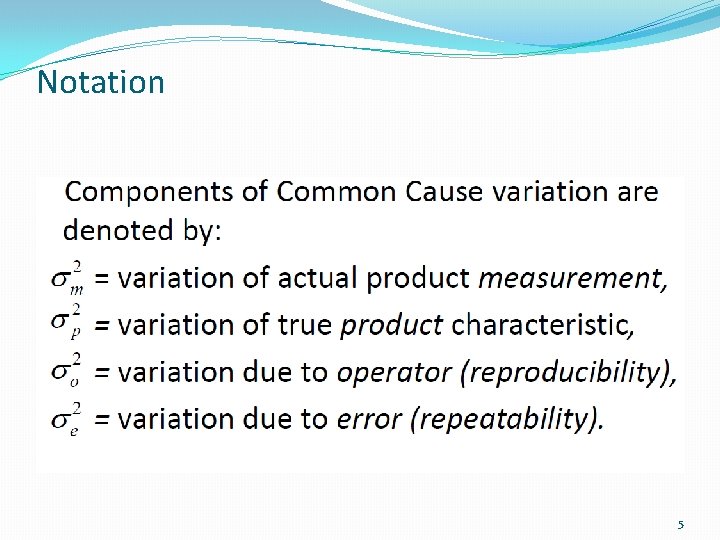
Notation 5
Gage R&R: Designed Data Collection In order to estimate these components of variation, we do a standard Gage R&R study. All such studies follow the following format: �We select a fixed number of parts. �We select a fixed number of operators. �Each operator measures each of the parts a fixed number of times. 6
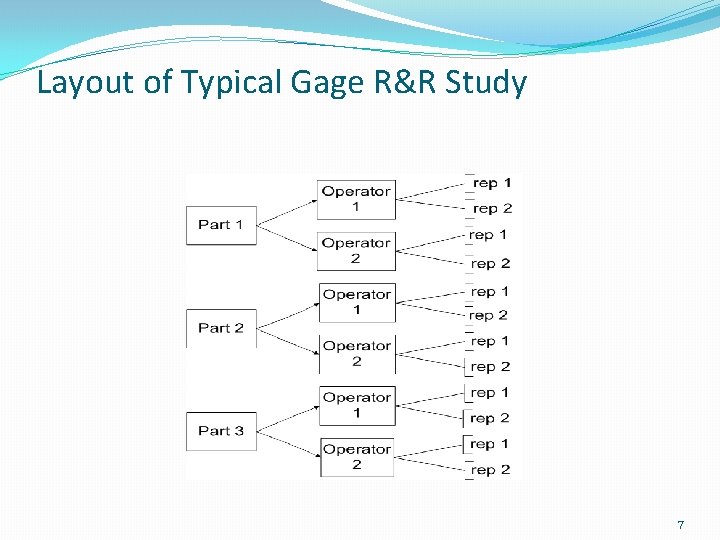
Layout of Typical Gage R&R Study 7
Analysis of Gage R&R Study Data There are two typical Statistical tools for the analysis of the data from Gage R&R studies: �The first, and most widely taught technique, is the analysis of average Ranges. � Ranges are obtained from successive replications to estimate error variance. � Ranges from averages between different operators for the same part are used to estimate operator variation. 8
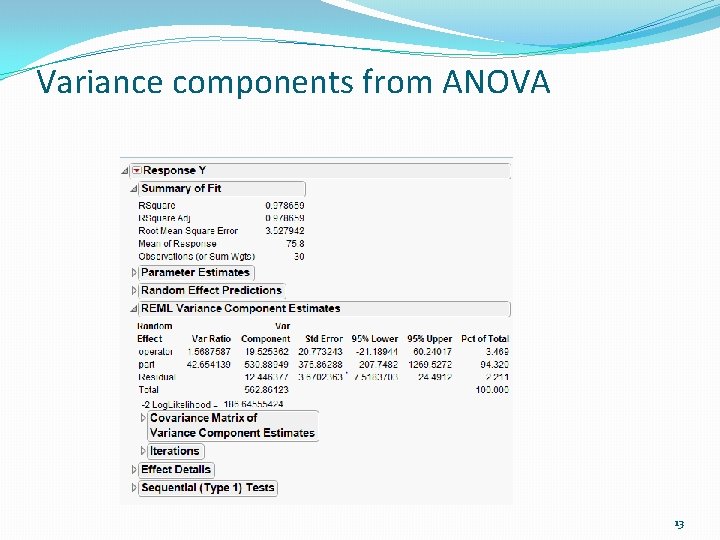
Analysis of Variance for Gage R&R �The Analysis of Variance (ANOVA) can also be used to analyze Gage R&R studies. �In ANOVA terminology, most Gage R&R studies have an ANOVA type data structure. �A variance component analysis can easily be done in most software packages. �The individual variance components provide estimates of error, operator and “true” product variance. 9
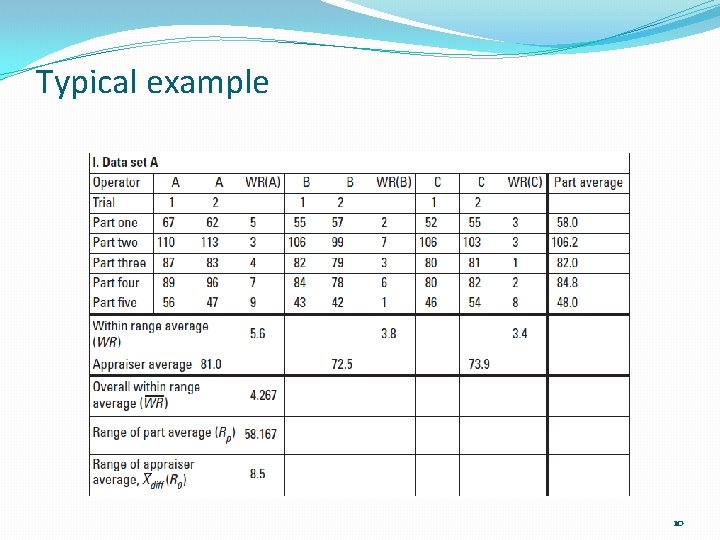
Typical example 10
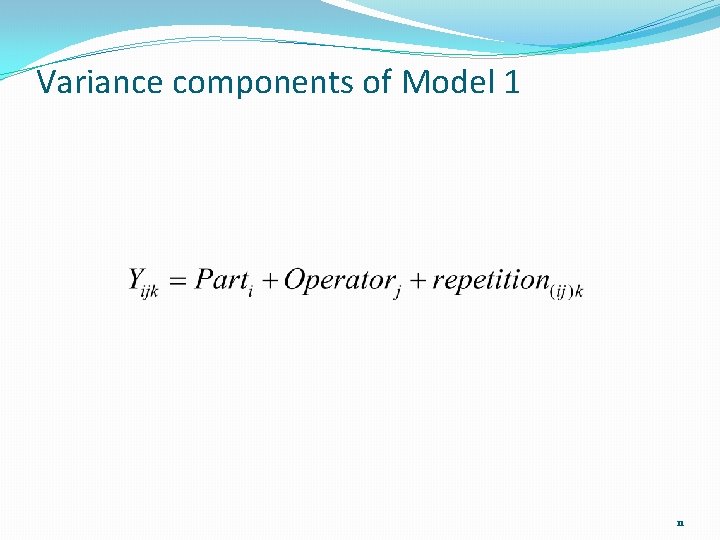
Variance components of Model 1 11
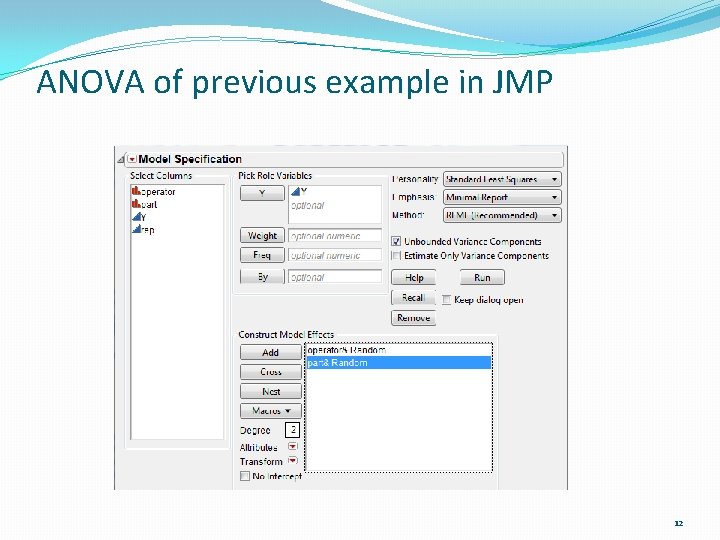
ANOVA of previous example in JMP 12
Variance components from ANOVA 13
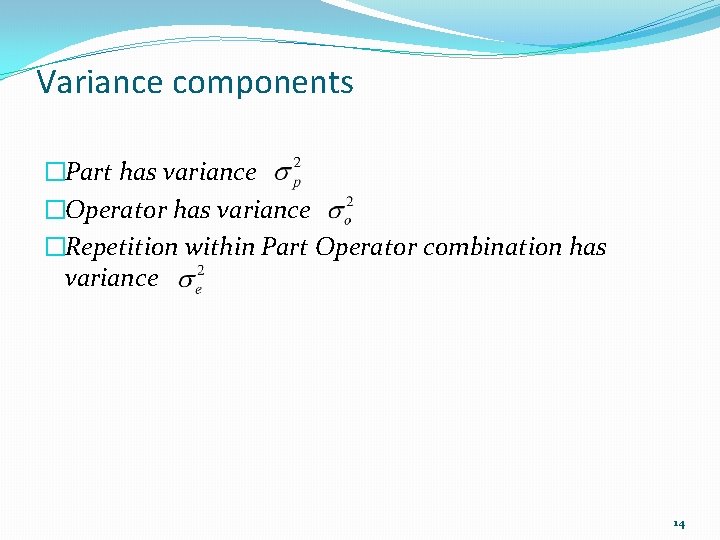
Variance components �Part has variance �Operator has variance �Repetition within Part Operator combination has variance 14
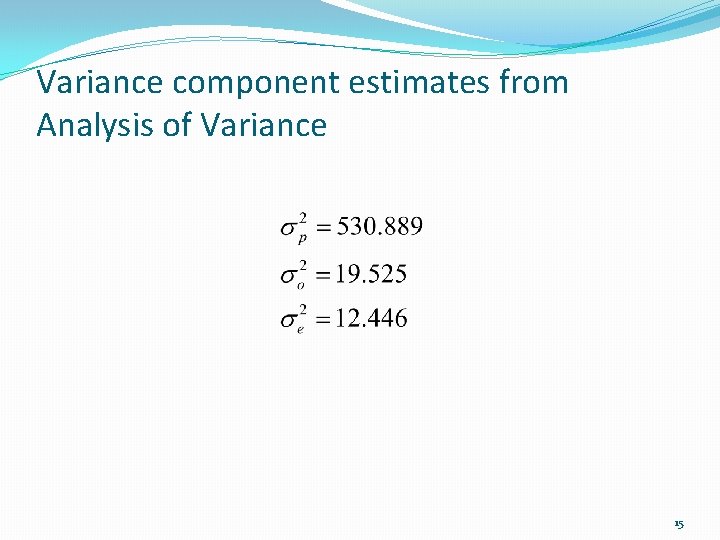
Variance component estimates from Analysis of Variance 15
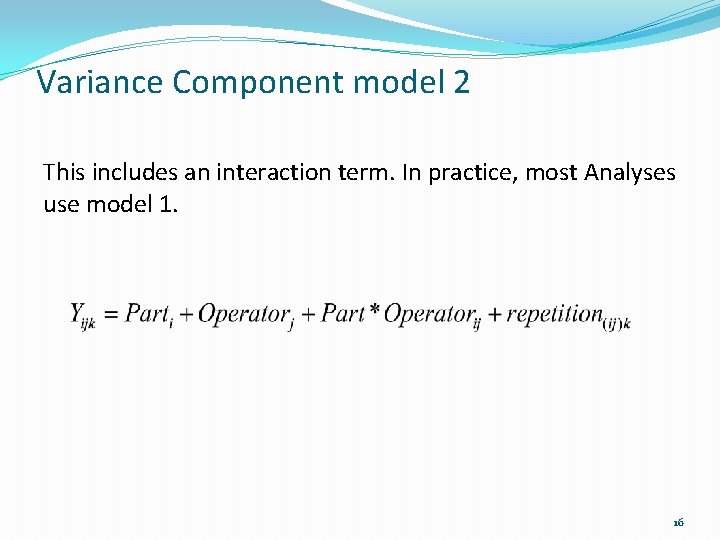
Variance Component model 2 This includes an interaction term. In practice, most Analyses use model 1. 16
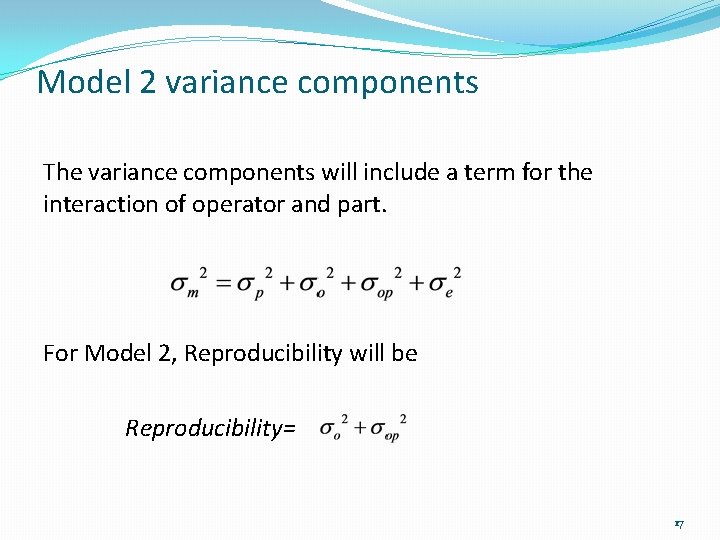
Model 2 variance components The variance components will include a term for the interaction of operator and part. For Model 2, Reproducibility will be Reproducibility= 17
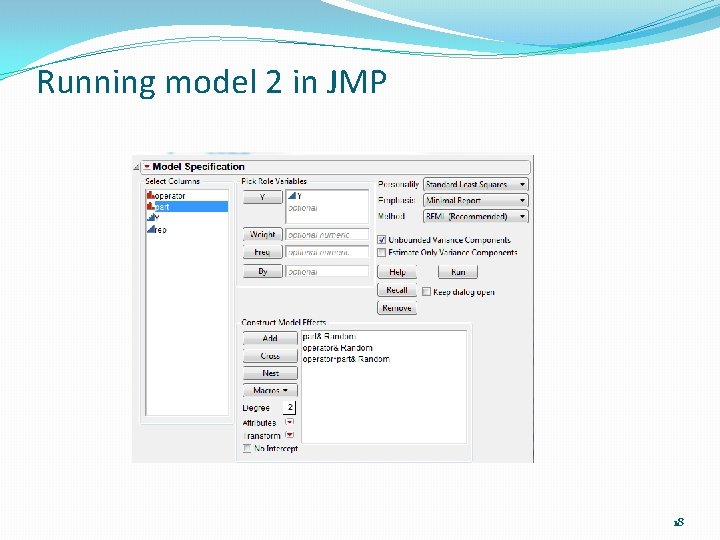
Running model 2 in JMP 18
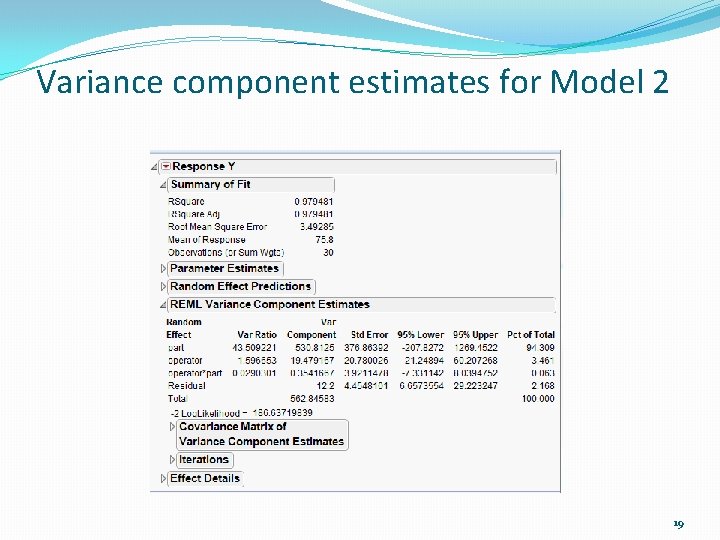
Variance component estimates for Model 2 19
Model 1 vs. Model 2 An F-test (not shown) shows that the Operator*Part term is not significant at alpha =. 10 (authors criteria), then we will use the results of Model 1. Operator*Part is rarely significant. As a result many people leave it out in practice. 20
Conclusions from Gage R&R �Part has the greatest variability �Operator and repetition are negligible �Invest in the Process �The Measurement system here is not an issue in the sense of Reproducibility and Repeatability �Concentrate on the Process, put on Target with Minimum Variation 21
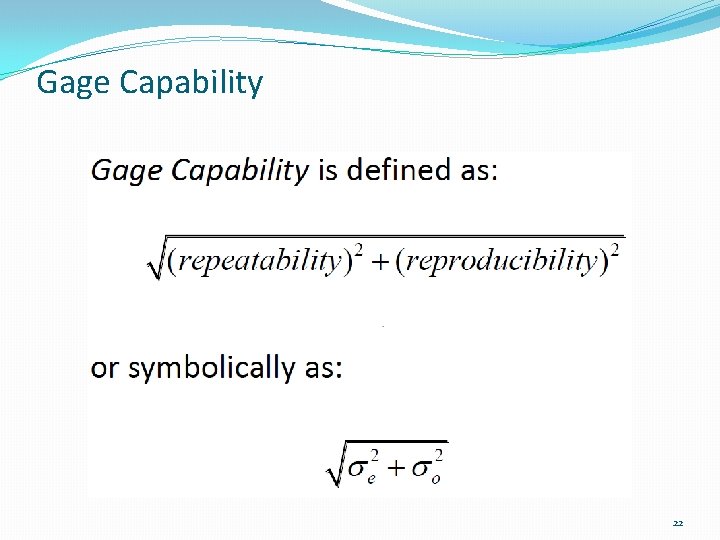
Gage Capability 22
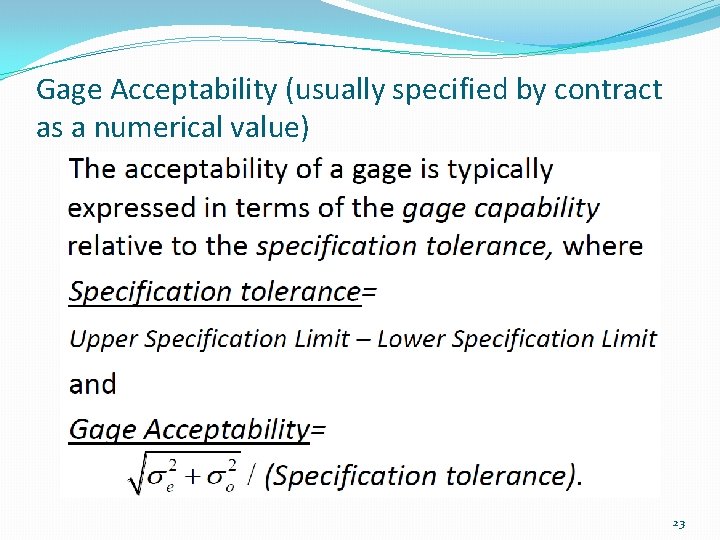
Gage Acceptability (usually specified by contract as a numerical value) 23
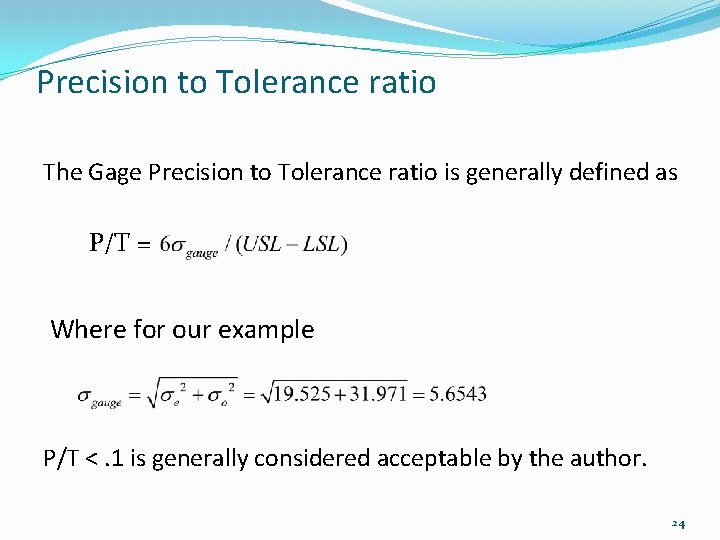
Precision to Tolerance ratio The Gage Precision to Tolerance ratio is generally defined as P/T = Where for our example P/T <. 1 is generally considered acceptable by the author. 24
- Slides: 24