
Gadgets and Gizmos Reviewing pulmonary therapies for optimizing




- Slides: 42
Gadgets and Gizmos: Reviewing pulmonary therapies for optimizing airway clearance Stacey Denver DNP, RN, FNP-BC Pediatric Pulmonary Division University of Texas Health Science Center Director of Operations for Pediatric Ambulatory University Health Systems
Disclosures • I have no financial or commercial disclosures
Objectives • Review the physiologic airway differences between children and adults • Review disease processes that benefit from chest physiotherapy • Options of chest physiotherapy reviewed in context of the hospital and home settings
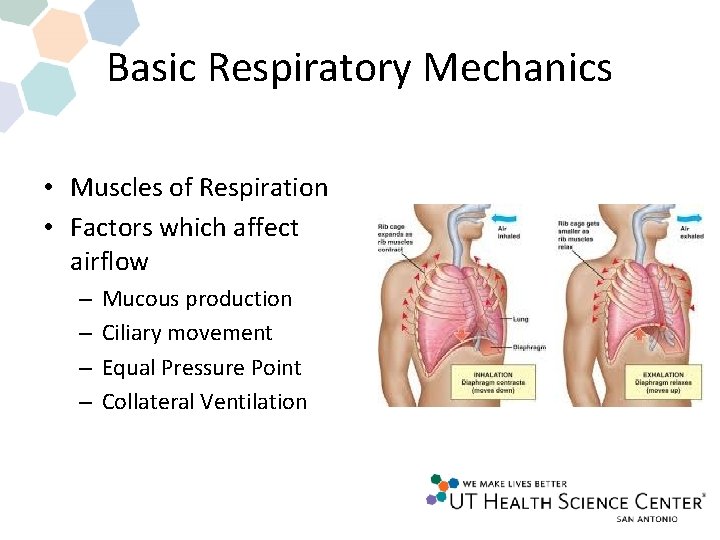
Basic Respiratory Mechanics • Muscles of Respiration • Factors which affect airflow – – Mucous production Ciliary movement Equal Pressure Point Collateral Ventilation
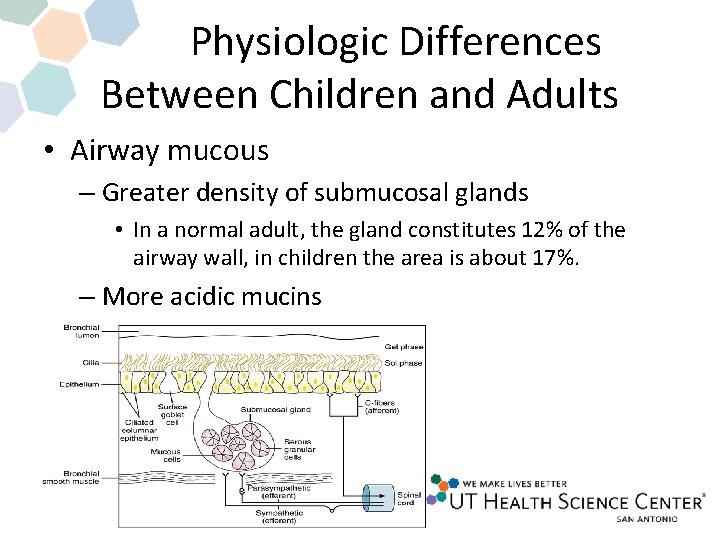
Physiologic Differences Between Children and Adults • Airway mucous – Greater density of submucosal glands • In a normal adult, the gland constitutes 12% of the airway wall, in children the area is about 17%. – More acidic mucins
Physiologic Differences Between Children and Adults • Respiratory Mechanics – Greater airway wall compliance • This contributes to less airway support and increase collapsibility of the airway. – Lower functional residual capacity – Smaller airway diameter – Fewer collateral airway channels • The interalveolar pores of Kohn and bronchiolaralveolar channels of Lambert
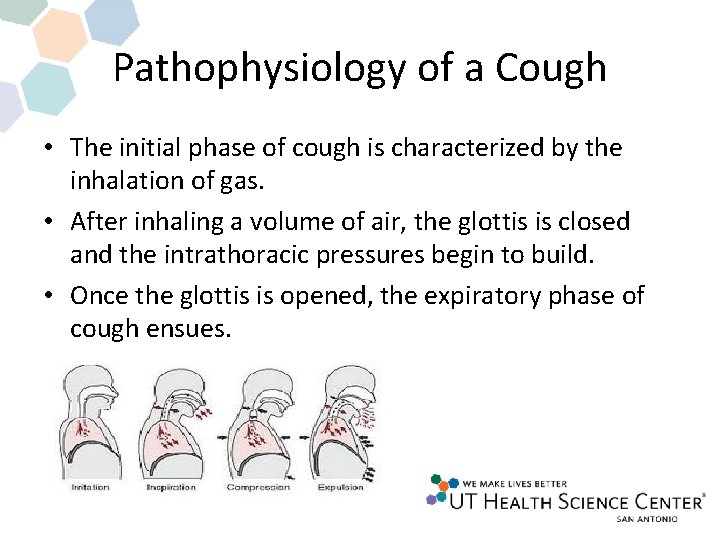
Pathophysiology of a Cough • The initial phase of cough is characterized by the inhalation of gas. • After inhaling a volume of air, the glottis is closed and the intrathoracic pressures begin to build. • Once the glottis is opened, the expiratory phase of cough ensues.
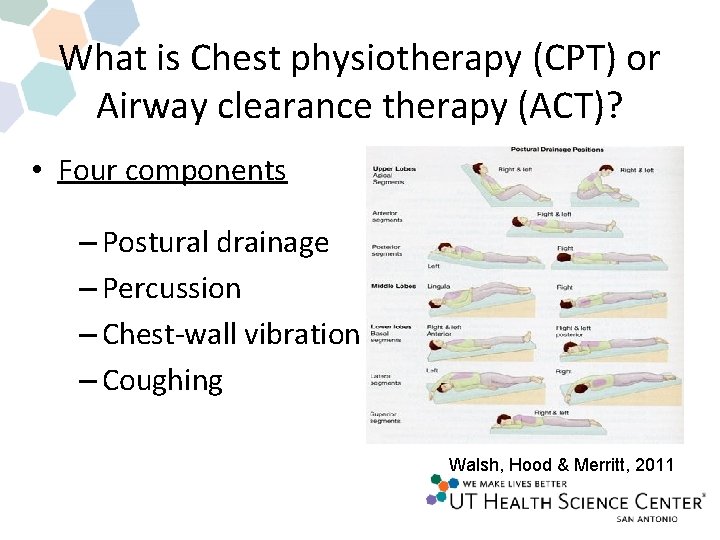
What is Chest physiotherapy (CPT) or Airway clearance therapy (ACT)? • Four components – Postural drainage – Percussion – Chest-wall vibration – Coughing Walsh, Hood & Merritt, 2011
Who benefits from airway clearance therapies and how do we decide? ?
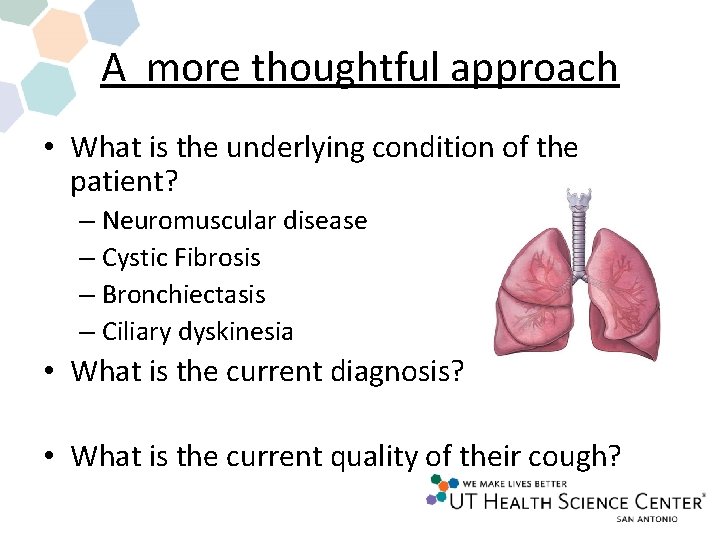
A more thoughtful approach • What is the underlying condition of the patient? – Neuromuscular disease – Cystic Fibrosis – Bronchiectasis – Ciliary dyskinesia • What is the current diagnosis? • What is the current quality of their cough?
Remember… Primary objective of ACT or CPT is to reduce the obstructing secretions and possibly remove ineffective materials such as mediators of inflammation or oxidative agents from the bronchioles. Schechter, 2007
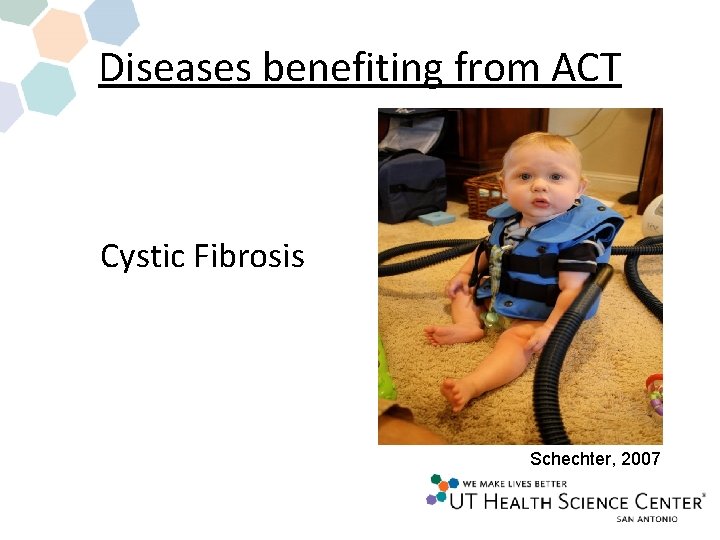
Diseases benefiting from ACT Cystic Fibrosis Schechter, 2007
Diseases likely benefiting from ACT • Neuromuscular diseases ie: muscular dystrophy • Bronchiectasis of unknown origin • Cerebral Palsy • Atelectasis (with mechanical ventilation) Schechter, 2007
Diseases with minimal benefit from ACT Bronchopulmonary dysplasia Bronchiolitis Asthma (acute) Preventative post op measures on ventilated child • Respiratory failure without atelectasis • • Schechter, 2007
Airway clearance ‘toolbox’ So many options! What to consider? • Age and size of child • Cooperation/maturit y of child • Tolerability of device • Mental Status of child
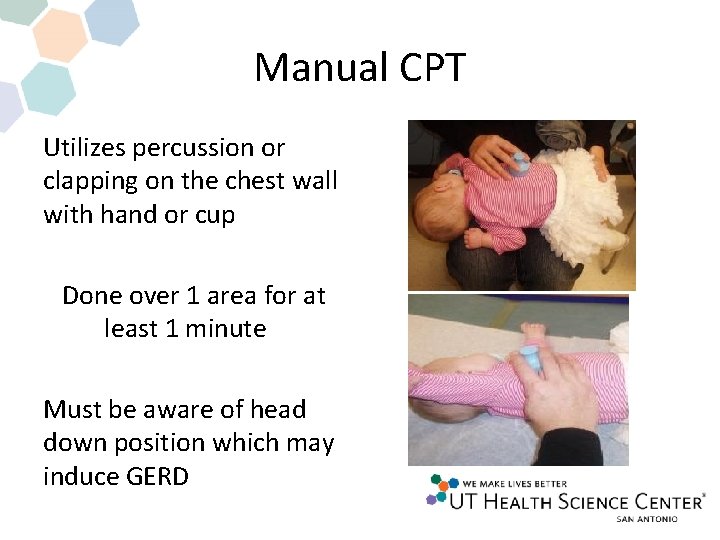
Manual CPT Utilizes percussion or clapping on the chest wall with hand or cup Done over 1 area for at least 1 minute Must be aware of head down position which may induce GERD
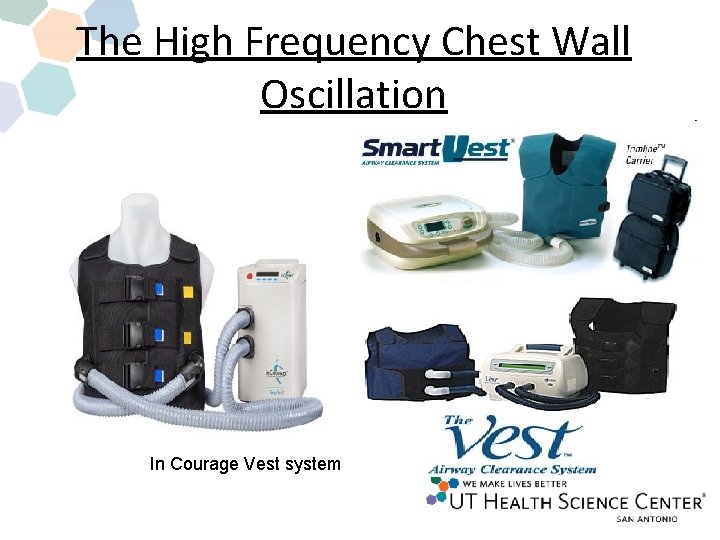
The High Frequency Chest Wall Oscillation In Courage Vest system
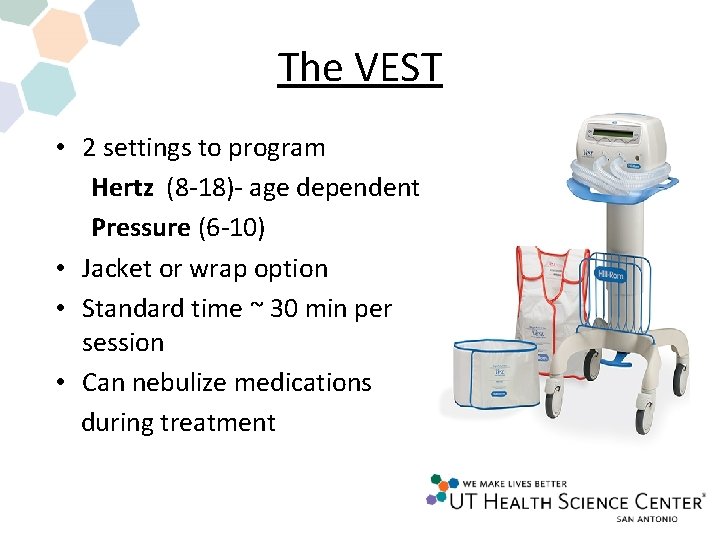
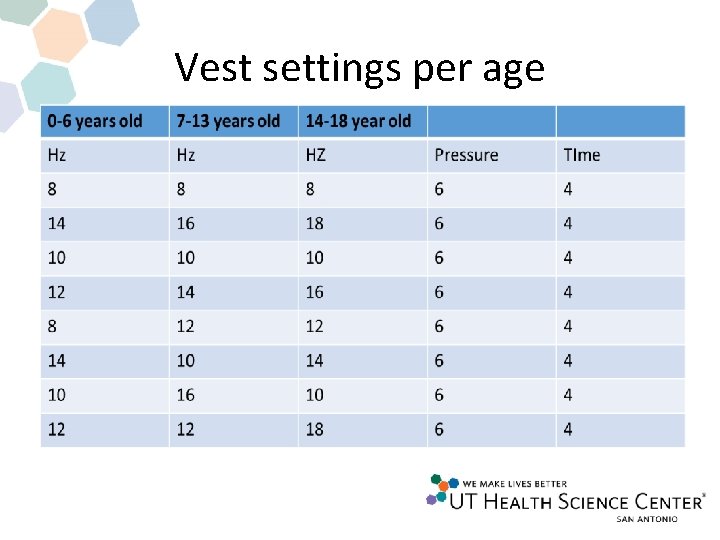
The VEST • 2 settings to program Hertz (8 -18)- age dependent Pressure (6 -10) • Jacket or wrap option • Standard time ~ 30 min per session • Can nebulize medications during treatment
Vest settings per age
Tricks for vest therapy • Before inflationing hold bottom of vest to prevent ride up • Make sure vest jacket fits properly. It should ride at top of hip and snug but not tight • Use washcloth and twist into donut shape and place over ports or G-tubes for protection • No food one hour before or one hour after treatment to prevent nausea/vomiting
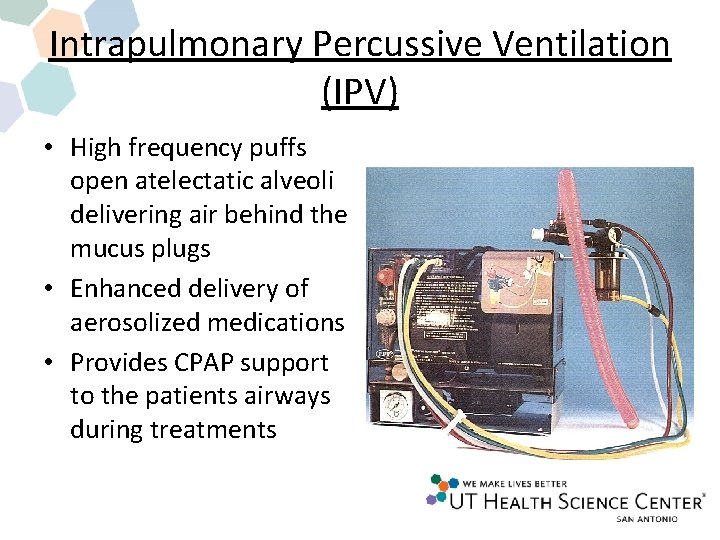
Intrapulmonary Percussive Ventilation (IPV) • High frequency puffs open atelectatic alveoli delivering air behind the mucus plugs • Enhanced delivery of aerosolized medications • Provides CPAP support to the patients airways during treatments
Tricks for IPV • Can be used inline with vent or with mouthpiece or mask • Always use no less than 12 ml of liquid in system for effective treatment • Pucker up lips to make check muscles taunt and prevent check puffs • Never put inhaled antibiotics in the system • Adjust pressures to achieve an adequate pulse power to mobilize secretions
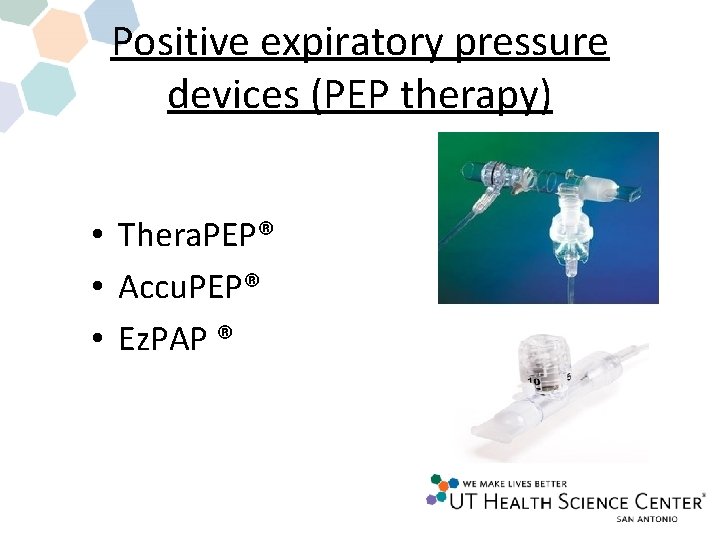
Positive expiratory pressure devices (PEP therapy) • Thera. PEP® • Accu. PEP® • Ez. PAP ®
PEP therapy • Uses a simple flow resistor device which the patient breathes out of 5 -20 times • By exhaling through the device, a positive pressure (back pressure) is created in the airways helping small airways and aveoli open up • Vibrations create airflow that help to loosen secretions from the bronchial walls
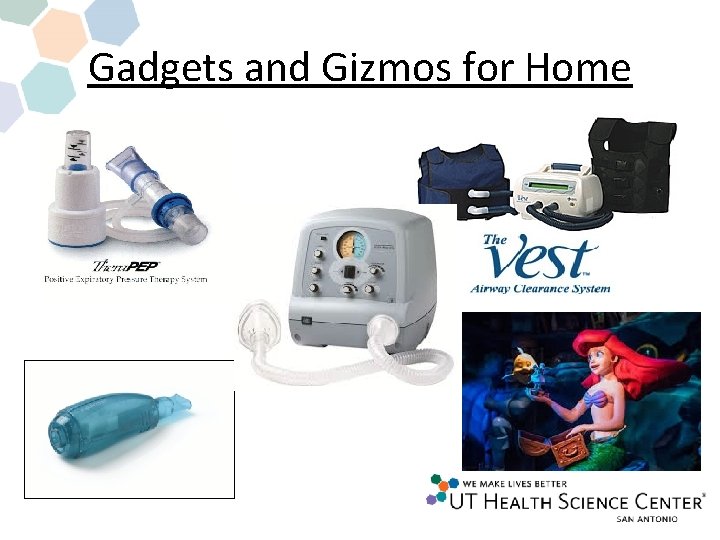
Gadgets and Gizmos for Home
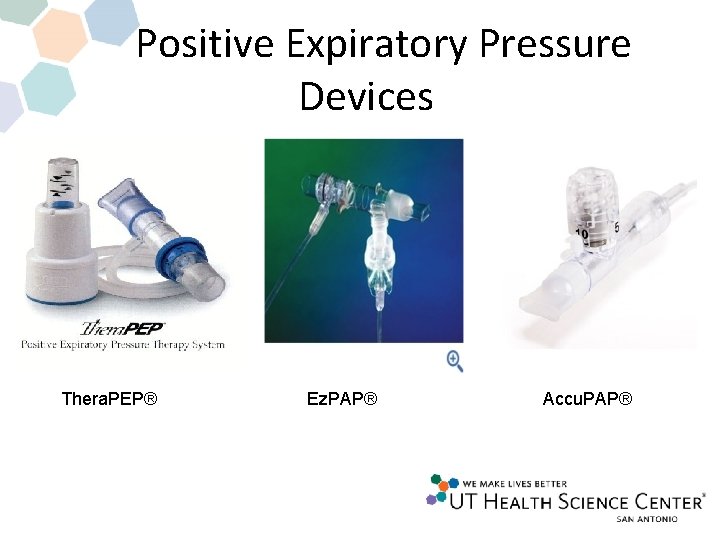
Positive Expiratory Pressure Devices Thera. PEP® Ez. PAP® Accu. PAP®
Positive Expiratory Pressure (PEP) • Thera. PEP® application – Patient slowly inspires to vital capacity then holds his breath for 3 seconds. Then slowly exhales through the mouthpiece with a fixed resister creating an expiratory pressure resistance between 10 -20 cm H 2 O. – The breathing maneuver is repeated 10 -20 times, followed by a “huff” or forced exhalation.
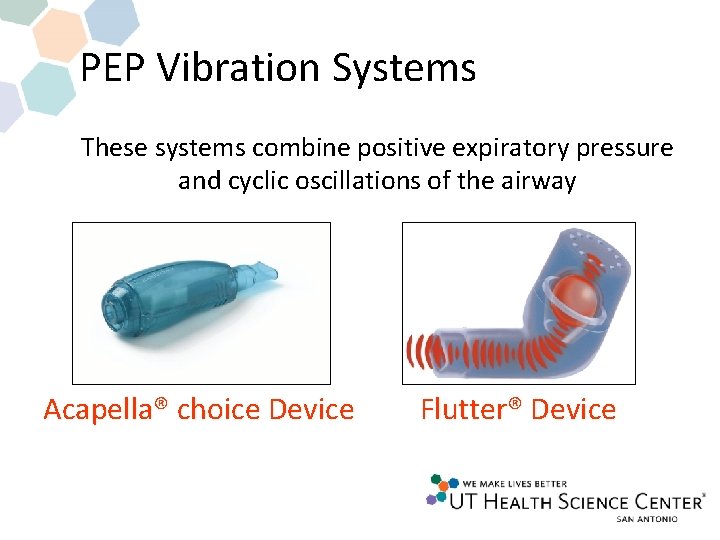
PEP Vibration Systems These systems combine positive expiratory pressure and cyclic oscillations of the airway Acapella® choice Device Flutter® Device
PEP Vibration Systems • Application – The patient is instructed to inhale deeply and hold his breath for 3 seconds. – Exhale slowly through the devise, which causes positive pressure. The vibrations created helps loosen secretions. – Routinely, three sets of 15 exhalations are performed over 15 -20 minutes.
PEP Vibration Systems • Huff Coughing: • Take a breath that is slightly deeper than normal. • Use your stomach muscles to make a series of 3 rapid exhalations with the airway open, making a "ha, ha" sound. • Follow this by controlled diaphragmatic breathing and a deep cough if you feel mucus moving.
Positive Expiratory Pressure (PEP) • Advantages – Independence to patients – Convenient and Easy to use – Can be used simultaneous with nebulizer • Disadvantages – Limited by age – Dependent of patient effort – Cleaning required after each use
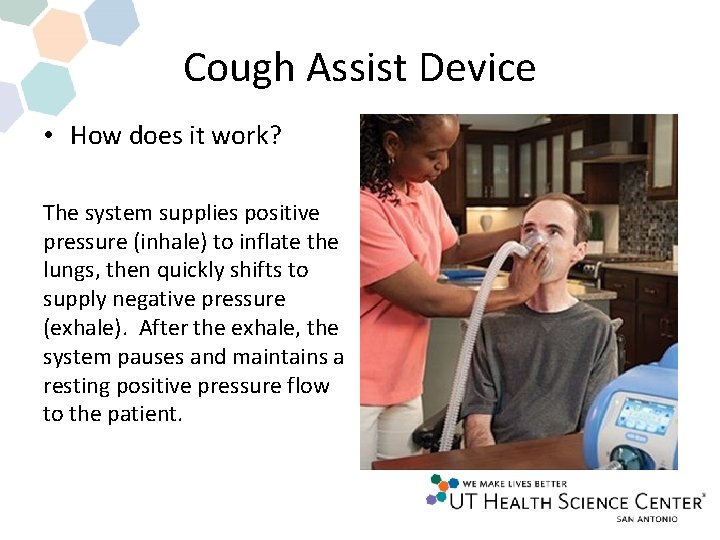
Cough Assist Device • How does it work? The system supplies positive pressure (inhale) to inflate the lungs, then quickly shifts to supply negative pressure (exhale). After the exhale, the system pauses and maintains a resting positive pressure flow to the patient.
Diseases benefiting from a Cough Assist Device • Duchane’s Muscular Dystrophy • SMA • Cerebral palsy • Neuromuscular Diseases • Children with neurological devastation
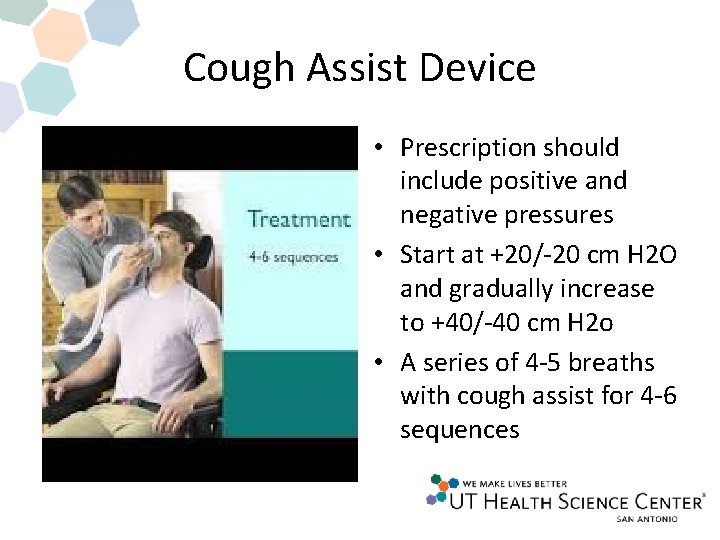
Cough Assist Device • Prescription should include positive and negative pressures • Start at +20/-20 cm H 2 O and gradually increase to +40/-40 cm H 2 o • A series of 4 -5 breaths with cough assist for 4 -6 sequences
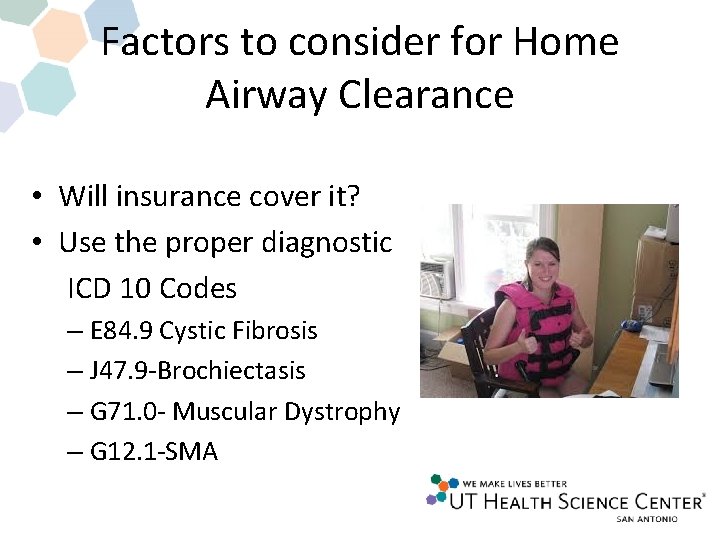
Factors to consider for Home Airway Clearance • Will insurance cover it? • Use the proper diagnostic ICD 10 Codes – E 84. 9 Cystic Fibrosis – J 47. 9 -Brochiectasis – G 71. 0 - Muscular Dystrophy – G 12. 1 -SMA
How do I get a device for my patient? ? ? • Prescription forms- usually located on the companies websites • Letters of Medical Necessity • Lots and lots of clinical documentation – Hospitalizations – Antibiotics use – Failure of lesser expensive options
Things to consider for Home Airway Clearance • Provide patient/family with a well and sick plan • Plans should include order of therapies • SABA, 3% or 7% saline with airway clearance, followed by inhaled antibiotic and/or inhaled corticosteroids. • Well plan is usually BID and sick plan is every 4 -6 hours
Things to consider for Home Airway Clearance • Airway clearance on a full stomach may cause vomiting. • To prevent this from happening do it: – Before a meal – 2 hours after meals – Bedtime
Considerations regarding airway clearance therapies in Infants and children • Airway clearance performed in a head-down position aggravates reflux. • The small infant may not have adequate musculoskeletal support to resist injury from CPT. • Behavioral issues
Questions? ?
References • Schechter, M. (2007). Airway clearance applications in infants and children. Respiratory Care, 52(10), 1382 -1391. • Walsch, B. Hood, K. & Merritt, G. (2011). Pediatric airway maintenance and clearance in the acute care setting: how to stay out of trouble. Respiratory Care, 56(9), 1424 -1434. • Boundless. “The Mechanics of Human Breathing. ” Boundless Biology. Boundless, 08 Jan. 2016. Retrieved 30 Jan. 2016 from https: //www. boundless. com/biology/textbooks/boundless-biologytextbook/the-respiratory-system-39/breathing-221/the-mechanics-ofhuman-breathing-838 -12083/ • Bach JR. Mechanical insufflation/exsufflation: has it come of age? A commentary. Eur Respir J. 2003; 21: 385 -386.