
G Nicole Sinclair MD Pediatric Critical Care Medicine
- Slides: 26
G Nicole Sinclair, MD Pediatric Critical Care Medicine Covenant Health. Care/ Central Michigan University PEDIATRIC TRAUMATIC BRAIN INJURY AND MECHANICAL VENTILATION: UNDER PRESSURE
Objectives � Understand the epidemiology of lung injury following a brain trauma. � Understand the effect lung injury has on the neurologic outcome in TBI. � Discuss the concept of “brain-lung crosstalk”. � Discuss the impact of PEEP and tidal volume on the injured brain. � Role of HFOV and nitric oxide.
Pediatric Traumatic Brain Injury (TBI) � Almost half a million ER visits for TBI annually in children aged 0 -14 years (CDC, 2010). � Five times as many children die from TBI than from cancer (Murphy, 2011). � TBI is the leading cause of mortality in children > 1 year of age (Murphy, 2011). � TBI leads to long term cognitive and behavioral problems.
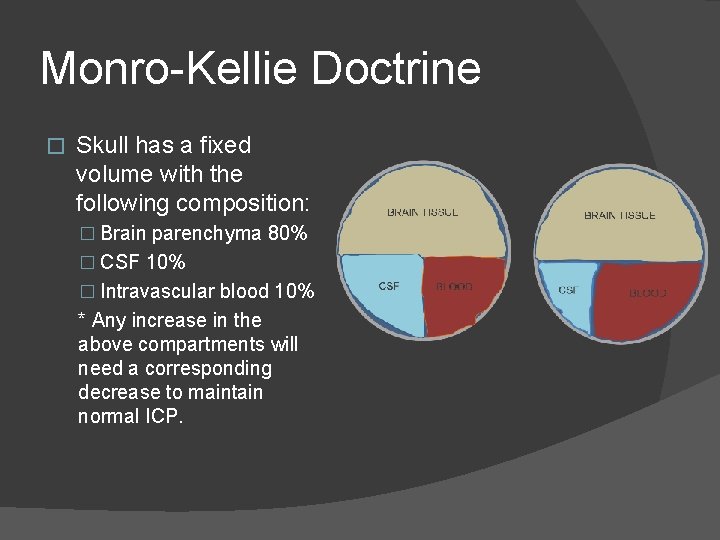
Monro-Kellie Doctrine � Skull has a fixed volume with the following composition: � Brain parenchyma 80% � CSF 10% � Intravascular blood 10% * Any increase in the above compartments will need a corresponding decrease to maintain normal ICP.
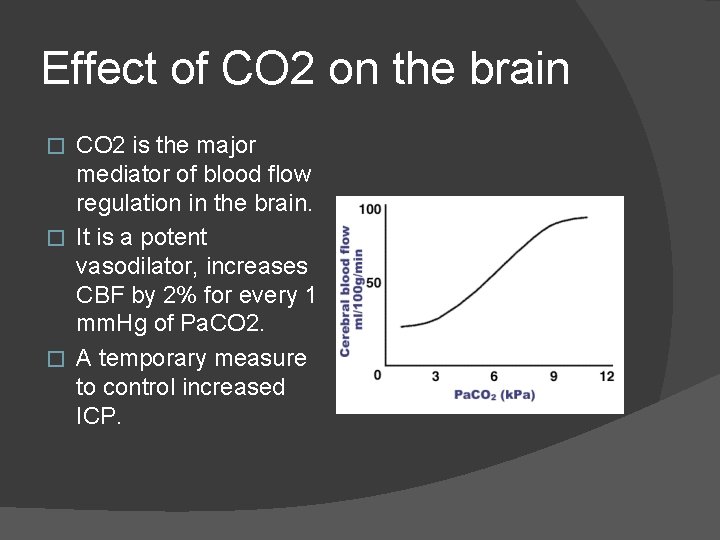
Effect of CO 2 on the brain CO 2 is the major mediator of blood flow regulation in the brain. � It is a potent vasodilator, increases CBF by 2% for every 1 mm. Hg of Pa. CO 2. � A temporary measure to control increased ICP. �
Hyperventilation has been used for ICP control since the 1970’s. � In 2012, Guidelines for the Medical Management of Severe Traumatic Brain Injury for Infants, Children, and Adolescents was released and advised against the use of routine hyperventilation. � Reduction in CBF may affect both the damaged and intact areas of the brain leading to poorer outcomes. �
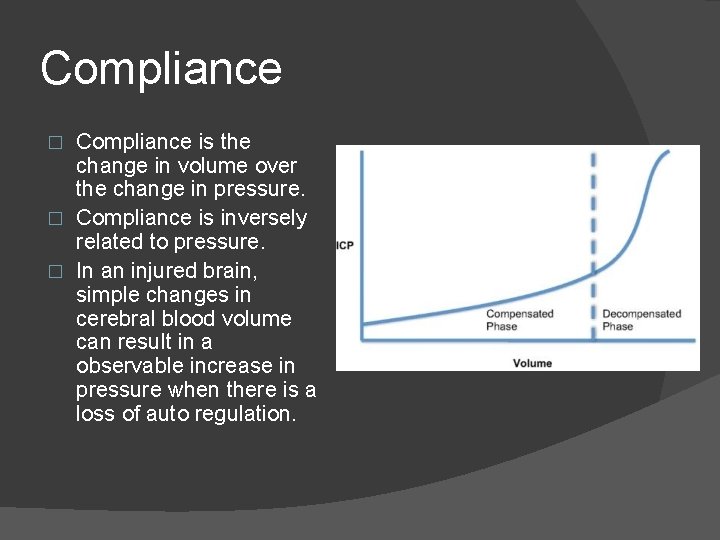
Compliance is the change in volume over the change in pressure. � Compliance is inversely related to pressure. � In an injured brain, simple changes in cerebral blood volume can result in a observable increase in pressure when there is a loss of auto regulation. �
What is unique in pediatric TBI? � Mechanisms differ by age �Toddlers-School age > falls �Older children-Adolescents > bike and MVA � Inflicted brain injury �Acceleration-deceleration forces �Subdural hemorrhage, retinal hemorrhage, and encephalopathy � Age related responses to injury
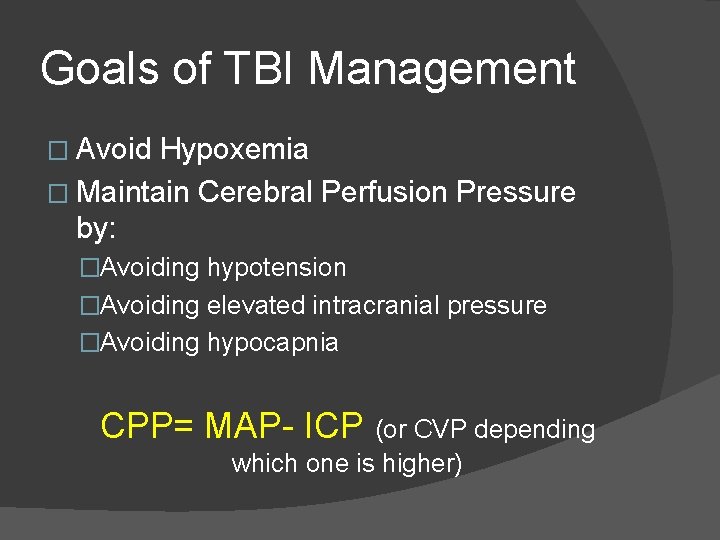
Goals of TBI Management � Avoid Hypoxemia � Maintain Cerebral Perfusion Pressure by: �Avoiding hypotension �Avoiding elevated intracranial pressure �Avoiding hypocapnia CPP= MAP- ICP (or CVP depending which one is higher)
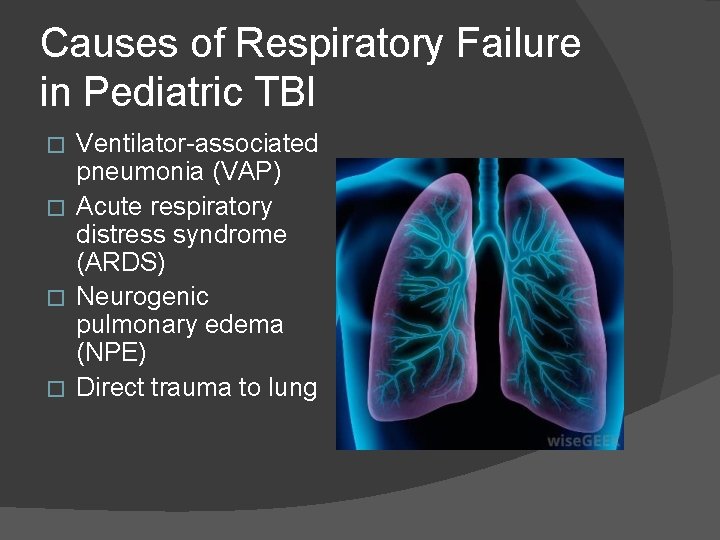
Causes of Respiratory Failure in Pediatric TBI Ventilator-associated pneumonia (VAP) � Acute respiratory distress syndrome (ARDS) � Neurogenic pulmonary edema (NPE) � Direct trauma to lung �
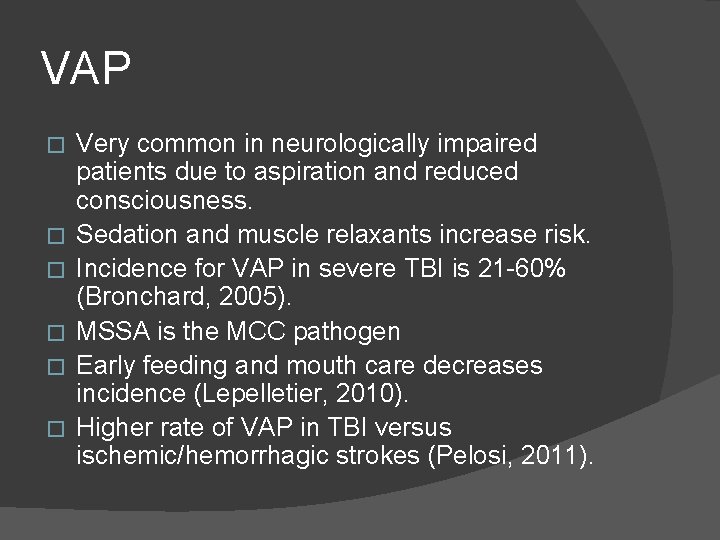
VAP � � � Very common in neurologically impaired patients due to aspiration and reduced consciousness. Sedation and muscle relaxants increase risk. Incidence for VAP in severe TBI is 21 -60% (Bronchard, 2005). MSSA is the MCC pathogen Early feeding and mouth care decreases incidence (Lepelletier, 2010). Higher rate of VAP in TBI versus ischemic/hemorrhagic strokes (Pelosi, 2011).
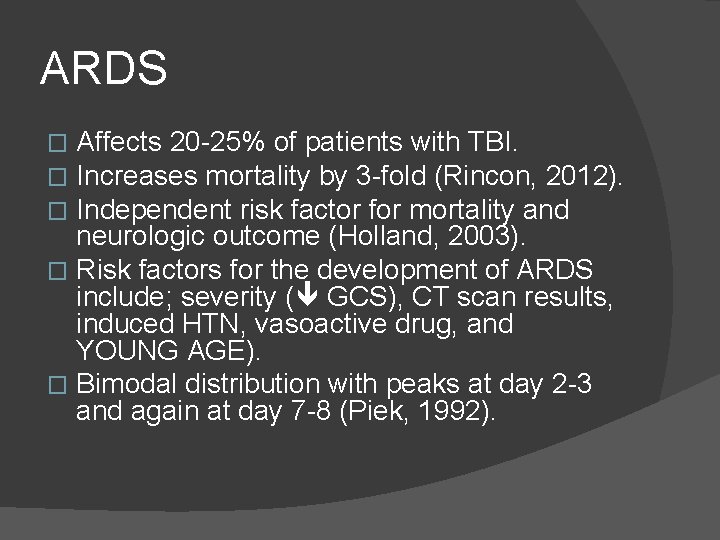
ARDS Affects 20 -25% of patients with TBI. Increases mortality by 3 -fold (Rincon, 2012). Independent risk factor for mortality and neurologic outcome (Holland, 2003). � Risk factors for the development of ARDS include; severity ( GCS), CT scan results, induced HTN, vasoactive drug, and YOUNG AGE). � Bimodal distribution with peaks at day 2 -3 and again at day 7 -8 (Piek, 1992). � � �
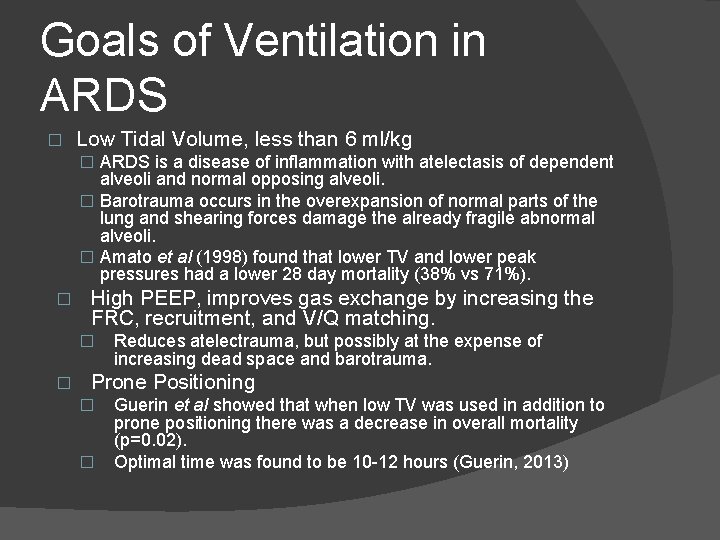
Goals of Ventilation in ARDS � Low Tidal Volume, less than 6 ml/kg � ARDS is a disease of inflammation with atelectasis of dependent alveoli and normal opposing alveoli. � Barotrauma occurs in the overexpansion of normal parts of the lung and shearing forces damage the already fragile abnormal alveoli. � Amato et al (1998) found that lower TV and lower peak pressures had a lower 28 day mortality (38% vs 71%). � High PEEP, improves gas exchange by increasing the FRC, recruitment, and V/Q matching. � � Reduces atelectrauma, but possibly at the expense of increasing dead space and barotrauma. Prone Positioning � � Guerin et al showed that when low TV was used in addition to prone positioning there was a decrease in overall mortality (p=0. 02). Optimal time was found to be 10 -12 hours (Guerin, 2013)
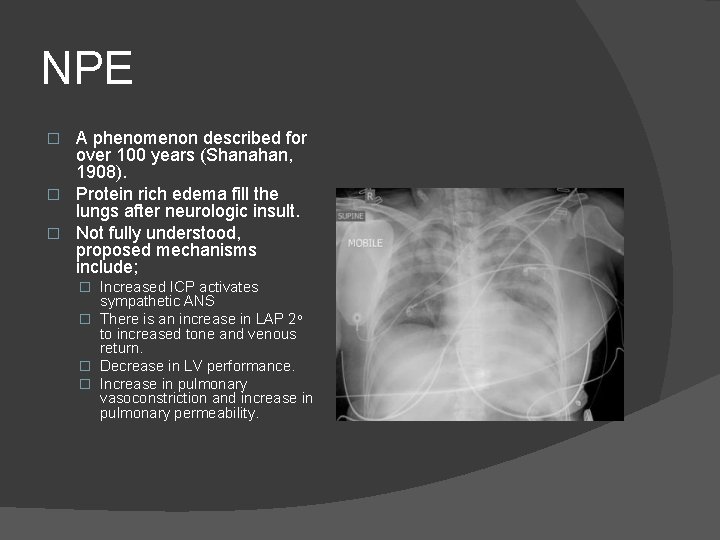
NPE A phenomenon described for over 100 years (Shanahan, 1908). � Protein rich edema fill the lungs after neurologic insult. � Not fully understood, proposed mechanisms include; � � Increased ICP activates sympathetic ANS � There is an increase in LAP 2 o to increased tone and venous return. � Decrease in LV performance. � Increase in pulmonary vasoconstriction and increase in pulmonary permeability.
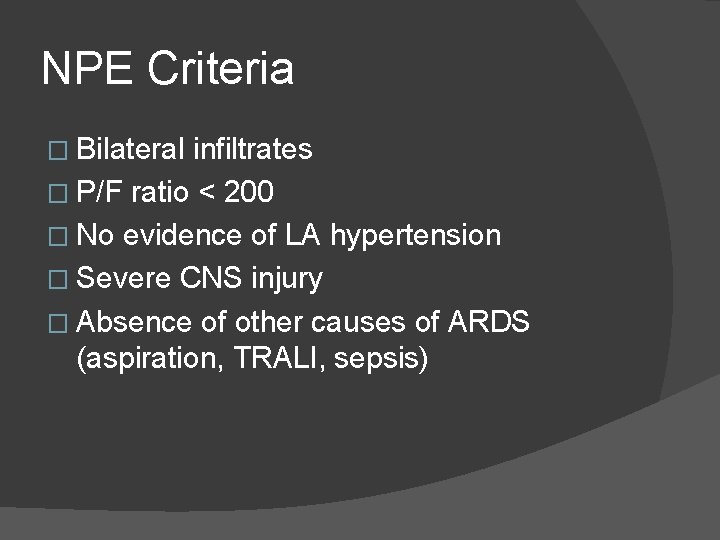
NPE Criteria � Bilateral infiltrates � P/F ratio < 200 � No evidence of LA hypertension � Severe CNS injury � Absence of other causes of ARDS (aspiration, TRALI, sepsis)
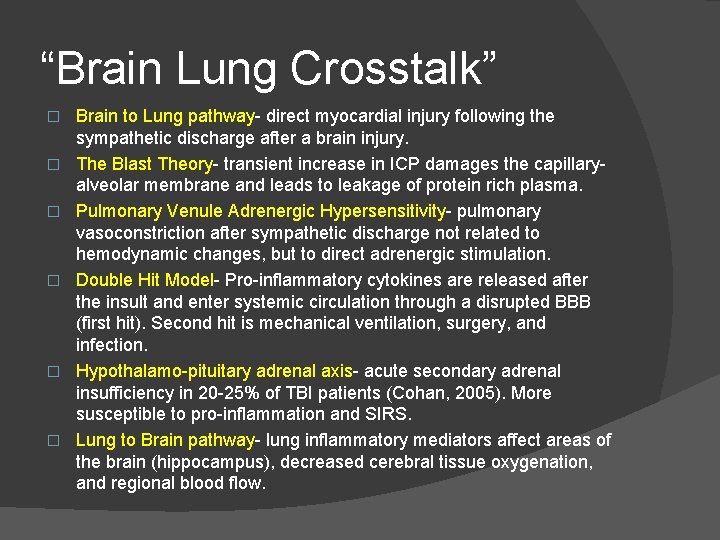
“Brain Lung Crosstalk” � � � Brain to Lung pathway- direct myocardial injury following the sympathetic discharge after a brain injury. The Blast Theory- transient increase in ICP damages the capillaryalveolar membrane and leads to leakage of protein rich plasma. Pulmonary Venule Adrenergic Hypersensitivity- pulmonary vasoconstriction after sympathetic discharge not related to hemodynamic changes, but to direct adrenergic stimulation. Double Hit Model- Pro-inflammatory cytokines are released after the insult and enter systemic circulation through a disrupted BBB (first hit). Second hit is mechanical ventilation, surgery, and infection. Hypothalamo-pituitary adrenal axis- acute secondary adrenal insufficiency in 20 -25% of TBI patients (Cohan, 2005). More susceptible to pro-inflammation and SIRS. Lung to Brain pathway- lung inflammatory mediators affect areas of the brain (hippocampus), decreased cerebral tissue oxygenation, and regional blood flow.
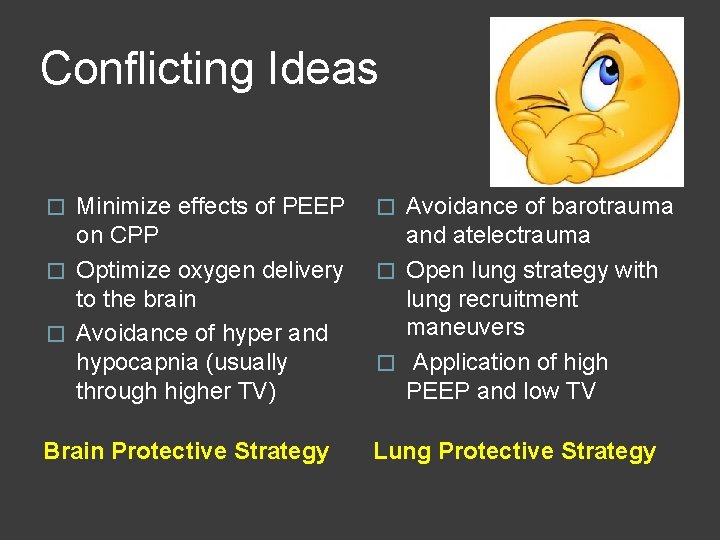
Conflicting Ideas � Minimize effects of PEEP on CPP � Optimize oxygen delivery to the brain � Avoidance of hyper and hypocapnia (usually through higher TV) � Avoidance of barotrauma and atelectrauma � Open lung strategy with lung recruitment maneuvers � Application of high PEEP and low TV Brain Protective Strategy Lung Protective Strategy
So what’s the problem with PEEP? � Decreases venous drainage from superior veins. � Increases intrathoracic pressure. � Decreases cardiac output BUT, is this what studies have shown? ? ?
Studies Examining Use of PEEP in Brain Injury � � � Frost (1977) showed that PEEP from 5 to 20 cm H 2 O did not increase ICP after continuous use. In 2 patients PEEP at 40 cm H 2 O was held for 15 min with only a slight increase in PEEP (12%, statistically insignificant). No difference was found in low vs moderate compliant brains. CVP and PAWP increased in all patients, cardiac output varied. All patients had marked improvement in arterial oxygenation.
Studies Examining Use of PEEP in Brain Injury � Nemer et al (2015) applied PEEP levels of 5, 10, and 15 cm H 2 O progressively. � Brain tissue oxygen pressure and saturation increased significantly. � ICP and CPP did not differ significantly with increasing PEEP from 5 -10 (p=0. 16 and 10 -15 cm H 2 O (p=0. 79).
Measures that can Reduce Impact of PEEP Maintain MAP with fluid status and blood pressure support. � Head of the bed elevated to 30 -45 degrees to promote venous drainage. �
So what’s the problem with high tidal volume? � Higher tidal volumes are used TBI avoid hypercapnia and subsequent vasodilatation. � ARDS trials have shown that permissive hypercapnia is lung protective with improved mortality. Many of the large studies excluded patients with raised ICP. � ARMA, ALVEOLI, and LOVS studies had normal CO 2 for the first few days.
Approach to Tidal Volume in TBI � Use lung protective strategies with tidal volumes 6 ml/kg and low plateau pressures. � Closely monitor ICP and Pa. CO 2. � Improve ventilation through: �Decreasing dead space �Maximizing effective tidal volume, NG decompression, draining effusions, sedation, proper tube size and cuff pressure.
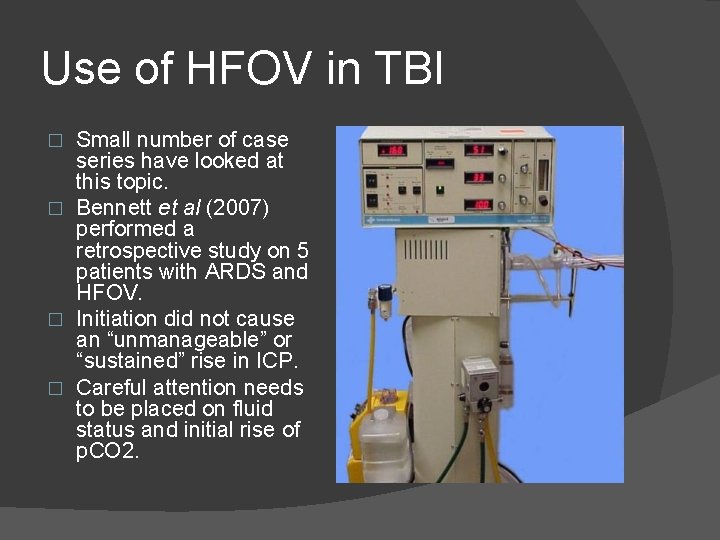
Use of HFOV in TBI Small number of case series have looked at this topic. � Bennett et al (2007) performed a retrospective study on 5 patients with ARDS and HFOV. � Initiation did not cause an “unmanageable” or “sustained” rise in ICP. � Careful attention needs to be placed on fluid status and initial rise of p. CO 2. �
Use of Nitric Oxide in TBI NO has been FDAapproved for neonatal respiratory failure. � Potent vasodilator and improves pulmonary blood flow. � Some studies have suggested that inhaled NO improved collateral circulation and outcomes in TBI models (Terpolilli et al, 2013). �
Summary TBI is a common cause of injury in children and respiratory failure is common in TBI. � Management focuses maintaining cerebral perfusion and controlling intracranial pressure. � Normocapnia is ideal, hypocapnia is harmful. � There is no need to choose between brain vs lung protective strategies: � �PEEP appears safe if needed �Low tidal volumes safe as well, as long as CO 2 can be controlled.