
G 2 Biomes EQ Why are species where
G 2 Biomes EQ: Why are species where they are?
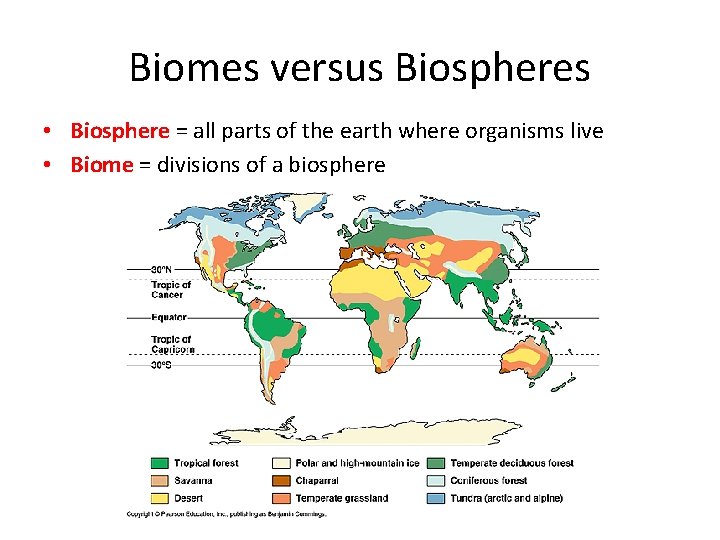
Biomes versus Biospheres • Biosphere = all parts of the earth where organisms live • Biome = divisions of a biosphere
Biomes mini presentation • Major biomes: desert, grassland, shrubland, temperate deciduous forest, tropical forest, tundra Find the: • Location • Temperature (average in degree C in summer/winter) • Moisture (annual precipitation (cm/year)) • Characteristics of vegetation and animals • Environmental challenges facing the biome • Have visuals to aid your presentation! On FRIDAY
G 2 Biomes EQ: Why are species where they are? TODAY: 1. In your blog: what are some things that you like about the class? What are some things that you would like to see/do more? 2. This week’s feedback distributer: Maria C.

Biomes mini presentation • Major biomes: desert, grassland, shrubland, temperate deciduous forest, tropical forest, tundra Find the: • Location • Temperature (average in degree C in summer/winter) • Moisture (annual precipitation (cm/year)) • Characteristics of vegetation and animals • Environmental challenges facing the biome • Have visuals to aid your presentation! TODAY?
G 2 Biomes EQ: Why are species where they are? TODAY 1. In your blog: What are some parts of the lab which you think you did well on? What are some areas which you struggled? ANNOUCEMENTS Lab Learning log
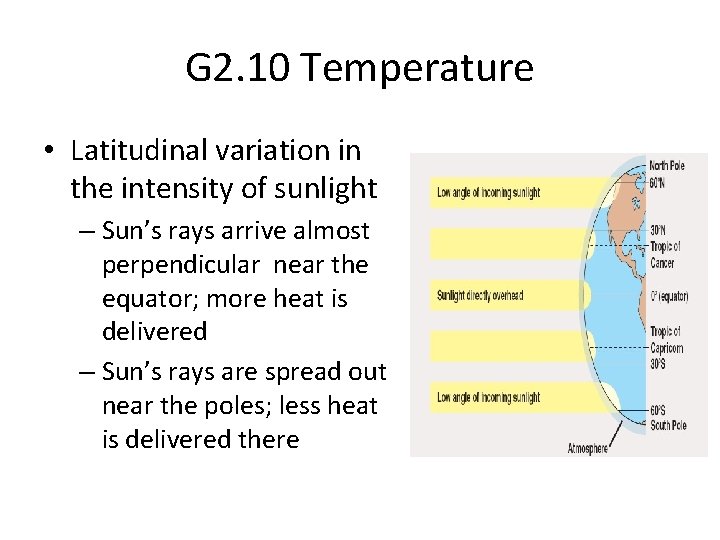
G 2. 10 Temperature • Latitudinal variation in the intensity of sunlight – Sun’s rays arrive almost perpendicular near the equator; more heat is delivered – Sun’s rays are spread out near the poles; less heat is delivered there
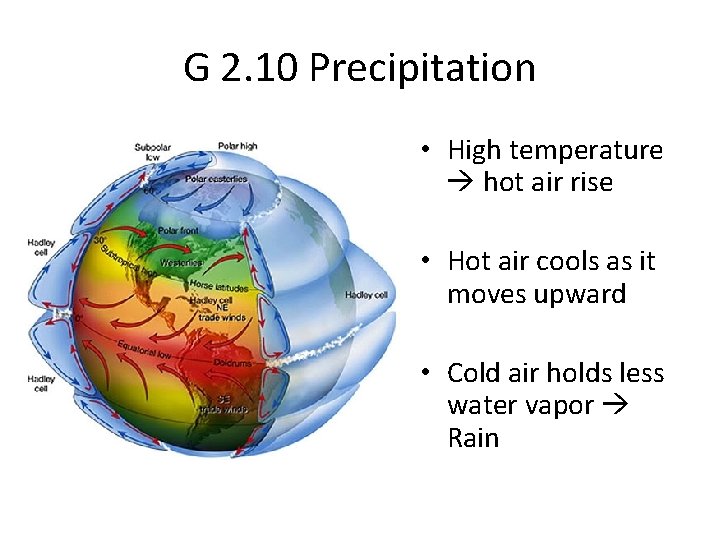
G 2. 10 Precipitation • High temperature hot air rise • Hot air cools as it moves upward • Cold air holds less water vapor Rain
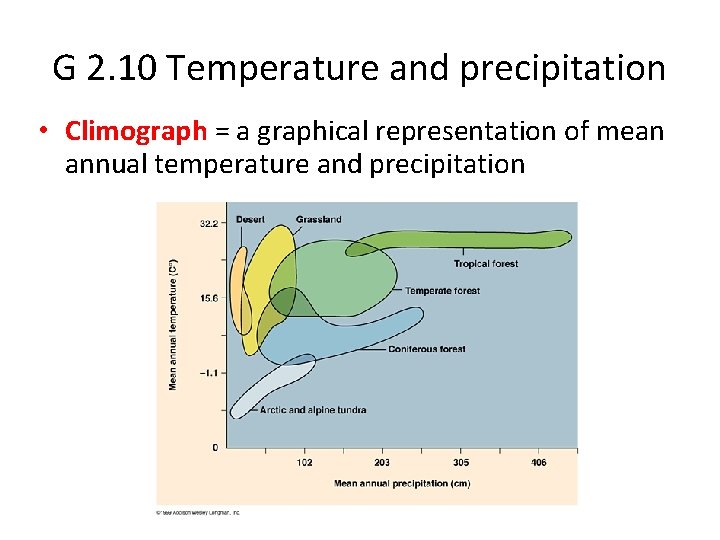
G 2. 10 Temperature and precipitation • Climograph = a graphical representation of mean annual temperature and precipitation
Correlation or causation?
Correlation! • Precipitation and temperature are not the only factors which affect the distribution of a species – E. g. soil nutrient availability can affect vegetation • Climographs are based on averages – Some areas may get regular precipitation throughout the year, while others with same annual precipitation have wet and dry seasons
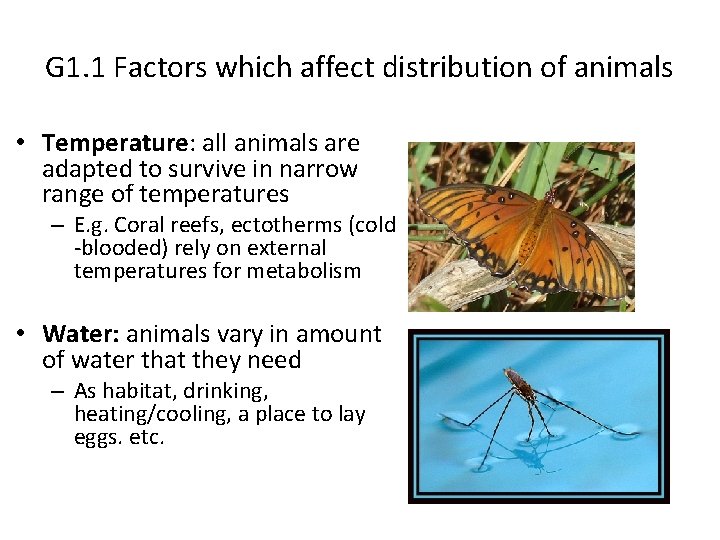
G 1. 1 Factors which affect distribution of animals • Temperature: all animals are adapted to survive in narrow range of temperatures – E. g. Coral reefs, ectotherms (cold -blooded) rely on external temperatures for metabolism • Water: animals vary in amount of water that they need – As habitat, drinking, heating/cooling, a place to lay eggs. etc.
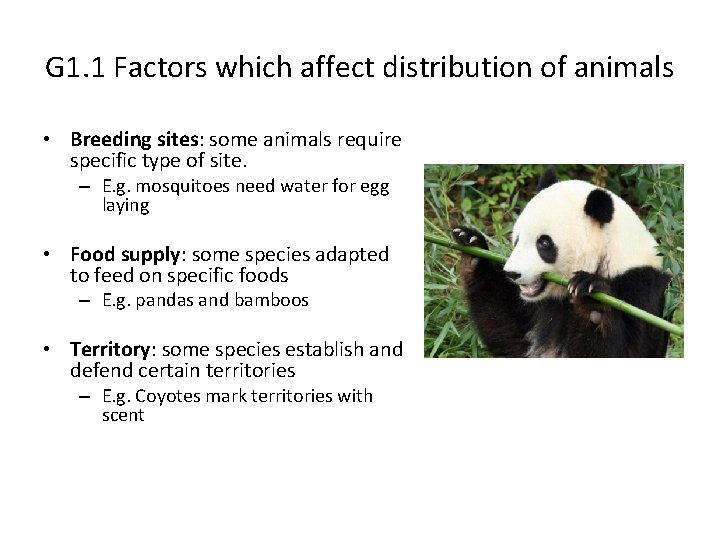
G 1. 1 Factors which affect distribution of animals • Breeding sites: some animals require specific type of site. – E. g. mosquitoes need water for egg laying • Food supply: some species adapted to feed on specific foods – E. g. pandas and bamboos • Territory: some species establish and defend certain territories – E. g. Coyotes mark territories with scent
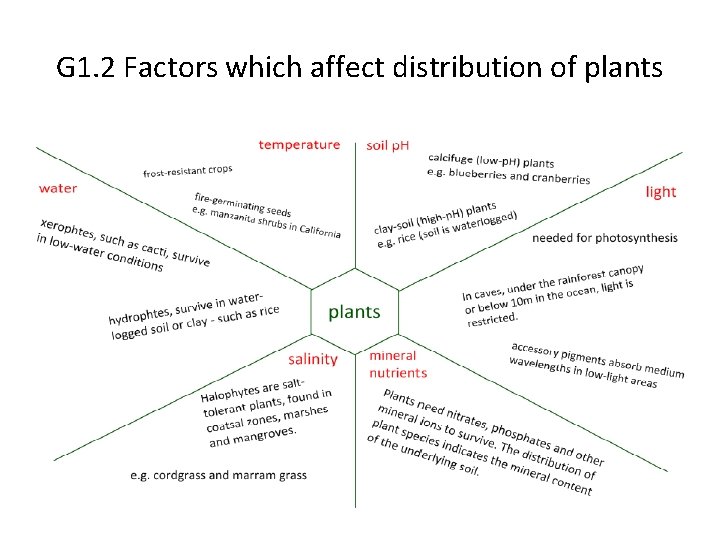
G 1. 2 Factors which affect distribution of plants
To do 1. Share your powepoint on the grade 11 biology google drive. 2. Complete biomes chart 3. Finish
- Slides: 15