
FWPS PBIS Tier 1 Module 6 Using Discipline
FWPS PBIS Tier 1 Module 6: Using Discipline Data for Decision-Making March 29, 2017 Colleen Allen, School Psychologist at FWHS Greg Perkins, Behavior Specialist Erin Hutchinson, Facilitator of Social Emotional Learning *Training adapted from Lori Lynass, Sound Supports LLC & NWPBIS Network, includes information from TFI Cultural Responsiveness Companion
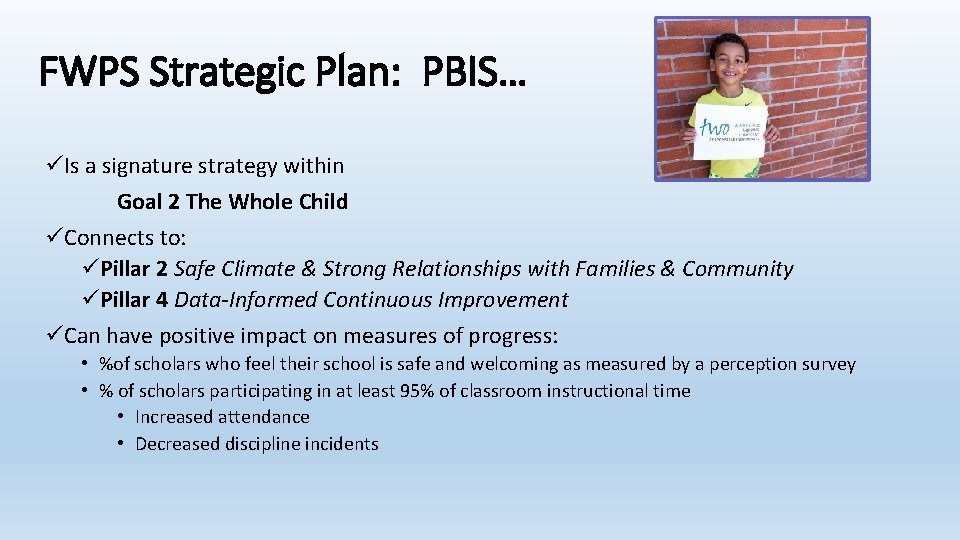
FWPS Strategic Plan: PBIS… üIs a signature strategy within Goal 2 The Whole Child üConnects to: üPillar 2 Safe Climate & Strong Relationships with Families & Community üPillar 4 Data-Informed Continuous Improvement üCan have positive impact on measures of progress: • %of scholars who feel their school is safe and welcoming as measured by a perception survey • % of scholars participating in at least 95% of classroom instructional time • Increased attendance • Decreased discipline incidents
Learning Targets & Success Criteria • Understand the purpose of consistently collecting discipline information, particularly as related to loss of instructional time for scholars. • Consider both examples and non-examples of Culturally-Responsive PBIS with respect to use of discipline data & problem-solving. • Use the Big 5 questions to begin to analyze discipline data at the school level, and identify possible red flags in discipline data. • Introduction to multiple metrics related to identifying disproportionality within discipline data. • Begin to use Team-Initiated Problem-Solving Worksheet to analyze discipline data, identify possible problems, goals, and solutions to implement at the school level.
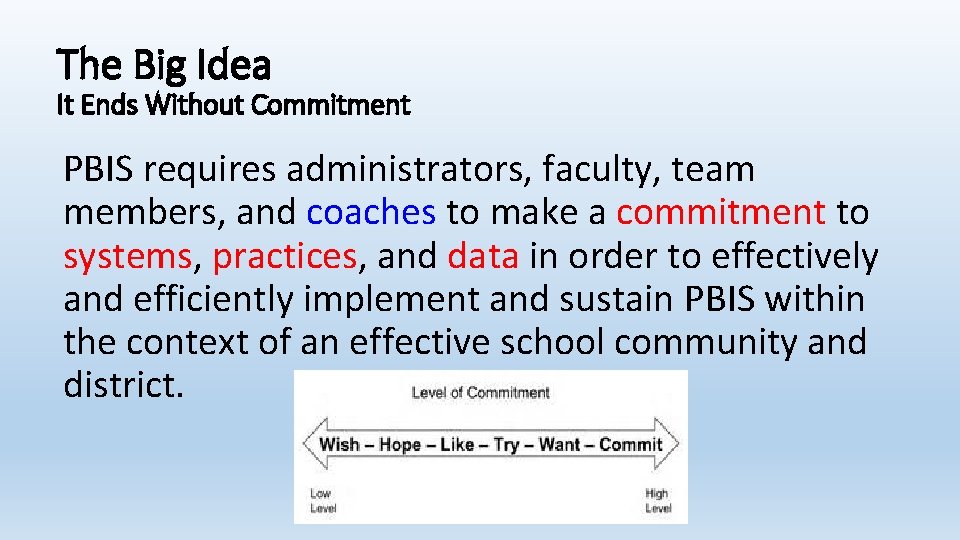
The Big Idea It Ends Without Commitment PBIS requires administrators, faculty, team members, and coaches to make a commitment to systems, practices, and data in order to effectively and efficiently implement and sustain PBIS within the context of an effective school community and district.
Why Collect Discipline Information? Decision-making Professional Accountability Decisions made with data (information) are more likely to be: • (a) implemented, & (b) effective Goal: Consistently log office referrals into Synergy It starts with a good referral form/process! Synonym: Office Referral Form = Time Out of Class Form
1) What is your school’s current practice of entering office referrals (time out of class) into Synergy? 2) What would it take to shift the practice to accurately capture scholar’s lost instructional time due to exclusion from class?
Discipline Data Big Idea in PBIS Culturally Responsive Examples • Teams with access to current and reliable data are able to make more accurate and relevant decisions regarding staff and scholar instruction & support • Disaggregate discipline data regularly • Assess and monitor equity in scholar outcomes • Examine inequitable outcome data from a systems level prior to viewing issues with individual scholar or family
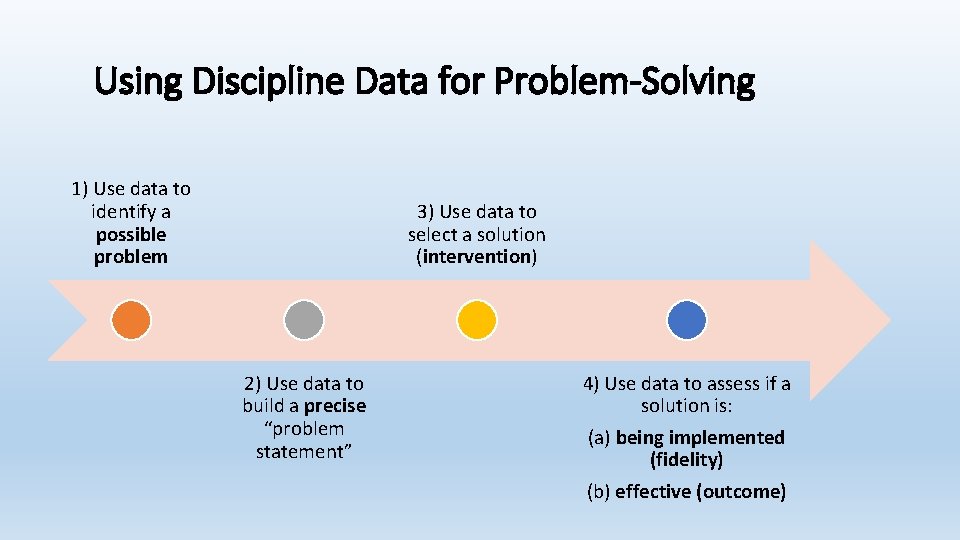
Using Discipline Data for Problem-Solving 1) Use data to identify a possible problem 3) Use data to select a solution (intervention) 2) Use data to build a precise “problem statement” 4) Use data to assess if a solution is: (a) being implemented (fidelity) (b) effective (outcome)
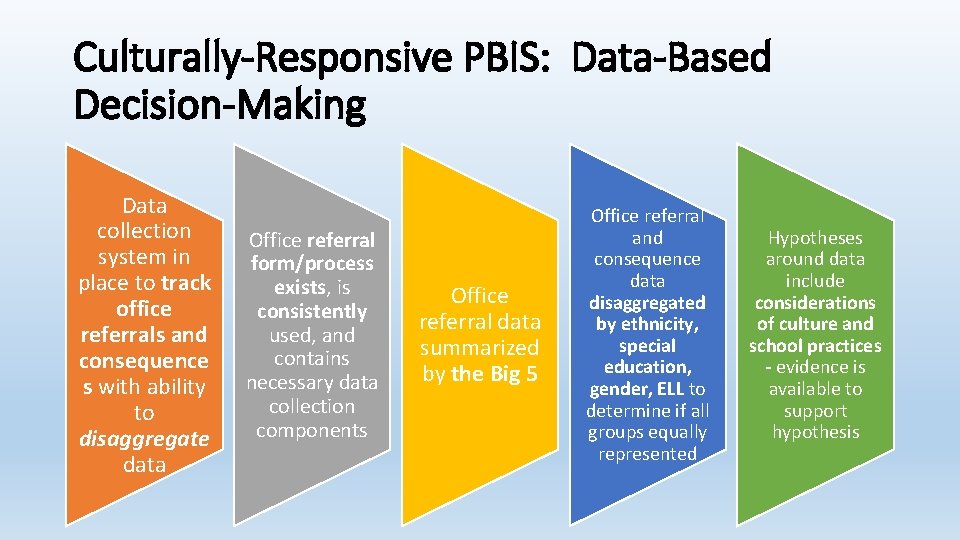
Culturally-Responsive PBIS: Data-Based Decision-Making Data collection system in place to track office referrals and consequence s with ability to disaggregate data Office referral form/process exists, is consistently used, and contains necessary data collection components Office referral data summarized by the Big 5 Office referral and consequence data disaggregated by ethnicity, special education, gender, ELL to determine if all groups equally represented Hypotheses around data include considerations of culture and school practices - evidence is available to support hypothesis
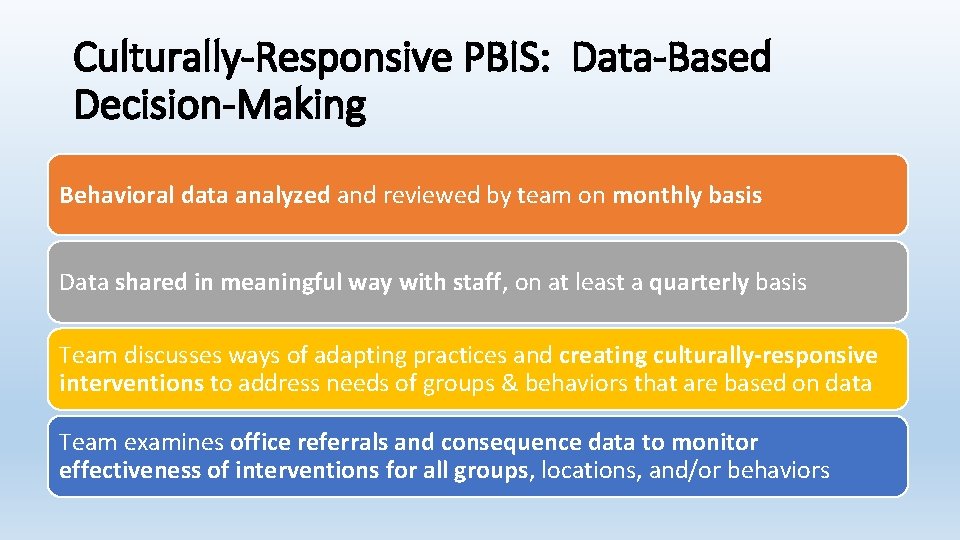
Culturally-Responsive PBIS: Data-Based Decision-Making Behavioral data analyzed and reviewed by team on monthly basis Data shared in meaningful way with staff, on at least a quarterly basis Team discusses ways of adapting practices and creating culturally-responsive interventions to address needs of groups & behaviors that are based on data Team examines office referrals and consequence data to monitor effectiveness of interventions for all groups, locations, and/or behaviors
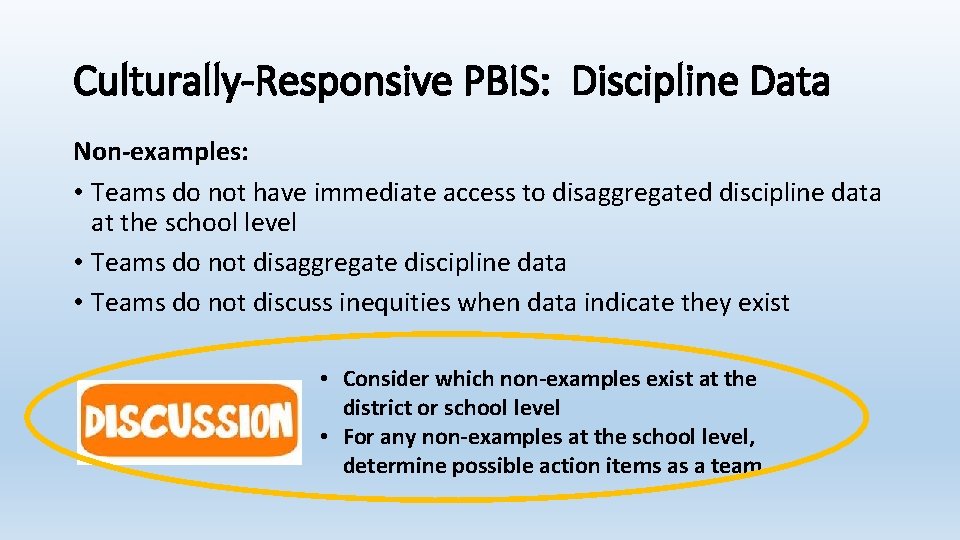
Culturally-Responsive PBIS: Discipline Data Non-examples: • Teams do not have immediate access to disaggregated discipline data at the school level • Teams do not disaggregate discipline data • Teams do not discuss inequities when data indicate they exist • Consider which non-examples exist at the district or school level • For any non-examples at the school level, determine possible action items as a team
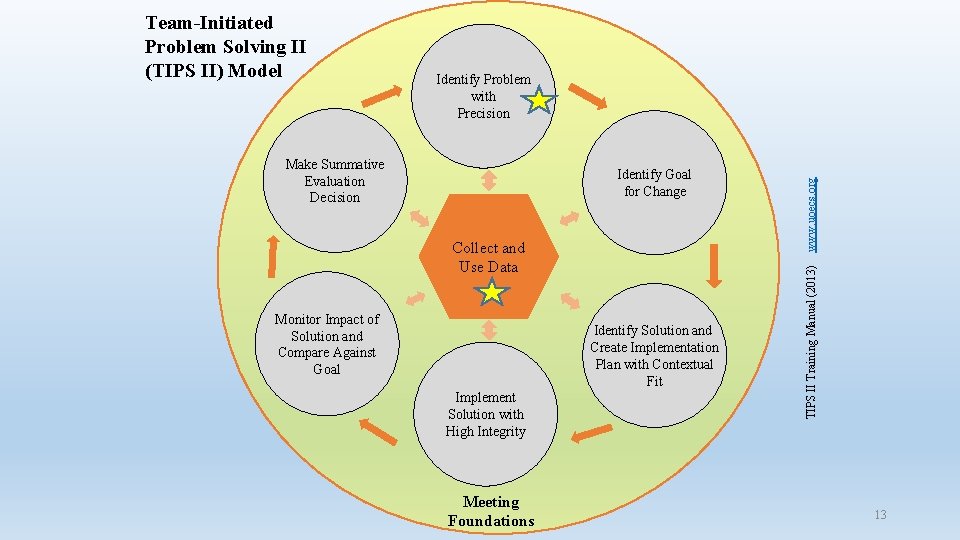
Make Summative Evaluation Decision Identify Goal for Change Collect and Use Data Monitor Impact of Solution and Compare Against Goal Identify Solution and Create Implementation Plan with Contextual Fit Implement Solution with High Integrity Meeting Foundations www. uoecs. org Identify Problem with Precision TIPS II Training Manual (2013) Team-Initiated Problem Solving II (TIPS II) Model 13
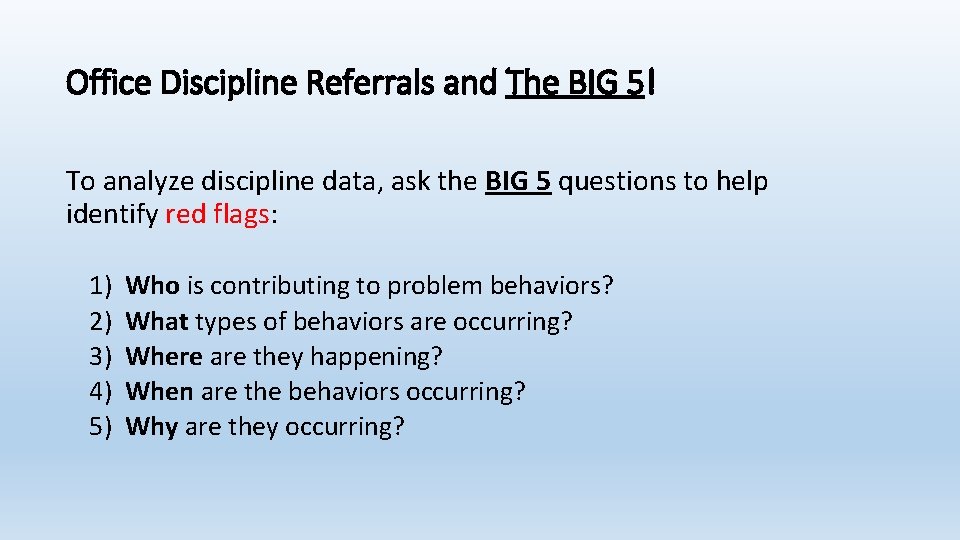
Office Discipline Referrals and The BIG 5! To analyze discipline data, ask the BIG 5 questions to help identify red flags: 1) 2) 3) 4) 5) Who is contributing to problem behaviors? What types of behaviors are occurring? Where are they happening? When are the behaviors occurring? Why are they occurring?
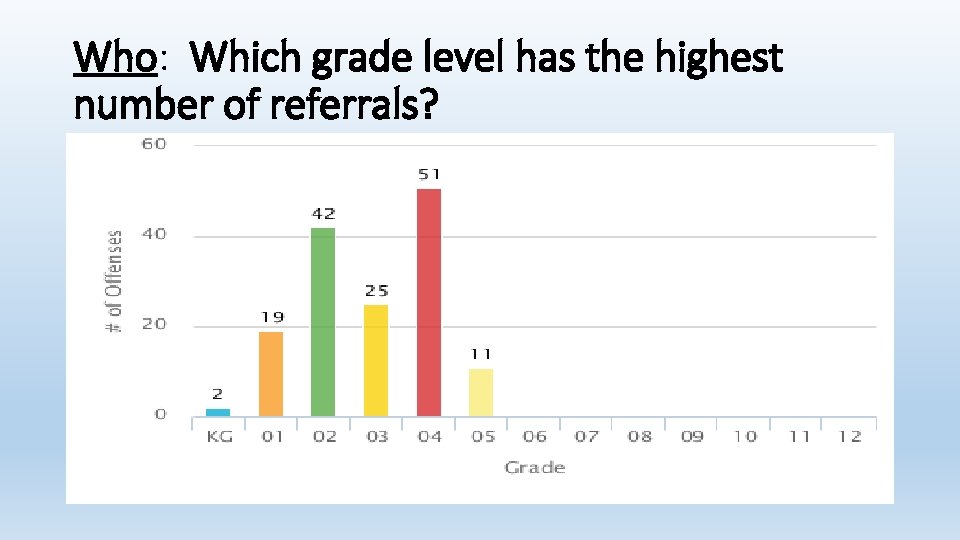
Who: Which grade level has the highest number of referrals?
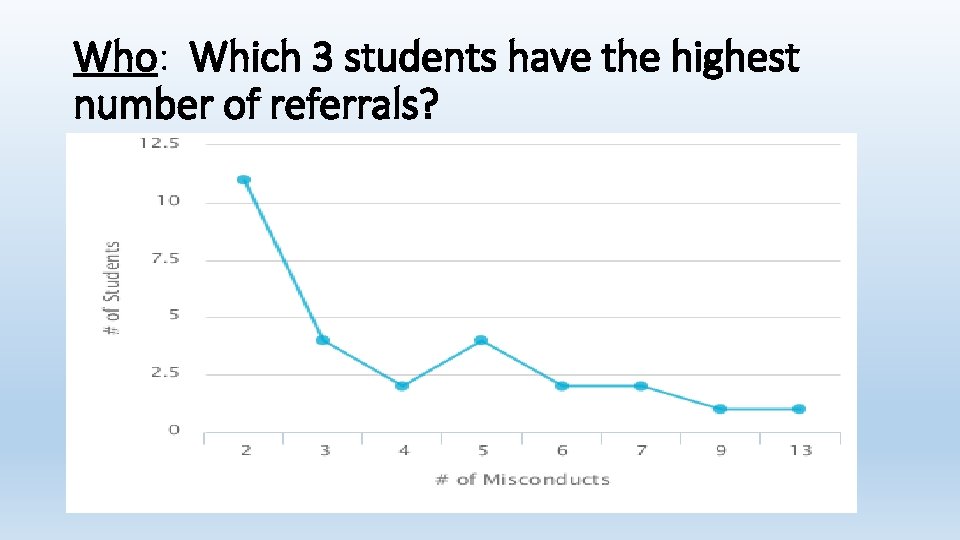
Who: Which 3 students have the highest number of referrals?
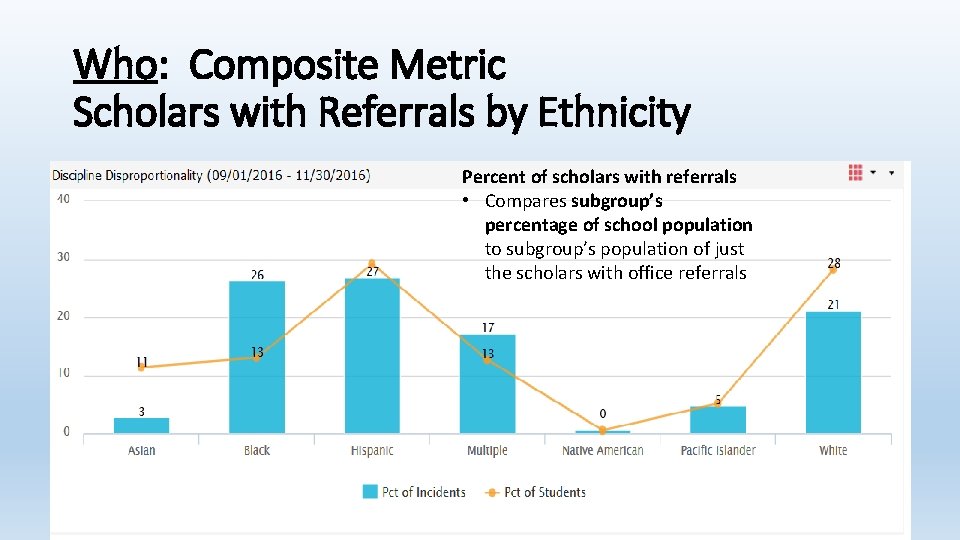
Who: Composite Metric Scholars with Referrals by Ethnicity Percent of scholars with referrals • Compares subgroup’s percentage of school population to subgroup’s population of just the scholars with office referrals
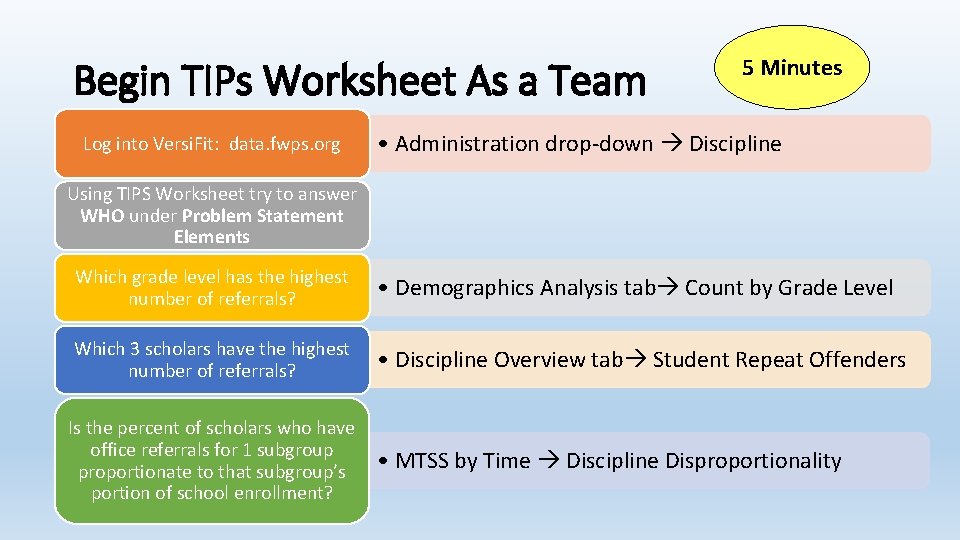
Begin TIPs Worksheet As a Team Log into Versi. Fit: data. fwps. org 5 Minutes • Administration drop-down Discipline Using TIPS Worksheet try to answer WHO under Problem Statement Elements Which grade level has the highest number of referrals? • Demographics Analysis tab Count by Grade Level Which 3 scholars have the highest number of referrals? • Discipline Overview tab Student Repeat Offenders Is the percent of scholars who have office referrals for 1 subgroup proportionate to that subgroup’s portion of school enrollment? • MTSS by Time Discipline Disproportionality
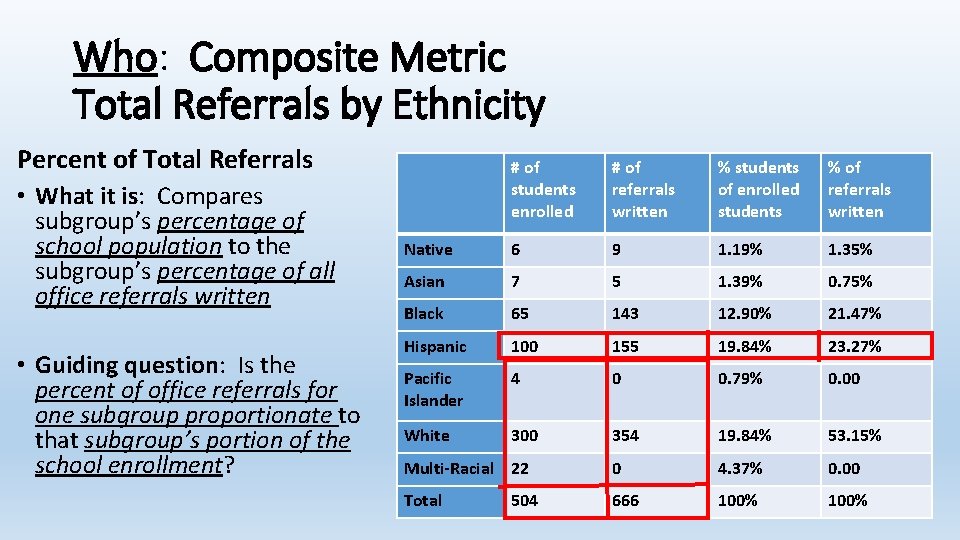
Who: Composite Metric Total Referrals by Ethnicity Percent of Total Referrals • What it is: Compares subgroup’s percentage of school population to the subgroup’s percentage of all office referrals written • Guiding question: Is the percent of office referrals for one subgroup proportionate to that subgroup’s portion of the school enrollment? # of students enrolled # of referrals written % students of enrolled students % of referrals written Native 6 9 1. 19% 1. 35% Asian 7 5 1. 39% 0. 75% Black 65 143 12. 90% 21. 47% Hispanic 100 155 19. 84% 23. 27% Pacific Islander 4 0 0. 79% 0. 00 White 300 354 19. 84% 53. 15% Multi-Racial 22 0 4. 37% 0. 00 Total 666 100% 504
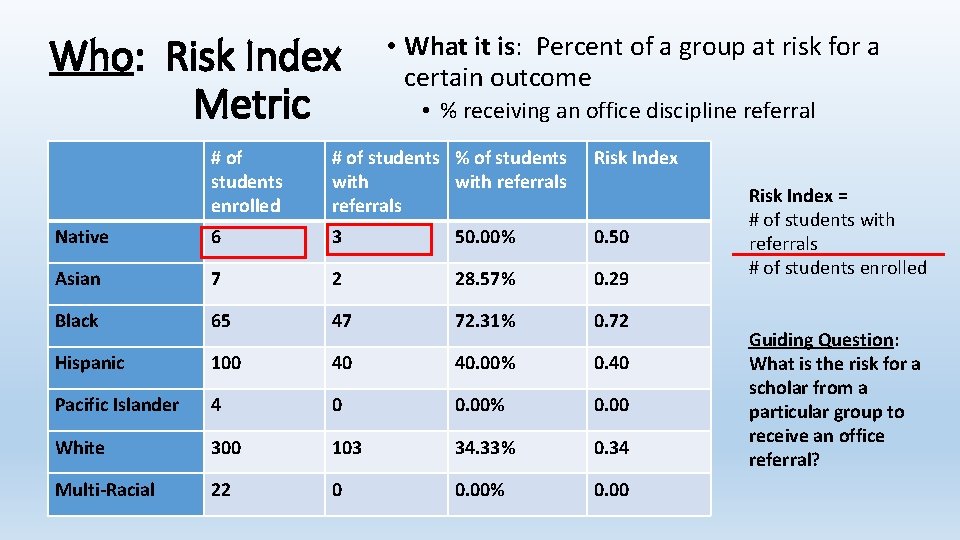
Who: Risk Index Metric • What it is: Percent of a group at risk for a certain outcome • % receiving an office discipline referral # of students enrolled # of students % of students with referrals Risk Index Native 6 3 50. 00% 0. 50 Asian 7 2 28. 57% 0. 29 Black 65 47 72. 31% 0. 72 Hispanic 100 40 40. 00% 0. 40 Pacific Islander 4 0 0. 00% 0. 00 White 300 103 34. 33% 0. 34 Multi-Racial 22 0 0. 00% 0. 00 Risk Index = # of students with referrals # of students enrolled Guiding Question: What is the risk for a scholar from a particular group to receive an office referral?
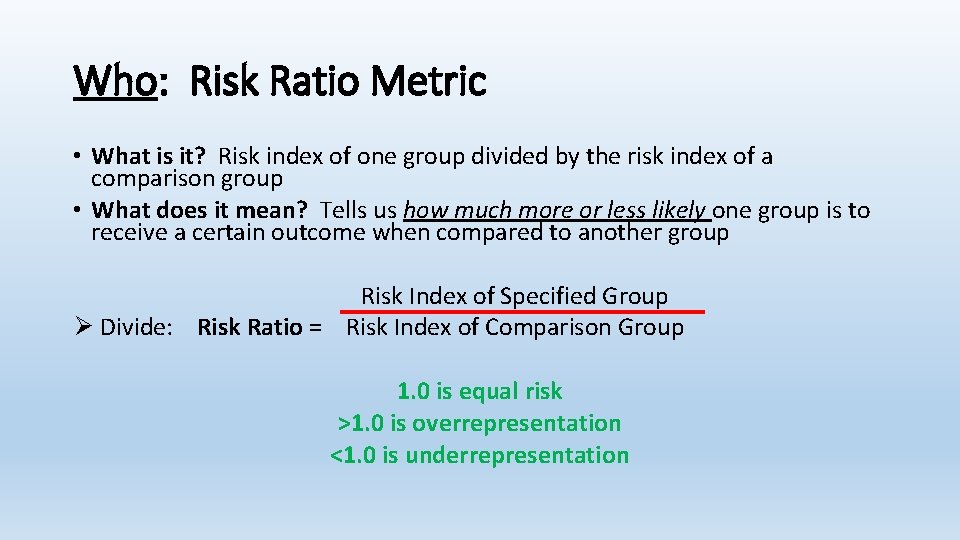
Who: Risk Ratio Metric • What is it? Risk index of one group divided by the risk index of a comparison group • What does it mean? Tells us how much more or less likely one group is to receive a certain outcome when compared to another group Risk Index of Specified Group Ø Divide: Risk Ratio = Risk Index of Comparison Group 1. 0 is equal risk >1. 0 is overrepresentation <1. 0 is underrepresentation
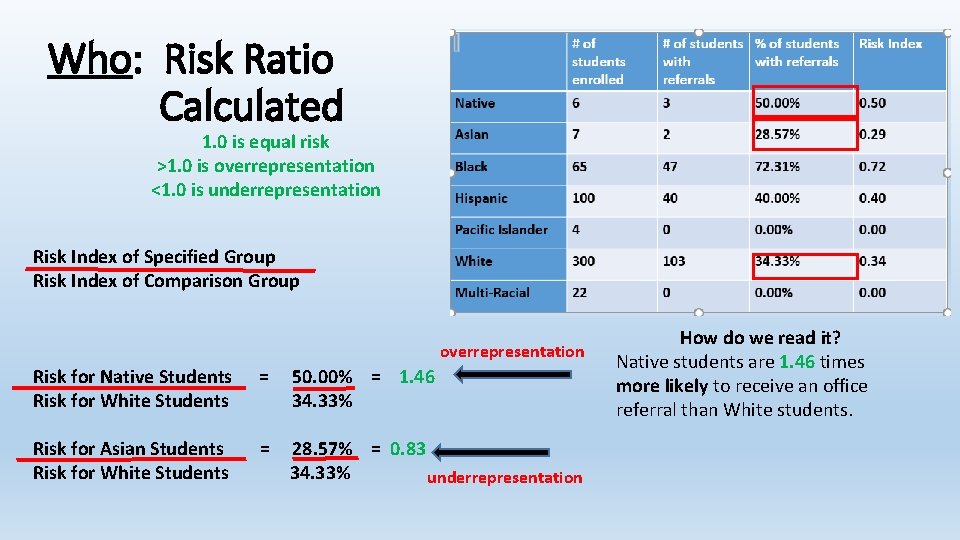
Who: Risk Ratio Calculated 1. 0 is equal risk >1. 0 is overrepresentation <1. 0 is underrepresentation Risk Index of Specified Group Risk Index of Comparison Group overrepresentation Risk for Native Students Risk for White Students = 50. 00% = 1. 46 34. 33% Risk for Asian Students Risk for White Students = 28. 57% = 0. 83 34. 33% underrepresentation How do we read it? Native students are 1. 46 times more likely to receive an office referral than White students.
Why do you think it’s important to have multiple ways to identify potential disproportionality in discipline data?
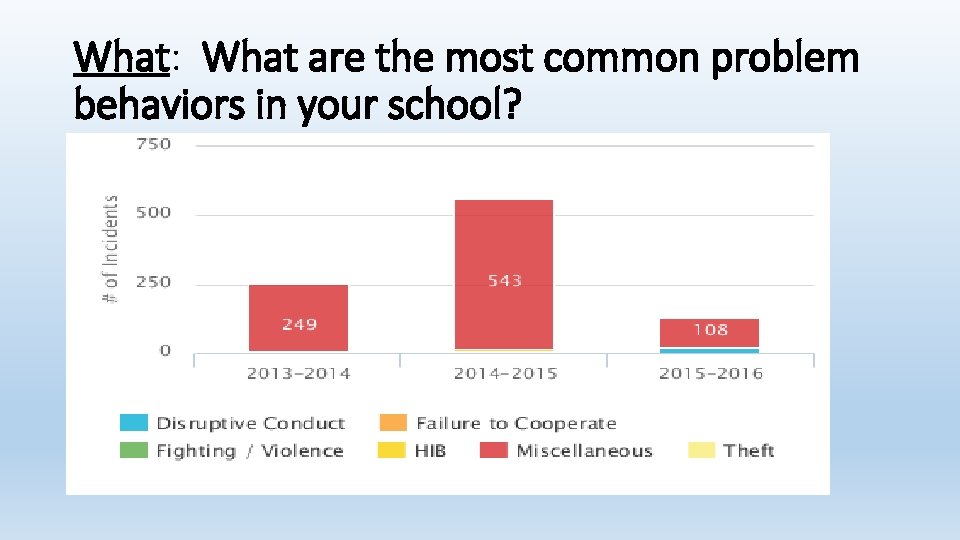
What: What are the most common problem behaviors in your school?
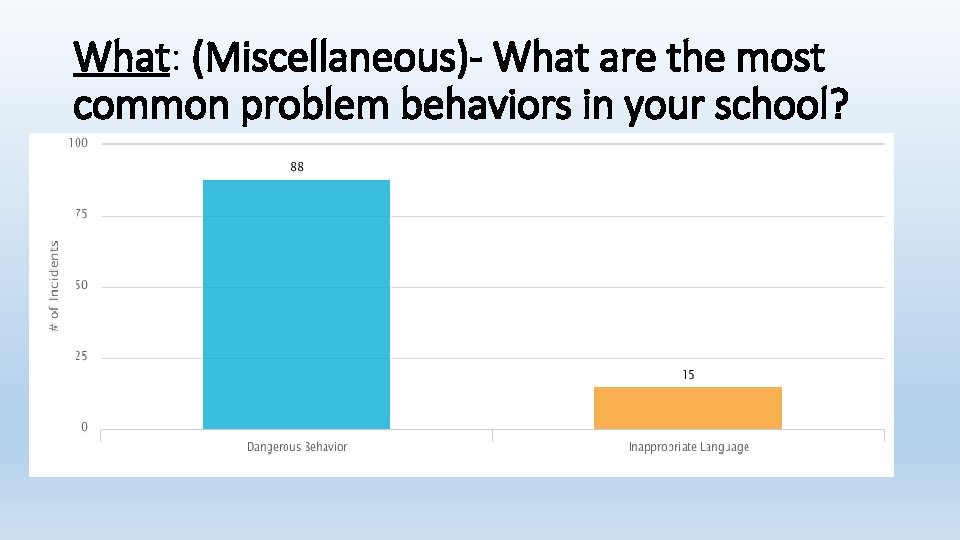
What: (Miscellaneous)- What are the most common problem behaviors in your school?
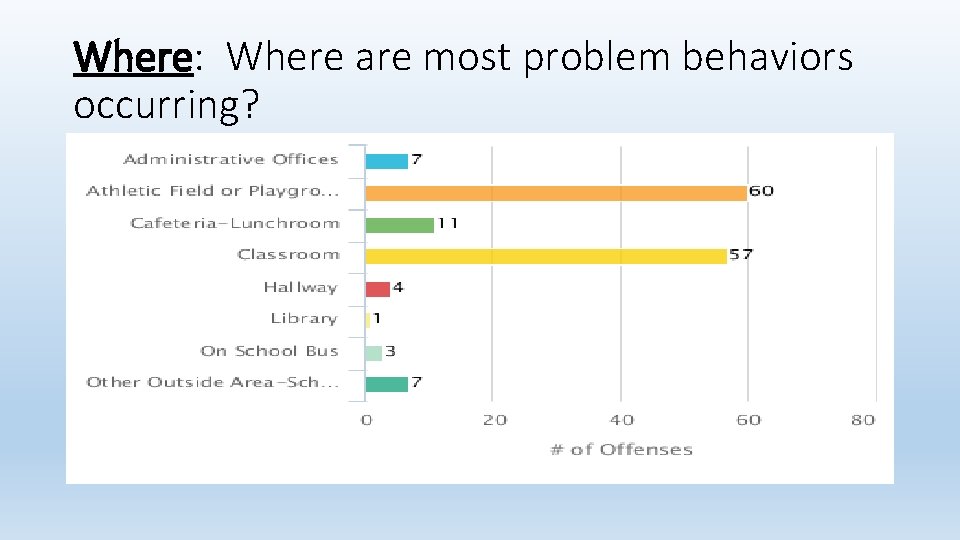
Where: Where are most problem behaviors occurring?
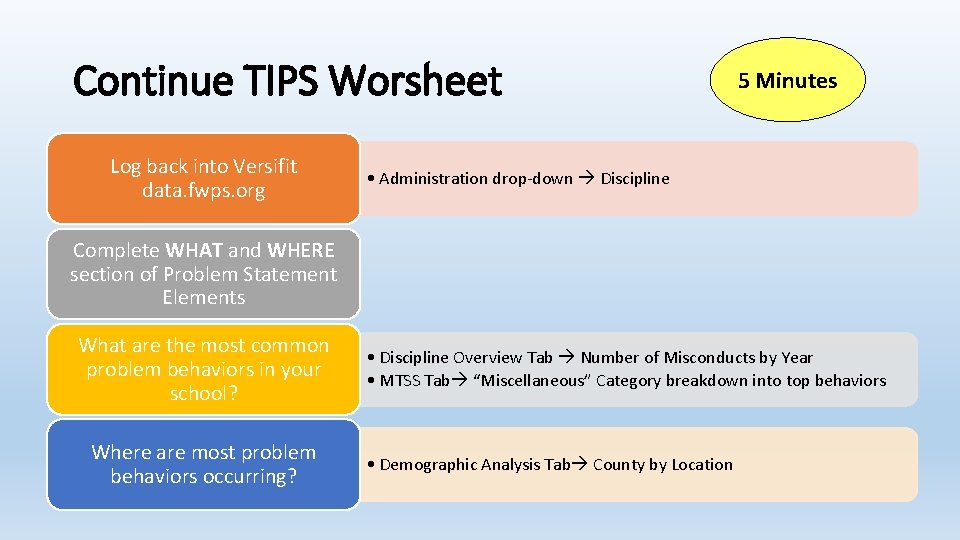
Continue TIPS Worsheet Log back into Versifit data. fwps. org 5 Minutes • Administration drop-down Discipline Complete WHAT and WHERE section of Problem Statement Elements What are the most common problem behaviors in your school? Where are most problem behaviors occurring? • Discipline Overview Tab Number of Misconducts by Year • MTSS Tab “Miscellaneous” Category breakdown into top behaviors • Demographic Analysis Tab County by Location
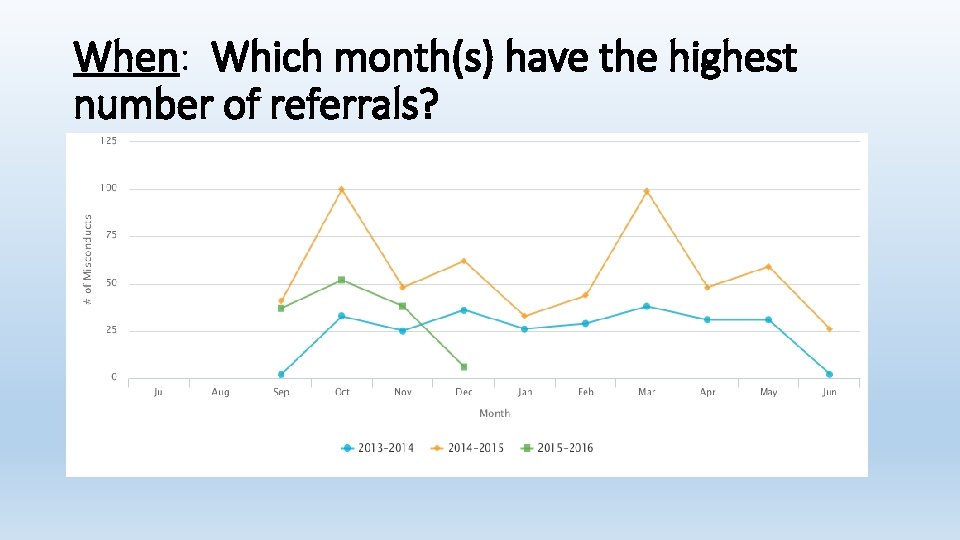
When: Which month(s) have the highest number of referrals?
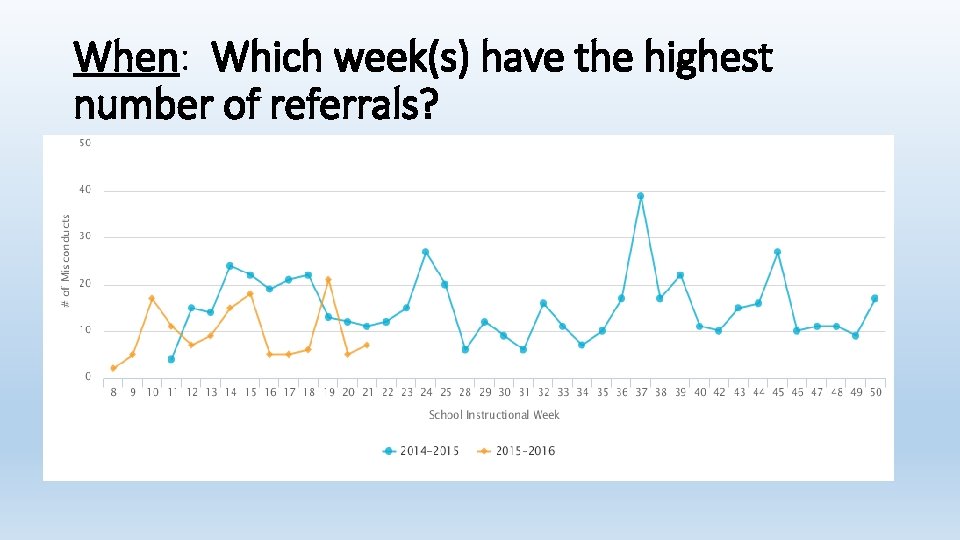
When: Which week(s) have the highest number of referrals?
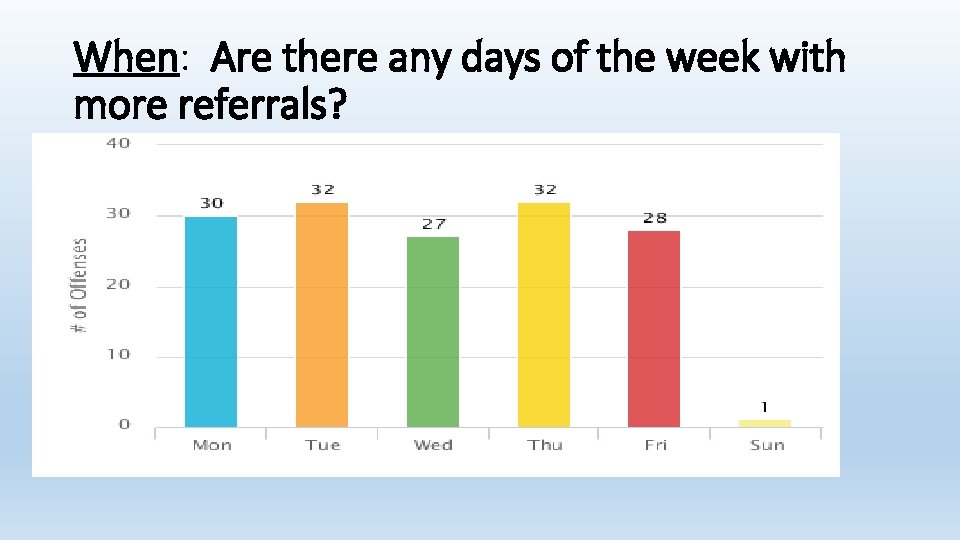
When: Are there any days of the week with more referrals?
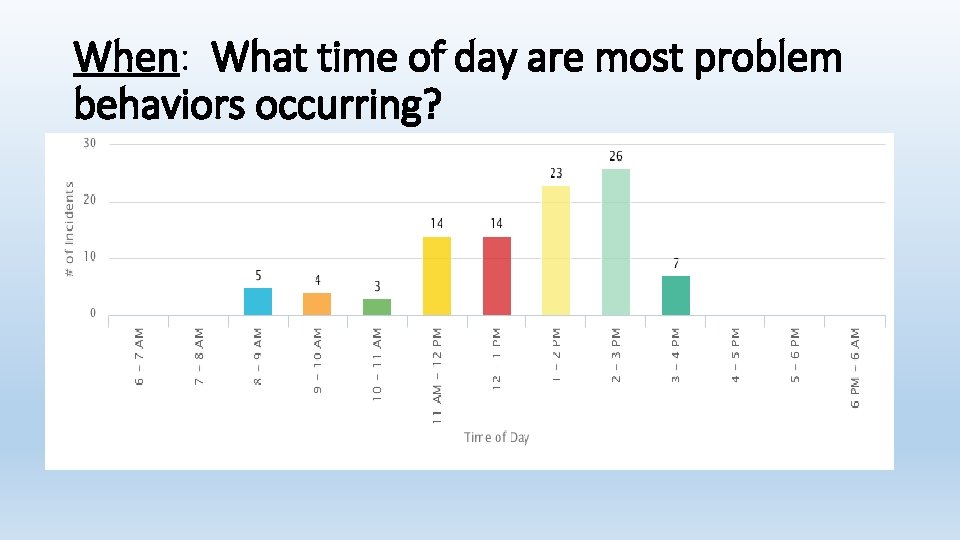
When: What time of day are most problem behaviors occurring?
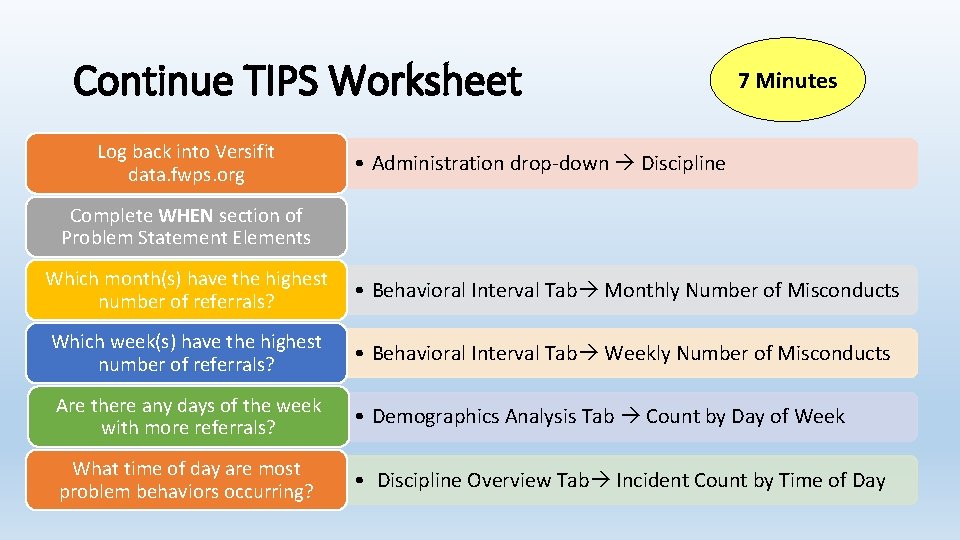
Continue TIPS Worksheet Log back into Versifit data. fwps. org 7 Minutes • Administration drop-down Discipline Complete WHEN section of Problem Statement Elements Which month(s) have the highest number of referrals? • Behavioral Interval Tab Monthly Number of Misconducts Which week(s) have the highest number of referrals? • Behavioral Interval Tab Weekly Number of Misconducts Are there any days of the week with more referrals? • Demographics Analysis Tab Count by Day of Week What time of day are most problem behaviors occurring? • Discipline Overview Tab Incident Count by Time of Day
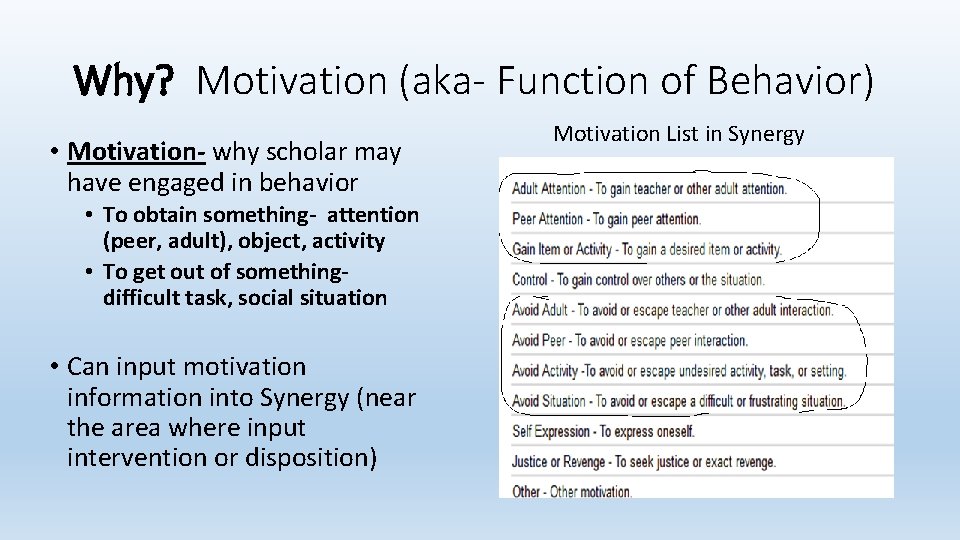
Why? Motivation (aka- Function of Behavior) • Motivation- why scholar may have engaged in behavior • To obtain something- attention (peer, adult), object, activity • To get out of somethingdifficult task, social situation • Can input motivation information into Synergy (near the area where input intervention or disposition) Motivation List in Synergy
Additional Versi. Fit Features: MTSS By Time tab • Put in start and end dates & click on Go to compare various date ranges & Filter by • Location* • Time of Day* • Gender • Race/Ethnicity Discipline Disproportionality • Changes with date ranges put in • Identify if any groups of scholars are over- or underrepresented in discipline data
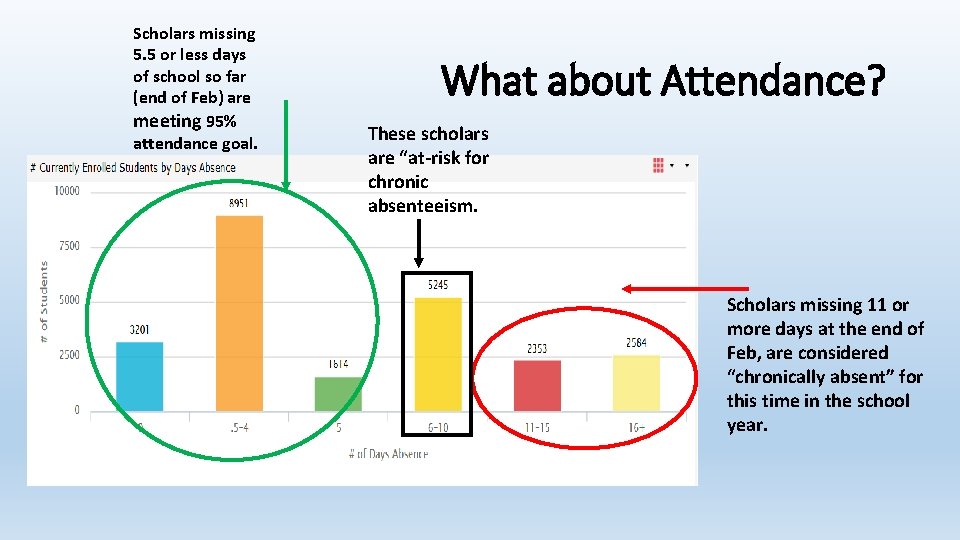
Scholars missing 5. 5 or less days of school so far (end of Feb) are meeting 95% attendance goal. What about Attendance? These scholars are “at-risk for chronic absenteeism. Scholars missing 11 or more days at the end of Feb, are considered “chronically absent” for this time in the school year.
Attendance Data 5 Minutes Log into Versifit & choose your school Go to Administration Drop Down Attendance Monitor As of the of end of Feb: • How many scholars are meeting 95% attendance goal at this point in the school year? (5. 5 or less days absent) • How many scholars are currently “at-risk” for chronic absenteeism? (6 -10 absences) • How many scholars are “chronically absent” at this time in the school year? (missing 11 or more school days)
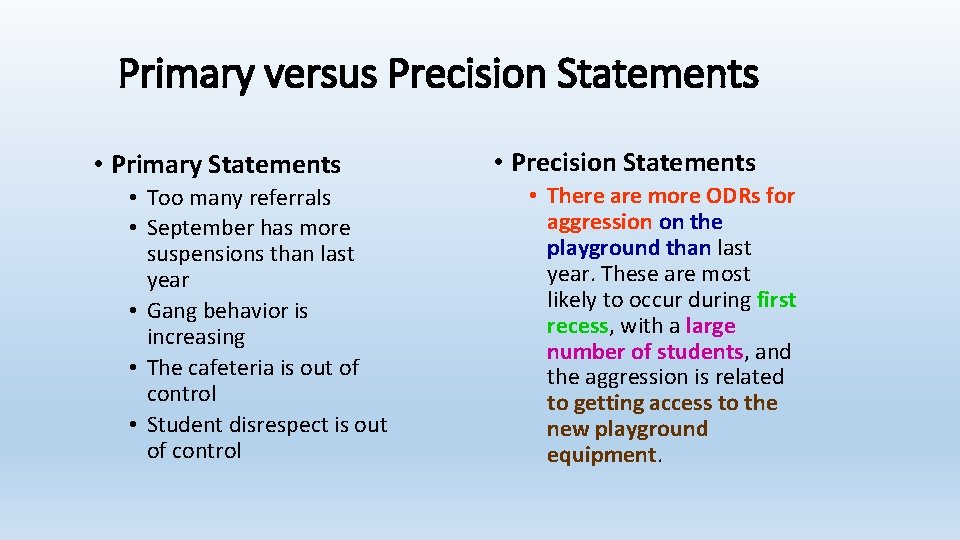
Primary versus Precision Statements • Primary Statements • Too many referrals • September has more suspensions than last year • Gang behavior is increasing • The cafeteria is out of control • Student disrespect is out of control • Precision Statements • There are more ODRs for aggression on the playground than last year. These are most likely to occur during first recess, with a large number of students, and the aggression is related to getting access to the new playground equipment.
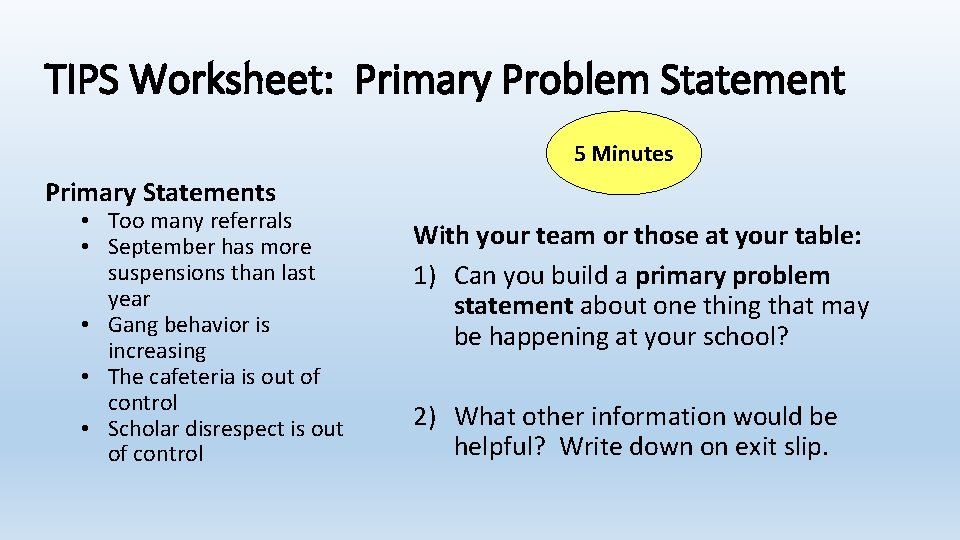
TIPS Worksheet: Primary Problem Statement 5 Minutes Primary Statements • Too many referrals • September has more suspensions than last year • Gang behavior is increasing • The cafeteria is out of control • Scholar disrespect is out of control With your team or those at your table: 1) Can you build a primary problem statement about one thing that may be happening at your school? 2) What other information would be helpful? Write down on exit slip.
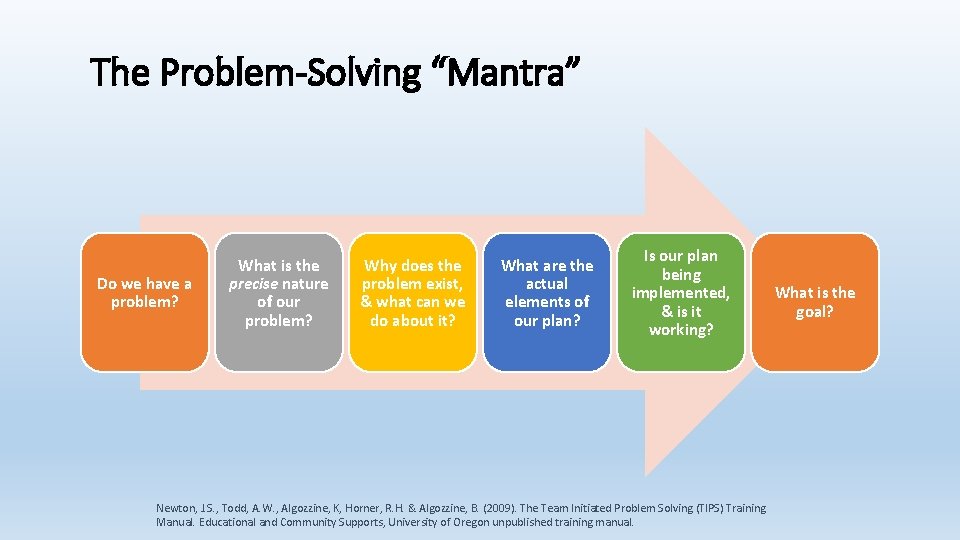
The Problem-Solving “Mantra” Do we have a problem? What is the precise nature of our problem? Why does the problem exist, & what can we do about it? What are the actual elements of our plan? Is our plan being implemented, & is it working? Newton, J. S. , Todd, A. W. , Algozzine, K, Horner, R. H. & Algozzine, B. (2009). The Team Initiated Problem Solving (TIPS) Training Manual. Educational and Community Supports, University of Oregon unpublished training manual. What is the goal?
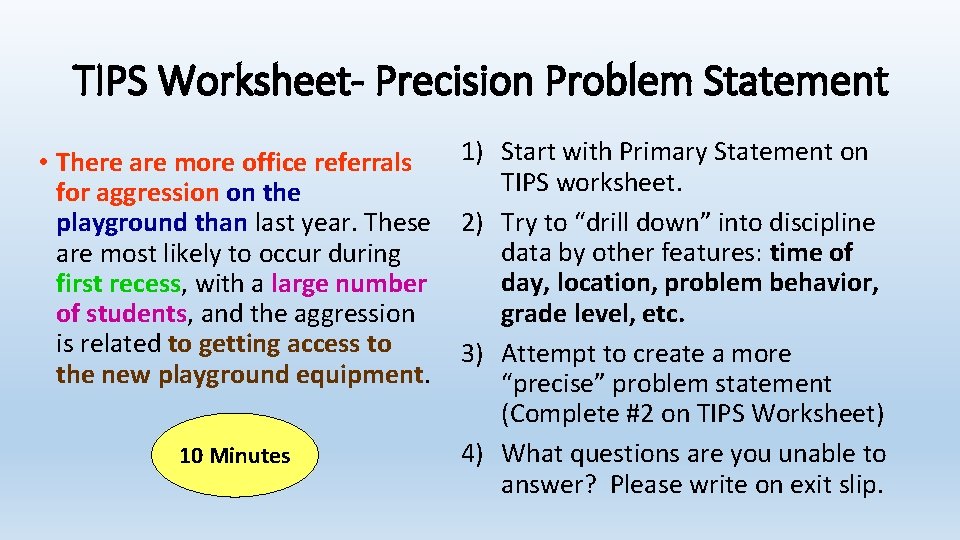
TIPS Worksheet- Precision Problem Statement • There are more office referrals for aggression on the playground than last year. These are most likely to occur during first recess, with a large number of students, and the aggression is related to getting access to the new playground equipment. 10 Minutes 1) Start with Primary Statement on TIPS worksheet. 2) Try to “drill down” into discipline data by other features: time of day, location, problem behavior, grade level, etc. 3) Attempt to create a more “precise” problem statement (Complete #2 on TIPS Worksheet) 4) What questions are you unable to answer? Please write on exit slip.
TIPS Worksheet Now What? Solution options • Prevent: reduce probability of behavior continuing • Teach: teach to increase probability of positive behavior change • Acknowledge: adjust reinforcement efforts/ revitalize staff use of positive feedback • Correct: give feedback to increase probability of improved behavior after problem ocurrs • Extinction: reduce the “reward” for problem behavior • Safety: what may need to occur to remove possibility of harm to others
Finish TIPS Worksheet 15 Minutes • Complete #3: Solution Options • What types of solution options could your team/staff consider to address problem? • Complete #4: Action Planning • Who will do what, by when? • Complete #5: Evaluation Planning • Goal Setting- what will it look like when there is no longer a problem? • Data Collection • measure outcome (did it work? ) • measure fidelity (did we do what we said we would? )
Top Ten Reasons PBIS Fails • 1. Lack of continuous administrative support & involvement • 2. Not tracking, reporting, & responding to data • 3. Lack of understanding that staff set and change culture in schools • 4. Lack of understanding commitment and buy-in from staff • 5. Lack of understanding that academic success is driven by school culture • 6. Not working through the PBIS processes as a team • 7. Taking on too much too fast (generally with positive intentions) • 8. Inconsistency of implementation by staff • 9. Looking for the negative vs. looking for positives in scholar behavior • 10. Focusing only on the high risk scholars
Congratulations! You’ve made it to conclusion of PBIS Tier 1 Training Modules Don’t forget to complete any earned clock hours!
- Slides: 44