
Fuzzy PID Control Reduce design choices Tuning stability
Fuzzy PID Control - Reduce design choices - Tuning, stability - Standard nonlinearities
Design Procedure* • • Build and tune a conventional PID controller first. Replace it with an equivalent linear fuzzy controller. Make the fuzzy controller nonlinear. Fine-tune the fuzzy controller. *) Relevant whenever PID control is possible, or already implemented
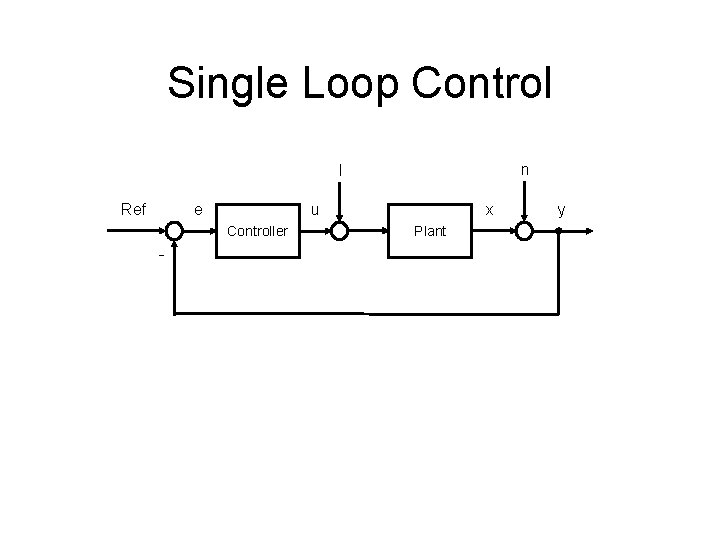
Single Loop Control n l Ref e u Controller - x Plant y
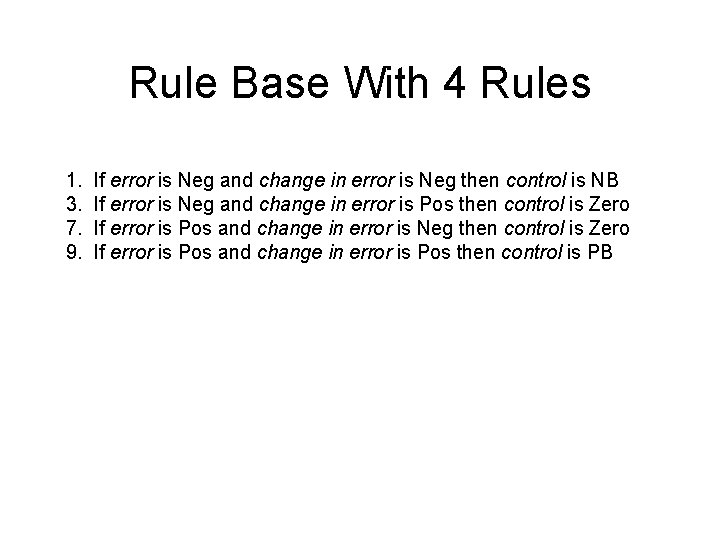
Rule Base With 4 Rules 1. 3. 7. 9. If error is Neg and change in error is Neg then control is NB If error is Neg and change in error is Pos then control is Zero If error is Pos and change in error is Neg then control is Zero If error is Pos and change in error is Pos then control is PB
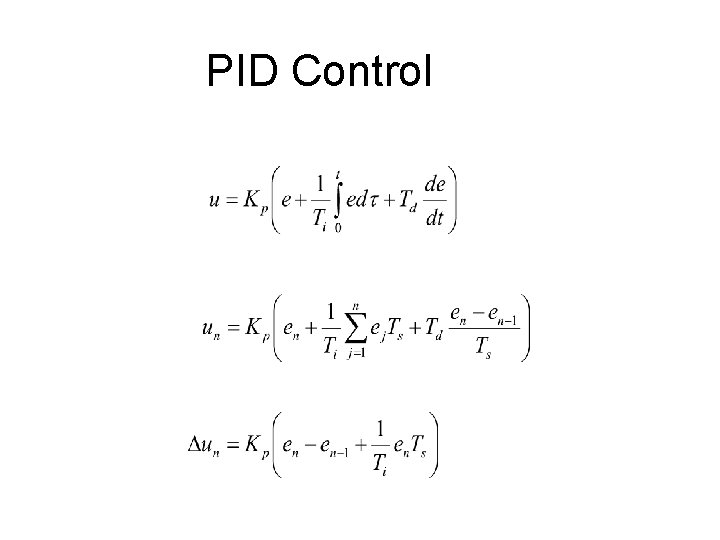
PID Control
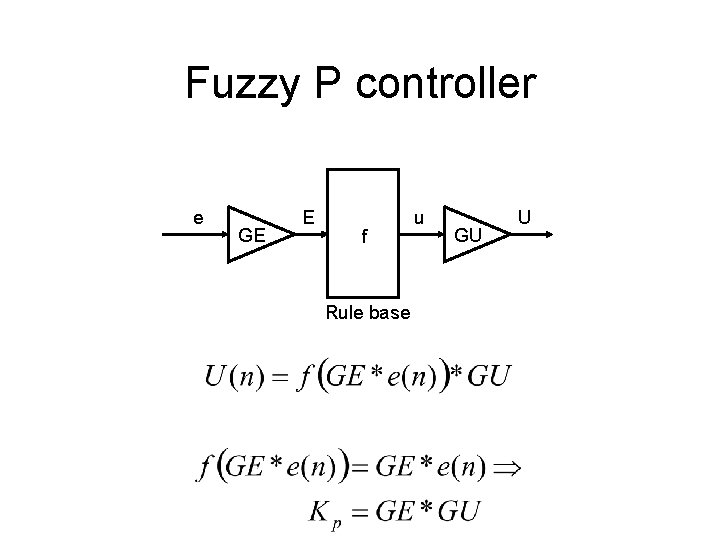
Fuzzy P controller e GE E f Rule base u GU U
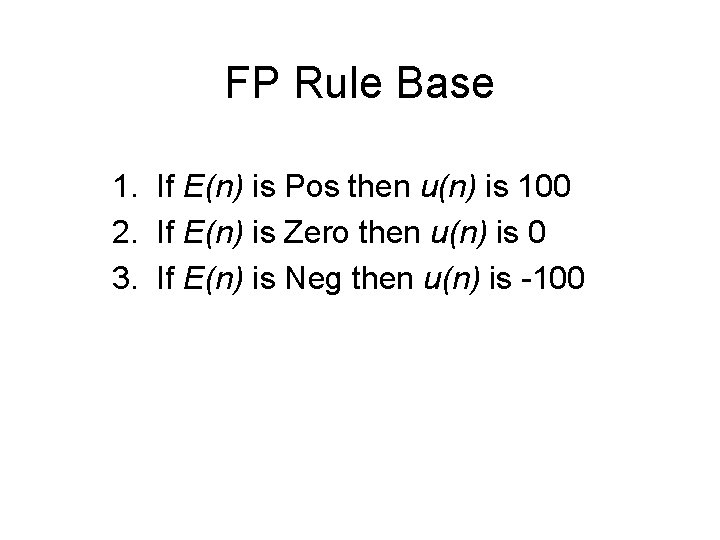
FP Rule Base 1. If E(n) is Pos then u(n) is 100 2. If E(n) is Zero then u(n) is 0 3. If E(n) is Neg then u(n) is -100
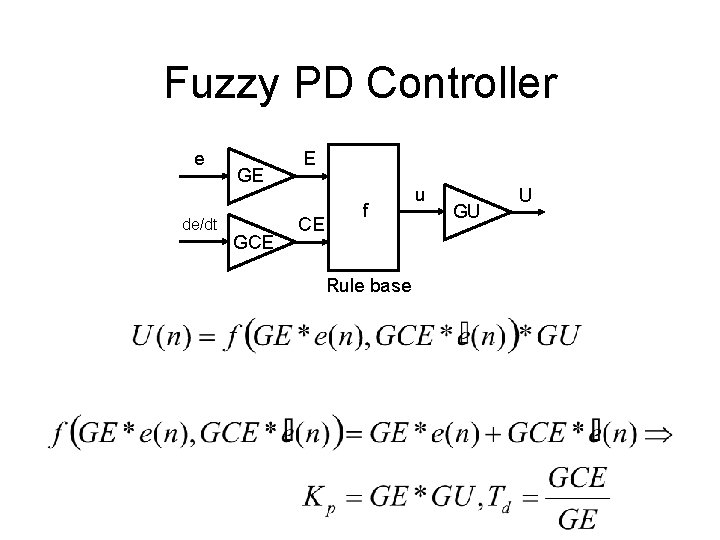
Fuzzy PD Controller e de/dt GE GCE E CE f Rule base u GU U

FPD Rule Base 1. 3. 7. 9. If E(n) is Neg and CE(n) is Neg then u(n) is -200 If E(n) is Neg and CE(n) is Pos then u(n) is 0 If E(n) is Pos and CE(n) is Neg then u(n) is 0 If E(n) is Pos and CE(n) is Pos then u(n) is 200
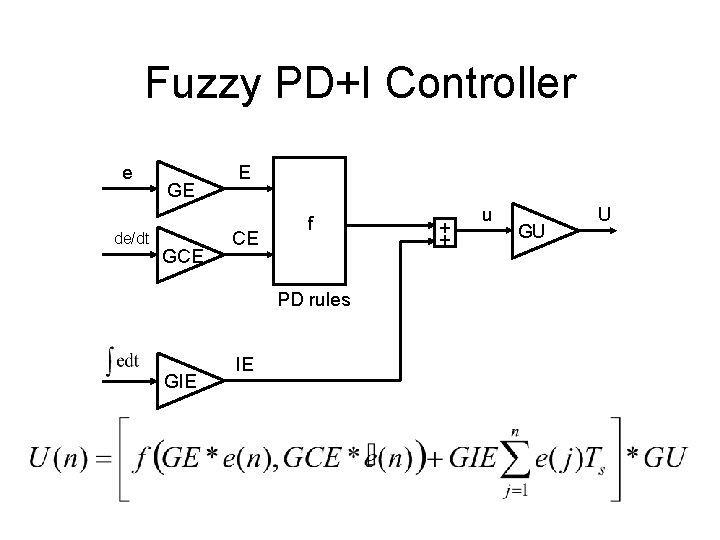
Fuzzy PD+I Controller e de/dt GE GCE E CE f PD rules GIE IE + + u GU U
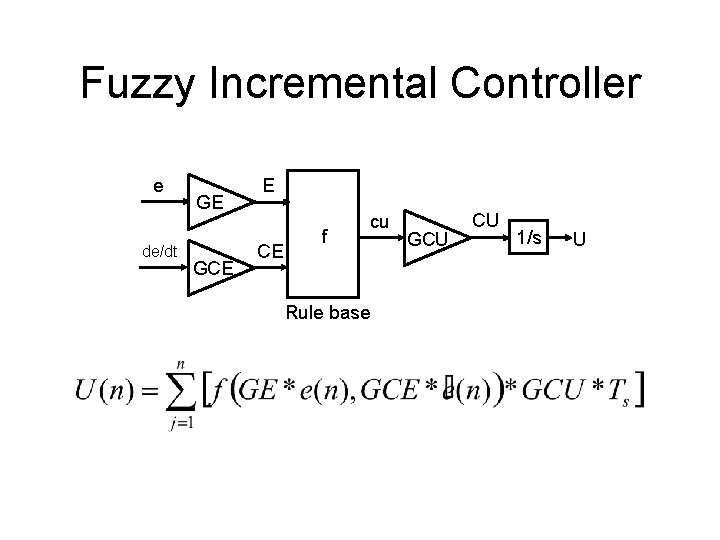
Fuzzy Incremental Controller e de/dt GE GCE E CE f cu Rule base GCU CU 1/s U
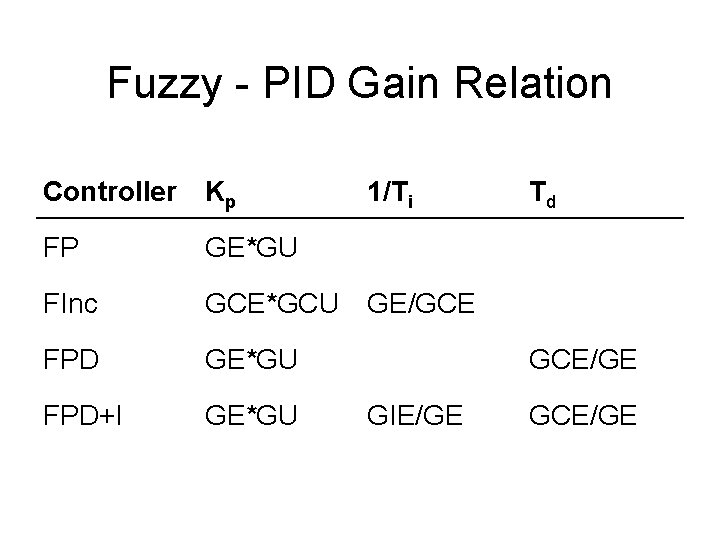
Fuzzy - PID Gain Relation Controller Kp FP GE*GU FInc GCE*GCU FPD GE*GU FPD+I GE*GU 1/Ti Td GE/GCE GCE/GE GIE/GE GCE/GE
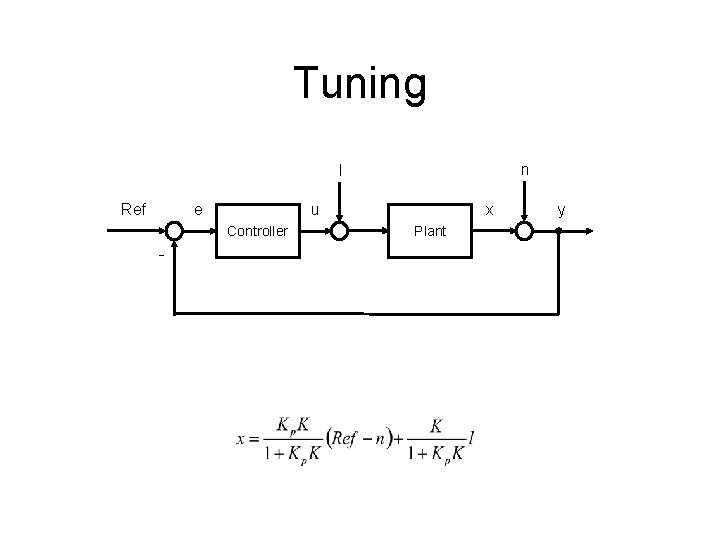
Tuning n l Ref e u Controller - x Plant y
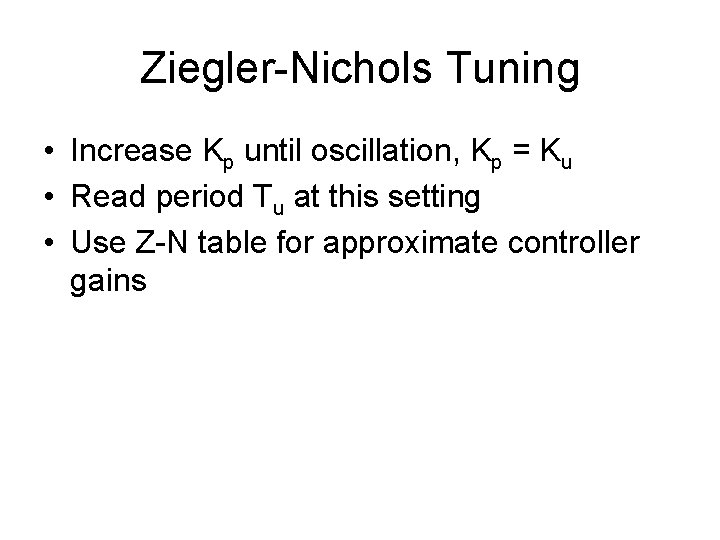
Ziegler-Nichols Tuning • Increase Kp until oscillation, Kp = Ku • Read period Tu at this setting • Use Z-N table for approximate controller gains
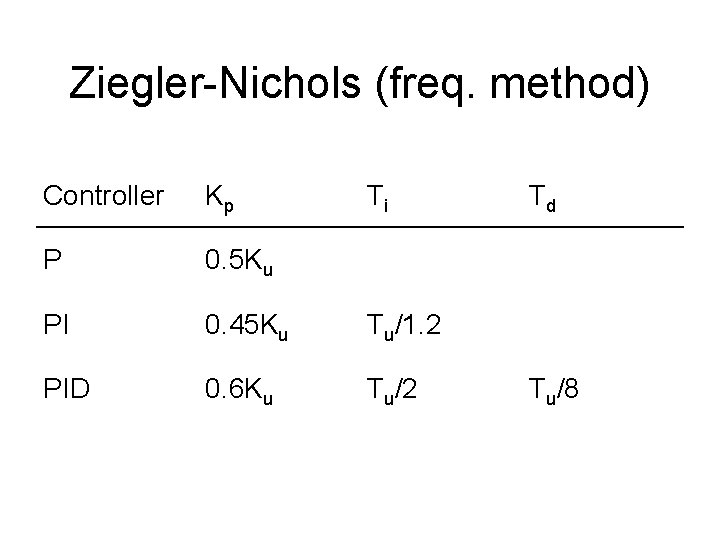
Ziegler-Nichols (freq. method) Controller Kp Ti P 0. 5 Ku PI 0. 45 Ku Tu/1. 2 PID 0. 6 Ku Tu/2 Td Tu/8
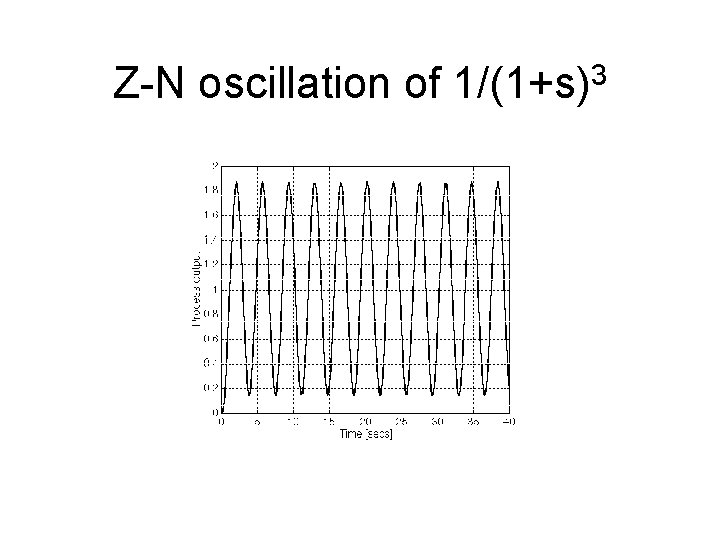
Z-N oscillation of 1/(1+s)3
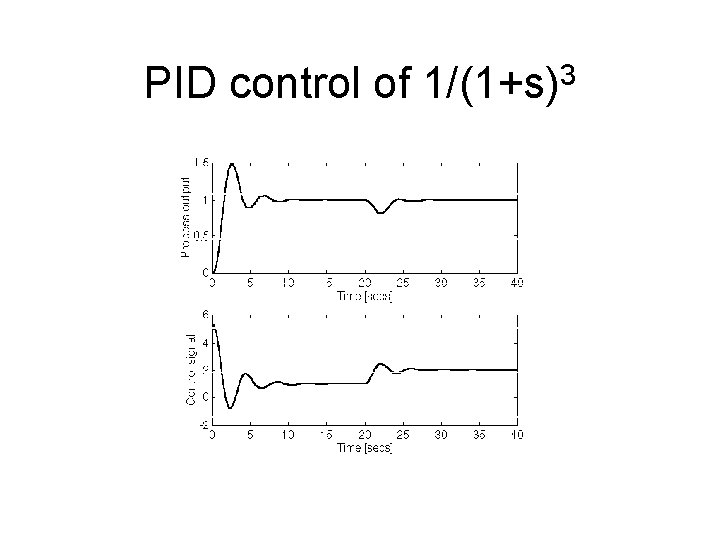
PID control of 1/(1+s)3
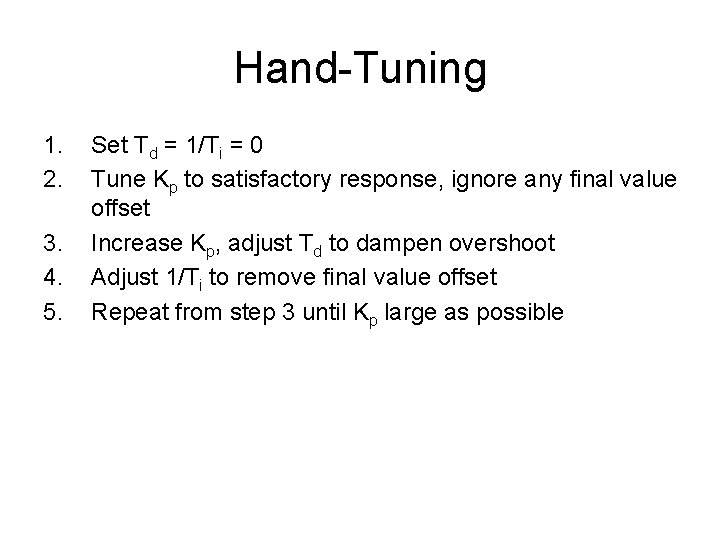
Hand-Tuning 1. 2. 3. 4. 5. Set Td = 1/Ti = 0 Tune Kp to satisfactory response, ignore any final value offset Increase Kp, adjust Td to dampen overshoot Adjust 1/Ti to remove final value offset Repeat from step 3 until Kp large as possible
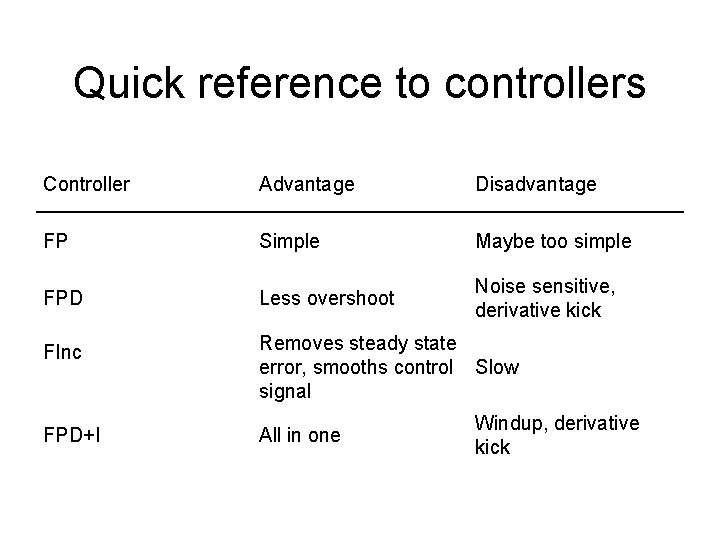
Quick reference to controllers Controller Advantage Disadvantage FP Simple Maybe too simple FPD Less overshoot Noise sensitive, derivative kick FInc Removes steady state error, smooths control Slow signal FPD+I All in one Windup, derivative kick
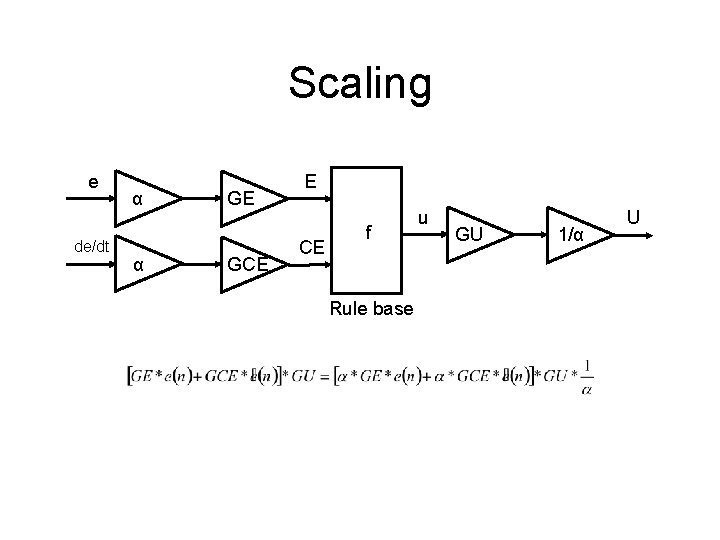
Scaling e de/dt α α GE GCE E CE f Rule base u GU 1/α U
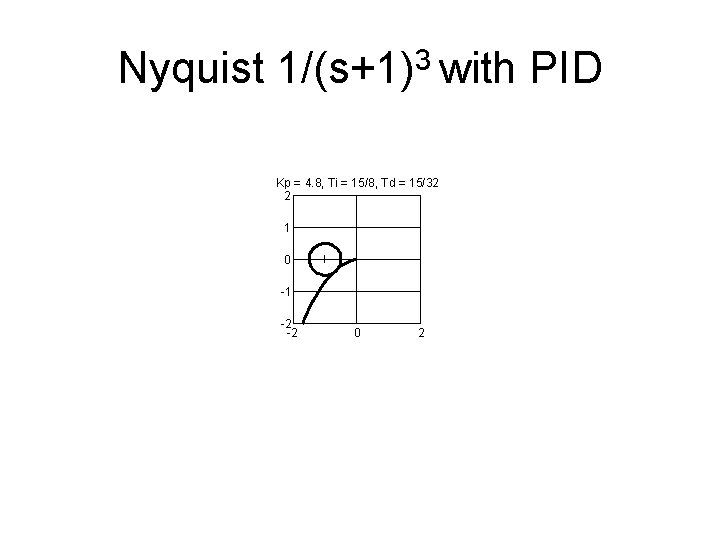
Nyquist 1/(s+1)3 with PID Kp = 4. 8, Ti = 15/8, Td = 15/32 2 1 0 -1 -2 -2 0 2
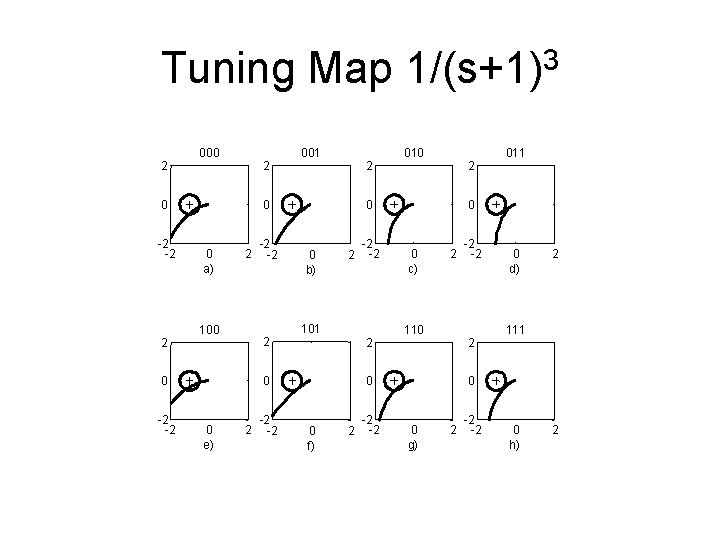
Tuning Map 1/(s+1)3 2 000 2 0 -2 -2 2 2 0 0 a) 2 100 -2 -2 2 0 -2 -2 001 2 -2 -2 2 0 0 b) 2 -2 -2 101 2 0 0 e) 010 0 0 c) 2 110 2 -2 -2 2 0 0 f) 011 0 d) 2 111 0 0 g) 2 -2 -2 0 h) 2
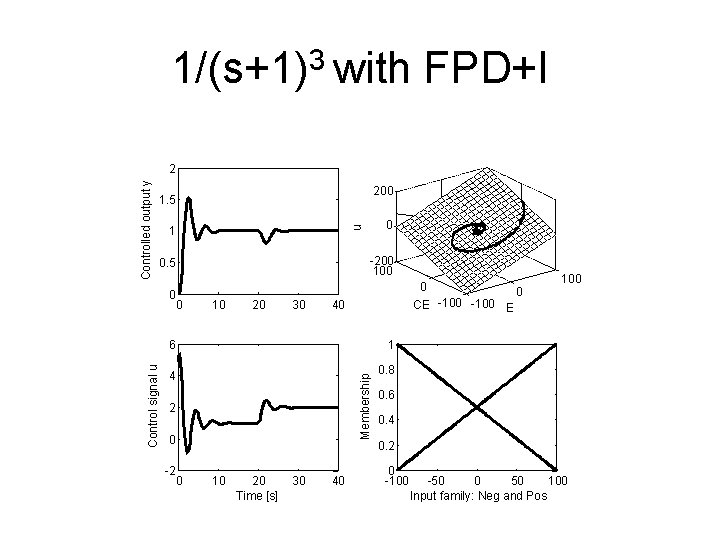
1/(s+1)3 with FPD+I 200 1. 5 1 -200 100 0. 5 0 0 u Controlled output y 2 0 10 20 30 0 0 -100 E CE 40 1 4 Membership Control signal u 6 2 0 -2 0 10 20 Time [s] 30 40 0. 8 0. 6 0. 4 0. 2 0 -100 -50 0 50 100 Input family: Neg and Pos
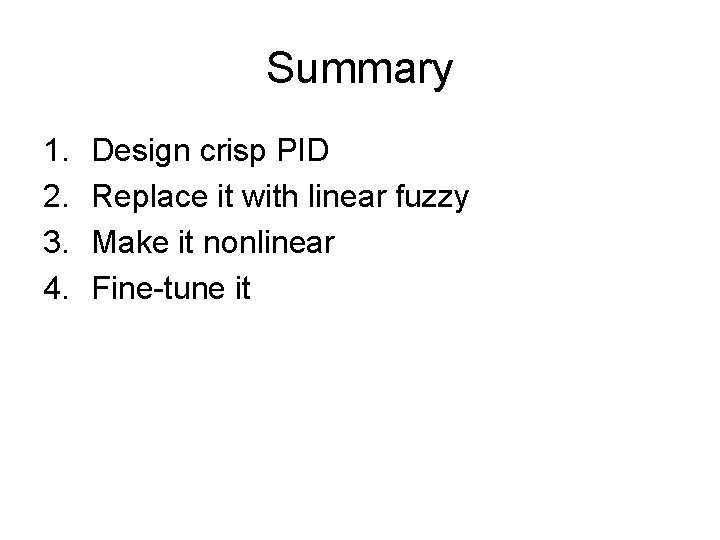
Summary 1. 2. 3. 4. Design crisp PID Replace it with linear fuzzy Make it nonlinear Fine-tune it
- Slides: 24