
Future Planning Resources Katie Arnold Sibling Leadership Network
Future Planning Resources Katie Arnold Sibling Leadership Network
By joining the network you will: v Become connected to the larger sibling movement happening across the country. v Help strengthen the sibling voice so together we can effect even more change. www. siblingleadership. org 2
• Anxiety about mortality • Unaware of options and opportunities • Lack of resources and options • Afraid to “burden” siblings Barriers to Planning What barriers make it hard for your family to plan for the future?

Siblings Role in Future Planning • Identify concerns and share • Gather helpful information • Advocate for services and supports • Network with other siblings and families
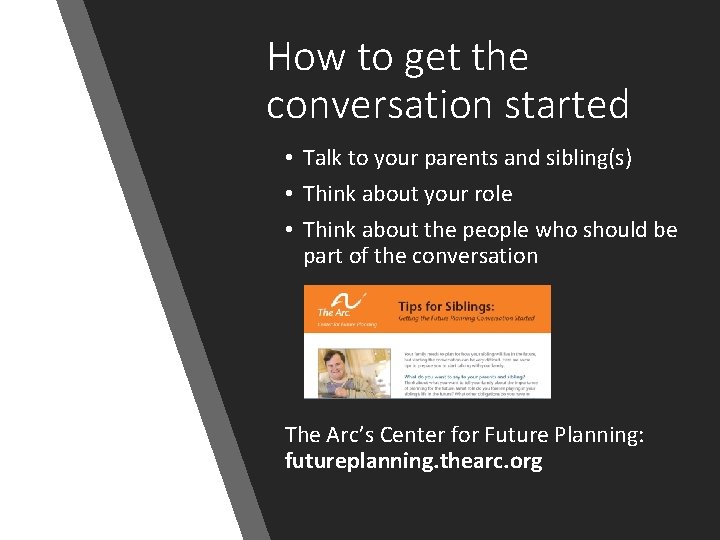
How to get the conversation started • Talk to your parents and sibling(s) • Think about your role • Think about the people who should be part of the conversation The Arc’s Center for Future Planning: futureplanning. thearc. org
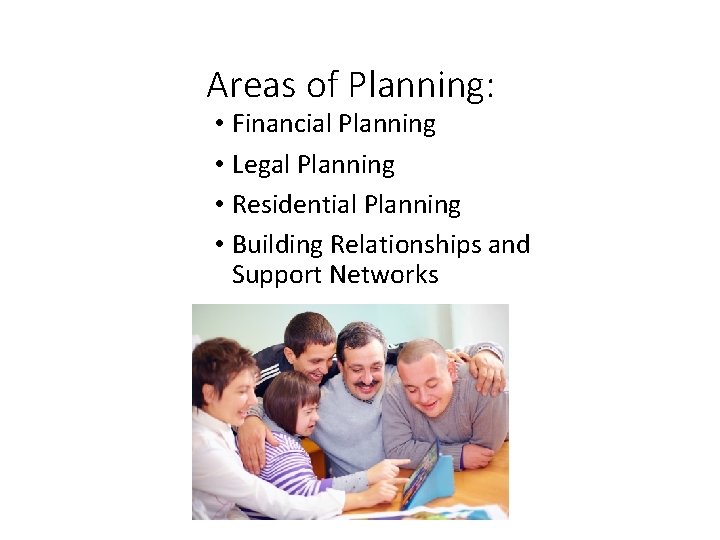
Areas of Planning: • Financial Planning • Legal Planning • Residential Planning • Building Relationships and Support Networks
Financial Planning • Social Security Disability Insurance (SSDI) - monthly benefit paid to the person with disabilities based on their parent’s Social Security earnings record. • Supplemental Security Income (SSI) - benefits to disabled adults and children who have limited income and resources. This is based on financial need. • Medicaid - provides health coverage to eligible lowincome adults, children, pregnant women, and people who are older or who have disabilities. Many people with disabilities use Medicaid to access social and community supports, including housing supports and other long term services. • Medicare - health insurance program for people age 65 or older or people younger with certain disabilities. The program helps with the cost of health care, but it does not cover all medical expenses or the cost of most long-term care.
Special Needs Trusts • Setting up a special needs trust takes an initial financial investment, although in the long run it can also help save money. • Special Needs Alliance: http: //www. specialneedsalliance. org/ 8
ABLE Accounts • ABLE = Achieving a Better Life Experience • ABLE Accounts help people with disabilities have a savings account for money that is to supplement, but not supplant, other benefits a person without negatively impacting benefits. For more information visit: savewithable. com
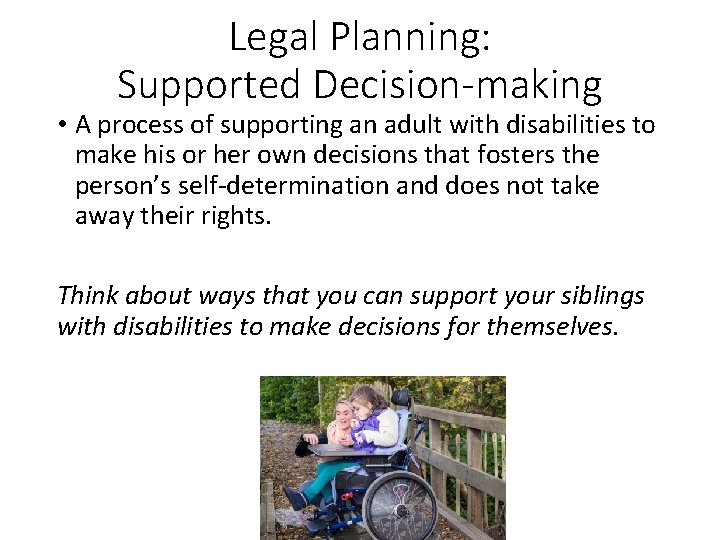
Legal Planning: Supported Decision-making • A process of supporting an adult with disabilities to make his or her own decisions that fosters the person’s self-determination and does not take away their rights. Think about ways that you can support your siblings with disabilities to make decisions for themselves.
Supported Decisionmaking Resources • Sibling Survival Guide chapter on Future Planning • National Resource Center on Supported Decision -Making: http: //supporteddecisionmaking. org/about • Supported Decision-making and the Sibling Role: http: //www. supporteddecisionmaking. org/legalresource/supported-decision-making-and-rolesiblings-presentation • Autistic Self Advocacy Network : https: //autisticadvocacy. org/2016/02/the-rightto-make-choices-new-resource-on-supporteddecision-making/ • The Arc’s Center for Future Planning: • http: //thearc. org/wpcontent/uploads/2020/09/Decision-Making. Supports-Center-for-Future-Planning-1. pdf
Surrogate/Substitute Decision-making • Representative Payee is an individual or organization that serves as a representative to help a person manage his or her government benefits. • Power of attorney is when someone is given authority to make legal and financial decisions on a person’s behalf • Health Care Surrogacy/Proxy is a document that allows an individual to appoint someone to make health care decisions for them if they are or become unable to make these types of decisions by themselves. • Guardianship is when someone is designated to make decisions on behalf of someone else. This should be the last option to consider because it can take away rights of people.
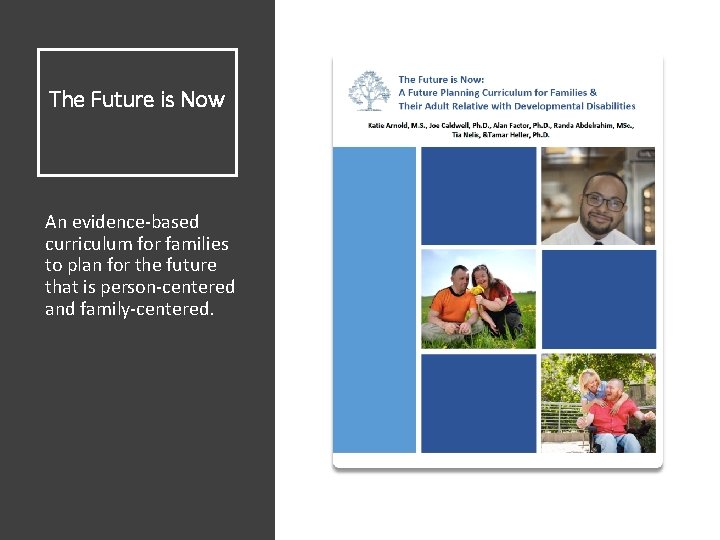
The Future is Now An evidence-based curriculum for families to plan for the future that is person-centered and family-centered.
Housing Resources and more For Home and Community Based supports and services for adults with intellectual disabilities, many states have Medicaid waivers that provide residential services and a lot more: employment services, certain therapies, adaptive aids and more. Every state has different services. Check your State’s Department of Disability (the name is slightly different in each state) to see what is available.
Respite • Respite is when you have someone else look after your loved one while you take a short break • It can be provided in your home or a community location • All people providing care for a loved one need and deserve a break at some point and it can help the person continue to provide great care and be beneficial to the person they are caring for and their whole family. https: //archrespite. org/respitelocator
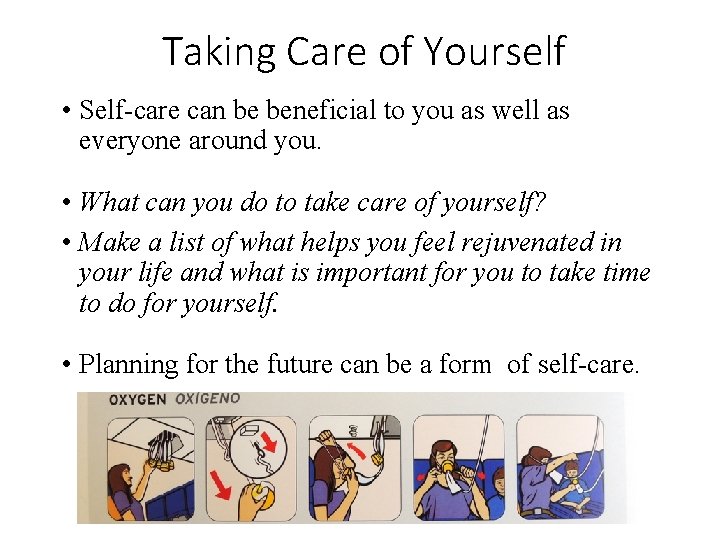
Taking Care of Yourself • Self-care can be beneficial to you as well as everyone around you. • What can you do to take care of yourself? • Make a list of what helps you feel rejuvenated in your life and what is important for you to take time to do for yourself. • Planning for the future can be a form of self-care.
Connect with other sibs: Connect with Siblings with a Mission: www. siblingswithamission. org Join the SLN: siblingleadership. org Online networks by Sibling Support Project— Find them on Facebook: • • • Sib. Teen: for teenager Sib 20: for sibs in their 20 Sib. Net: for adult sibs

Save the Date! www. siblingleadership. org
Katie Arnold Executive Director, Sibling Leadership Network Katie. Arnold@Sibling. Leadership. org 19
- Slides: 19