
Future of Hazardous Waste Recycling By Tech Web
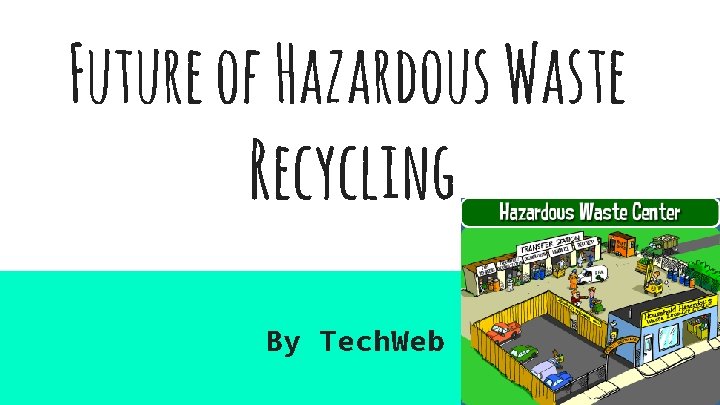
Future of Hazardous Waste Recycling By Tech. Web
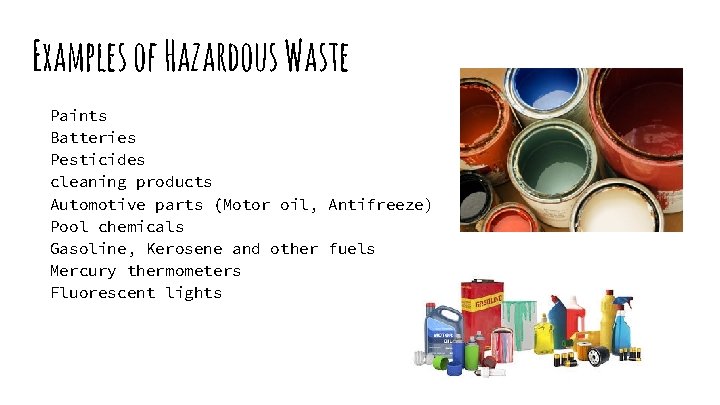
Examples of Hazardous Waste Paints Batteries Pesticides cleaning products Automotive parts (Motor oil, Antifreeze) Pool chemicals Gasoline, Kerosene and other fuels Mercury thermometers Fluorescent lights
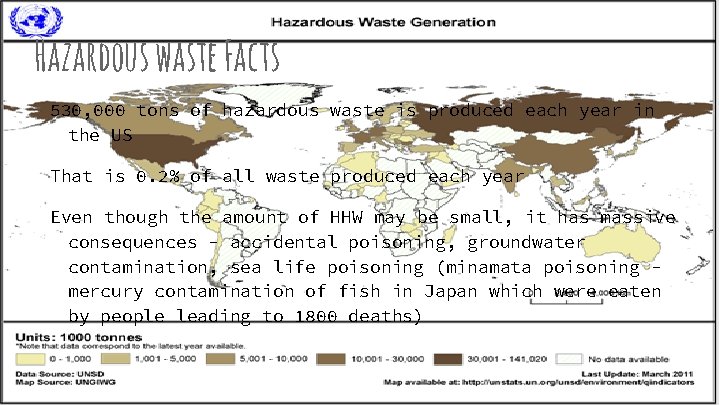
Hazardous waste Facts 530, 000 tons of hazardous waste is produced each year in the US That is 0. 2% of all waste produced each year Even though the amount of HHW may be small, it has massive consequences - accidental poisoning, groundwater contamination, sea life poisoning (minamata poisoning mercury contamination of fish in Japan which were eaten by people leading to 1800 deaths)
How HAZARDOUS WASTE is Recycled PAINT Mix, Filter, Reuse. Use water-based paint when possible BATTERIES Car batteries - Trade, Other batteries--valuable materials are taken out and used to make other ones MOTOR OIL Collect separately and dispose in special collection stations
Pros and Cons of Hazardous waste recycling Hazardous waste is extremely dangerous to the environment and has caused major problems in the past Recycling it minimizes the wastage of resources on producing such products People may start to make more green products so that HHW is reduced Lots of HHW cannot be recycled because of the chemicals in it Most HHW is not environment friendly; therefore, is hard to recycle
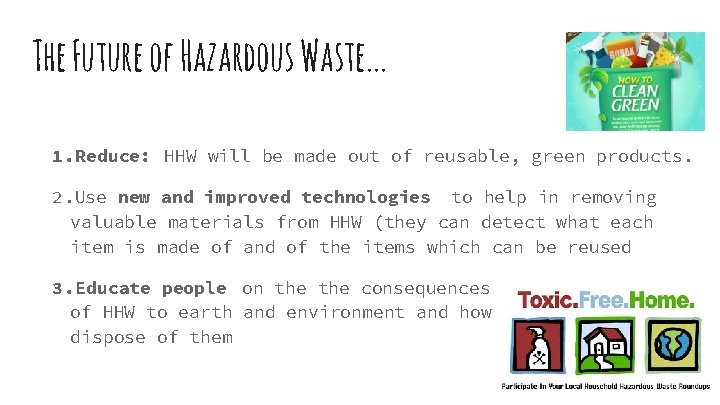
The Future of Hazardous Waste. . . 1. Reduce: HHW will be made out of reusable, green products. 2. Use new and improved technologies to help in removing valuable materials from HHW (they can detect what each item is made of and of the items which can be reused 3. Educate people on the consequences of HHW to earth and environment and how to properly dispose of them
- Slides: 6