
Future Grid Supporting Next Generation Cyberinfrastructure VTDC 10
Future. Grid: Supporting Next Generation Cyberinfrastructure VTDC 10 - The 4 th International Workshop on Virtualization Technologies in Distributed Computing at HPDC Chicago Illinois June 20 -25 2010 http: //www. grid-appliance. org/wiki/index. php/VTDC 10 June 22 2010 Geoffrey Fox gcf@indiana. edu http: //www. infomall. org http: //www. futuregrid. org Director, Digital Science Center, Pervasive Technology Institute Associate Dean for Research and Graduate Studies, School of Informatics and Computing Indiana University Bloomington
Future. Grid Concepts Support development of new applications and new middleware using Cloud, Grid and Parallel computing (Nimbus, Eucalyptus, Hadoop, Globus, Unicore, MPI, Open. MP. Linux, Windows …) looking at functionality, interoperability, performance • Put the “science” back in the computer science of grid computing by enabling replicable experiments • Open source software built around Moab/x. CAT to support dynamic provisioning from Cloud to HPC environment, Linux to Windows …. . with monitoring, benchmarks and support of important existing middleware • June 2010 Initial users; September 2010 All hardware (except IU shared memory system) accepted and significant use starts; October 2011 Future. Grid allocatable via Tera. Grid process •
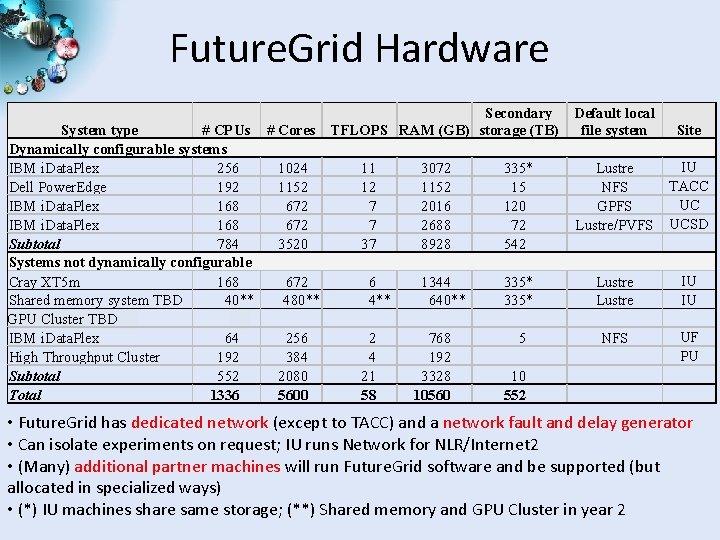
Future. Grid Hardware System type # CPUs Dynamically configurable systems IBM i. Data. Plex 256 Dell Power. Edge 192 IBM i. Data. Plex 168 784 Subtotal Systems not dynamically configurable Cray XT 5 m 168 Shared memory system TBD 40** GPU Cluster TBD Cell BE Cluster 4 IBM i. Data. Plex 64 High Throughput Cluster 192 552 Subtotal 1336 Total Secondary Default local # Cores TFLOPS RAM (GB) storage (TB) file system 1024 1152 672 3520 11 12 7 7 37 672 480** 256 384 2080 5600 6 4** 2 4 21 58 3072 1152 2016 2688 8928 335* 15 120 72 542 1344 640** 768 192 3328 10560 335* 5 10 552 Site IU Lustre TACC NFS UC GPFS Lustre/PVFS UCSD Lustre NFS IU IU UF PU • Future. Grid has dedicated network (except to TACC) and a network fault and delay generator • Can isolate experiments on request; IU runs Network for NLR/Internet 2 • (Many) additional partner machines will run Future. Grid software and be supported (but allocated in specialized ways) • (*) IU machines share same storage; (**) Shared memory and GPU Cluster in year 2
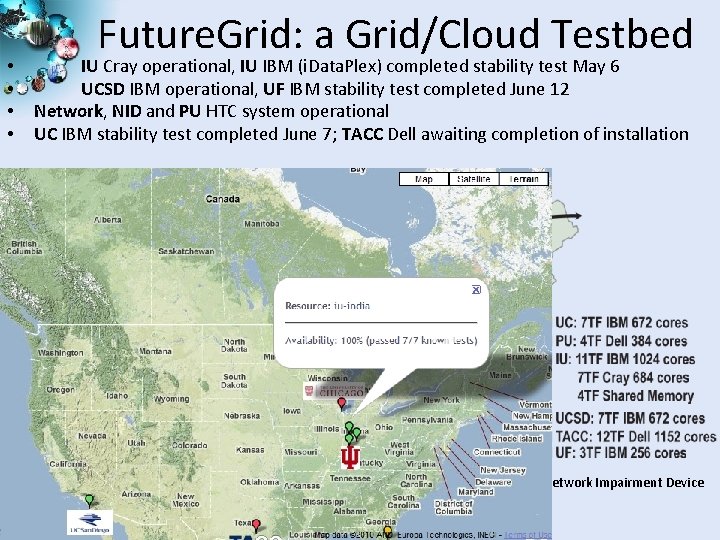
• • Future. Grid: a Grid/Cloud Testbed IU Cray operational, IU IBM (i. Data. Plex) completed stability test May 6 UCSD IBM operational, UF IBM stability test completed June 12 Network, NID and PU HTC system operational UC IBM stability test completed June 7; TACC Dell awaiting completion of installation Private FG Network Public NID: Network Impairment Device
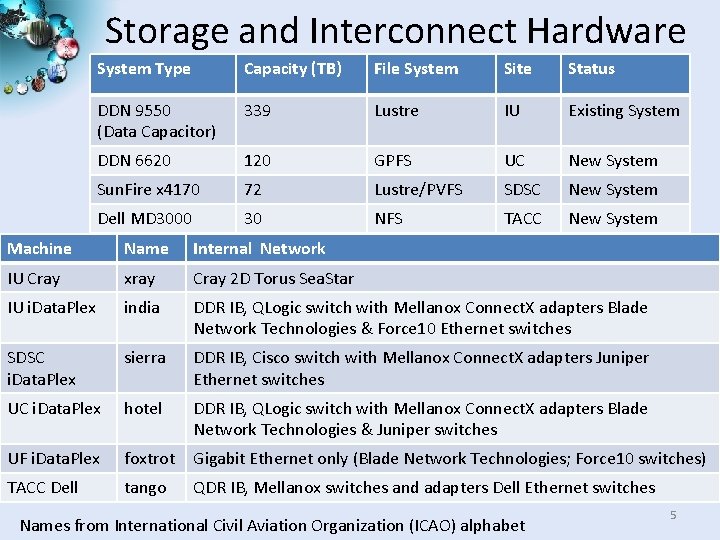
Storage and Interconnect Hardware System Type Capacity (TB) File System Site Status DDN 9550 (Data Capacitor) 339 Lustre IU Existing System DDN 6620 120 GPFS UC New System Sun. Fire x 4170 72 Lustre/PVFS SDSC New System Dell MD 3000 30 NFS TACC New System Machine Name Internal Network IU Cray xray Cray 2 D Torus Sea. Star IU i. Data. Plex india DDR IB, QLogic switch with Mellanox Connect. X adapters Blade Network Technologies & Force 10 Ethernet switches SDSC i. Data. Plex sierra DDR IB, Cisco switch with Mellanox Connect. X adapters Juniper Ethernet switches UC i. Data. Plex hotel DDR IB, QLogic switch with Mellanox Connect. X adapters Blade Network Technologies & Juniper switches UF i. Data. Plex foxtrot Gigabit Ethernet only (Blade Network Technologies; Force 10 switches) TACC Dell tango QDR IB, Mellanox switches and adapters Dell Ethernet switches Names from International Civil Aviation Organization (ICAO) alphabet 5
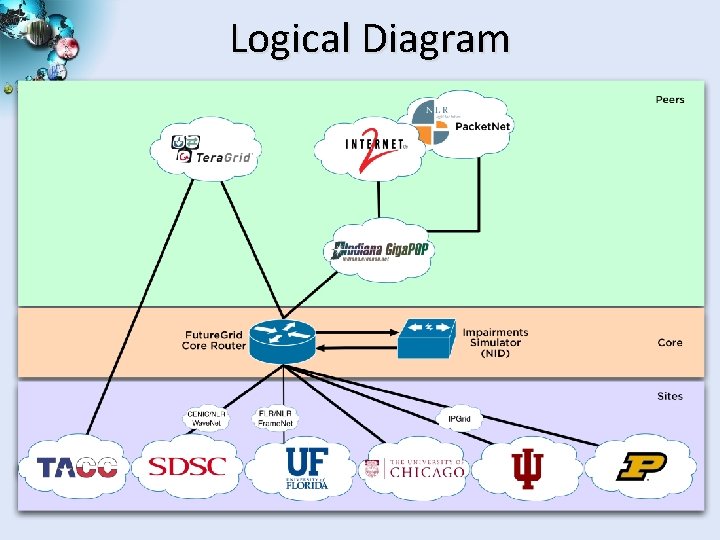
Logical Diagram
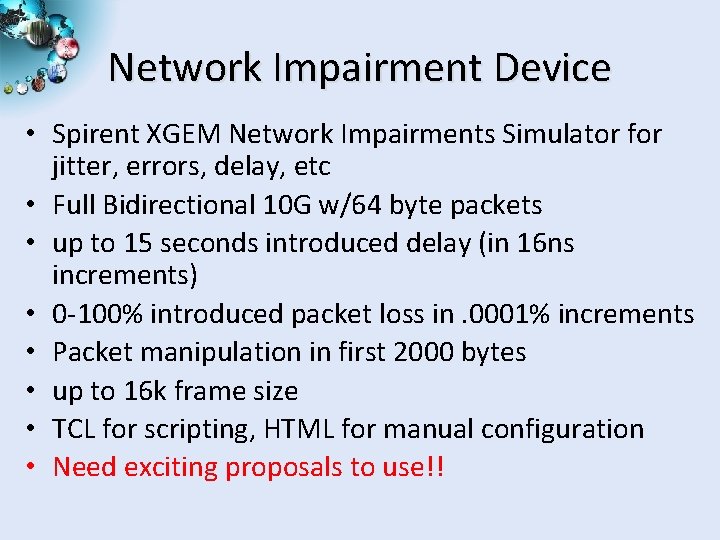
Network Impairment Device • Spirent XGEM Network Impairments Simulator for jitter, errors, delay, etc • Full Bidirectional 10 G w/64 byte packets • up to 15 seconds introduced delay (in 16 ns increments) • 0 -100% introduced packet loss in. 0001% increments • Packet manipulation in first 2000 bytes • up to 16 k frame size • TCL for scripting, HTML for manual configuration • Need exciting proposals to use!!
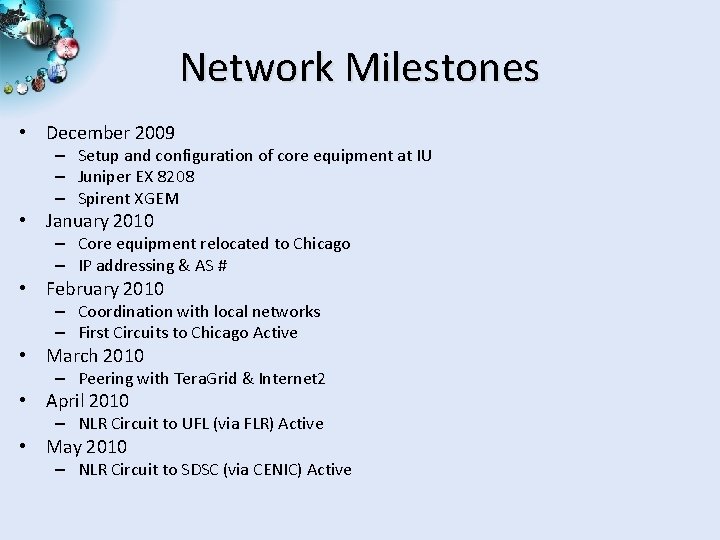
Network Milestones • December 2009 – Setup and configuration of core equipment at IU – Juniper EX 8208 – Spirent XGEM • January 2010 – Core equipment relocated to Chicago – IP addressing & AS # • February 2010 – Coordination with local networks – First Circuits to Chicago Active • March 2010 – Peering with Tera. Grid & Internet 2 • April 2010 – NLR Circuit to UFL (via FLR) Active • May 2010 – NLR Circuit to SDSC (via CENIC) Active
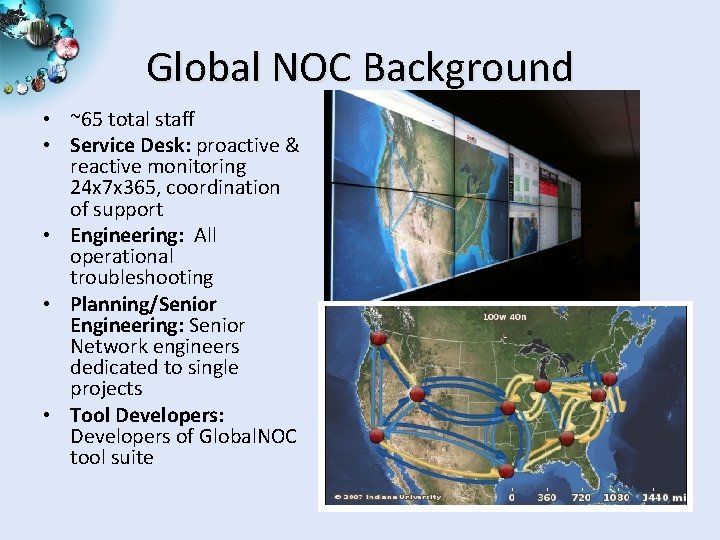
Global NOC Background • ~65 total staff • Service Desk: proactive & reactive monitoring 24 x 7 x 365, coordination of support • Engineering: All operational troubleshooting • Planning/Senior Engineering: Senior Network engineers dedicated to single projects • Tool Developers: Developers of Global. NOC tool suite
• Future. Grid Partners Indiana University (Architecture, core software, Support) – Collaboration between research and infrastructure groups • Purdue University (HTC Hardware) • San Diego Supercomputer Center at University of California San Diego (INCA, Monitoring) • University of Chicago/Argonne National Labs (Nimbus) • University of Florida (Vi. NE, Education and Outreach) • University of Southern California Information Sciences (Pegasus to manage experiments) • University of Tennessee Knoxville (Benchmarking) • University of Texas at Austin/Texas Advanced Computing Center (Portal) • University of Virginia (OGF, Advisory Board and allocation) • Center for Information Services and GWT-TUD from Technische Universtität Dresden. (VAMPIR) • Red institutions have Future. Grid hardware 10
Other Important Collaborators • Early users from an application and computer science perspective and from both research and education • Grid 5000 and D-Grid in Europe • Commercial partners such as – Eucalyptus …. – Microsoft (Dryad + Azure) – Application partners NSF Tera. Grid – Tutorial at TG 10 Open Grid Forum Possibly Open Nebula, Open Cirrus Testbed, Open Cloud Consortium, Cloud Computing Interoperability Forum. IBM-Google-NSF Cloud, Magellan and other Do. E/NSF/NASA … clouds • You!! • •
Future. Grid Usage Model • The goal of Future. Grid is to support the research on the future of distributed, grid, and cloud computing. • Future. Grid will build a robustly managed simulation environment and test-bed to support the development and early use in science of new technologies at all levels of the software stack: from networking to middleware to scientific applications. • The environment will mimic Tera. Grid and/or general parallel and distributed systems – Future. Grid is part of Tera. Grid and one of two experimental Tera. Grid systems (other is GPU) – It will also mimic commercial clouds (initially Iaa. S not Paa. S) • Future. Grid is a (small ~5000 core) Science/Computer Science Cloud but it is more accurately a virtual machine or baremetal based simulation environment • This test-bed will succeed if it enables major advances in science and engineering through collaborative development of science applications and related software.
Education on Future. Grid • Build up tutorials on supported software • Support development of curricula requiring privileges and systems destruction capabilities that are hard to grant on conventional Tera. Grid • Offer suite of appliances supporting online laboratories – The training, education, and outreach mission of Future. Grid leverages extensively the use of virtual machines and selfconfiguring virtual networks to allow convenient encapsulation and seamless instantiation of virtualized clustered environments in a variety of resources: Future. Grid machines, cloud providers, and desktops or clusters within an institution. The Grid Appliance provides a framework for building virtual educational environments used in Future. Grid.
FUTUREGRID SOFTWARE Lead: Gregor von Laszewski
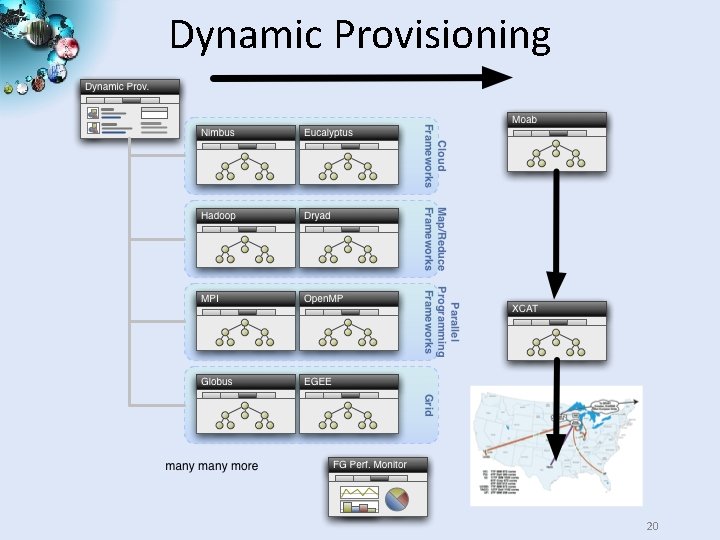
Future. Grid Software Architecture • Flexible Architecture allows one to configure resources based on images • Managed images allows to create similar experiment environments • Experiment management allows reproducible activities • Through our modular design we allow different clouds and images to be “rained” upon hardware. • Note will eventually be supported 24 x 7 at “Tera. Grid Production Quality” • Will support deployment of “important” middleware including Tera. Grid stack, Condor, BOINC, g. Lite, Unicore, Genesis II, Map. Reduce, Bigtable …. . – Love more supported software! • Will support links to external clouds, GPU clusters etc. – Grid 5000 initial highlight with OGF 29 Hadoop deployment over Grid 5000 and Future. Grid – Love more external system collaborators! 15
Software Components • Portals including “Support” “use Future. Grid” “Outreach” • Monitoring – INCA, Power (Green. IT) • Experiment Manager: specify/workflow • Image Generation and Repository • Intercloud Networking Vi. NE • Performance library • Rain or Runtime Adaptable Insertio. N Service: Schedule and Deploy images • Security (including use of isolated network), Authentication, Authorization,
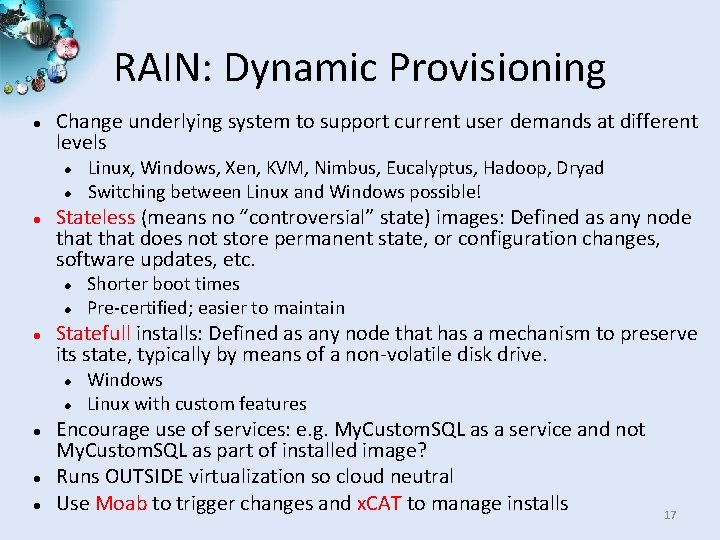
RAIN: Dynamic Provisioning Change underlying system to support current user demands at different levels Stateless (means no “controversial” state) images: Defined as any node that does not store permanent state, or configuration changes, software updates, etc. Shorter boot times Pre-certified; easier to maintain Statefull installs: Defined as any node that has a mechanism to preserve its state, typically by means of a non-volatile disk drive. Linux, Windows, Xen, KVM, Nimbus, Eucalyptus, Hadoop, Dryad Switching between Linux and Windows possible! Windows Linux with custom features Encourage use of services: e. g. My. Custom. SQL as a service and not My. Custom. SQL as part of installed image? Runs OUTSIDE virtualization so cloud neutral Use Moab to trigger changes and x. CAT to manage installs 17
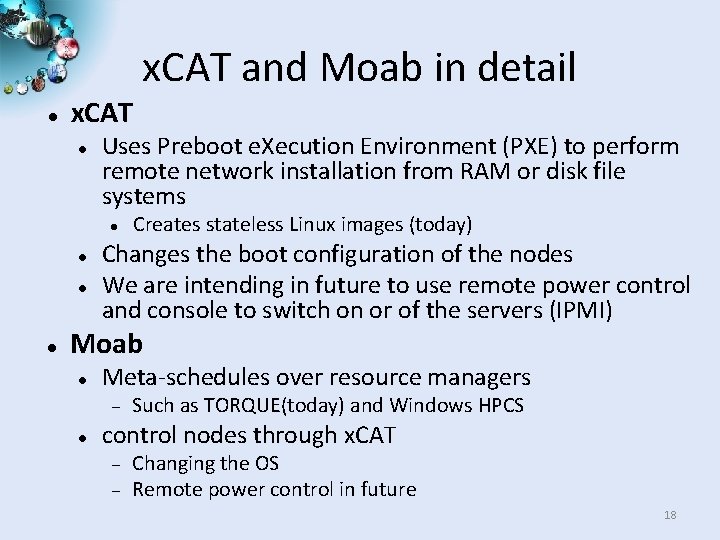
x. CAT and Moab in detail x. CAT Uses Preboot e. Xecution Environment (PXE) to perform remote network installation from RAM or disk file systems Creates stateless Linux images (today) Changes the boot configuration of the nodes We are intending in future to use remote power control and console to switch on or of the servers (IPMI) Moab Meta-schedules over resource managers Such as TORQUE(today) and Windows HPCS control nodes through x. CAT Changing the OS Remote power control in future 18
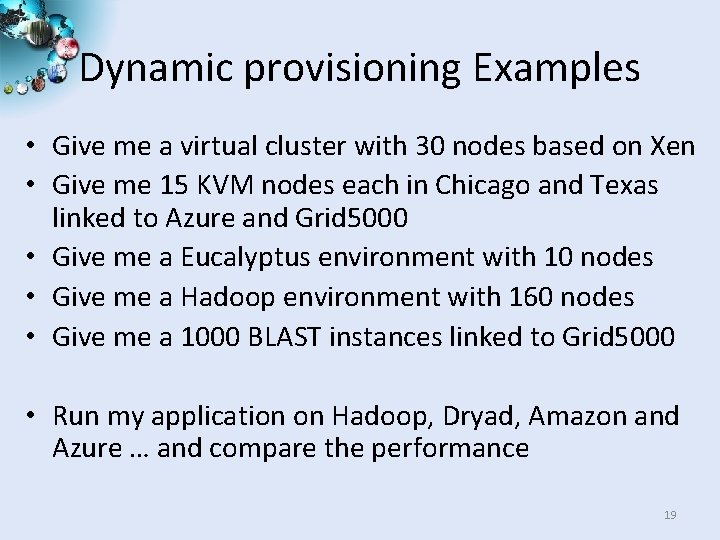
Dynamic provisioning Examples • Give me a virtual cluster with 30 nodes based on Xen • Give me 15 KVM nodes each in Chicago and Texas linked to Azure and Grid 5000 • Give me a Eucalyptus environment with 10 nodes • Give me a Hadoop environment with 160 nodes • Give me a 1000 BLAST instances linked to Grid 5000 • Run my application on Hadoop, Dryad, Amazon and Azure … and compare the performance 19
Dynamic Provisioning 20
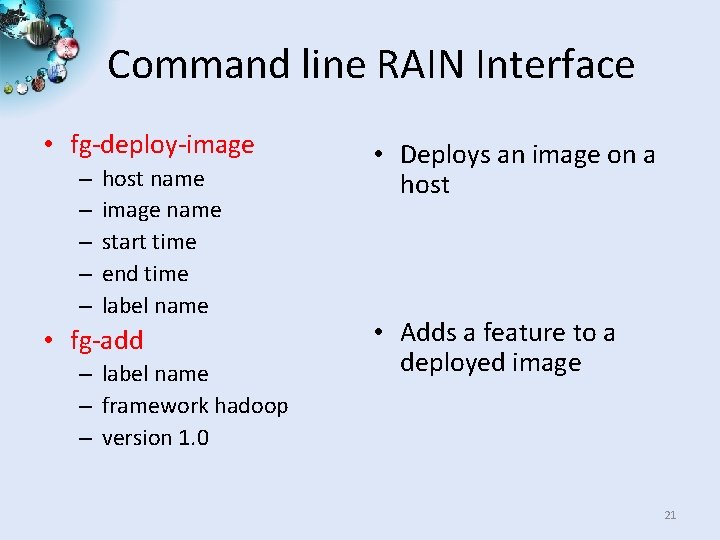
Command line RAIN Interface • fg-deploy-image – – – host name image name start time end time label name • fg-add – label name – framework hadoop – version 1. 0 • Deploys an image on a host • Adds a feature to a deployed image 21
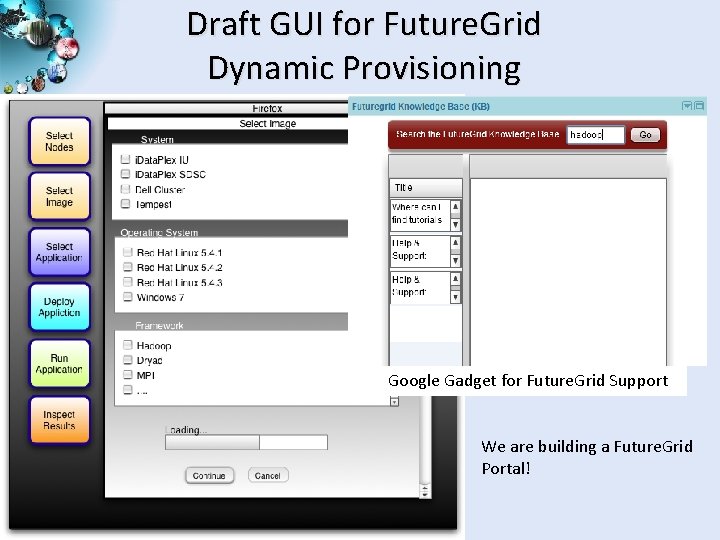
Draft GUI for Future. Grid Dynamic Provisioning Google Gadget for Future. Grid Support We are building a Future. Grid Portal!
Experiment Manager Future. Grid Software Component • Objective • Risk – Manage the provisioning for reproducible experiments – Coordinate workflow of experiments – Share workflow and experiment images – Minimize space through reuse 3/6/2021 – Images are large – Users have different requirements and need different images http: //futuregrid. org 23
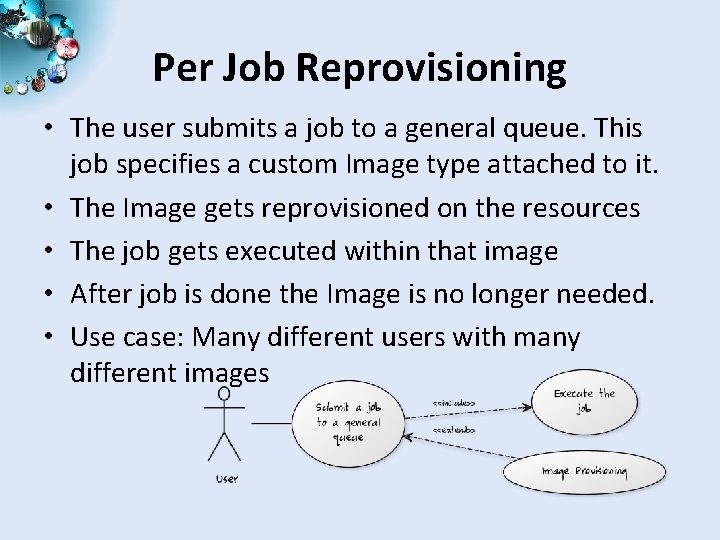
Per Job Reprovisioning • The user submits a job to a general queue. This job specifies a custom Image type attached to it. • The Image gets reprovisioned on the resources • The job gets executed within that image • After job is done the Image is no longer needed. • Use case: Many different users with many different images
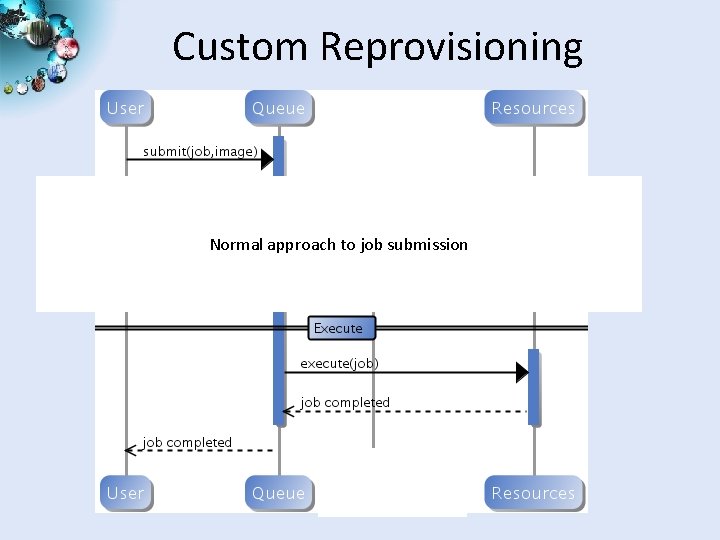
Custom Reprovisioning Normal approach to job submission
Reprovisioning based on prior state • The user submits a job to a general queue. This job specifies an OS (re-used stateless image) type attached to it. • The queue evaluates the OS requirement. – If an available node has OS already running, run the job there. – If there are no OS types available, reprovision an available node and submit the job to the new node. • Repeat the provisioning steps if the job requires multiple processors (such as a large MPI job). • Use case: reusing the same stateless image between usages
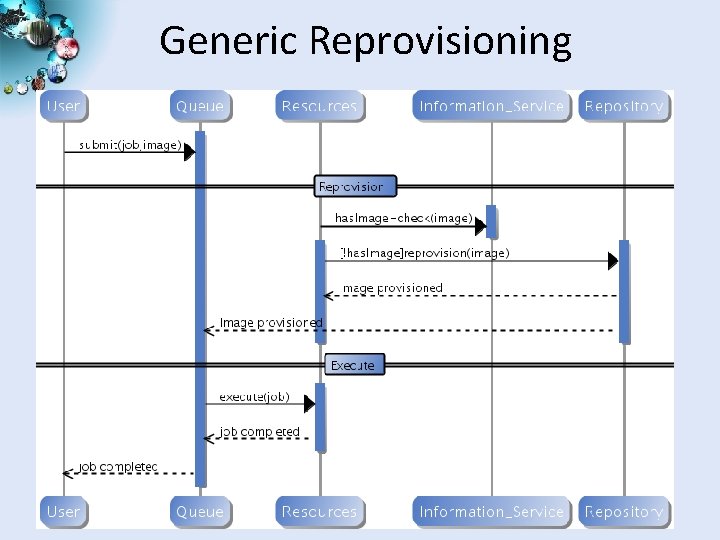
Generic Reprovisioning
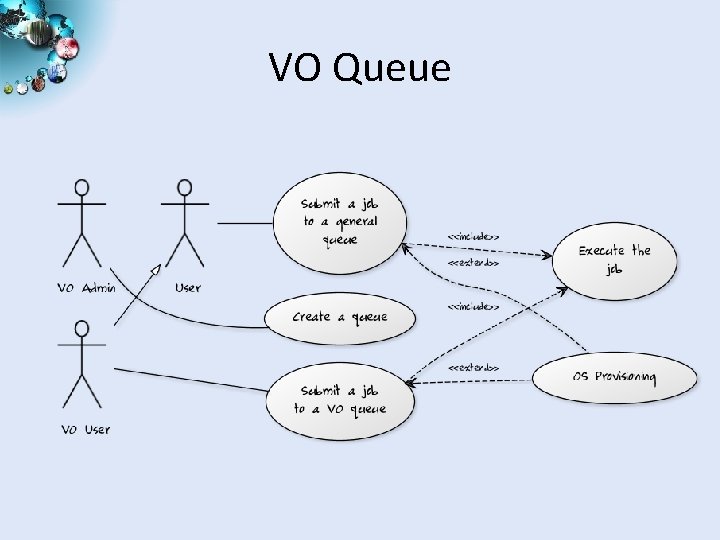
Manage your own VO queue • This use case illustrates how a group of users or a Virtual Organization (VO) can handle their own queue to specifically tune their application environment to their specification. • A VO sets up a new queue, and provides an Operating System image that is associated to this image. – Can aid in image creation through the use of advanced scripts and a configuration management tool. • A user within the VO submits a job to the VO queue. • The queue is evaluated, and determines if there are free resource nodes available. – If there is an available node and the VO OS is running on it, then the Job is scheduled there. – If an un-provisioned node is available, the VO OS is provisioned and the job is then submitted to that node. – If there are other idle nodes without jobs running, a node can be re-provisioned to the VO OS and the job is then submitted to that node. • Repeat the provisioning steps if multiple processors are required (such as an MPI job). • Use case: Provide a service to the users of a VO. For example: submit a job that uses particular software. For example provide a queue called Genesis or Hadoop for the associated user community. Provisioning is hidden from the users.
VO Queue
Current Status of Dynamic Provisioning @ Future. Grid • Future. Grid now supports the Dynamic Provisioning feature through MOAB. – Submit a job with ‘os 1’ requested, if there is a node running ‘os 1’ and in idle status, the job will be scheduled. – If there is no node running ‘os 1’, a provisioning job will be started automatically and change an idle node’s OS to the requested one. And when it's done, the submitted job will be scheduled there. – In our experiment we used 2 rhel 5 OS and dynamically switched between, one stateless and one statefull. – In our experiment the reprovisioning costs were • Approximately 4 -5 minutes for Statefull and Stateless • Used sierra. futuregrid. org i. Data. Plex at SDSC
Difficult Issues • Performance of VM’s poor with Infiniband: Future. Grid does not have resources to address such core VM issues – we can identify issues and report • What about root access? Typically administrators involved in preparation of images requiring root access. This is part of certification process. We will offer certified tools to prepare images • What about attacks on Infiniband switch? We need to study this • How does one certify statefull images? All statefull images must have a certain default software included that auto-update the image which is tested against a security service prior to staging. In case an image is identified as having a security risk it is no longer allowed to be booted.
Future. Grid and Commercial Clouds
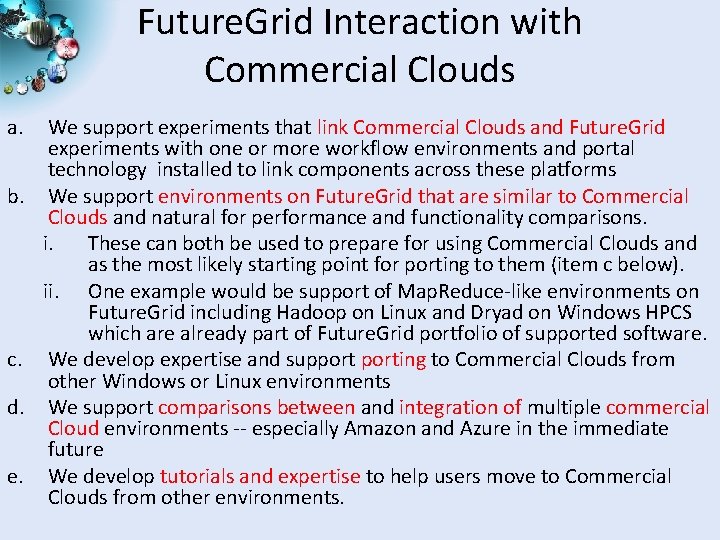
Future. Grid Interaction with Commercial Clouds a. b. c. d. e. We support experiments that link Commercial Clouds and Future. Grid experiments with one or more workflow environments and portal technology installed to link components across these platforms We support environments on Future. Grid that are similar to Commercial Clouds and natural for performance and functionality comparisons. i. These can both be used to prepare for using Commercial Clouds and as the most likely starting point for porting to them (item c below). ii. One example would be support of Map. Reduce-like environments on Future. Grid including Hadoop on Linux and Dryad on Windows HPCS which are already part of Future. Grid portfolio of supported software. We develop expertise and supporting to Commercial Clouds from other Windows or Linux environments We support comparisons between and integration of multiple commercial Cloud environments -- especially Amazon and Azure in the immediate future We develop tutorials and expertise to help users move to Commercial Clouds from other environments.
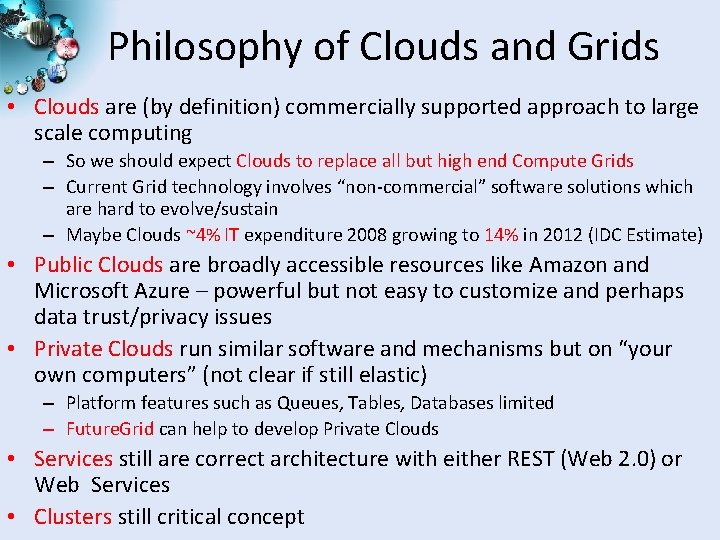
Philosophy of Clouds and Grids • Clouds are (by definition) commercially supported approach to large scale computing – So we should expect Clouds to replace all but high end Compute Grids – Current Grid technology involves “non-commercial” software solutions which are hard to evolve/sustain – Maybe Clouds ~4% IT expenditure 2008 growing to 14% in 2012 (IDC Estimate) • Public Clouds are broadly accessible resources like Amazon and Microsoft Azure – powerful but not easy to customize and perhaps data trust/privacy issues • Private Clouds run similar software and mechanisms but on “your own computers” (not clear if still elastic) – Platform features such as Queues, Tables, Databases limited – Future. Grid can help to develop Private Clouds • Services still are correct architecture with either REST (Web 2. 0) or Web Services • Clusters still critical concept
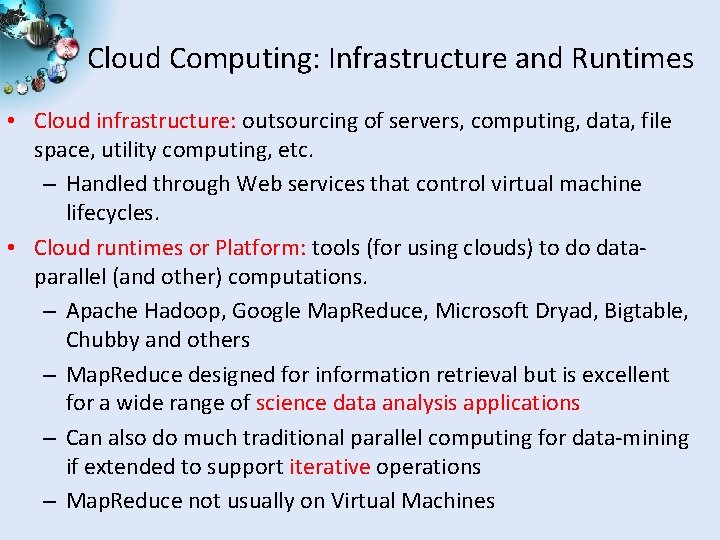
Cloud Computing: Infrastructure and Runtimes • Cloud infrastructure: outsourcing of servers, computing, data, file space, utility computing, etc. – Handled through Web services that control virtual machine lifecycles. • Cloud runtimes or Platform: tools (for using clouds) to do dataparallel (and other) computations. – Apache Hadoop, Google Map. Reduce, Microsoft Dryad, Bigtable, Chubby and others – Map. Reduce designed for information retrieval but is excellent for a wide range of science data analysis applications – Can also do much traditional parallel computing for data-mining if extended to support iterative operations – Map. Reduce not usually on Virtual Machines
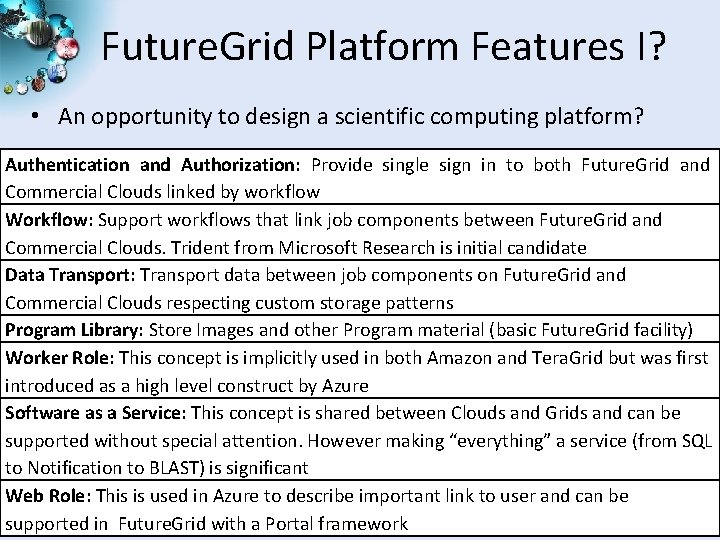
Future. Grid Platform Features I? • An opportunity to design a scientific computing platform? Authentication and Authorization: Provide single sign in to both Future. Grid and Commercial Clouds linked by workflow Workflow: Support workflows that link job components between Future. Grid and Commercial Clouds. Trident from Microsoft Research is initial candidate Data Transport: Transport data between job components on Future. Grid and Commercial Clouds respecting custom storage patterns Program Library: Store Images and other Program material (basic Future. Grid facility) Worker Role: This concept is implicitly used in both Amazon and Tera. Grid but was first introduced as a high level construct by Azure Software as a Service: This concept is shared between Clouds and Grids and can be supported without special attention. However making “everything” a service (from SQL to Notification to BLAST) is significant Web Role: This is used in Azure to describe important link to user and can be supported in Future. Grid with a Portal framework
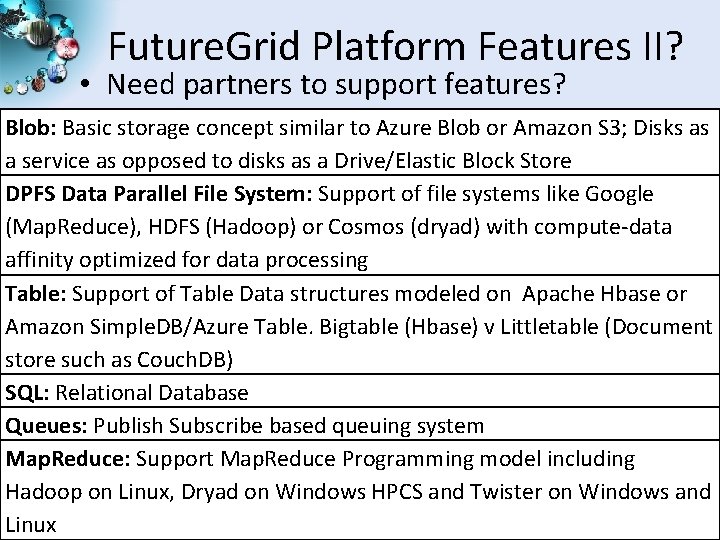
Future. Grid Platform Features II? • Need partners to support features? Blob: Basic storage concept similar to Azure Blob or Amazon S 3; Disks as a service as opposed to disks as a Drive/Elastic Block Store DPFS Data Parallel File System: Support of file systems like Google (Map. Reduce), HDFS (Hadoop) or Cosmos (dryad) with compute-data affinity optimized for data processing Table: Support of Table Data structures modeled on Apache Hbase or Amazon Simple. DB/Azure Table. Bigtable (Hbase) v Littletable (Document store such as Couch. DB) SQL: Relational Database Queues: Publish Subscribe based queuing system Map. Reduce: Support Map. Reduce Programming model including Hadoop on Linux, Dryad on Windows HPCS and Twister on Windows and Linux

An Example of Future. Grid Performance Study
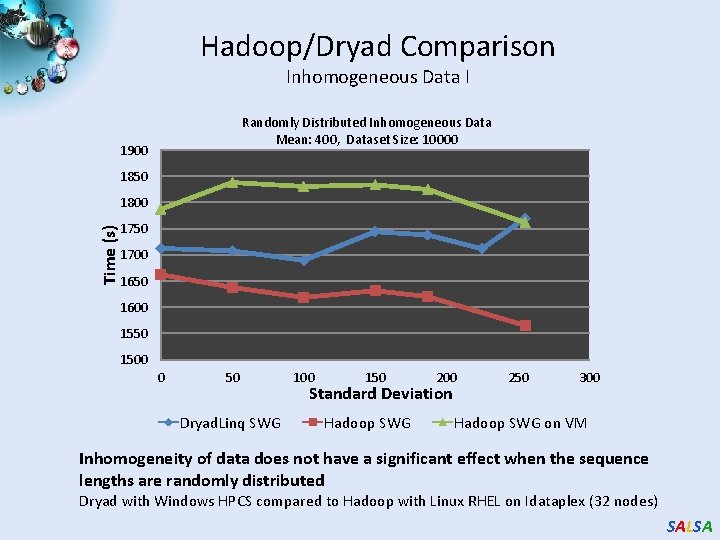
Hadoop/Dryad Comparison Inhomogeneous Data I Randomly Distributed Inhomogeneous Data Mean: 400, Dataset Size: 10000 1900 1850 Time (s) 1800 1750 1700 1650 1600 1550 1500 0 50 Dryad. Linq SWG 100 150 200 Standard Deviation Hadoop SWG 250 300 Hadoop SWG on VM Inhomogeneity of data does not have a significant effect when the sequence lengths are randomly distributed Dryad with Windows HPCS compared to Hadoop with Linux RHEL on Idataplex (32 nodes) SALSA
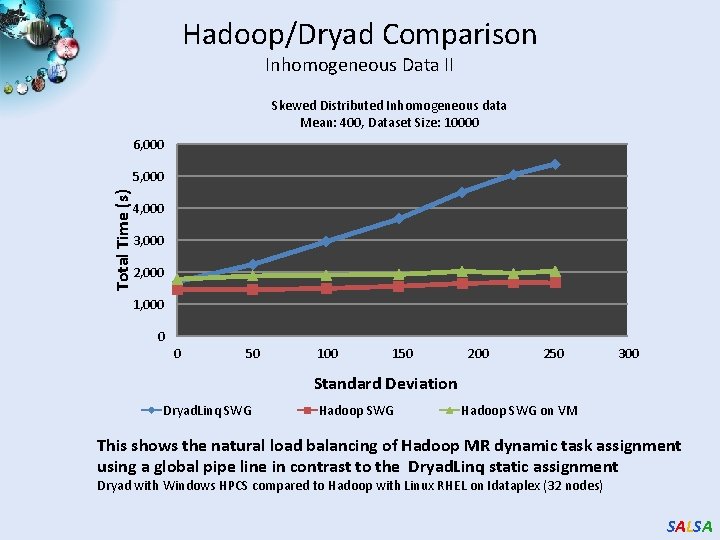
Hadoop/Dryad Comparison Inhomogeneous Data II Skewed Distributed Inhomogeneous data Mean: 400, Dataset Size: 10000 6, 000 Total Time (s) 5, 000 4, 000 3, 000 2, 000 1, 000 0 0 50 100 150 200 250 300 Standard Deviation Dryad. Linq SWG Hadoop SWG on VM This shows the natural load balancing of Hadoop MR dynamic task assignment using a global pipe line in contrast to the Dryad. Linq static assignment Dryad with Windows HPCS compared to Hadoop with Linux RHEL on Idataplex (32 nodes) SALSA
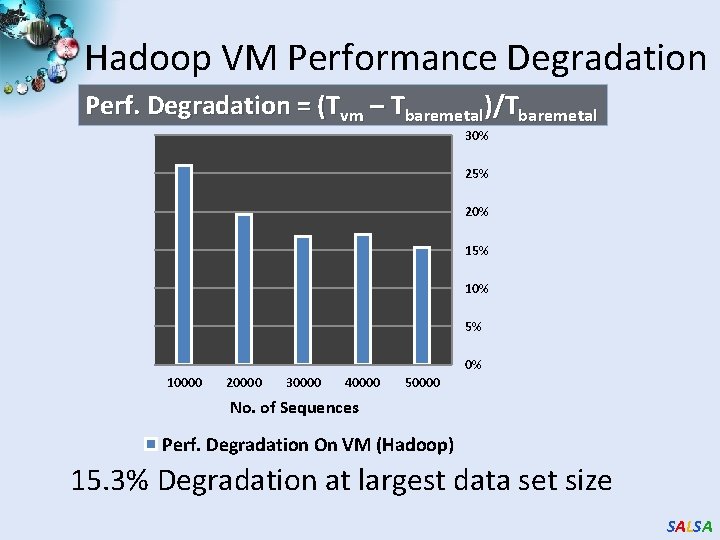
Hadoop VM Performance Degradation Perf. Degradation = (Tvm – Tbaremetal)/Tbaremetal 30% 25% 20% 15% 10% 5% 0% 10000 20000 30000 40000 50000 No. of Sequences Perf. Degradation On VM (Hadoop) 15. 3% Degradation at largest data set size SALSA
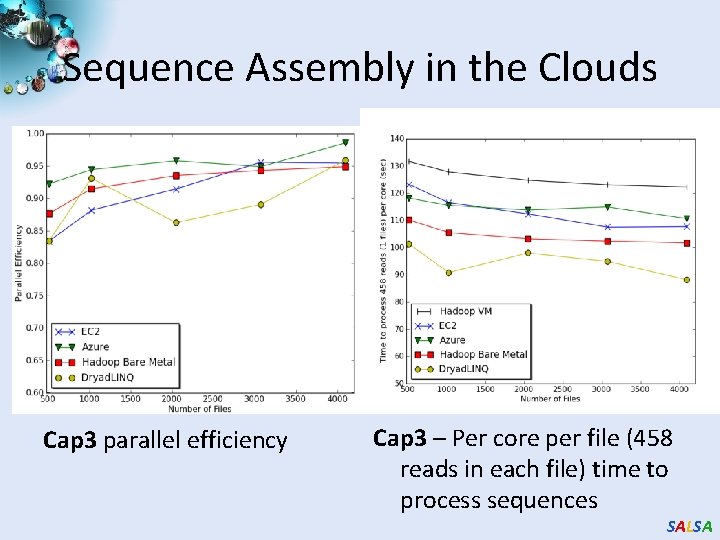
Sequence Assembly in the Clouds Cap 3 parallel efficiency Cap 3 – Per core per file (458 reads in each file) time to process sequences SALSA
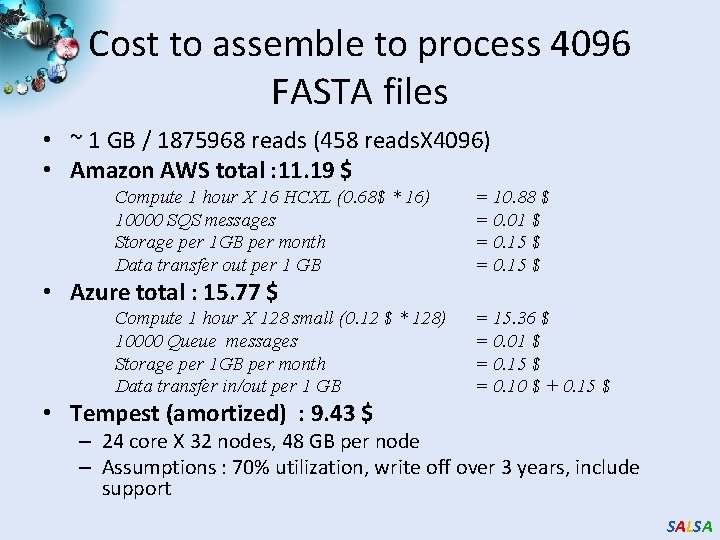
Cost to assemble to process 4096 FASTA files • ~ 1 GB / 1875968 reads (458 reads. X 4096) • Amazon AWS total : 11. 19 $ Compute 1 hour X 16 HCXL (0. 68$ * 16) 10000 SQS messages Storage per 1 GB per month Data transfer out per 1 GB = 10. 88 $ = 0. 01 $ = 0. 15 $ • Azure total : 15. 77 $ Compute 1 hour X 128 small (0. 12 $ * 128) 10000 Queue messages Storage per 1 GB per month Data transfer in/out per 1 GB = 15. 36 $ = 0. 01 $ = 0. 15 $ = 0. 10 $ + 0. 15 $ • Tempest (amortized) : 9. 43 $ – 24 core X 32 nodes, 48 GB per node – Assumptions : 70% utilization, write off over 3 years, include support SALSA
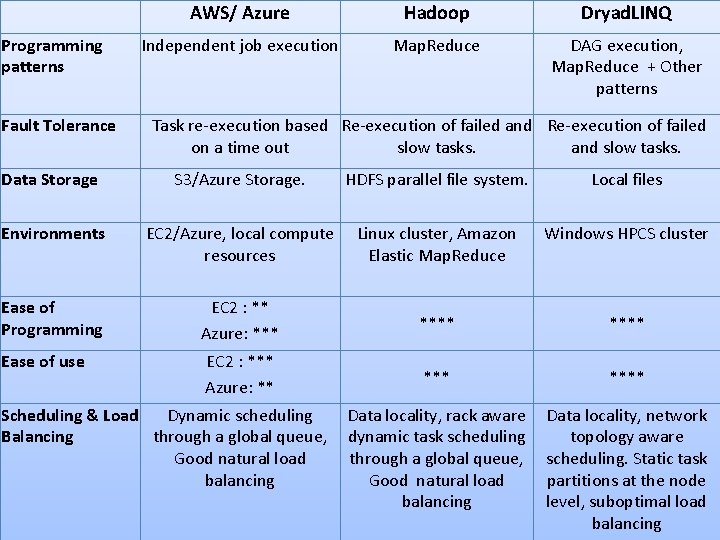
Programming patterns Fault Tolerance AWS/ Azure Hadoop Dryad. LINQ Independent job execution Map. Reduce DAG execution, Map. Reduce + Other patterns Task re-execution based Re-execution of failed and Re-execution of failed on a time out slow tasks. and slow tasks. Data Storage S 3/Azure Storage. HDFS parallel file system. Local files Environments EC 2/Azure, local compute resources Linux cluster, Amazon Elastic Map. Reduce Windows HPCS cluster Ease of Programming EC 2 : ** Azure: **** Ease of use EC 2 : *** Azure: ** **** Data locality, rack aware dynamic task scheduling through a global queue, Good natural load balancing Data locality, network topology aware scheduling. Static task partitions at the node level, suboptimal load balancing SALSA Scheduling & Load Dynamic scheduling Balancing through a global queue, Good natural load balancing
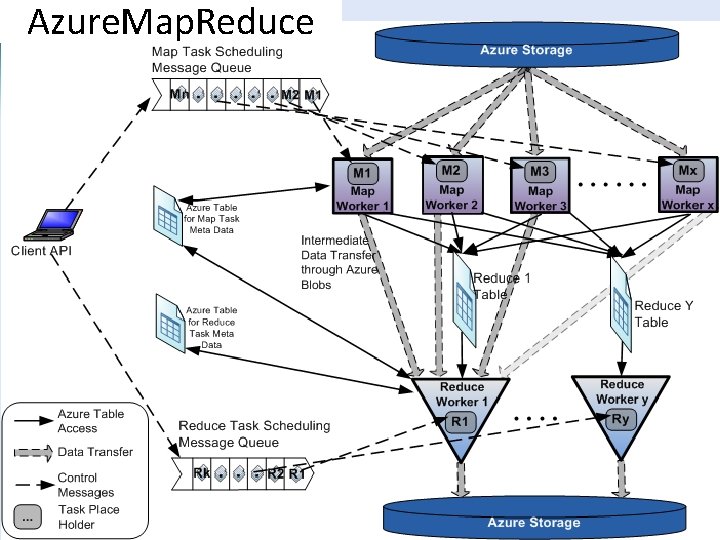
Azure. Map. Reduce SALSA
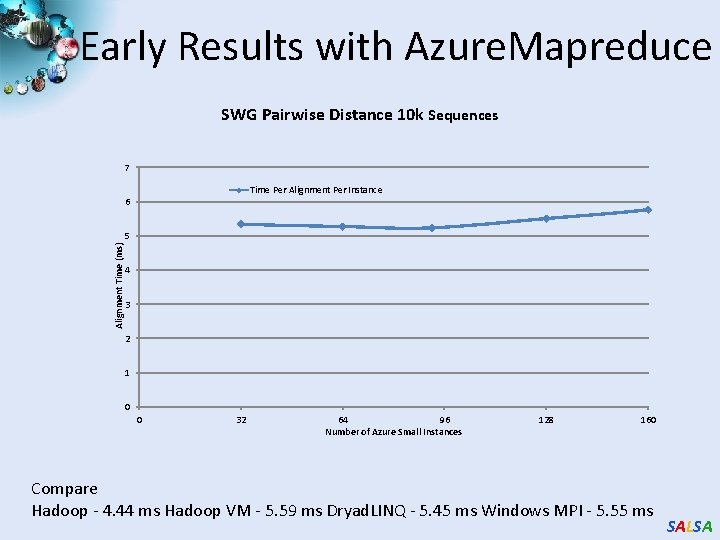
Early Results with Azure. Mapreduce SWG Pairwise Distance 10 k Sequences 7 Time Per Alignment Per Instance 6 Alignment Time (ms) 5 4 3 2 1 0 0 32 64 96 Number of Azure Small Instances 128 160 Compare Hadoop - 4. 44 ms Hadoop VM - 5. 59 ms Dryad. LINQ - 5. 45 ms Windows MPI - 5. 55 ms SALSA
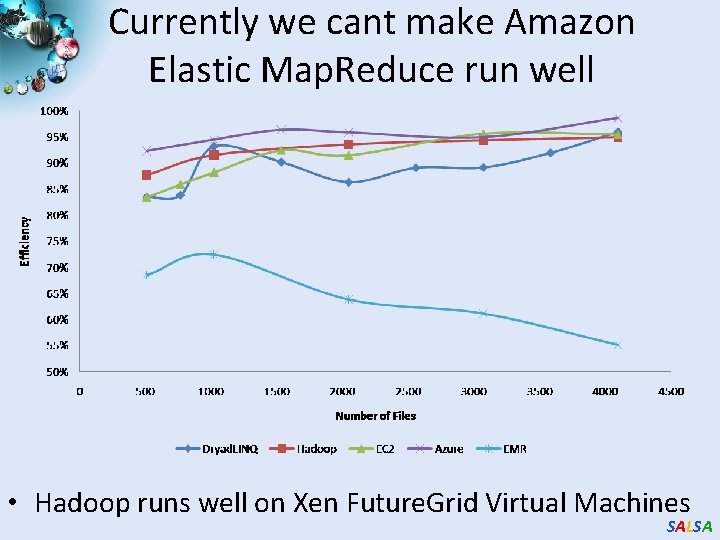
Currently we cant make Amazon Elastic Map. Reduce run well • Hadoop runs well on Xen Future. Grid Virtual Machines SALSA
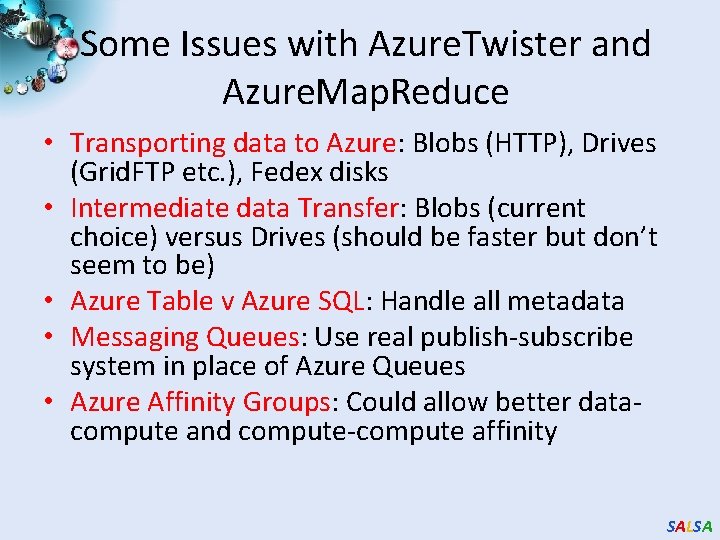
Some Issues with Azure. Twister and Azure. Map. Reduce • Transporting data to Azure: Blobs (HTTP), Drives (Grid. FTP etc. ), Fedex disks • Intermediate data Transfer: Blobs (current choice) versus Drives (should be faster but don’t seem to be) • Azure Table v Azure SQL: Handle all metadata • Messaging Queues: Use real publish-subscribe system in place of Azure Queues • Azure Affinity Groups: Could allow better datacompute and compute-compute affinity SALSA
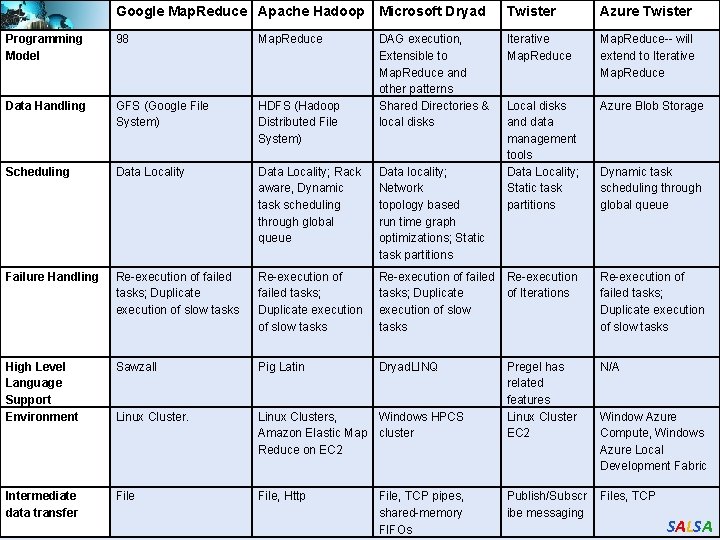
Google Map. Reduce Apache Hadoop Microsoft Dryad Twister Azure Twister Programming Model 98 Map. Reduce Iterative Map. Reduce-- will extend to Iterative Map. Reduce Data Handling GFS (Google File System) HDFS (Hadoop Distributed File System) Azure Blob Storage Scheduling Data Locality; Rack aware, Dynamic task scheduling through global queue Data locality; Network topology based run time graph optimizations; Static task partitions Local disks and data management tools Data Locality; Static task partitions Failure Handling Re-execution of failed tasks; Duplicate execution of slow tasks Re-execution of Iterations Re-execution of failed tasks; Duplicate execution of slow tasks High Level Language Support Environment Sawzall Pig Latin Dryad. LINQ N/A Linux Clusters, Windows HPCS Amazon Elastic Map cluster Reduce on EC 2 Pregel has related features Linux Cluster EC 2 Intermediate data transfer File, Http Publish/Subscr ibe messaging Files, TCP DAG execution, Extensible to Map. Reduce and other patterns Shared Directories & local disks File, TCP pipes, shared-memory FIFOs Dynamic task scheduling through global queue Window Azure Compute, Windows Azure Local Development Fabric SALSA
Future. Grid Cloud. Bench • Maintain a set of comparative benchmarks for comparable operations on Future. Grid, Azure, Amazon • e. g. http: //azurescope. cloudapp. net/ with Amazon and Future. Grid analogues • Need Map. Reduce as well SALSA
The term SALSA or Service Aggregated Linked Sequential Activities, is derived from Hoare’s Concurrent Sequential Processes (CSP) SALSA Group http: //salsahpc. indiana. edu Group Leader: Judy Qiu Staff : Adam Hughes CS Ph. D: Jaliya Ekanayake, Thilina Gunarathne, Jong Youl Choi, Seung-Hee Bae, Yang Ruan, Hui Li, Bingjing Zhang, Saliya Ekanayake, CS Masters: Stephen Wu Undergraduates: Zachary Adda, Jeremy Kasting, William Bowman http: //salsahpc. indiana. edu/content/cloud-materials Cloud Tutorial Material SALSA
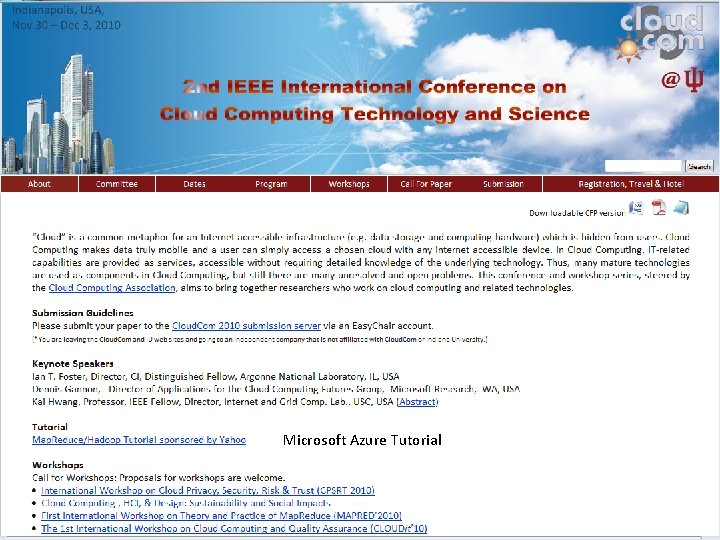
Microsoft Azure Tutorial SALSA
- Slides: 52