
FUTURE FORMS Future tenses There are several different
- Slides: 18
FUTURE FORMS
Future tenses There are several different ways in English that you can talk about the future. This page is an introduction to the most important ones: - Predictions/statements of fact - Intentions - Arrangements - Scheduled events
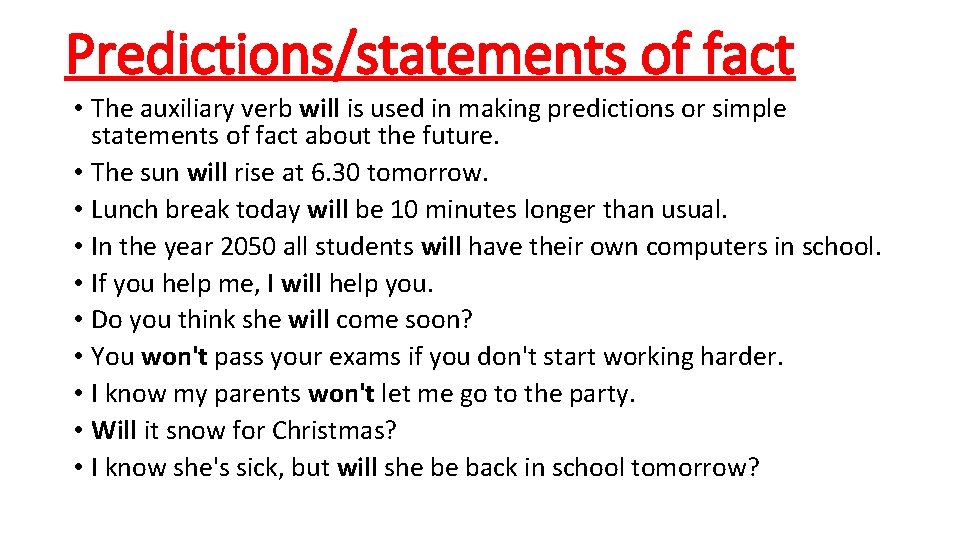
Predictions/statements of fact • The auxiliary verb will is used in making predictions or simple statements of fact about the future. • The sun will rise at 6. 30 tomorrow. • Lunch break today will be 10 minutes longer than usual. • In the year 2050 all students will have their own computers in school. • If you help me, I will help you. • Do you think she will come soon? • You won't pass your exams if you don't start working harder. • I know my parents won't let me go to the party. • Will it snow for Christmas? • I know she's sick, but will she be back in school tomorrow?
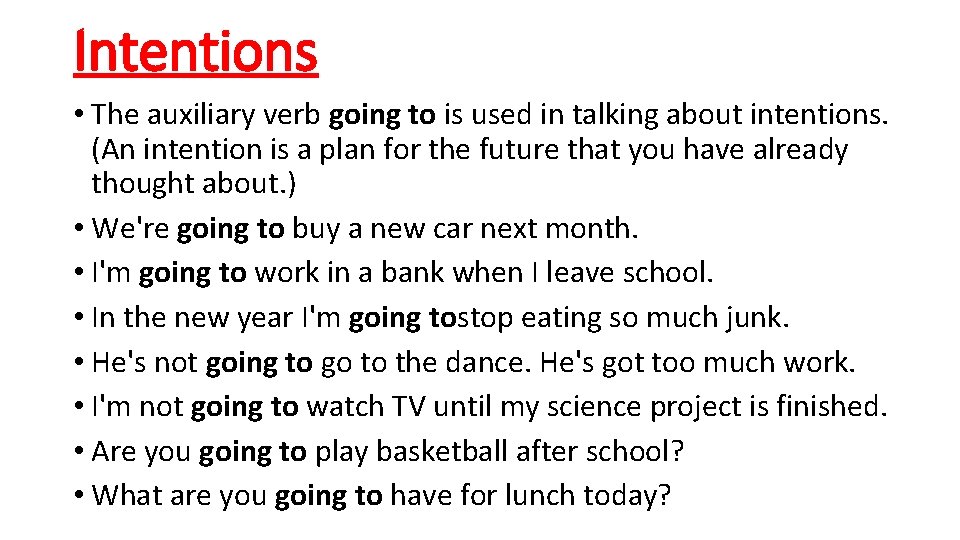
Intentions • The auxiliary verb going to is used in talking about intentions. (An intention is a plan for the future that you have already thought about. ) • We're going to buy a new car next month. • I'm going to work in a bank when I leave school. • In the new year I'm going tostop eating so much junk. • He's not going to go to the dance. He's got too much work. • I'm not going to watch TV until my science project is finished. • Are you going to play basketball after school? • What are you going to have for lunch today?
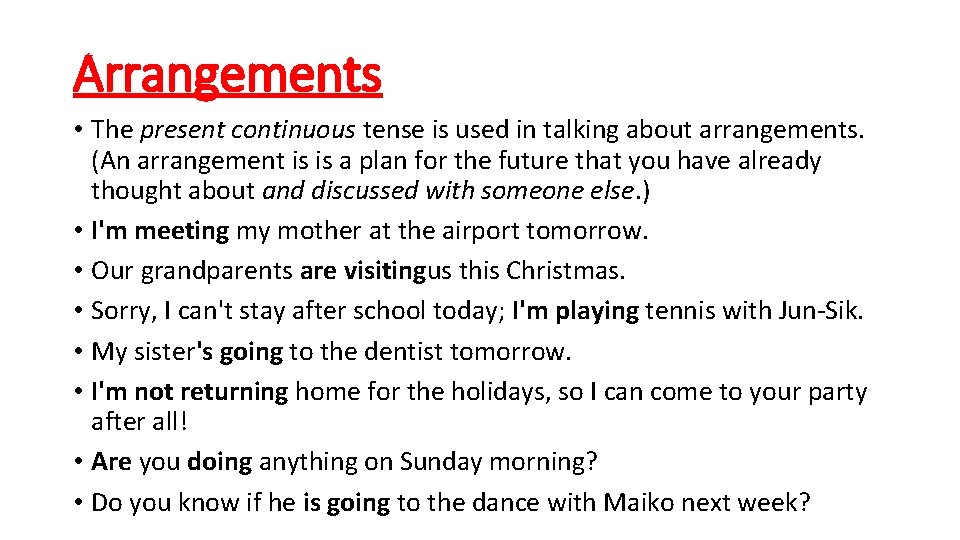
Arrangements • The present continuous tense is used in talking about arrangements. (An arrangement is is a plan for the future that you have already thought about and discussed with someone else. ) • I'm meeting my mother at the airport tomorrow. • Our grandparents are visitingus this Christmas. • Sorry, I can't stay after school today; I'm playing tennis with Jun-Sik. • My sister's going to the dentist tomorrow. • I'm not returning home for the holidays, so I can come to your party after all! • Are you doing anything on Sunday morning? • Do you know if he is going to the dance with Maiko next week?
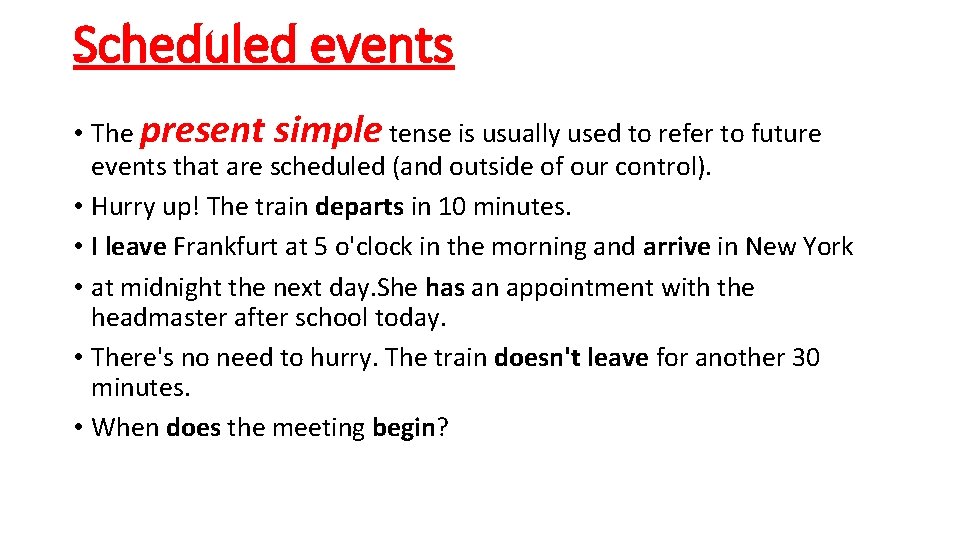
Scheduled events • The present simple tense is usually used to refer to future events that are scheduled (and outside of our control). • Hurry up! The train departs in 10 minutes. • I leave Frankfurt at 5 o'clock in the morning and arrive in New York • at midnight the next day. She has an appointment with the headmaster after school today. • There's no need to hurry. The train doesn't leave for another 30 minutes. • When does the meeting begin?
MODALS
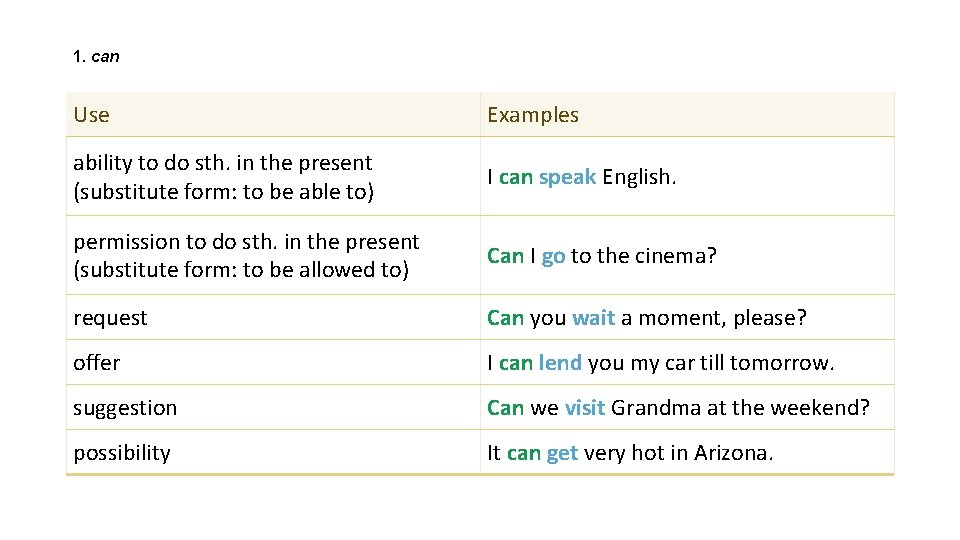
1. can Use Examples ability to do sth. in the present (substitute form: to be able to) I can speak English. permission to do sth. in the present (substitute form: to be allowed to) Can I go to the cinema? request Can you wait a moment, please? offer I can lend you my car till tomorrow. suggestion Can we visit Grandma at the weekend? possibility It can get very hot in Arizona.
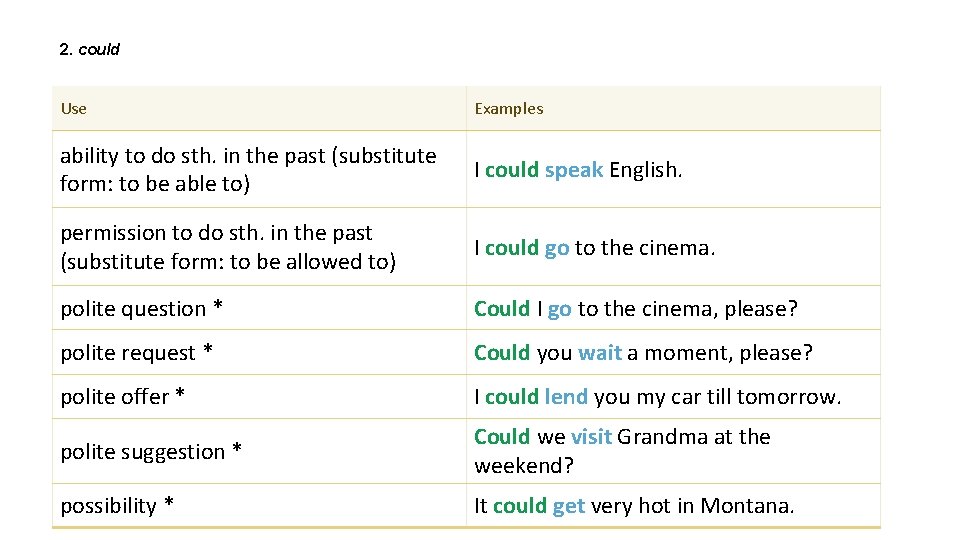
2. could Use Examples ability to do sth. in the past (substitute form: to be able to) I could speak English. permission to do sth. in the past (substitute form: to be allowed to) I could go to the cinema. polite question * Could I go to the cinema, please? polite request * Could you wait a moment, please? polite offer * I could lend you my car till tomorrow. polite suggestion * Could we visit Grandma at the weekend? possibility * It could get very hot in Montana.
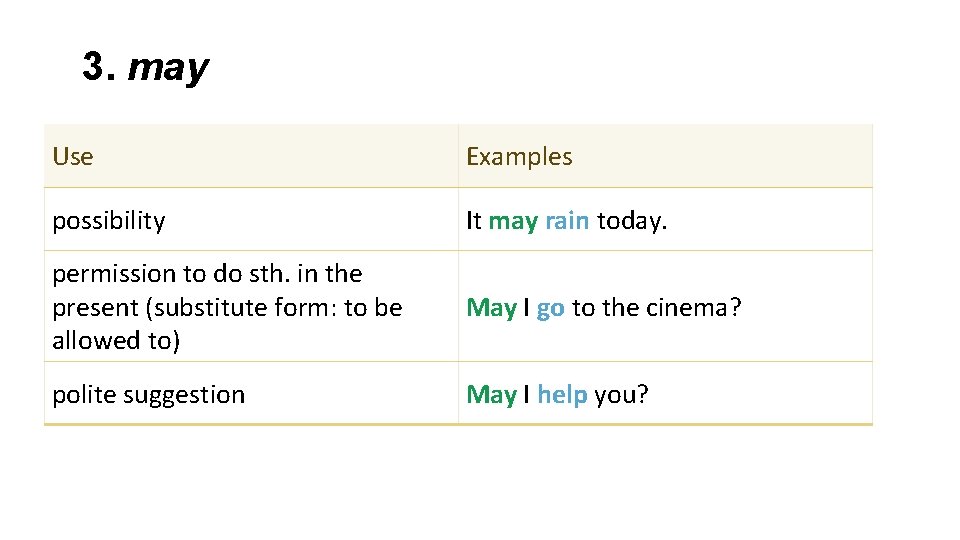
3. may Use Examples possibility It may rain today. permission to do sth. in the present (substitute form: to be allowed to) May I go to the cinema? polite suggestion May I help you?
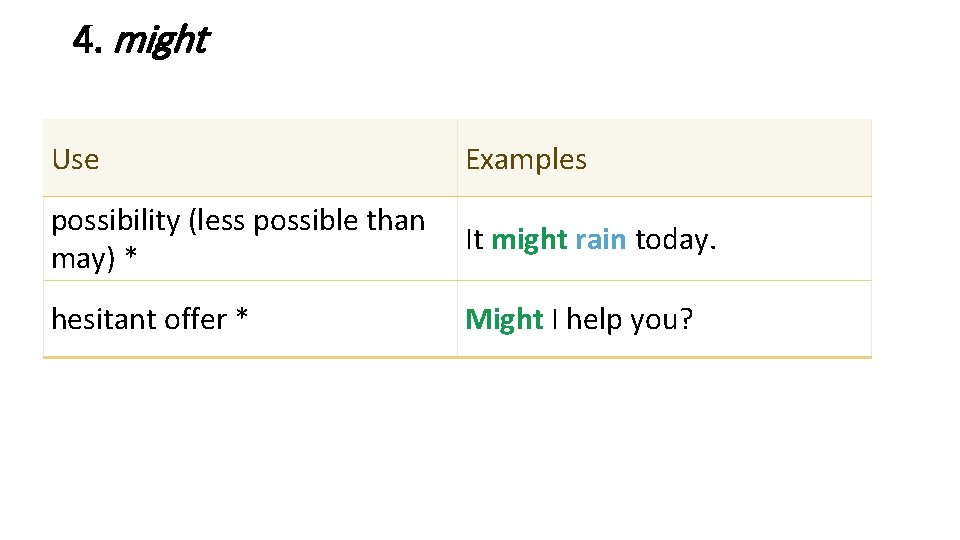
4. might Use Examples possibility (less possible than It might rain today. may) * hesitant offer * Might I help you?
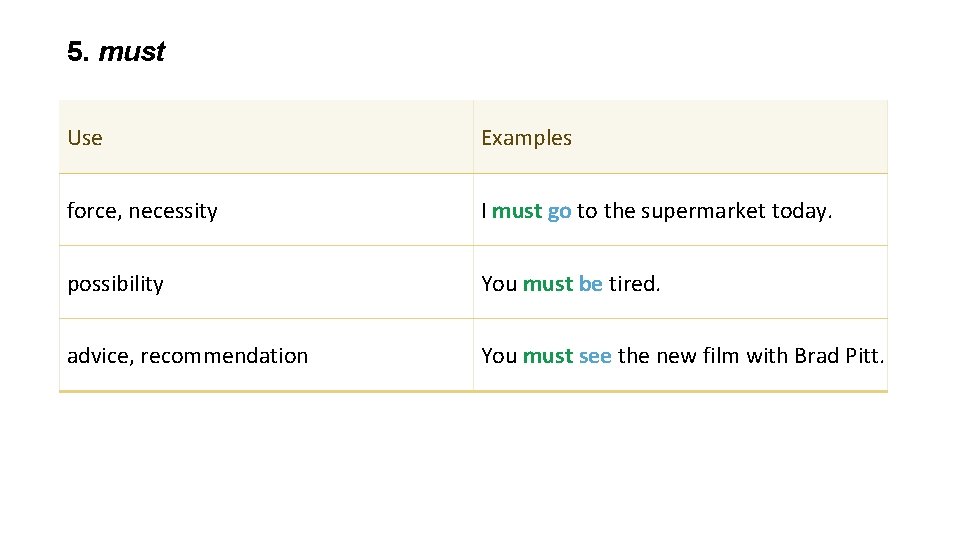
5. must Use Examples force, necessity I must go to the supermarket today. possibility You must be tired. advice, recommendation You must see the new film with Brad Pitt.
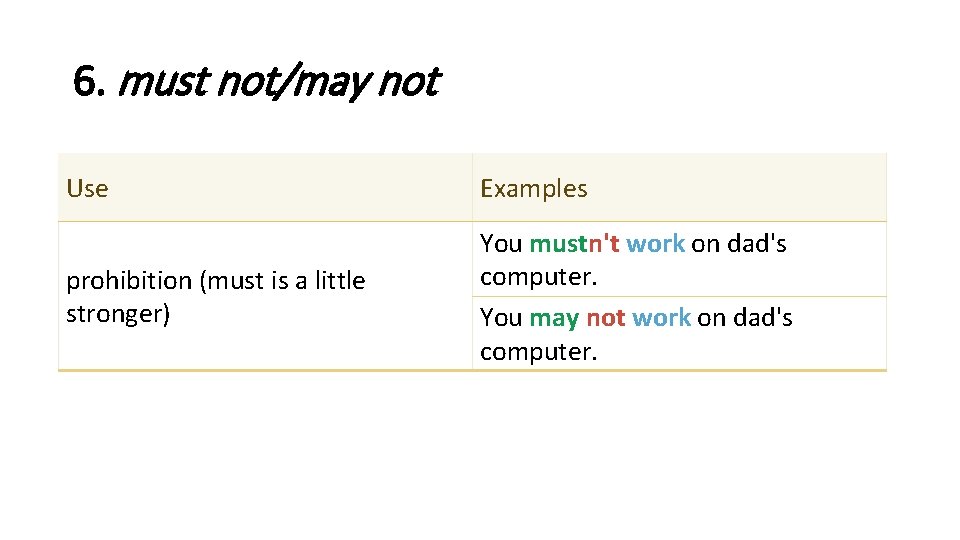
6. must not/may not Use Examples prohibition (must is a little stronger) You mustn't work on dad's computer. You may not work on dad's computer.
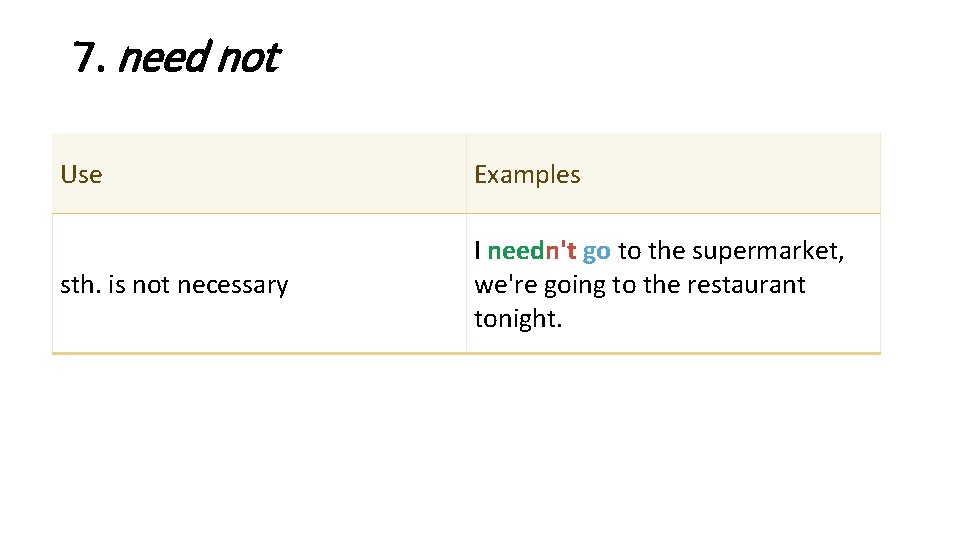
7. need not Use Examples sth. is not necessary I needn't go to the supermarket, we're going to the restaurant tonight.
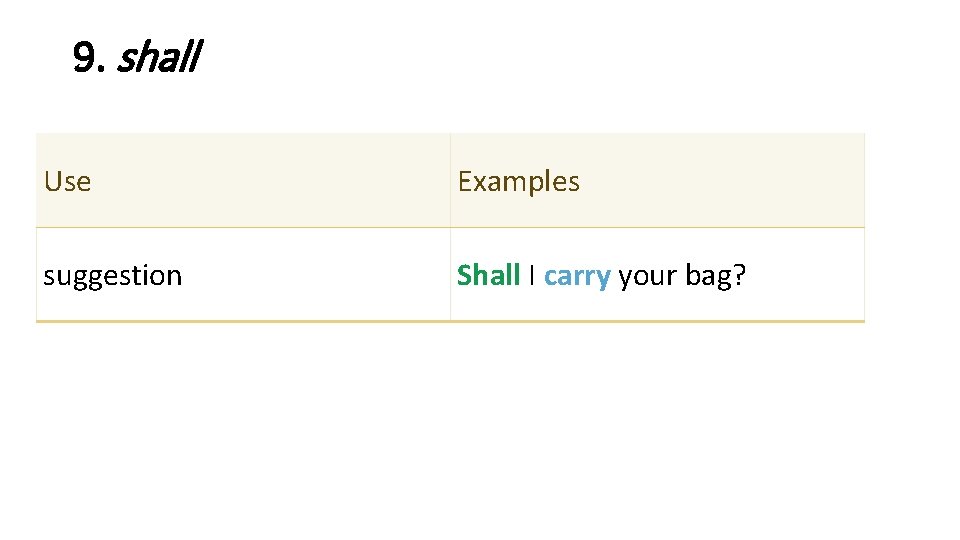
9. shall Use Examples suggestion Shall I carry your bag?
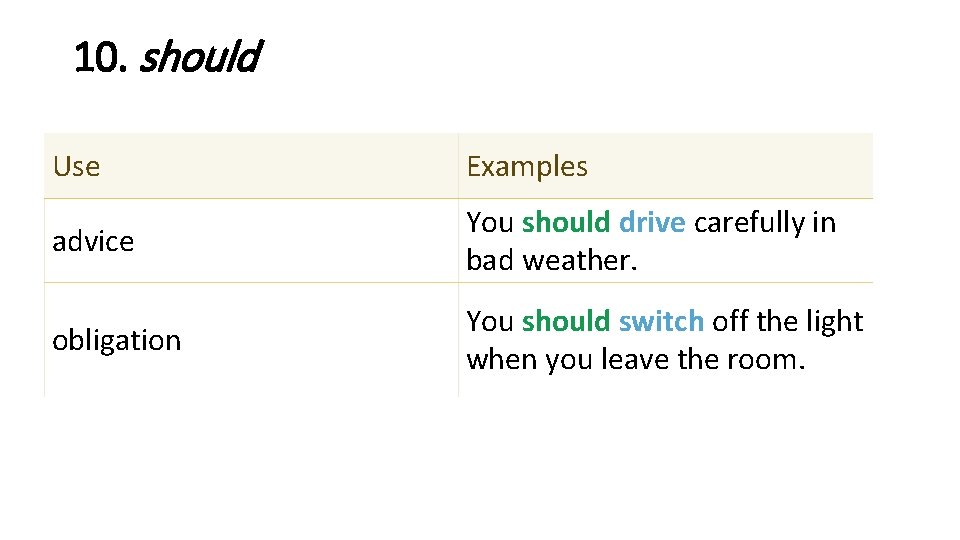
10. should Use Examples advice You should drive carefully in bad weather. obligation You should switch off the light when you leave the room.
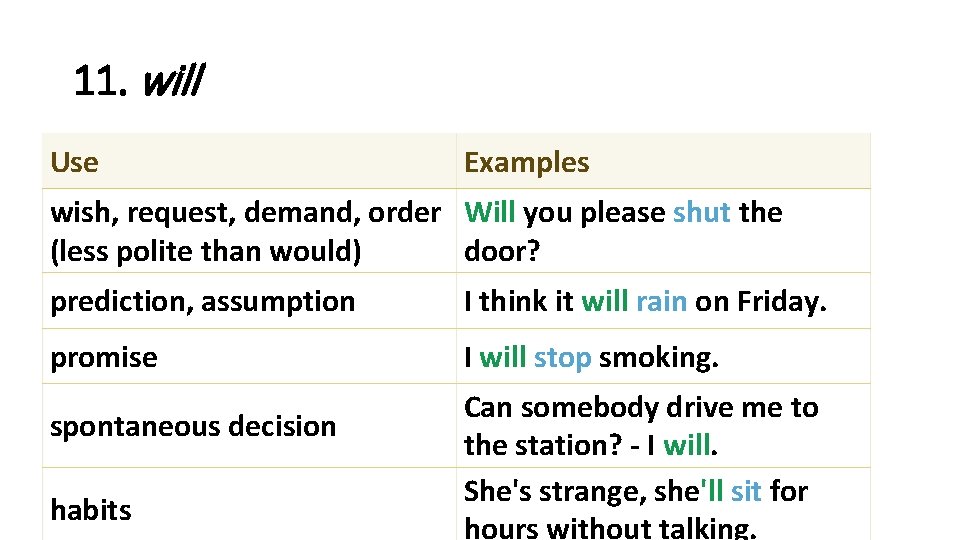
11. will Use Examples wish, request, demand, order Will you please shut the (less polite than would) door? prediction, assumption I think it will rain on Friday. promise I will stop smoking. spontaneous decision habits Can somebody drive me to the station? - I will. She's strange, she'll sit for hours without talking.
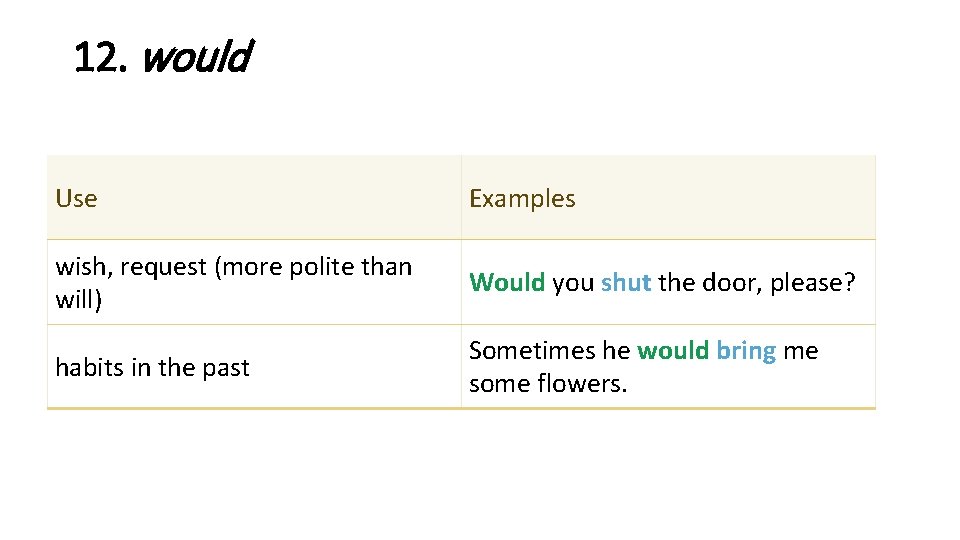
12. would Use Examples wish, request (more polite than will) Would you shut the door, please? habits in the past Sometimes he would bring me some flowers.