
Fusion Stars and Elements Twinkle little star Inside
- Slides: 13
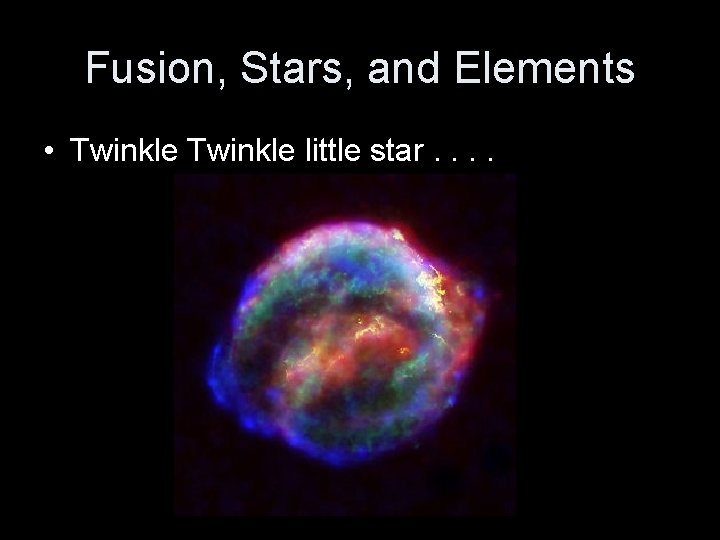
Fusion, Stars, and Elements • Twinkle little star. .
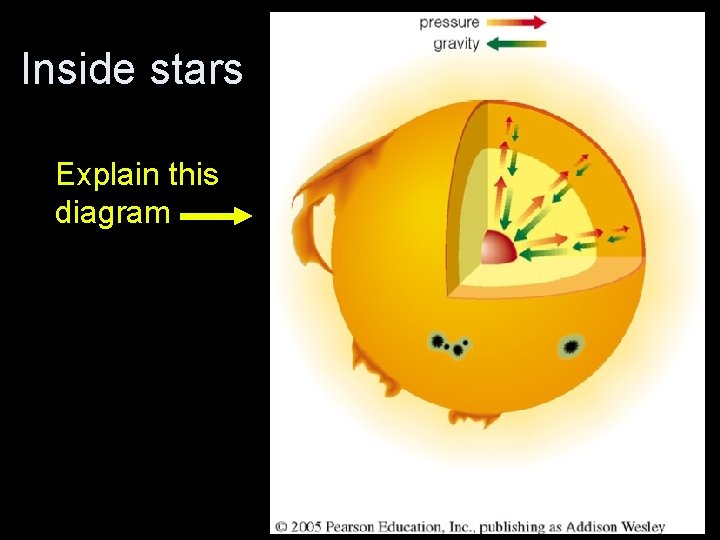
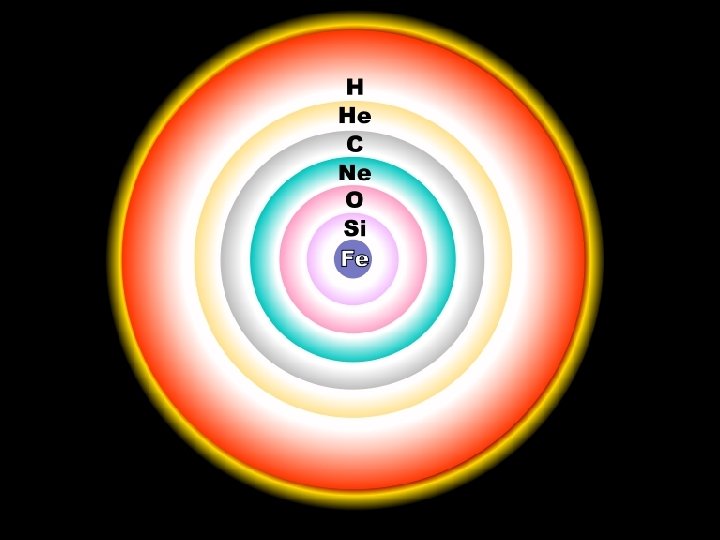
Inside stars Explain this diagram
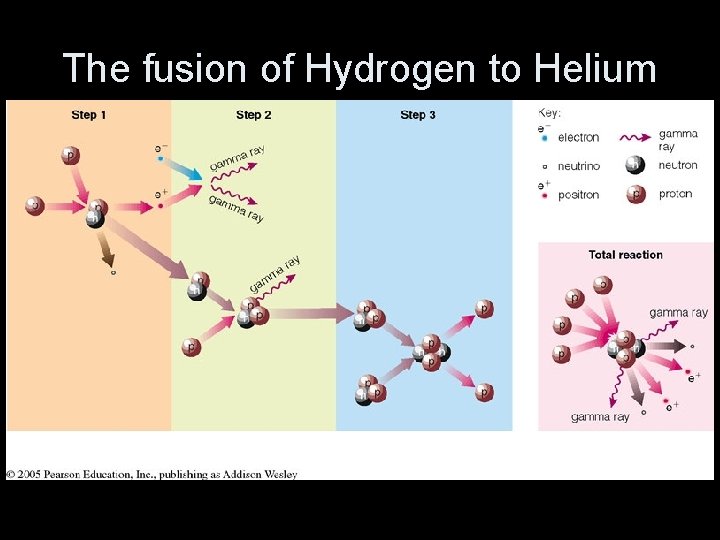
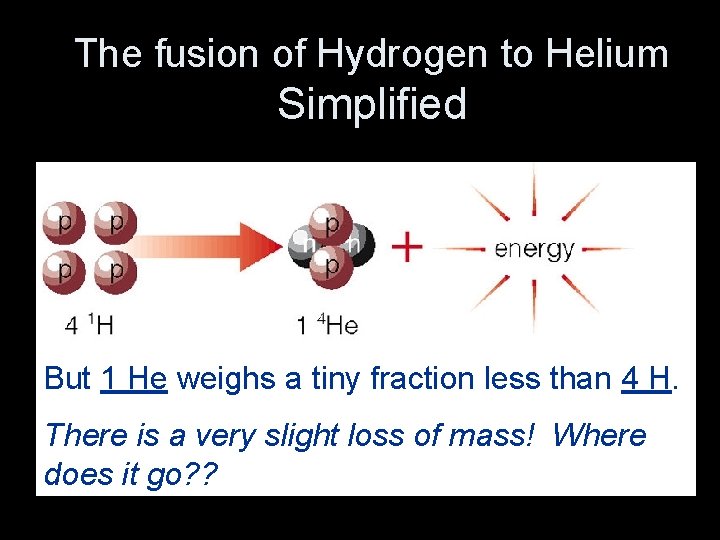
The fusion of Hydrogen to Helium
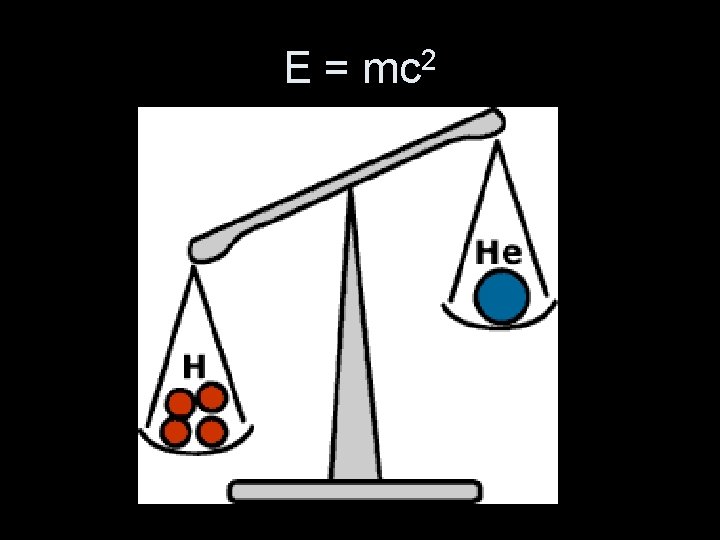
The fusion of Hydrogen to Helium Simplified But 1 He weighs a tiny fraction less than 4 H. There is a very slight loss of mass! Where does it go? ?
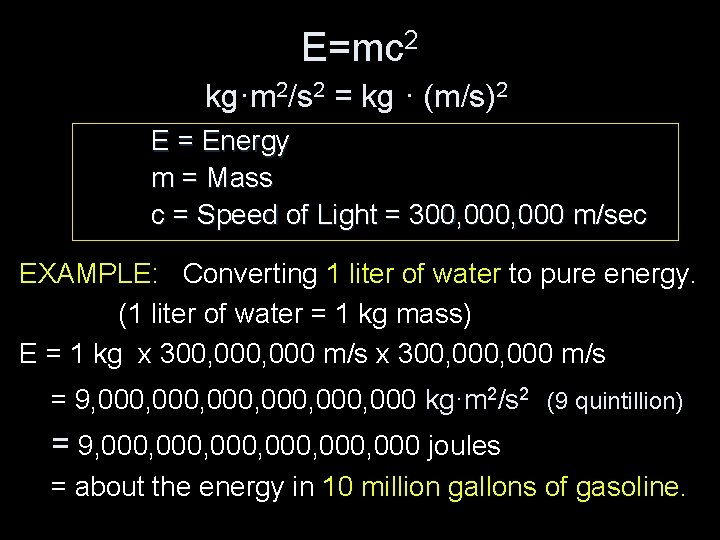
E = mc 2
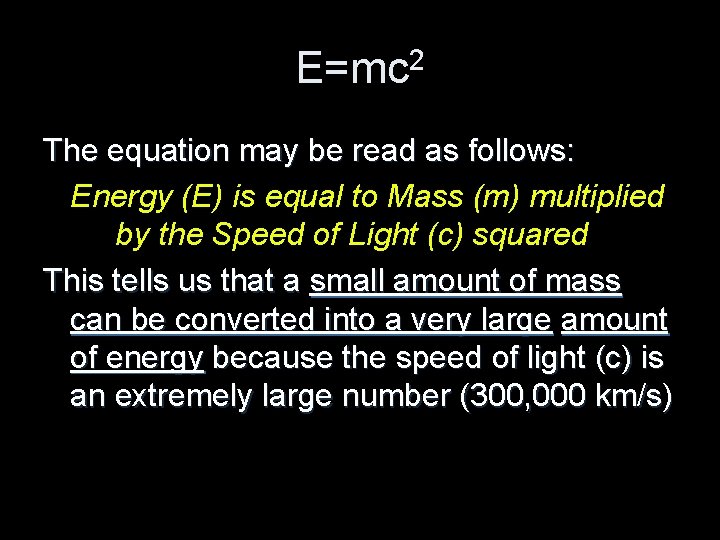
E=mc 2 The equation may be read as follows: Energy (E) is equal to Mass (m) multiplied by the Speed of Light (c) squared This tells us that a small amount of mass can be converted into a very large amount of energy because the speed of light (c) is an extremely large number (300, 000 km/s)
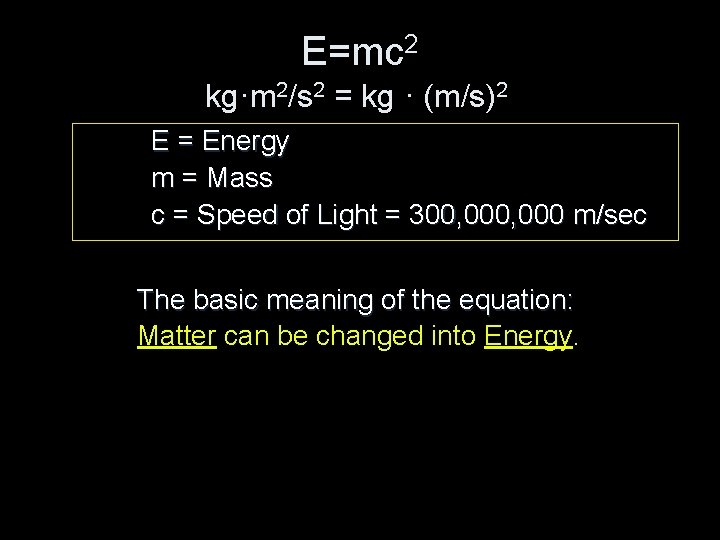
E=mc 2 kg·m 2/s 2 = kg · (m/s)2 E = Energy m = Mass c = Speed of Light = 300, 000 m/sec The basic meaning of the equation: Matter can be changed into Energy.
E=mc 2 kg·m 2/s 2 = kg · (m/s)2 E = Energy m = Mass c = Speed of Light = 300, 000 m/sec EXAMPLE: Converting 1 liter of water to pure energy. (1 liter of water = 1 kg mass) E = 1 kg x 300, 000, 000 m/s = 9, 000, 000 kg·m 2/s 2 (9 quintillion) = 9, 000, 000 joules = about the energy in 10 million gallons of gasoline.
E=mc 2 Listen in…
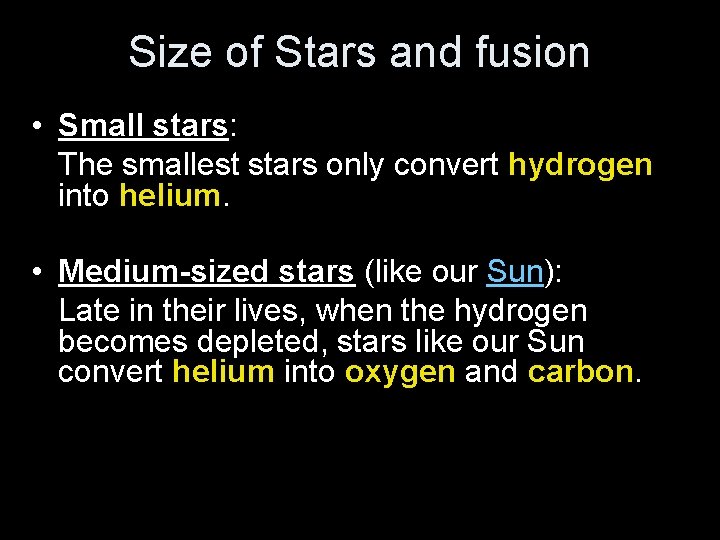
Size of Stars and fusion • Small stars: The smallest stars only convert hydrogen into helium. • Medium-sized stars (like our Sun): Late in their lives, when the hydrogen becomes depleted, stars like our Sun convert helium into oxygen and carbon.
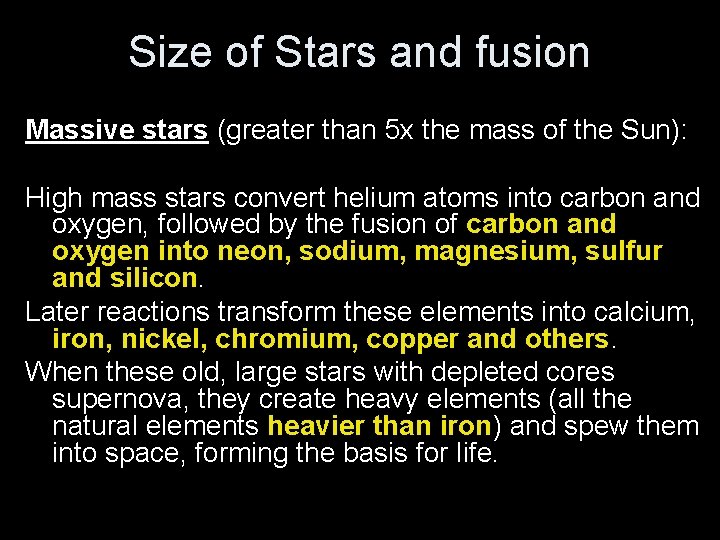
Size of Stars and fusion Massive stars (greater than 5 x the mass of the Sun): High mass stars convert helium atoms into carbon and oxygen, followed by the fusion of carbon and oxygen into neon, sodium, magnesium, sulfur and silicon. Later reactions transform these elements into calcium, iron, nickel, chromium, copper and others. When these old, large stars with depleted cores supernova, they create heavy elements (all the natural elements heavier than iron) and spew them into space, forming the basis for life.