
FURCATION DEFFINITION The furcation is an area of
- Slides: 25
FURCATION
DEFFINITION • The furcation is an area of complex anatomic morphology, that may be difficult or impossible to debride by routine periodontal instrumentation.
Etiologic Factors • bacterial plaque • local anatomic factors (e. g. , root trunk length, root morphology) • local developmental anomalies (e. g. , cervical enamel projections)
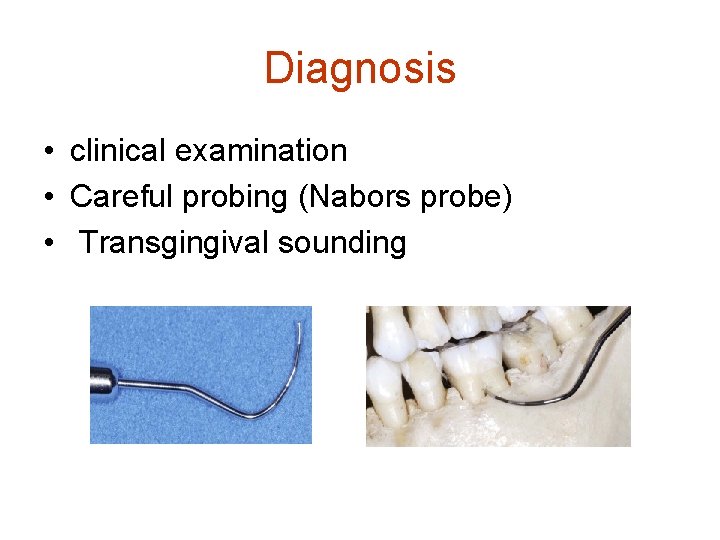
Diagnosis • clinical examination • Careful probing (Nabors probe) • Transgingival sounding
Local Anatomic Factors • • • Root trunk length Root form Interradicular dimension Anatomy of furcation Cervical enamel projections
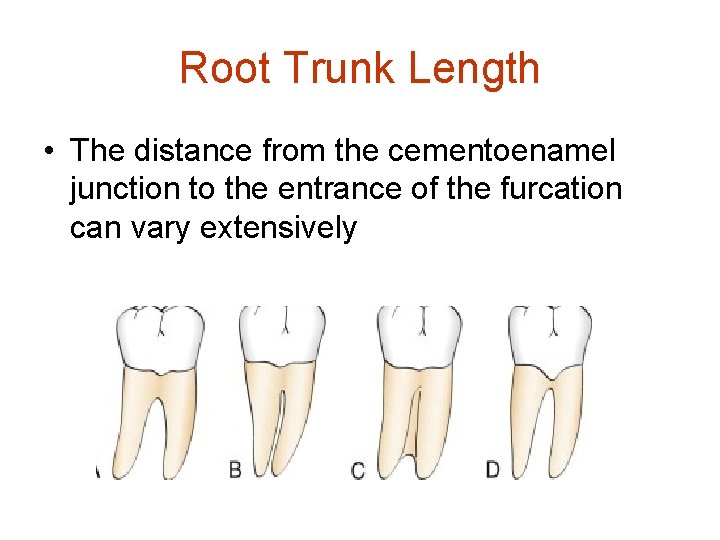
Root Trunk Length • The distance from the cementoenamel junction to the entrance of the furcation can vary extensively
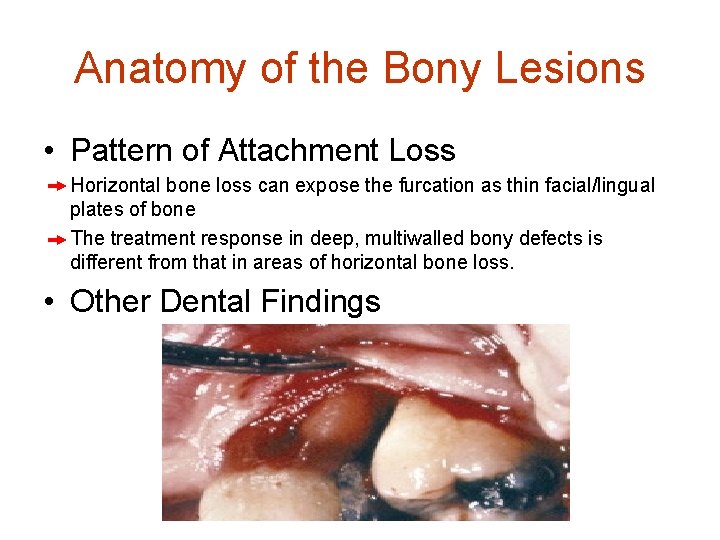
Anatomy of the Bony Lesions • Pattern of Attachment Loss Horizontal bone loss can expose the furcation as thin facial/lingual plates of bone The treatment response in deep, multiwalled bony defects is different from that in areas of horizontal bone loss. • Other Dental Findings
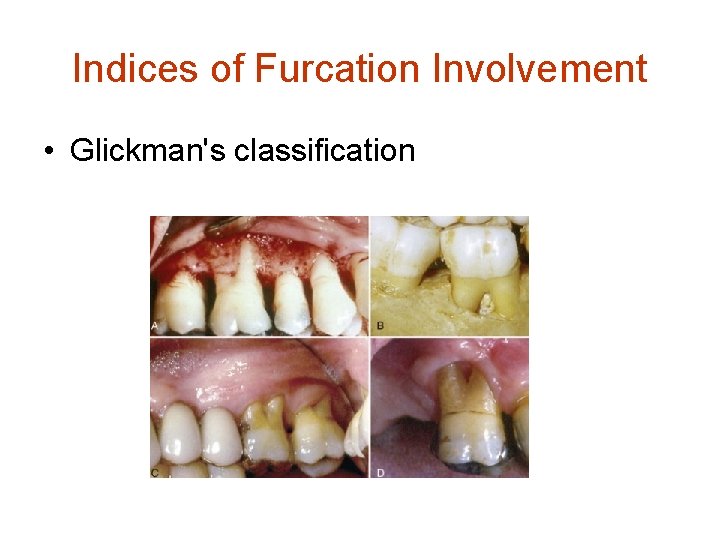
Indices of Furcation Involvement • Glickman's classification
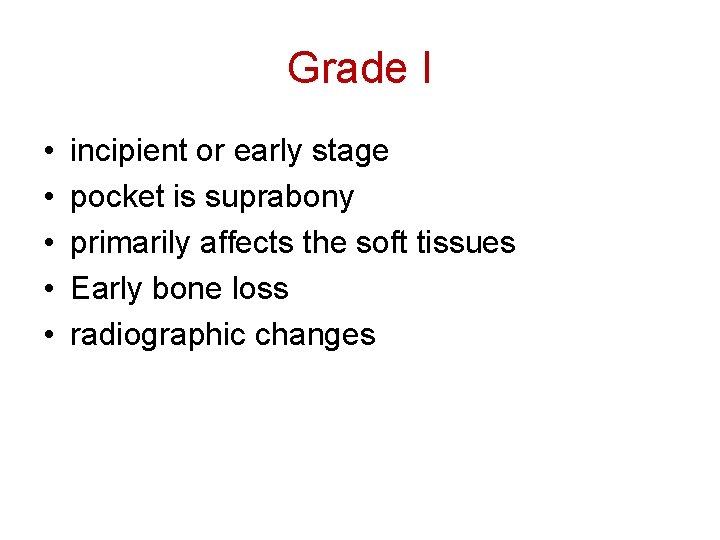
Grade I • • • incipient or early stage pocket is suprabony primarily affects the soft tissues Early bone loss radiographic changes
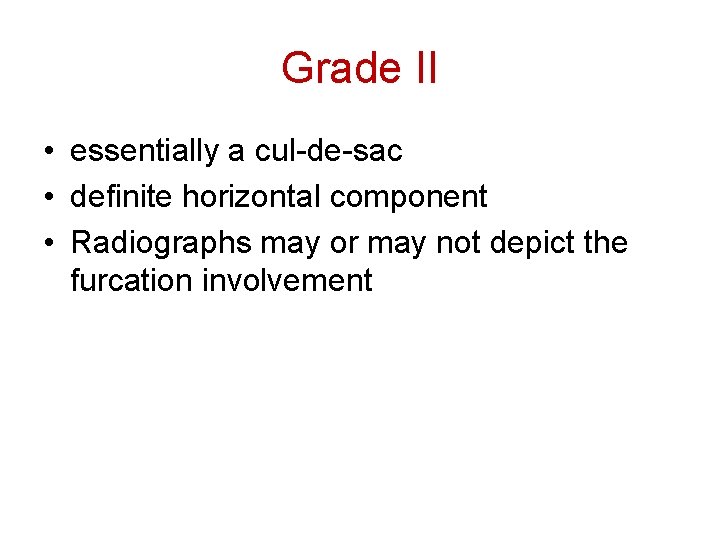
Grade II • essentially a cul-de-sac • definite horizontal component • Radiographs may or may not depict the furcation involvement
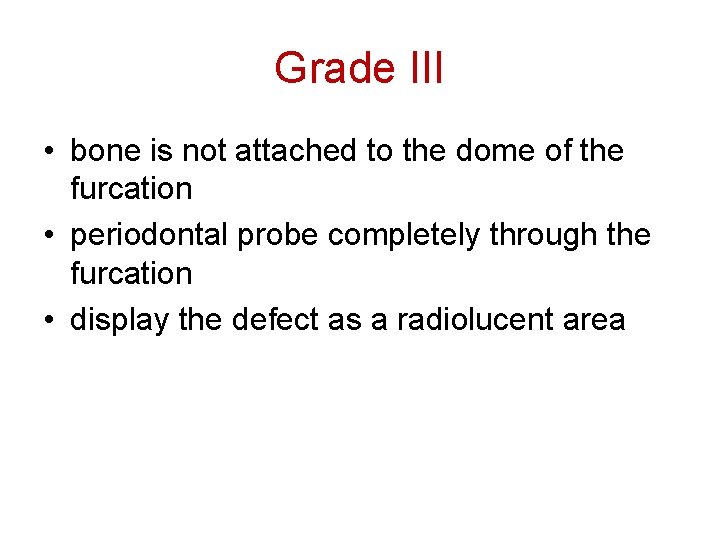
Grade III • bone is not attached to the dome of the furcation • periodontal probe completely through the furcation • display the defect as a radiolucent area
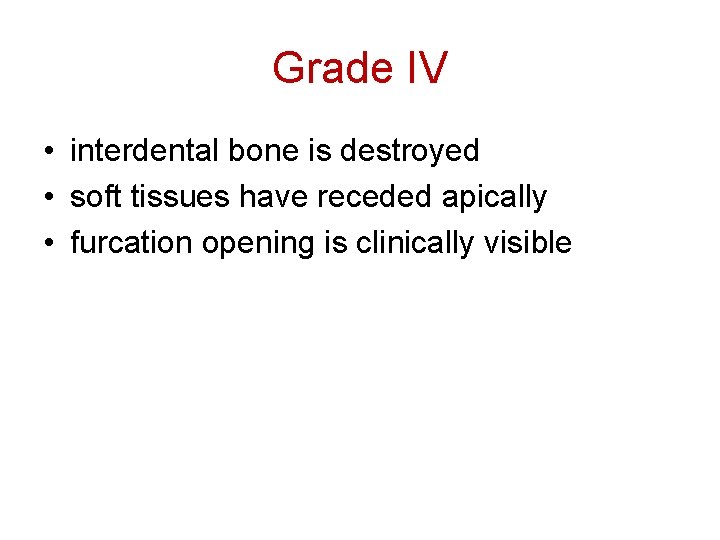
Grade IV • interdental bone is destroyed • soft tissues have receded apically • furcation opening is clinically visible
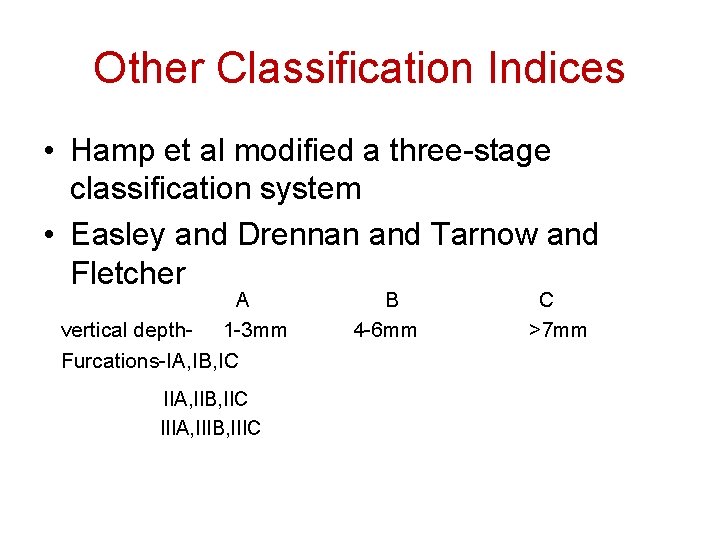
Other Classification Indices • Hamp et al modified a three-stage classification system • Easley and Drennan and Tarnow and Fletcher A B C vertical depth- 1 -3 mm 4 -6 mm >7 mm Furcations-IA, IB, IC IIA, IIB, IIC IIIA, IIIB, IIIC
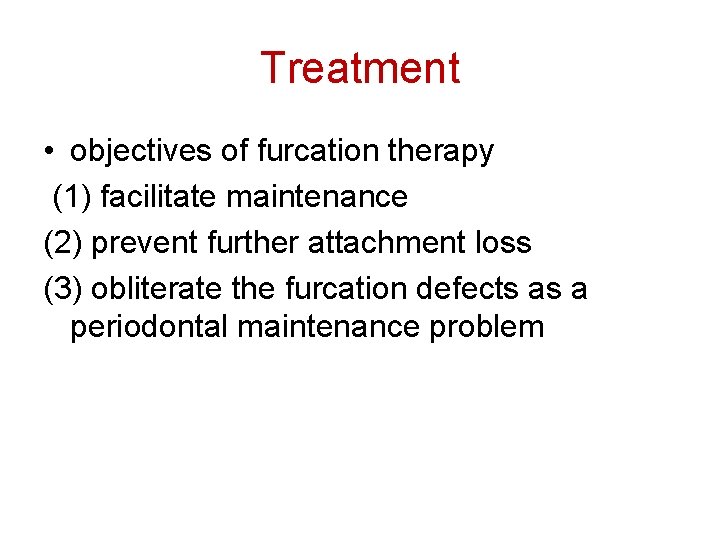
Treatment • objectives of furcation therapy (1) facilitate maintenance (2) prevent further attachment loss (3) obliterate the furcation defects as a periodontal maintenance problem
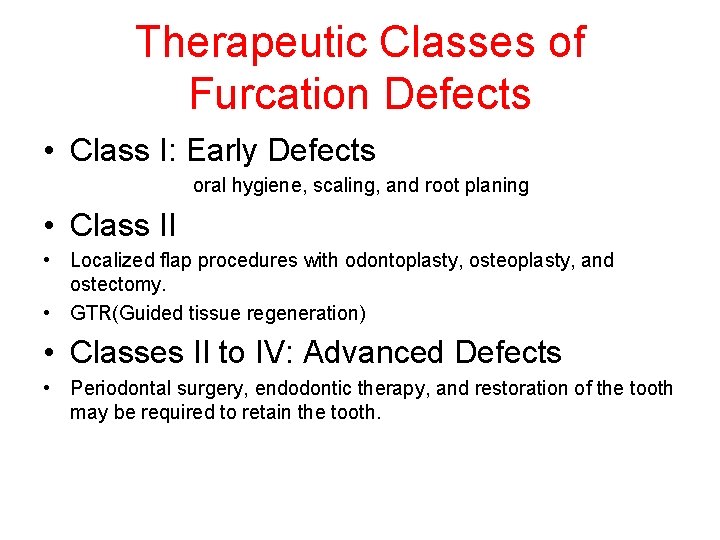
Therapeutic Classes of Furcation Defects • Class I: Early Defects oral hygiene, scaling, and root planing • Class II • Localized flap procedures with odontoplasty, osteoplasty, and ostectomy. • GTR(Guided tissue regeneration) • Classes II to IV: Advanced Defects • Periodontal surgery, endodontic therapy, and restoration of the tooth may be required to retain the tooth.
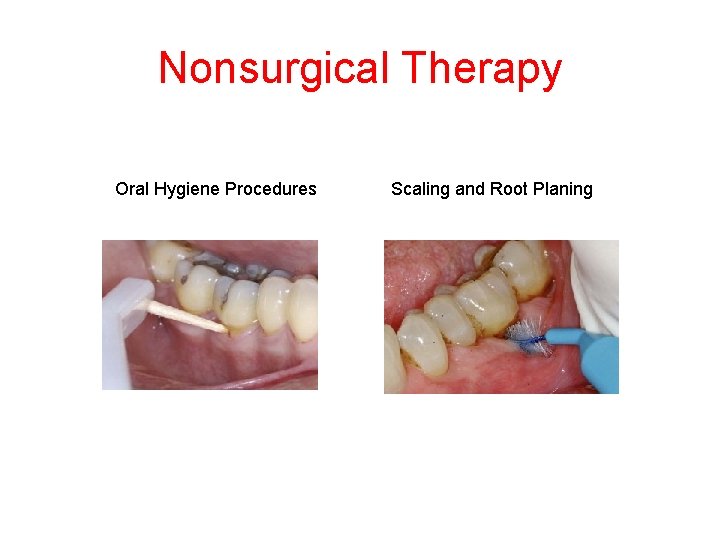
Nonsurgical Therapy Oral Hygiene Procedures Scaling and Root Planing
Surgical Therapy • • • Osseous Resection Regeneration(GTR) Root Resection Hemesection Extraction Dental Implants
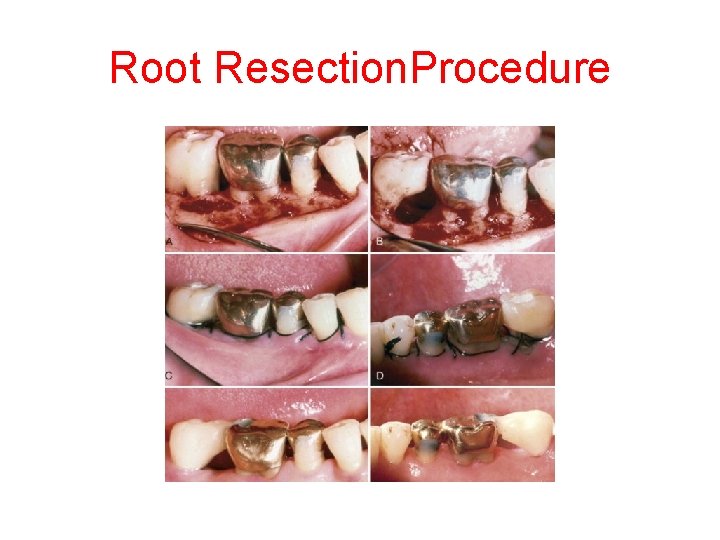
Root Resection. Procedure
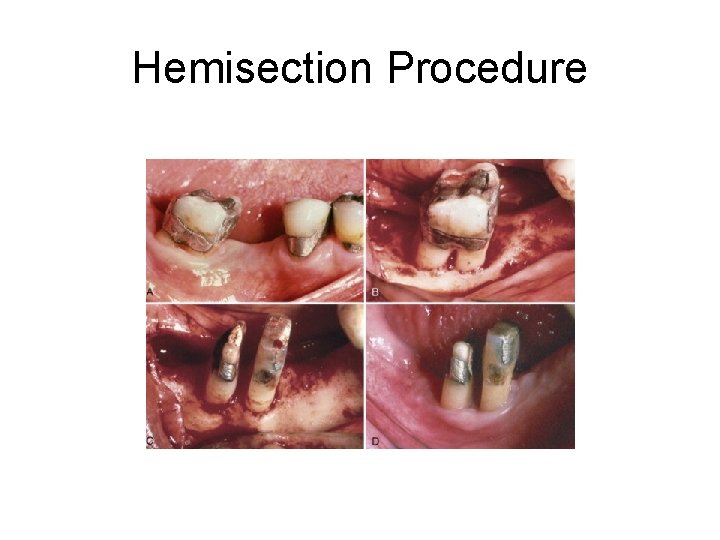
Hemisection Procedure
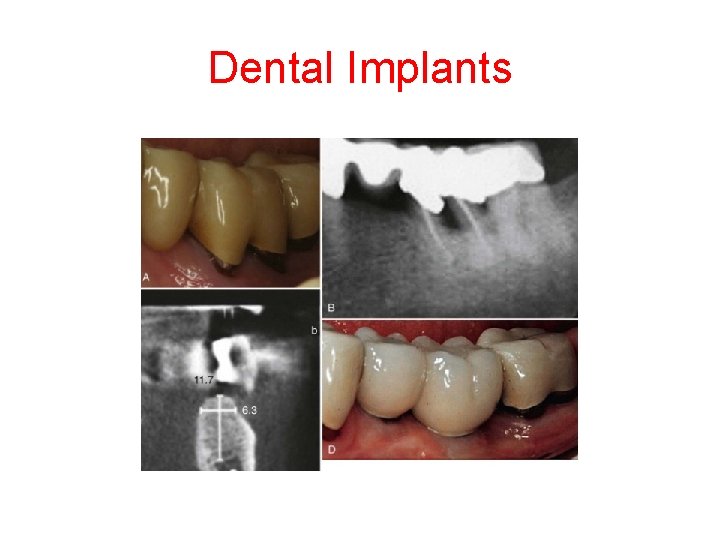
Dental Implants
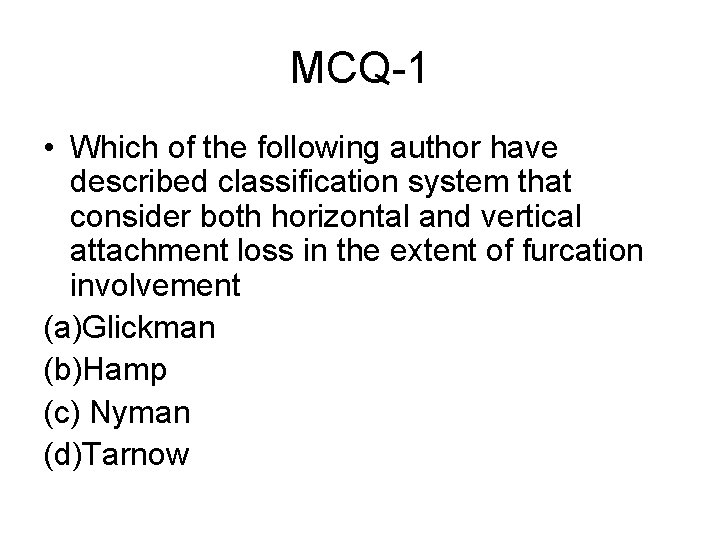
MCQ-1 • Which of the following author have described classification system that consider both horizontal and vertical attachment loss in the extent of furcation involvement (a)Glickman (b)Hamp (c) Nyman (d)Tarnow
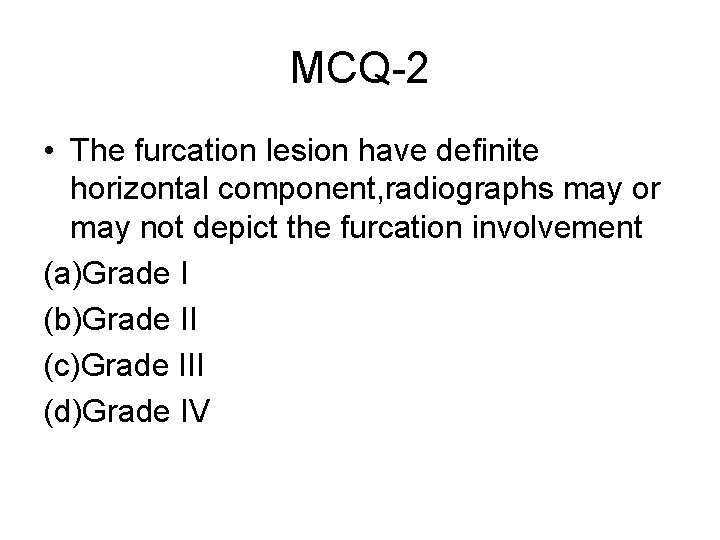
MCQ-2 • The furcation lesion have definite horizontal component, radiographs may or may not depict the furcation involvement (a)Grade I (b)Grade II (c)Grade III (d)Grade IV
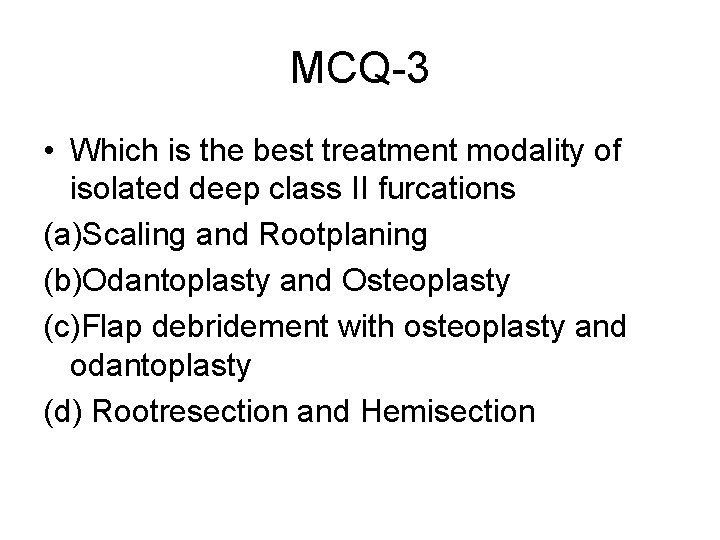
MCQ-3 • Which is the best treatment modality of isolated deep class II furcations (a)Scaling and Rootplaning (b)Odantoplasty and Osteoplasty (c)Flap debridement with osteoplasty and odantoplasty (d) Rootresection and Hemisection
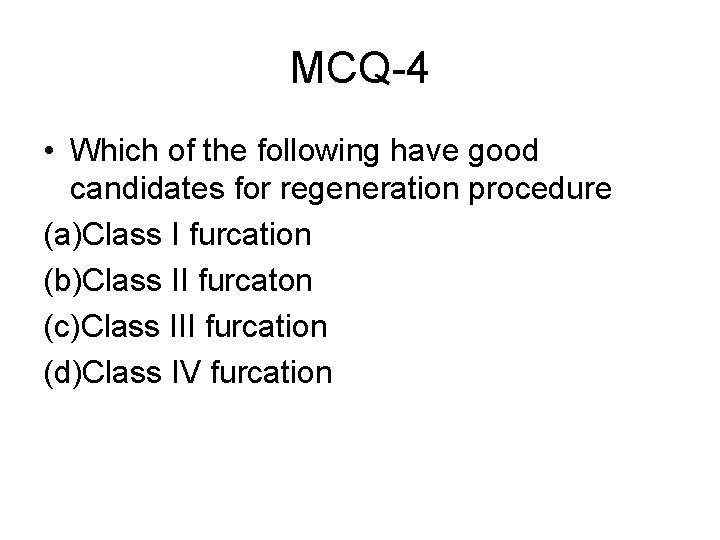
MCQ-4 • Which of the following have good candidates for regeneration procedure (a)Class I furcation (b)Class II furcaton (c)Class III furcation (d)Class IV furcation
MCQ-5 • Which of the following probe is used for the diagnosis of furcation defects (a)U. N. C Probe (b)WHO Probe (c)CPITN Probe (d)Nabers Probe