
FUNGUSLIKE PROTISTS Phylum Myxomycota Phylum Acrasiomycota Phylum Oomycota
- Slides: 19
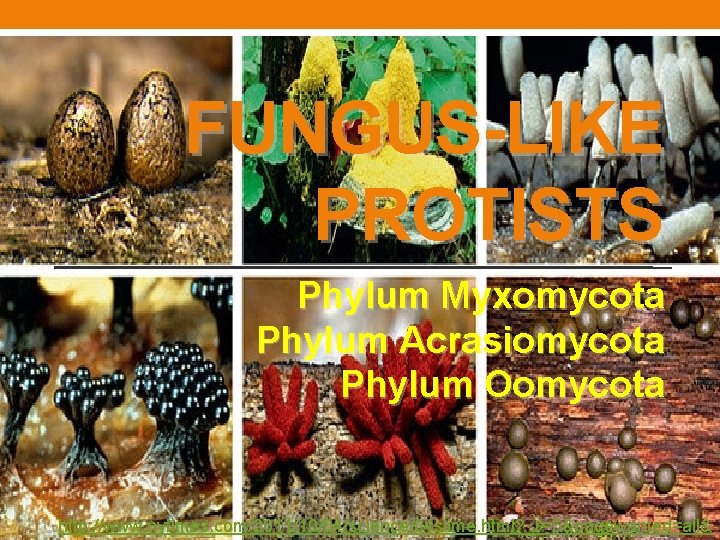
FUNGUS-LIKE PROTISTS Phylum Myxomycota Phylum Acrasiomycota Phylum Oomycota http: //www. nytimes. com/2011/10/04/science/04 slime. html? _r=5&pagewanted=all&
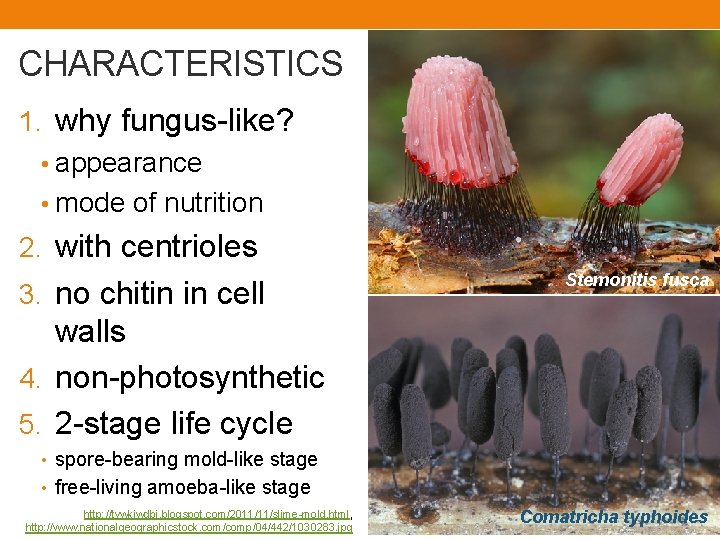
CHARACTERISTICS 1. why fungus-like? • appearance • mode of nutrition 2. with centrioles 3. no chitin in cell Stemonitis fusca walls 4. non-photosynthetic 5. 2 -stage life cycle • spore-bearing mold-like stage • free-living amoeba-like stage http: //tywkiwdbi. blogspot. com/2011/11/slime-mold. html, http: //www. nationalgeographicstock. com/comp/04/442/1030283. jpg Comatricha typhoides
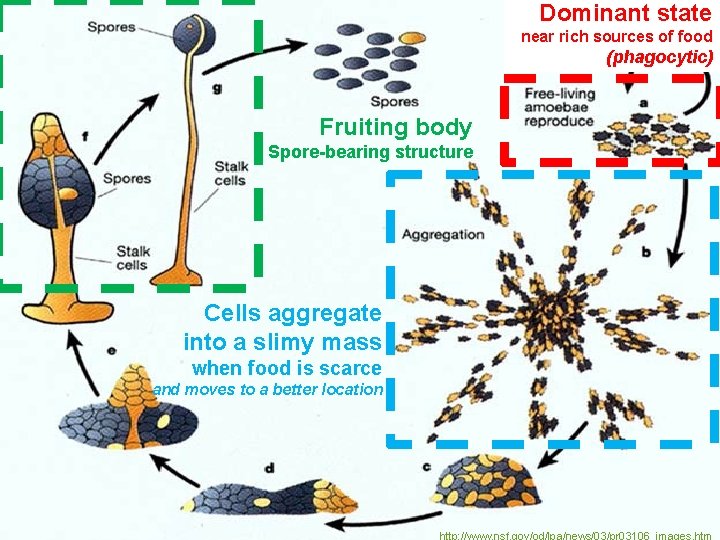
Dominant state near rich sources of food (phagocytic) Fruiting body Spore-bearing structure Cells aggregate into a slimy mass when food is scarce and moves to a better location http: //www. nsf. gov/od/lpa/news/03/pr 03106_images. htm
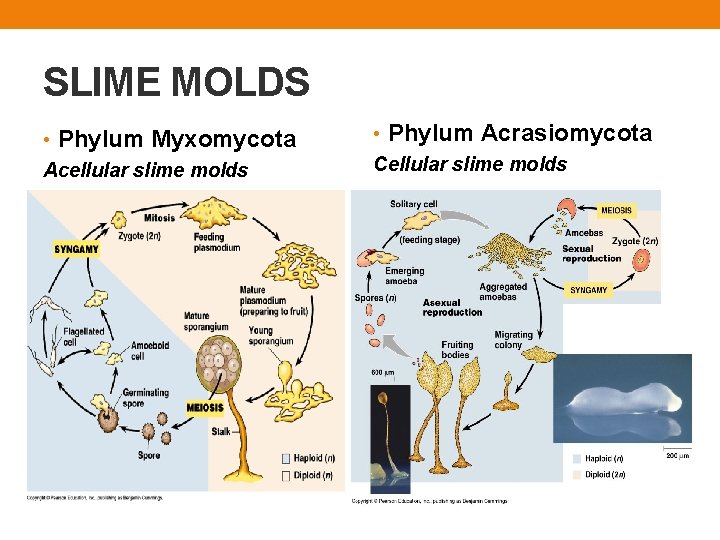
SLIME MOLDS • Phylum Myxomycota Acellular slime molds • Phylum Acrasiomycota Cellular slime molds
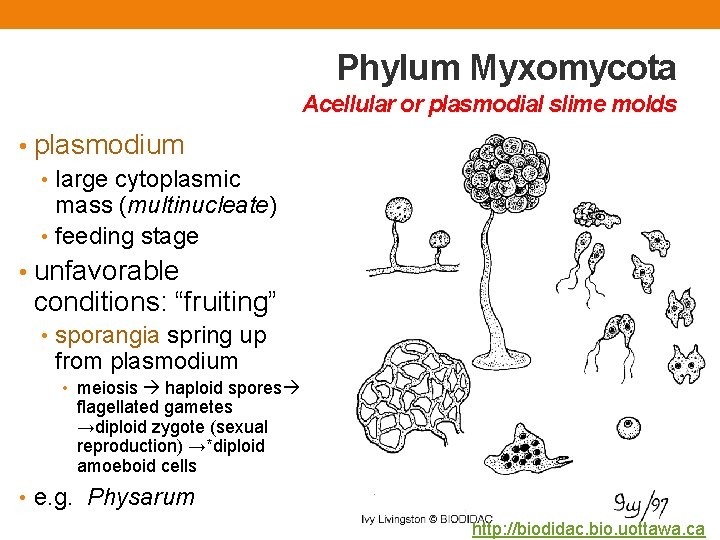
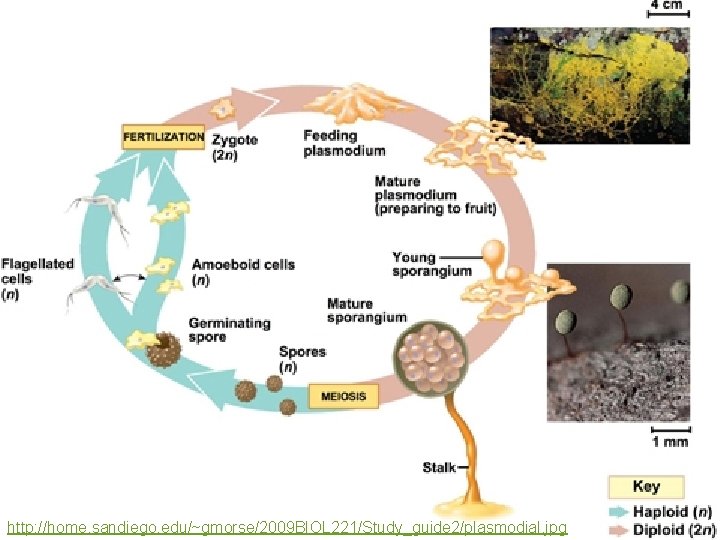
Phylum Myxomycota Acellular or plasmodial slime molds • plasmodium • large cytoplasmic mass (multinucleate) • feeding stage • unfavorable conditions: “fruiting” • sporangia spring up from plasmodium • meiosis haploid spores flagellated gametes →diploid zygote (sexual reproduction) →*diploid amoeboid cells • e. g. Physarum http: //biodidac. bio. uottawa. ca
http: //home. sandiego. edu/~gmorse/2009 BIOL 221/Study_guide 2/plasmodial. jpg
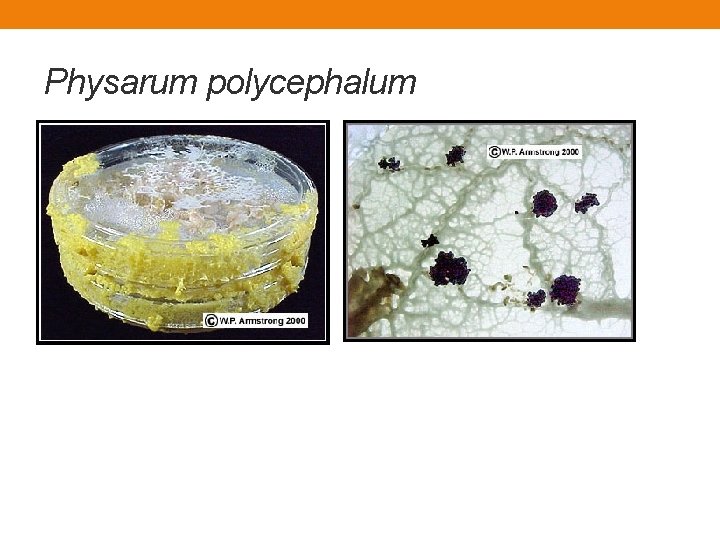
Physarum polycephalum
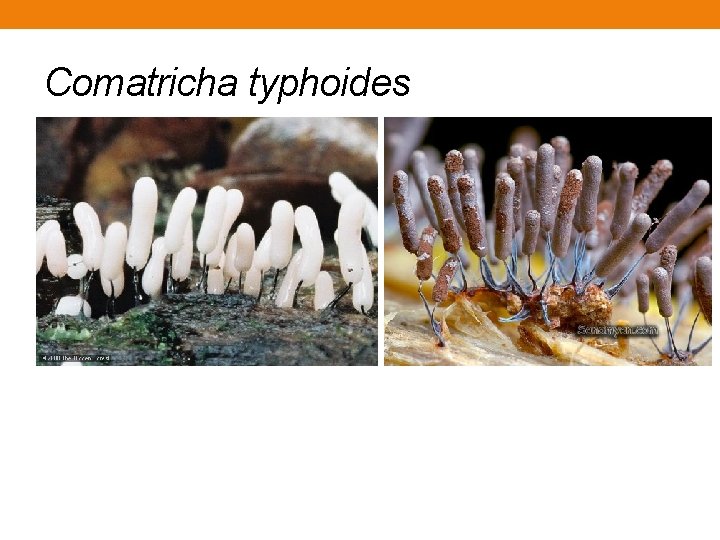
Comatricha typhoides
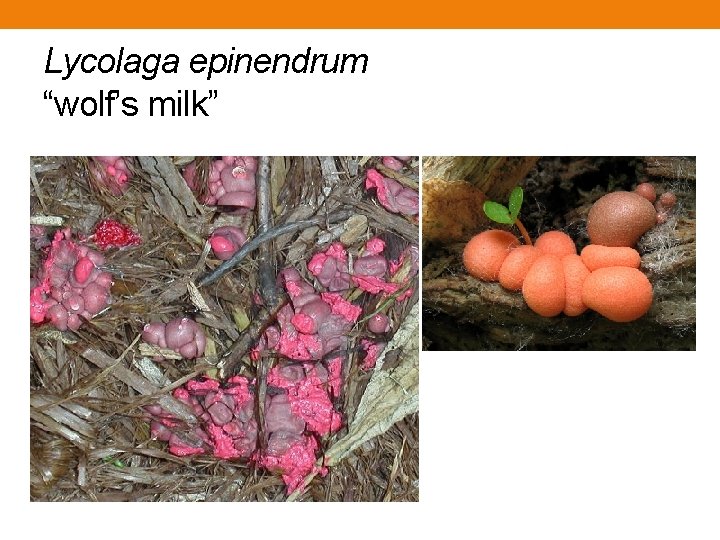
Lycolaga epinendrum “wolf’s milk”
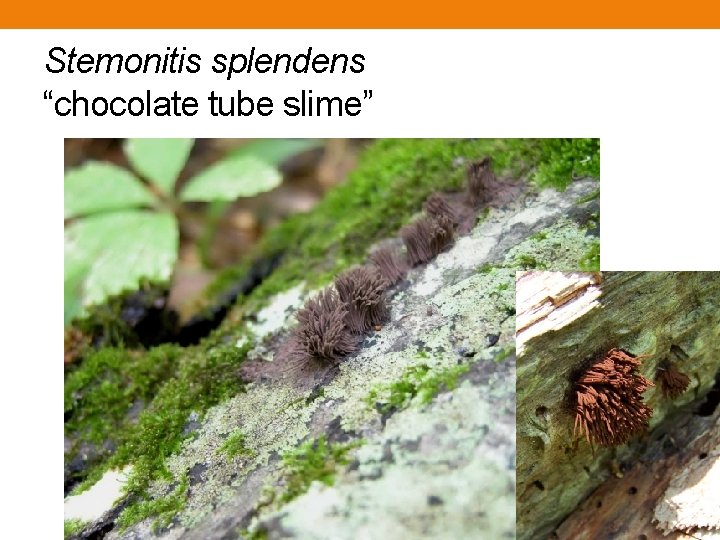
Stemonitis splendens “chocolate tube slime”
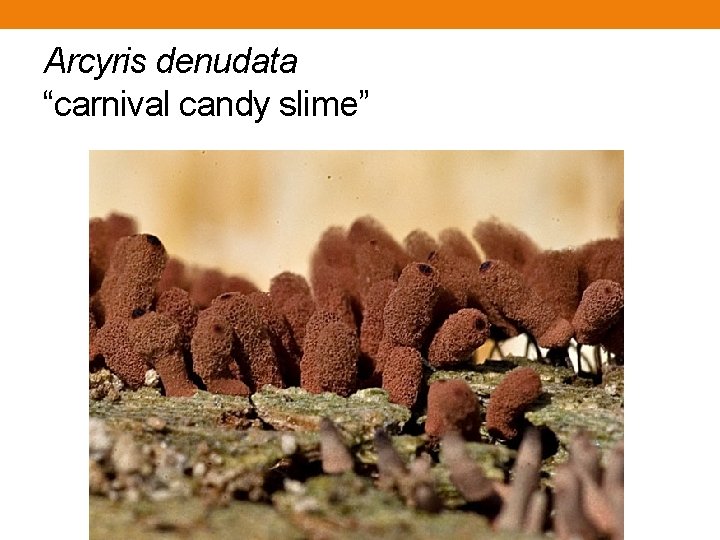
Arcyris denudata “carnival candy slime”
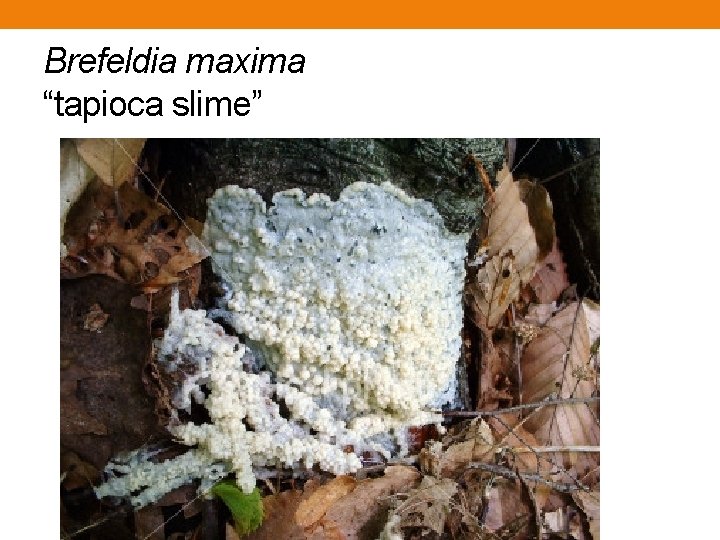
Brefeldia maxima “tapioca slime”
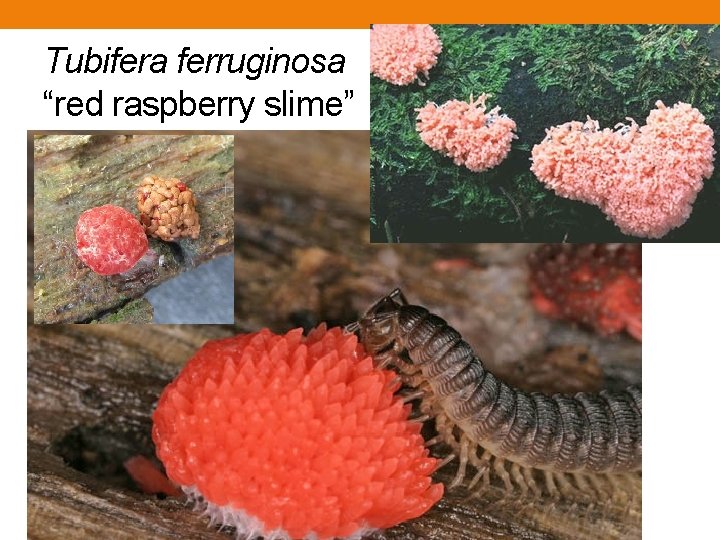
Tubifera ferruginosa “red raspberry slime”
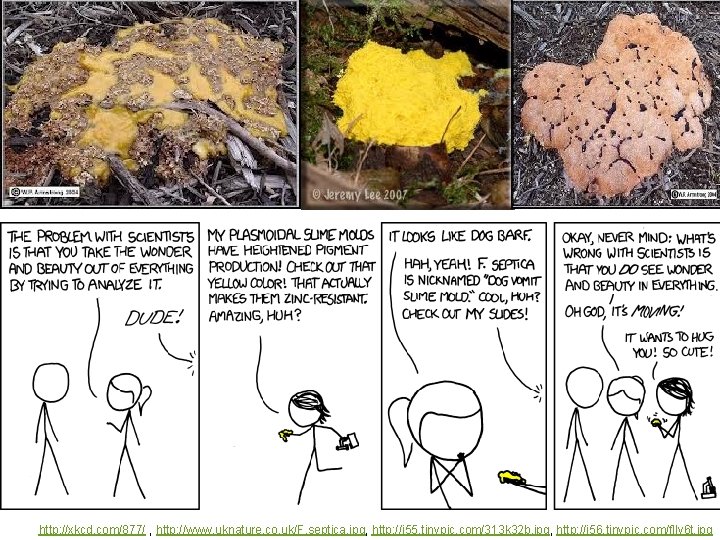
http: //xkcd. com/877/ , http: //www. uknature. co. uk/F. septica. jpg, http: //i 55. tinypic. com/313 k 32 b. jpg, http: //i 56. tinypic. com/flly 6 t. jpg
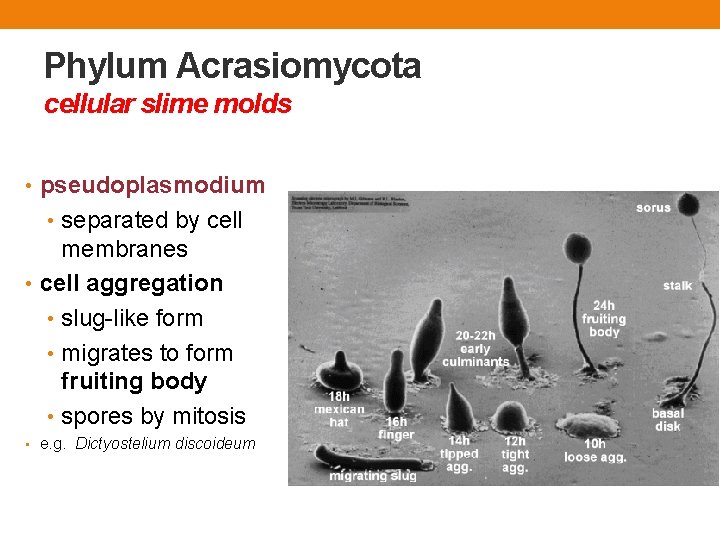
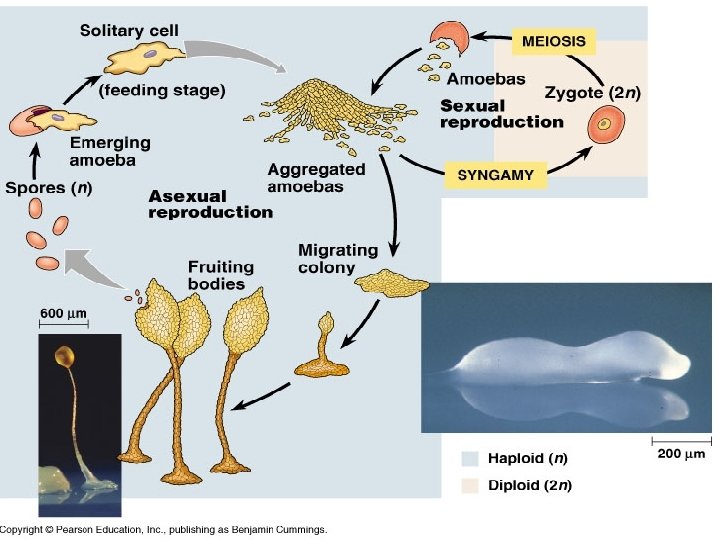
Phylum Acrasiomycota cellular slime molds • pseudoplasmodium • separated by cell membranes • cell aggregation • slug-like form • migrates to form fruiting body • spores by mitosis • e. g. Dictyostelium discoideum
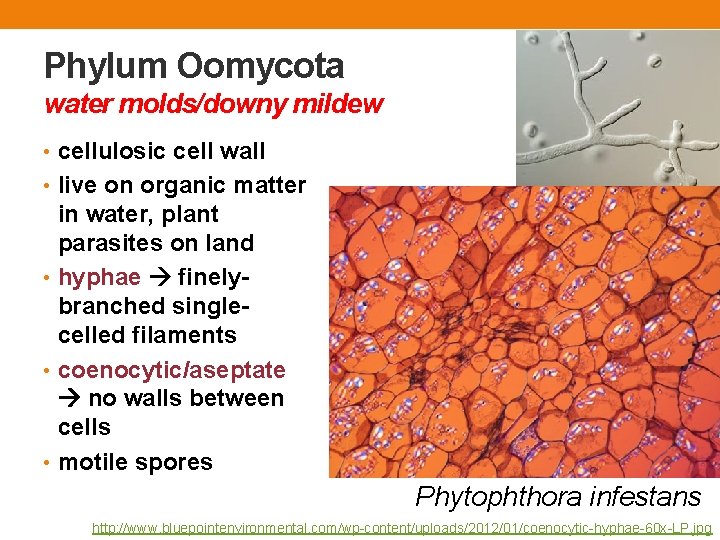
Phylum Oomycota water molds/downy mildew • cellulosic cell wall • live on organic matter in water, plant parasites on land • hyphae finelybranched singlecelled filaments • coenocytic/aseptate no walls between cells • motile spores Phytophthora infestans http: //www. bluepointenvironmental. com/wp-content/uploads/2012/01/coenocytic-hyphae-60 x-LP. jpg
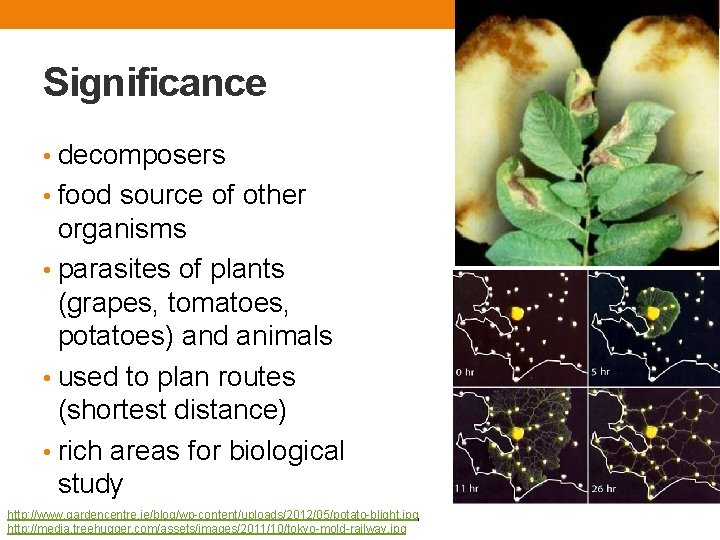
Significance • decomposers • food source of other organisms • parasites of plants (grapes, tomatoes, potatoes) and animals • used to plan routes (shortest distance) • rich areas for biological study http: //www. gardencentre. ie/blog/wp-content/uploads/2012/05/potato-blight. jpg, http: //media. treehugger. com/assets/images/2011/10/tokyo-mold-railway. jpg