
Fungus Fungicides Classification Activity Technical Training by Sudarshan
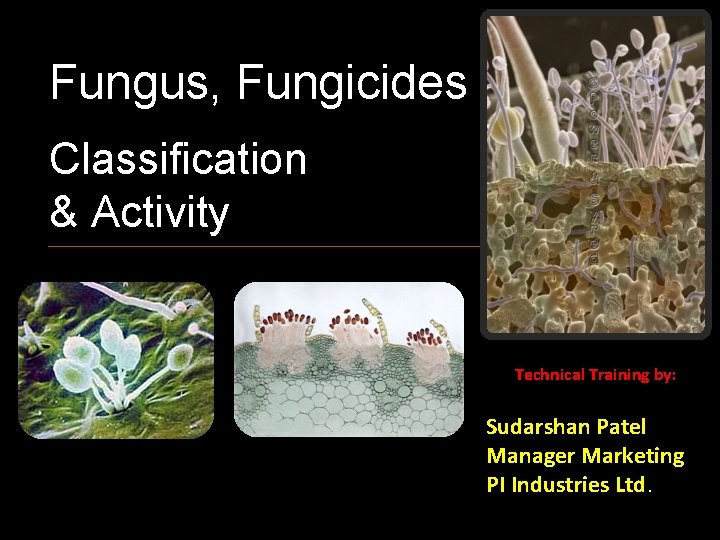
Fungus, Fungicides Classification & Activity Technical Training by: Sudarshan Patel Manager Marketing PI Industries Ltd.

Fungus, Fungicides Classification & Activity üFungus and Fungicide Basics üFungicide Mode of action üMobility in plant üStrobilurine Fungicides & Cabrio Top üInnovative fungicides in SL market & their features comparison
What is a Plant Disease? A disorder in q Structure or q Physiological function in a plant
What are plant Physiological functions? q Photosynthesis q Respiration q Plant nutrition q Plant hormone functions q Photoperiodism & photomorphogenesis q Environmental stress physiology q Seed germination q Dormancy q Stomata function q Transpiration………etc
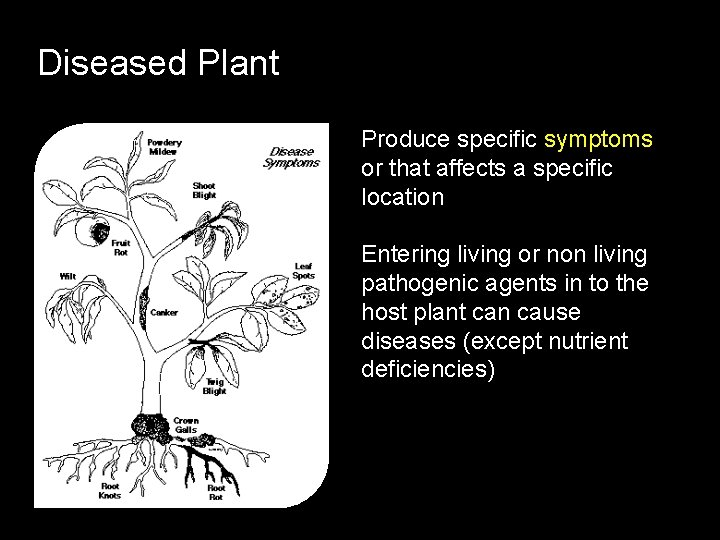
Diseased Plant Produce specific symptoms or that affects a specific location Entering living or non living pathogenic agents in to the host plant can cause diseases (except nutrient deficiencies)
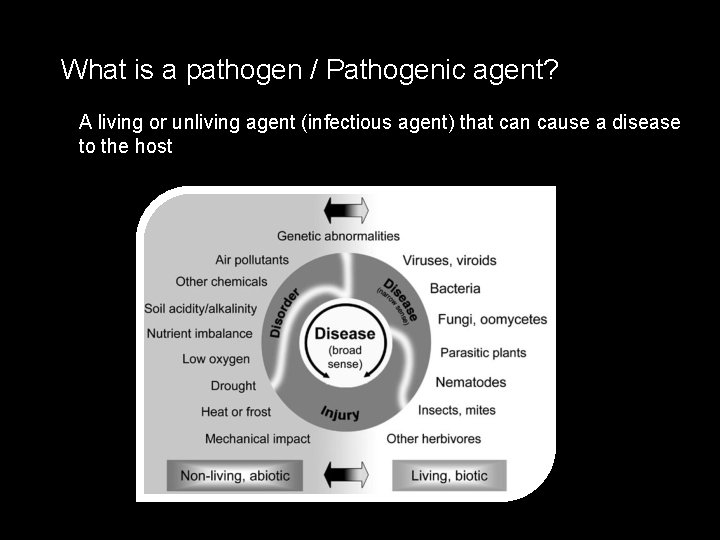
What is a pathogen / Pathogenic agent? A living or unliving agent (infectious agent) that can cause a disease to the host
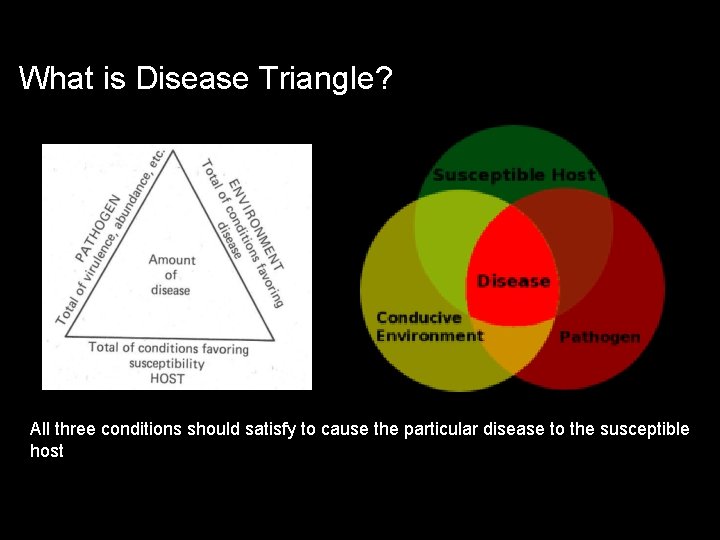
What is Disease Triangle? ¾ All three conditions should satisfy to cause the particular disease to the susceptible host
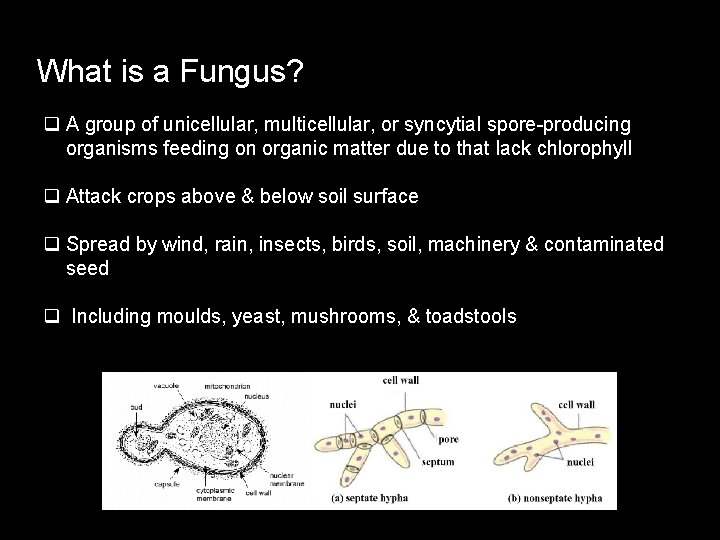
What is a Fungus? q A group of unicellular, multicellular, or syncytial spore-producing organisms feeding on organic matter due to that lack chlorophyll q Attack crops above & below soil surface q Spread by wind, rain, insects, birds, soil, machinery & contaminated seed q Including moulds, yeast, mushrooms, & toadstools
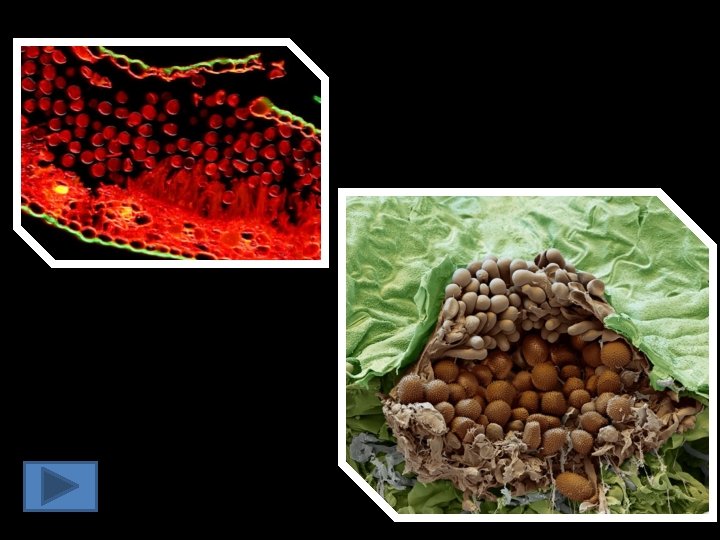

Fungi Classification : Example Kingdom : Plantae Division : Phycomycetes Class: Oomycetes Order : Peronosporales Family : Peronosporaceae Genus : Phytophthora Species : infestans Life cycle known Myxomycetes club root rot of crucifers Pathogenic Fungi Phycomycetes Order : Oomycetes Pythium rot, Damping off, Root rot Phytophthora Diseases Downy Mildews Ascomycetes Powdery Mildews, Alternaria Sigatoka, Leaf Spots, Stem & Twig Canker, Anthracnose, Fruit diseases, Post harvest disease, Fussarium Basidiomycetes Deutromycetes Leaf Spots, Fruit spots Vascular wilts. The Rust, the Smut, Rizoctonia
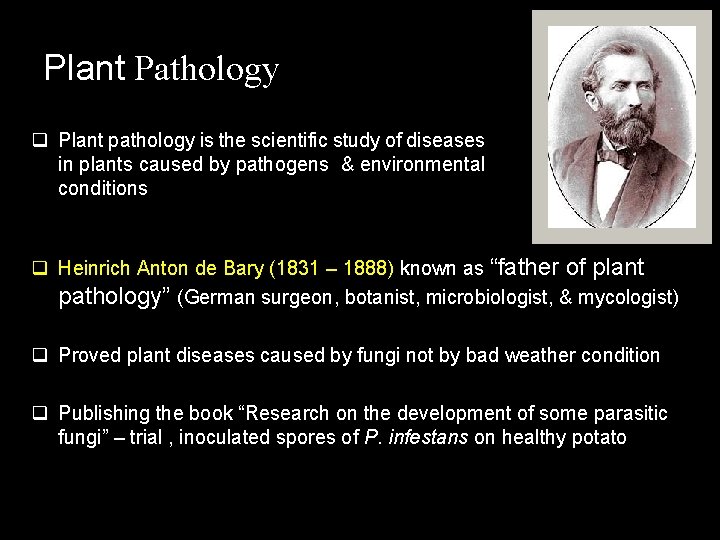
Plant Pathology q Plant pathology is the scientific study of diseases in plants caused by pathogens & environmental conditions q Heinrich Anton de Bary (1831 – 1888) known as “father of plant pathology” (German surgeon, botanist, microbiologist, & mycologist) q Proved plant diseases caused by fungi not by bad weather condition q Publishing the book “Research on the development of some parasitic fungi” – trial , inoculated spores of P. infestans on healthy potato
History of Fungicides q Seed wheat salvaged from the sea was free of bunt. In the middle of 17 th Century the first use of brining of grain with salt water followed by liming took place to control bunt in seed wheat q Tillet (1755) found, seed-borne fungi (Tilletia tritici, T. laevis) caused bunt of wheat & could be controlled by seed treatments of lime, or lime and salt
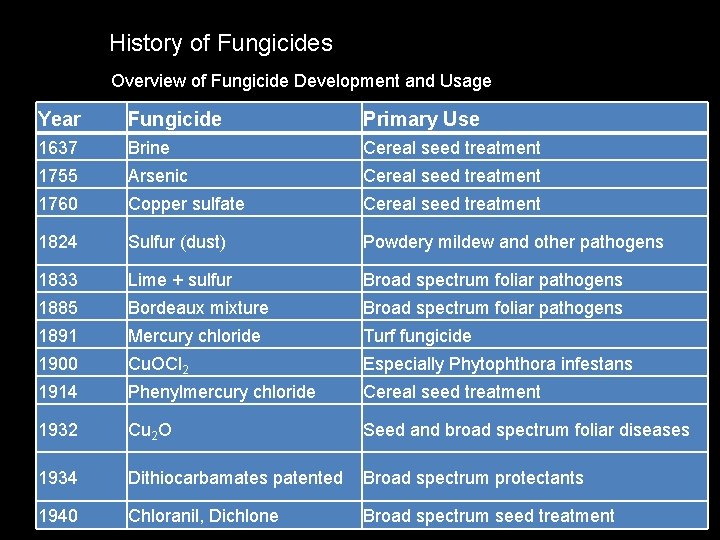
History of Fungicides Overview of Fungicide Development and Usage Year Fungicide Primary Use 1637 Brine Cereal seed treatment 1755 Arsenic Cereal seed treatment 1760 Copper sulfate Cereal seed treatment 1824 Sulfur (dust) Powdery mildew and other pathogens 1833 Lime + sulfur Broad spectrum foliar pathogens 1885 Bordeaux mixture Broad spectrum foliar pathogens 1891 Mercury chloride Turf fungicide 1900 Cu. OCl 2 Especially Phytophthora infestans 1914 Phenylmercury chloride Cereal seed treatment 1932 Cu 2 O Seed and broad spectrum foliar diseases 1934 Dithiocarbamates patented Broad spectrum protectants 1940 Chloranil, Dichlone Broad spectrum seed treatment
Fungicide Classification 1. Mobility within plants- distribution 2. By chemical group – chemical structure 3. By MOA – site of action
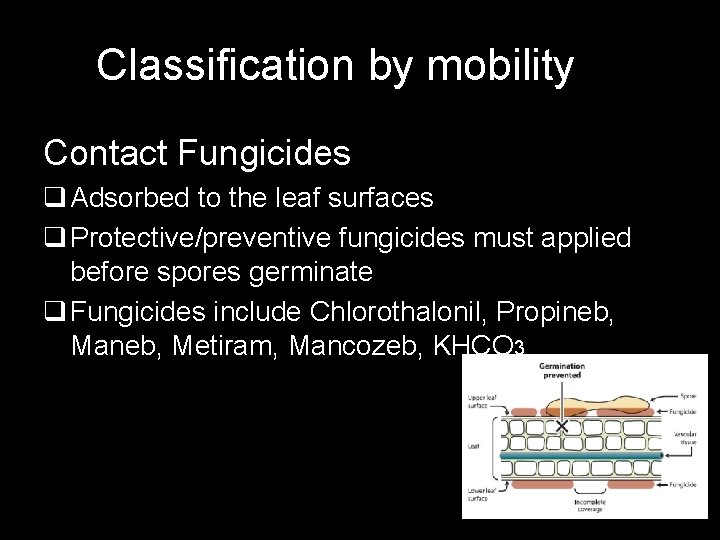
Classification by mobility Contact Fungicides q Adsorbed to the leaf surfaces q Protective/preventive fungicides must applied before spores germinate q Fungicides include Chlorothalonil, Propineb, Maneb, Metiram, Mancozeb, KHCO 3
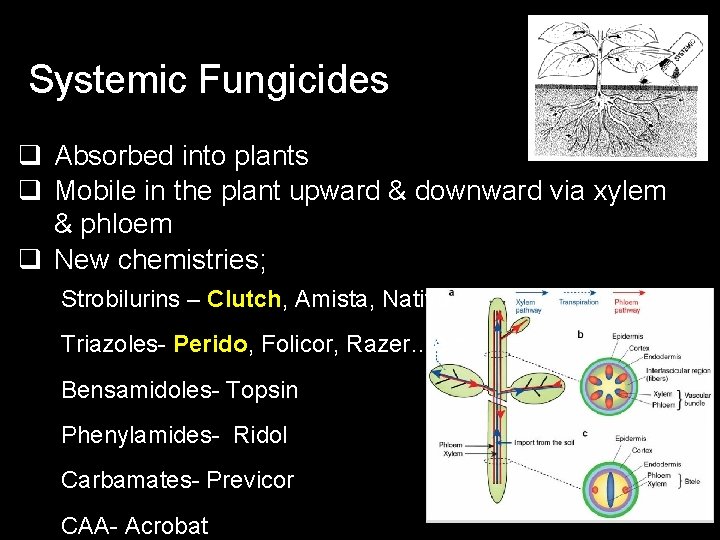
Systemic Fungicides q Absorbed into plants q Mobile in the plant upward & downward via xylem & phloem q New chemistries; Strobilurins – Clutch, Amista, Nativo Triazoles- Perido, Folicor, Razer…etc Bensamidoles- Topsin Phenylamides- Ridol Carbamates- Previcor CAA- Acrobat
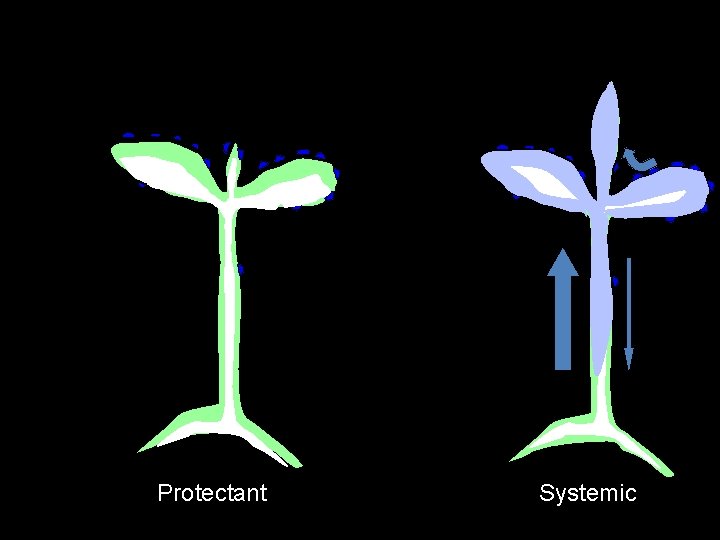
Fungicide categories Protectant Systemic
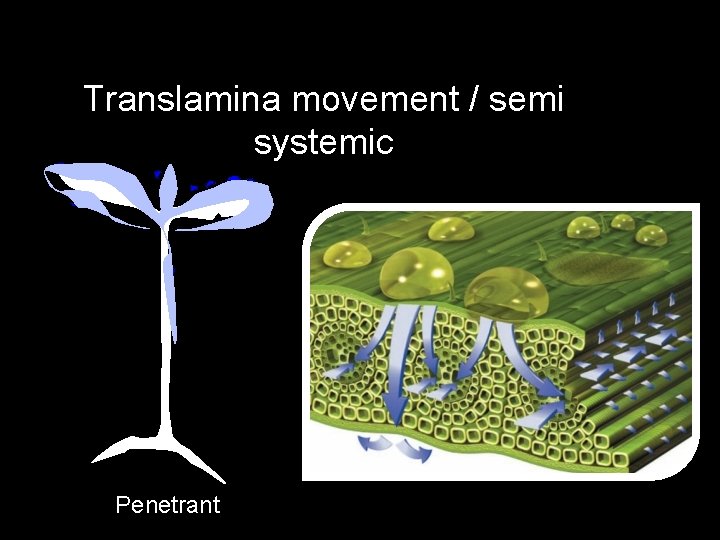
Translamina movement / semi systemic Penetrant
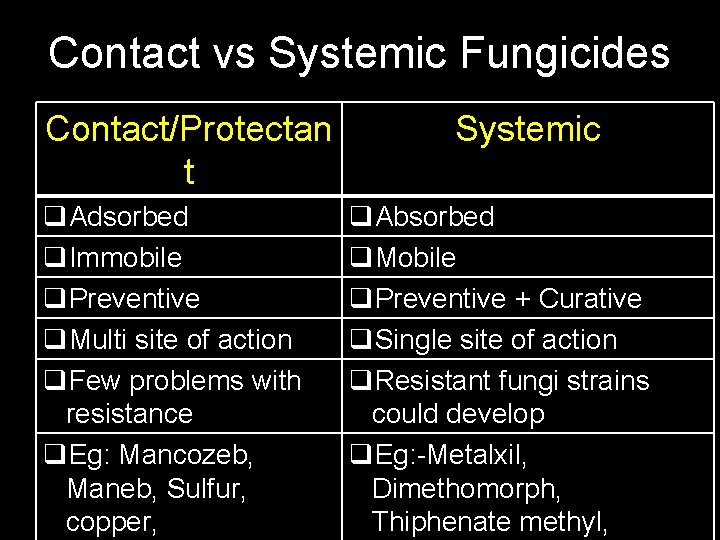
Contact vs Systemic Fungicides Contact/Protectan t q. Adsorbed q. Immobile q. Preventive q. Multi site of action q. Few problems with resistance q. Eg: Mancozeb, Maneb, Sulfur, copper, Systemic q. Absorbed q. Mobile q. Preventive + Curative q. Single site of action q. Resistant fungi strains could develop q. Eg: -Metalxil, Dimethomorph, Thiphenate methyl,
Types of Fungicides
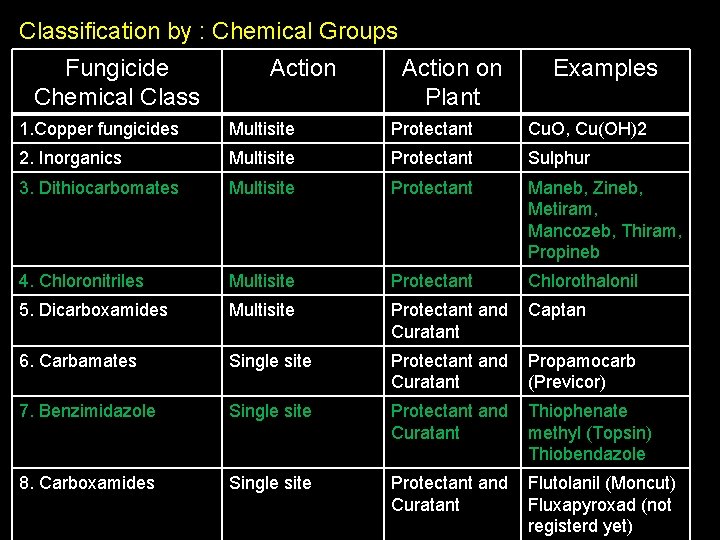
Classification by : Chemical Groups Fungicide Chemical Class Action on Plant Examples 1. Copper fungicides Multisite Protectant Cu. O, Cu(OH)2 2. Inorganics Multisite Protectant Sulphur 3. Dithiocarbomates Multisite Protectant Maneb, Zineb, Metiram, Mancozeb, Thiram, Propineb 4. Chloronitriles Multisite Protectant Chlorothalonil 5. Dicarboxamides Multisite Protectant and Captan Curatant 6. Carbamates Single site Protectant and Propamocarb Curatant (Previcor) 7. Benzimidazole Single site Protectant and Thiophenate Curatant methyl (Topsin) Thiobendazole 8. Carboxamides Single site Protectant and Flutolanil (Moncut) Curatant Fluxapyroxad (not registerd yet)
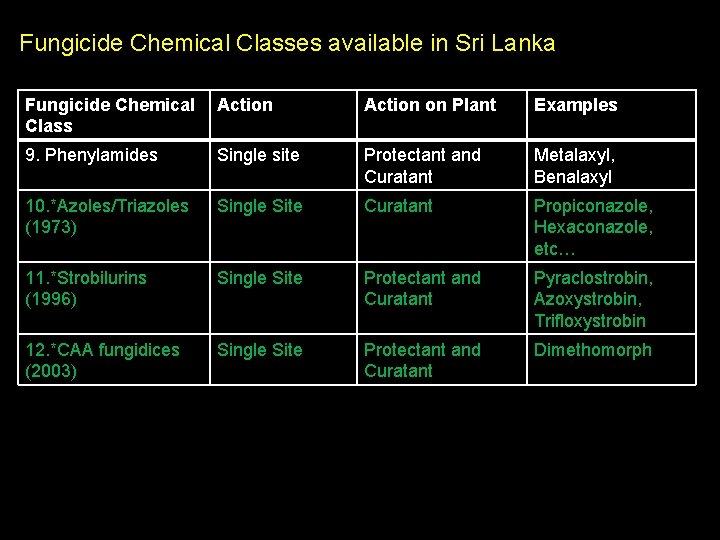
Fungicide Chemical Classes available in Sri Lanka Fungicide Chemical Class Action on Plant Examples 9. Phenylamides Single site Protectant and Curatant Metalaxyl, Benalaxyl 10. *Azoles/Triazoles (1973) Single Site Curatant Propiconazole, Hexaconazole, etc… 11. *Strobilurins (1996) Single Site Protectant and Curatant Pyraclostrobin, Azoxystrobin, Trifloxystrobin 12. *CAA fungidices (2003) Single Site Protectant and Curatant Dimethomorph
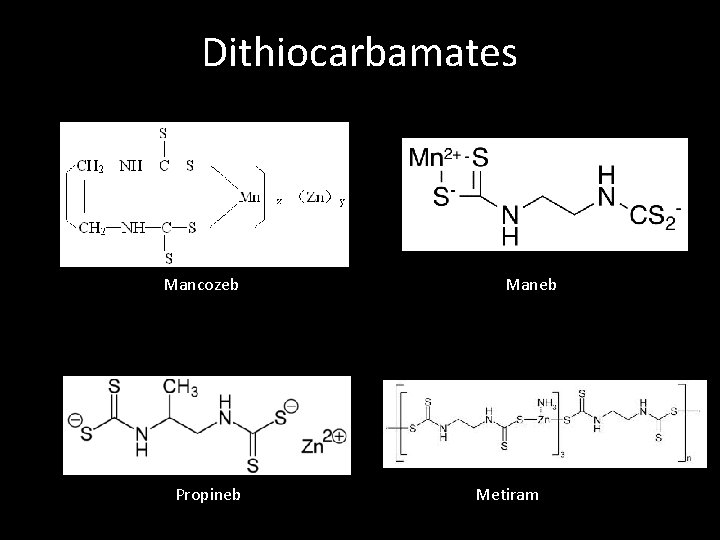
Dithiocarbamates Mancozeb Propineb Maneb Metiram

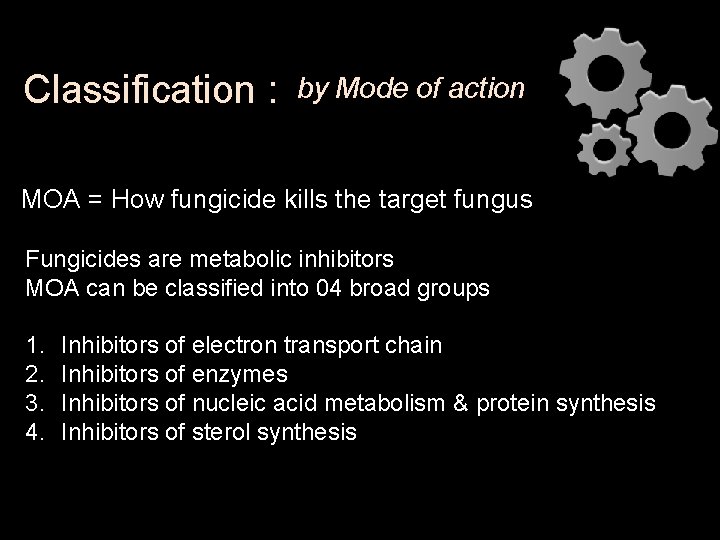
Classification : by Mode of action MOA = How fungicide kills the target fungus Fungicides are metabolic inhibitors MOA can be classified into 04 broad groups 1. 2. 3. 4. Inhibitors of electron transport chain Inhibitors of enzymes Inhibitors of nucleic acid metabolism & protein synthesis Inhibitors of sterol synthesis
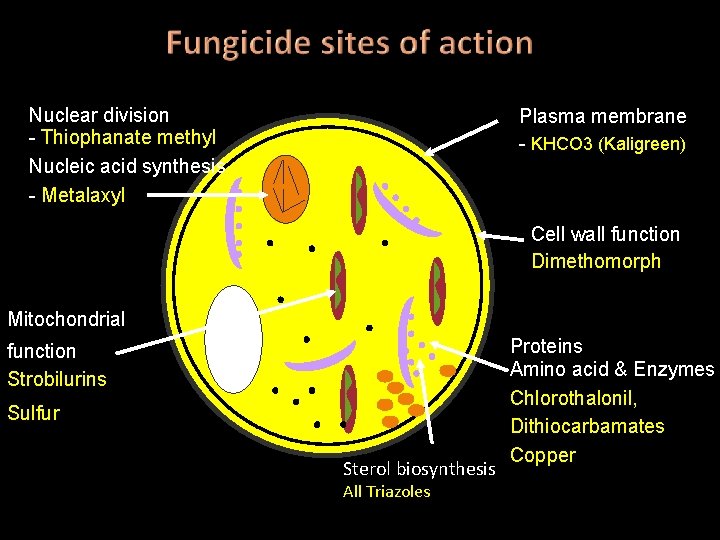
Nuclear division - Thiophanate methyl Nucleic acid synthesis - Metalaxyl Plasma membrane - KHCO 3 (Kaligreen) Cell wall function Dimethomorph Mitochondrial function Strobilurins Sulfur Sterol biosynthesis All Triazoles Proteins Amino acid & Enzymes Chlorothalonil, Dithiocarbamates Copper
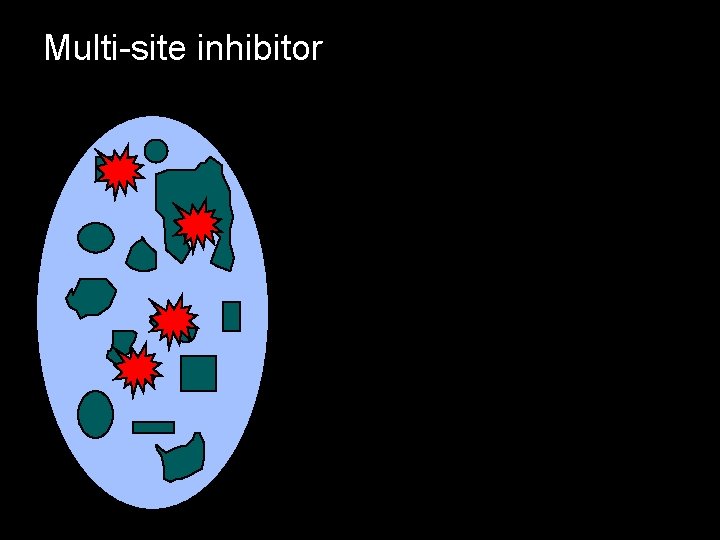
Multi-site inhibitor
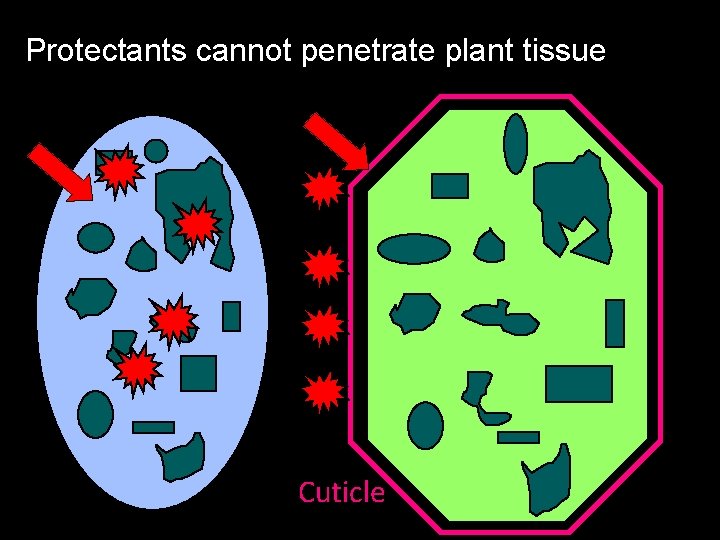
Protectants cannot penetrate plant tissue Cuticle
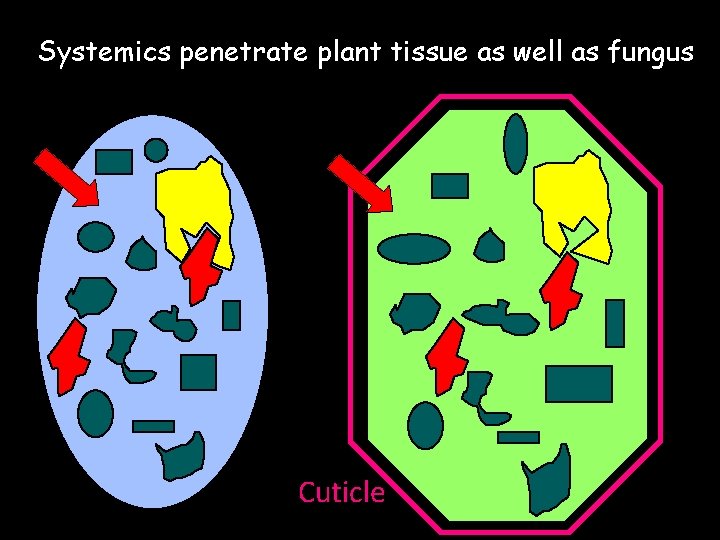
Systemics penetrate plant tissue as well as fungus Cuticle
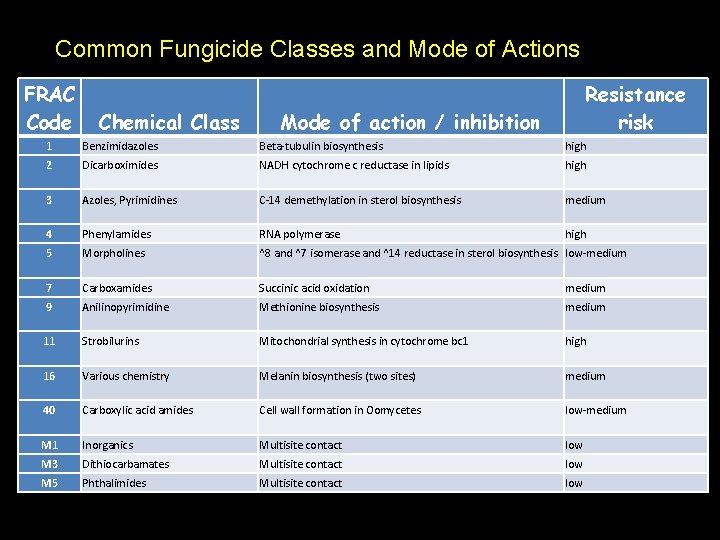
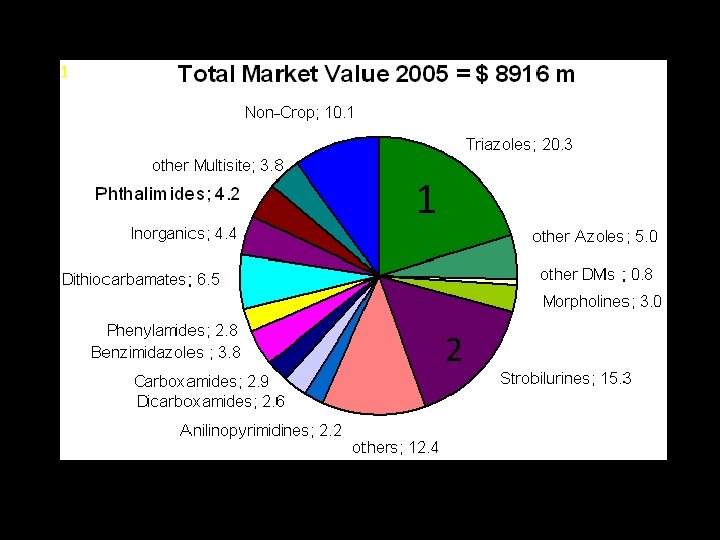
Common Fungicide Classes and Mode of Actions FRAC Code Chemical Class Resistance risk Mode of action / inhibition 1 Benzimidazoles Beta-tubulin biosynthesis high 2 Dicarboximides NADH cytochrome c reductase in lipids high 3 Azoles, Pyrimidines C-14 demethylation in sterol biosynthesis medium 4 Phenylamides RNA polymerase high 5 Morpholines ^8 and ^7 isomerase and ^14 reductase in sterol biosynthesis low-medium 7 Carboxamides Succinic acid oxidation medium 9 Anilinopyrimidine Methionine biosynthesis medium 11 Strobilurins Mitochondrial synthesis in cytochrome bc 1 high 16 Various chemistry Melanin biosynthesis (two sites) medium 40 Carboxylic acid amides Cell wall formation in Oomycetes low-medium M 1 Inorganics Multisite contact low M 3 Dithiocarbamates Multisite contact low M 5 Phthalimides Multisite contact low
1 1 2
Why Fungicide Pre – mixtures? ? ?
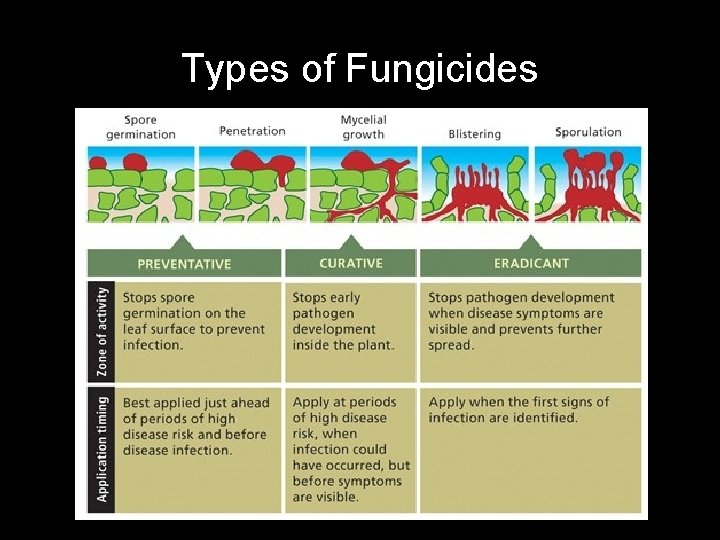
Protective Curative Eradicative
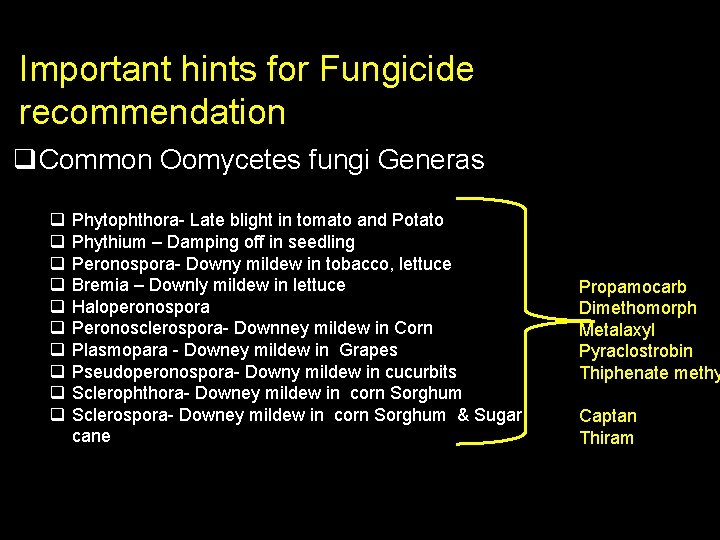
Important hints for Fungicide recommendation q. Common Oomycetes fungi Generas q q q q q Phytophthora- Late blight in tomato and Potato Phythium – Damping off in seedling Peronospora- Downy mildew in tobacco, lettuce Bremia – Downly mildew in lettuce Haloperonospora Peronosclerospora- Downney mildew in Corn Plasmopara - Downey mildew in Grapes Pseudoperonospora- Downy mildew in cucurbits Sclerophthora- Downey mildew in corn Sorghum Sclerospora- Downey mildew in corn Sorghum & Sugar cane Propamocarb Dimethomorph Metalaxyl Pyraclostrobin Thiphenate methy Captan Thiram
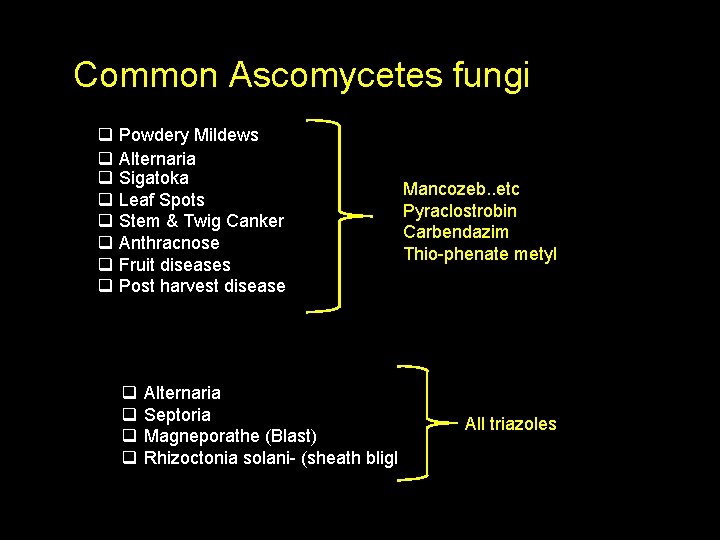
Common Ascomycetes fungi q q q q Powdery Mildews Alternaria Sigatoka Leaf Spots Stem & Twig Canker Anthracnose Fruit diseases Post harvest disease q q Mancozeb. . etc Pyraclostrobin Carbendazim Thio-phenate metyl Alternaria Septoria Magneporathe (Blast) Rhizoctonia solani- (sheath blight) All triazoles
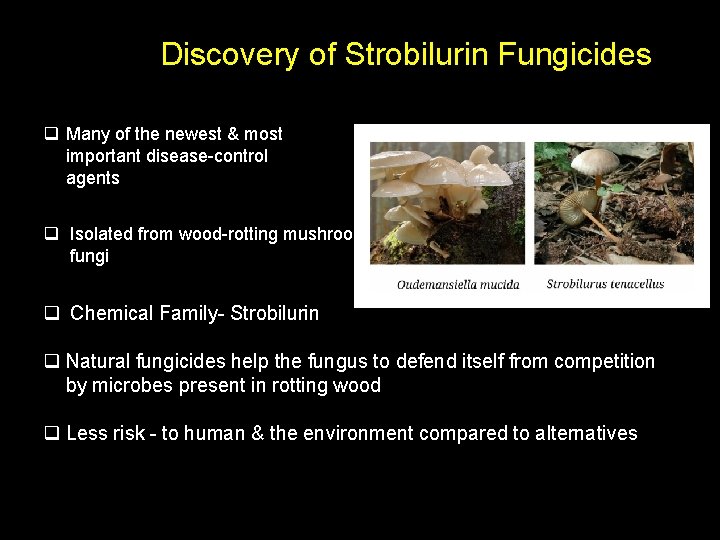
Discovery of Strobilurin Fungicides q Many of the newest & most important disease-control agents q Isolated from wood-rotting mushroom fungi q Chemical Family- Strobilurin q Natural fungicides help the fungus to defend itself from competition by microbes present in rotting wood q Less risk - to human & the environment compared to alternatives
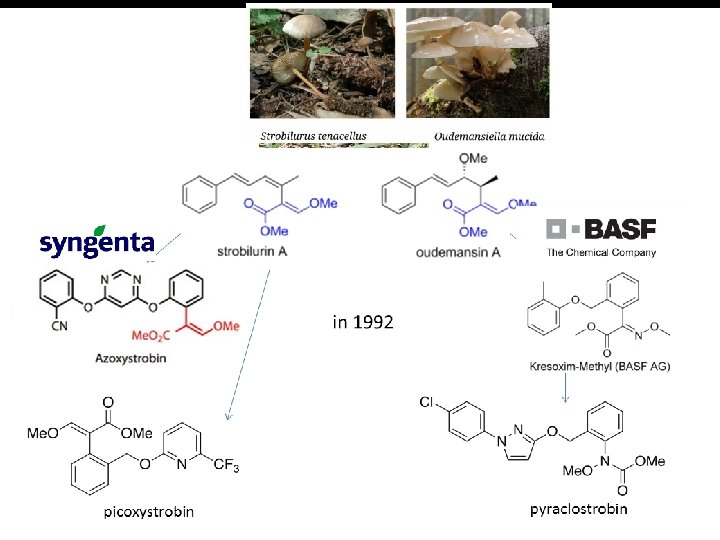
Strobilurin Fungicides Pyraclostrobin Fluoxastrobin Metominostrobin Azoxystrobin & Picoxystrobin Trifloxystrobin Famoxadone Fenamidone
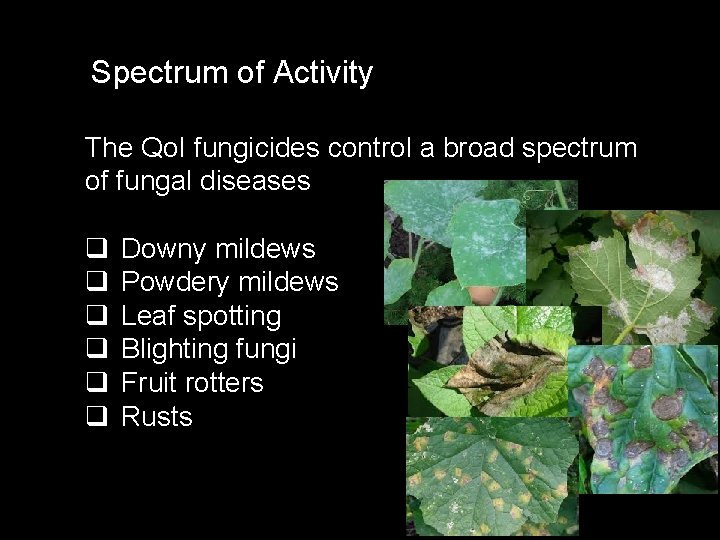
Spectrum of Activity The Qo. I fungicides control a broad spectrum of fungal diseases q Downy mildews q Powdery mildews q Leaf spotting q Blighting fungi q Fruit rotters q Rusts
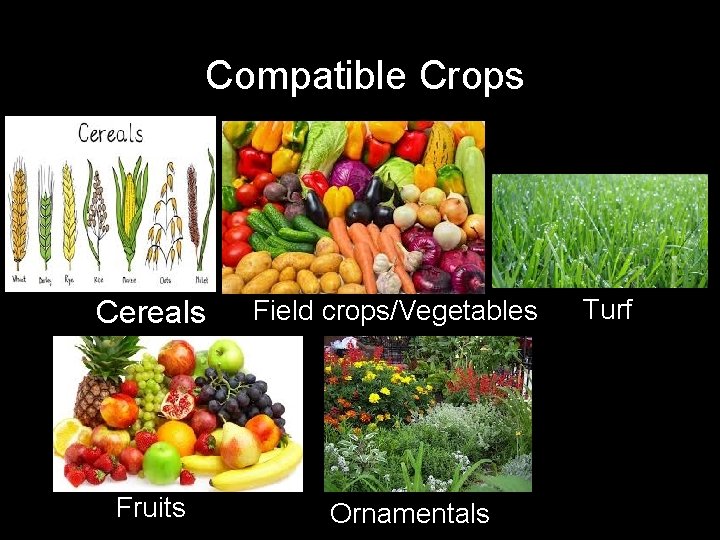
Compatible Crops Cereals Fruits Field crops/Vegetables Ornamentals Turf
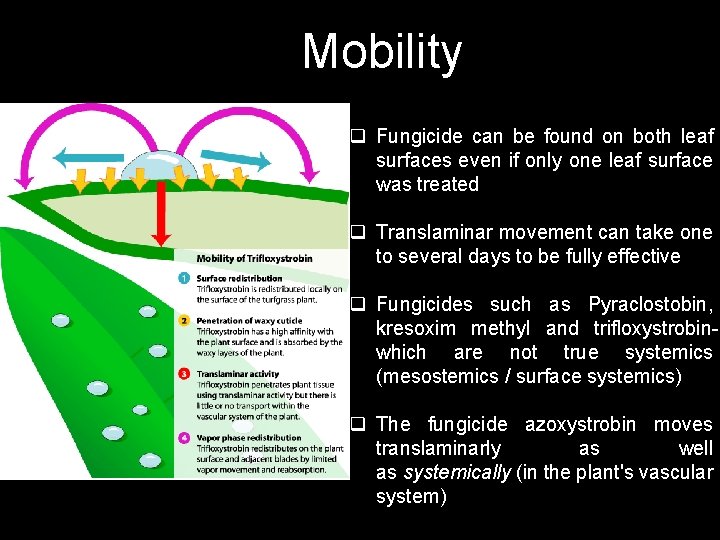
Mobility q Fungicide can be found on both leaf surfaces even if only one leaf surface was treated q Translaminar movement can take one to several days to be fully effective q Fungicides such as Pyraclostobin, kresoxim methyl and trifloxystrobinwhich are not true systemics (mesostemics / surface systemics) q The fungicide azoxystrobin moves translaminarly as well as systemically (in the plant's vascular system)
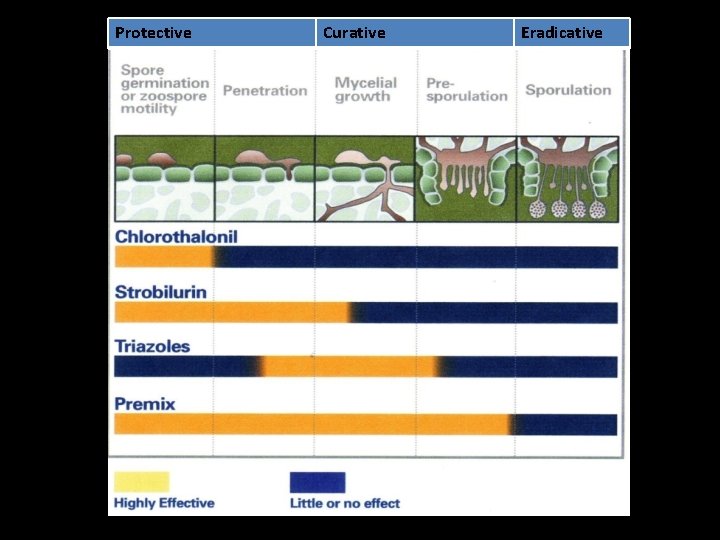
Importance of Mobility q Translaminar movement help to compensate for incomplete spray coverage q Vapor phase redistribution help to compensate for poor crop coverage q Several days may be required for adequate protection q Concerns curative disease control q Excellent as preventive fungicides - effectively kill germinating spores q Best use of Qo. I fungicides is to apply them before fungus development infection takes place.
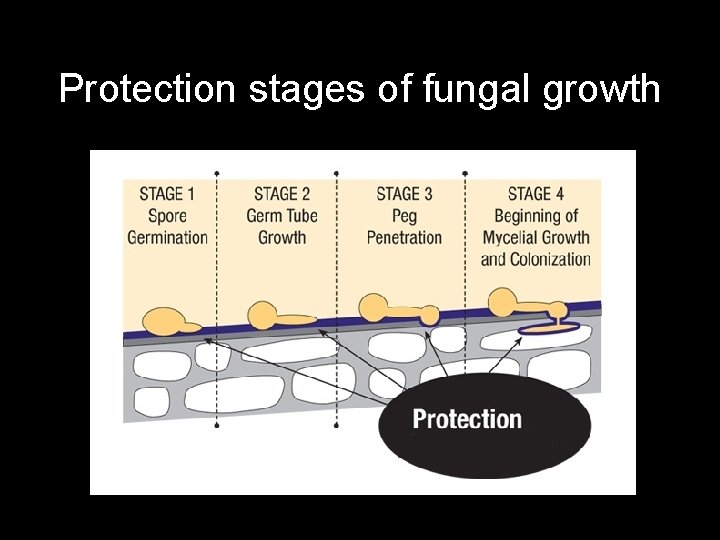
Protection stages of fungal growth
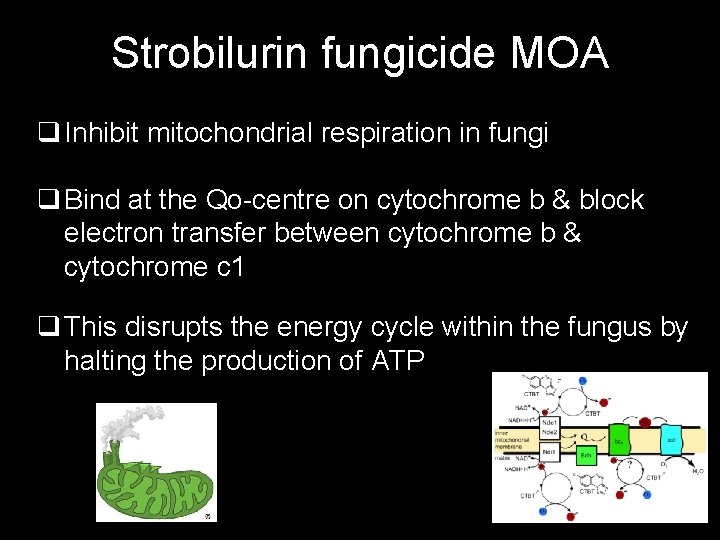
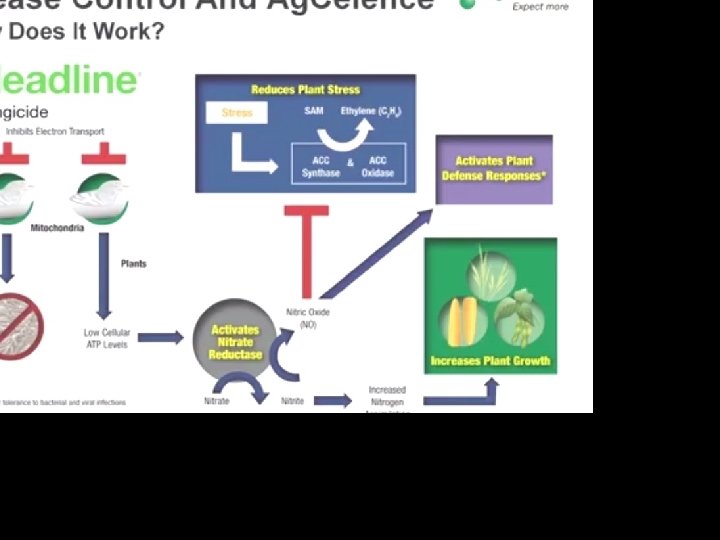
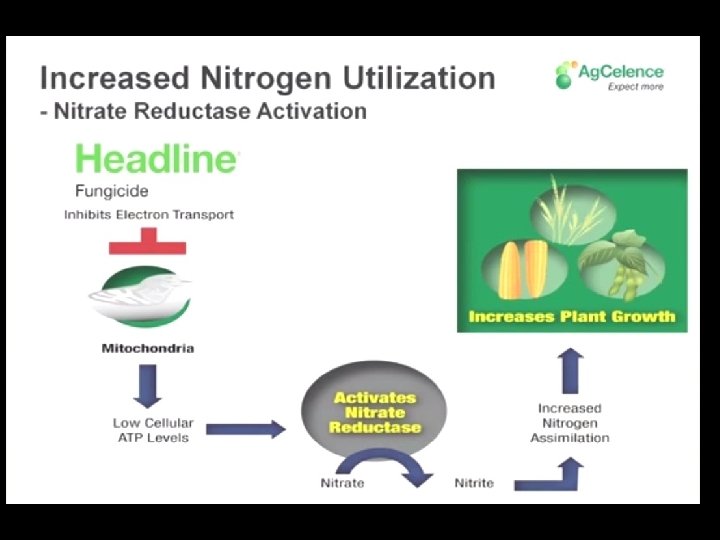
Strobilurin fungicide MOA q Inhibit mitochondrial respiration in fungi q Bind at the Qo-centre on cytochrome b & block electron transfer between cytochrome b & cytochrome c 1 q This disrupts the energy cycle within the fungus by halting the production of ATP
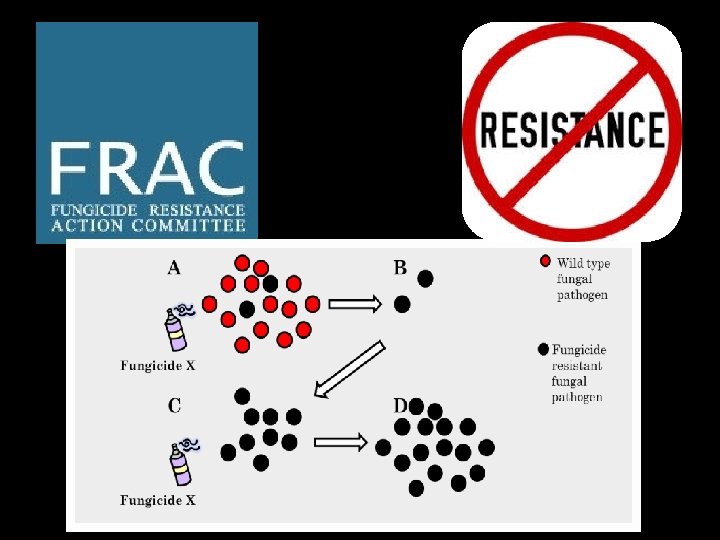
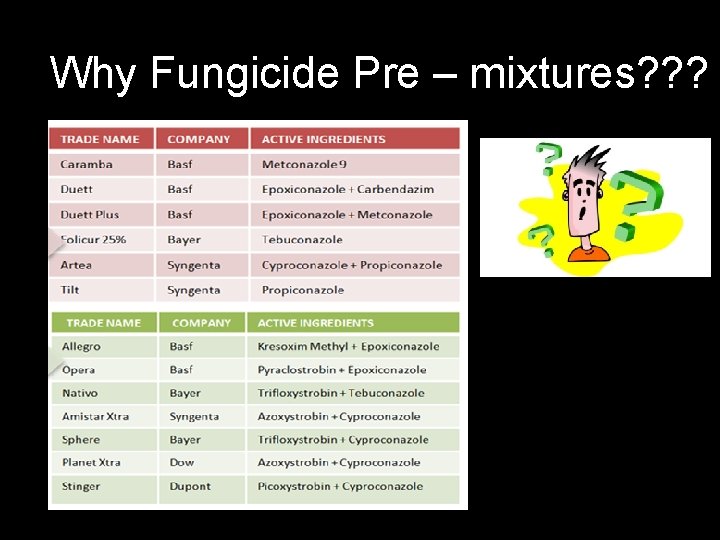
Resistance Management q Limit the number of applications q Limit the number of consecutive applications q Pre-mixtures are preferable q Use them at early stages of disease development (Preventive/Protective action) q Tank mix with other fungicides
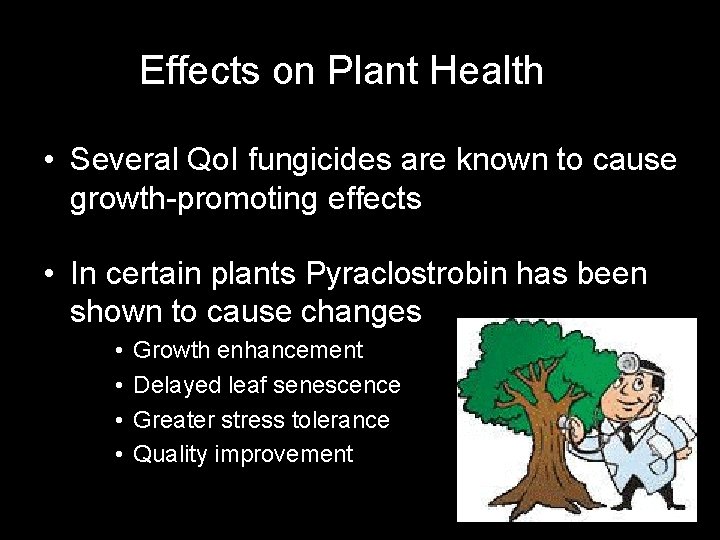
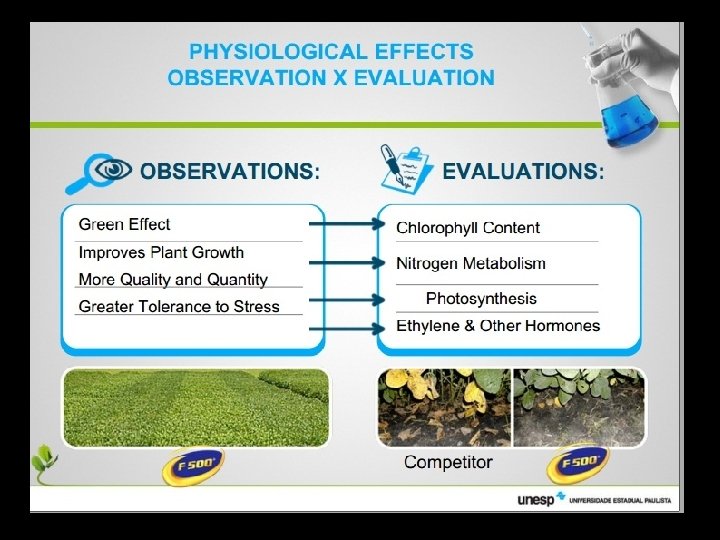
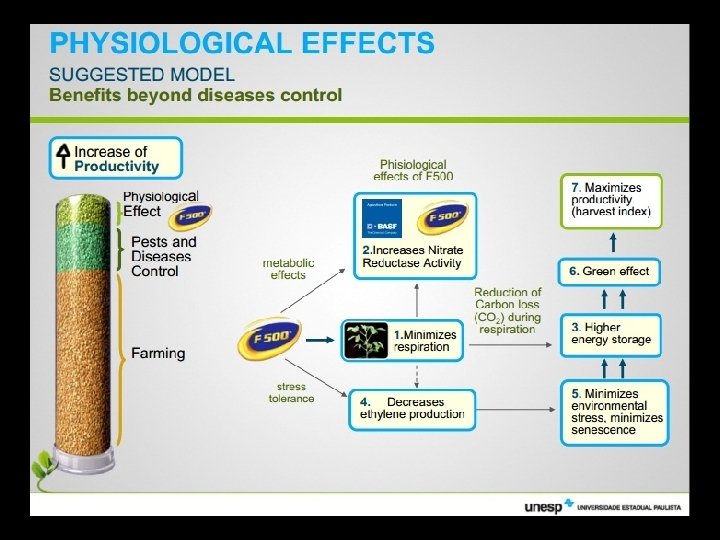
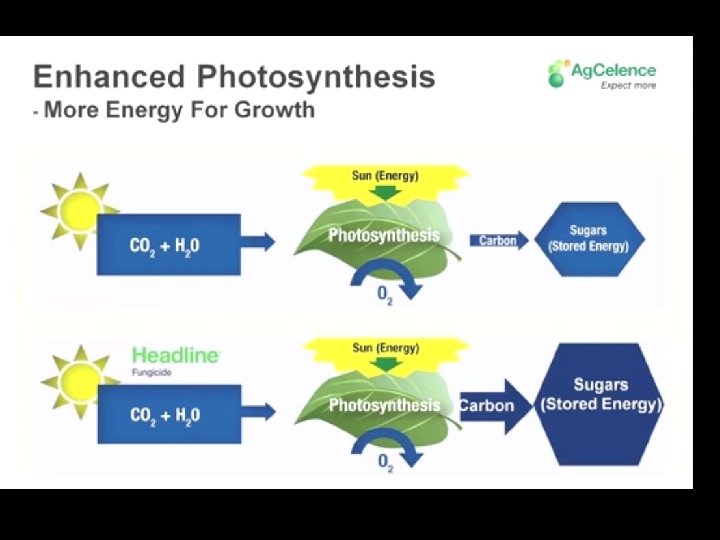
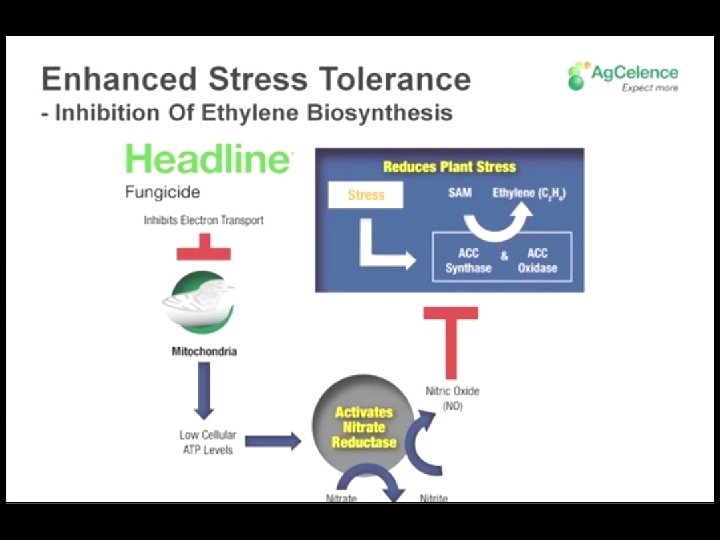
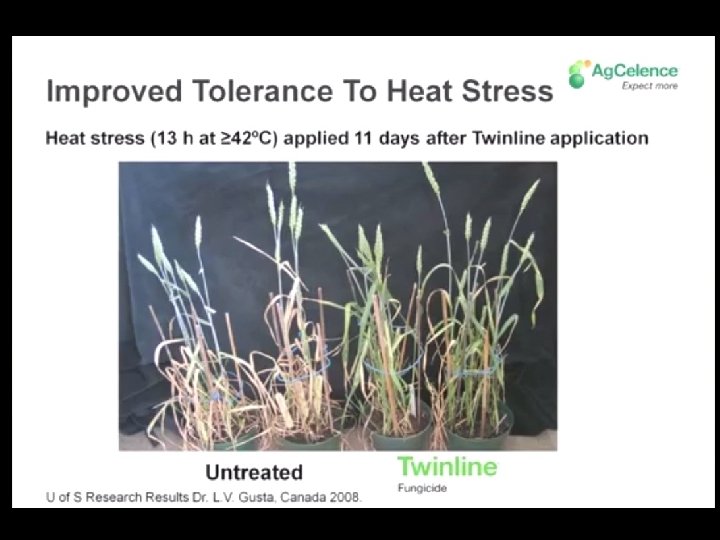
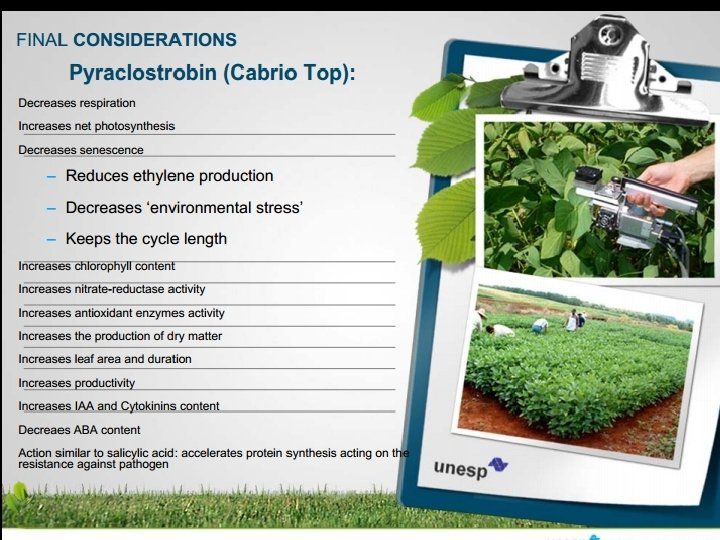
Effects on Plant Health • Several Qo. I fungicides are known to cause growth-promoting effects • In certain plants Pyraclostrobin has been shown to cause changes • • Growth enhancement Delayed leaf senescence Greater stress tolerance Quality improvement
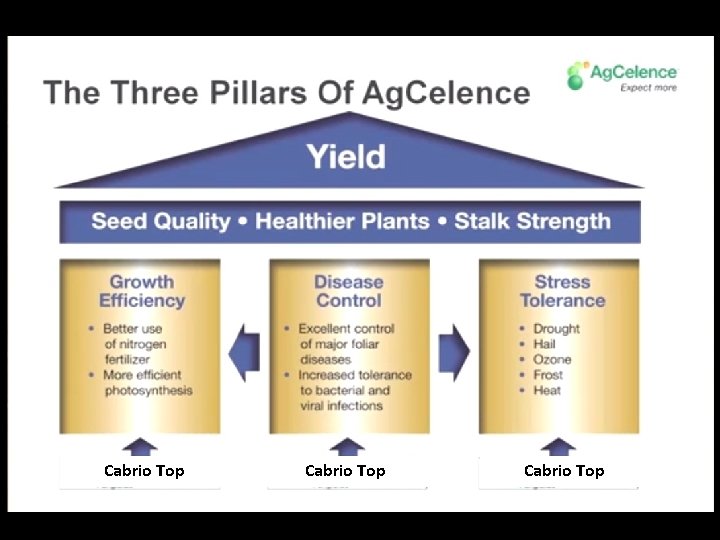
Cabrio Top
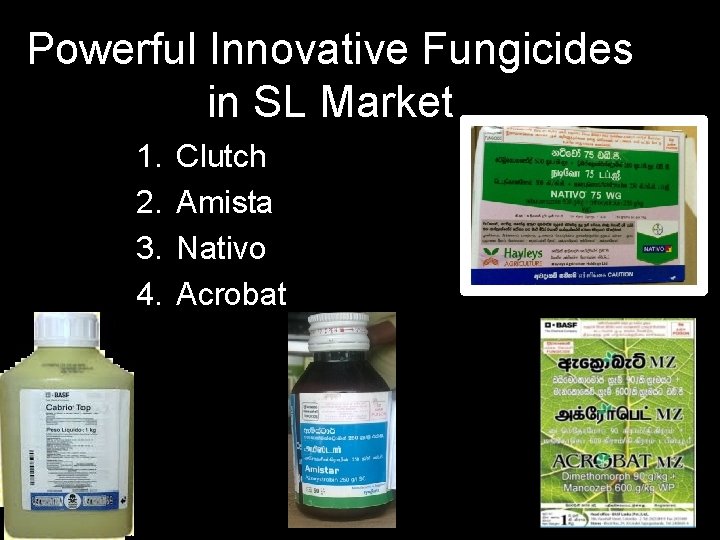
Powerful Innovative Fungicides in SL Market 1. 2. 3. 4. Clutch Amista Nativo Acrobat
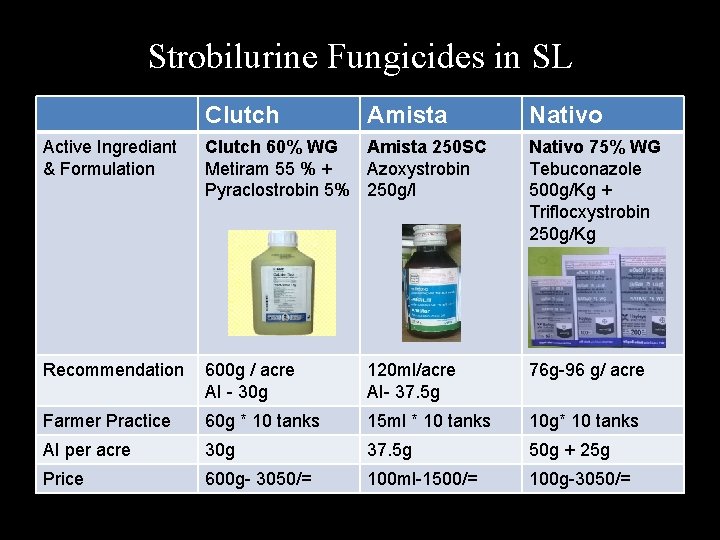
Strobilurine Fungicides in SL Clutch Amista Nativo Active Ingrediant & Formulation Clutch 60% WG Amista 250 SC Metiram 55 % + Azoxystrobin Pyraclostrobin 5% 250 g/l Nativo 75% WG Tebuconazole 500 g/Kg + Triflocxystrobin 250 g/Kg Recommendation 600 g / acre AI - 30 g 120 ml/acre AI- 37. 5 g 76 g-96 g/ acre Farmer Practice 60 g * 10 tanks 15 ml * 10 tanks 10 g* 10 tanks AI per acre 30 g 37. 5 g 50 g + 25 g Price 600 g- 3050/= 100 ml-1500/= 100 g-3050/=
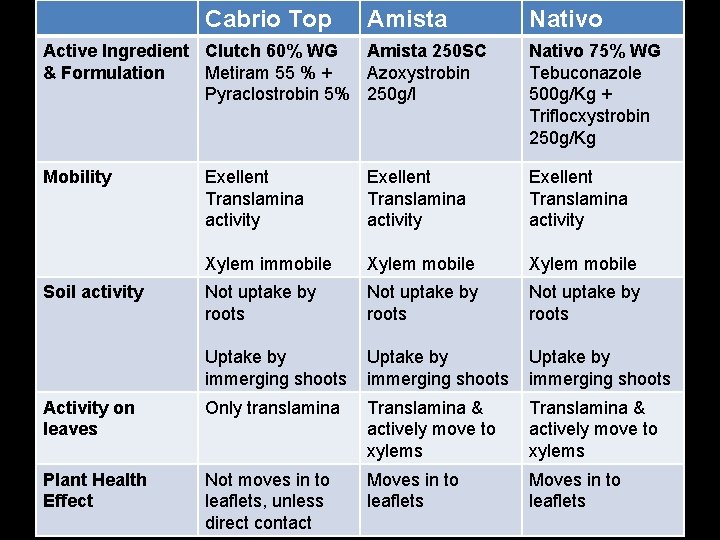
Cabrio Top Amista Nativo Active Ingredient Clutch 60% WG Amista 250 SC & Formulation Metiram 55 % + Azoxystrobin Pyraclostrobin 5% 250 g/l Nativo 75% WG Tebuconazole 500 g/Kg + Triflocxystrobin 250 g/Kg Mobility Exellent Translamina activity Xylem immobile Xylem mobile Not uptake by roots Uptake by immerging shoots Activity on leaves Only translamina Translamina & actively move to xylems Plant Health Effect Not moves in to leaflets, unless direct contact Moves in to leaflets Soil activity
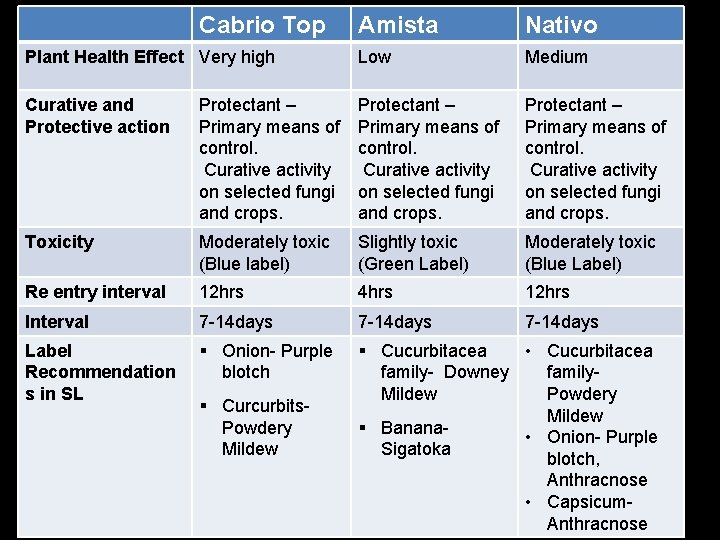
Cabrio Top Amista Nativo Plant Health Effect Very high Low Medium Curative and Protective action Protectant – Primary means of control. Curative activity on selected fungi and crops. Toxicity Moderately toxic (Blue label) Slightly toxic (Green Label) Moderately toxic (Blue Label) Re entry interval 12 hrs 4 hrs 12 hrs Interval 7 -14 days Label Recommendation s in SL § Onion- Purple blotch § Cucurbitacea • Cucurbitacea family- Downey family- Mildew Powdery Mildew § Banana- • Onion- Purple Sigatoka blotch, Anthracnose • Capsicum- Anthracnose § Curcurbits. Powdery Mildew
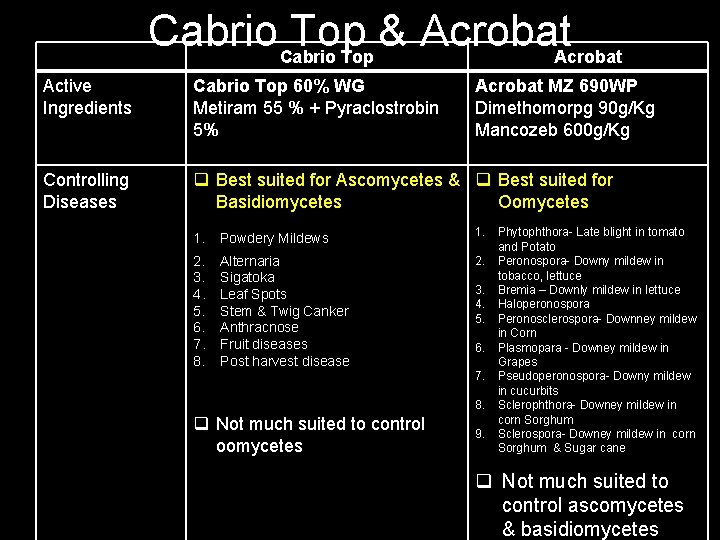
Cabrio Top & Acrobat Cabrio Top Acrobat Active Ingredients Cabrio Top 60% WG Metiram 55 % + Pyraclostrobin 5% Controlling Diseases q Best suited for Ascomycetes & q Best suited for Basidiomycetes Oomycetes 1. Powdery Mildews 2. 3. 4. 5. 6. 7. 8. Alternaria Sigatoka Leaf Spots Stem & Twig Canker Anthracnose Fruit diseases Post harvest disease q Not much suited to control oomycetes Acrobat MZ 690 WP Dimethomorpg 90 g/Kg Mancozeb 600 g/Kg 1. Phytophthora- Late blight in tomato and Potato 2. Peronospora- Downy mildew in tobacco, lettuce 3. Bremia – Downly mildew in lettuce 4. Haloperonospora 5. Peronosclerospora- Downney mildew in Corn 6. Plasmopara - Downey mildew in Grapes 7. Pseudoperonospora- Downy mildew in cucurbits 8. Sclerophthora- Downey mildew in corn Sorghum 9. Sclerospora- Downey mildew in corn Sorghum & Sugar cane q Not much suited to control ascomycetes & basidiomycetes
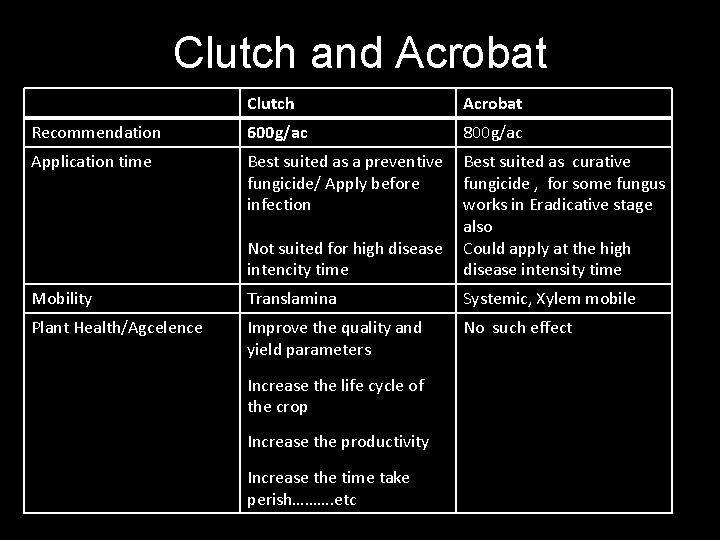
Clutch and Acrobat Clutch Acrobat Recommendation 600 g/ac 800 g/ac Application time Best suited as a preventive fungicide/ Apply before infection Not suited for high disease intencity time Best suited as curative fungicide , for some fungus works in Eradicative stage also Could apply at the high disease intensity time Mobility Translamina Systemic, Xylem mobile Plant Health/Agcelence Improve the quality and yield parameters No such effect Increase the life cycle of the crop Increase the productivity Increase the time take perish………. etc
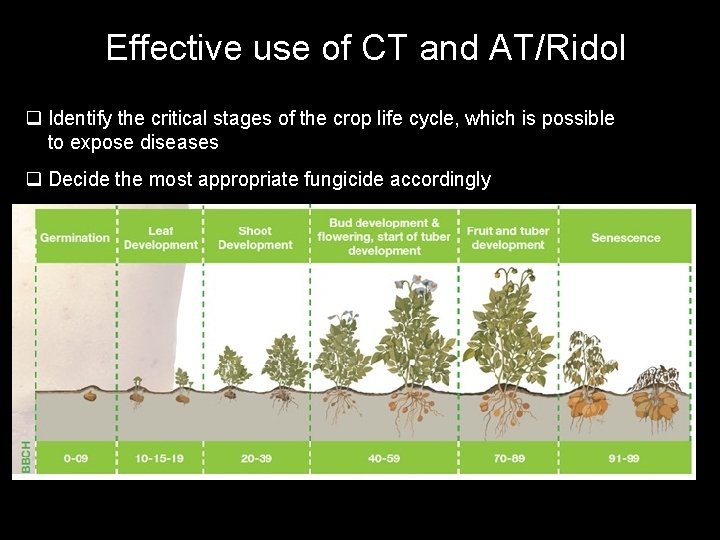
Effective use of CT and AT/Ridol q Identify the critical stages of the crop life cycle, which is possible to expose diseases q Decide the most appropriate fungicide accordingly
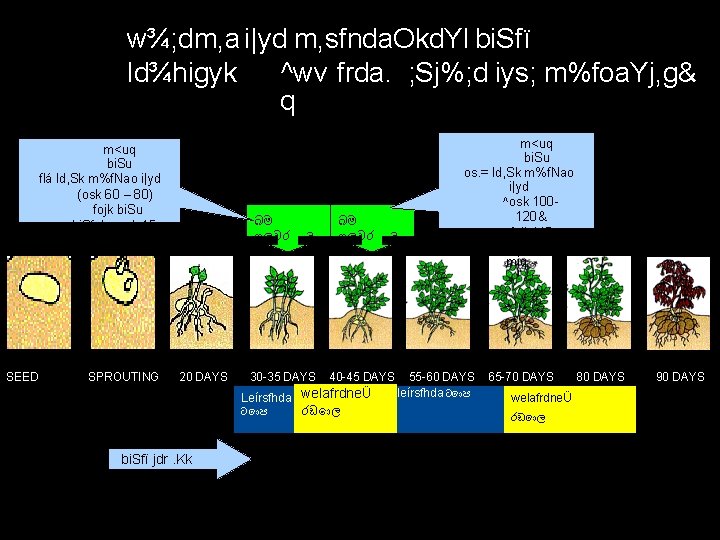
w¾; dm, a i|yd m, sfnda. Okd. Yl bi. Sfï ld¾higyk ^wv frda. ; Sj%; d iys; m%foa. Yj, g& q m<uq bi. Su flá ld, Sk m%f. Nao i|yd (osk 60 – 80) fojk bi. Su m<uq bi. Sfuka osk 15 g miq SEED SPROUTING 20 DAYS බම ෆලවර a 30 -35 DAYS 40 -45 DAYS Leírsfhda welafrdneÜ රඩ ල ට ප bi. Sfï jdr. Kk 1 2 m<uq bi. Su os. = ld, Sk m%f. Nao i|yd ^osk 100120& fojk bi. Su m<uq bi. Sfuka osk 15 g miq 55 -60 DAYS leírsfhda ට ප 65 -70 DAYS welafrdneÜ රඩ ල 3 4 80 DAYS 90 DAYS
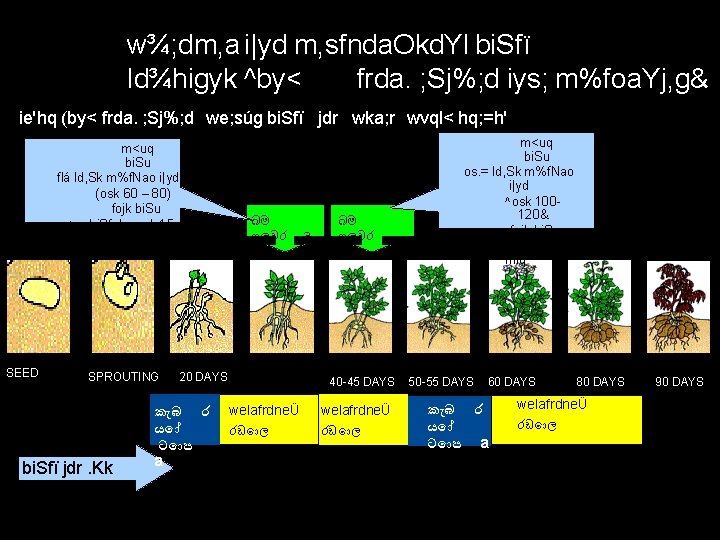
w¾; dm, a i|yd m, sfnda. Okd. Yl bi. Sfï ld¾higyk ^by< frda. ; Sj%; d iys; m%foa. Yj, g& ie'hq (by< frda. ; Sj%; d we; súg bi. Sfï jdr wka; r wvql< hq; =h' m<uq bi. Su flá ld, Sk m%f. Nao i|yd (osk 60 – 80) fojk bi. Su m<uq bi. Sfuka osk 15 g miq SEED SPROUTING bi. Sfï jdr. Kk බම ෆලවර a 20 DAYS ක බ ර ය ට ප 1 a බම ෆලවර 40 -45 DAYS welafrdneÜ රඩ ල 2 welafrdneÜ රඩ ල m<uq bi. Su os. = ld, Sk m%f. Nao i|yd ^osk 100120& fojk bi. Su m<uq bi. Sfuka osk 15 g miq 50 -55 DAYS 60 DAYS ක බ ර ය ට ප a 80 DAYS welafrdneÜ රඩ ල 5 90 DAYS

Thank You
- Slides: 67