
Fungi What is fungi Where does it grow

- Slides: 13
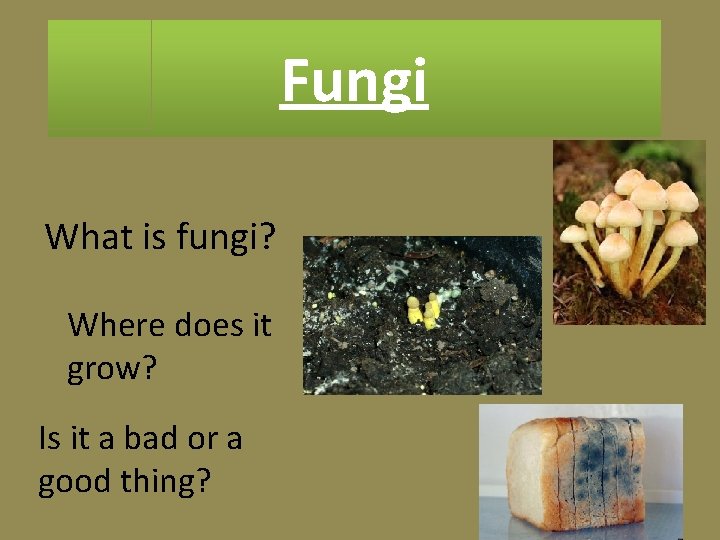
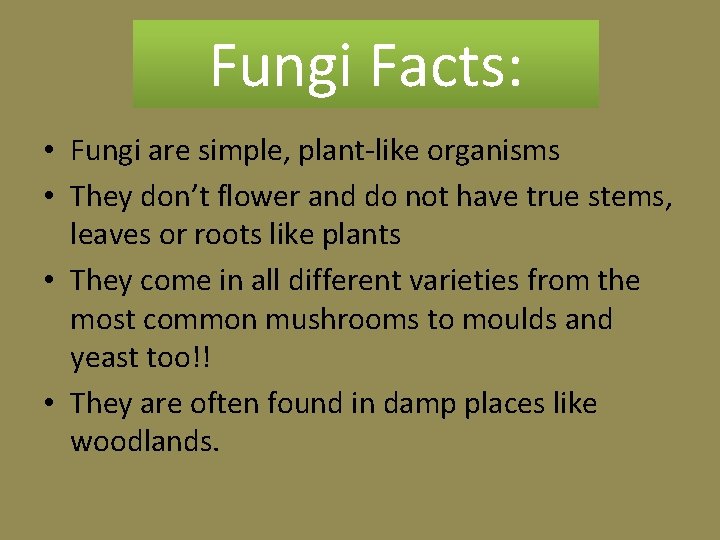
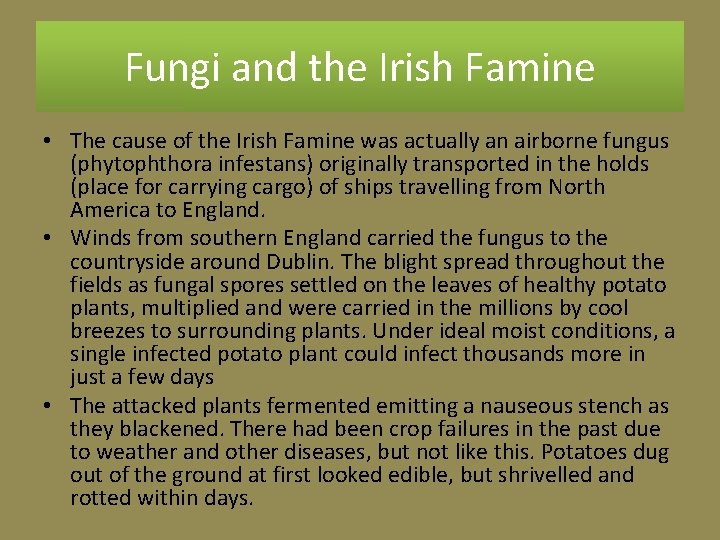
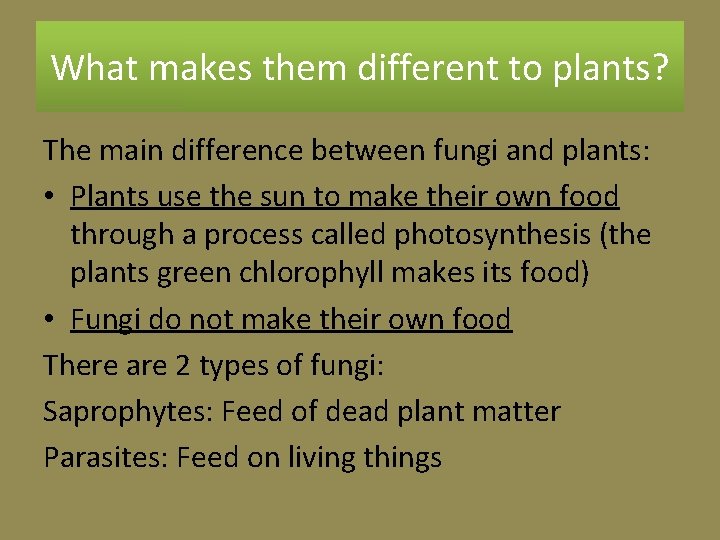
Fungi What is fungi? Where does it grow? Is it a bad or a good thing?
Fungi Facts: • Fungi are simple, plant-like organisms • They don’t flower and do not have true stems, leaves or roots like plants • They come in all different varieties from the most common mushrooms to moulds and yeast too!! • They are often found in damp places like woodlands.
Fungi and the Irish Famine • The cause of the Irish Famine was actually an airborne fungus (phytophthora infestans) originally transported in the holds (place for carrying cargo) of ships travelling from North America to England. • Winds from southern England carried the fungus to the countryside around Dublin. The blight spread throughout the fields as fungal spores settled on the leaves of healthy potato plants, multiplied and were carried in the millions by cool breezes to surrounding plants. Under ideal moist conditions, a single infected potato plant could infect thousands more in just a few days • The attacked plants fermented emitting a nauseous stench as they blackened. There had been crop failures in the past due to weather and other diseases, but not like this. Potatoes dug out of the ground at first looked edible, but shrivelled and rotted within days.
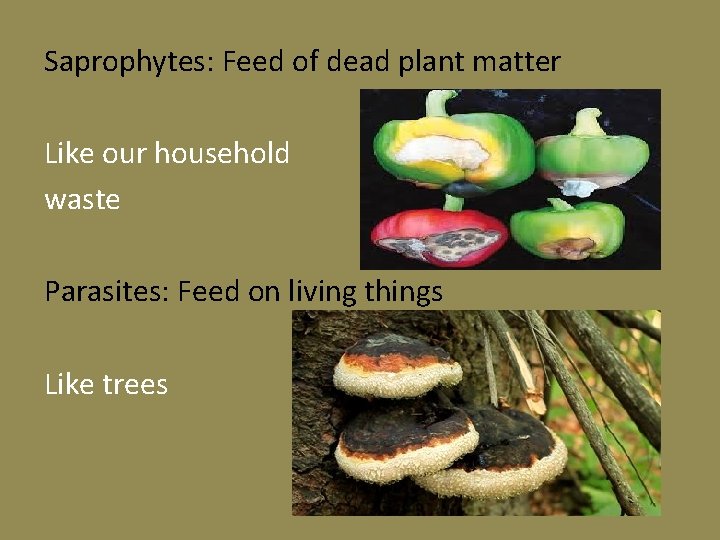
What makes them different to plants? The main difference between fungi and plants: • Plants use the sun to make their own food through a process called photosynthesis (the plants green chlorophyll makes its food) • Fungi do not make their own food There are 2 types of fungi: Saprophytes: Feed of dead plant matter Parasites: Feed on living things
Saprophytes: Feed of dead plant matter Like our household waste Parasites: Feed on living things Like trees
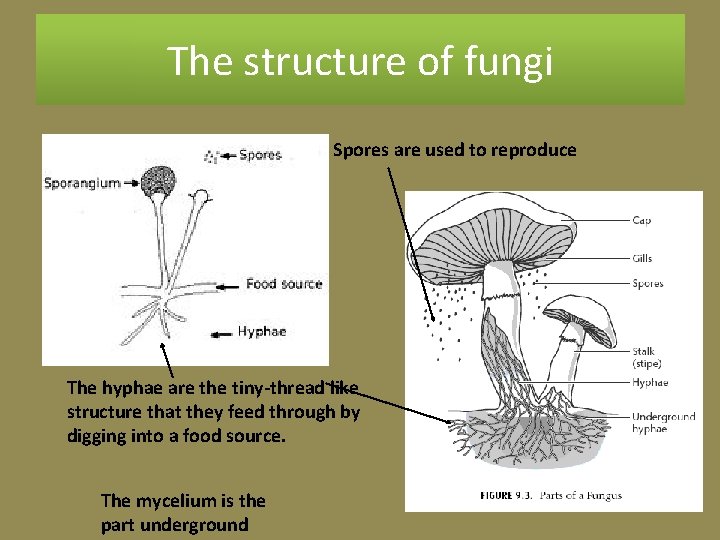
The structure of fungi Spores are used to reproduce The hyphae are the tiny-thread like structure that they feed through by digging into a food source. The mycelium is the part underground
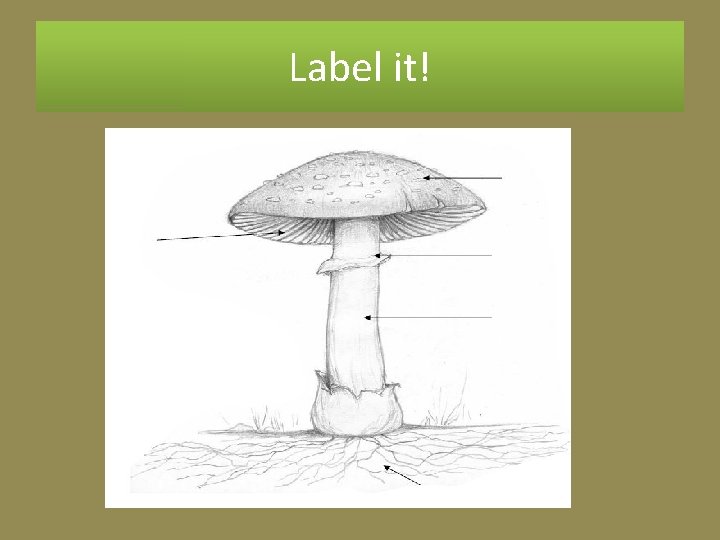
Label it!
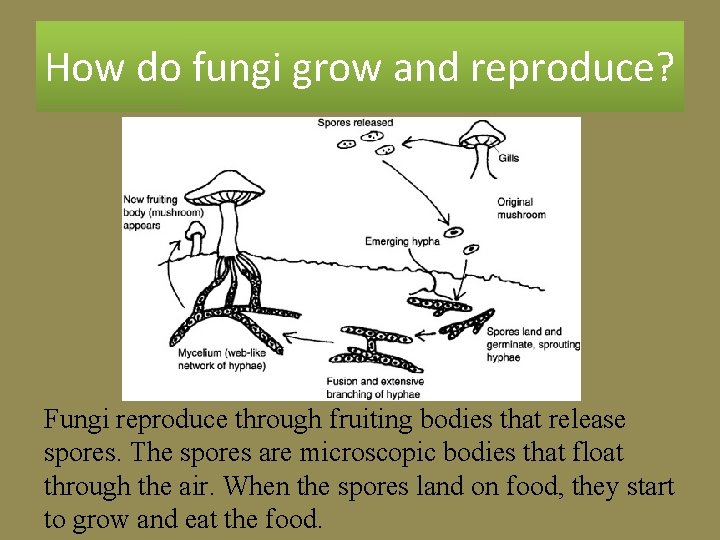
How do fungi grow and reproduce? Fungi reproduce through fruiting bodies that release spores. The spores are microscopic bodies that float through the air. When the spores land on food, they start to grow and eat the food.
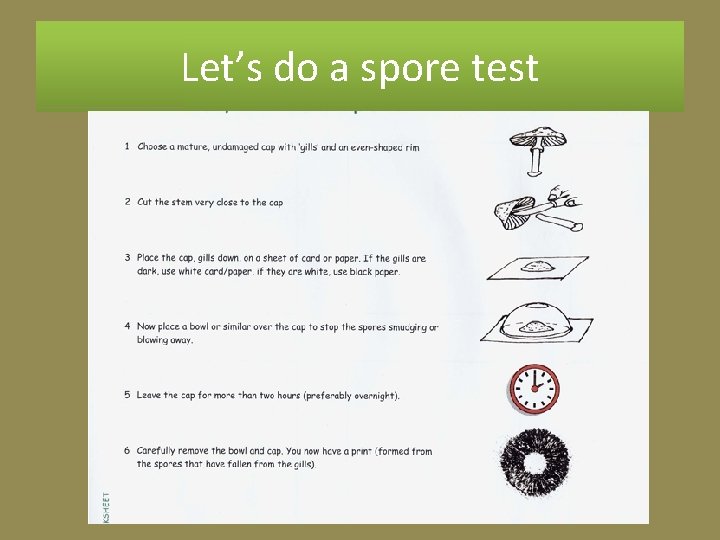
Let’s do a spore test
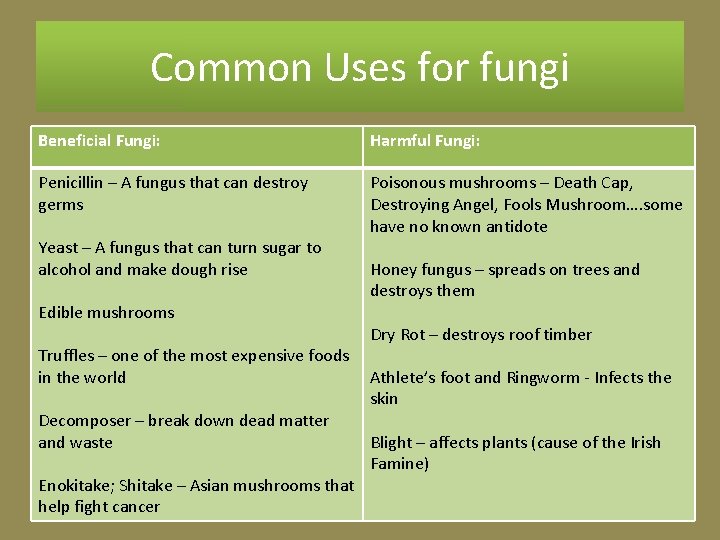
Common Uses for fungi Beneficial Fungi: Harmful Fungi: Penicillin – A fungus that can destroy germs Poisonous mushrooms – Death Cap, Destroying Angel, Fools Mushroom…. some have no known antidote Yeast – A fungus that can turn sugar to alcohol and make dough rise Edible mushrooms Truffles – one of the most expensive foods in the world Decomposer – break down dead matter and waste Enokitake; Shitake – Asian mushrooms that help fight cancer Honey fungus – spreads on trees and destroys them Dry Rot – destroys roof timber Athlete’s foot and Ringworm - Infects the skin Blight – affects plants (cause of the Irish Famine)
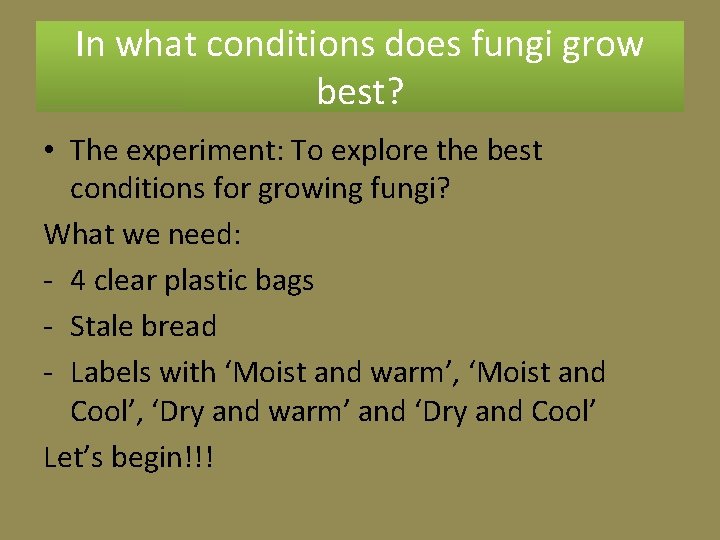
In what conditions does fungi grow best? • The experiment: To explore the best conditions for growing fungi? What we need: - 4 clear plastic bags - Stale bread - Labels with ‘Moist and warm’, ‘Moist and Cool’, ‘Dry and warm’ and ‘Dry and Cool’ Let’s begin!!!
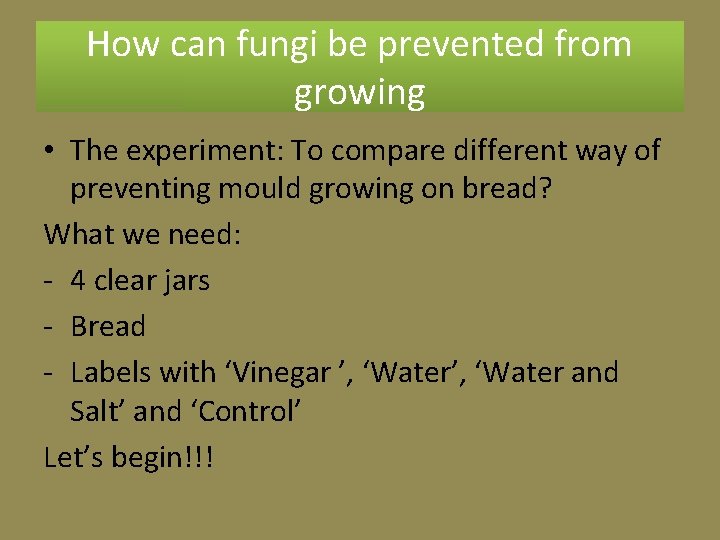
How can fungi be prevented from growing • The experiment: To compare different way of preventing mould growing on bread? What we need: - 4 clear jars - Bread - Labels with ‘Vinegar ’, ‘Water and Salt’ and ‘Control’ Let’s begin!!!
Record your result! Results: