
Fungi What are Fungi Characteristics Eukaryotic Nonphotosynthetic organisms
- Slides: 21
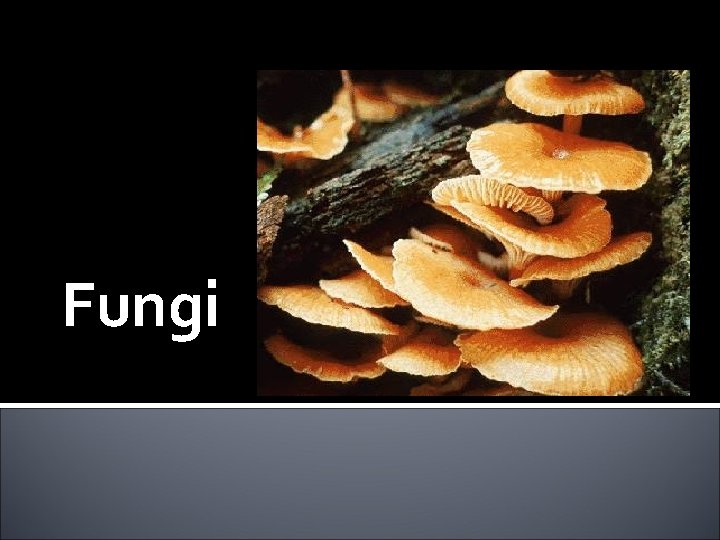
Fungi
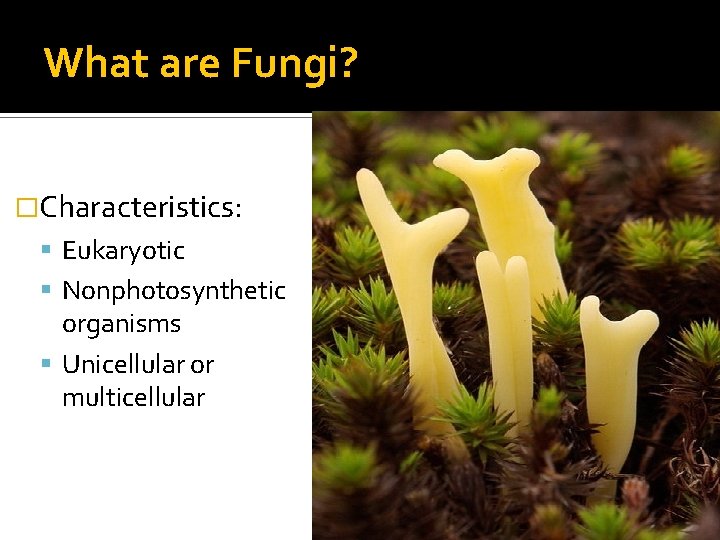
What are Fungi? �Characteristics: Eukaryotic Nonphotosynthetic organisms Unicellular or multicellular
What are Fungi? �Obtaining Nutrients Most important decomposers of organic material Obtain nutrients by secreting enzymes and absorbing simple organic molecules from the environment
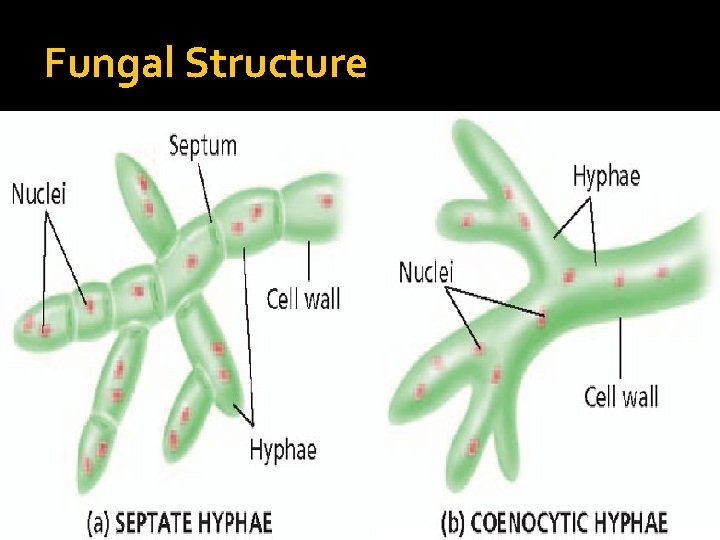
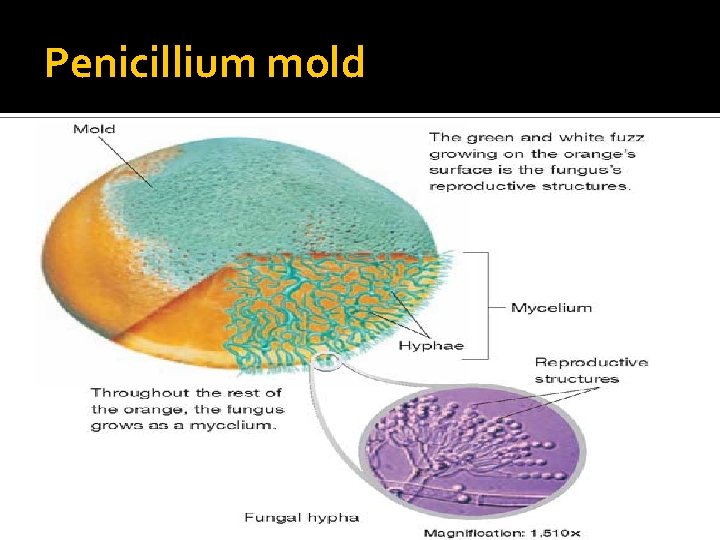
Fungi Structure �Made up of short filaments called hyphae Mats of hyphae are called mycelium Some have partitions called septa in their hyphae �Fungal cell walls contain CHITIN rather than cellulose �Reproduce both sexually and asexually
Fungal Structure
Reproduction �Asexual: Produce thousands of genetically identical haploid spores, usually on modified cells of the hyphae �Sexual: Fungi occur in mating types----minus and plus When two different types come together, their hyphaes fuse together Produce genetically different spores
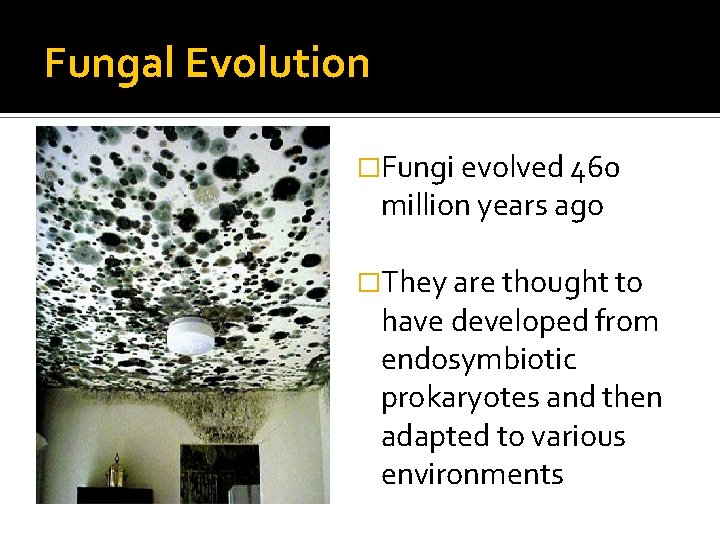
Fungal Evolution �Fungi evolved 460 million years ago �They are thought to have developed from endosymbiotic prokaryotes and then adapted to various environments
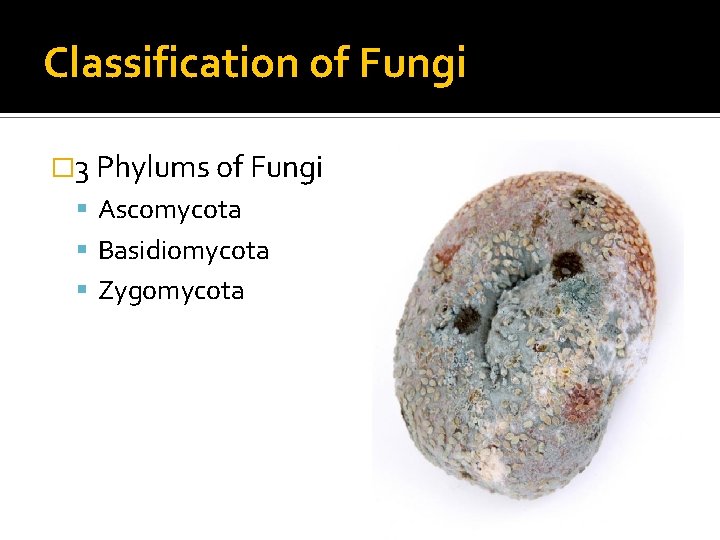
Classification of Fungi � 3 Phylums of Fungi Ascomycota Basidiomycota Zygomycota
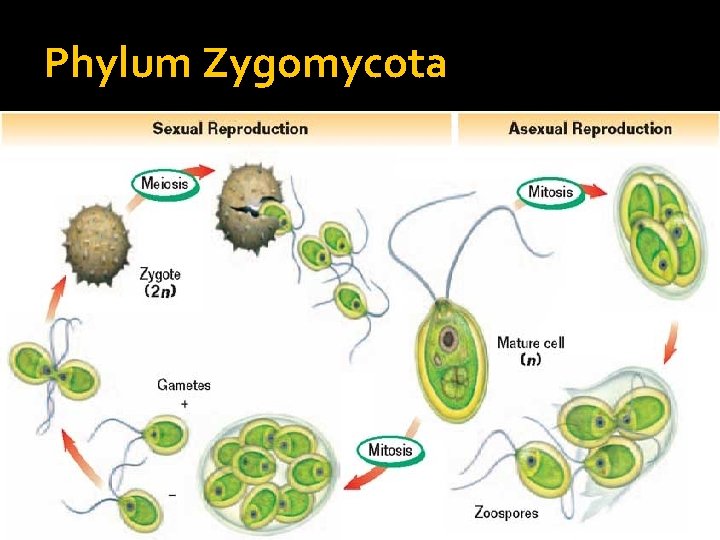
Phylum Zygomycota �Zygomycota fungi’s hyphae lack septa �Asexual sporangiospores form within sacs called sporangia. �Sexual reproduction results in Zygospores �Type of Fungus: Bread Mold �Example: Black Mold
Phylum Zygomycota
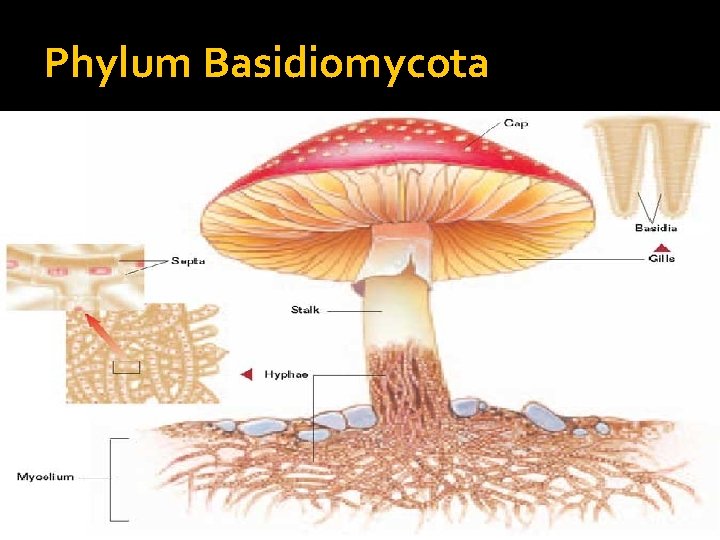
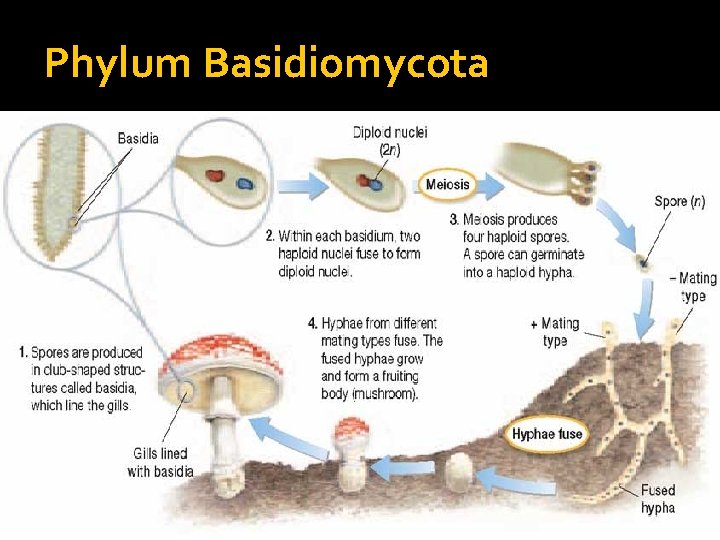
Phylum Basidiomycota �Often called the club fungi �Examples: Bracket fungi, puff balls, and mushrooms �They are spore bearing with above ground sexual reproductive structures called basidiocarps
Phylum Basidiomycota
Phylum Basidiomycota
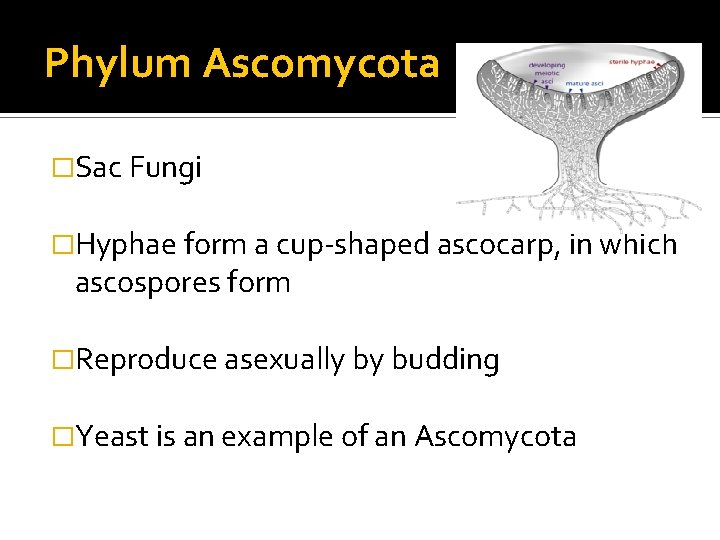
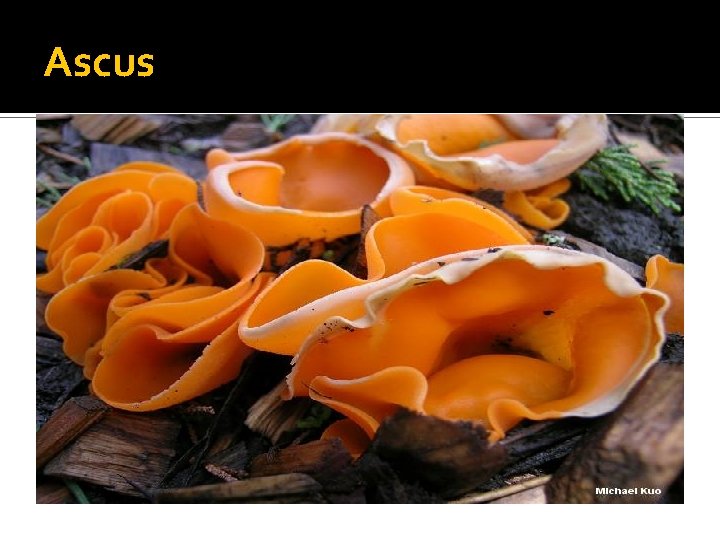
Phylum Ascomycota �Sac Fungi �Hyphae form a cup-shaped ascocarp, in which ascospores form �Reproduce asexually by budding �Yeast is an example of an Ascomycota
Sac Fungi Reproduction �In asexual reproduction, tiny spores called CONIDIA are formed at the tips of specialized hyphae called CONIDIOPHORES �If conidium lands in a suitable environment, it grows into a haploid mycelium
Sac Fungi Reproduction � In sexual reproduction, two different mating types � Two mating types nuclei fuse to form a diploid zygote inside a ASCUS � Zygote divides by meiosis, followed by a cycle of mitosis, and forms eight ASCOSPORES In favorable environments, ascospores can grow into a haploid mycelium
Ascus
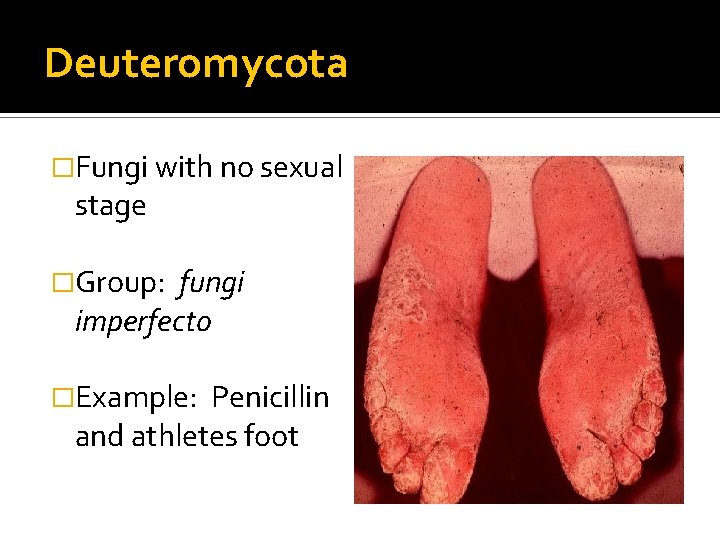
Deuteromycota �Fungi with no sexual stage �Group: fungi imperfecto �Example: Penicillin and athletes foot
Penicillium mold
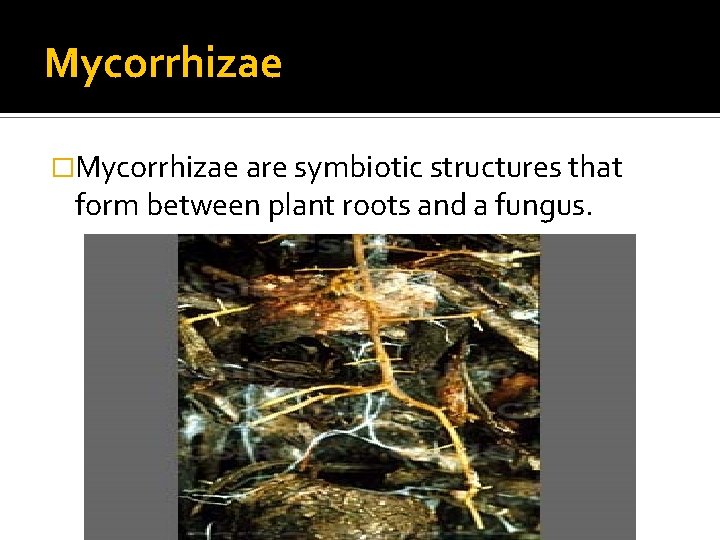
Mycorrhizae �Mycorrhizae are symbiotic structures that form between plant roots and a fungus.
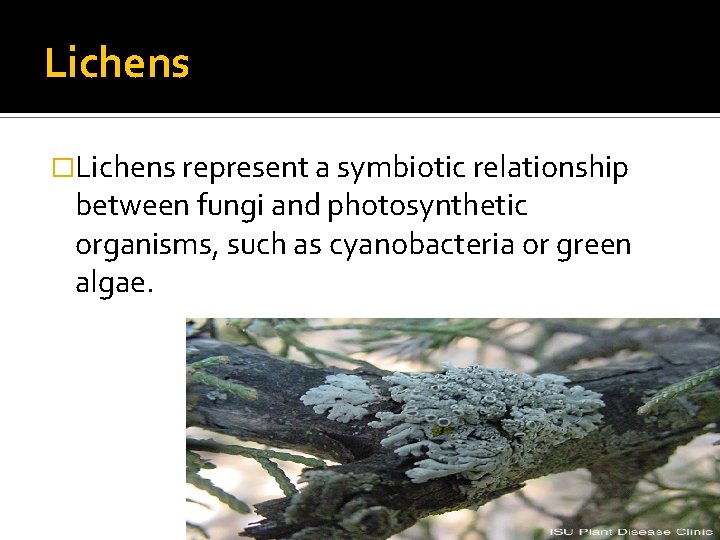
Lichens �Lichens represent a symbiotic relationship between fungi and photosynthetic organisms, such as cyanobacteria or green algae.