
Fungi Outline Definition of fungi Structure of fungi

- Slides: 25
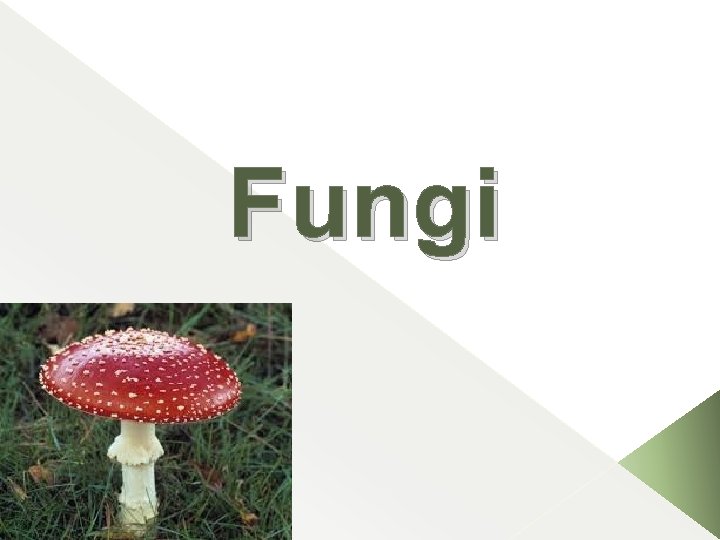
Fungi
Outline Definition of fungi Structure of fungi Life cycle of fungi Types of Fungi Importance of fungi References
Outline Definition of fungi Structure of fungi Life cycle of fungi Types of Fungi Importance of fungi References
Definition of fungi A fungus (plural: fungi) is any member of the group of eukaryotic organisms that includes microorganisms such as yeasts and molds, as well as the more familiar mushrooms. These organisms are classified as a kingdom, Fungi, which is separate from the other eukaryotic life kingdoms of plants and animals
Outline Definition of fungi Structure of fungi Life cycle of fungi Types of Fungi Importance of fungi References
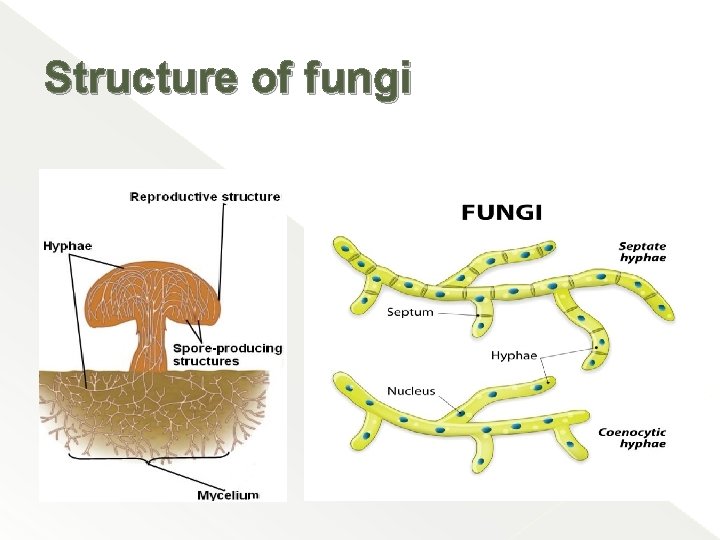
Structure of fungi Except for yeasts, which grow as single cells, most fungi grow as thread-like filaments, . The filaments are called hyphae (singular, hypha). Each hypha consists of one or more cells surrounded by a tubular cell wall. A mass of hyphae make up the body of a fungus, which is called a mycelium (plural, mycelia). The hyphae of most fungi are divided into cells by internal walls called septa (singular, septum
Structure of fungi
Outline Definition of fungi Structure of fungi Life cycle of fungi Types of Fungi Importance of fungi References
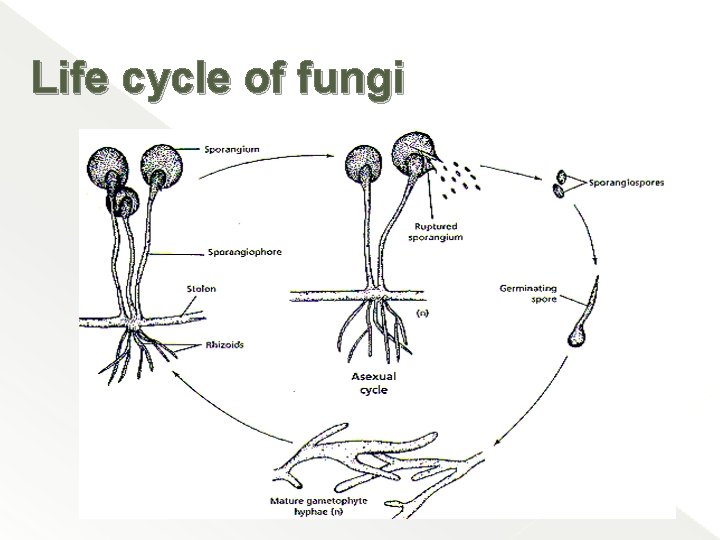
Life cycle of fungi In general, the life cycle involves the fusion of hyphae from two individuals, forming a mycelium that contains haploid nuclei of both individuals. Eventually, two nuclei that originated from different individuals fuse to form a diploid zygote. Meiosis then produces four haploid cells.
Life cycle of fungi
Outline Definition of fungi Structure of fungi Life cycle of fungi Types of Fungi Importance of fungi References
Types of Fungi Within the Fungi Kingdom, these are the most 5 important sub-divisions : 1. Basidiomycota 2. Ascomycota 3. Neocallimastigomycota 4. Blastocl. Glomeromycotaadiomycota 5. Glomeromycota
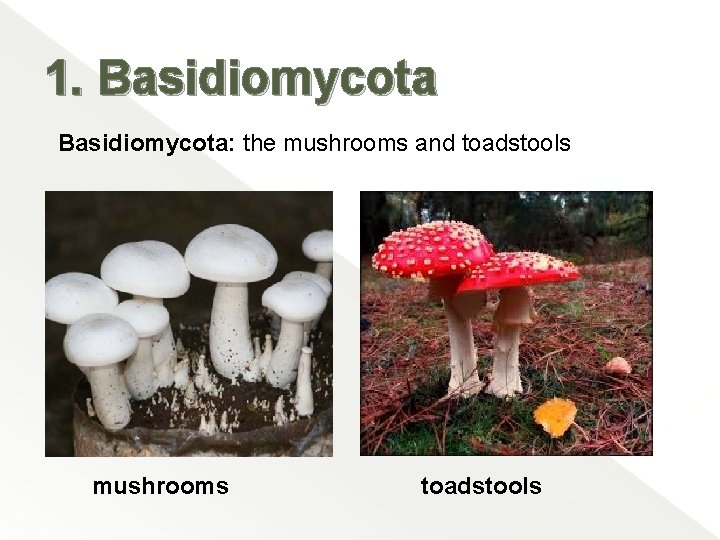
1. Basidiomycota: the mushrooms and toadstools mushrooms toadstools
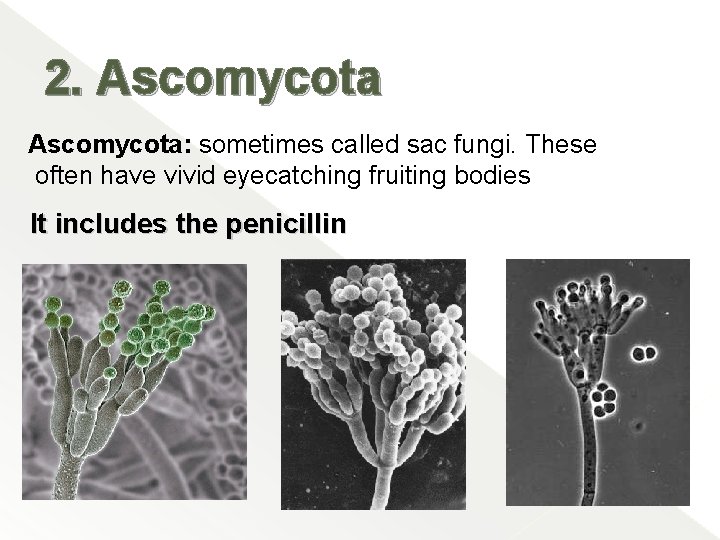
2. Ascomycota: sometimes called sac fungi. These often have vivid eyecatching fruiting bodies It includes the penicillin
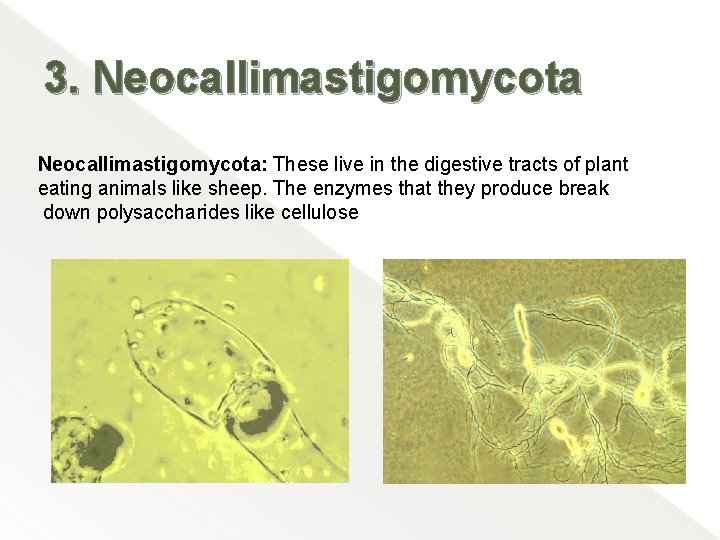
3. Neocallimastigomycota: These live in the digestive tracts of plant eating animals like sheep. The enzymes that they produce break down polysaccharides like cellulose
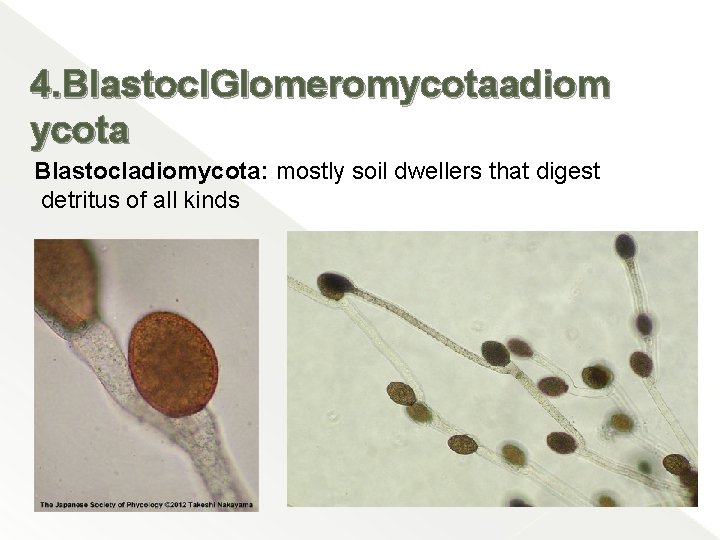
4. Blastocl. Glomeromycotaadiom ycota Blastocladiomycota: mostly soil dwellers that digest detritus of all kinds
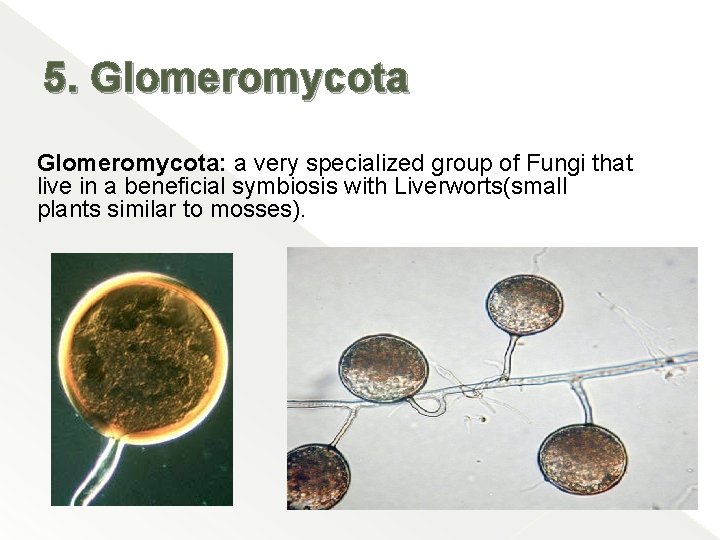
5. Glomeromycota: a very specialized group of Fungi that live in a beneficial symbiosis with Liverworts(small plants similar to mosses).
Outline Definition of fungi Structure of fungi Life cycle of fungi Types of Fungi Importance of fungi References
Importance of fungi Fungi are one of the most important groups of organisms on the planet. They are important in an enormous variety of ways. Recycling Mycorrhizae and plant growth Food Medicines
Recycling Fungi, together with bacteria, are responsible for most of the recycling which returns dead material to the soil in a form in which it can be reused.
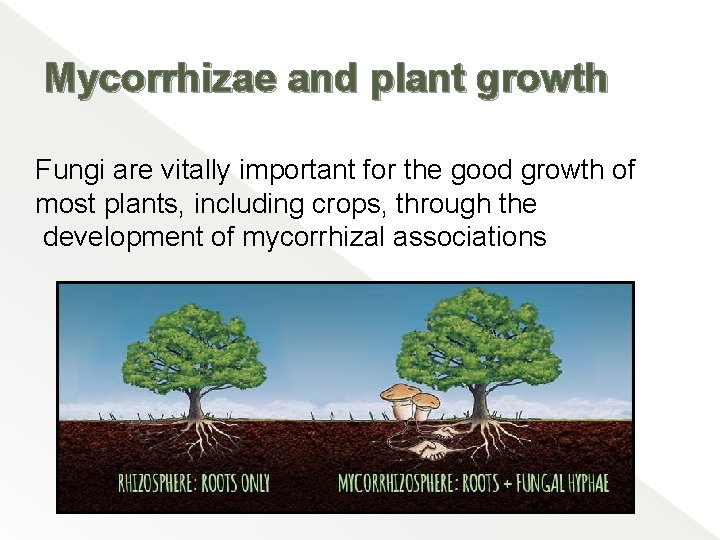
Mycorrhizae and plant growth Fungi are vitally important for the good growth of most plants, including crops, through the development of mycorrhizal associations
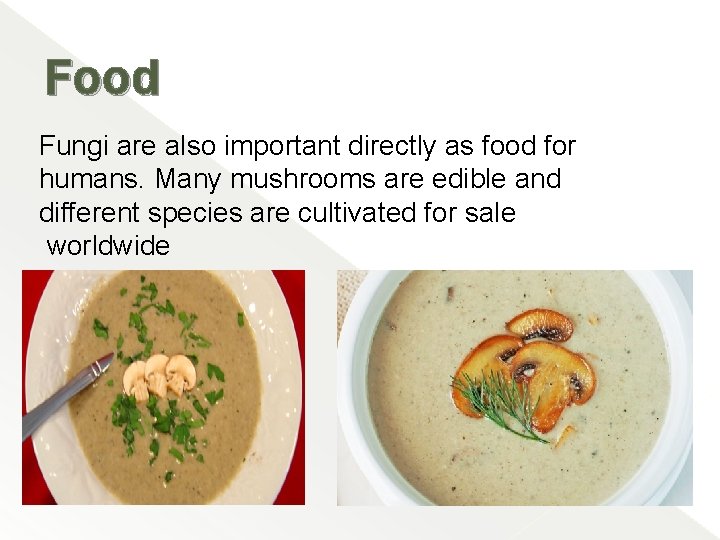
Food Fungi are also important directly as food for humans. Many mushrooms are edible and different species are cultivated for sale worldwide
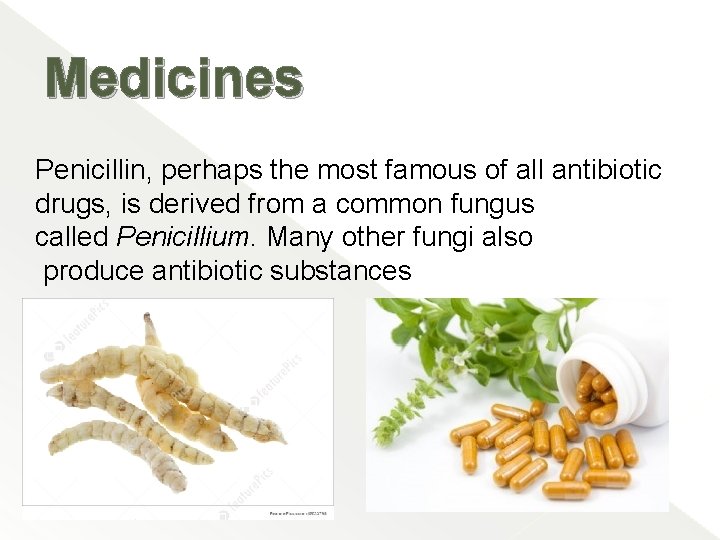
Medicines Penicillin, perhaps the most famous of all antibiotic drugs, is derived from a common fungus called Penicillium. Many other fungi also produce antibiotic substances
Outline Definition of fungi Structure of fungi Life cycle of fungi Types of Fungi Importance of fungi References
References www. presentationszone. com www. wikibedia. org https: //owlcation. com www. ck 12. org https: //biolympiads. com www. countrysideinfo. co. uk