
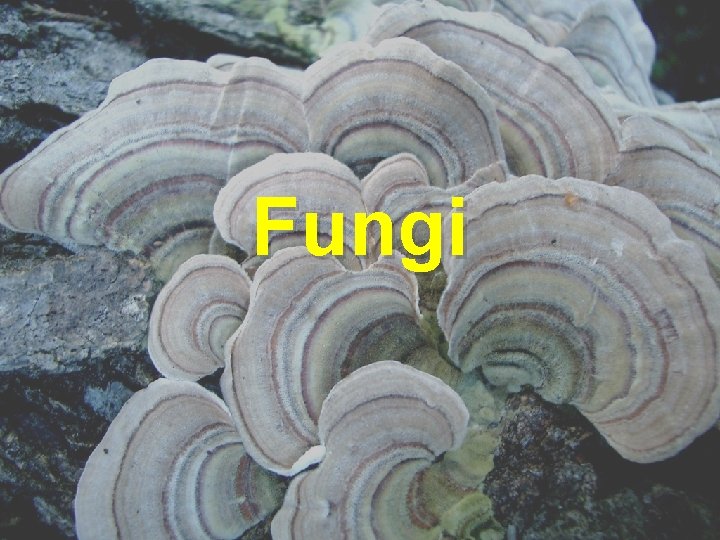
Fungi Fungi There are many types of fungi
- Slides: 18
Fungi
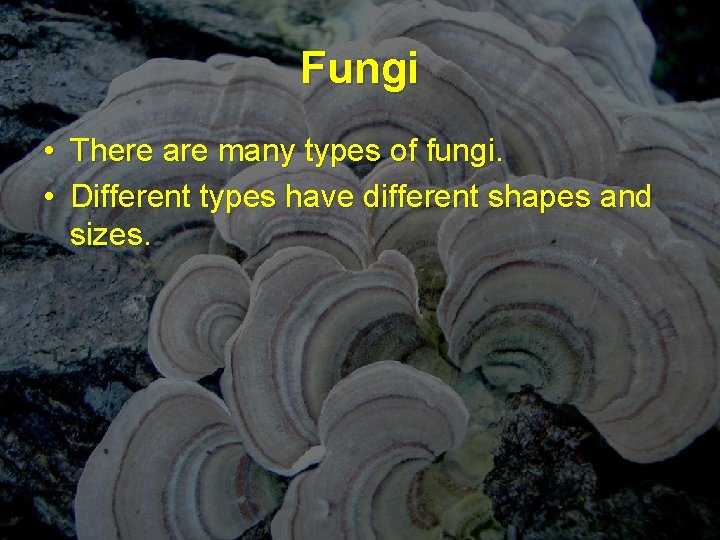
Fungi • There are many types of fungi. • Different types have different shapes and sizes.
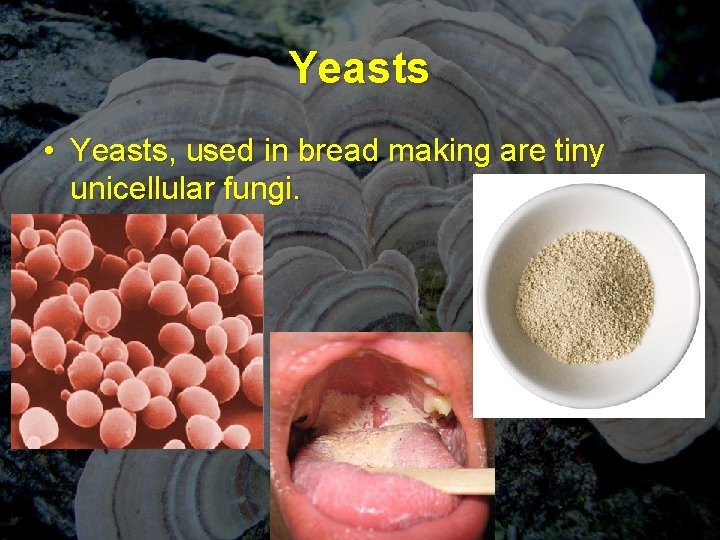
Yeasts • Yeasts, used in bread making are tiny unicellular fungi.
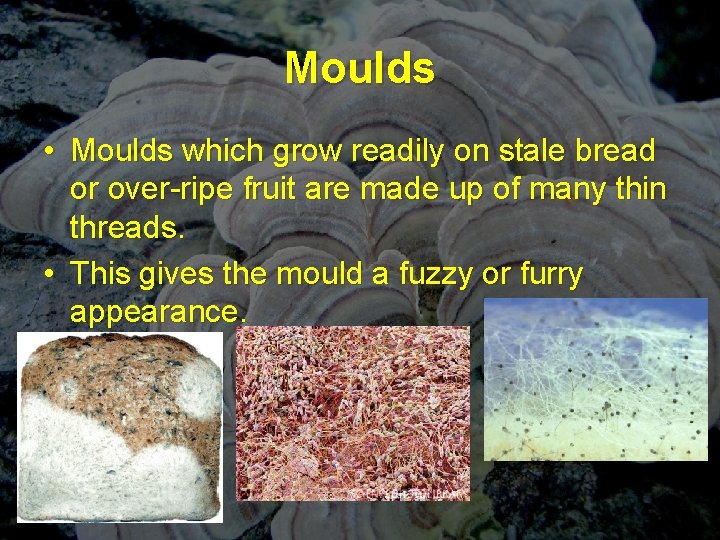
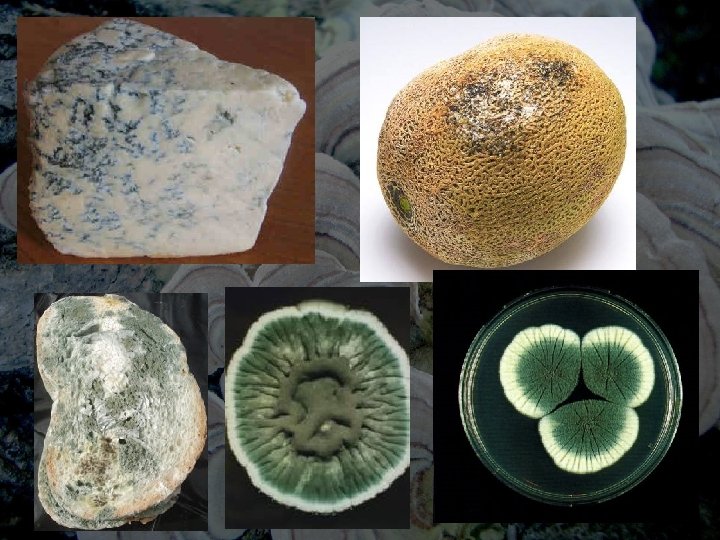
Moulds • Moulds which grow readily on stale bread or over-ripe fruit are made up of many thin threads. • This gives the mould a fuzzy or furry appearance.
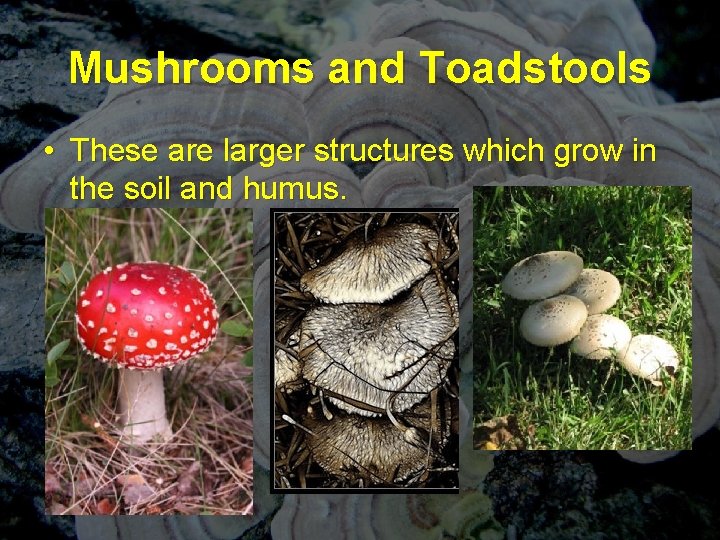
Mushrooms and Toadstools • These are larger structures which grow in the soil and humus.
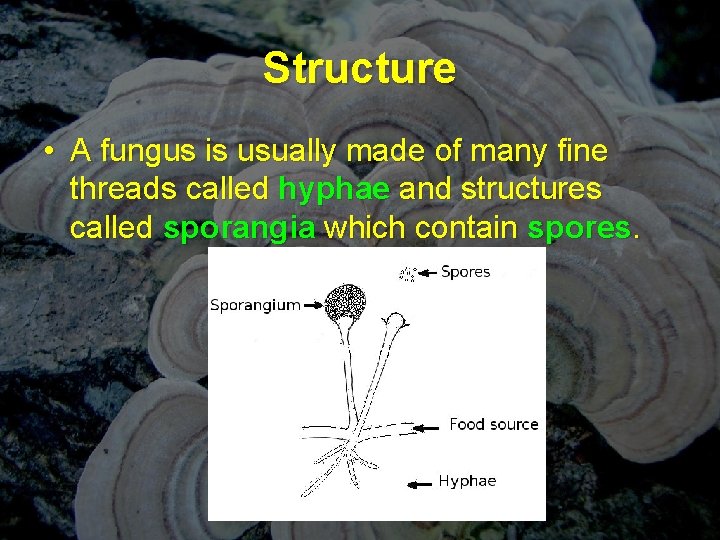
Structure • A fungus is usually made of many fine threads called hyphae and structures called sporangia which contain spores.
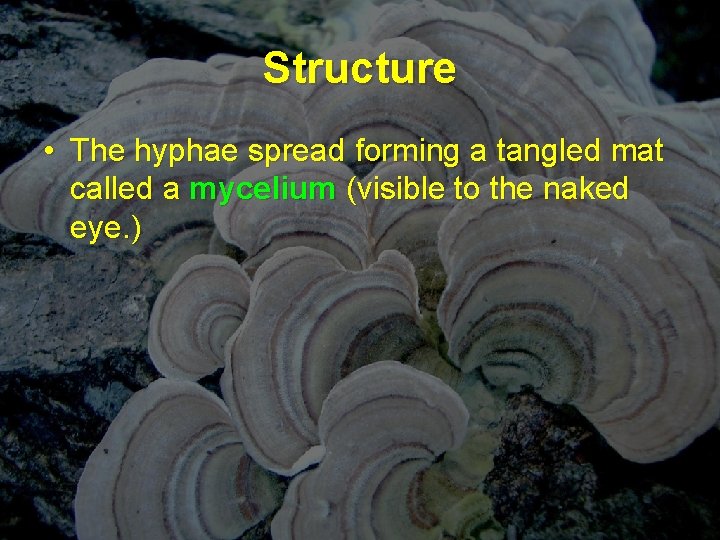
Structure • The hyphae spread forming a tangled mat called a mycelium (visible to the naked eye. )
Nutrition • Fungi grow on top of and down through their food source. • They obtain nutrients by releasing enzymes which break down the food so that it can be absorbed. • Each type of fungus can only grow on certain substances – E. g. bread mould can not grow on our skin.
Reproduction • Fungi grow from tiny particles called spores, which float in the air like dust. • Each sporangium contains thousands of spores. • Fungal spores can survive for years before they begin to grow.
Culturing Fungi • Fungi will grow readily in warm, moist places. • Fungi can be cultured on a nutrient agar plate if incubated between 20 – 40 o. C for 3 -4 days.
Helpful Effects of Fungi • Mushroom Farming – Mushrooms are the fleshy fruiting bodies of certain fungi. – The button and flat mushrooms from shops are both Agaricus bisporus, the buttons are simply immature fruit while the larger, flat ones are older.
Helpful Effects of Fungi • Making Bread – The purpose of using yeast is to produce the gas that makes bread rise. – Yeast does this by feeding on the sugars in flour, and expelling carbon dioxide in the process. (Fermentation) – This carbon dioxide forms thousands of balloon-like bubbles in the dough, and the bread rises.
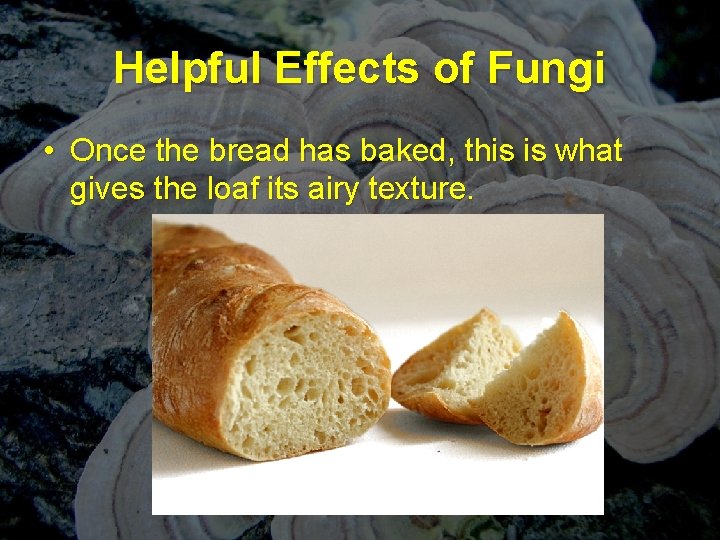
Helpful Effects of Fungi • Once the bread has baked, this is what gives the loaf its airy texture.
Helpful Effects of Fungi • Making Alcoholic Beverages – Although there is a distinction between beer and wine, they share one thing in common. They are the fermentation products of yeasts. – Fermentation can be summarized as: Yeast + Glucose Ethanol + CO 2
Helpful Effects of Fungi • Antibiotics – Fungi produce special chemicals which kill or slow the growth of other organisms such as bacteria which would otherwise compete with the fungus for nutrients. – We call these chemicals antibiotics.
Antibiotics • The best known antibiotic is penicillin which is produced by the mould fungus Penicillium. • Discovered by Sir Alexander Flemming in 1928. • Penicillin is still important today, but many variations are produced by mutant forms of the fungus. – Ampicillin; methicillin, oxacillin
Antibiotics • Antibiotics attack bacteria in a variety of ways: – Some disrupt the production of the cell wall, preventing the bacteria from reproducing, or causing them to burst open. – Others interfere with protein synthesis, thus arresting bacterial growth.