
Fungi Fungal diversity mushrooms molds yeast morels truffles
- Slides: 8
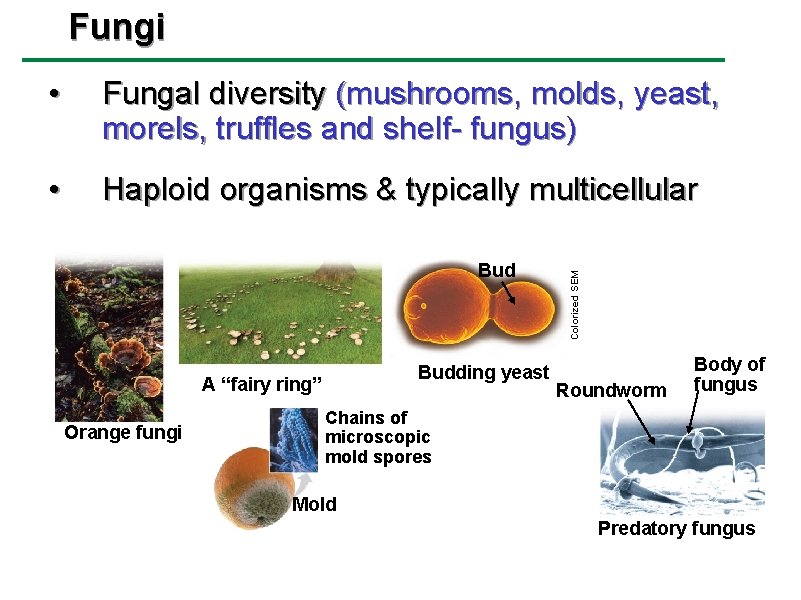
Fungi Fungal diversity (mushrooms, molds, yeast, morels, truffles and shelf- fungus) • Haploid organisms & typically multicellular Budding yeast A “fairy ring” Orange fungi Colorized SEM • Roundworm Body of fungus Chains of microscopic mold spores Mold Predatory fungus
Fungi • Fungi have unique forms and modes of nutrition • All are heterotrophs, decomposers and important nutrient recyclers Feed on decaying logs & leaf litters, animal corpses and wastes of living organisms & on aging food (bread and cheese) • Decompose & acquire nutrients by absorption Ø Ø Ø v Secrete enzymes outside their bodies Enzymes digest complex molecules into smaller subunits Smaller subunits diffuse through the cell wall into cells Liberate nutrients (C, N, P compounds & minerals) to the ecosystem (nutrient recyclers)
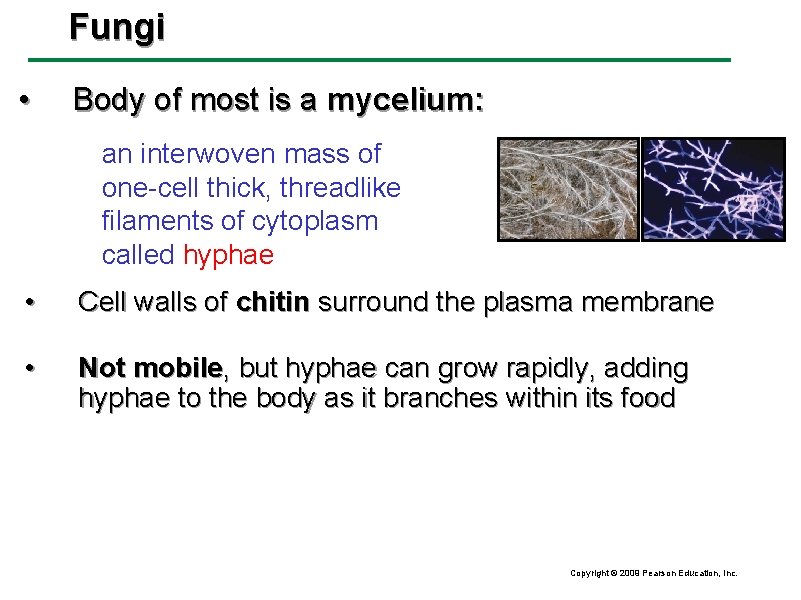
Fungi • Body of most is a mycelium: an interwoven mass of one-cell thick, threadlike filaments of cytoplasm called hyphae • Cell walls of chitin surround the plasma membrane • Not mobile, but hyphae can grow rapidly, adding hyphae to the body as it branches within its food Copyright © 2009 Pearson Education, Inc.
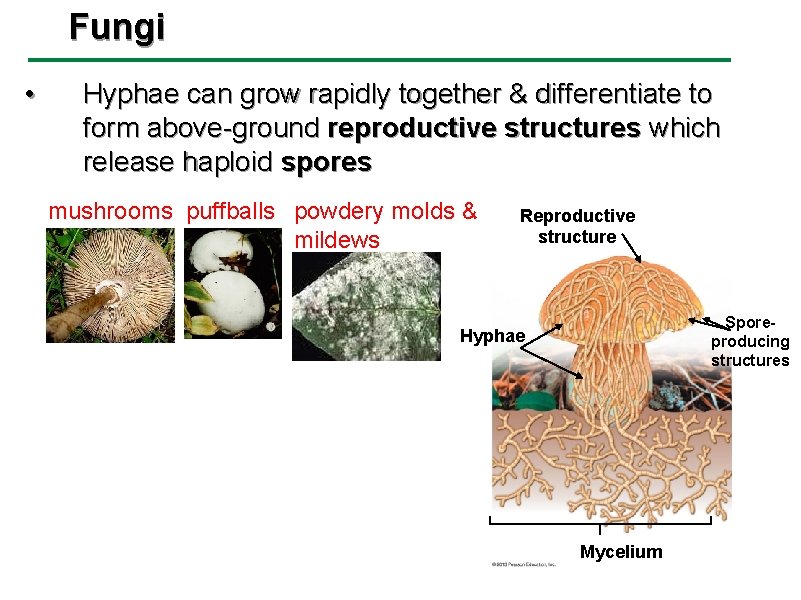
Fungi • Hyphae can grow rapidly together & differentiate to form above-ground reproductive structures which release haploid spores mushrooms puffballs powdery molds & mildews Reproductive structure Sporeproducing structures Hyphae Mycelium
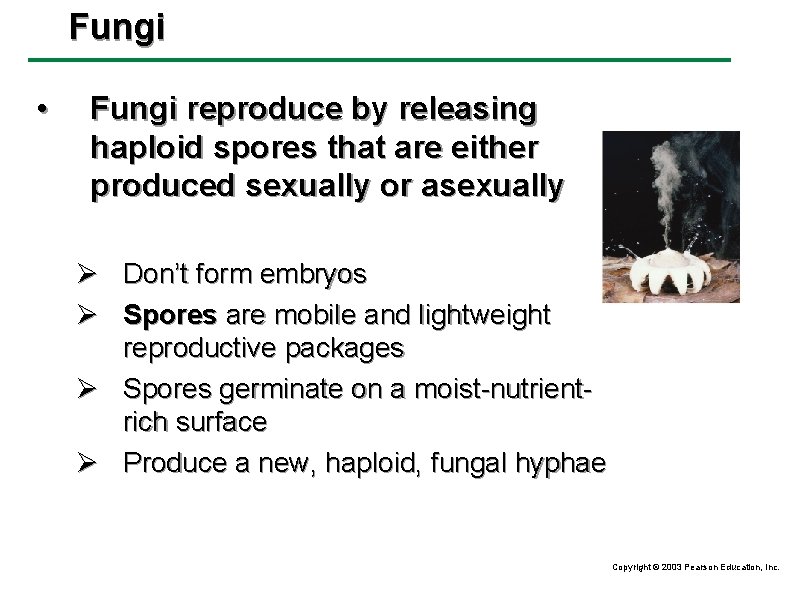
Fungi • Fungi reproduce by releasing haploid spores that are either produced sexually or asexually Ø Ø Don’t form embryos Spores are mobile and lightweight reproductive packages Ø Spores germinate on a moist-nutrientrich surface Ø Produce a new, haploid, fungal hyphae Copyright © 2003 Pearson Education, Inc.
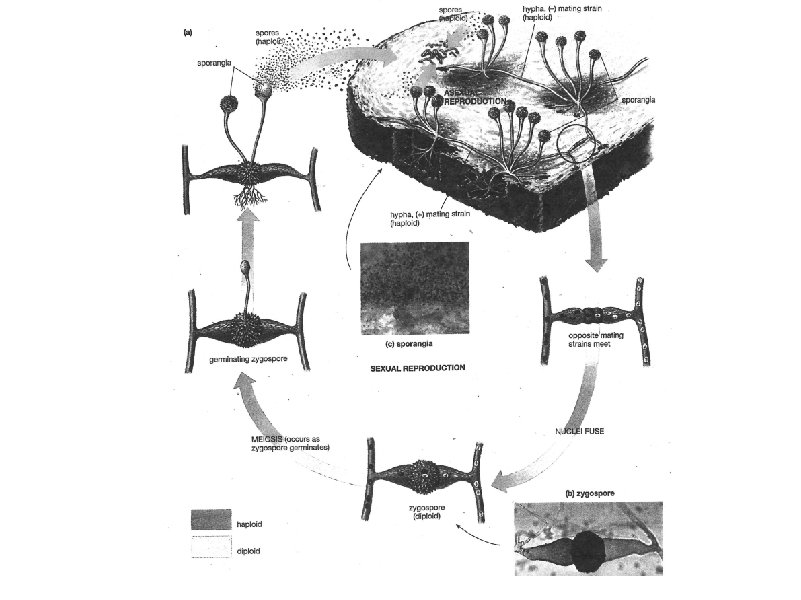
Sexual reproduction with spores Ø Fusion of two haploid nuclei of compatible mating types results in a diploid zygote Ø Diploid zygote undergoes meiosis Ø Haploid sexual spores are produced Ø Spores are dispersed and germinate
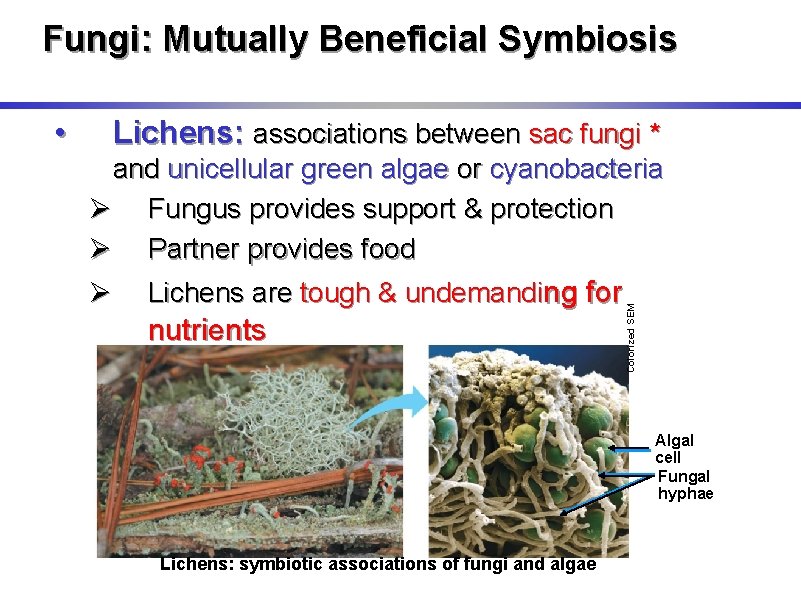
Fungi: Mutually Beneficial Symbiosis Lichens: associations between sac fungi * and unicellular green algae or cyanobacteria Ø Fungus provides support & protection Ø Partner provides food Ø Lichens are tough & undemanding for nutrients Colorized SEM • Algal cell Fungal hyphae Lichens: symbiotic associations of fungi and algae