
Fungi Common Types of Fungi What are Fungi
- Slides: 25
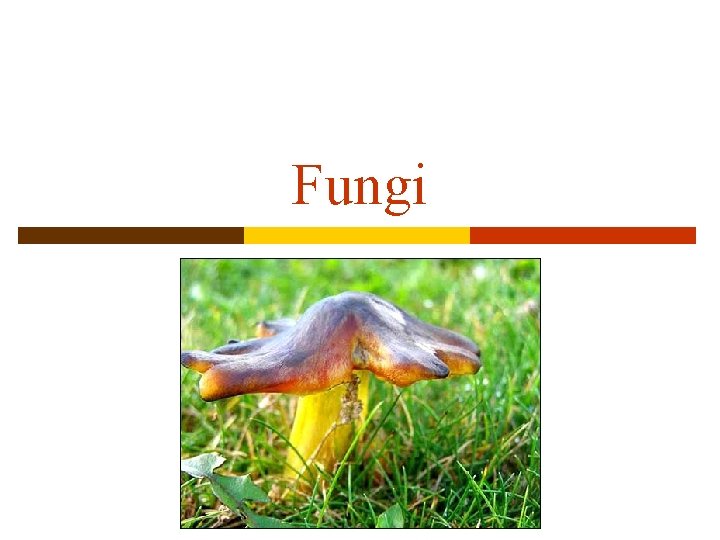
Fungi
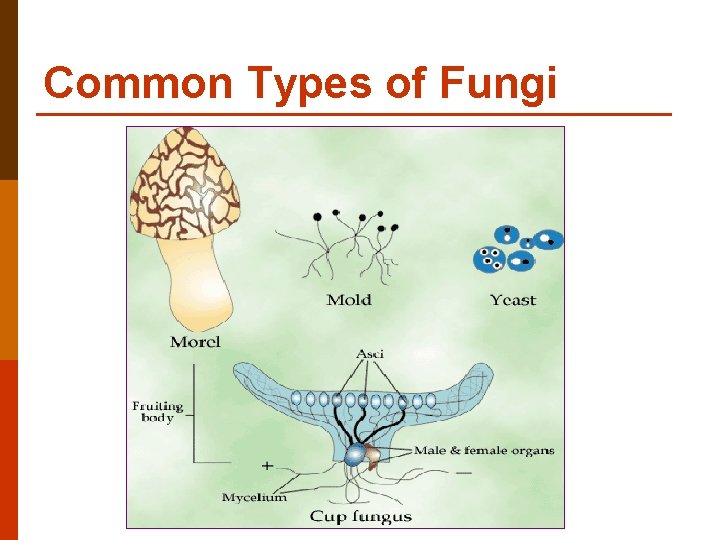
Common Types of Fungi
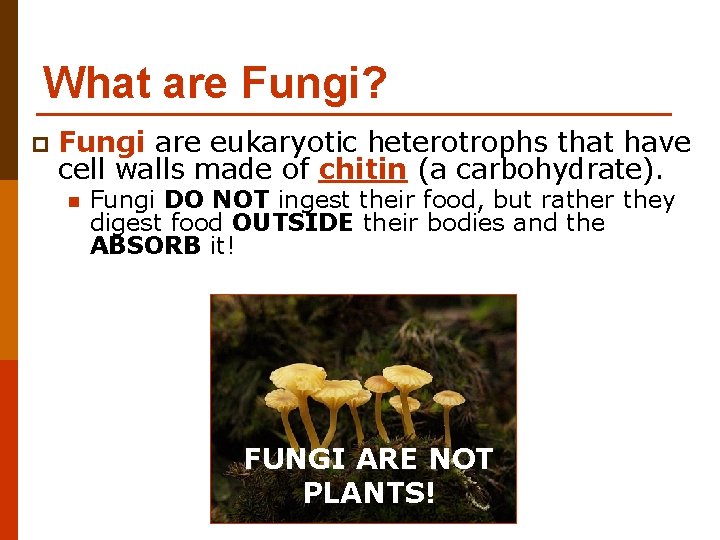
What are Fungi? p Fungi are eukaryotic heterotrophs that have cell walls made of chitin (a carbohydrate). n Fungi DO NOT ingest their food, but rather they digest food OUTSIDE their bodies and the ABSORB it! FUNGI ARE NOT PLANTS!
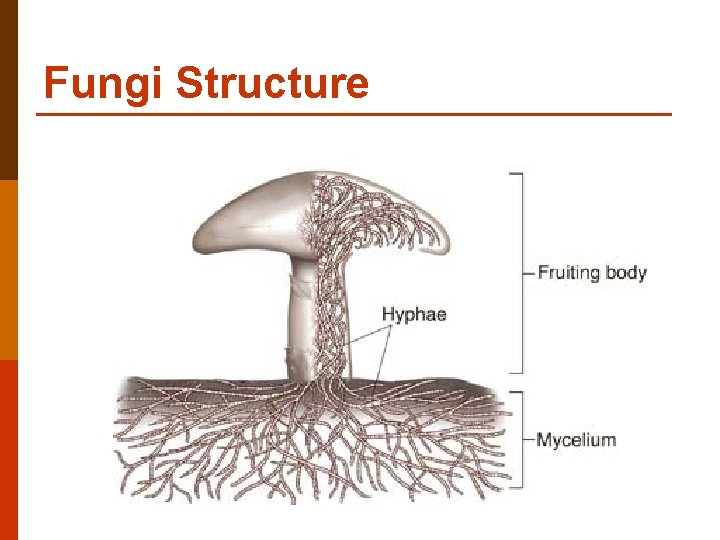
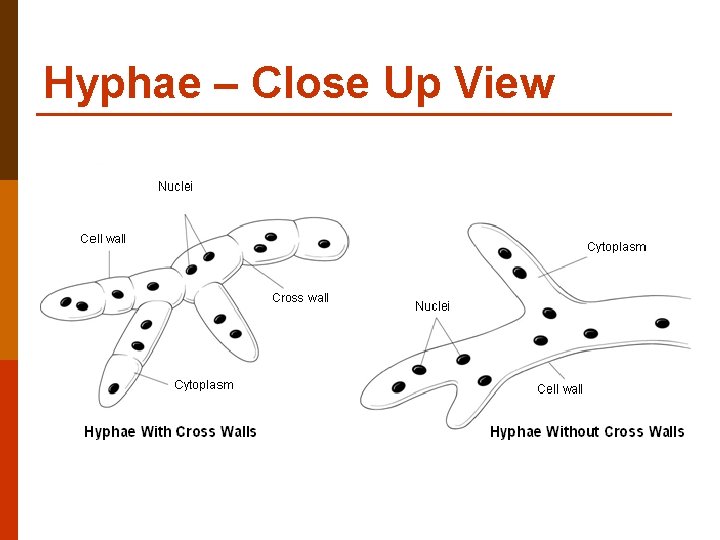
Structure & Function of Fungi p Except for yeasts, ALL fungi are multicellular and composed of tiny filaments called hyphae. n n n The bodies of multicellular fungi are composed of many hyphae tangled together into a thick mass called a mycelium. The mycelium is well suited to absorb food. The fruiting body is a reproductive structure that develops from a mycelium that grows below the surface of the ground.
Fungi Structure
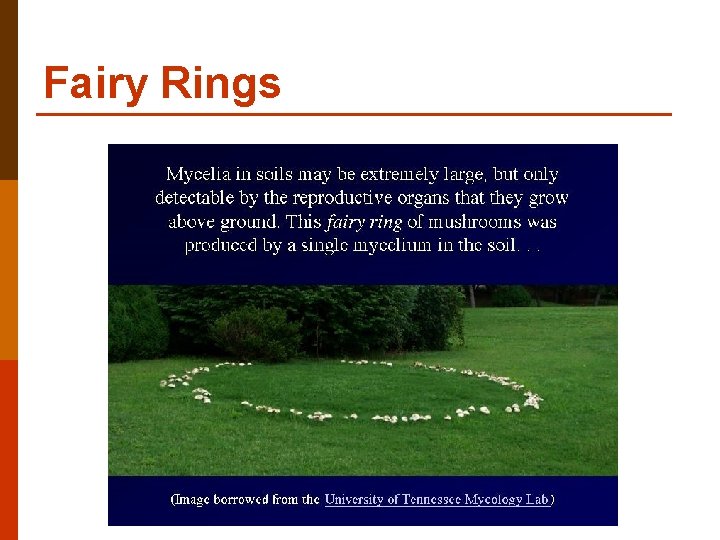
Fairy Rings
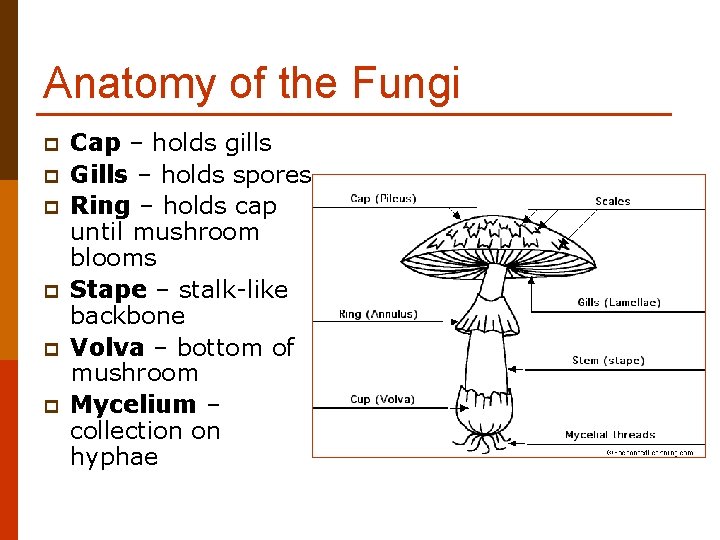
Anatomy of the Fungi p p p Cap – holds gills Gills – holds spores Ring – holds cap until mushroom blooms Stape – stalk-like backbone Volva – bottom of mushroom Mycelium – collection on hyphae
Hyphae – Close Up View
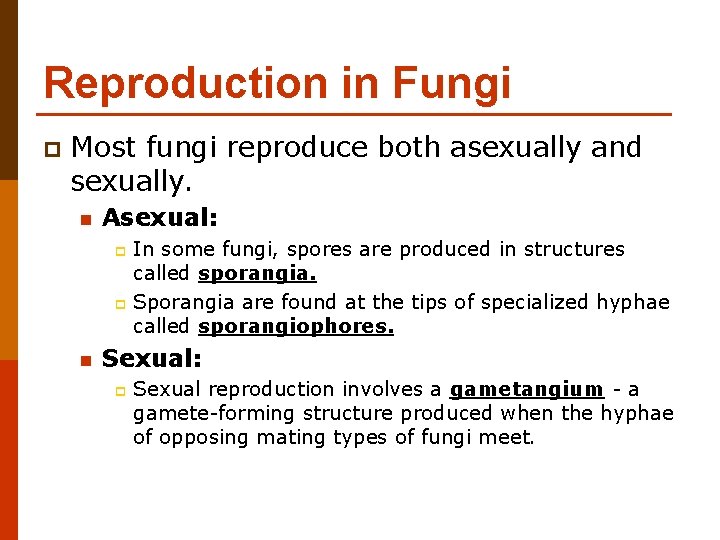
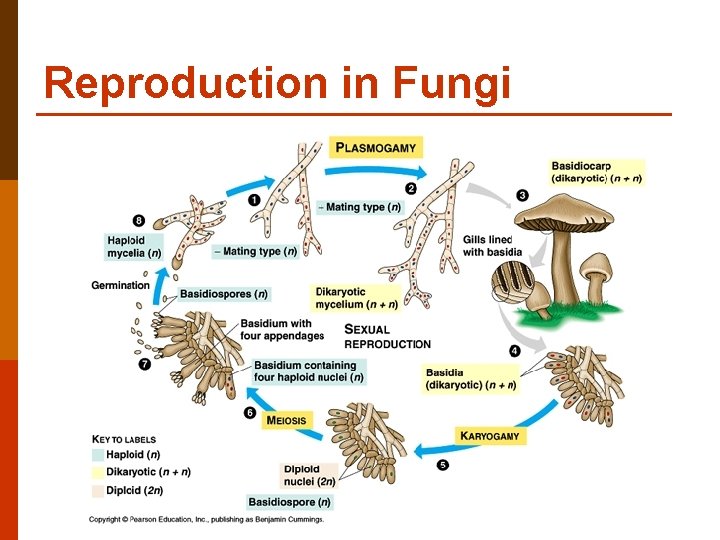
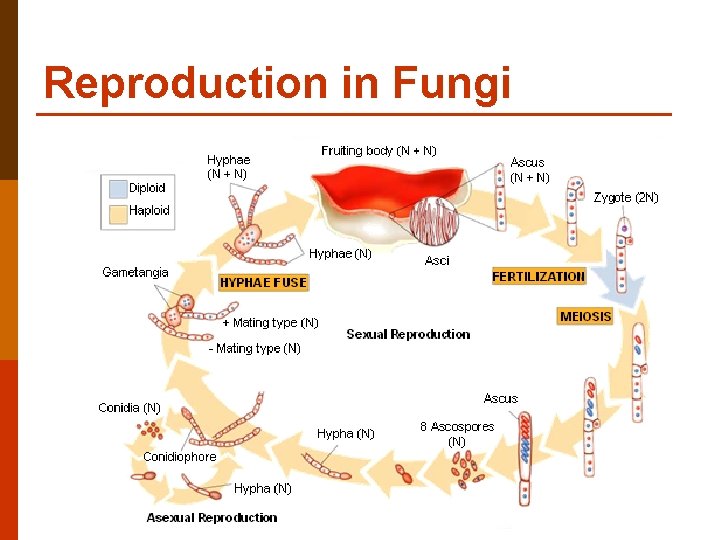
Reproduction in Fungi p Most fungi reproduce both asexually and sexually. n Asexual: In some fungi, spores are produced in structures called sporangia. p Sporangia are found at the tips of specialized hyphae called sporangiophores. p n Sexual: p Sexual reproduction involves a gametangium - a gamete-forming structure produced when the hyphae of opposing mating types of fungi meet.
Reproduction in Fungi
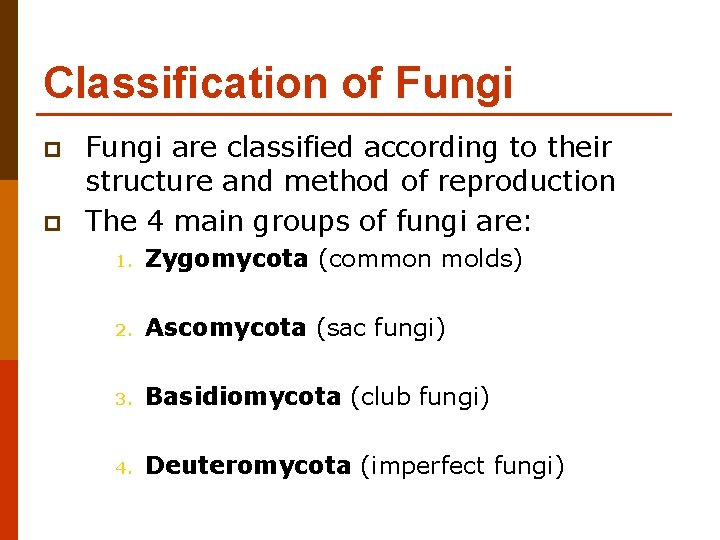
Classification of Fungi p p Fungi are classified according to their structure and method of reproduction The 4 main groups of fungi are: 1. Zygomycota (common molds) 2. Ascomycota (sac fungi) 3. Basidiomycota (club fungi) 4. Deuteromycota (imperfect fungi)
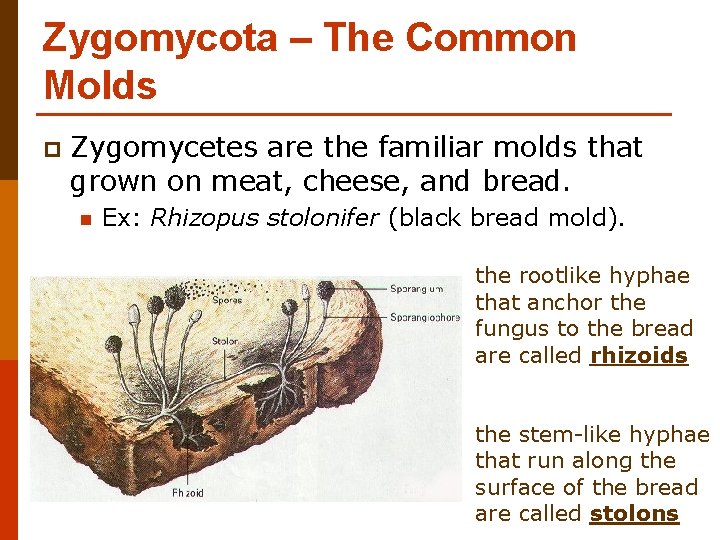
Zygomycota – The Common Molds p Zygomycetes are the familiar molds that grown on meat, cheese, and bread. n Ex: Rhizopus stolonifer (black bread mold). the rootlike hyphae that anchor the fungus to the bread are called rhizoids the stem-like hyphae that run along the surface of the bread are called stolons
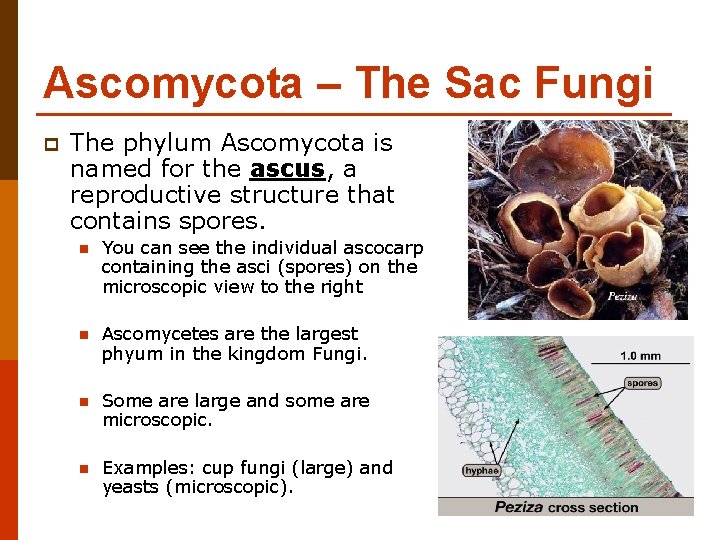
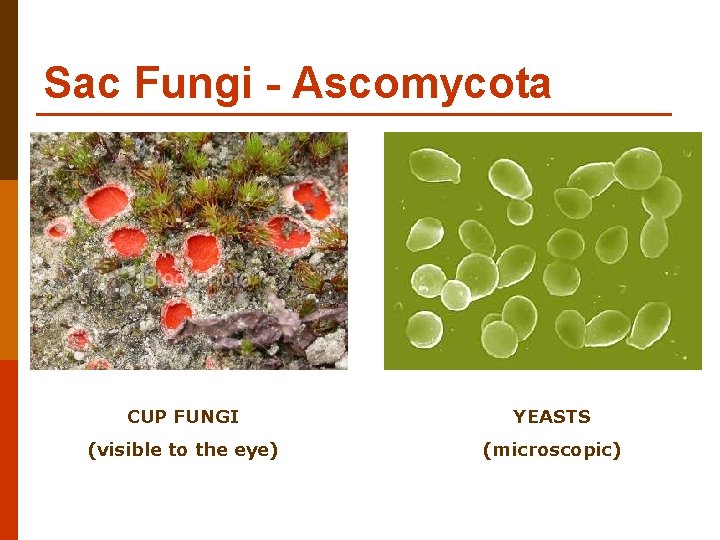
Ascomycota – The Sac Fungi p The phylum Ascomycota is named for the ascus, a reproductive structure that contains spores. n You can see the individual ascocarp containing the asci (spores) on the microscopic view to the right n Ascomycetes are the largest phyum in the kingdom Fungi. n Some are large and some are microscopic. n Examples: cup fungi (large) and yeasts (microscopic).
Sac Fungi - Ascomycota CUP FUNGI YEASTS (visible to the eye) (microscopic)
Reproduction in Fungi
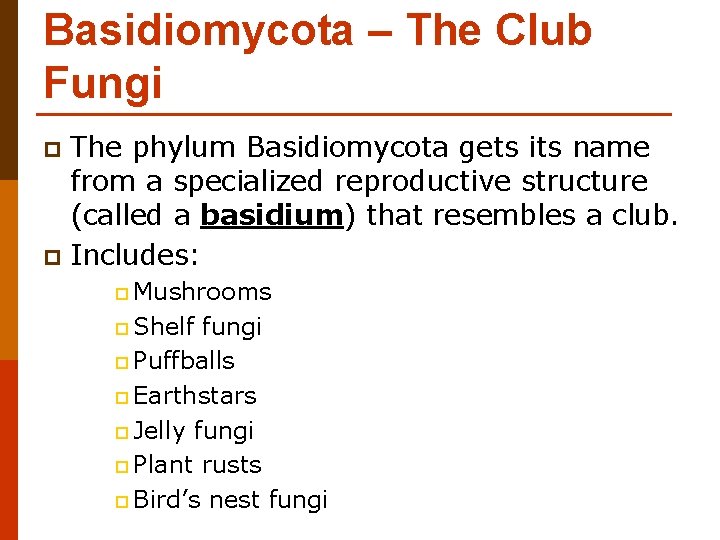
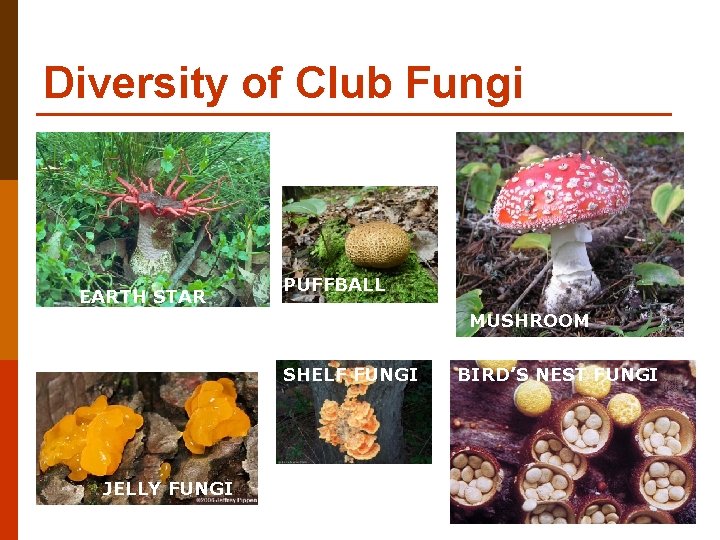
Basidiomycota – The Club Fungi The phylum Basidiomycota gets its name from a specialized reproductive structure (called a basidium) that resembles a club. p Includes: p p Mushrooms p Shelf fungi p Puffballs p Earthstars p Jelly fungi p Plant rusts p Bird’s nest fungi
Diversity of Club Fungi EARTH STAR PUFFBALL MUSHROOM SHELF FUNGI JELLY FUNGI BIRD’S NEST FUNGI
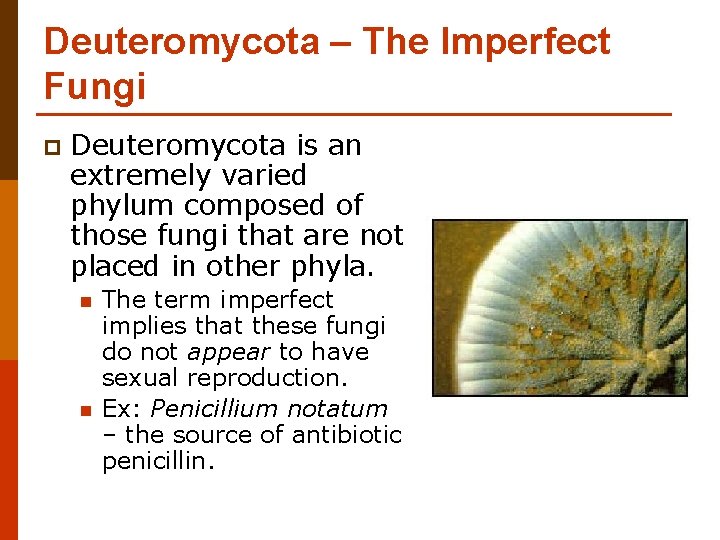
Deuteromycota – The Imperfect Fungi p Deuteromycota is an extremely varied phylum composed of those fungi that are not placed in other phyla. n n The term imperfect implies that these fungi do not appear to have sexual reproduction. Ex: Penicillium notatum – the source of antibiotic penicillin.
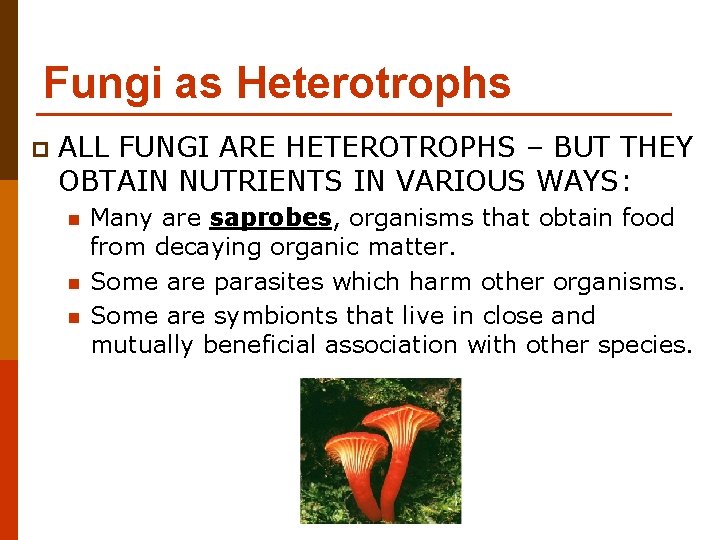
Fungi as Heterotrophs p ALL FUNGI ARE HETEROTROPHS – BUT THEY OBTAIN NUTRIENTS IN VARIOUS WAYS: n n n Many are saprobes, organisms that obtain food from decaying organic matter. Some are parasites which harm other organisms. Some are symbionts that live in close and mutually beneficial association with other species.
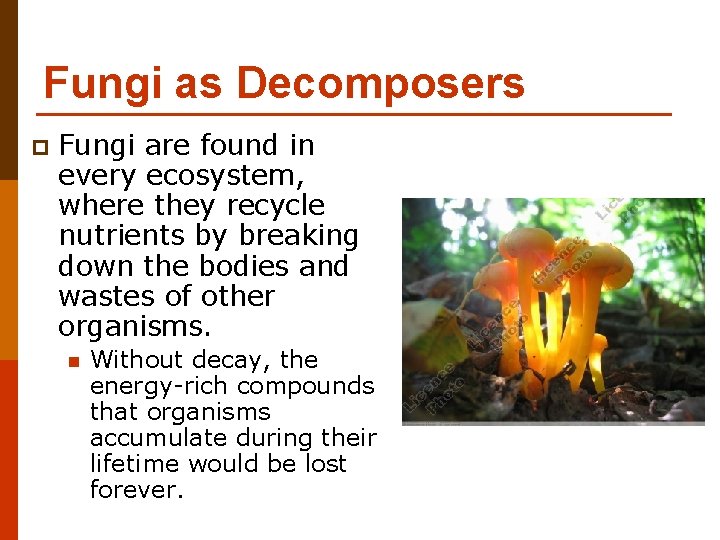
Fungi as Decomposers p Fungi are found in every ecosystem, where they recycle nutrients by breaking down the bodies and wastes of other organisms. n Without decay, the energy-rich compounds that organisms accumulate during their lifetime would be lost forever.
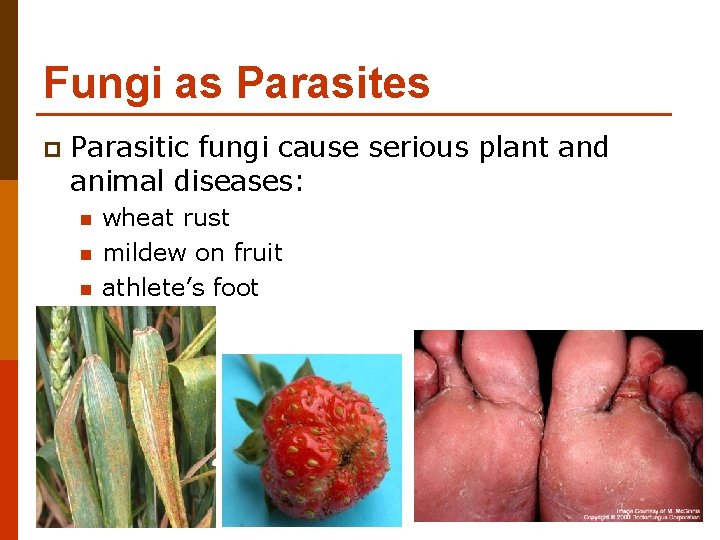
Fungi as Parasites p Parasitic fungi cause serious plant and animal diseases: n n n wheat rust mildew on fruit athlete’s foot
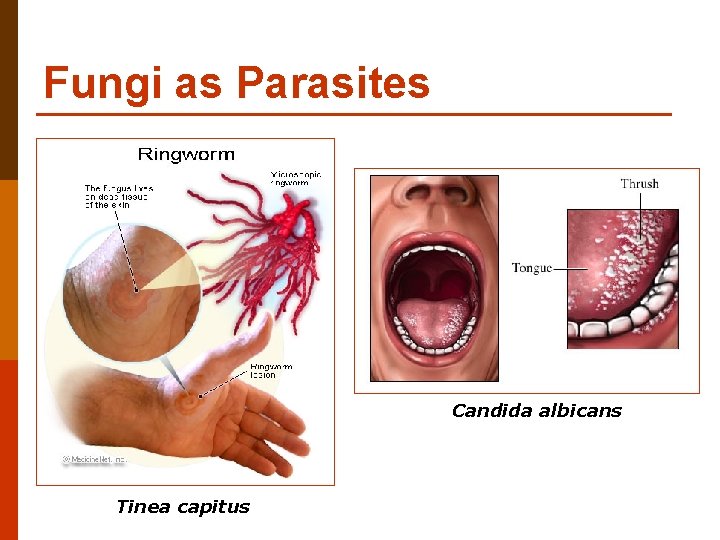
Fungi as Parasites Candida albicans Tinea capitus
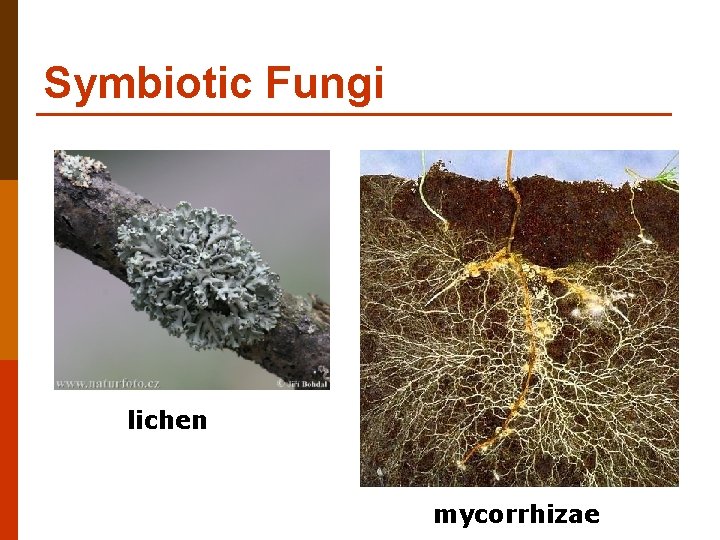
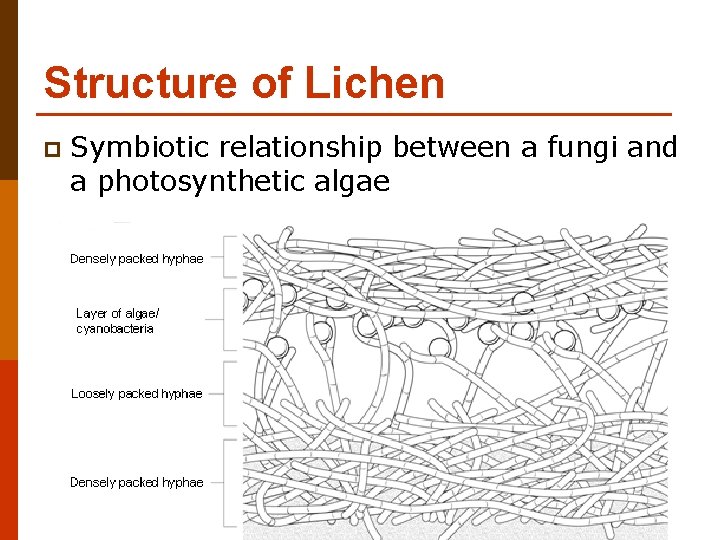
Symbiotic Fungi p Lichens n n n p A symbiotic associations between a fungus and a photosynthetic organism. Lichen can grow on dry, bare rock and are often the first organisms to inhabit an area (pioneer species). The lichen break down the bare rock, allowing other plants to grow. Mycorrhizae n n n A symbiotic associations of plant roots and fungi. Fungi increases the surface area of the plants roots. Its presence is often necessary for the growth of many plants.
Symbiotic Fungi lichen mycorrhizae
Structure of Lichen p Symbiotic relationship between a fungi and a photosynthetic algae