
Fundraising for your Mission Christian Giving principles applied

- Slides: 24
Fundraising for your Mission Christian Giving principles applied to Philanthropic Fundraising
Press. Go Established by Assembly 2008 with vision that every church or presbytery committed to a growth project would receive the resources it needs. Now three strands: • Inspiring Mission • Building Capacity • Seed Funding for mission ventures Press. Go Board + Catalyst = team Contact Lisa Wells 027 4455 723 or lisaw@Presbyterian. org. nz www. vision 2 missionblog. wordpress. com
Christian Giving • • Starting point for all funding discussions. Not dependant on “needs” of congregation, but on our own need to give as part of our commitment to God. Not a “membership levy” implying expected benefit for giver. Requires prayerful consideration, not token response.
Fostering an attitude of generosity • All we have and are comes from God • How we use our money shows where our priorities are • Giving is important part of our discipleship
Fostering an attitude of generosity We are to give: Generously (2 Corinthians 9: 6) Cheerfully (2 Corinthians 9: 7) Systematically (1 Cor 16: 2) Fearlessly (2 Corinthians 9: 8, 9)
Fostering an attitude of generosity • We don’t have a shortage of money, we have a shortage of imagination • Financial woes are an indicator of spiritual weakness
Mission questions … • What does Christ want us to do? • Who are we called to serve? • What strengths do we have that can be built on? • What opportunities are there in our community? • What have I been given to show Christ’s love to my community?
Missional Imagination • What is God up to in my neighbourhood? • Learning and failing • Curiosity and wondering • Mission provides focus for fundraising
Mission Action Budget • Shows what mission action is planned • Is easier to talk about than a list of numbers and cost centres • Wraps the functional in the mission • Helps with understanding parish priorities • Involves everyone in decisionmaking (and thus feel ownership of means and ends) • Focuses outward rather than inward • Has potential to grow • Is oriented towards the future
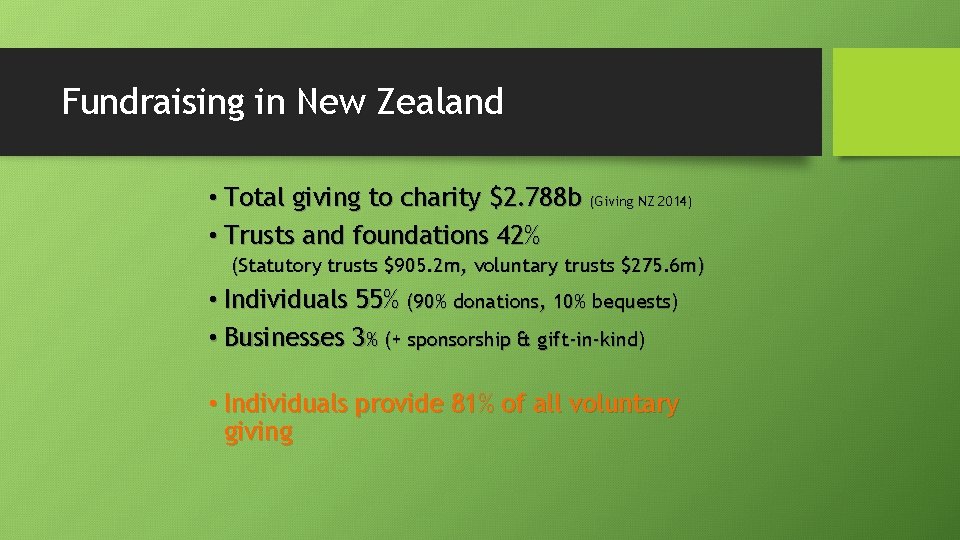
Fundraising in New Zealand • Total giving to charity $2. 788 b (Giving NZ 2014) • Trusts and foundations 42% (Statutory trusts $905. 2 m, voluntary trusts $275. 6 m) • Individuals 55% (90% donations, 10% bequests) • Businesses 3% (+ sponsorship & gift-in-kind) • Individuals provide 81% of all voluntary giving
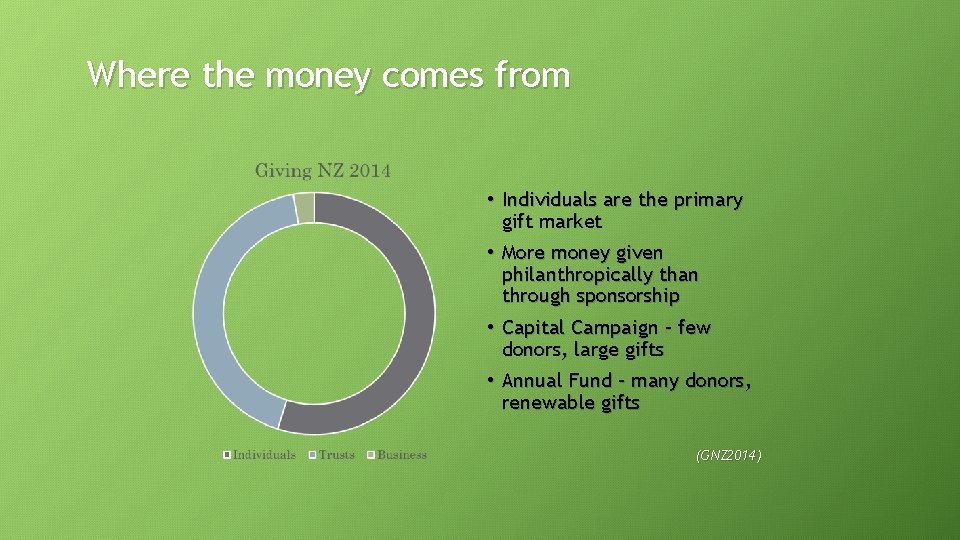
Where the money comes from • Individuals are the primary gift market • More money given philanthropically than through sponsorship • Capital Campaign – few donors, large gifts • Annual Fund – many donors, renewable gifts (GNZ 2014)
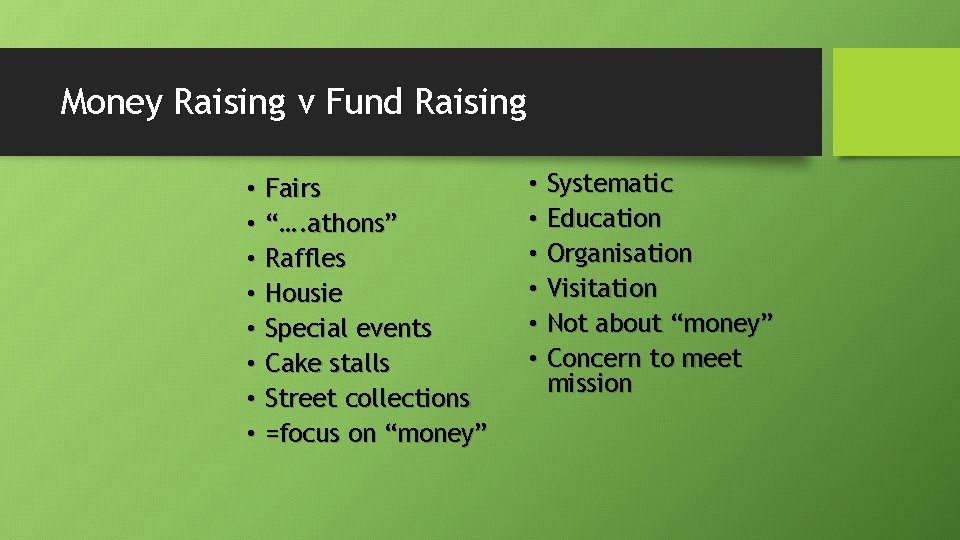
Money Raising v Fund Raising • Fairs • “…. athons” • Raffles • Housie • Special events • Cake stalls • Street collections • =focus on “money” • Systematic • Education • Organisation • Visitation • Not about “money” • Concern to meet mission
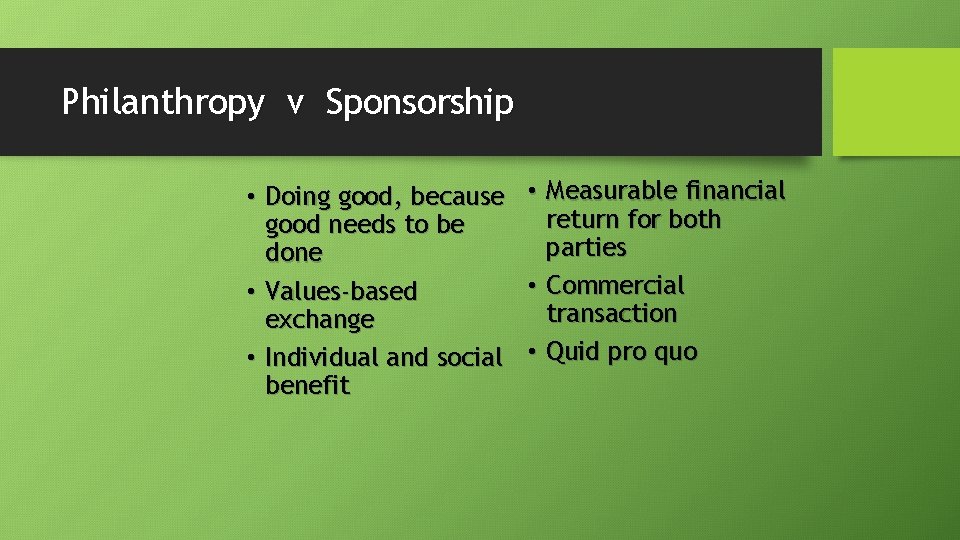
Philanthropy v Sponsorship • Doing good, because good needs to be done • Values-based exchange • Individual and social benefit • Measurable financial return for both parties • Commercial transaction • Quid pro quo
The Annual Fund • Building block for all other fundraising • Aim to involve, inform and educate constituency • Accountability to constituency / community • Development process • Aim to build large number of donors who give reguarly • Techniques: DM, phone, email etc
Requirements for successful fundraising • A project that is urgent, relevant and important • A need that is acknowledged by the constituency • Willing, committed volunteer workers • Leadership prepared to set an example • Individuals who will be givers
Characteristics of Capital Campaigns • Short in duration • Intense in effort (a whirlwind) • Task is broken into achievable tasks • Pledges are sought, not cash gifts • Precise management structure • Volunteers represent the organisation • All asking is personal
Deferred gifts • Bequest • Legacy • Endowment • Insurance policy • Family Trust • other
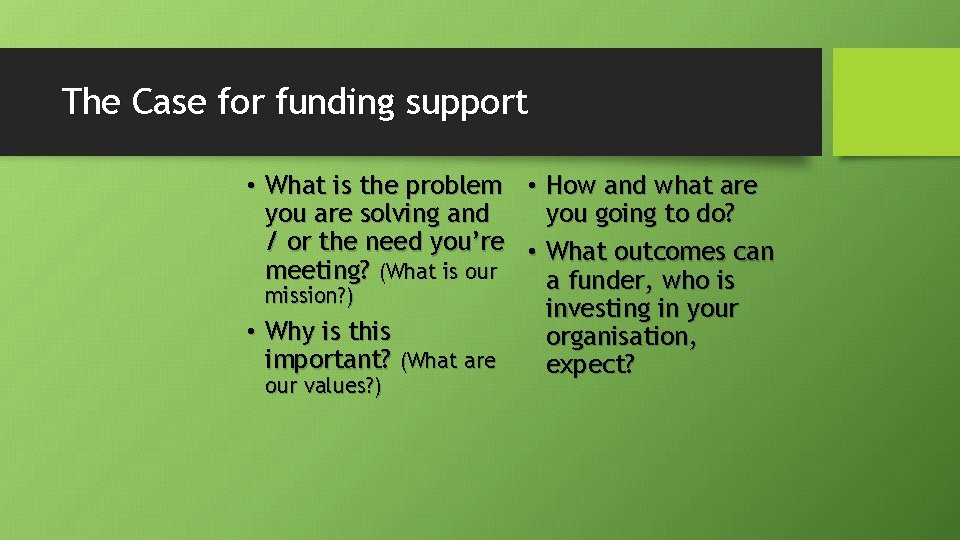
The Case for funding support • What is the problem • How and what are you are solving and you going to do? / or the need you’re • What outcomes can meeting? (What is our a funder, who is mission? ) investing in your • Why is this organisation, important? (What are expect? our values? )
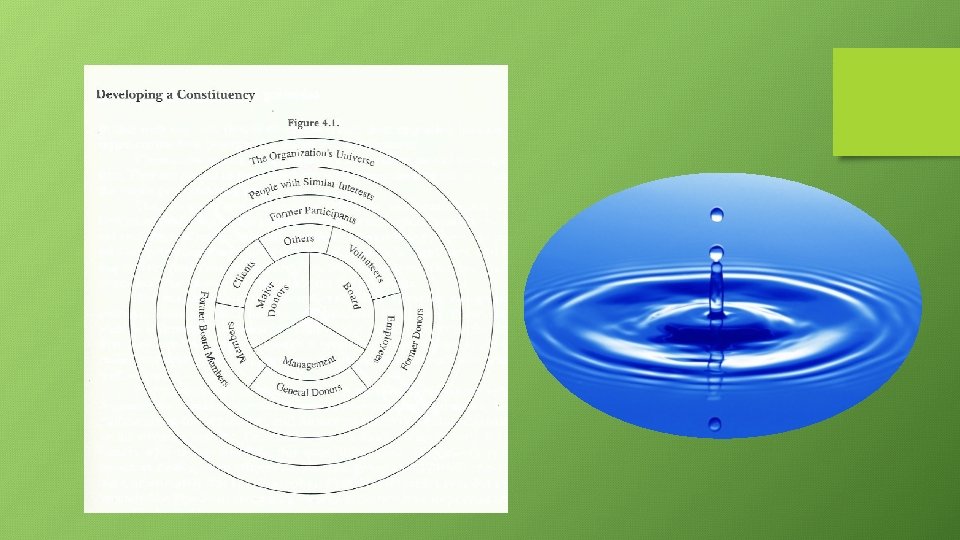
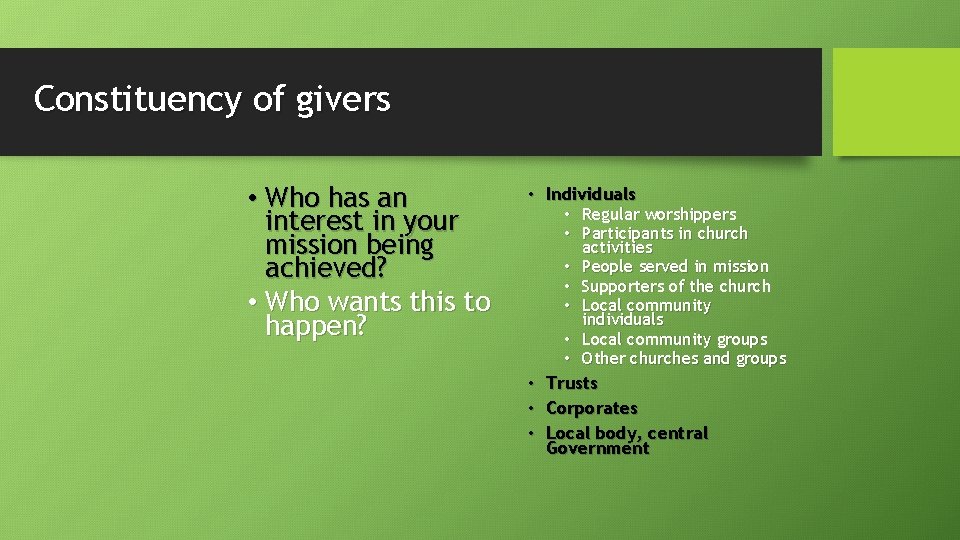
Constituency of givers • Who has an interest in your mission being achieved? • Who wants this to happen? • Individuals • Regular worshippers • Participants in church activities • People served in mission • Supporters of the church • Local community individuals • Local community groups • Other churches and groups • Trusts • Corporates • Local body, central Government
Top reason people DON’T give? ?
Why people give: 6 top reasons 1) 2) 3) 4) 5) 6) Belief in Mission of organisation Community responsibility / civic pride Fiscal stability of organisation Regard for staff leadership Regard for volunteer leadership Service on a Board or committee
Effective asking … • One to one most effective • Asking provides opportunity to learn why donor will give! • Tell your story • Reason most people don’t give?
Where do you go for information? • www. fis. org. nz • www. dia. govt. nz (Lottery, COGS, gaming trusts) • www. tindall. org. nz (Presbyterian Support is faith funding manager) • www. presbyterian. org. nz (Presbyterian Foundation, Press. Go, Giving & Getting) • Internet search • www. philanthropy. org. nz • Library, Citizens Advice, DIA service centre • Local body community department • Local Lawyers • Organisations – statutory grants and corporate grants • www. strategicgrants. co. nz • www. fundraising. org. nz