
FUNDRAISING 101 A SIX STEP ACTION PLAN TO
- Slides: 14
FUNDRAISING 101 A SIX STEP ACTION PLAN TO TURN VISION INTO RESULTS
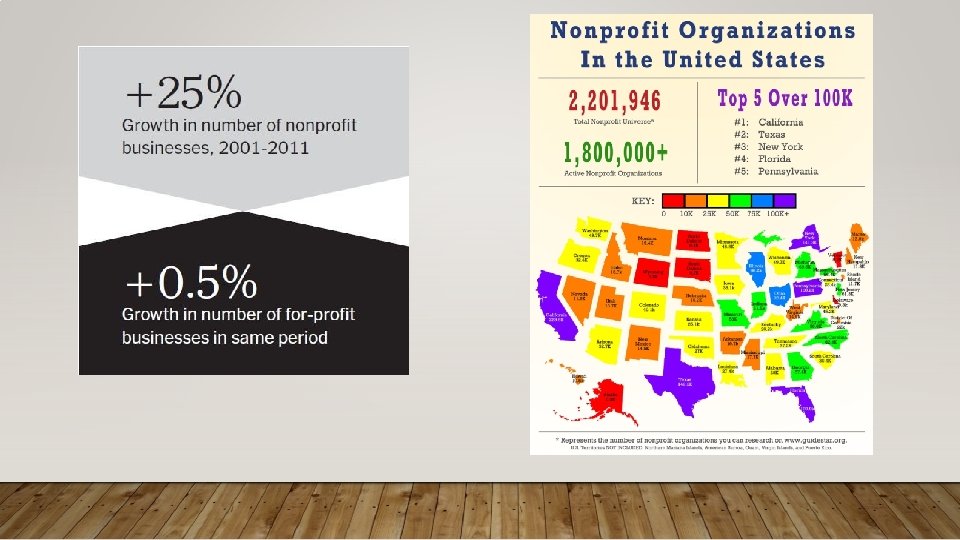
BROTHER, CAN YOU SPARE A DIME? • A not-for-profit organization is defined as a corporation or an association that conducts business for the benefit of the general public, without shareholders and without a profit motive. • There are more than 1. 8 million not-for-profit organizations in the United States. • This includes a variety of entities such as public charities, private foundations, fraternal organizations, schools, etc. • In Iowa, there are more than 38, 000 active not-for-profits registered with the Secretary of State.
BY AND LARGE, AMERICA IS A NATION OF GIVERS • In 2016, Americans donated more than $390 billion to not-for-profit organizations. • Individual contributions comprised 72% of this total ($282 billion) • 2016 giving increased 4. 2% over the previous year • The average household gave $2, 520 to charity in 2016 • Iowans give more than $7 billion to charity each year • The average is 3. 03% of household income • The Des Moines metro area ranked #7 in a 2016 study of most generous cities, with 87% donating to some form of not-for-profit. Data Source – National Philanthropic Trust
WHY PEOPLE DON’T LIKE TO FUNDRAISE • The “M” word • Quid pro Whoa! • Where do I begin? • It’s not you, it’s your request (and kinda you) • I don’t know any rich people • Mirror, mirror, on the wall
HOW TO TURN INTENTION INTO ACTION • Creating a fundraising plan • A good fundraising plan has six key elements • Defining the project • Setting the goal • Mission check • Detail planning • Setting the timeline • Measuring outcomes
DEFINING THE PROJECT • Establishing a clear, specific and unambiguous objective for your fundraising effort will provide focus to the team, and a sense of scope to your prospects. • Some questions to ask in this phase: • Is the project realistic? “End world hunger” is noble, but is it achievable by your group? • Who are your potential/necessary partners? Synergistic organizations, government agencies? • Will you just fundraise, or will you also execute? Key for determining division of responsibilities • How will this project benefit the public at large? • How will we define success?
SETTING THE GOAL • More than just the dollars you hope to raise, goal setting begins the strategic process of identifying, cultivating, and soliciting prospective donors. • Some sample goals may include: • By *month* we will identify a list of *XX* prospects capable of making a gift of at least *YY* • Number of initial and follow up contacts made with delivery of proposals • Projected end date for the fundraising phase, or initiation of the program phase • How much money do we need to fully fund this project?
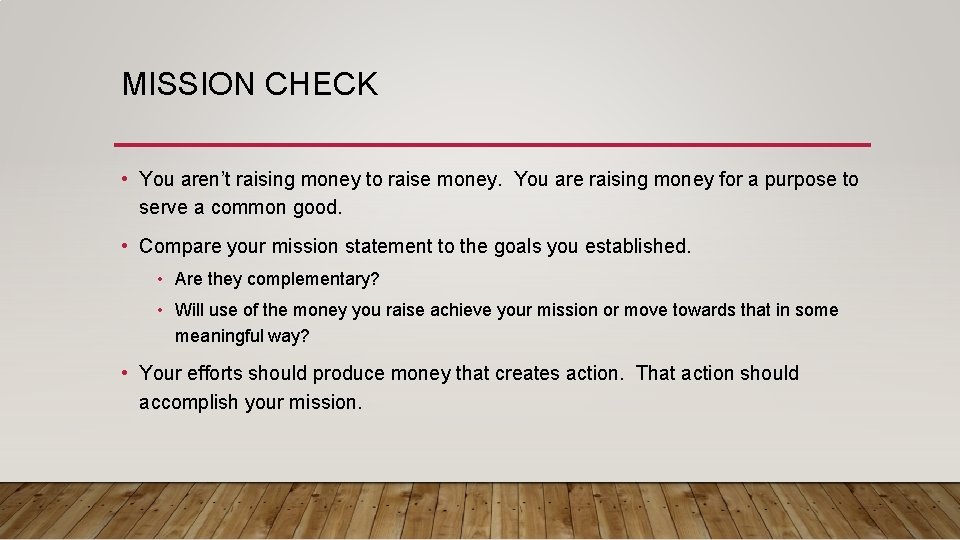
MISSION CHECK • You aren’t raising money to raise money. You are raising money for a purpose to serve a common good. • Compare your mission statement to the goals you established. • Are they complementary? • Will use of the money you raise achieve your mission or move towards that in some meaningful way? • Your efforts should produce money that creates action. That action should accomplish your mission.
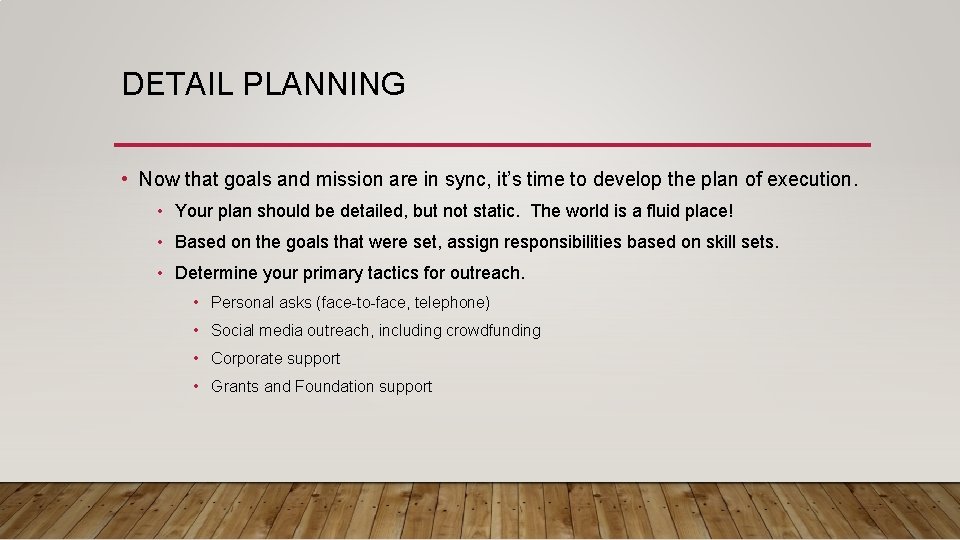
DETAIL PLANNING • Now that goals and mission are in sync, it’s time to develop the plan of execution. • Your plan should be detailed, but not static. The world is a fluid place! • Based on the goals that were set, assign responsibilities based on skill sets. • Determine your primary tactics for outreach. • Personal asks (face-to-face, telephone) • Social media outreach, including crowdfunding • Corporate support • Grants and Foundation support
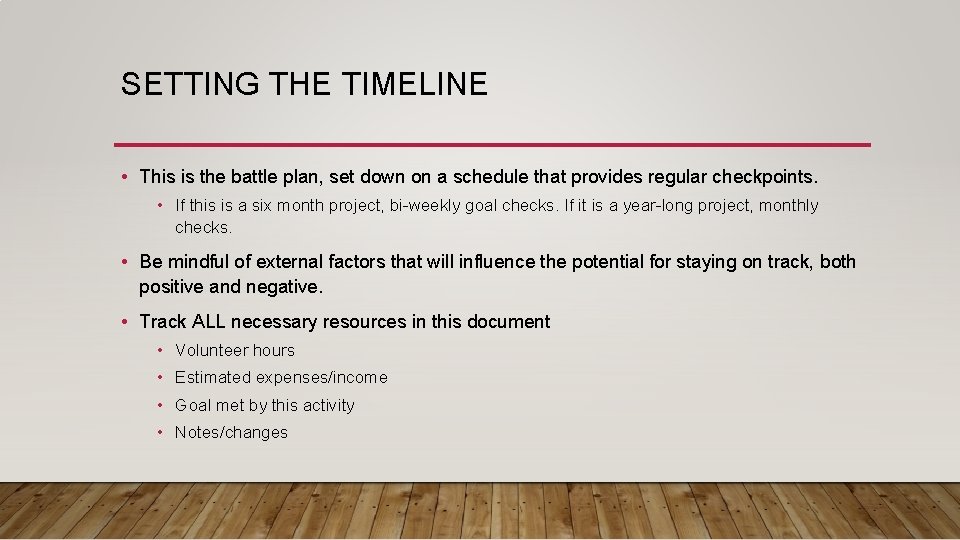
SETTING THE TIMELINE • This is the battle plan, set down on a schedule that provides regular checkpoints. • If this is a six month project, bi-weekly goal checks. If it is a year-long project, monthly checks. • Be mindful of external factors that will influence the potential for staying on track, both positive and negative. • Track ALL necessary resources in this document • Volunteer hours • Estimated expenses/income • Goal met by this activity • Notes/changes
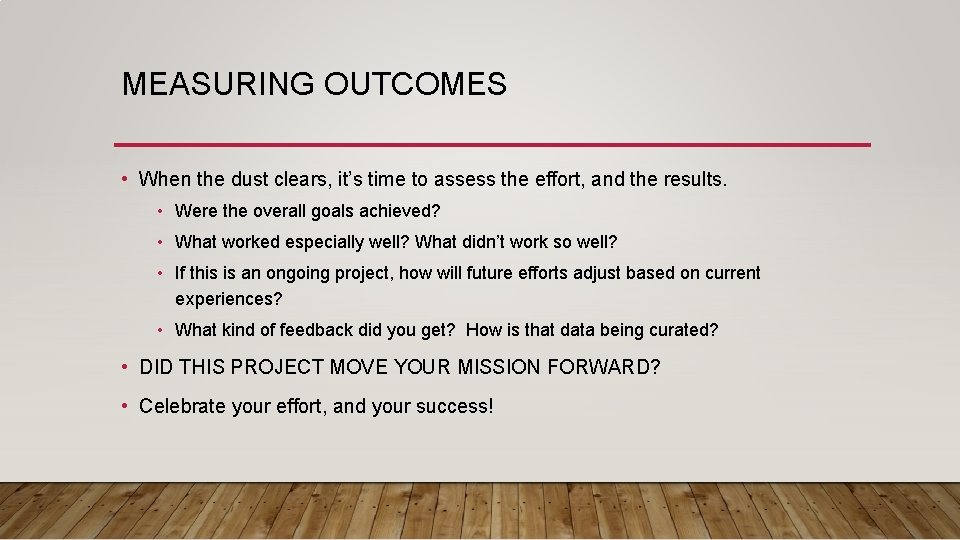
MEASURING OUTCOMES • When the dust clears, it’s time to assess the effort, and the results. • Were the overall goals achieved? • What worked especially well? What didn’t work so well? • If this is an ongoing project, how will future efforts adjust based on current experiences? • What kind of feedback did you get? How is that data being curated? • DID THIS PROJECT MOVE YOUR MISSION FORWARD? • Celebrate your effort, and your success!
WE GIVE THANKS TO THEE, O DONORS (AND VOLUNTEERS) • There is no surer way to guarantee a one-time donation than to let the first one go unthanked. • Recognition and appreciation should be a part of every fundraising plan • Have a recognition plan in place before solicitations begin • Don’t forget to include volunteers in your recognition plan. Time can be just as critical as treasure in achieving your goals.
SUMMARY • Define • Determine • Verify • Detail • Schedule • Vet • Thank, thank