
Fundamentals of Systems Engineering Human Systems Integration Dr




- Slides: 48
Fundamentals of Systems Engineering Human Systems Integration Dr. Ravi Vaidyanathan rvaidyan@nps. edu
Objectives • • HSI conceptual models Top-down view of HSI in Do. D Apply systems analysis approach to HSI process Examine operational HSI applications • NOTE: This presentation is mostly a compilation of other people’s ideas 2
Challenges in discussing HSI • Lack of formalism – Language – Processes • HSI workforce fragmented by specialty • Resulting lack of specificity regarding HSI INCOSE consensus def (2007): An interdisciplinary technical and management process for integrating human considerations within and across all system elements; an essential enabler to systems engineering. 3
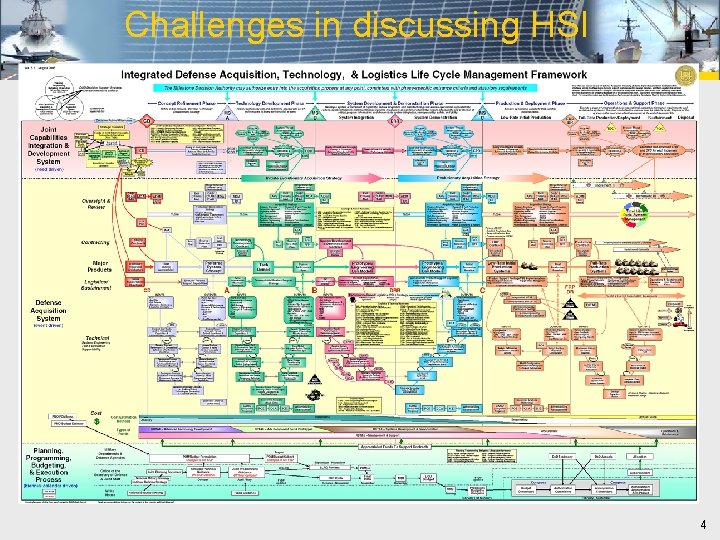
Challenges in discussing HSI 4
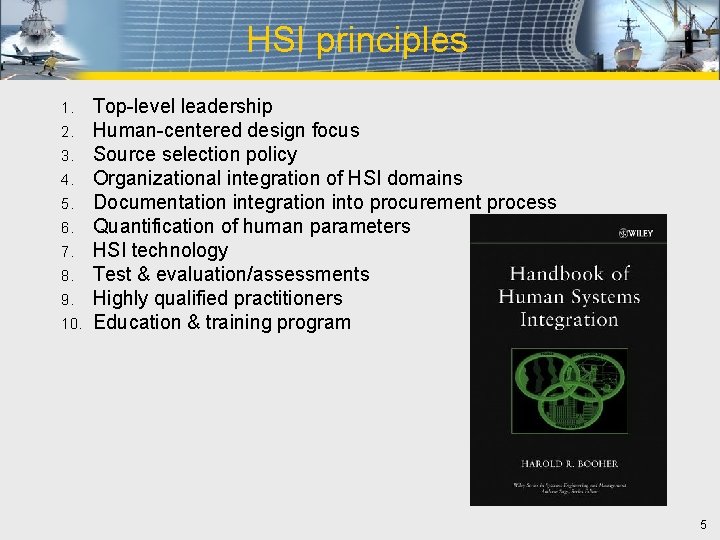
HSI principles 1. 2. 3. 4. 5. 6. 7. 8. 9. 10. Top-level leadership Human-centered design focus Source selection policy Organizational integration of HSI domains Documentation integration into procurement process Quantification of human parameters HSI technology Test & evaluation/assessments Highly qualified practitioners Education & training program 5
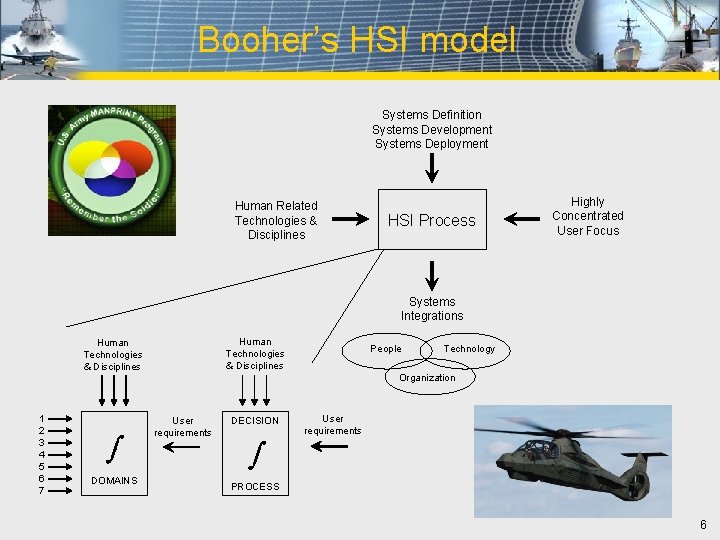
Booher’s HSI model Systems Definition Systems Development Systems Deployment Human Related Technologies & Disciplines HSI Process Highly Concentrated User Focus Systems Integrations Human Technologies & Disciplines 1 2 3 4 5 6 7 DOMAINS People Technology Organization User requirements DECISION User requirements PROCESS 6
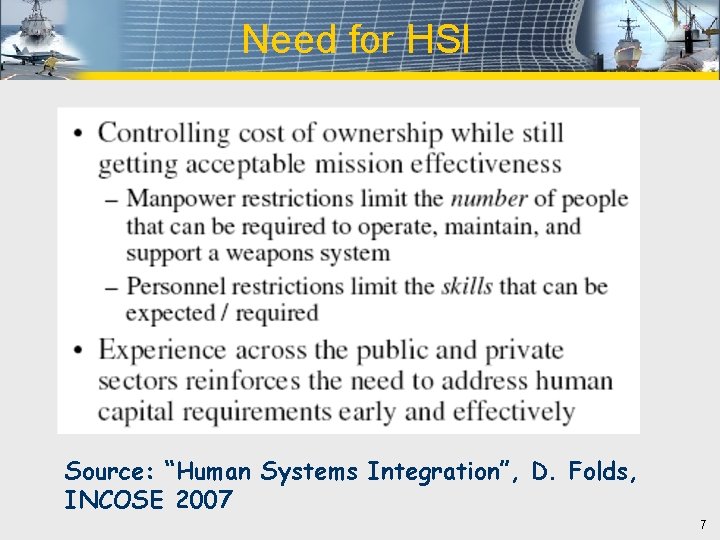
Need for HSI Source: “Human Systems Integration”, D. Folds, INCOSE 2007 7
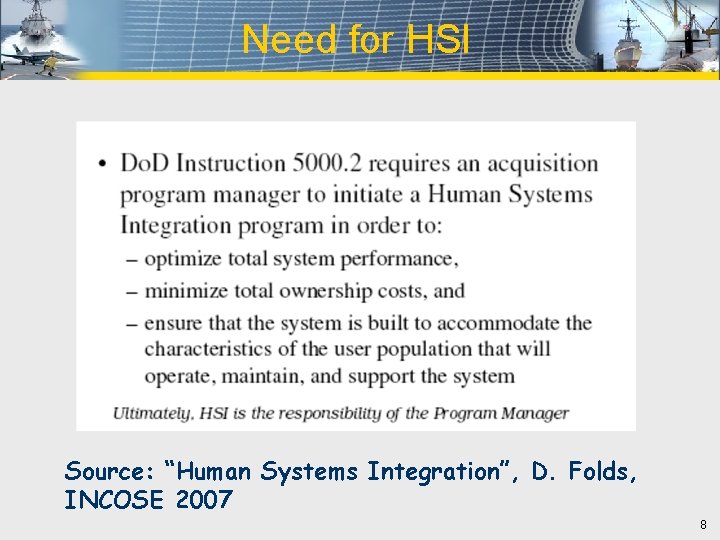
Need for HSI Source: “Human Systems Integration”, D. Folds, INCOSE 2007 8
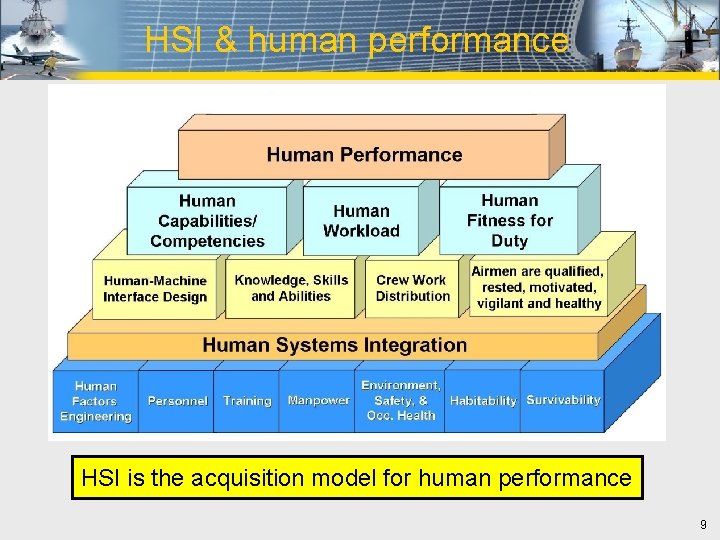
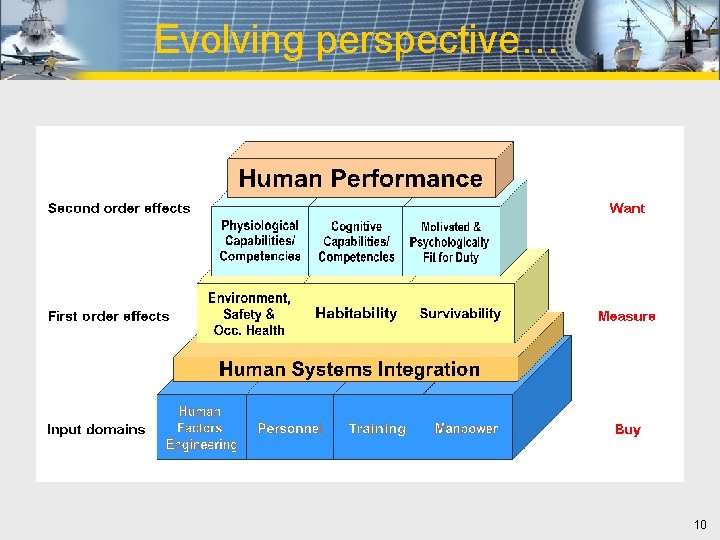
HSI & human performance HSI is the acquisition model for human performance 9
Evolving perspective… 10
Human performance optimization Linking HSI to Survivability KPP… Proposed model: (HFE • M • P • T) (ESOH • S) Performance What if these parameters are driven to absolute limits? • 100% system reliability/0 injuries • Perfect habitability • 100% survivable (HFE • M • P • T) HPO Survivability 11
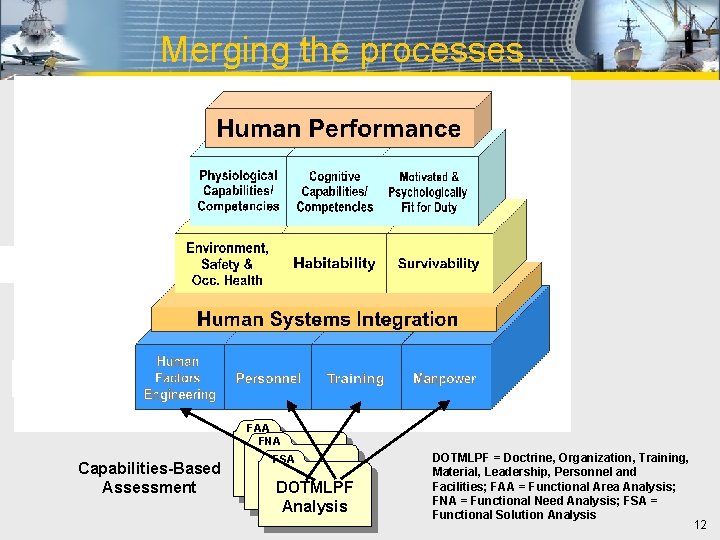
Merging the processes… FAA FNA Capabilities-Based Assessment FSA DOTMLPF Analysis DOTMLPF = Doctrine, Organization, Training, Material, Leadership, Personnel and Facilities; FAA = Functional Area Analysis; FNA = Functional Need Analysis; FSA = Functional Solution Analysis 12
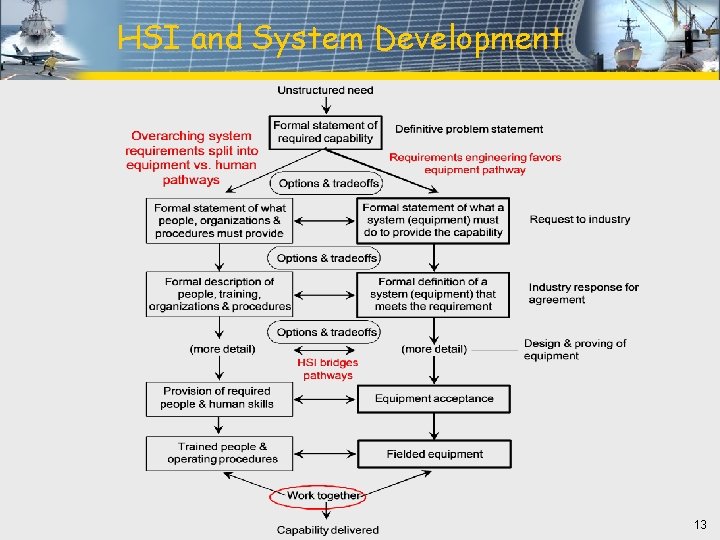
HSI and System Development 13
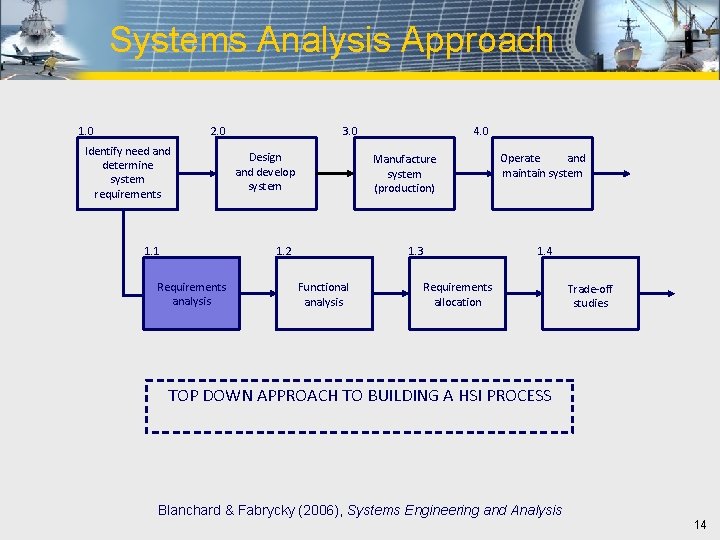
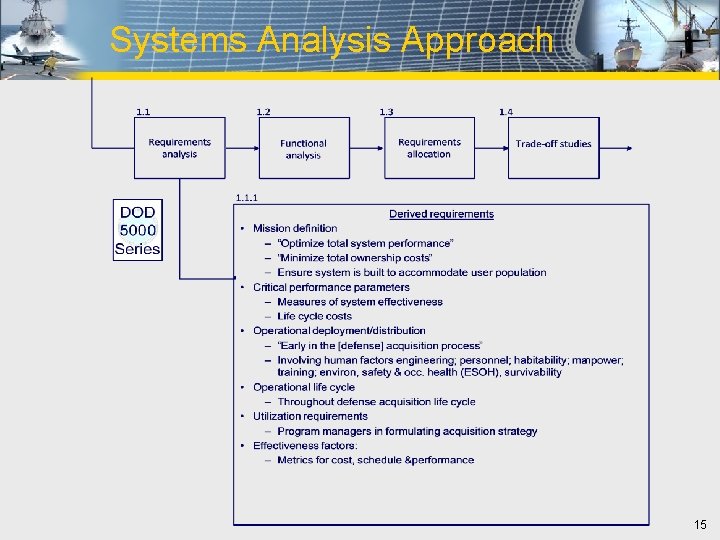
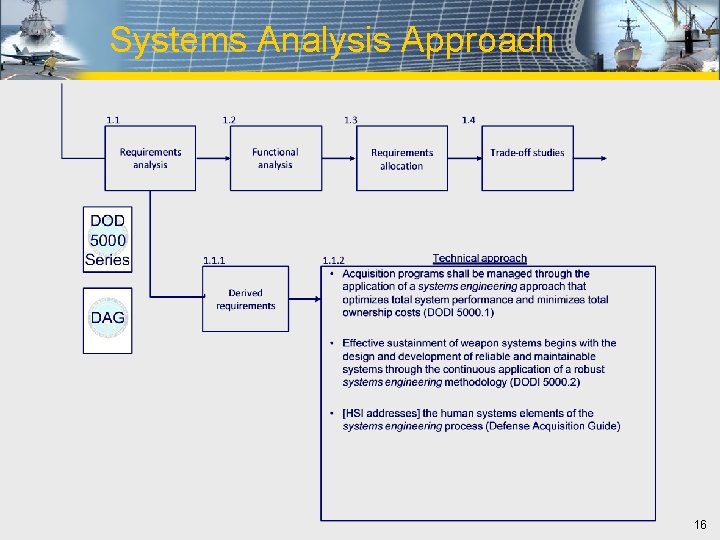
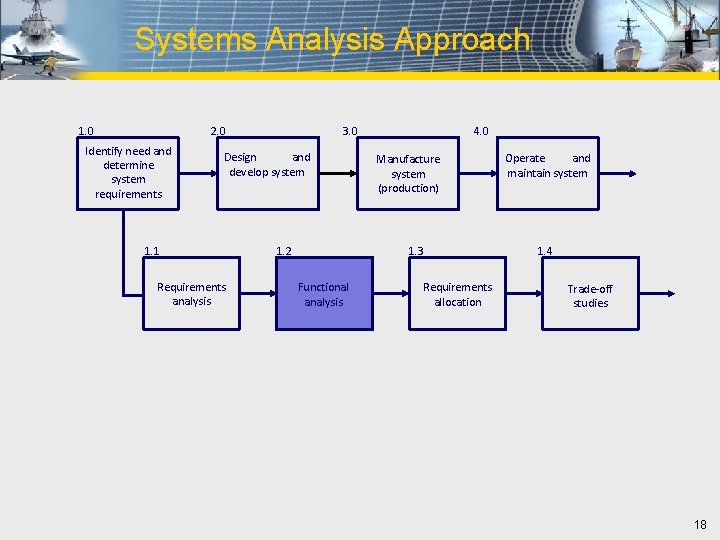
Systems Analysis Approach 1. 0 2. 0 Identify need and determine system requirements 1. 1 3. 0 Design and develop system Manufacture system (production) 1. 2 Requirements analysis 4. 0 1. 3 Functional analysis Operate and maintain system 1. 4 Requirements allocation Trade-off studies TOP DOWN APPROACH TO BUILDING A HSI PROCESS Blanchard & Fabrycky (2006), Systems Engineering and Analysis 14
Systems Analysis Approach 15
Systems Analysis Approach 16
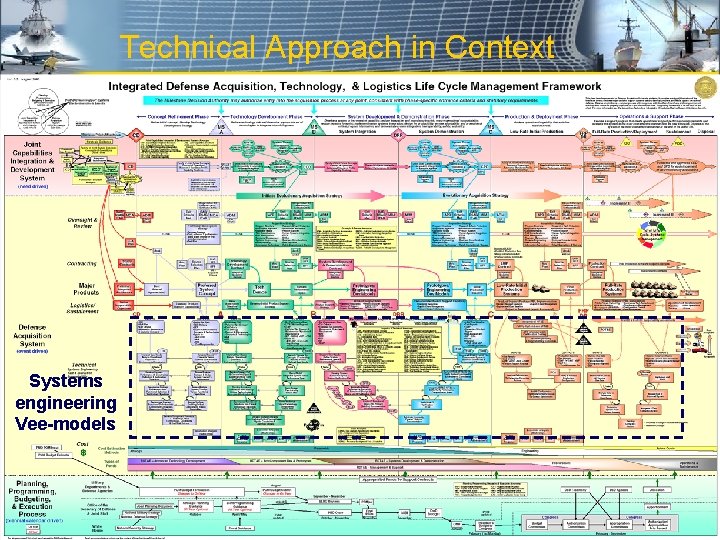
Technical Approach in Context Systems engineering Vee-models 17
Systems Analysis Approach 1. 0 2. 0 Identify need and determine system requirements 3. 0 Design and develop system 1. 1 Requirements analysis 1. 2 4. 0 Manufacture system (production) 1. 3 Functional analysis Requirements allocation Operate and maintain system 1. 4 Trade-off studies 18
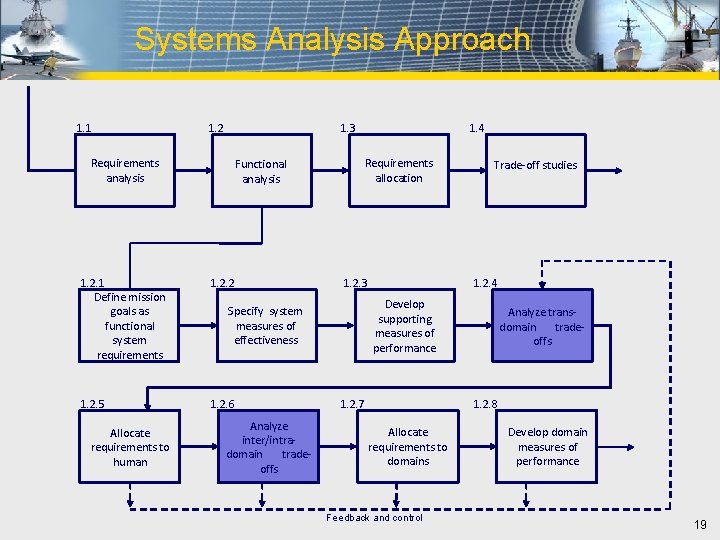
Systems Analysis Approach 1. 1 1. 2 1. 3 Requirements analysis Functional analysis 1. 2. 1 Define mission goals as functional system requirements 1. 2. 2 1. 2. 5 1. 2. 6 Allocate requirements to human 1. 4 Requirements allocation 1. 2. 3 1. 2. 4 Develop supporting measures of performance Specify system measures of effectiveness Analyze inter/intradomain tradeoffs Trade-off studies 1. 2. 7 Analyze transdomain tradeoffs 1. 2. 8 Allocate requirements to domains Feedback and control Develop domain measures of performance 19
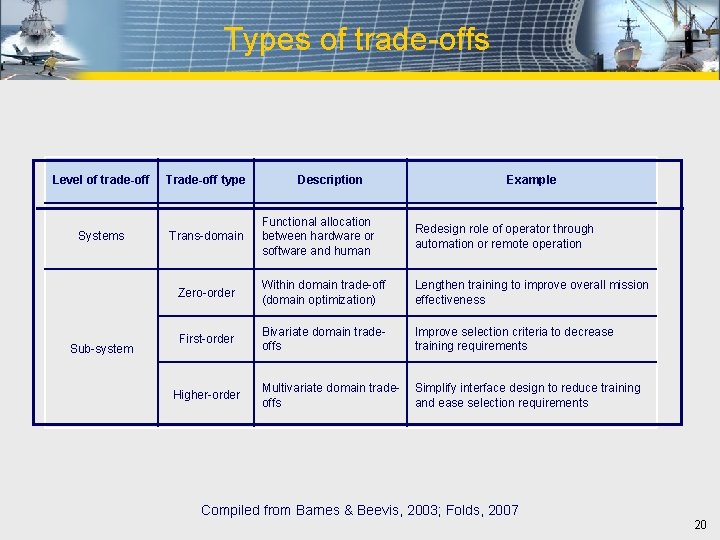
Types of trade-offs Level of trade-off Systems Sub-system Trade-off type Description Example Functional allocation between hardware or software and human Redesign role of operator through automation or remote operation Zero-order Within domain trade-off (domain optimization) Lengthen training to improve overall mission effectiveness First-order Bivariate domain tradeoffs Improve selection criteria to decrease training requirements Multivariate domain tradeoffs Simplify interface design to reduce training and ease selection requirements Trans-domain Higher-order Compiled from Barnes & Beevis, 2003; Folds, 2007 20
Weapon System XYZ Adapted from Blanchard & Fabrycky (2006) 21
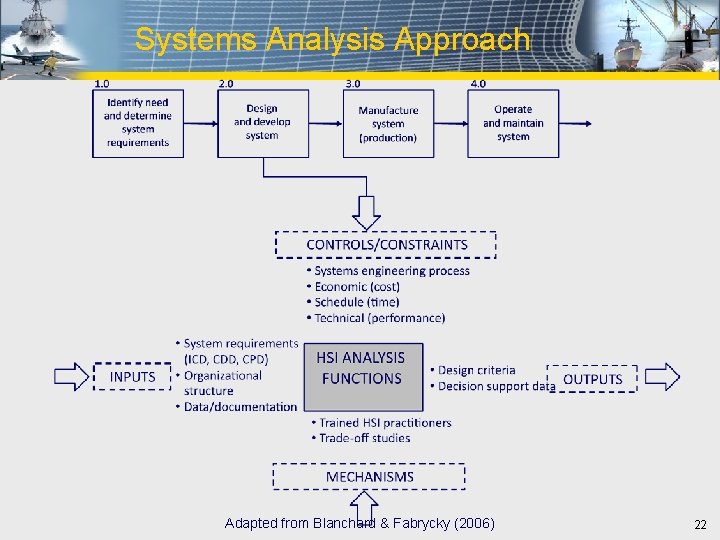
Systems Analysis Approach Adapted from Blanchard & Fabrycky (2006) 22
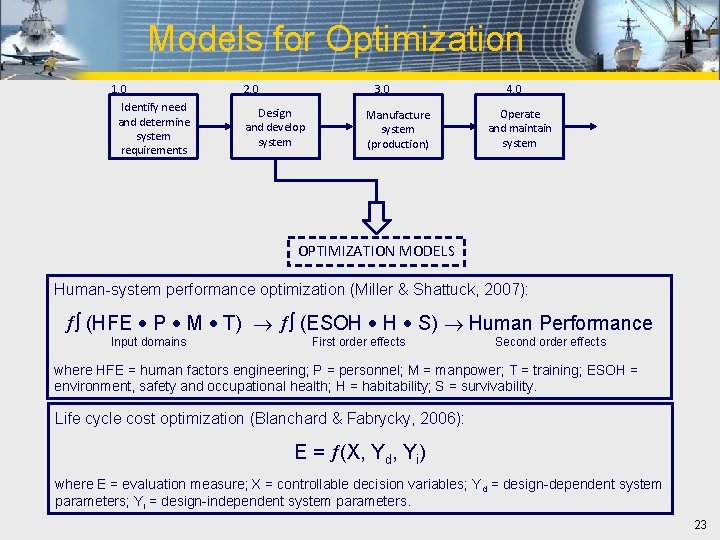
Models for Optimization 1. 0 Identify need and determine system requirements 2. 0 3. 0 Design and develop system Manufacture system (production) 4. 0 Operate and maintain system OPTIMIZATION MODELS Human-system performance optimization (Miller & Shattuck, 2007): (HFE P M T) (ESOH H S) Human Performance Input domains First order effects Second order effects where HFE = human factors engineering; P = personnel; M = manpower; T = training; ESOH = environment, safety and occupational health; H = habitability; S = survivability. Life cycle cost optimization (Blanchard & Fabrycky, 2006): E = (X, Yd, Yi) where E = evaluation measure; X = controllable decision variables; Yd = design-dependent system parameters; Yi = design-independent system parameters. 23
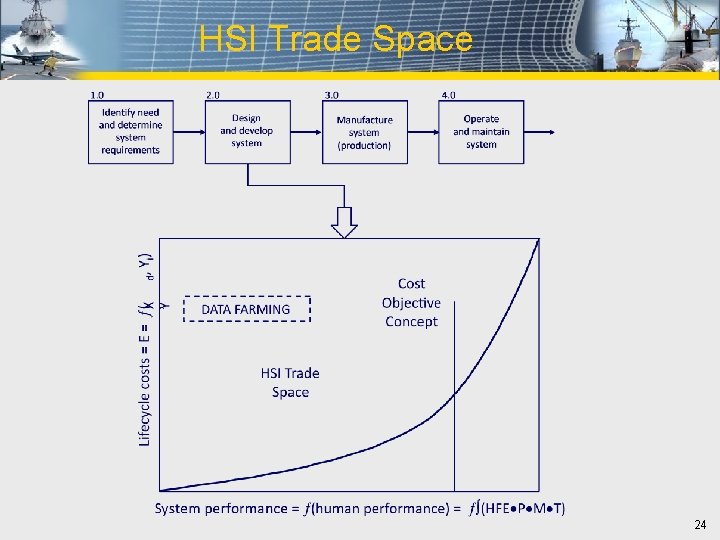
HSI Trade Space 24
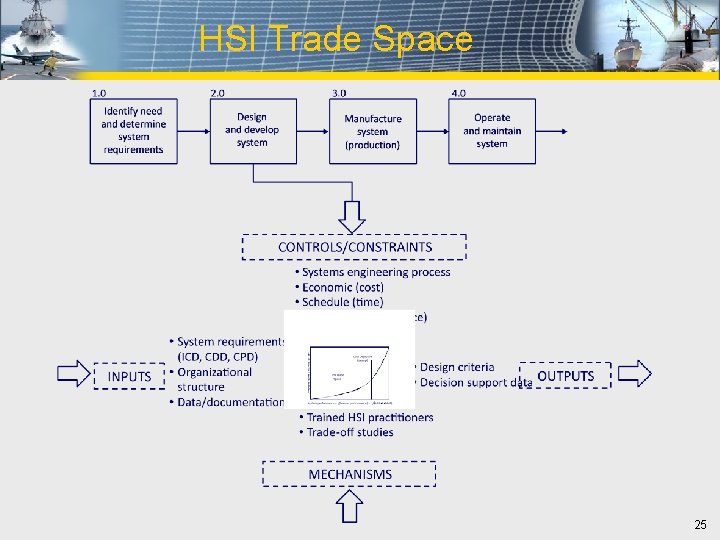
HSI Trade Space 25
Two HSI Paradigms? Concept Refinement Phase Tech Demo Phase System Design & Development Production & Deployment Operations and Support Phase COTS items Training Efficacy Workstation Design (HFE domain) Personnel & Manpower fixed foreseeable future Time (HFE P M T) (ESOH H S) Human Performance 26
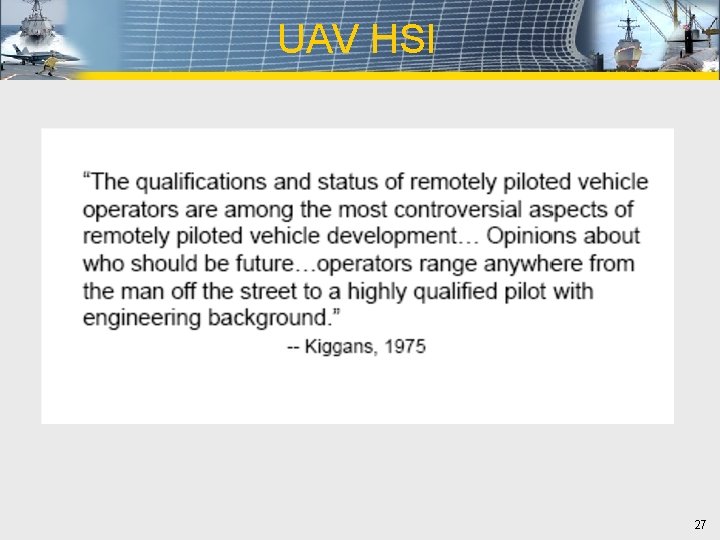
UAV HSI 27
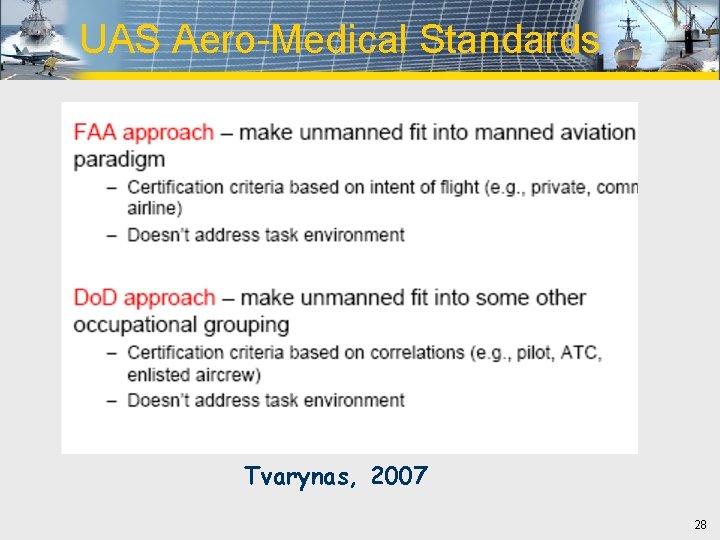
UAS Aero-Medical Standards Tvarynas, 2007 28
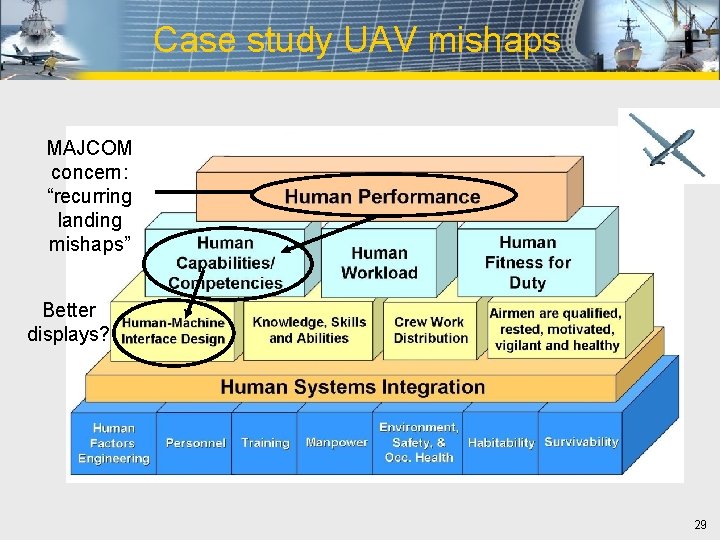
Case study UAV mishaps MAJCOM concern: “recurring landing mishaps” Better displays? 29
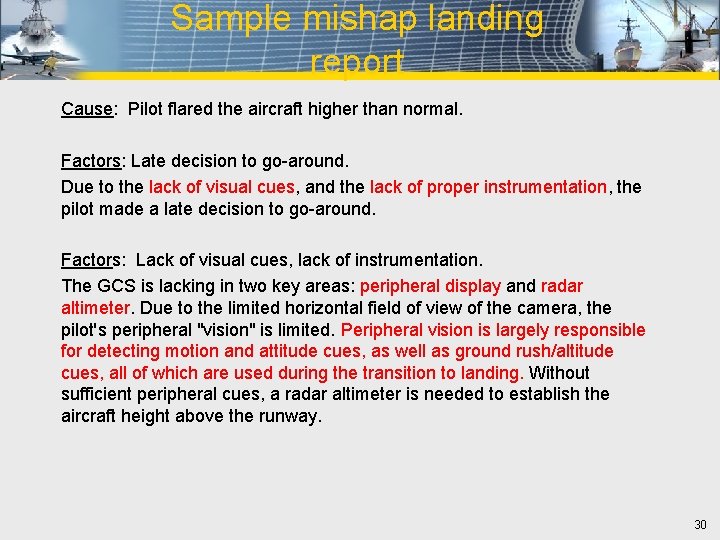
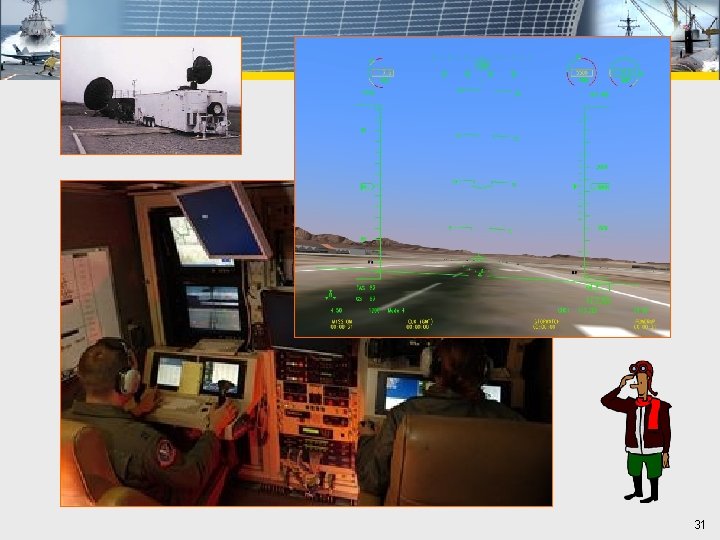
Sample mishap landing report Cause: Pilot flared the aircraft higher than normal. Factors: Late decision to go-around. Due to the lack of visual cues, and the lack of proper instrumentation, the pilot made a late decision to go-around. Factors: Lack of visual cues, lack of instrumentation. The GCS is lacking in two key areas: peripheral display and radar altimeter. Due to the limited horizontal field of view of the camera, the pilot's peripheral "vision" is limited. Peripheral vision is largely responsible for detecting motion and attitude cues, as well as ground rush/altitude cues, all of which are used during the transition to landing. Without sufficient peripheral cues, a radar altimeter is needed to establish the aircraft height above the runway. 30
31
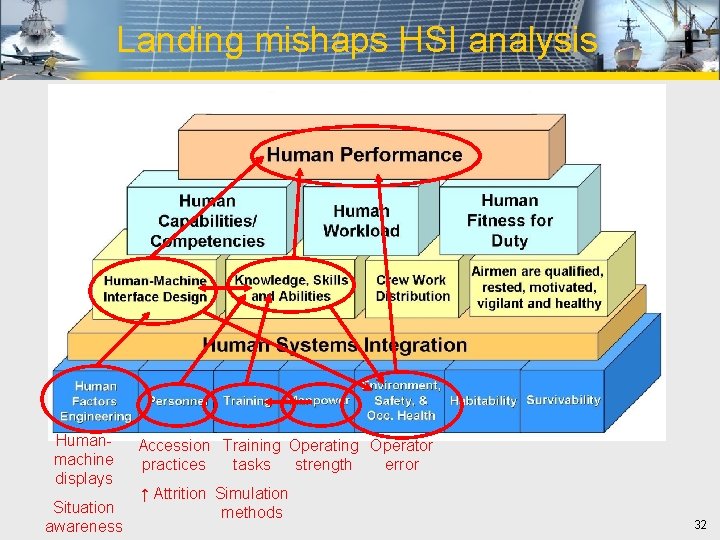
Landing mishaps HSI analysis Humanmachine displays Situation awareness Accession Training Operator practices tasks strength error ↑ Attrition Simulation methods 32
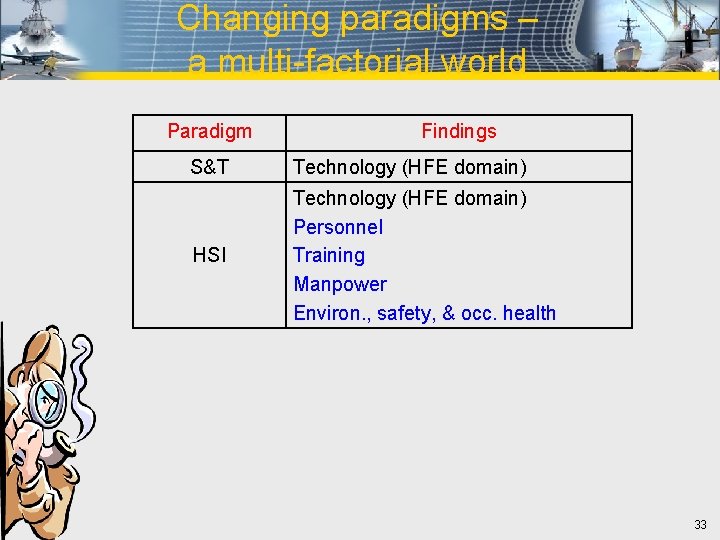
Changing paradigms – a multi-factorial world Paradigm Findings S&T Technology (HFE domain) HSI Technology (HFE domain) Personnel Training Manpower Environ. , safety, & occ. health 33
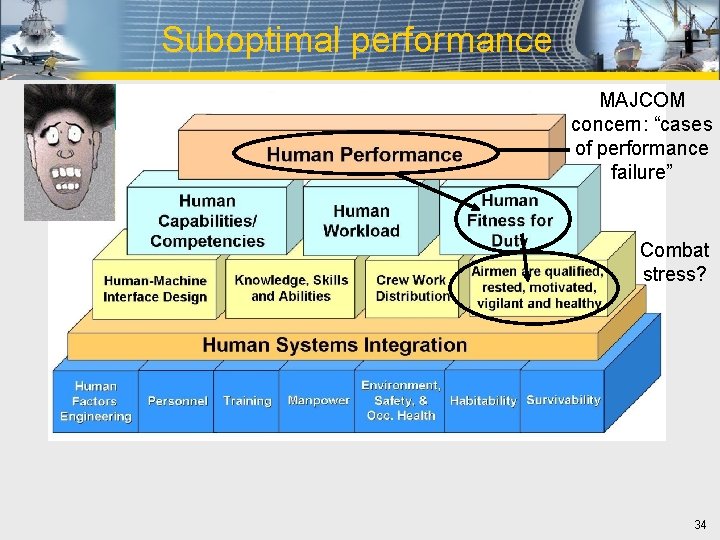
Suboptimal performance MAJCOM concern: “cases of performance failure” Combat stress? 34
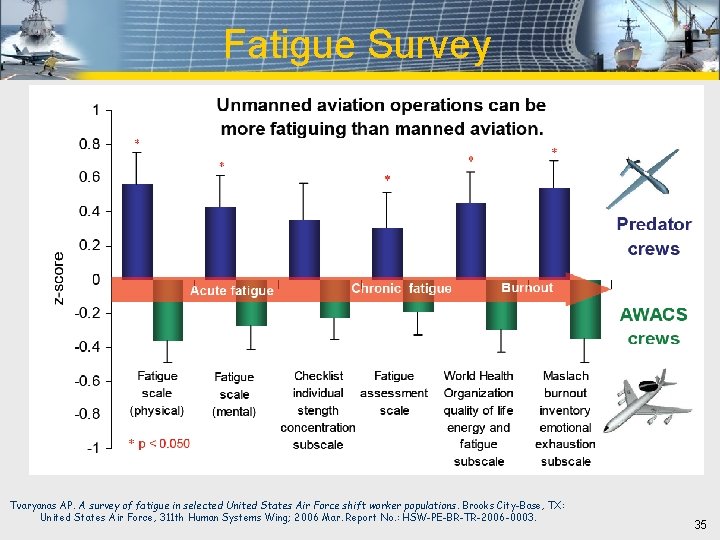
Fatigue Survey Tvaryanas AP. A survey of fatigue in selected United States Air Force shift worker populations. Brooks City-Base, TX: United States Air Force, 311 th Human Systems Wing; 2006 Mar. Report No. : HSW-PE-BR-TR-2006 -0003. 35
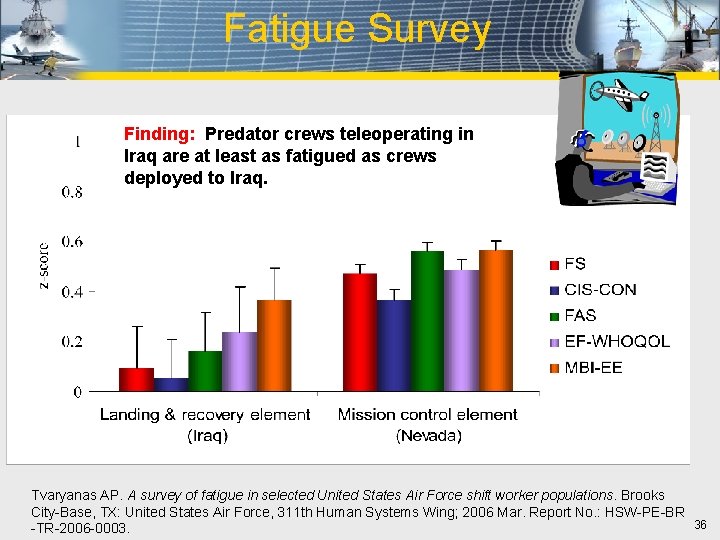
Fatigue Survey Finding: Predator crews teleoperating in Iraq are at least as fatigued as crews deployed to Iraq. Tvaryanas AP. A survey of fatigue in selected United States Air Force shift worker populations. Brooks City-Base, TX: United States Air Force, 311 th Human Systems Wing; 2006 Mar. Report No. : HSW-PE-BR 36 -TR-2006 -0003.
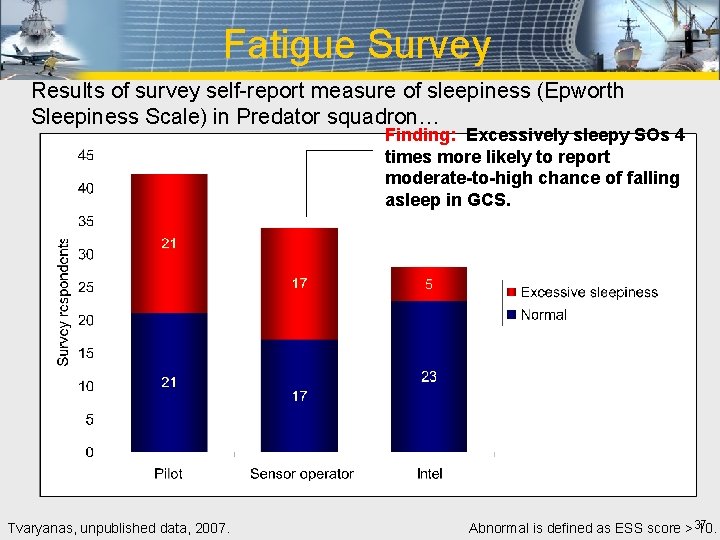
Fatigue Survey Results of survey self-report measure of sleepiness (Epworth Sleepiness Scale) in Predator squadron… Finding: Excessively sleepy SOs 4 times more likely to report moderate-to-high chance of falling asleep in GCS. Tvaryanas, unpublished data, 2007. Abnormal is defined as ESS score >37 10.
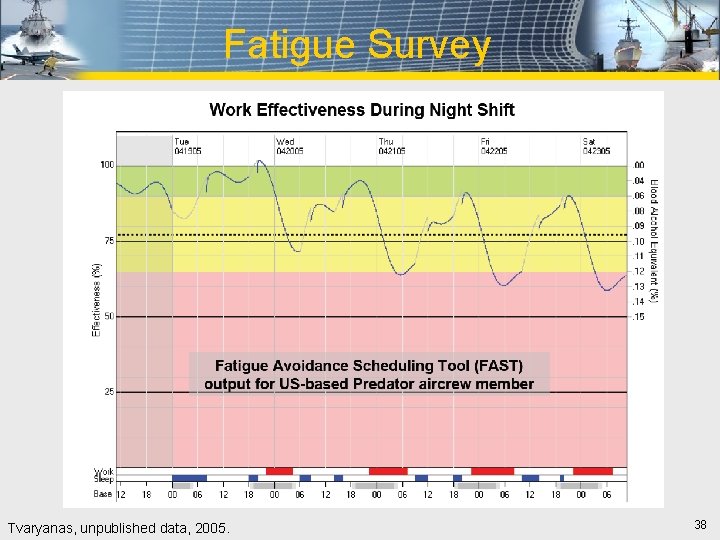
Fatigue Survey Tvaryanas, unpublished data, 2005. 38
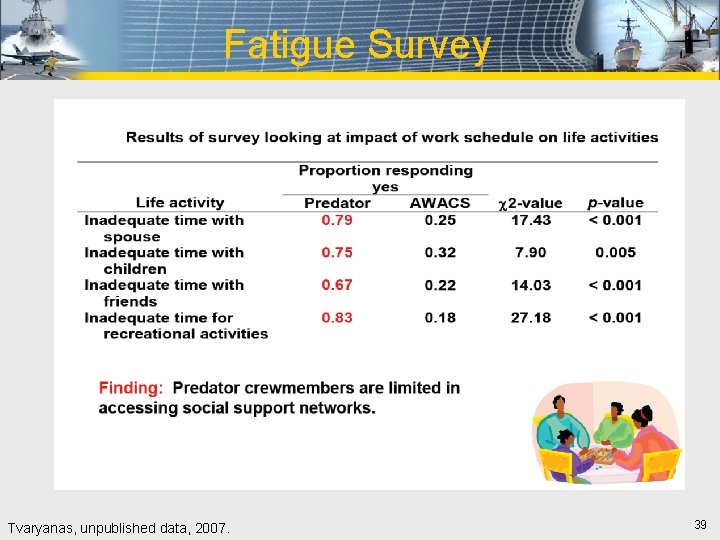
Fatigue Survey Tvaryanas, unpublished data, 2007. 39
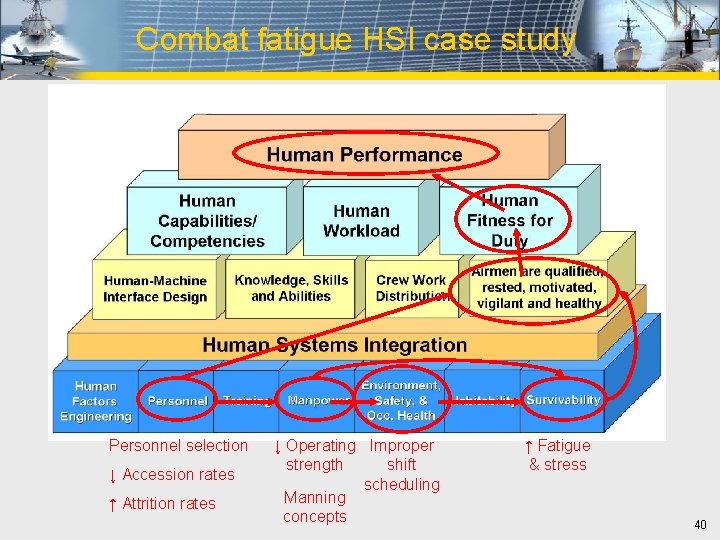
Combat fatigue HSI case study Personnel selection ↓ Accession rates ↑ Attrition rates ↓ Operating Improper strength shift scheduling Manning concepts ↑ Fatigue & stress 40
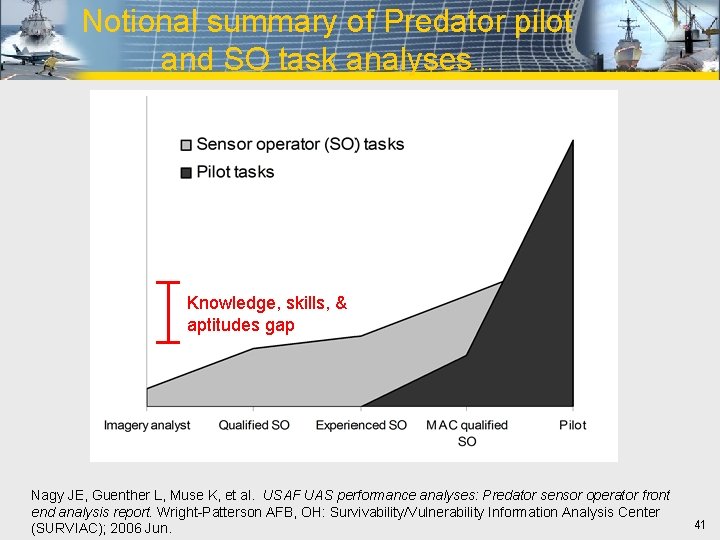
Notional summary of Predator pilot and SO task analyses… Knowledge, skills, & aptitudes gap Nagy JE, Guenther L, Muse K, et al. USAF UAS performance analyses: Predator sensor operator front end analysis report. Wright-Patterson AFB, OH: Survivability/Vulnerability Information Analysis Center (SURVIAC); 2006 Jun. 41
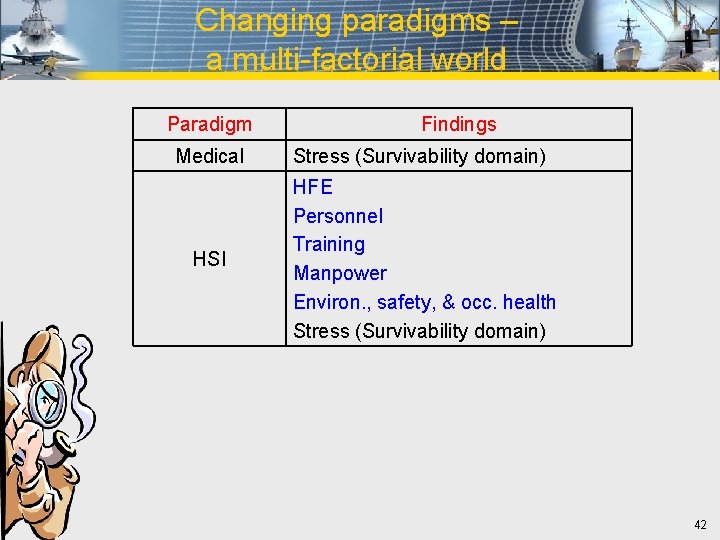
Changing paradigms – a multi-factorial world Paradigm Findings Medical Stress (Survivability domain) HSI HFE Personnel Training Manpower Environ. , safety, & occ. health Stress (Survivability domain) 42
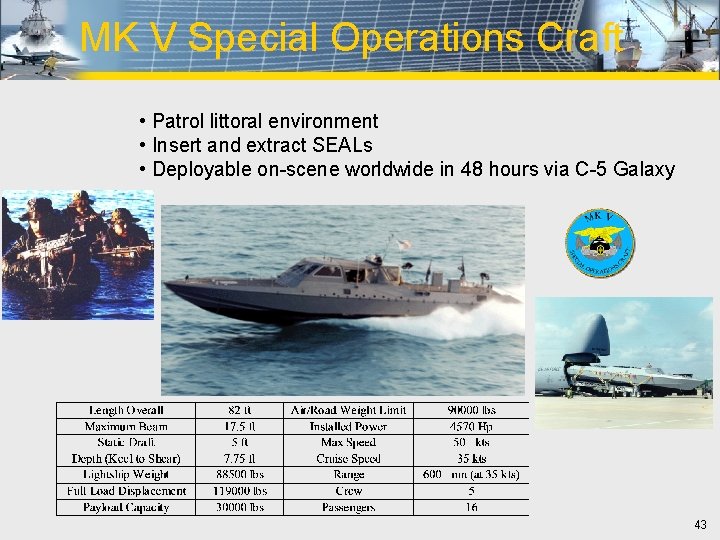
MK V Special Operations Craft • Patrol littoral environment • Insert and extract SEALs • Deployable on-scene worldwide in 48 hours via C-5 Galaxy 43
Background • Naval Special Forces operate high speed boats in calm and rough seas and experience significant shock loading • Effects of mechanical shock • Personnel injury (acute and chronic) • Equipment failure or degradation • Reduced mission effectiveness • No shock mitigation systems are currently in-place • Offshore racing industry faces similar problems • Research focuses on bolt-on solutions to existing platforms (suspension seats, deck padding) 44
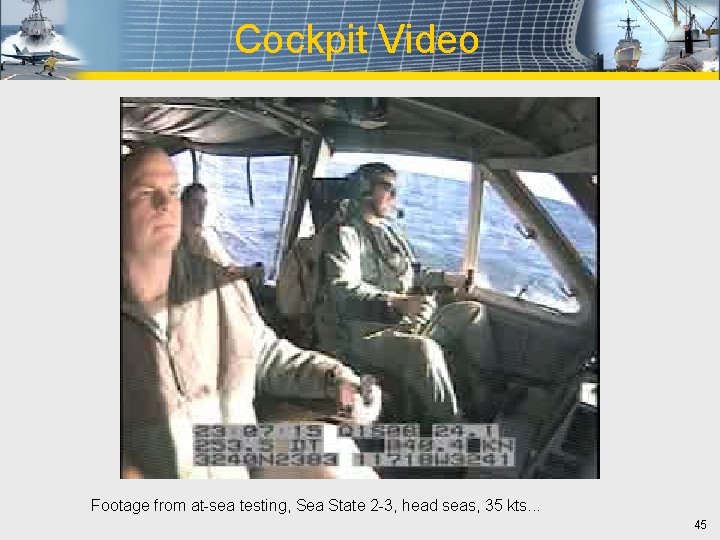
Cockpit Video Footage from at-sea testing, Sea State 2 -3, head seas, 35 kts. . . 45
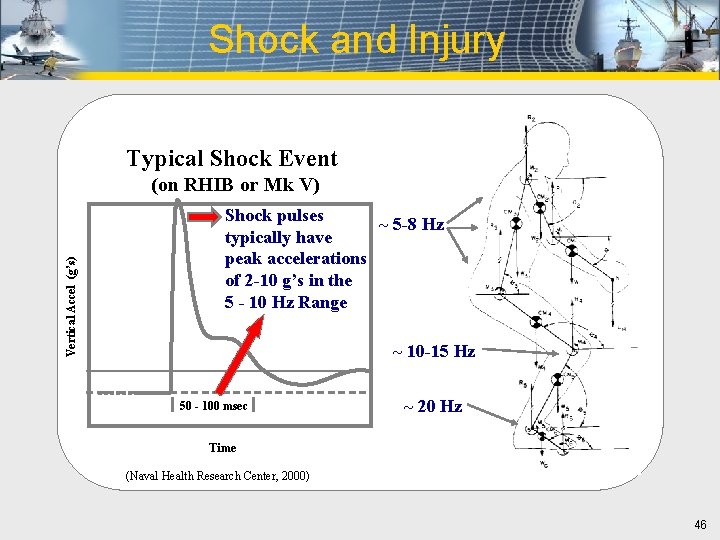
Shock and Injury Typical Shock Event Vertical Accel (g’s) (on RHIB or Mk V) Shock pulses ~ 5 -8 Hz typically have peak accelerations of 2 -10 g’s in the 5 - 10 Hz Range ~ 10 -15 Hz 50 - 100 msec ~ 20 Hz Time (Naval Health Research Center, 2000) 46
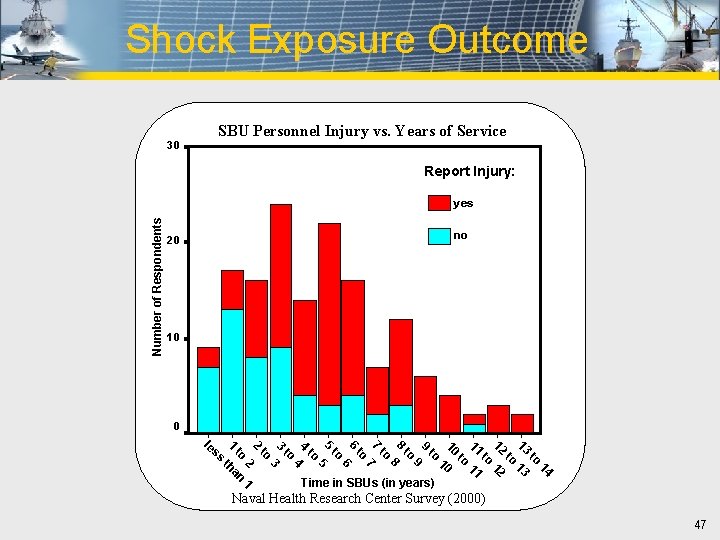
Shock Exposure Outcome SBU Personnel Injury vs. Years of Service 30 Report Injury: Number of Respondents yes no 20 10 0 14 to 13 13 to 12 12 to 11 11 to 10 0 1 to 9 9 to 8 8 to 7 7 to 6 6 to 5 5 to 4 4 to 3 3 to 2 2 1 to an th 1 ss le Time in SBUs (in years) Naval Health Research Center Survey (2000) 47
Summary • HSI conceptual models • Top-down view of HSI in Do. D • Apply systems analysis approach to HSI process • Examine operational HSI applications 48