
Fundamentals Of Occlusion The TemporoMandibular Joints Why Is
Fundamentals Of Occlusion
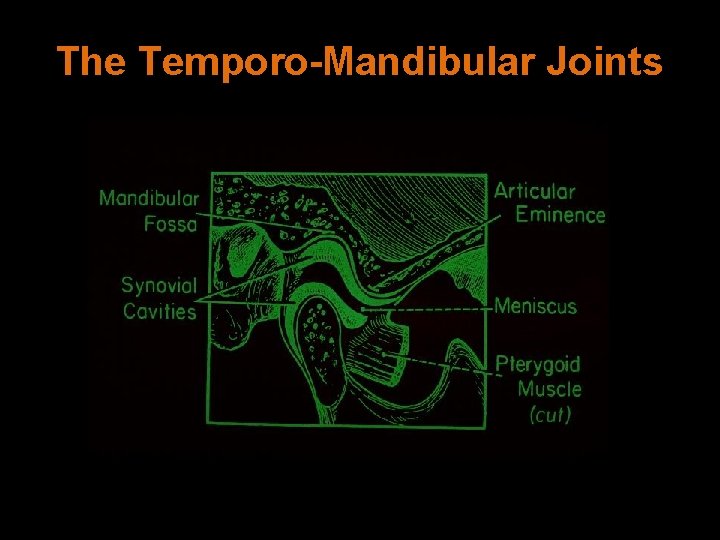
The Temporo-Mandibular Joints
Why Is Occlusion Important ? • Assist in diagnosis • Planning in restorative care To minimize failure Ensure predictable outcome by minimising loads on teeth Managing the environment so that we get the minimal amount of surprises (Similar to wearing a car seatbelt), the less the patient has to adapt the better.
Definitions OCCLUSION A relationship between the masticatory surfaces of the maxillary and mandibular teeth The relationship between tooth contacts and mandibular movements
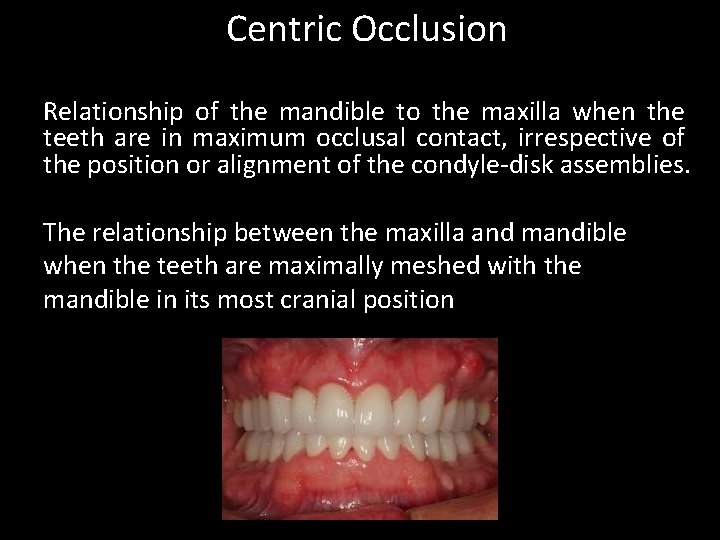
Centric Occlusion Relationship of the mandible to the maxilla when the teeth are in maximum occlusal contact, irrespective of the position or alignment of the condyle-disk assemblies. The relationship between the maxilla and mandible when the teeth are maximally meshed with the mandible in its most cranial position
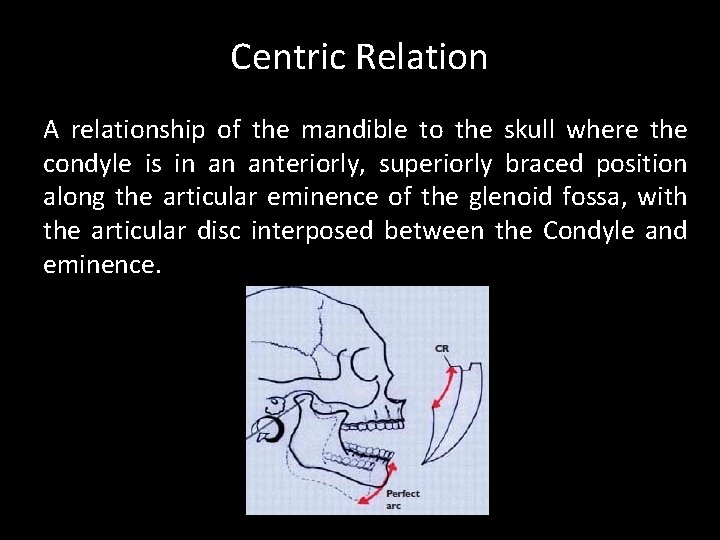
Centric Relation A relationship of the mandible to the skull where the condyle is in an anteriorly, superiorly braced position along the articular eminence of the glenoid fossa, with the articular disc interposed between the Condyle and eminence.
Ideal vs Pathologic Occlusion
Ideal Occlusion An ideal occlusion should provide comfort and function in a predictable way. 1) Ideal occlusion at tooth level Cusp tip to fossa or cusp to marginal ridge contact – i. e no incline contacts 2) Ideal occlusion at articulatory system level Posterior stability, Anterior guidance, Lack of posterior interferences. 3) Ideal occlusion at patient level Within the adaptability of the rest of the articulatory system.
Features Of Ideal Occlusion A) Anterior Guidance: • In lateral excursions of the mandible, workingside contacts (preferably on the canines) disocclude or separate the nonworking teeth instantly. • In protrusive excursions, anterior tooth contacts will disocclude the posterior teeth.
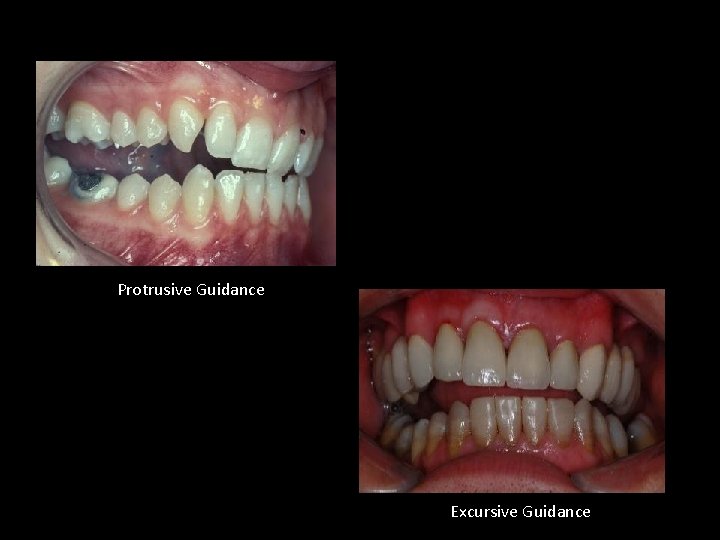
Protrusive Guidance Excursive Guidance
Features Of Ideal Occlusion B) Posterior stability: Enough posterior teeth in each arch with solid and stable contacts in appropriate positions to evenly distribute loads and to allow the mandible to close in a reproducible CO. Posterior teeth contact more heavily than anterior teeth It is enhanced by tall cusp – deep fossa Maintains teeth position CO or ICP is easily reproduced Increased masticatory function Signs of lack of PS, drifting, fremitus, fractured rest, mobility & wear
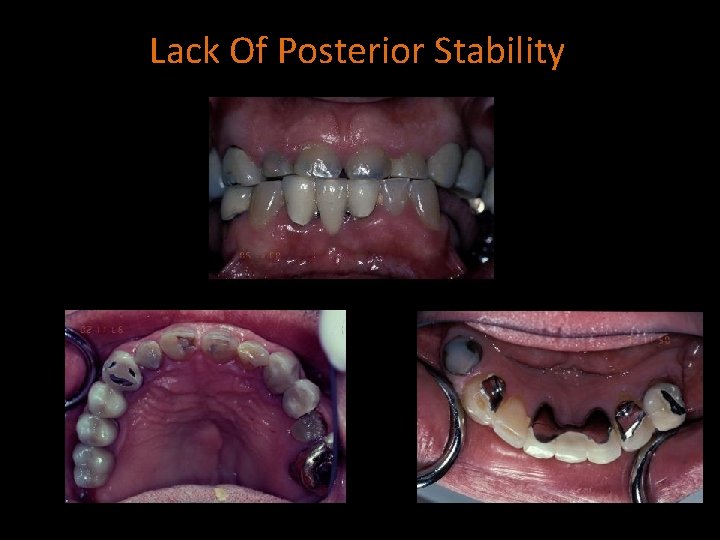
Lack Of Posterior Stability
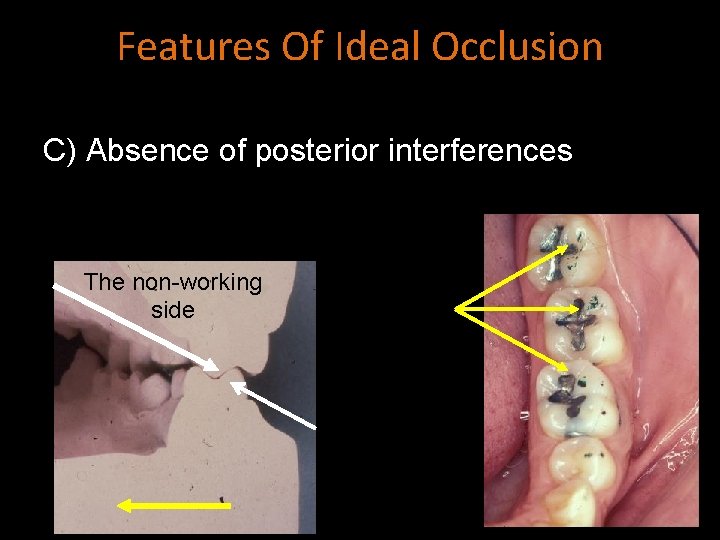
Features Of Ideal Occlusion C) Absence of posterior interferences The non-working side
Features Of Ideal Occlusion D) Centric Occlusion is achieved at centric relation position E) Occlusal loads are axially transmitted through the teeth
Organization Of Occlusion • There are three recognized concepts that describe how teeth should contact in various mandibular positions 1. Bilateral balanced occlusion 2. Unilateral Balanced occlusion (Group function) 3. Mutually protected occlusion (Canine protected)
Bilateral Balanced Occlusion • It dictates that a maximum number of teeth should contact in all excursive positions of the mandible. • Use for complete denture occlusal scheme as contacts on non-working side prevent tipping of the denture • Not used for fixed prosthodontics, as very difficult to achieve
Unilateral Balanced Occlusion • Also called group function • It requires teeth on the working side to be in contact in lateral excursion and teeth on the non-working side are free of any contact. • Avoids destructive , oblique forces on the nonworking side. • Prevents wear of maxillary palatal and mandibular buccal cusps

Mutually Protected Occlusion • Also called canine protected occlusion • Anterior teeth overlap prevents the posterior teeth from making any contact on either the working or the nonworking sides during mandibular excursions. • Anterior teeth bear all the load and the posterior teeth are dis-occluded during excursions. Protecting the posterior teeth • In CO, posterior teeth direct forces through their long axis and anterior teeth are slightly in or out of contact. Protecting the anterior teeth.
Guidance Describes the influenced path the mandible takes as a result of the contacting surfaces of the teeth. Depending on the contact and shape of the teeth they should be in harmony
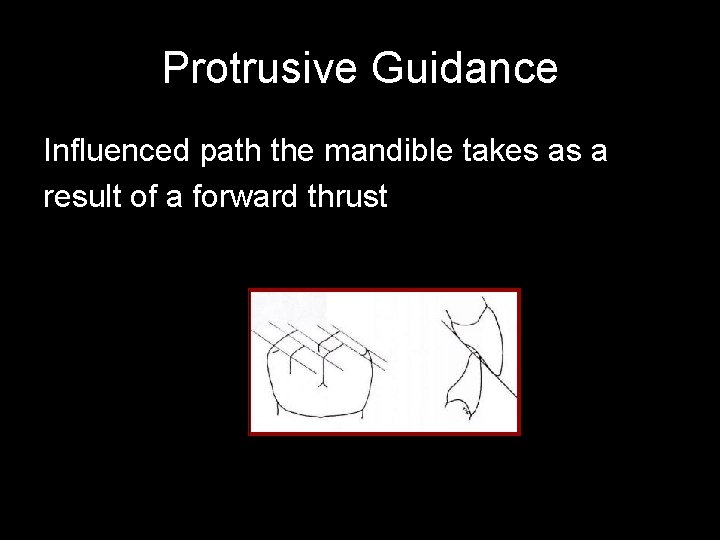
Protrusive Guidance Influenced path the mandible takes as a result of a forward thrust
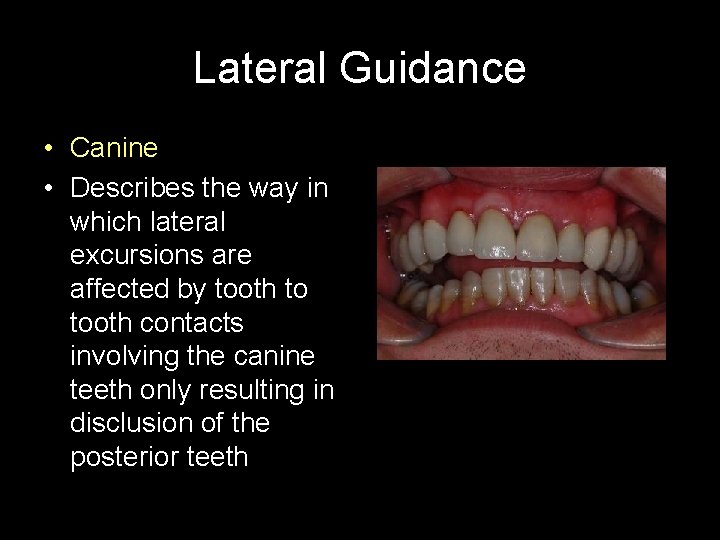
Lateral Guidance • Canine • Describes the way in which lateral excursions are affected by tooth to tooth contacts involving the canine teeth only resulting in disclusion of the posterior teeth
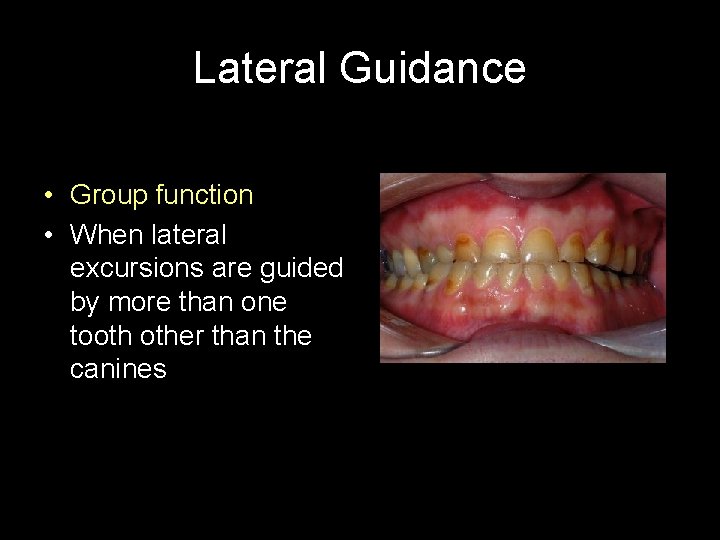
Lateral Guidance • Group function • When lateral excursions are guided by more than one tooth other than the canines

Anterior Guidance • Guidance produced by the teeth themselves and not the temporomandibular joint (can be on any tooth) • The influence of contacting surfaces of anterior teeth on mandibular movements. • The influence of contacting surfaces of the guide pin and anterior guide table on articulator movements. • The fabrication of a relationship of the anterior teeth preventing the posterior tooth contact in all eccentric mandibular movements.

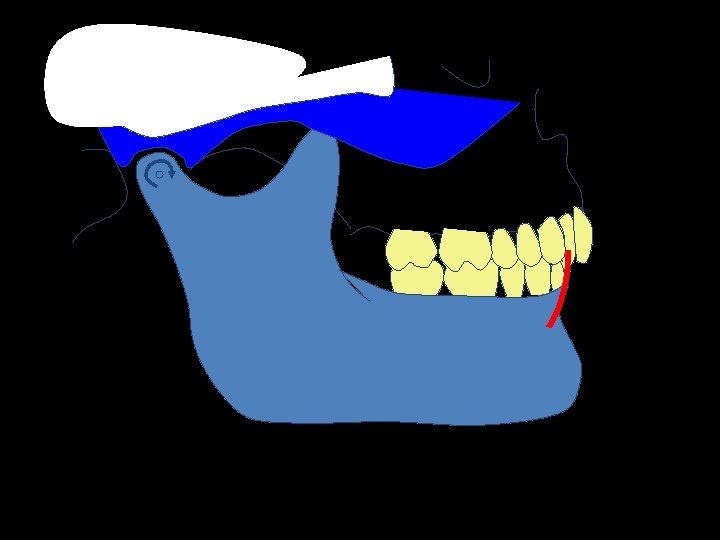

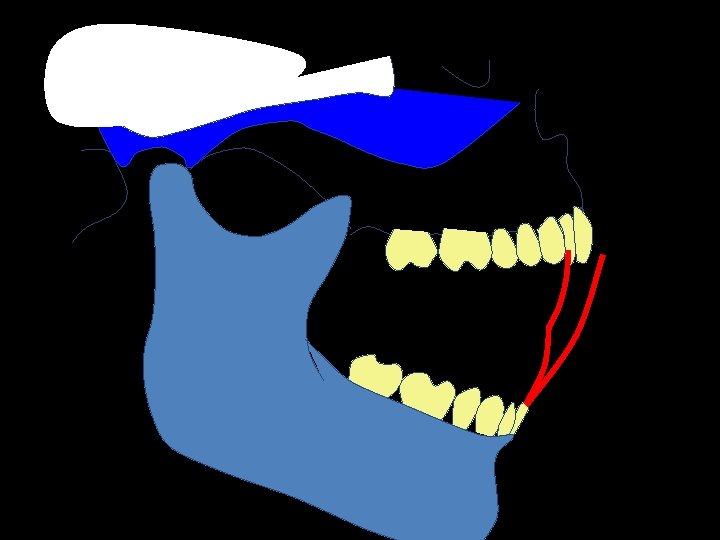
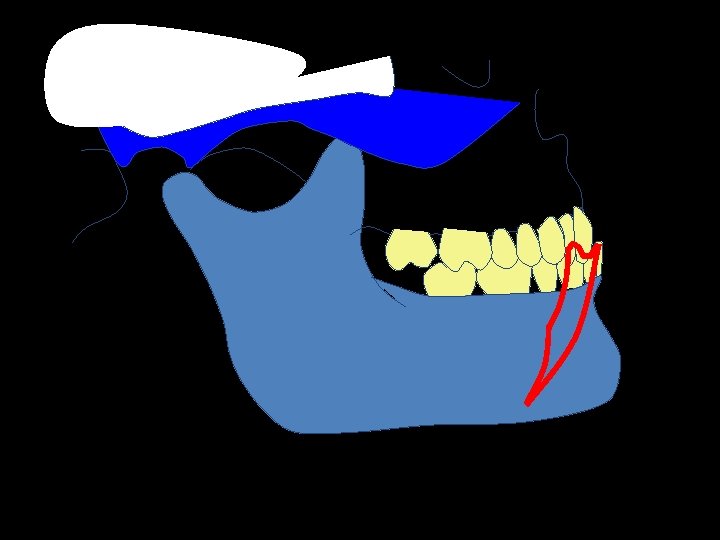
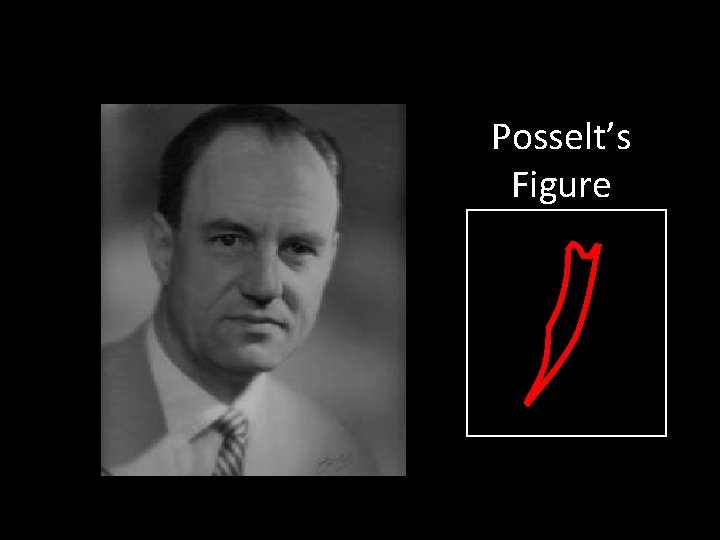
Posselt’s Figure
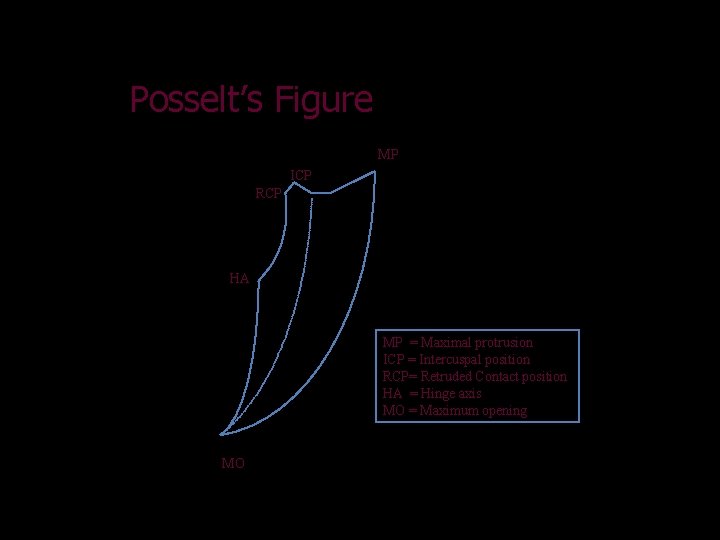
Posselt’s Figure MP ICP RCP HA MP = Maximal protrusion ICP = Intercuspal position RCP= Retruded Contact position HA = Hinge axis MO = Maximum opening MO
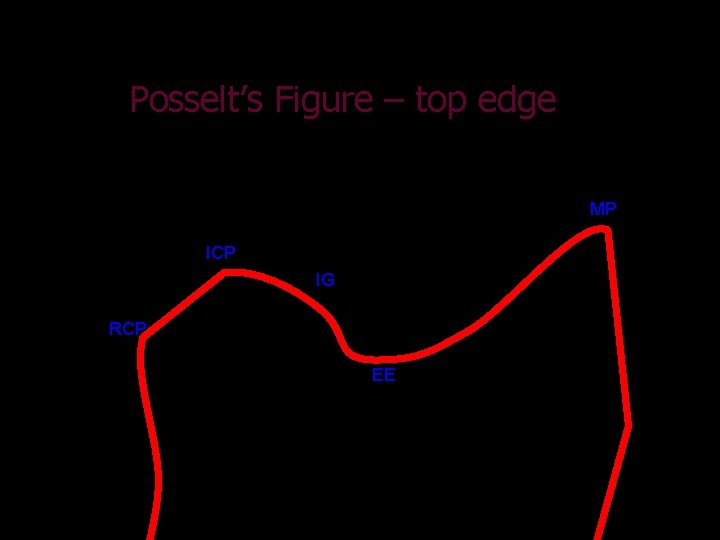
Posselt’s Figure – top edge MP ICP IG RCP EE

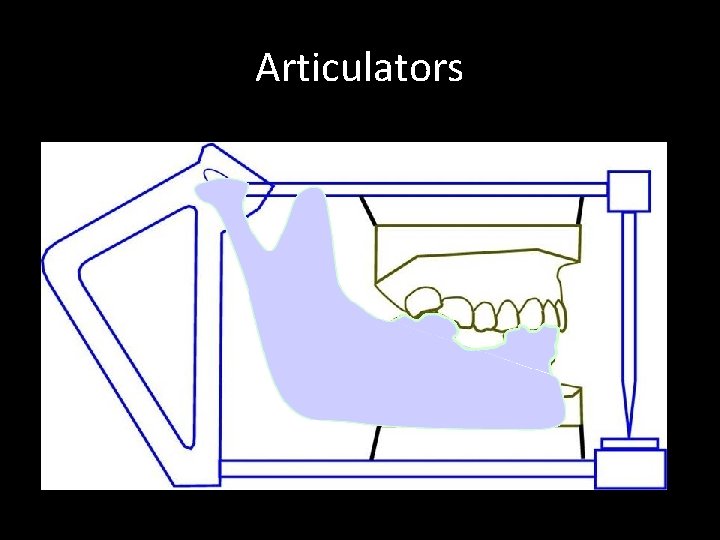
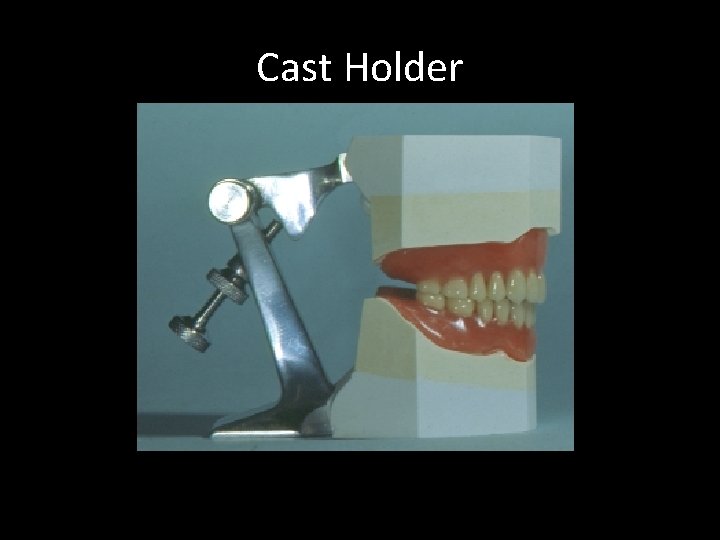
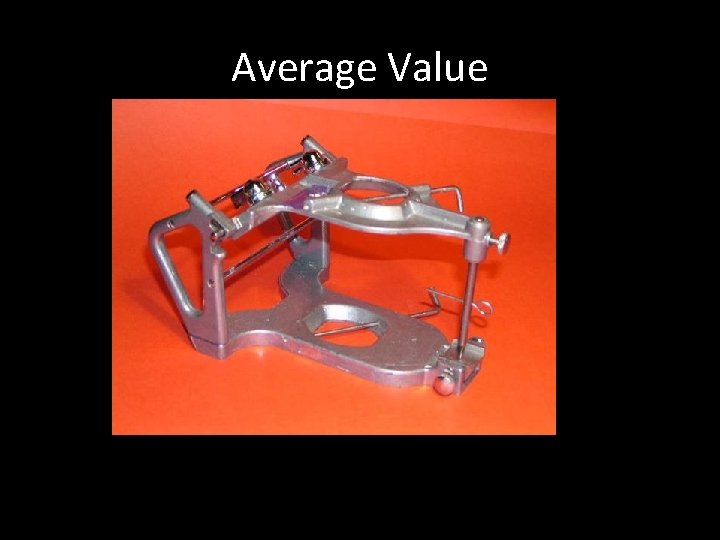
Definitions Articulators – A mechanical representation of the jaws and temporo-mandibular joints
Use of articulators Diagnosis • slides and occlusal relationships Treatment planning • Diagnostic wax - up • Occlusal adjustment Fabrication of Splint / Prostheses
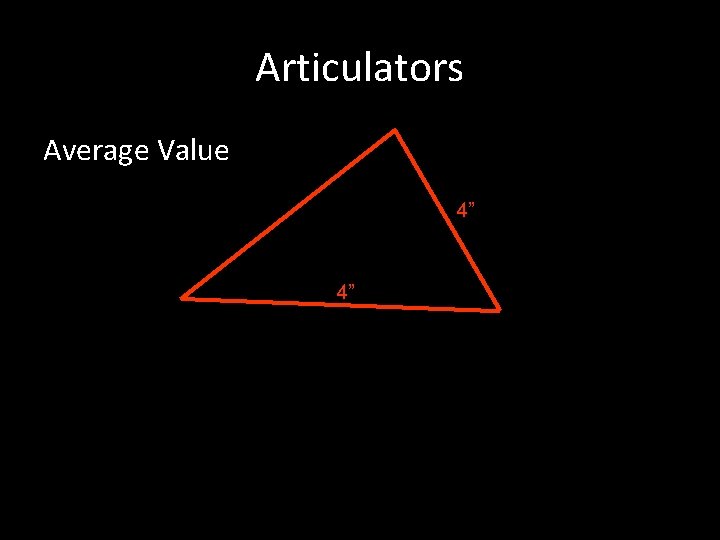
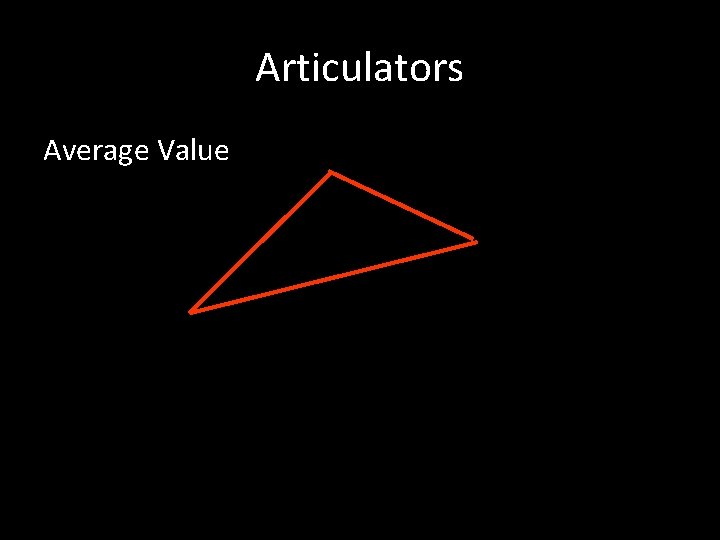
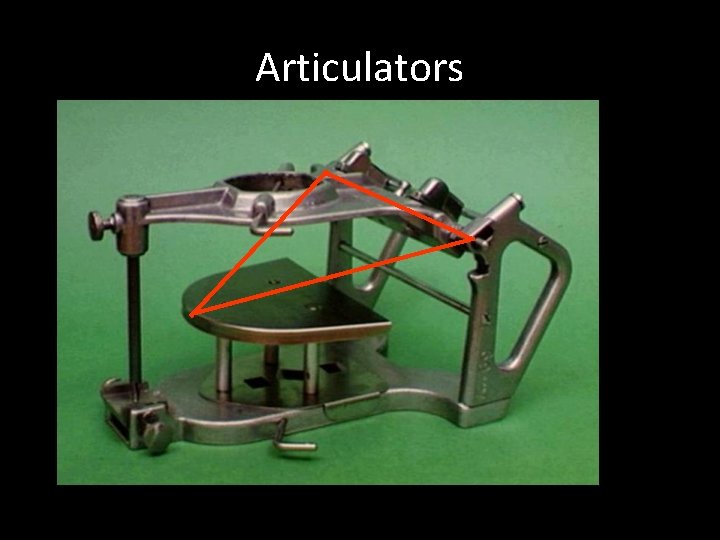
Articulators Types – Simple Hinge – Average Value – Semi-adjustable – Fully adjustable
Articulators
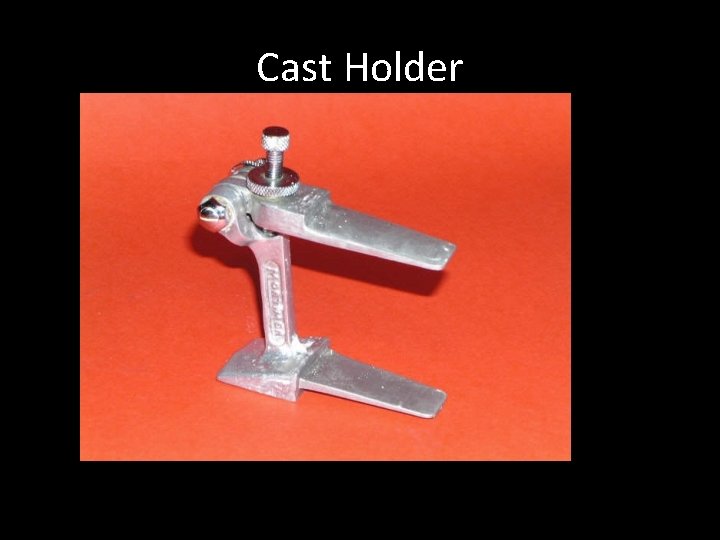
Cast Holder
Cast Holder
Average Value

Articulators BONWILL 1854 4” 4”
Articulators Average Value 4” 4”
Articulators Average Value
Articulators
Denar II - Arcon
Dentatus Non Arcon
Denar II Adjustable Condylar Angle, ISS & PSS

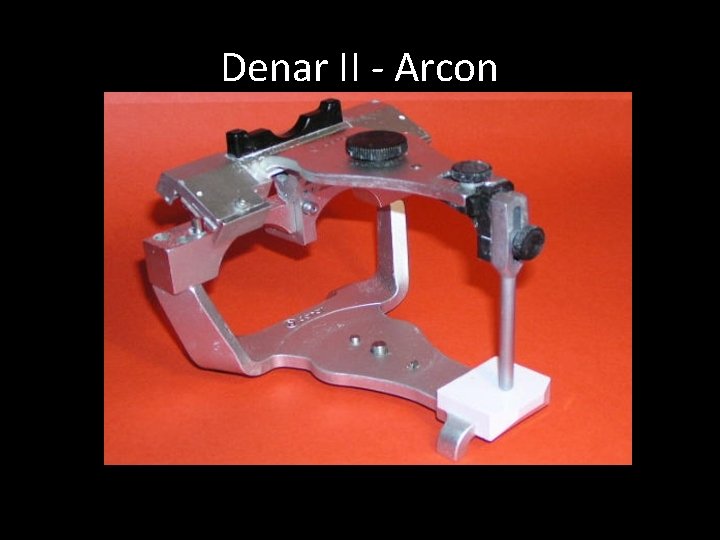
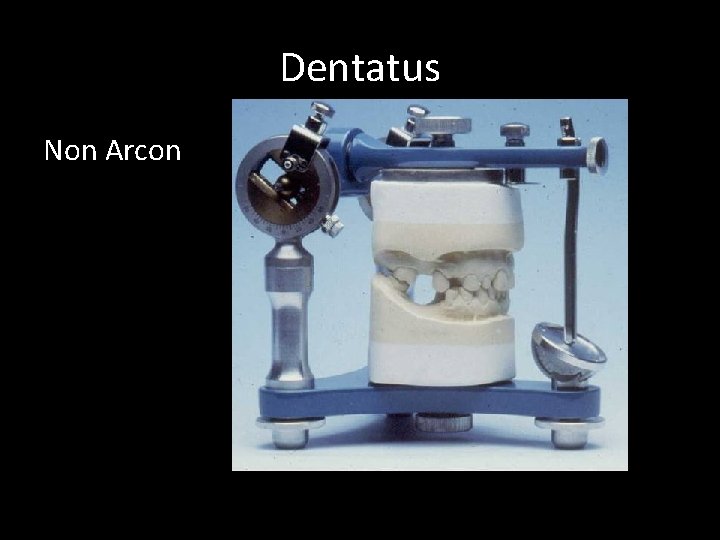
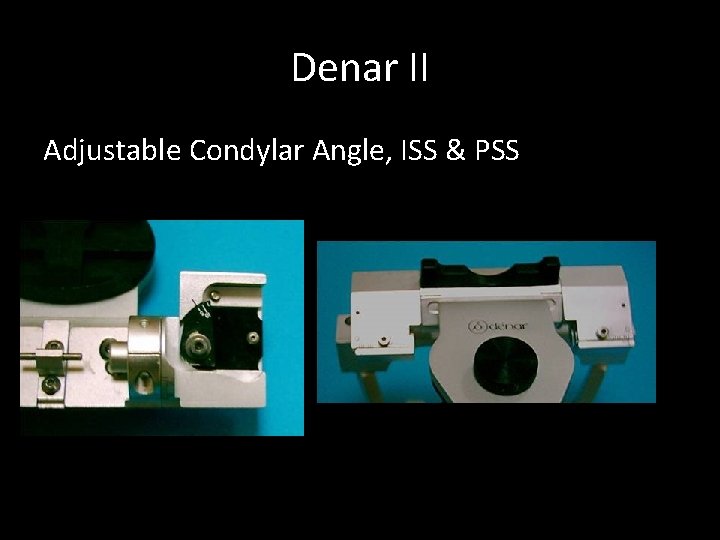
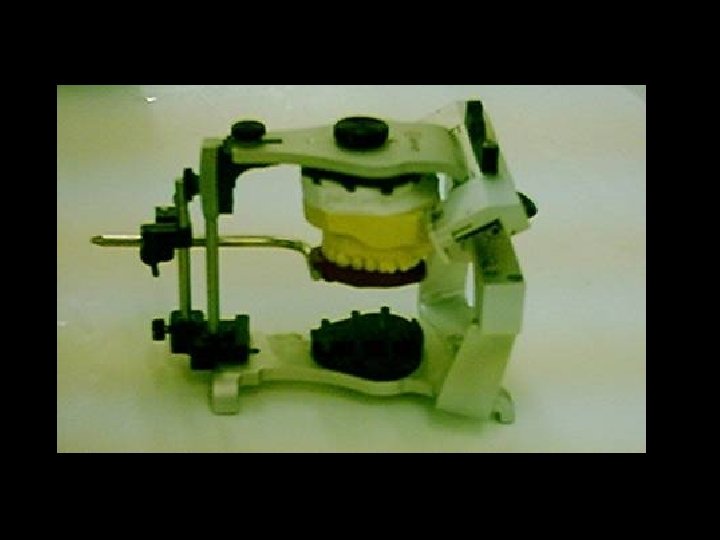
Articulators Semi-adjustable Can alter; • TMJ to Incisor distance • Bennett Angle • Condylor Guidance Angle • Incisal guidance plate
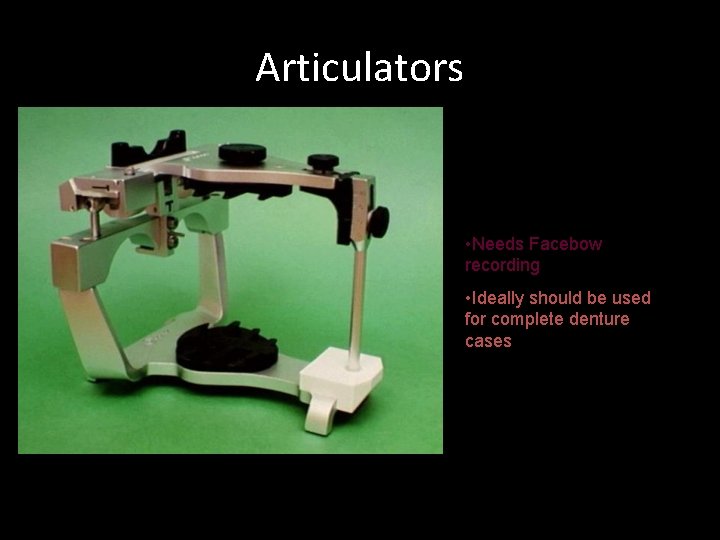
Articulators • Needs Facebow recording • Ideally should be used for complete denture cases
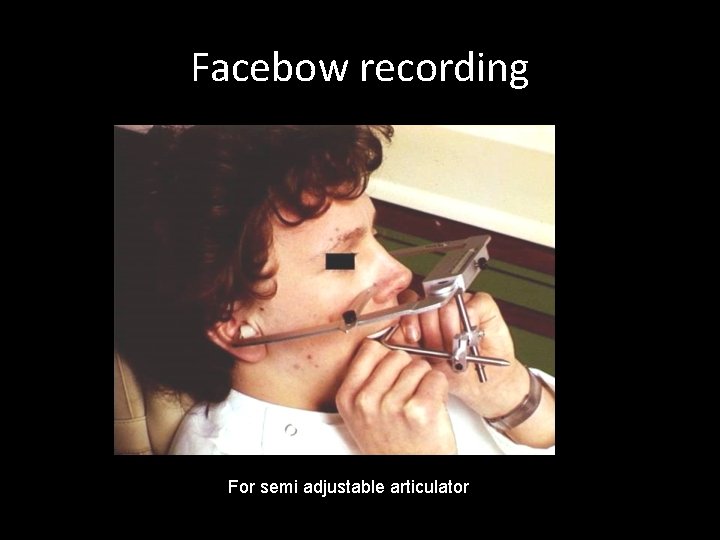
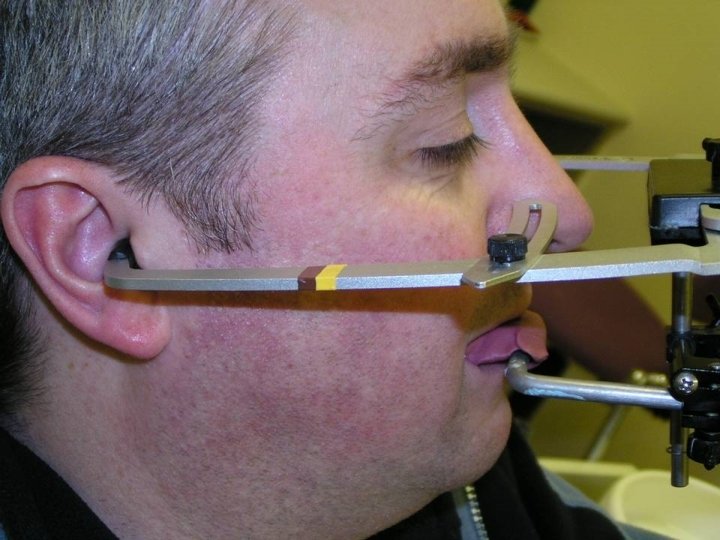
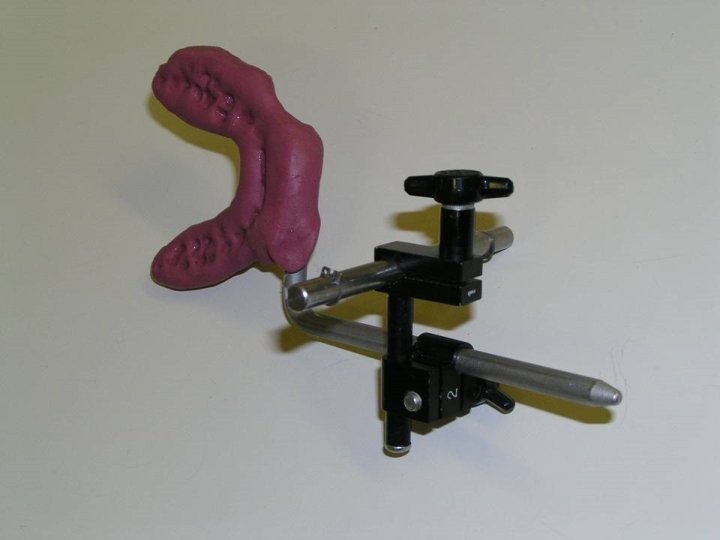
Facebow recording For semi adjustable articulator
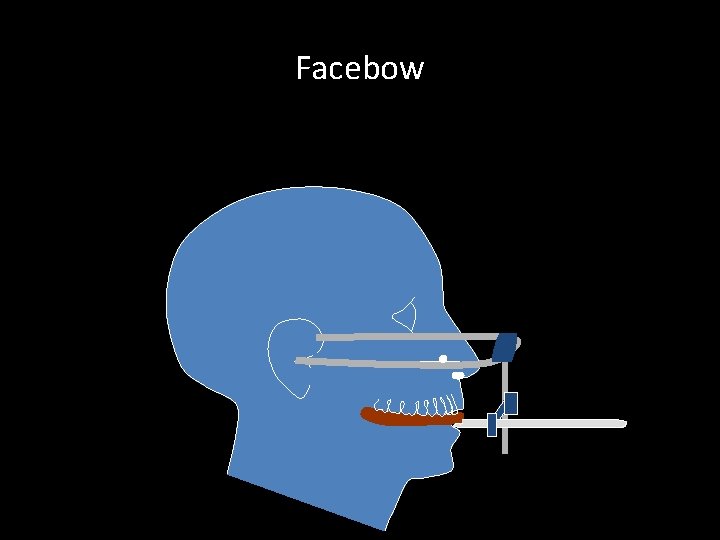
Facebow
Summary The choice of articulator depends upon such factors as; – Intended use - Skill of the technician – Availability of equipment - Expense – Patient's occlusion - Skill of the operator – The more closely the articulator matches the patients anatomy, usually the better the outcome and the less adjustment is required at chairside on fitting prostheses.
Key note messages • No articulator is best and no one can record all jaw movements • Articulator can try to record only jaw movements not reproduced anatomy of joint.

THANK YOU
- Slides: 56