
FUNDAMENTALS OF MECHANICAL SHAPING Introduction Dr Abdulcabbar Yavuz
FUNDAMENTALS OF MECHANICAL SHAPING Introduction Dr. Abdulcabbar Yavuz
MET 206 – Fundamentals of Mechanical Shaping Lectures : Friday 10: 20 to 12: 00 Faculty : Dr. Abdulcabbar Yavuz email: ayavuz@gantep. edu. tr room : Metallurgical and Materials Engineering, 1 st floor References : � Metal Forming: Mechanics and Metallurgy, W. F. HOSFORD, R. M. CADDELL, 3 E, Cambridge U. Press, 2007 � Metal shaping processes: casting and molding, particulate processing, deformation processes, and metal removal, Boljanovic, Vukota. Industrial Press Inc. , 2009. � Mechanical Metallurgy, G. E. Dieter, Mc. Graw-Hill, 3 rd Edition, 1986 � Fundamentals of Modern Manufacturing – materials, processes and systems, Mikell P. Groover, Wiley, 2 nd Edition, 2002 � Manufacturing Processes for Engineering Materials, Serope Kalpakjian and Steven R. Schmid, Prentice Hall, 4 th Edition, 2003 � Materials and Processes in Manufacturing, E. Degarmo, J. T. Black and R. A. Kohser, Wiley, 9 th Edition, 2002. � Material Science and Engineering, W. D. Callister, 8 th Edition, Wiley, 2011
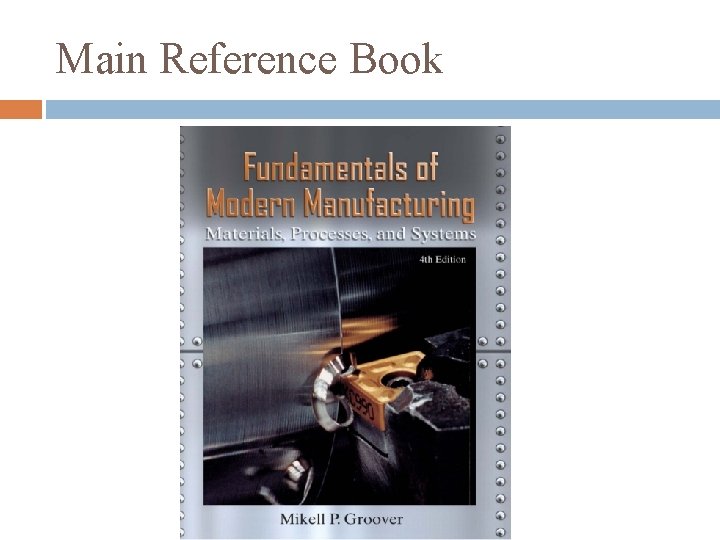
Main Reference Book
MET 206 – Fundamentals of Mechanical Shaping Handouts will be available at my webpage https: //www. gantep. edu. tr/akademik/index. php? ana=100&akad. ID=1000001442&bolum_id=109 Course Outline � 1 - Fundamentals of Metal Forming � � Annealing – Recrystallization Hot, warm or cold forming � � Bulk Deformation 2 - Forging 3 - Rolling 4 - Extrusion, Drawing � Sheet metalworking 5 - Bending 6 - Shearing 7 - Deep drawing � � 8 - Powder Metallurgy Forming and Shaping of Plastics 9 - Thermo-forming 10 - Moulding 11 - Extrusion Material Removal 12 - Machining 13 - Cutting Tools 13 - Friction and Lubrication 14 - Rapid Prototyping and Microfabrication
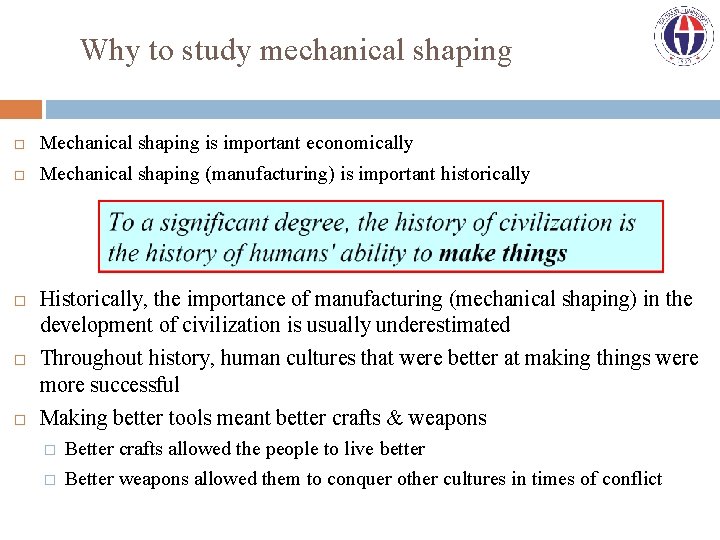
Why to study mechanical shaping Mechanical shaping is important economically Mechanical shaping (manufacturing) is important historically Historically, the importance of manufacturing (mechanical shaping) in the development of civilization is usually underestimated Throughout history, human cultures that were better at making things were more successful Making better tools meant better crafts & weapons � � Better crafts allowed the people to live better Better weapons allowed them to conquer other cultures in times of conflict
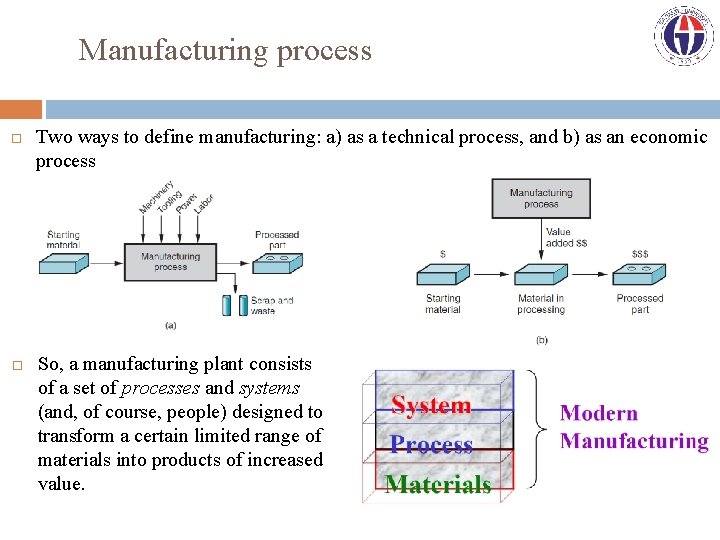
Manufacturing process Two ways to define manufacturing: a) as a technical process, and b) as an economic process So, a manufacturing plant consists of a set of processes and systems (and, of course, people) designed to transform a certain limited range of materials into products of increased value.
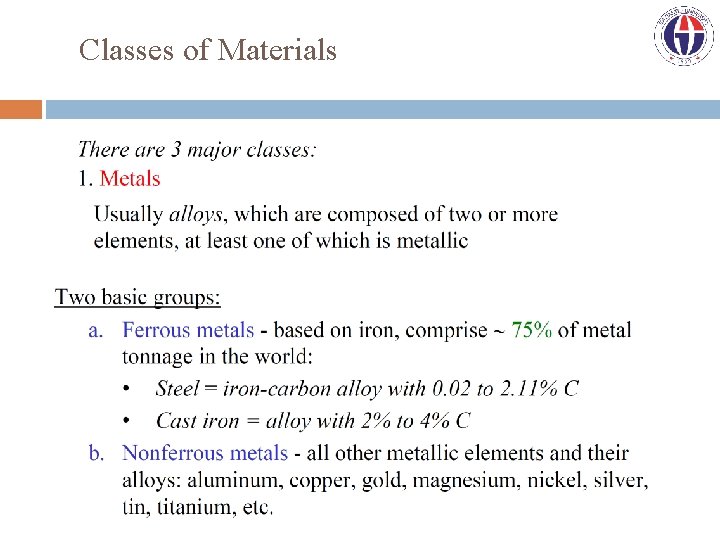
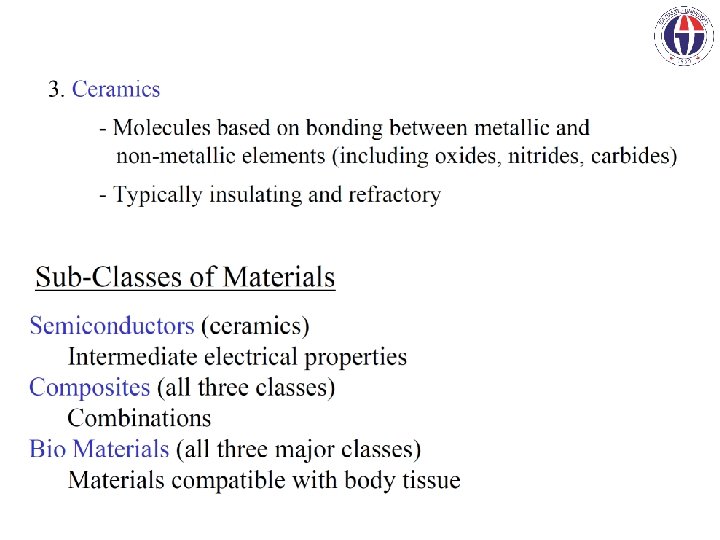
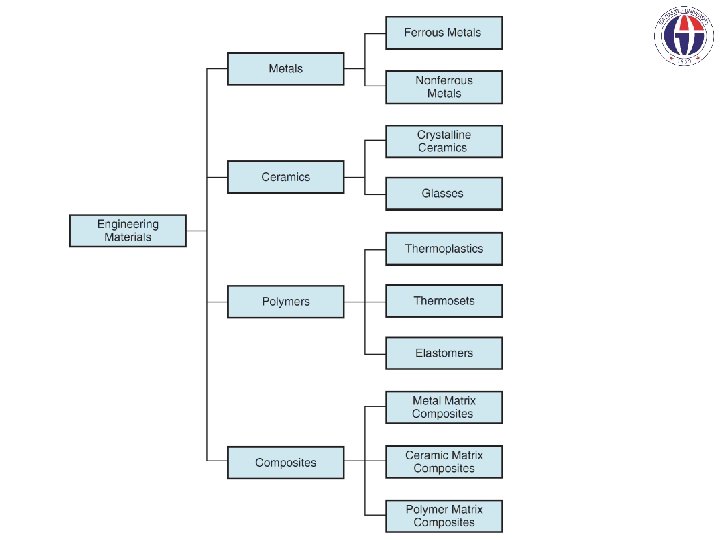
Classes of Materials
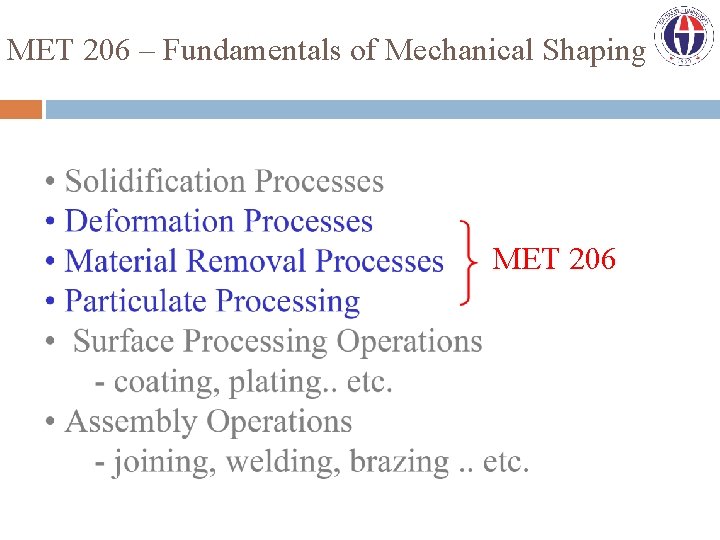
MET 206 – Fundamentals of Mechanical Shaping MET 206
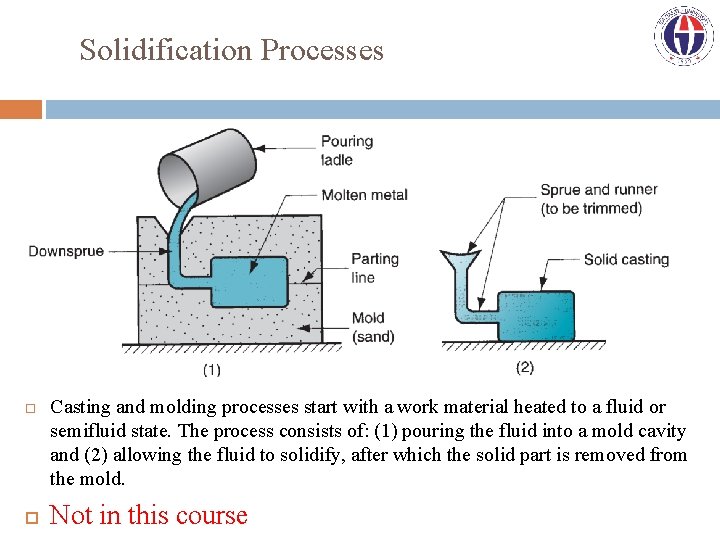
Solidification Processes Casting and molding processes start with a work material heated to a fluid or semifluid state. The process consists of: (1) pouring the fluid into a mold cavity and (2) allowing the fluid to solidify, after which the solid part is removed from the mold. Not in this course
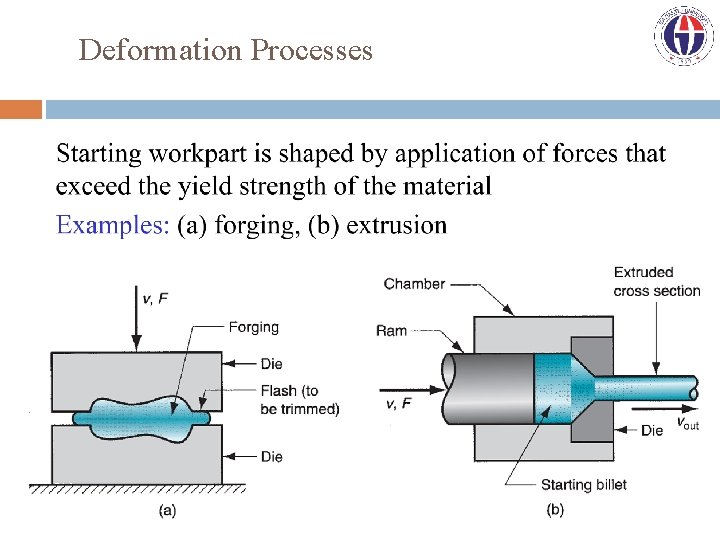
Deformation Processes
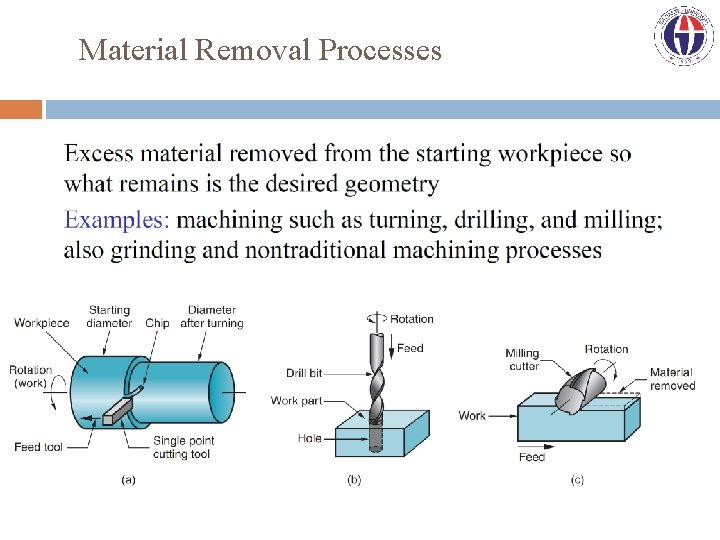
Material Removal Processes
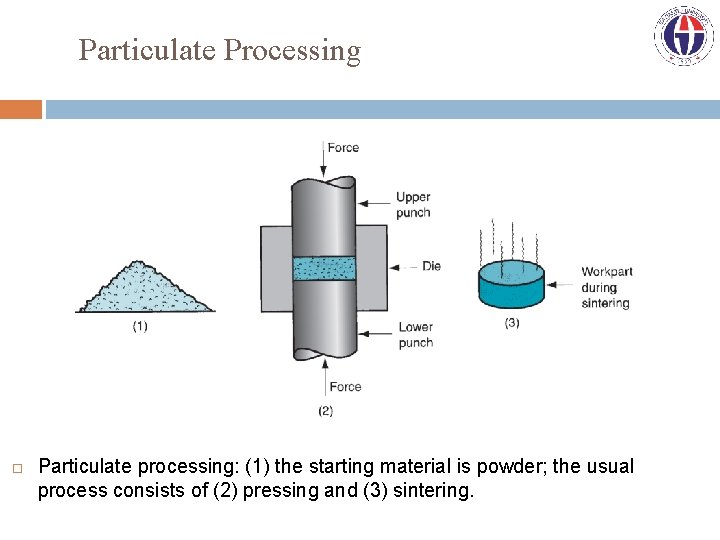
Particulate Processing Particulate processing: (1) the starting material is powder; the usual process consists of (2) pressing and (3) sintering.
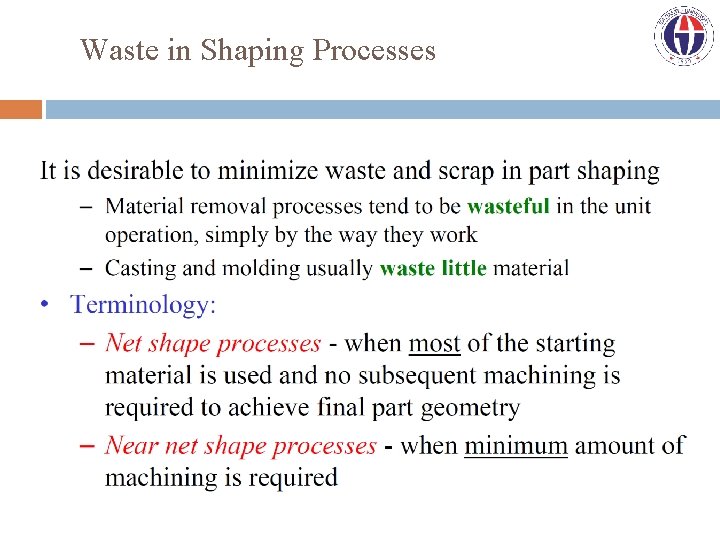
Waste in Shaping Processes
Surface Processing (1) cleaning (2) surface treatments (3) coating and thin film deposition processes. Not in this course
FUNDAMENTALS OF MECHANICAL SHAPING 1. Fundamentals of Metal Forming Dr. Abdulcabbar Yavuz
- Slides: 18