
Fundamentals of Integrated Pest Management IPM Lauren Diepenbrock
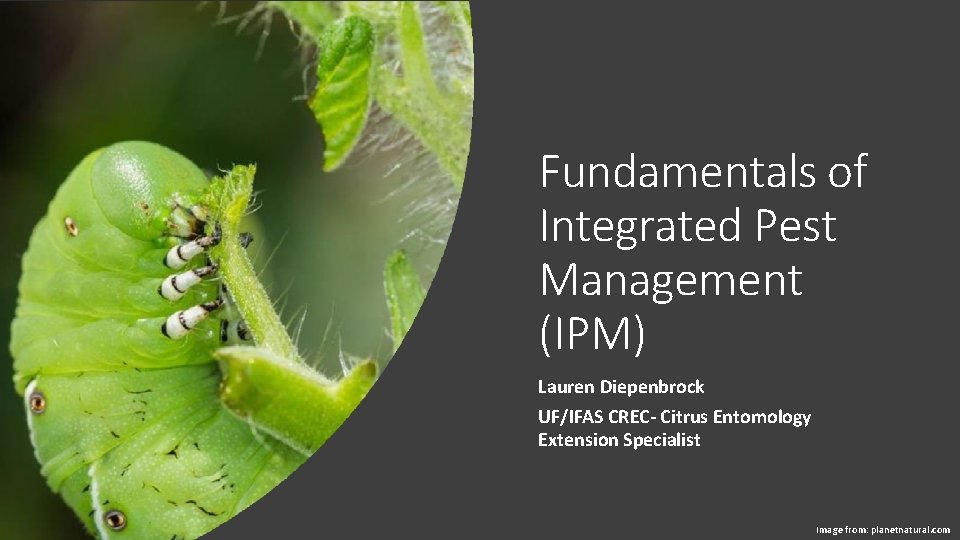
Fundamentals of Integrated Pest Management (IPM) Lauren Diepenbrock UF/IFAS CREC- Citrus Entomology Extension Specialist Image from: planetnatural. com

What is IPM? Images from: planetnatural. com, sundaygardener. net, almanac. com/pest/whiteflies, heartspm. com/giant-swallowtail-butterfly. php, en. Wikipedia. orf/wiki/Anthrocoridae, Diepenbrock

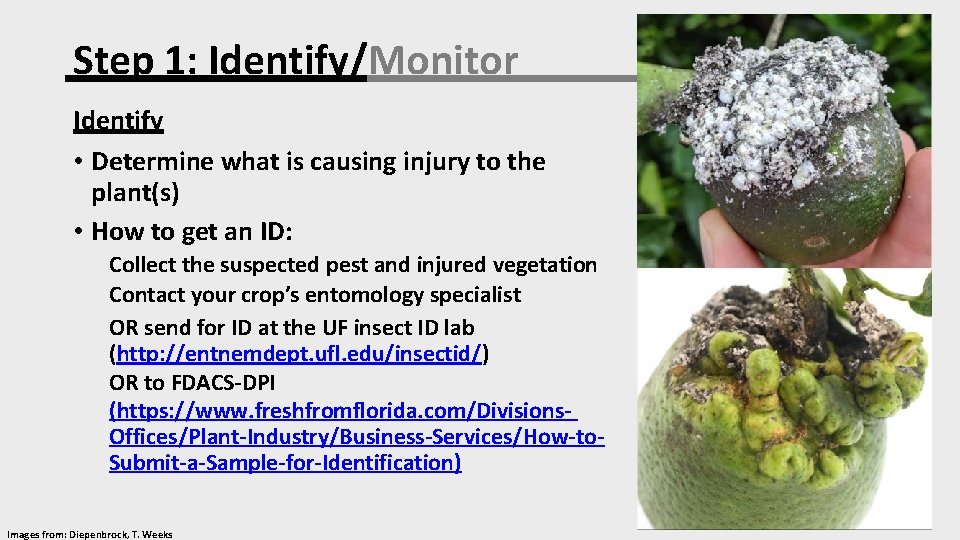
Step 1: Identify/Monitor Identify • Determine what is causing injury to the plant(s) • How to get an ID: Collect the suspected pest and injured vegetation Contact your crop’s entomology specialist OR send for ID at the UF insect ID lab (http: //entnemdept. ufl. edu/insectid/) OR to FDACS-DPI (https: //www. freshfromflorida. com/Divisions. Offices/Plant-Industry/Business-Services/How-to. Submit-a-Sample-for-Identification) Images from: Diepenbrock, T. Weeks
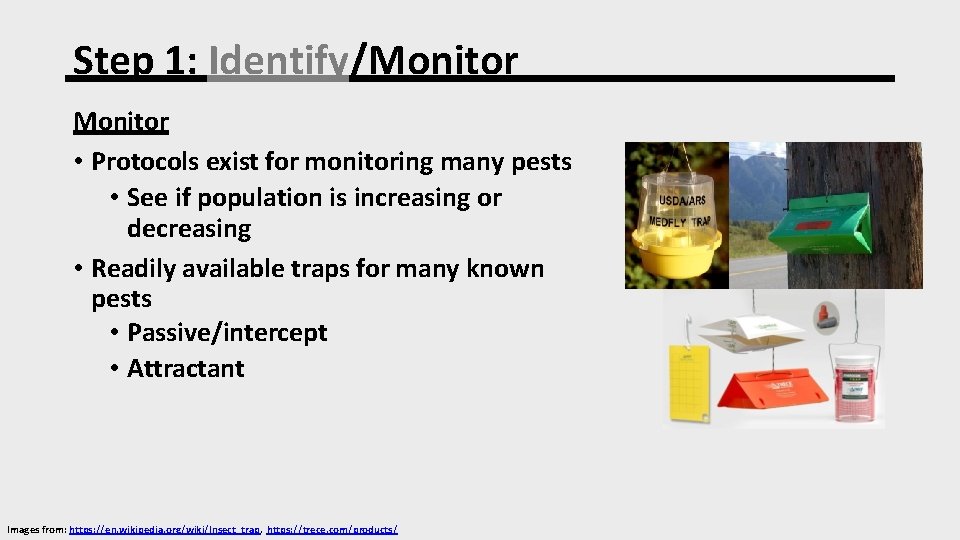
Step 1: Identify/Monitor • Protocols exist for monitoring many pests • See if population is increasing or decreasing • Readily available traps for many known pests • Passive/intercept • Attractant Images from: https: //en. wikipedia. org/wiki/Insect_trap, https: //trece. com/products/
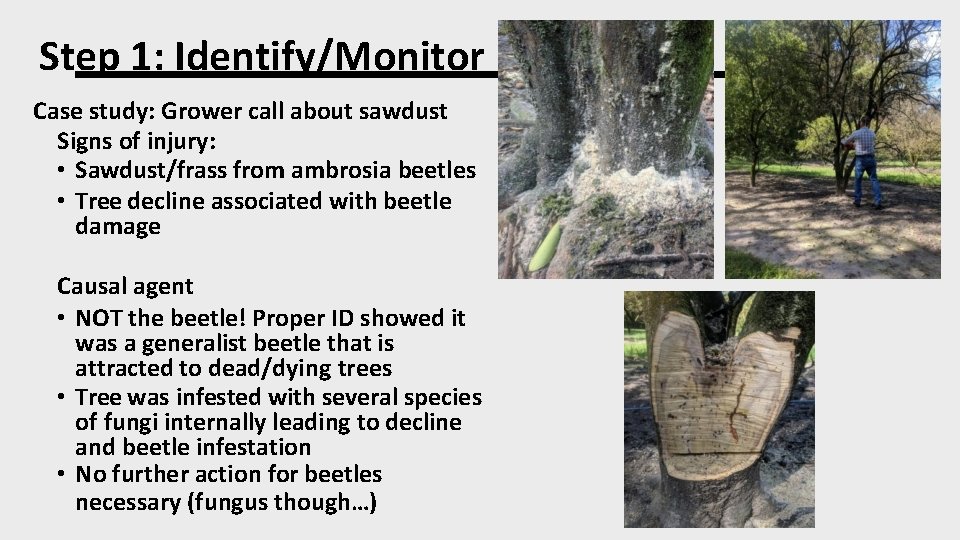
Step 1: Identify/Monitor Case study: Grower call about sawdust Signs of injury: • Sawdust/frass from ambrosia beetles • Tree decline associated with beetle damage Causal agent • NOT the beetle! Proper ID showed it was a generalist beetle that is attracted to dead/dying trees • Tree was infested with several species of fungi internally leading to decline and beetle infestation • No further action for beetles necessary (fungus though…)
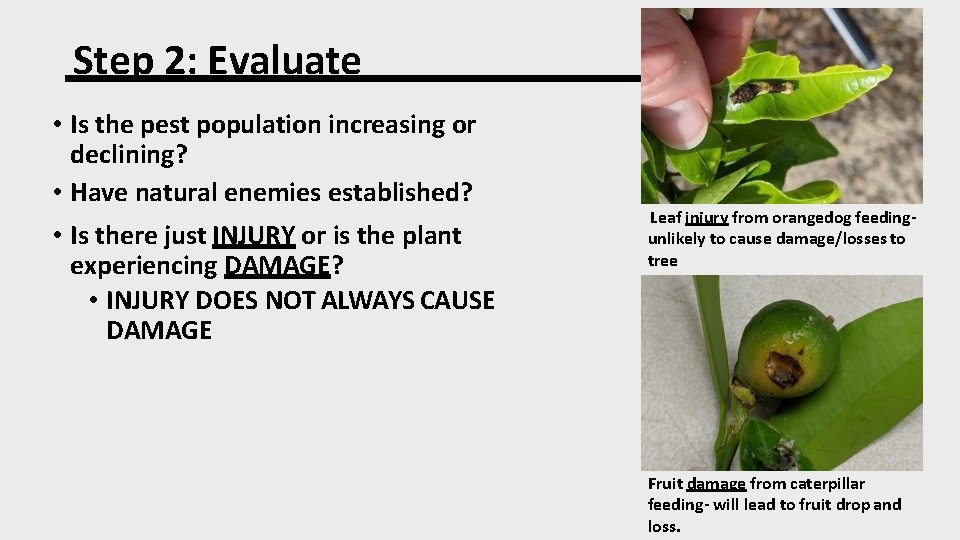
Step 2: Evaluate • Is the pest population increasing or declining? • Have natural enemies established? • Is there just INJURY or is the plant experiencing DAMAGE? • INJURY DOES NOT ALWAYS CAUSE DAMAGE Leaf injury from orangedog feedingunlikely to cause damage/losses to tree Fruit damage from caterpillar feeding- will lead to fruit drop and loss.
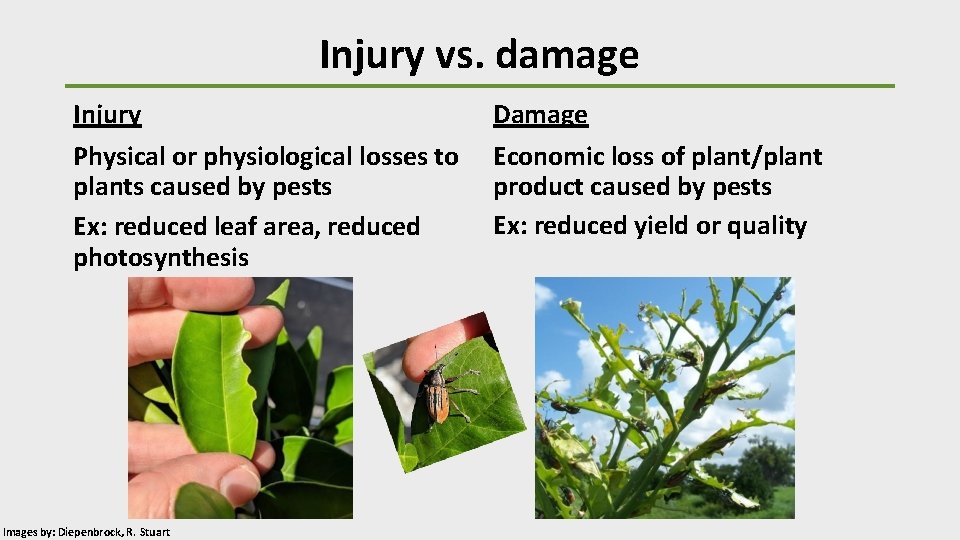
Injury vs. damage Injury Physical or physiological losses to plants caused by pests Ex: reduced leaf area, reduced photosynthesis Images by: Diepenbrock, R. Stuart Damage Economic loss of plant/plant product caused by pests Ex: reduced yield or quality
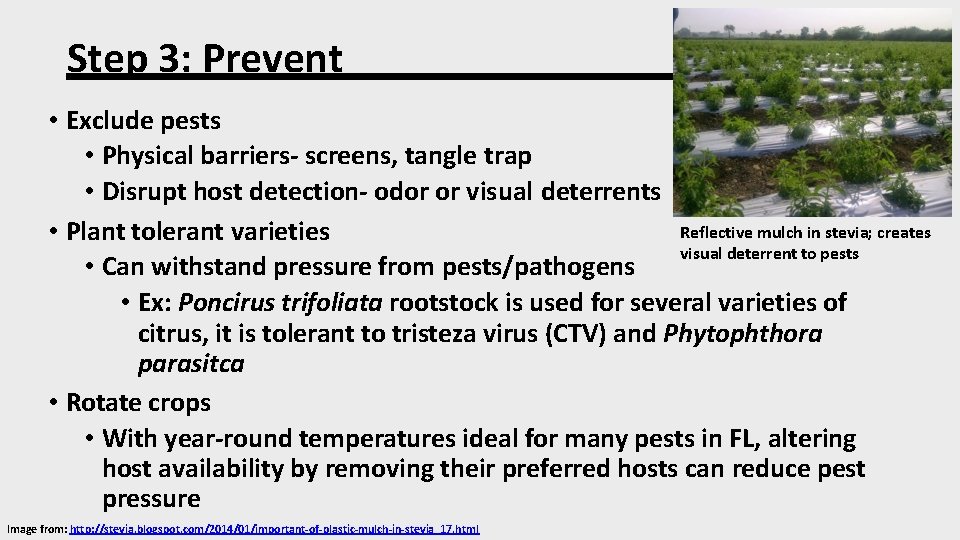
Step 3: Prevent • Exclude pests • Physical barriers- screens, tangle trap • Disrupt host detection- odor or visual deterrents Reflective mulch in stevia; creates • Plant tolerant varieties visual deterrent to pests • Can withstand pressure from pests/pathogens • Ex: Poncirus trifoliata rootstock is used for several varieties of citrus, it is tolerant to tristeza virus (CTV) and Phytophthora parasitca • Rotate crops • With year-round temperatures ideal for many pests in FL, altering host availability by removing their preferred hosts can reduce pest pressure Image from: http: //stevia. blogspot. com/2014/01/important-of-plastic-mulch-in-stevia_17. html
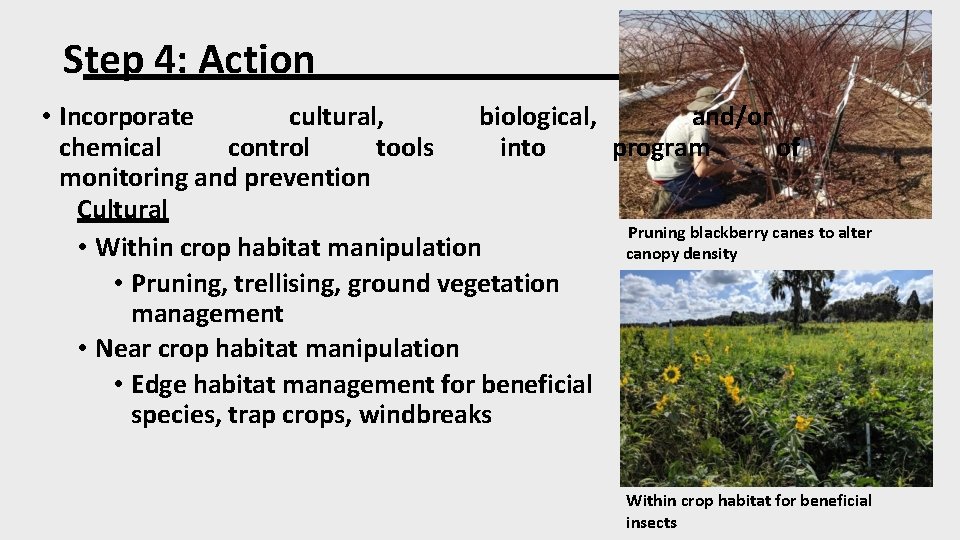
Step 4: Action • Incorporate cultural, biological, and/or chemical control tools into program of monitoring and prevention Cultural Pruning blackberry canes to alter • Within crop habitat manipulation canopy density • Pruning, trellising, ground vegetation management • Near crop habitat manipulation • Edge habitat management for beneficial species, trap crops, windbreaks Within crop habitat for beneficial insects
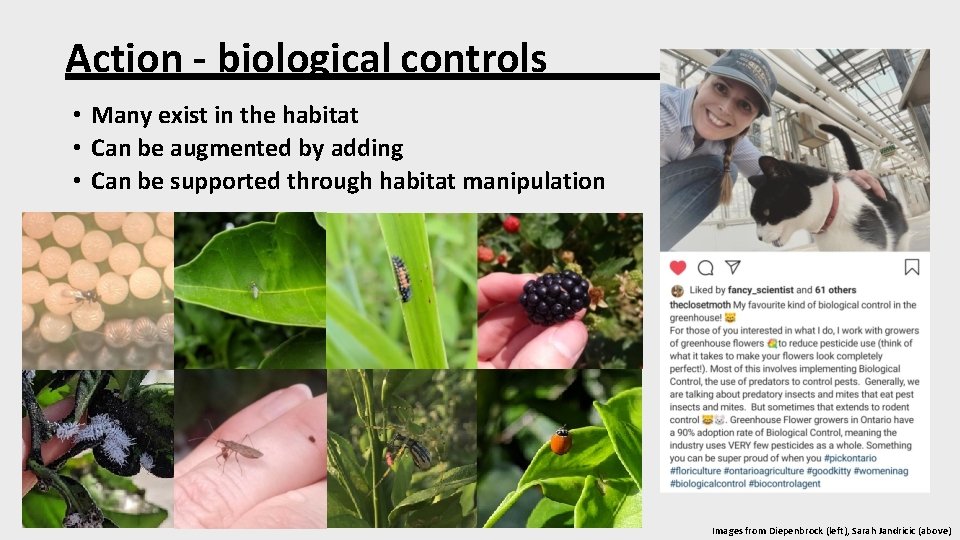
Action - biological controls • Many exist in the habitat • Can be augmented by adding • Can be supported through habitat manipulation Images from Diepenbrock (left), Sarah Jandricic (above)
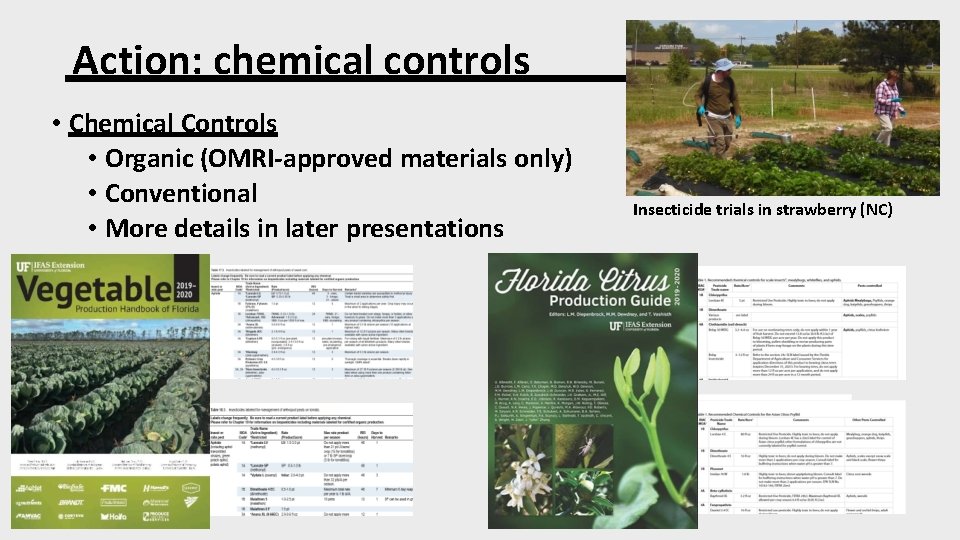
Action: chemical controls • Chemical Controls • Organic (OMRI-approved materials only) • Conventional • More details in later presentations Insecticide trials in strawberry (NC)
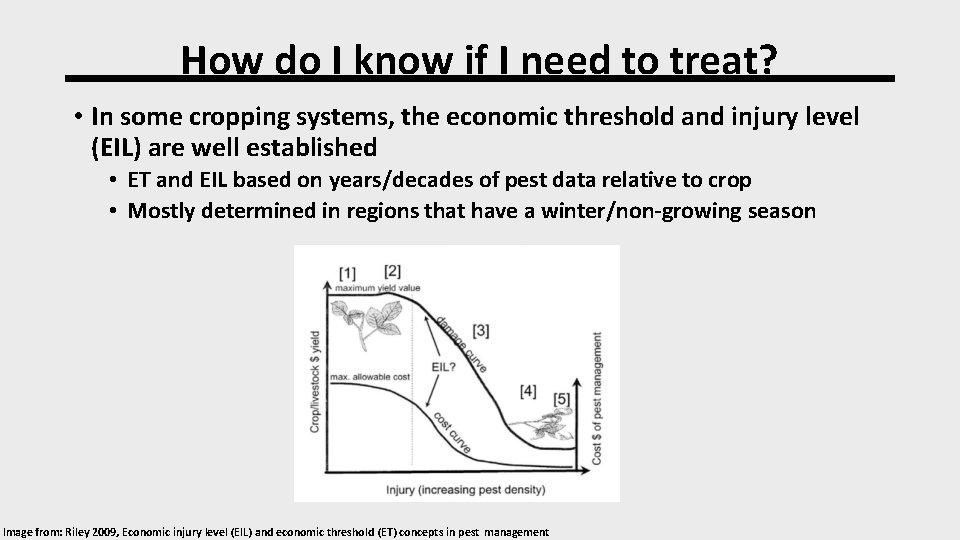
How do I know if I need to treat? • In some cropping systems, the economic threshold and injury level (EIL) are well established • ET and EIL based on years/decades of pest data relative to crop • Mostly determined in regions that have a winter/non-growing season Image from: Riley 2009, Economic injury level (EIL) and economic threshold (ET) concepts in pest management
Florida’s relationship with EILs
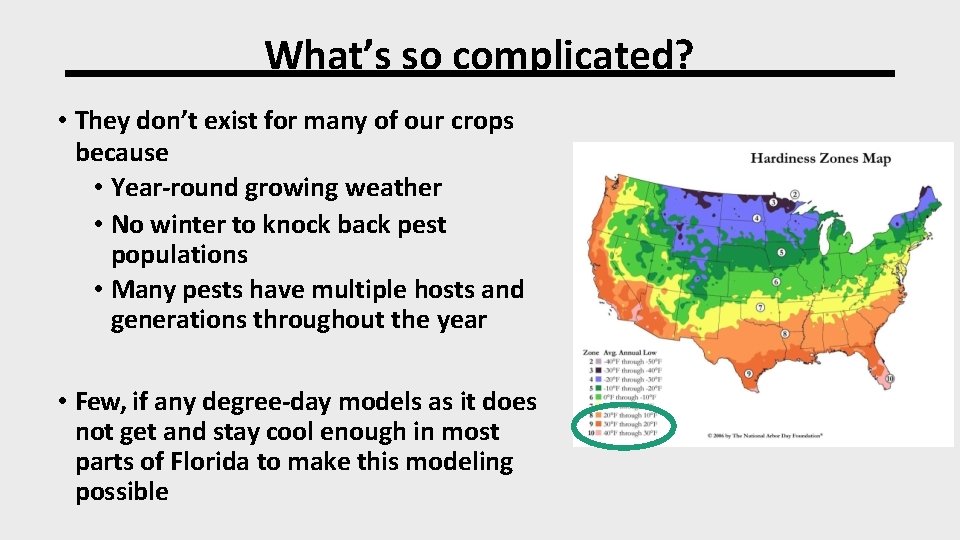
What’s so complicated? • They don’t exist for many of our crops because • Year-round growing weather • No winter to knock back pest populations • Many pests have multiple hosts and generations throughout the year • Few, if any degree-day models as it does not get and stay cool enough in most parts of Florida to make this modeling possible
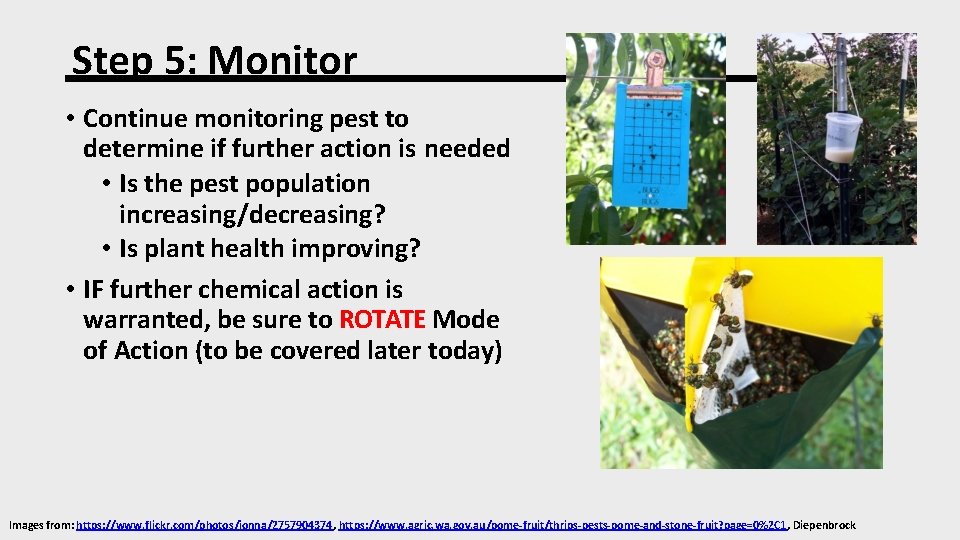
Step 5: Monitor • Continue monitoring pest to determine if further action is needed • Is the pest population increasing/decreasing? • Is plant health improving? • IF further chemical action is warranted, be sure to ROTATE Mode of Action (to be covered later today) Images from: https: //www. flickr. com/photos/jonna/2757904374, https: //www. agric. wa. gov. au/pome-fruit/thrips-pests-pome-and-stone-fruit? page=0%2 C 1, Diepenbrock
Questions? Lauren Diepenbrock ldiepenbrock@ufl. edu 863 -956 -8801
- Slides: 17