
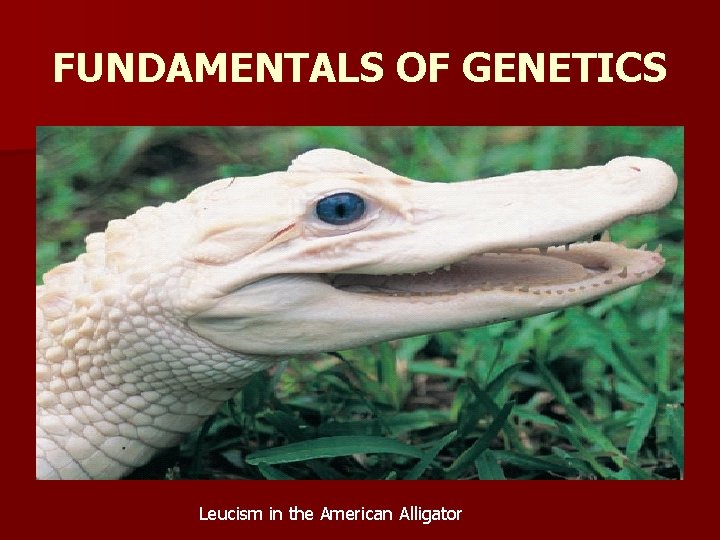
FUNDAMENTALS OF GENETICS Leucism in the American Alligator
- Slides: 29
FUNDAMENTALS OF GENETICS Leucism in the American Alligator
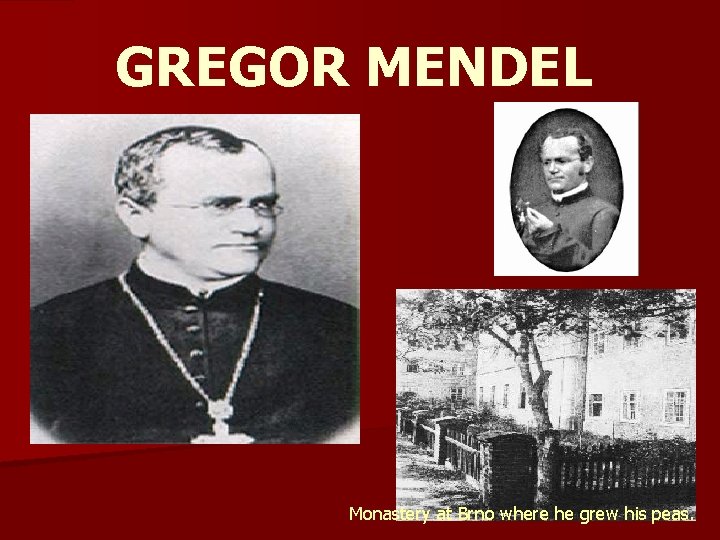
GREGOR MENDEL Monastery at Brno where he grew his peas.
n Genetics is the field of biology devoted to understanding how characteristics are transmitted from parents to offspring. n Genetics was founded with the work of Gregor Johann Mendel in the mid 1800’s.
n Austrian monk who experimented with garden peas. n Mendel’s knowledge of statistics later proved valuable in his research on heredity—the transmission of characteristics from parents to offspring.
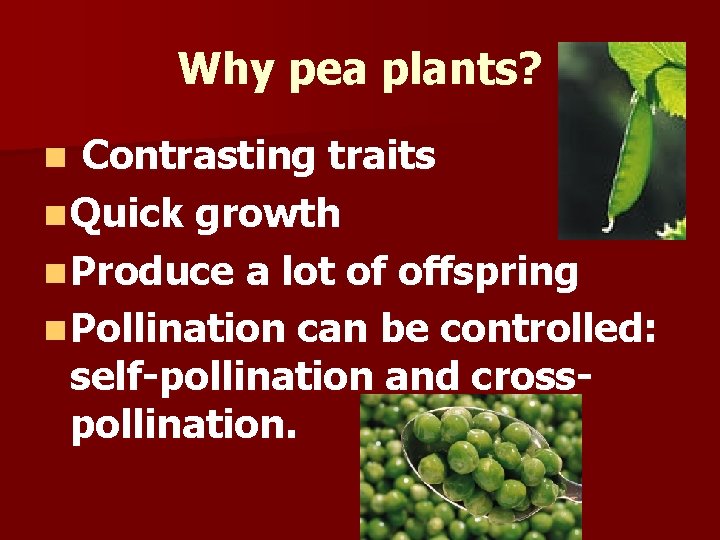
Why pea plants? Contrasting traits n Quick growth n Produce a lot of offspring n Pollination can be controlled: self-pollination and crosspollination. n
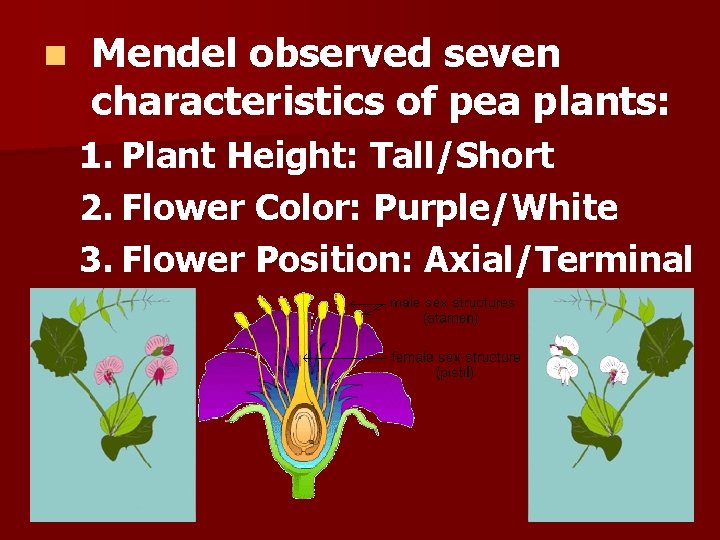
n Mendel observed seven characteristics of pea plants: 1. Plant Height: Tall/Short 2. Flower Color: Purple/White 3. Flower Position: Axial/Terminal
4. Seed Color: Yellow/Green 5. Seed Texture: Smooth/Wrinkled 6. Pod Shape: Inflated/Constricted 7. Pod Color: Green/Yellow
MENDEL’S EXPERIEMENTS n He began by growing plants that were pure for each trait. n Through self-pollination, Mendel developed 14 pure strains. n He called each strain a parental generation, or P 1 generation.
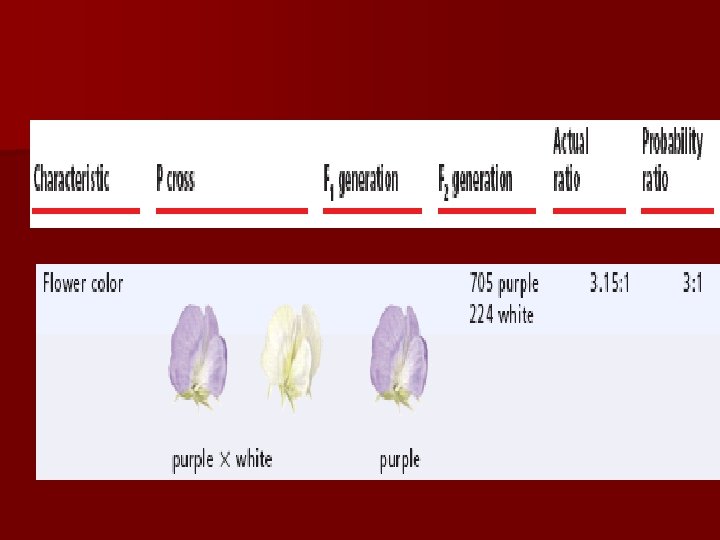
n Mendel then cross-pollinated these strains. n When the plants matured, he recorded the number of each type of offspring produced by each P 1 plant. Mendel called the offspring of the P 1 generation the first filial generation, or F 1 generation.
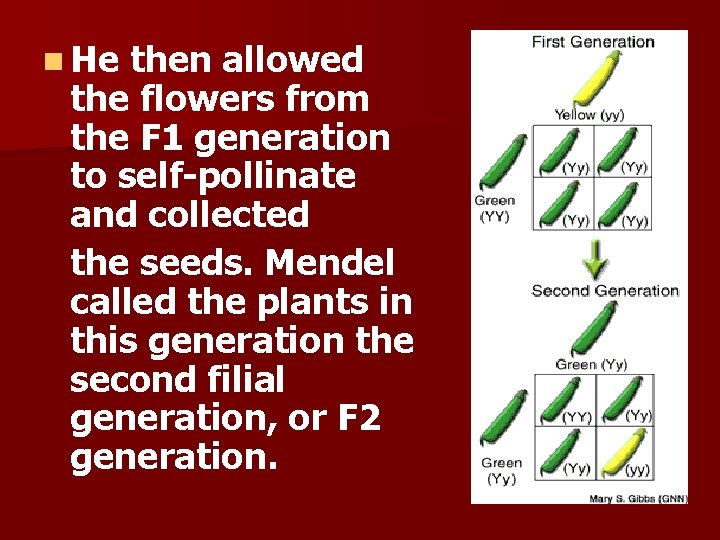
n He then allowed the flowers from the F 1 generation to self-pollinate and collected the seeds. Mendel called the plants in this generation the second filial generation, or F 2 generation.
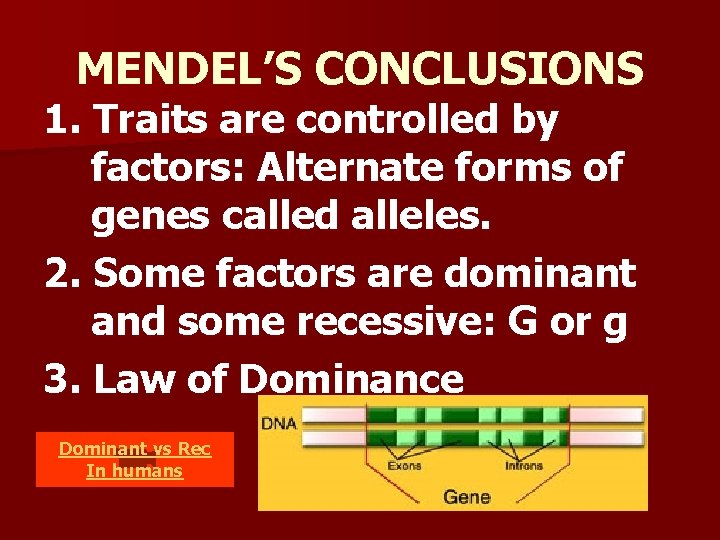
MENDEL’S CONCLUSIONS 1. Traits are controlled by factors: Alternate forms of genes called alleles. 2. Some factors are dominant and some recessive: G or g 3. Law of Dominance Dominant vs Rec In humans
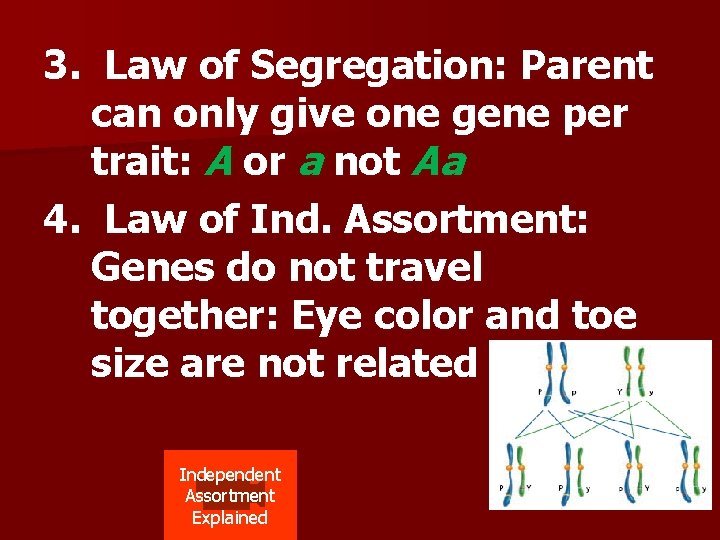
3. Law of Segregation: Parent can only give one gene per trait: A or a not Aa 4. Law of Ind. Assortment: Genes do not travel together: Eye color and toe size are not related Independent Assortment Explained
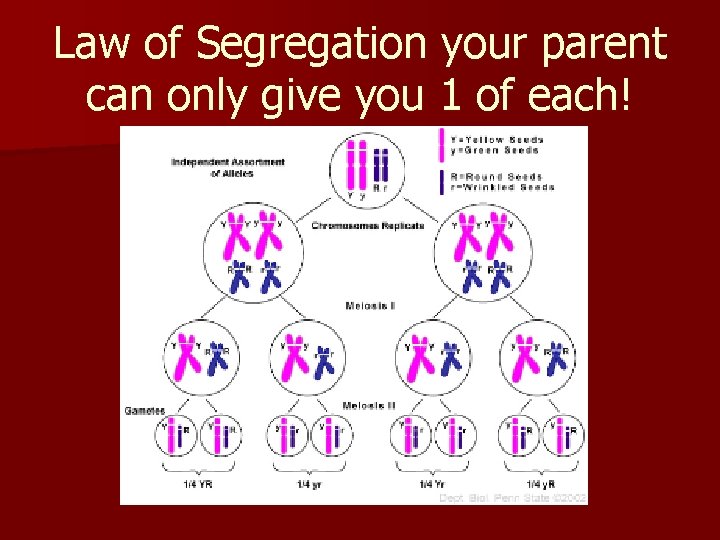
Law of Segregation your parent can only give you 1 of each!
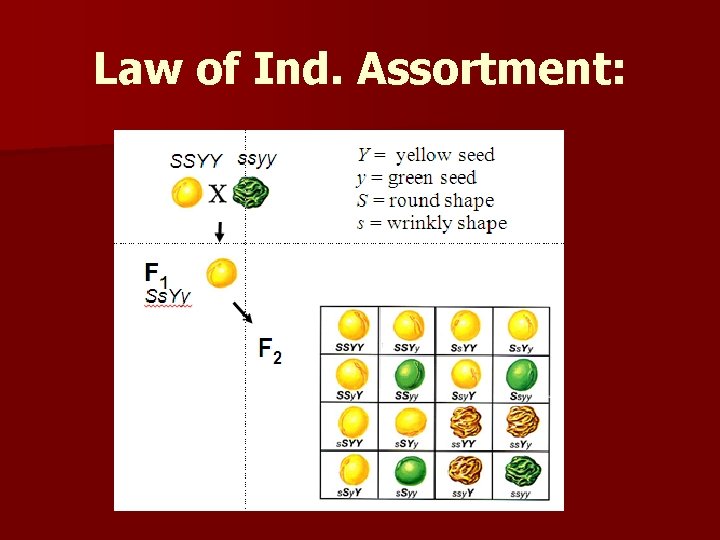
Law of Ind. Assortment:
GENETIC CROSSES n genotype: (gg, GG) The genetic makeup of an organism. n phenotype: (green or yellow seeds) what it looks like
n homozygous for a characteristic: GG or gg. Both alleles are the same (homo) n heterozygous for a characteristic: Gg. Alleles for the trait are different (hetero) n Name each of the following: – Aa – AA – aa
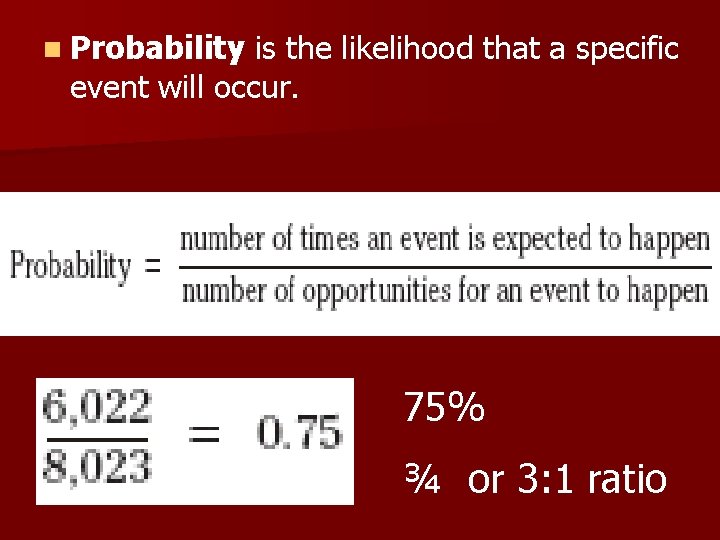
n Probability is the likelihood that a specific event will occur. 75% ¾ or 3: 1 ratio
RATIOS n The ratio of the genotypes that appear in offspring is called the genotypic ratio. n The ratio of the offsprings’ phenotypes is called the phenotypic ratio.
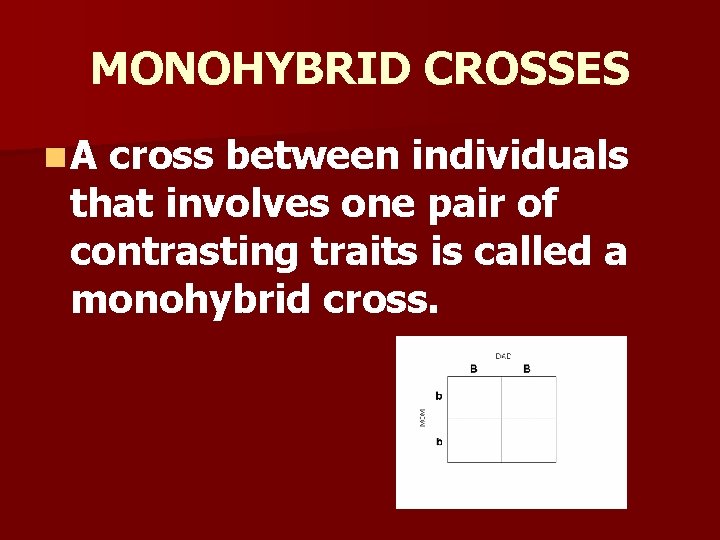
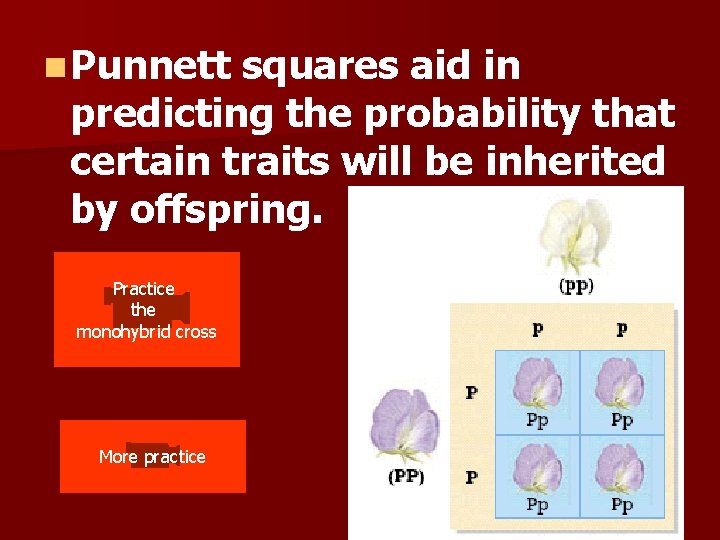
MONOHYBRID CROSSES n. A cross between individuals that involves one pair of contrasting traits is called a monohybrid cross.
n Punnett squares aid in predicting the probability that certain traits will be inherited by offspring. Practice the monohybrid cross More practice
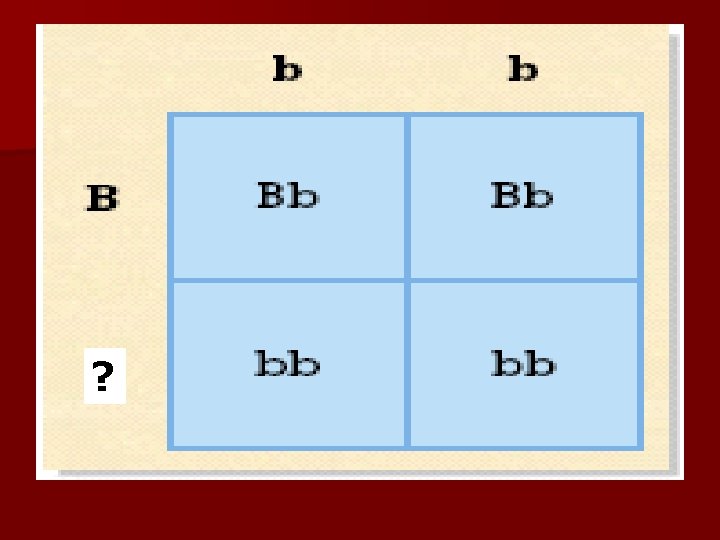
TEST CROSSES n. A testcross can determine the genotype of any individual whose phenotype is dominant.
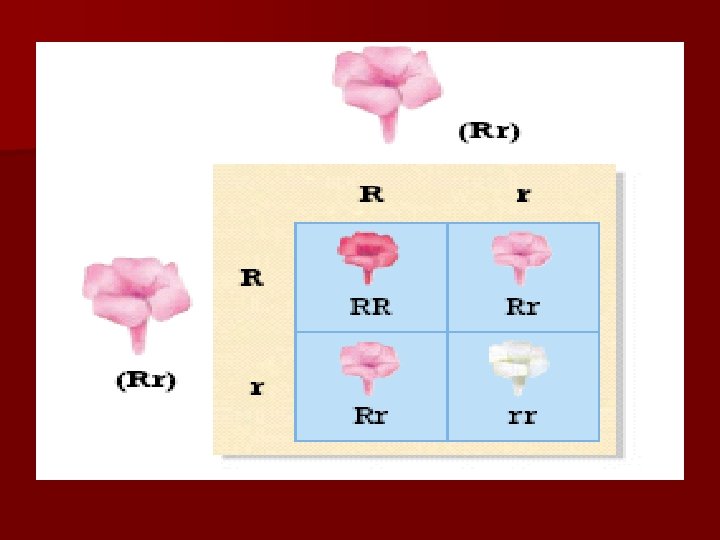
INCOMPLETE DOMINANCE n Sometimes the F 1 offspring will have a phenotype in between that of the parents, a relationship called incomplete dominance.
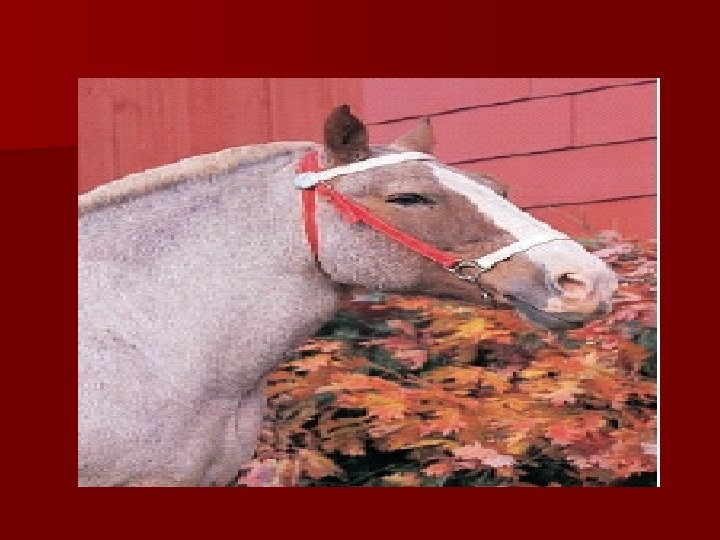
CODOMINANCE n Codominance occurs when both alleles for a gene are expressed in a heterozygous offspring.
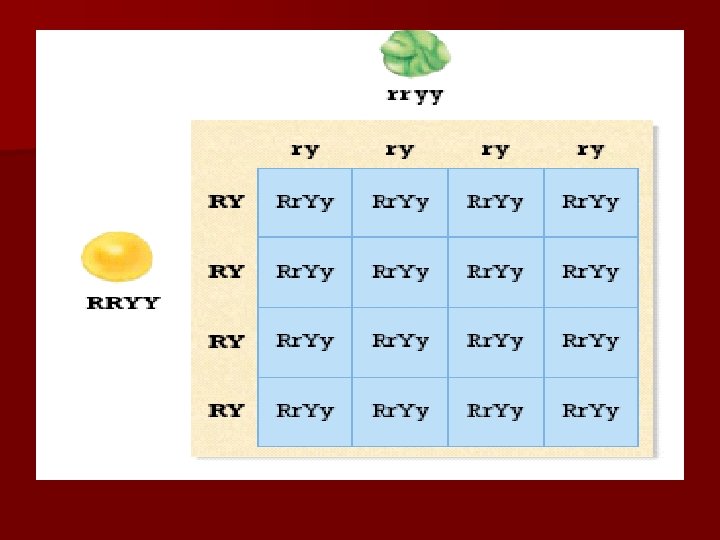
DIHYBRID CROSSES n. A dihybrid cross is a cross between individuals that involves two pairs of contrasting traits. Dihybrid Practice