
Fundamentals of Economics Outline of Unit I Basic
Fundamentals of Economics
Outline of Unit I. Basic Economic Concepts A. B. C. D. E. F. Scarcity, choice and opportunity cost Production possibilities curve Comparative advantage, absolute advantage, specialization, trade Economic systems Property rights and the role of incentives Marginal analysis
What is Economics? • Social science deals with choice and how to allocate scarce resources • Also examines decision making when dealing with scarcity • Microeconomics: study of individual decision making such as a household or a firm Ex: How much should businesses charge for products Ex: How many hours should a person work
Scarcity, choice and opportunity cost Topic 1. 1
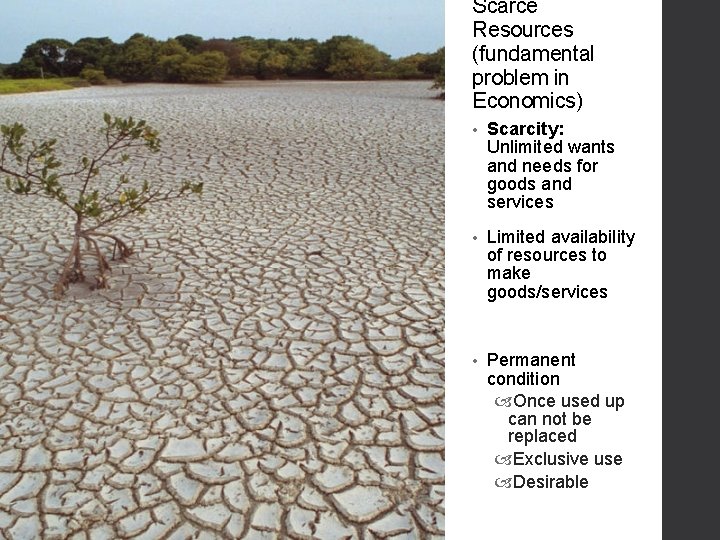
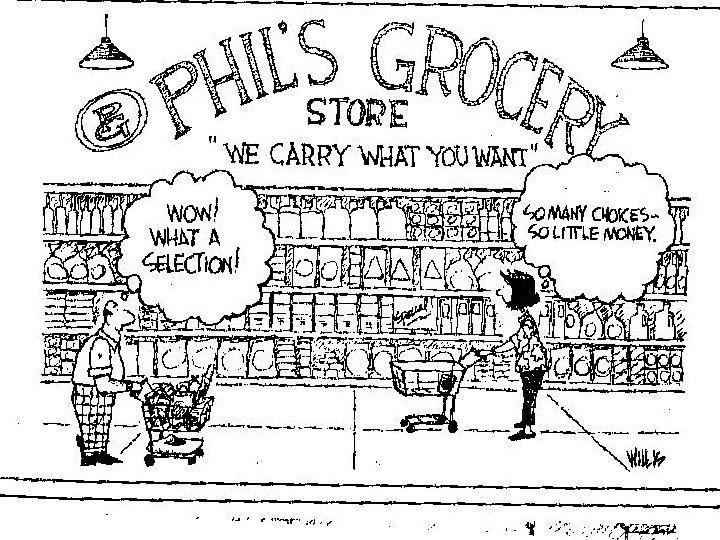
Scarce Resources (fundamental problem in Economics) • Scarcity: Unlimited wants and needs for goods and services • Limited availability of resources to make goods/services • Permanent condition Once used up can not be replaced Exclusive use Desirable

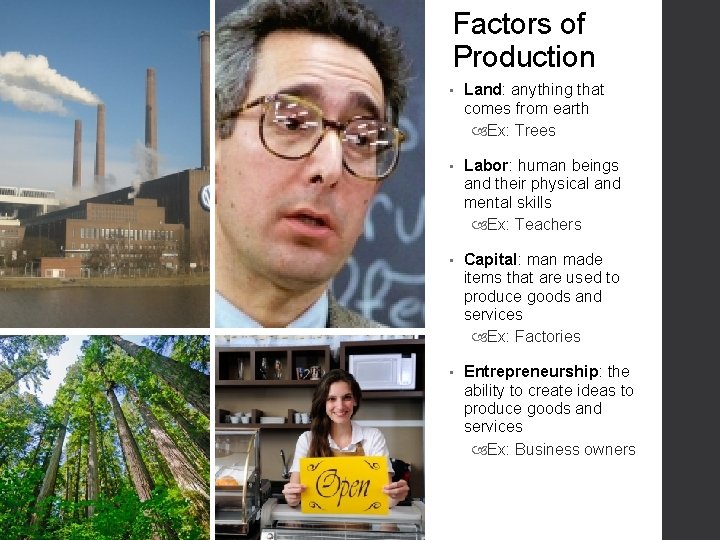
Factors of Production • Land: anything that comes from earth Ex: Trees • Labor: human beings and their physical and mental skills Ex: Teachers • Capital: man made items that are used to produce goods and services Ex: Factories • Entrepreneurship: the ability to create ideas to produce goods and services Ex: Business owners
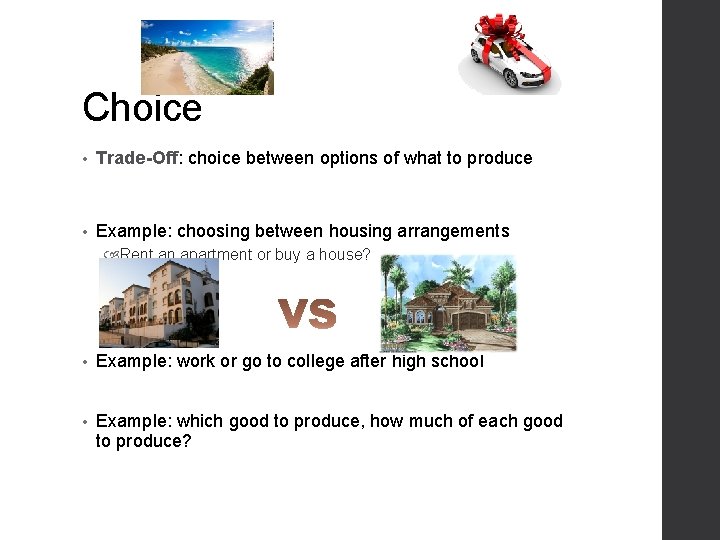
Choice • Trade-Off: choice between options of what to produce • Example: choosing between housing arrangements Rent an apartment or buy a house? • Example: work or go to college after high school • Example: which good to produce, how much of each good to produce?
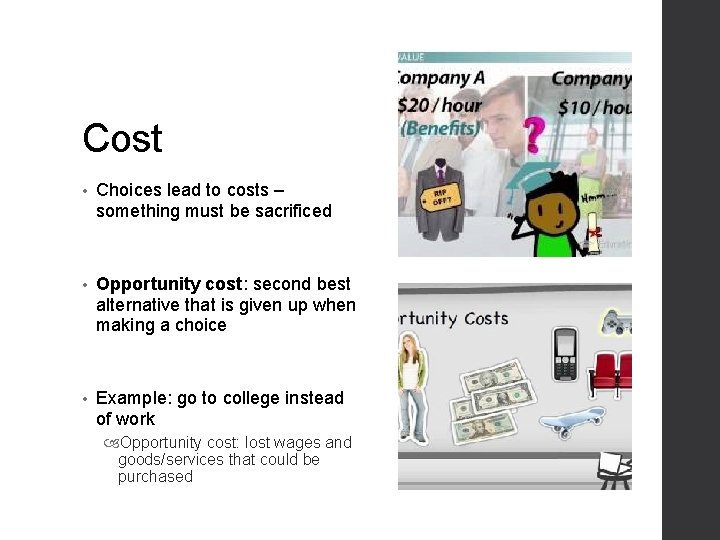
Cost • Choices lead to costs – something must be sacrificed • Opportunity cost: second best alternative that is given up when making a choice • Example: go to college instead of work Opportunity cost: lost wages and goods/services that could be purchased
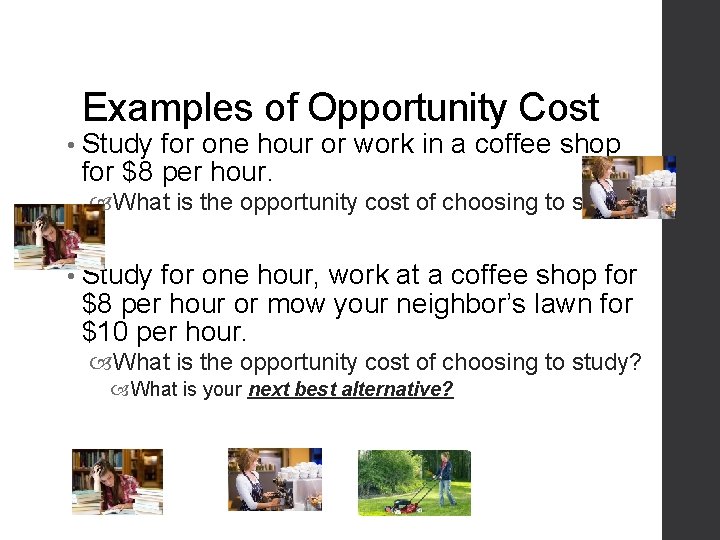
Examples of Opportunity Cost • Study for one hour or work in a coffee shop for $8 per hour. What is the opportunity cost of choosing to study? • Study for one hour, work at a coffee shop for $8 per hour or mow your neighbor’s lawn for $10 per hour. What is the opportunity cost of choosing to study? What is your next best alternative?
Resource Allocation and Economic Systems Topic 1. 2
• Market System: system where consumers and producers make the decisions about what is produced Capitalism • Command System: system where the central planners/government owns key resources and decides what is produced Socialism Communism Types of Systems
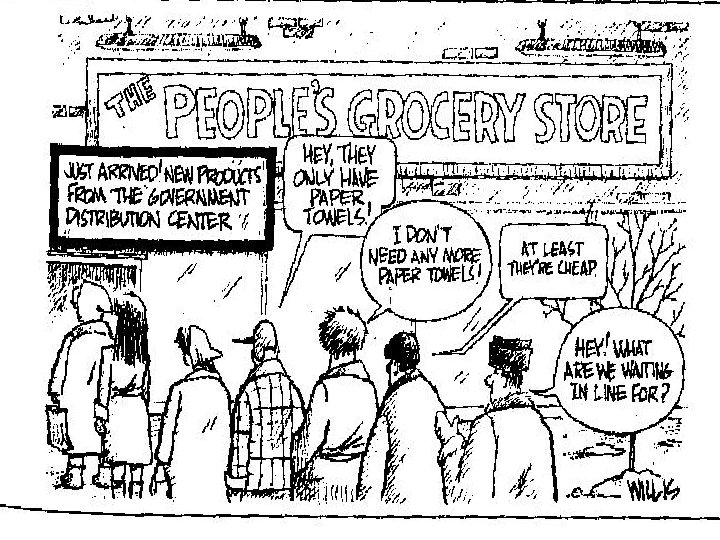
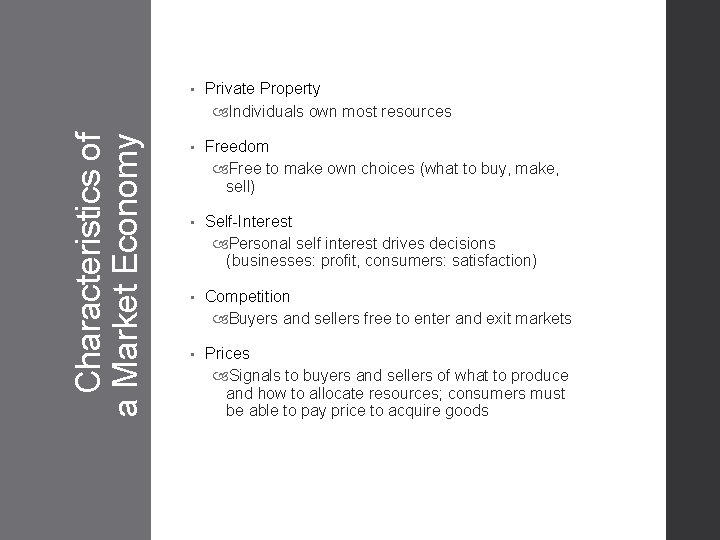
Characteristics of a Market Economy • Private Property Individuals own most resources • Freedom Free to make own choices (what to buy, make, sell) • Self-Interest Personal self interest drives decisions (businesses: profit, consumers: satisfaction) • Competition Buyers and sellers free to enter and exit markets • Prices Signals to buyers and sellers of what to produce and how to allocate resources; consumers must be able to pay price to acquire goods
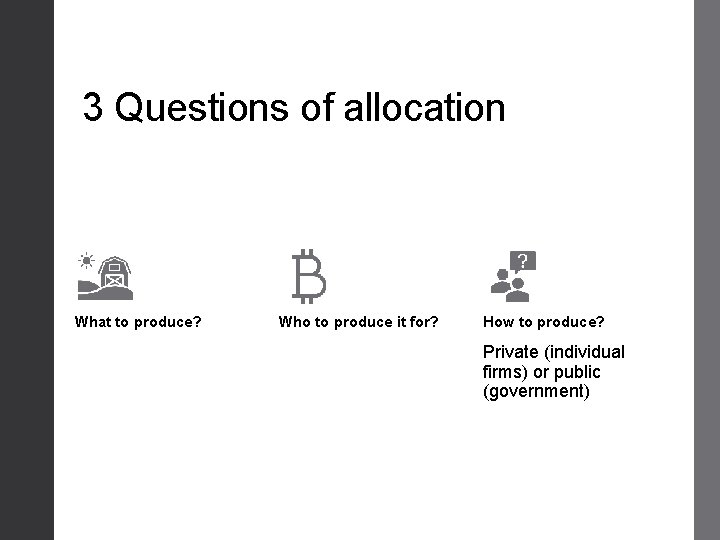
3 Questions of allocation What to produce? Who to produce it for? How to produce? Private (individual firms) or public (government)

Production Possibilities Curve Topic 1. 3
Production Possibilities Curve • Production Possibilities Curve: Graph showing options for allocating resources between production of two different goods or services Assumes all resources are fully employed and used efficiently Shows the opportunity cost of producing • Curve shows efficient production (all resources being used efficiently) • Example: Bakery owner has what resources? Labor: Capital: Natural:
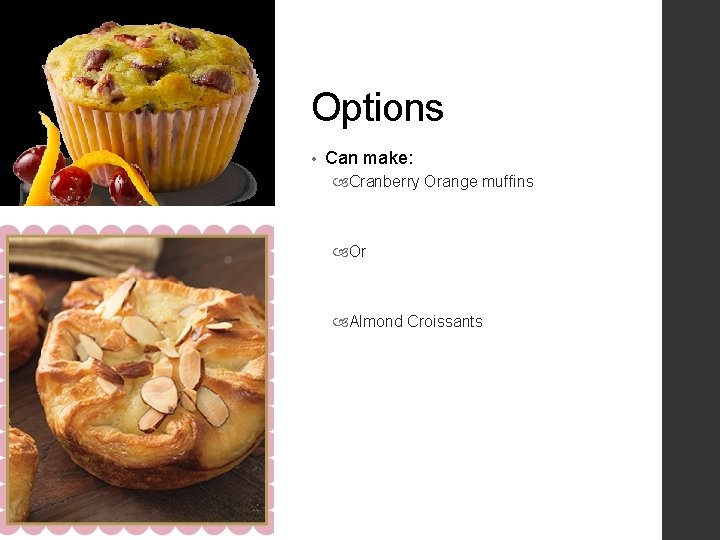
Options • Can make: Cranberry Orange muffins Or Almond Croissants
Production Possibilities Table Cranberry Orange Muffins Almond Croissant 0 10 1 8 2 6 3 4 4 2 5 0 What happens as more croissants are produced? What happens as more muffins are produced? What is the opportunity cost of producing 1 muffin? What is the opportunity cost of producing 1 croissant?
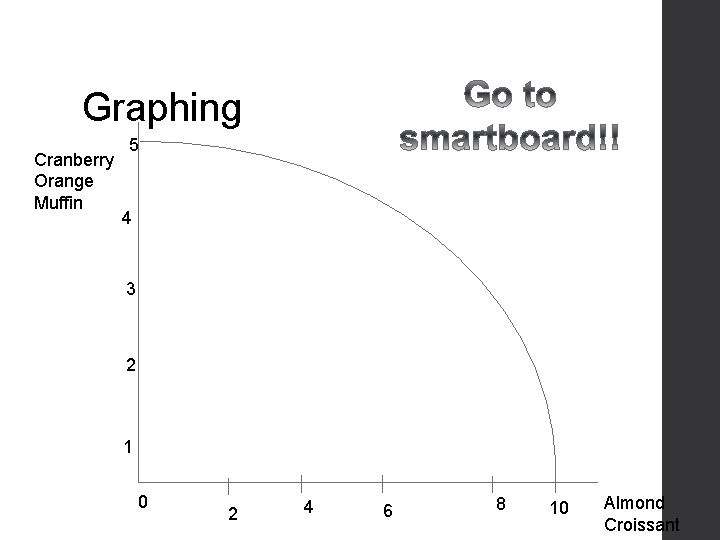
Graphing Cranberry Orange Muffin 5 4 3 2 1 0 2 4 6 8 10 Almond Croissant
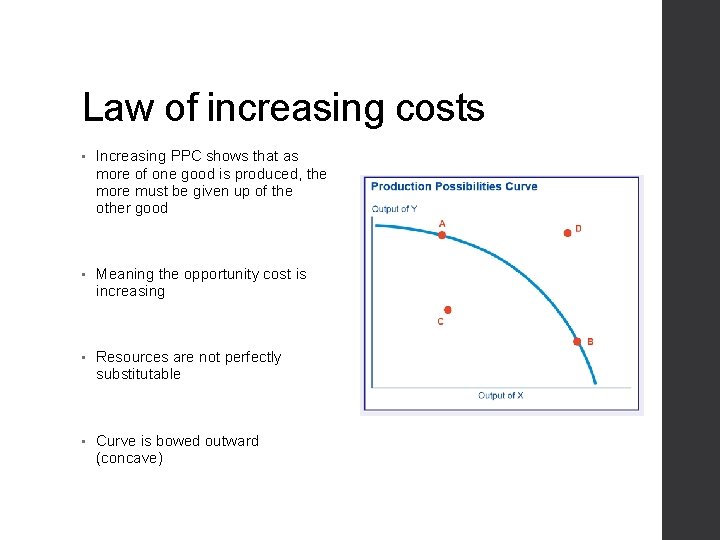
Law of increasing costs • Increasing PPC shows that as more of one good is produced, the more must be given up of the other good • Meaning the opportunity cost is increasing • Resources are not perfectly substitutable • Curve is bowed outward (concave)
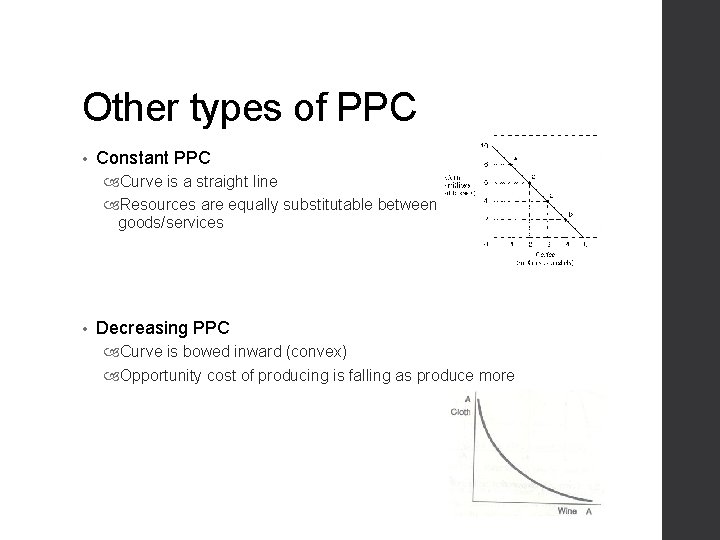
Other types of PPC • Constant PPC Curve is a straight line Resources are equally substitutable between goods/services • Decreasing PPC Curve is bowed inward (convex) Opportunity cost of producing is falling as produce more
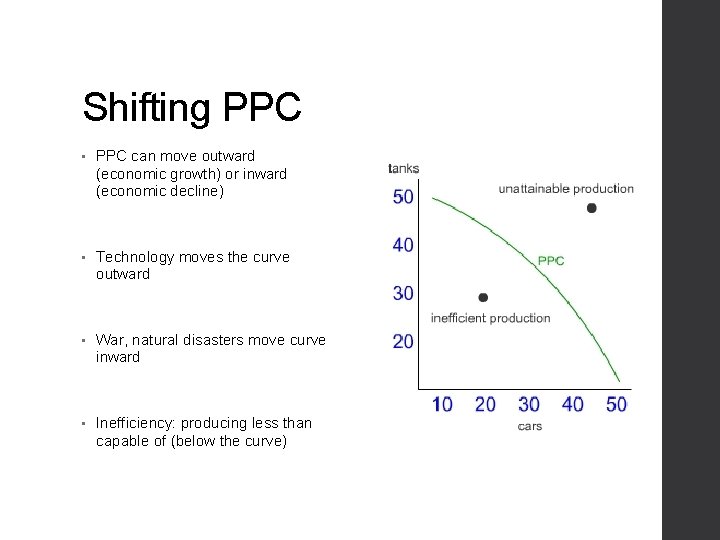
Shifting PPC • PPC can move outward (economic growth) or inward (economic decline) • Technology moves the curve outward • War, natural disasters move curve inward • Inefficiency: producing less than capable of (below the curve)
Comparative Advantage Absolute Advantage, Specialization, Trade Topic 1. 4
• Comparative Advantage: idea that one person/firm/country can produce at a lower opportunity cost than another, given the same resources • Absolute Advantage: idea that given the same resources, one person/firm/country can produce more of a good than another
• Countries/firms/people will specialize in the production of what they have the comparative advantage in • Then they trade and get more goods/services overall • Allows them to be better off
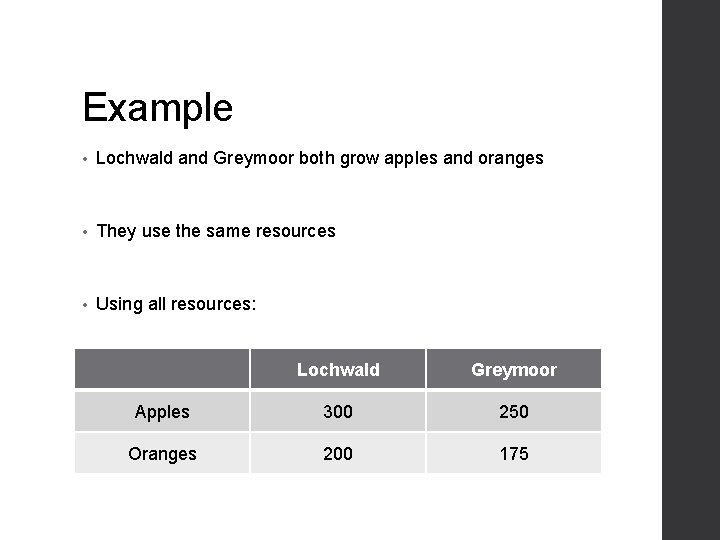
Example • Lochwald and Greymoor both grow apples and oranges • They use the same resources • Using all resources: Lochwald Greymoor Apples 300 250 Oranges 200 175
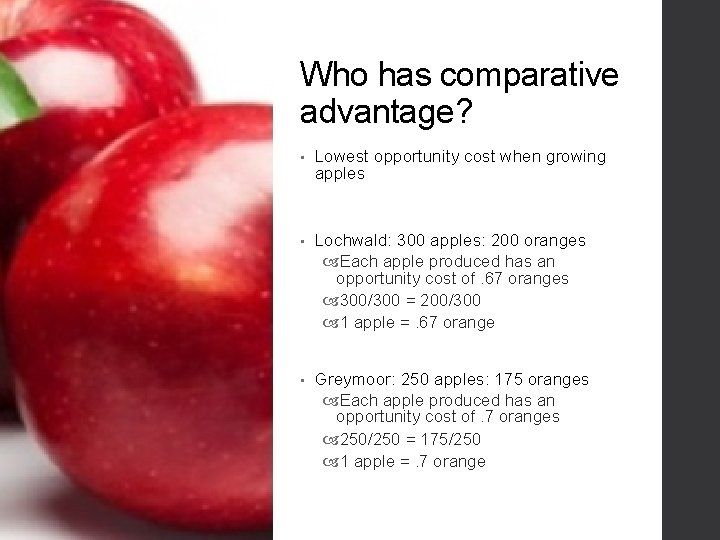
Who has comparative advantage? • Lowest opportunity cost when growing apples • Lochwald: 300 apples: 200 oranges Each apple produced has an opportunity cost of. 67 oranges 300/300 = 200/300 1 apple =. 67 orange • Greymoor: 250 apples: 175 oranges Each apple produced has an opportunity cost of. 7 oranges 250/250 = 175/250 1 apple =. 7 orange
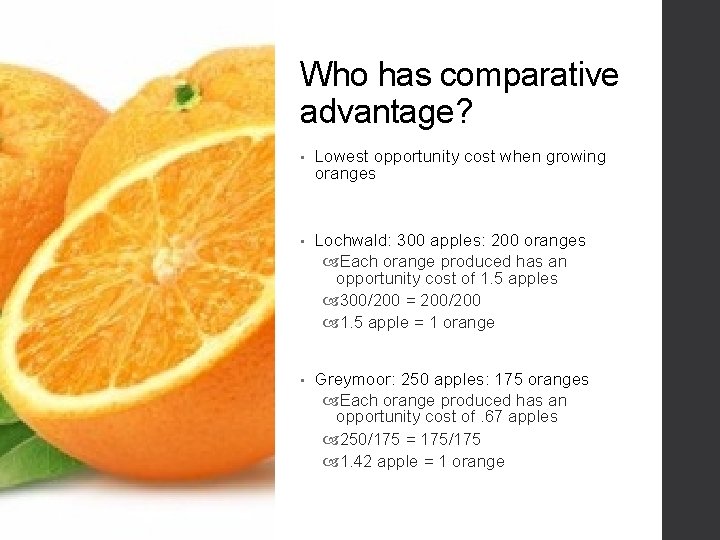
Who has comparative advantage? • Lowest opportunity cost when growing oranges • Lochwald: 300 apples: 200 oranges Each orange produced has an opportunity cost of 1. 5 apples 300/200 = 200/200 1. 5 apple = 1 orange • Greymoor: 250 apples: 175 oranges Each orange produced has an opportunity cost of. 67 apples 250/175 = 175/175 1. 42 apple = 1 orange
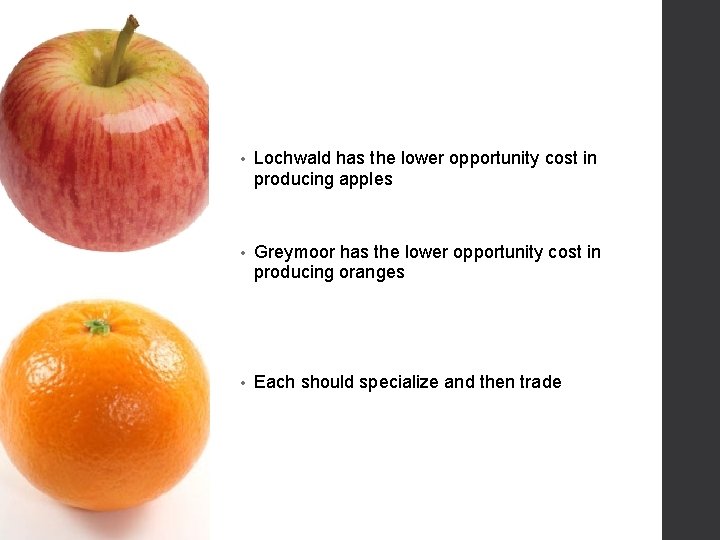
• Lochwald has the lower opportunity cost in producing apples • Greymoor has the lower opportunity cost in producing oranges • Each should specialize and then trade
Practice • Ray and Dorothy can both cook and can both pull weeds in the garden on a Saturday afternoon. For every hour of cooking, Ray can pull 50 weeds and Dorothy can pull 100 weeds. Based on this information: a) Ray pulls weeds since he has the absolute advantage in cooking b) Dorothy pulls weeds since she has the absolute advantage in cooking c) Dorothy cooks since she has comparative advantage in cooking d) Ray cooks since he has comparative advantage in cooking e) Dorothy pulls weeds since she has comparative advantage in cooking
Marginal Analysis Topic 1. 6
Utility means satisfaction or happiness It is the satisfaction gained from consuming a good or service Total utility is all the satisfaction you receive from consuming all units of a good or service Marginal utility is the additional satisfaction you receive from consuming 1 more unit of a good or service
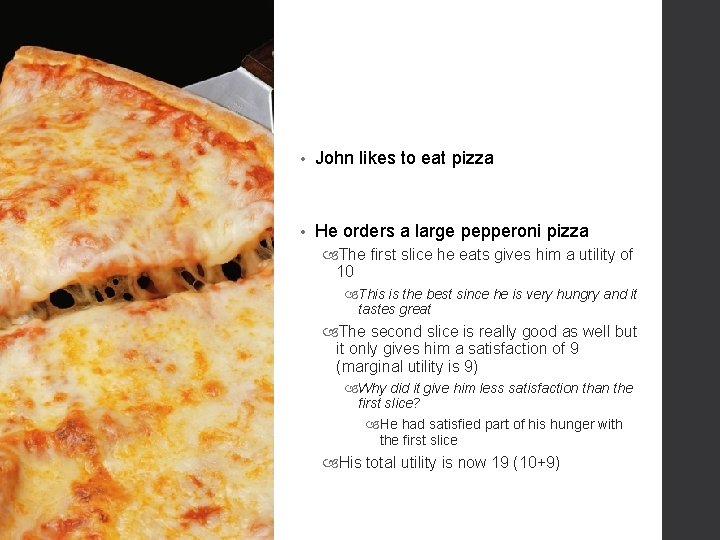
• John likes to eat pizza • He orders a large pepperoni pizza The first slice he eats gives him a utility of 10 This is the best since he is very hungry and it tastes great The second slice is really good as well but it only gives him a satisfaction of 9 (marginal utility is 9) Why did it give him less satisfaction than the first slice? He had satisfied part of his hunger with the first slice His total utility is now 19 (10+9)
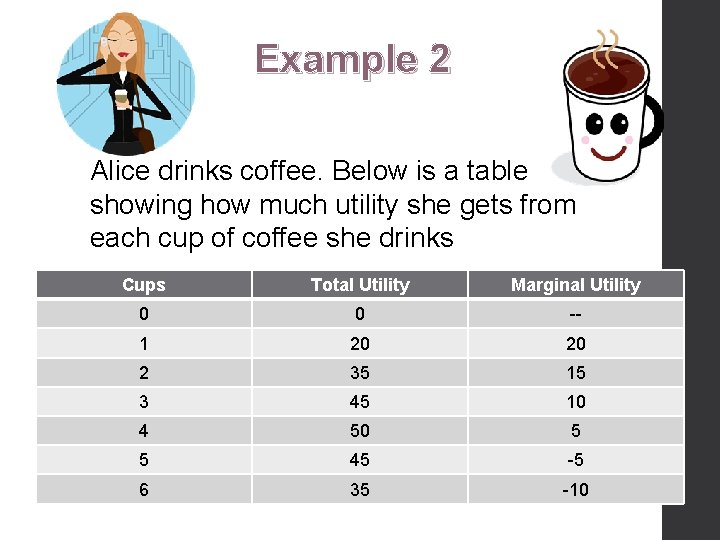
Example 2 Alice drinks coffee. Below is a table showing how much utility she gets from each cup of coffee she drinks Cups Total Utility Marginal Utility 0 0 -- 1 20 20 2 35 15 3 45 10 4 50 5 5 45 -5 6 35 -10
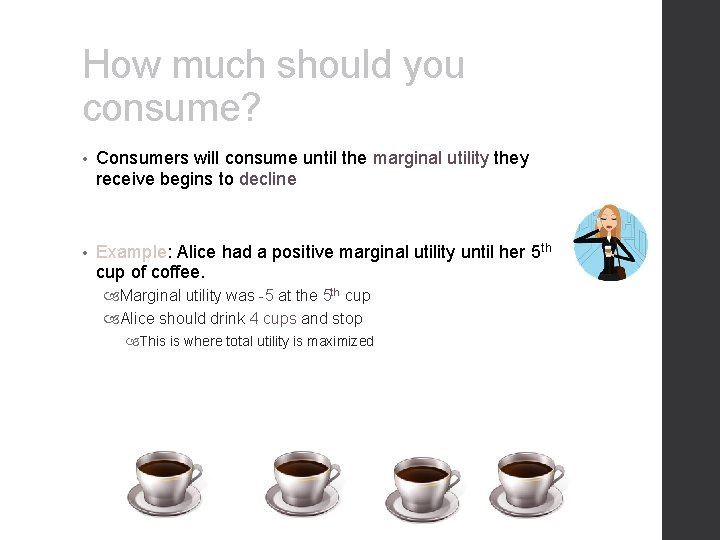
How much should you consume? • Consumers will consume until the marginal utility they receive begins to decline • Example: Alice had a positive marginal utility until her 5 th cup of coffee. Marginal utility was -5 at the 5 th cup Alice should drink 4 cups and stop This is where total utility is maximized
Why does utility begin to decline? • As people consume more, they get less utility from each unit Total will continue to increase but in smaller amounts Look at Alice again…
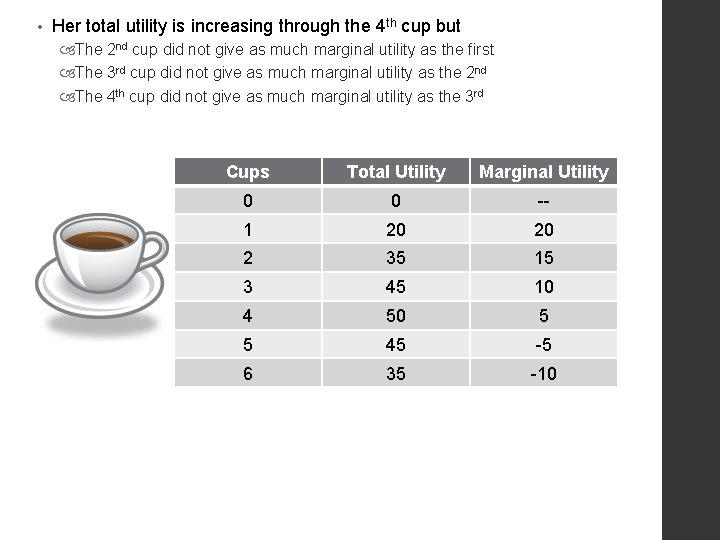
• Her total utility is increasing through the 4 th cup but The 2 nd cup did not give as much marginal utility as the first The 3 rd cup did not give as much marginal utility as the 2 nd The 4 th cup did not give as much marginal utility as the 3 rd Cups Total Utility Marginal Utility 0 0 -- 1 20 20 2 35 15 3 45 10 4 50 5 5 45 -5 6 35 -10
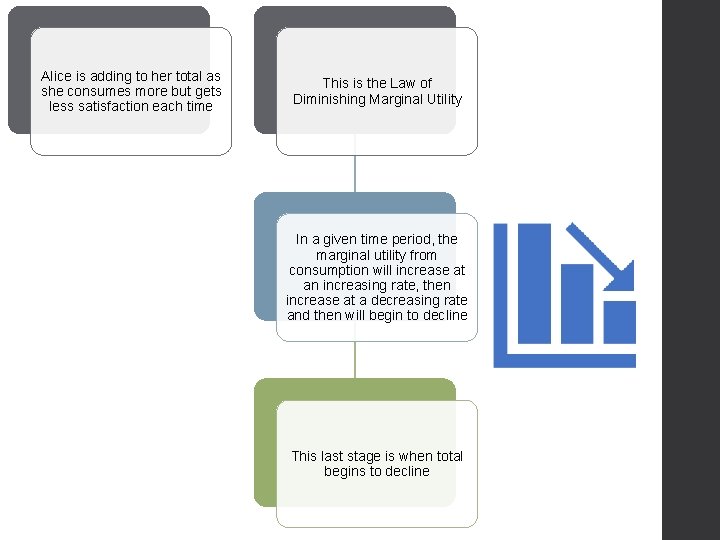
Alice is adding to her total as she consumes more but gets less satisfaction each time This is the Law of Diminishing Marginal Utility In a given time period, the marginal utility from consumption will increase at an increasing rate, then increase at a decreasing rate and then will begin to decline This last stage is when total begins to decline
Constrained Utility Maximization When consumers must pay for their goods and services, utility is constrained by their income The marginal utility of the good must be greater than or equal to the price of the good
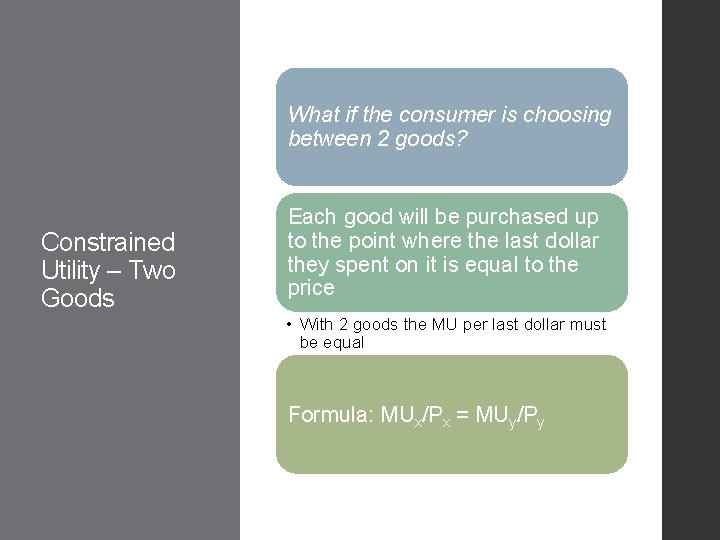
What if the consumer is choosing between 2 goods? Constrained Utility – Two Goods Each good will be purchased up to the point where the last dollar they spent on it is equal to the price • With 2 goods the MU per last dollar must be equal Formula: MUx/Px = MUy/Py
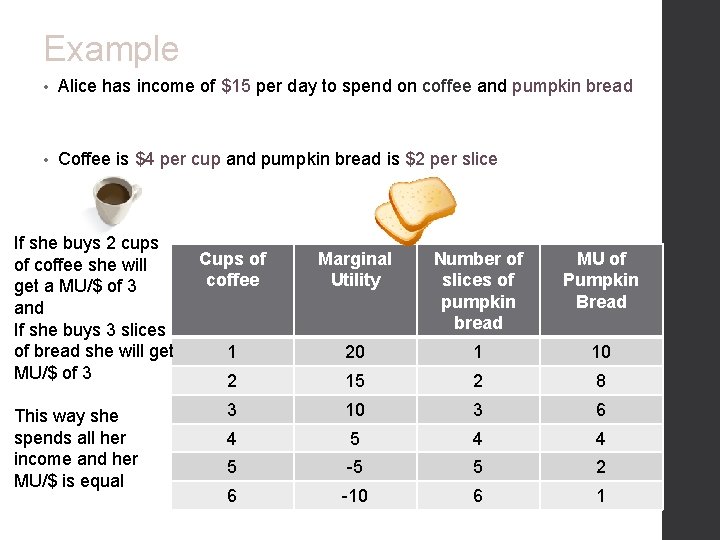
Example • Alice has income of $15 per day to spend on coffee and pumpkin bread • Coffee is $4 per cup and pumpkin bread is $2 per slice If she buys 2 cups of coffee she will get a MU/$ of 3 and If she buys 3 slices of bread she will get MU/$ of 3 This way she spends all her income and her MU/$ is equal Cups of coffee Marginal Utility Number of slices of pumpkin bread MU of Pumpkin Bread 1 20 1 10 2 15 2 8 3 10 3 6 4 5 4 4 5 -5 5 2 6 -10 6 1
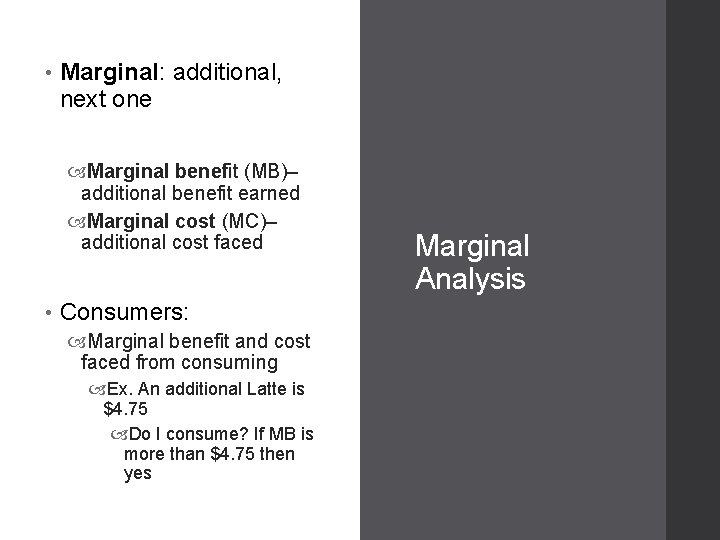
• Marginal: additional, next one Marginal benefit (MB)– additional benefit earned Marginal cost (MC)– additional cost faced • Consumers: Marginal benefit and cost faced from consuming Ex. An additional Latte is $4. 75 Do I consume? If MB is more than $4. 75 then yes Marginal Analysis
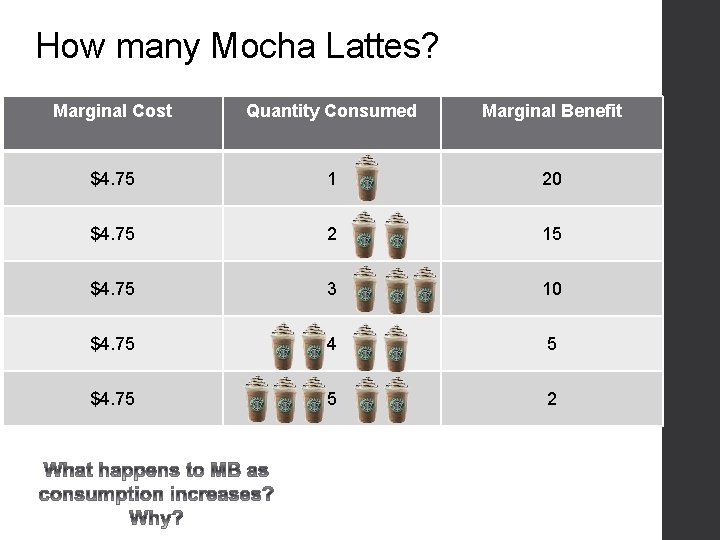
How many Mocha Lattes? Marginal Cost Quantity Consumed Marginal Benefit $4. 75 1 20 $4. 75 2 15 $4. 75 3 10 $4. 75 4 5 $4. 75 5 2
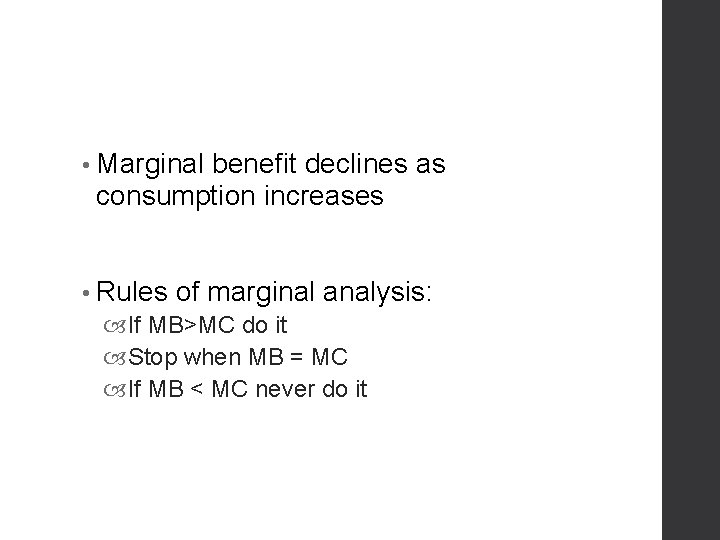
• Marginal benefit declines as consumption increases • Rules of marginal analysis: If MB>MC do it Stop when MB = MC If MB < MC never do it
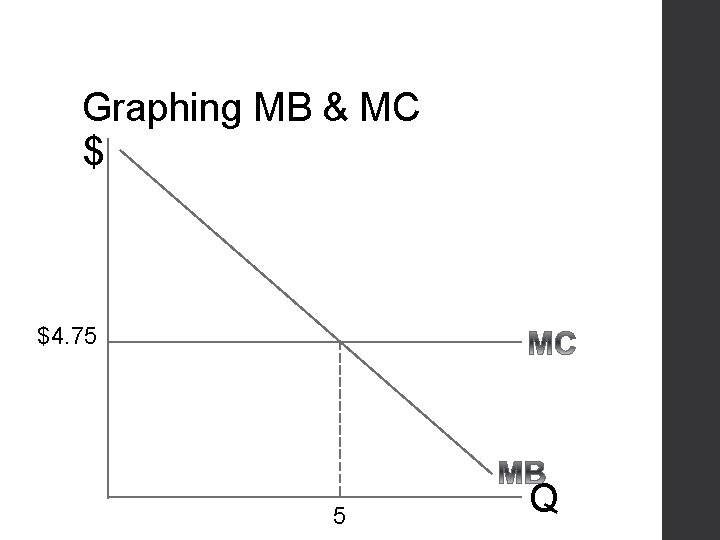
Graphing MB & MC $ $4. 75 5 Q
- Slides: 47