
Fundamentals of Collaboration Consultation and Teaming Mt Everest
Fundamentals of Collaboration, Consultation, and Teaming
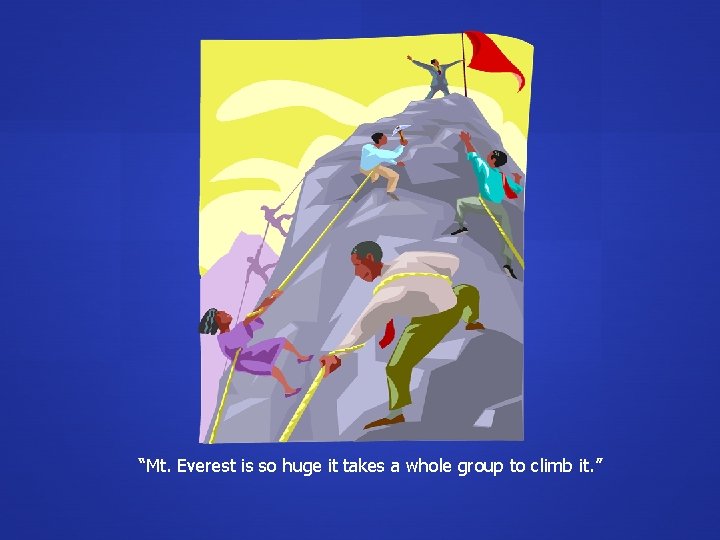
“Mt. Everest is so huge it takes a whole group to climb it. ”
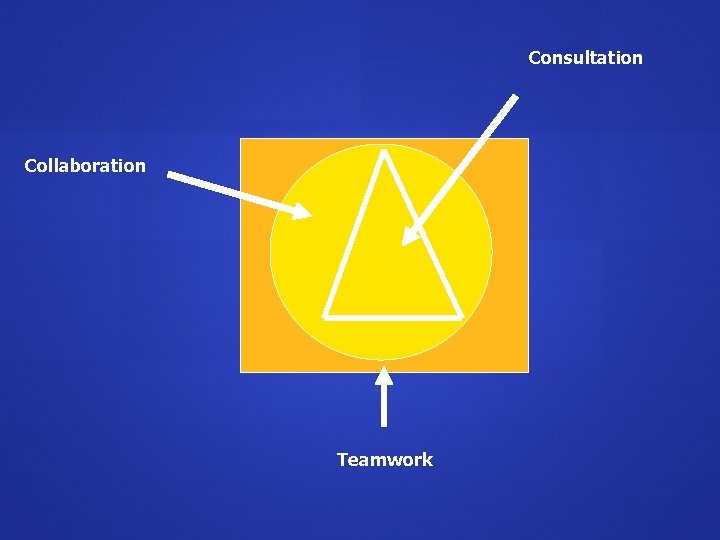
Consultation Collaboration Teamwork
Why has this come about? Change in students served in general education classrooms. Legal basis for change in service delivery Limitations of traditional approaches Marginal professional and parent interactions Limited understanding of the change process
What is Collaboration? Collaboration occurs when all members of a schools’ staff are working together and supporting each other to provide the highest quality of curriculum and instruction for the diverse students they serve. Interpersonal collaboration is a style for direct interaction between at least two co-equal parties voluntarily engaged in shared decision making as they work toward a common goal. Friend & Cook, 2007
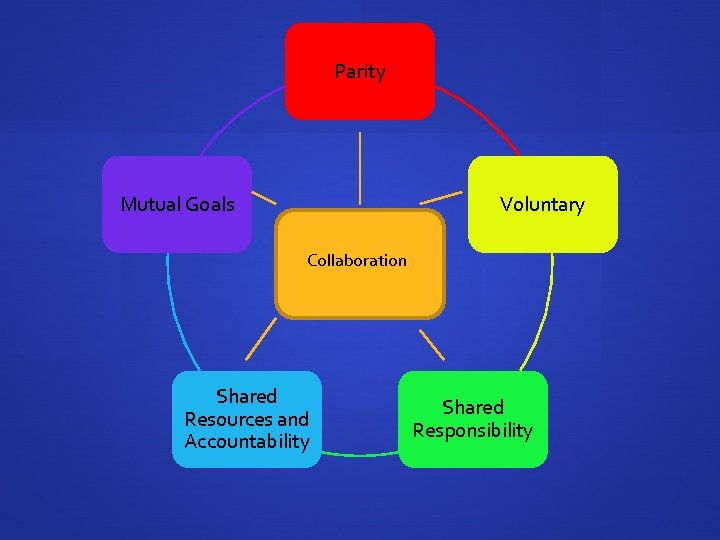
Parity Mutual Goals Voluntary Collaboration Shared Resources and Accountability Shared Responsibility
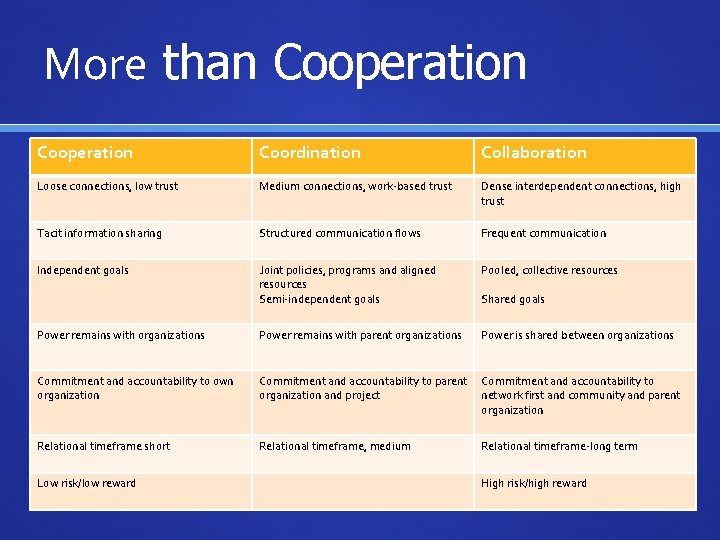
More than Cooperation Coordination Collaboration Loose connections, low trust Medium connections, work-based trust Dense interdependent connections, high trust Tacit information sharing Structured communication flows Frequent communication Independent goals Joint policies, programs and aligned resources Semi-independent goals Pooled, collective resources Power remains with organizations Power remains with parent organizations Power is shared between organizations Commitment and accountability to own organization Commitment and accountability to parent organization and project Commitment and accountability to network first and community and parent organization Relational timeframe short Relational timeframe, medium Relational timeframe-long term Low risk/low reward Shared goals High risk/high reward
What is Consultation? Individuals with specific expertise provide their input and recommendations to those who are implementing services. A expert in a particular area who listens and learns provides information to those who need “specialty” information in order to provide better services. specific “content” information
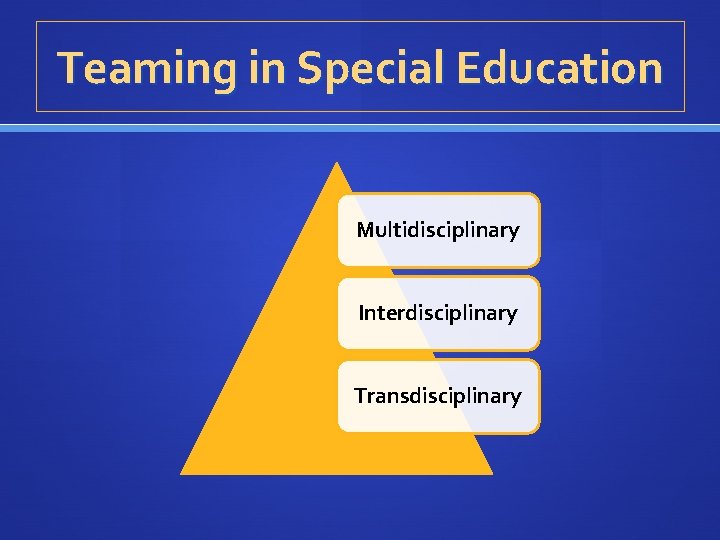
Teaming in Special Education Multidisciplinary Interdisciplinary Transdisciplinary
Problems that can interfere with the collaborative process School structure Lack of knowledge about students’ needs and other related factors Lack of skills or resources in dealing with the needs and problems Lack of confidence and self-esteem due to fatigue, illness, inexperience Lack of objectivity in assessing and handling the situation
Additional problem areas for Special Educators Being regarded as an aide Territoriality of school personnel Unrealistic expectations Not enough information or appropriate materials to share Being perceived as a “show-off” Running into “veils of professional politeness” Difficulty managing time and resources Lack of training Excessive caseload Too many hats to wear Reluctance of colleagues toward change of any kind.
Principles of Collaboration Create a climate of heightened professionalism between colleagues and team members with an “indirect impact on student outcomes” (Idol & West, 1991) Provide a vehicle to facilitate independent problem solving among participants. To produce solutions that are different from those that individual team members would not prduce individually (Idol, West, & Lloys, 1988) “Vested interests are sublimated to the broader purposes of the …strategic agenda” (Lasley, Matczynski, & Williams, 1992, p. 257)
Framework for Learning about Collaboration 1. Personal commitment to collaboration as a tool for 2. 3. 4. 5. carrying out job responsibilities Communication skills: the basic building blocks of collaborative interactions Interaction process: understanding the steps that take an interaction from beginning to end Programs or services that require these interactions to occur in order to deliver student services Context: the overall environment in which collaboration occurs
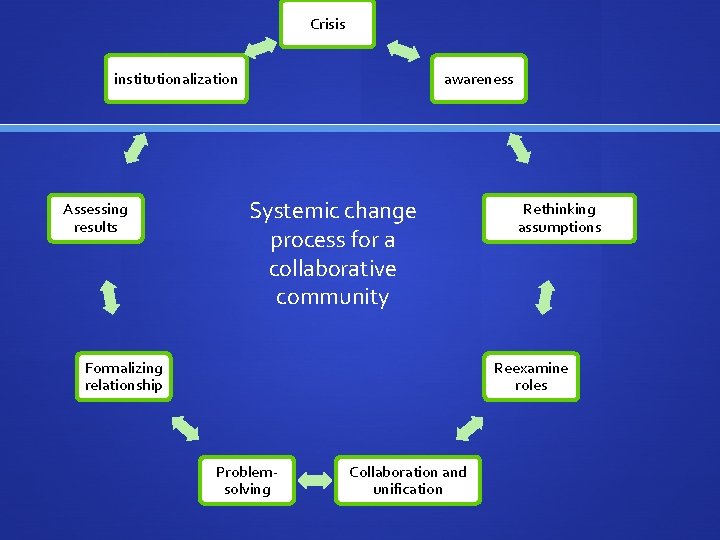
Crisis institutionalization Assessing results awareness Systemic change process for a collaborative community Formalizing relationship Rethinking assumptions Reexamine roles Problemsolving Collaboration and unification
Never underestimate that a small group of thoughtful, committed people can change the world, indeed it’s the only thing that ever has. --Margaret Mead
- Slides: 15