
Fundamentals of Best Practice Governing Board Self Assessment
Fundamentals of Best Practice Governing Board Self Assessment
Knowledge. Points • Why governance self-assessment is essential • How to develop and administer a board self-assessment • How to evaluate individual trustee performance • Key areas of self-assessment focus • How to analyze and report findings and facilitate improvement

Purpose, Potential and Power of Self-Assessment
Putting Your Current Board Self-Assessment to the Test Conduct annually? Full board participation? Anonymous? Full board review the results of the self-assessment? Actionable and measurable plans for improvement? Communicate the results of the selfassessment?
Key Outcomes of a Successful Board Self-Assessment Defines the board’s most critical success factors Secures anonymous and insightful trustee input Creates an opportunity to address major issues Clearly demonstrates where the board is in and out of alignment
Key Outcomes of a Successful Board Self-Assessment Objectively assesses the degree of trustee understanding Uncovers governance deficiencies Identifies opportunities for leadership improvement Helps administration better understand respond to the board’s needs
Tips for Ensuring a Successful Process Conduct your selfassessment prior to your annual retreat Two approaches to design and implementation Design, implement, compile, analyze and present internally Utilize outside consultants with experience using tested and proven tools and processes
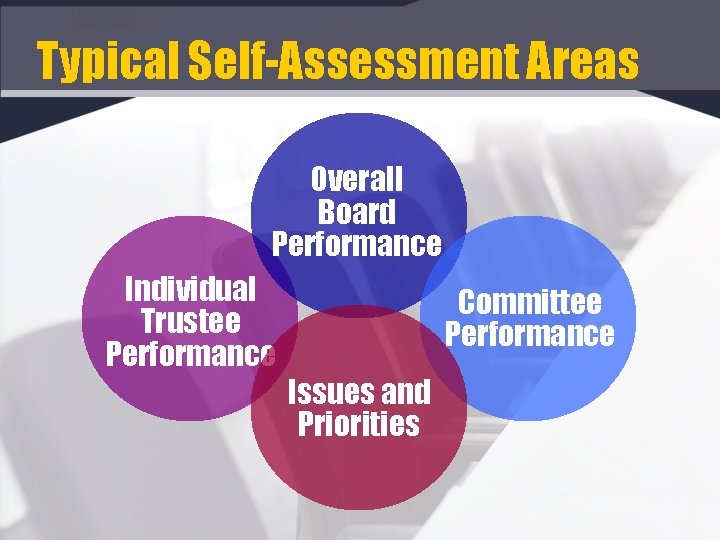
Typical Self-Assessment Areas Overall Board Performance Individual Trustee Performance Committee Performance Issues and Priorities
Five Steps to Board Self-Assessment Success
1 Define Your Governing Performance Criteria Define the areas to be measured, ensuring appropriateness to leadership needs Determine measurement method Include opportunities for comment and explanation Include thought-provoking questions

The Five Levels of Board Performance Level 5 I strongly agree with this statement. We always practice this as a part of our governance. Our performance in this area is outstanding. Level 4 I generally agree with this statement. We usually practice this as a part of our governance, but not always. We perform well in this area. Level 3 I somewhat agree with this statement. We often practice this in our governance, but we are not consistent. We perform fairly well in this area. Level 2 I somewhat disagree with this statement. We inconsistently practice this as a part of our governance. We do not perform well in this area. Level 1 I disagree with this statement. We never practice this as a part of our governance. We perform very poorly in this area. Not Sure: I do not have enough information to make a determination about our performance in this area.
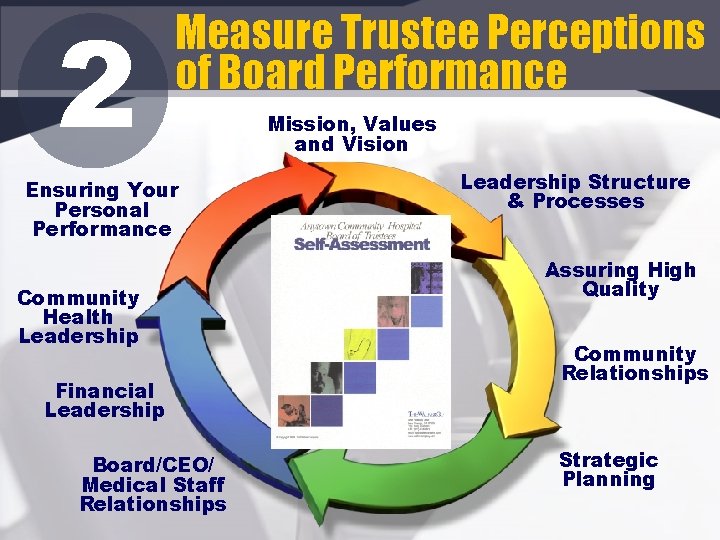
2 Measure Trustee Perceptions of Board Performance Ensuring Your Personal Performance Community Health Leadership Financial Leadership Board/CEO/ Medical Staff Relationships Mission, Values and Vision Leadership Structure & Processes Assuring High Quality Community Relationships Strategic Planning

Rating Committee Performance Specific criteria and goals Additional ideas for governance improvement Committees may do their own evaluation, and/or the board may evaluate committee performance

Governance Issues and Priorities Highest priority for the board? Board’s strengths and weaknesses? Key issues that should occupy the board’s time and attention Significant trends? Critical factors to address?

Measuring Individual Performance Views of overall board performance and individual performance may differ Introspective look enables a focus on good leadership essentials Peer assessment is a good way to evaluate personal performance
The Peer Leadership Assessment Planned, organized focus on the essentials of good governance Peer impressions of colleagues’ skills and performance Combines governing and personal attributes Confidential, intended to enhance trustee awareness of improvement opportunities
Board Reluctance to Peer Assessment Some boards are reluctant AHA survey report: only 6 % of hospitals nationwide conduct a peer assessment It should be a leading practice
Major Benefits of a Peer Assessment Board focus on critical individual skills and assets Feedback for personal change Reality check Assists in the trustee recruitment process Creates structured opportunity for board chair to discuss performance with colleagues
Sample Peer Criteria: Governing Attributes • Builds strong working relationships with other board members • Builds a strong working relationship with the CEO • Understands key issues and challenges facing the hospital • Focuses attention on long-term policy issues rather than administrative issues • Prepares for active and informed participation in board meetings • Asks probing and insightful questions intended to further the hospital’s progress and performance
Sample Peer Criteria: Personal Attributes • Is able to discuss controversial topics effectively • Keeps an open mind on issues • Willing and enthusiastic promoter for the • • hospital Meets time commitments Thinks quickly and assimilates ideas well Displays commitment to the hospital Continually seeks to improve his or her leadership performance
Key Factors to Consider When Conducting a Peer Assessment Criteria unique to your board Results should be confidential Opportunity to provide constructive ideas for improvement The right focus helps trustees raise their own personal performance bar
3 Report Findings and Potential Performance Improvement Areas 1. Compile the results in a database 2. Develop graphs 3. Develop a written report or presentation 4. Present and discuss the results 5. Individual review of peer results
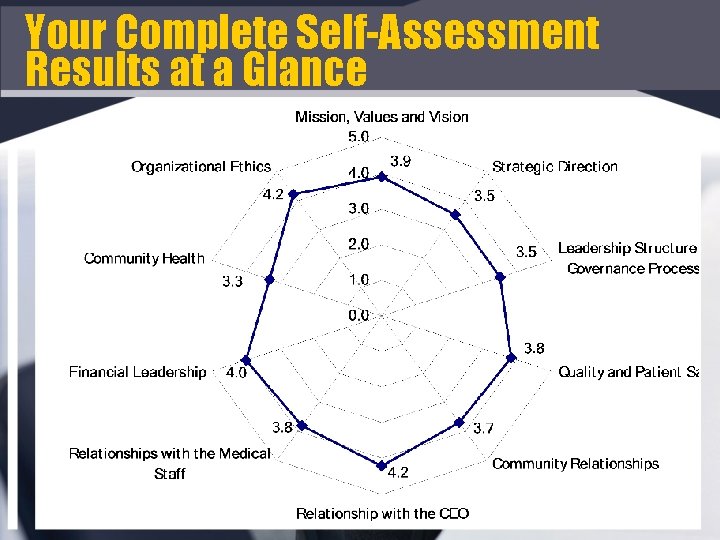
Your Complete Self-Assessment Results at a Glance
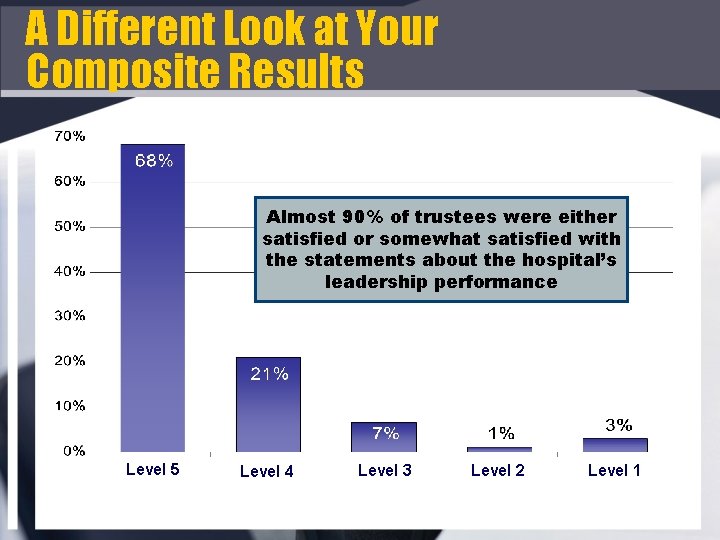
A Different Look at Your Composite Results Almost 90% of trustees were either satisfied or somewhat satisfied with the statements about the hospital’s leadership performance Level 5 Level 4 Level 3 Level 2 Level 1
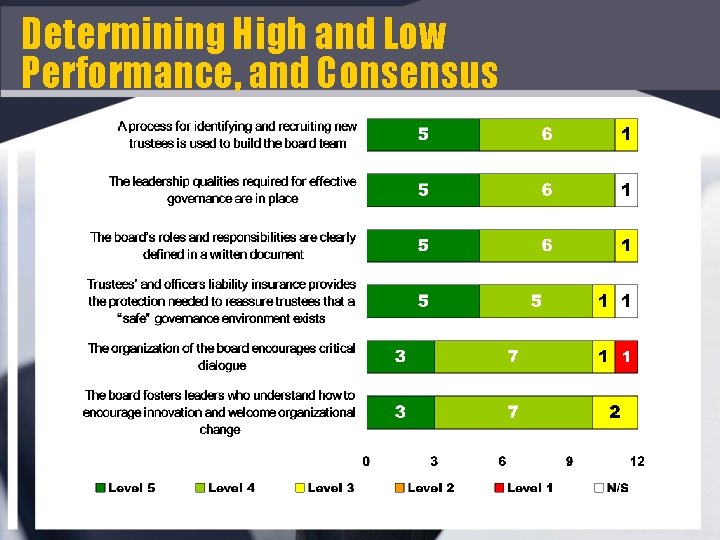
Determining High and Low Performance, and Consensus
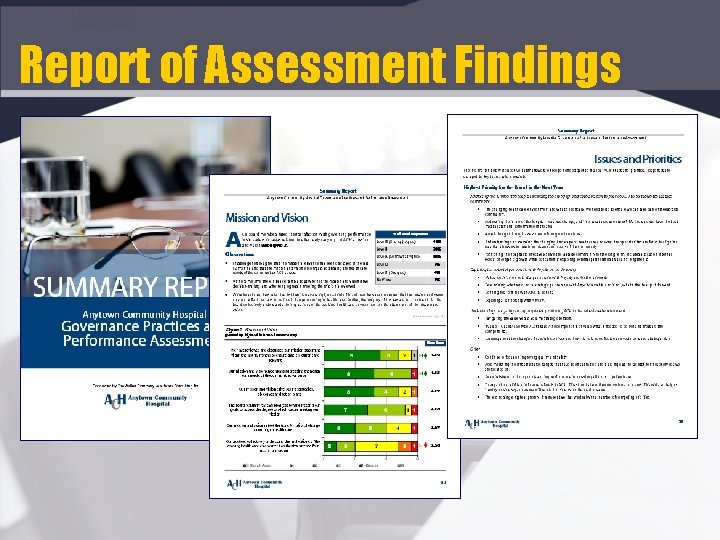
Report of Assessment Findings
4 Develop a Board Performance Improvement Plan Key to success is action taken as a result of the assessment The process should: • • • Be a catalyst for change Stimulate board discussion Result in the development of a governance improvement action plan
Using Your Self-Assessment to Create Meaningful Governance Gain Typical improvement plan components: Initiative description Priority, using consistent scale Projected outcomes Resources required and potential costs Start and end dates
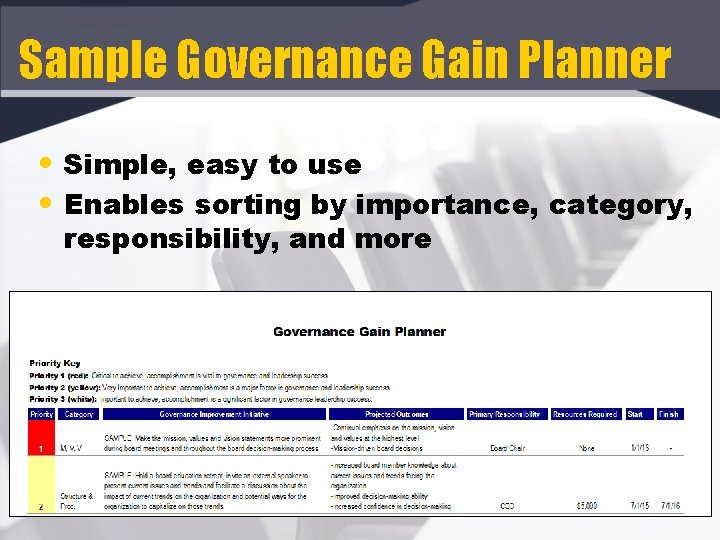
Sample Governance Gain Planner • Simple, easy to use • Enables sorting by importance, category, responsibility, and more
5 Communicate and Promote Your Process and Accountabilities Build understanding of hospital challenges Strengthen employee and community trust Share with employees first
5 Communicate and Promote Your Process and Accountabilities Deepen understanding of the board’s commitment Raise awareness of the challenges faced Demonstrate the high standards the board holds itself accountable for
Action Agenda 1. Analyze assessment process and methods, and determine improvement opportunities 2. Ensure complete understanding and buyin to criteria and process 3. Make full participation a board policy 4. Continually seek ways to improve
Fundamentals of Best Practice Governing Board Self Assessment
- Slides: 33