
Fundamental Problem Essence of a science Observation n
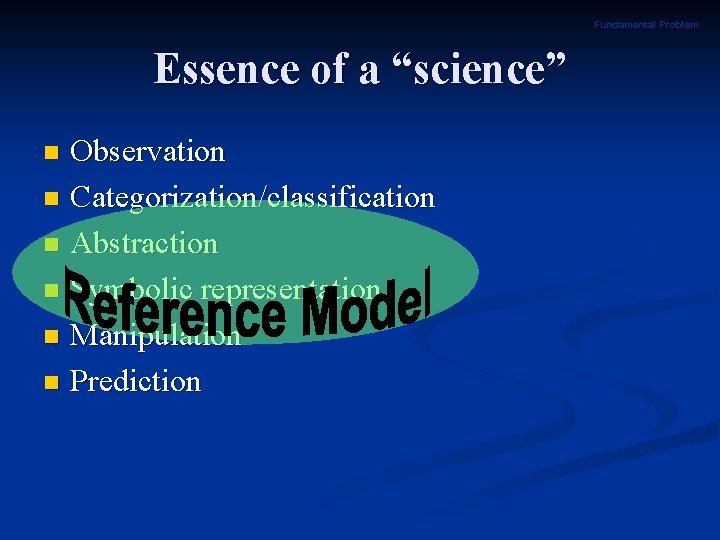
Fundamental Problem Essence of a “science” Observation n Categorization/classification n Abstraction n Symbolic representation n Manipulation n Prediction n
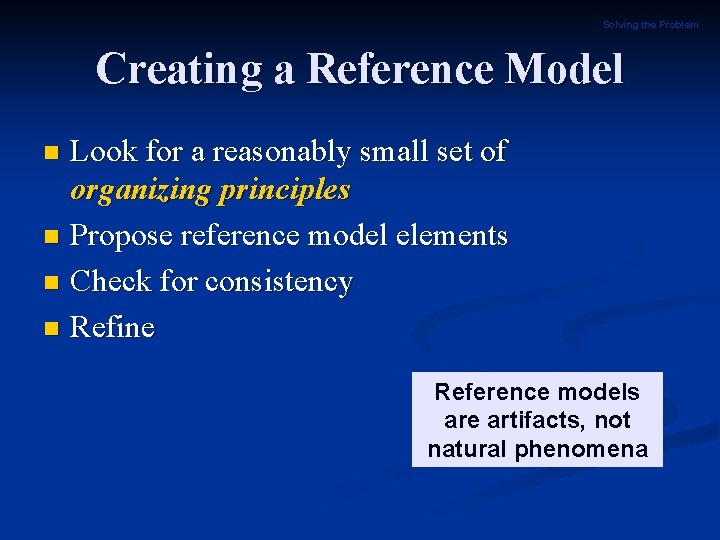
Solving the Problem Creating a Reference Model Look for a reasonably small set of organizing principles n Propose reference model elements n Check for consistency n Refine n Reference models are artifacts, not natural phenomena
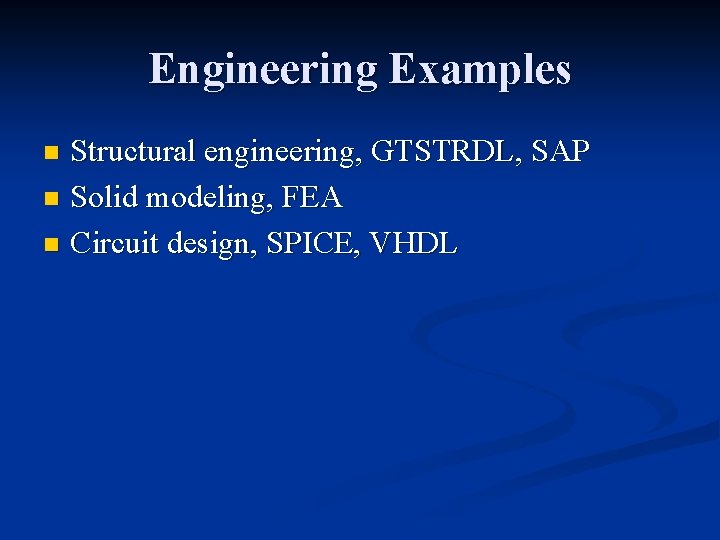
Engineering Examples Structural engineering, GTSTRDL, SAP n Solid modeling, FEA n Circuit design, SPICE, VHDL n
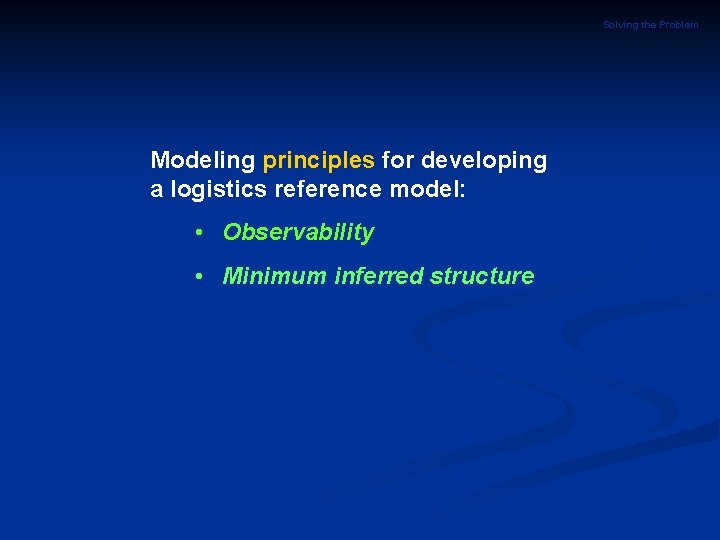
Solving the Problem Modeling principles for developing a logistics reference model: • Observability • Minimum inferred structure
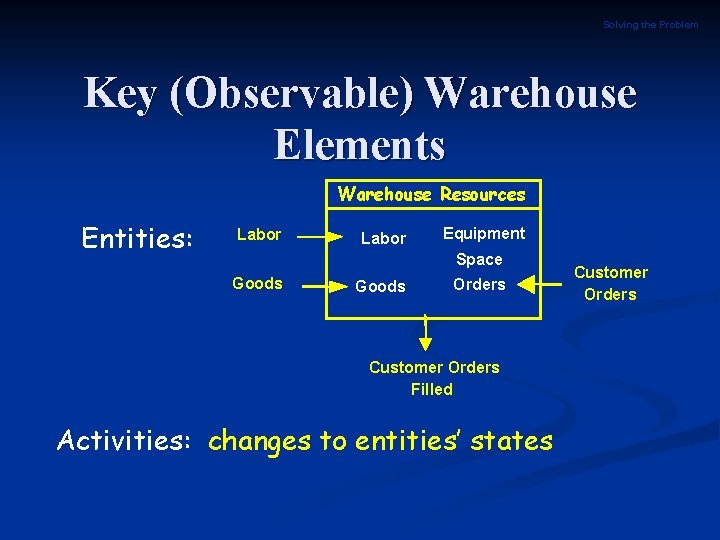
Solving the Problem Key (Observable) Warehouse Elements Warehouse. Equipment Resources Entities: Labor Equipment Space Goods Orders Customer Orders Filled Activities: changes to entities’ states Customer Orders

Solving the Problem What CAN’T be observed? Decision-making!
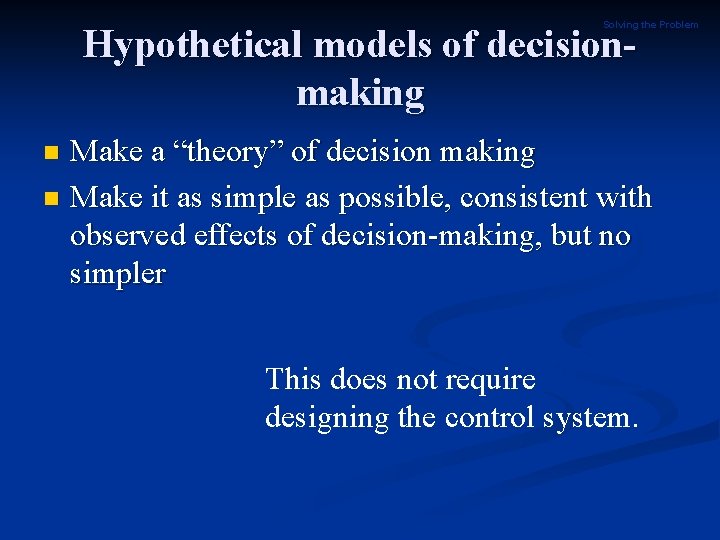
Solving the Problem Hypothetical models of decisionmaking Make a “theory” of decision making n Make it as simple as possible, consistent with observed effects of decision-making, but no simpler n Minimum structure This doesinferred not require designing the control system.
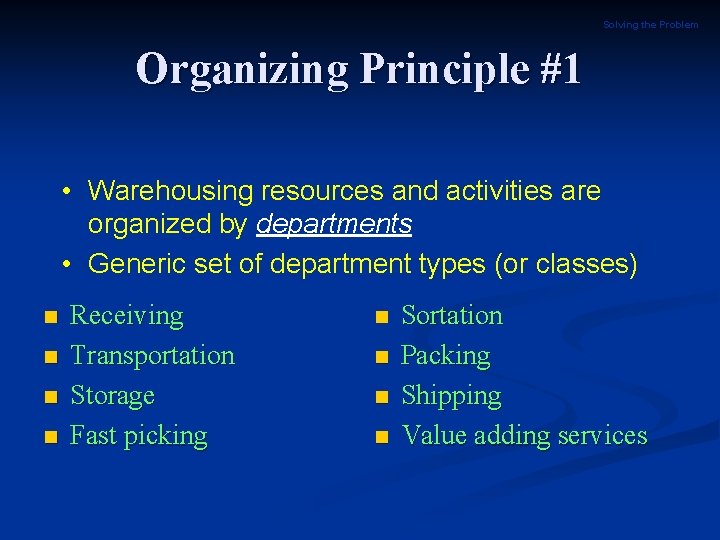
Solving the Problem Organizing Principle #1 • Warehousing resources and activities are organized by departments • Generic set of department types (or classes) n n Receiving Transportation Storage Fast picking n n Sortation Packing Shipping Value adding services
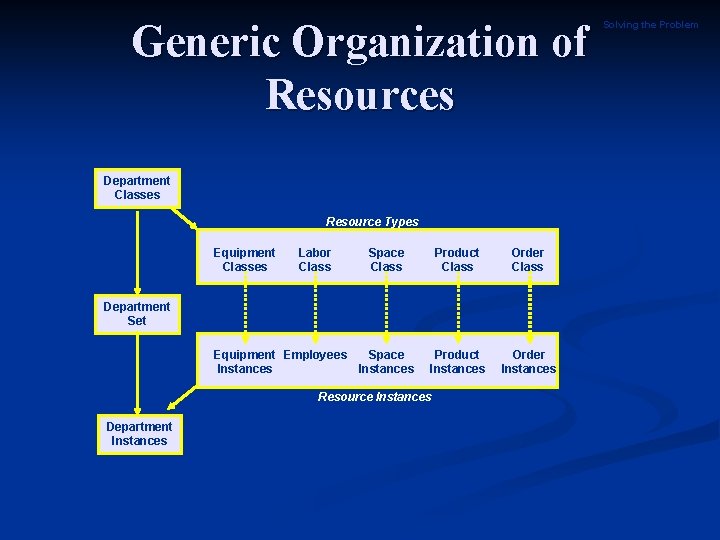
Generic Organization of Resources Department Classes Resource Types Equipment Classes Labor Class Space Class Product Class Order Class Product Instances Order Instances Department Set Equipment Employees Space Instances Resource Instances Department Instances Solving the Problem
Solving the Problem Object Models for Resources n Trust me, it’s straightforward n Even if it’s not unique
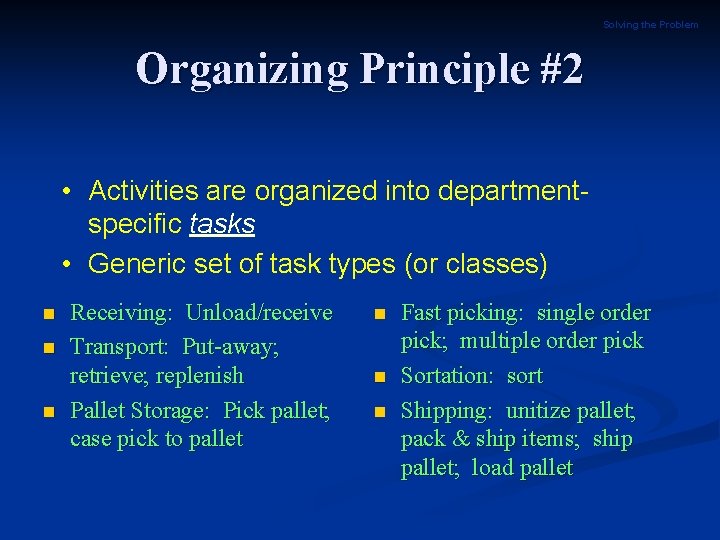
Solving the Problem Organizing Principle #2 • Activities are organized into departmentspecific tasks • Generic set of task types (or classes) n n n Receiving: Unload/receive Transport: Put-away; retrieve; replenish Pallet Storage: Pick pallet; case pick to pallet n n n Fast picking: single order pick; multiple order pick Sortation: sort Shipping: unitize pallet; pack & ship items; ship pallet; load pallet
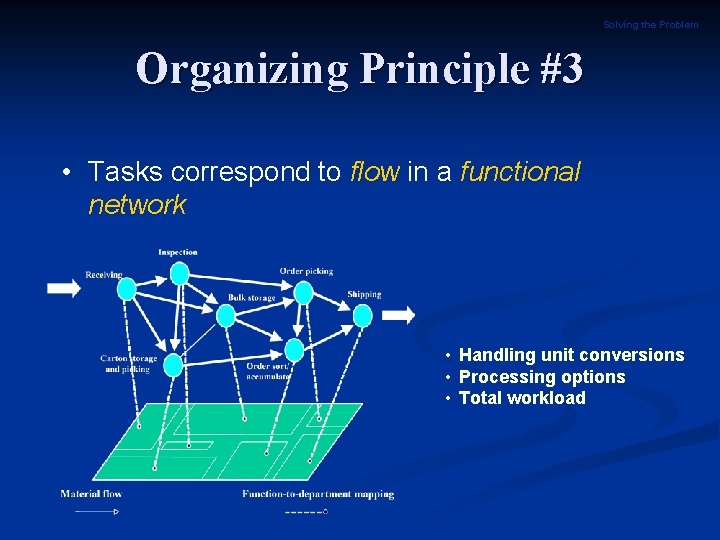
Solving the Problem Organizing Principle #3 • Tasks correspond to flow in a functional network • Handling unit conversions • Processing options • Total workload
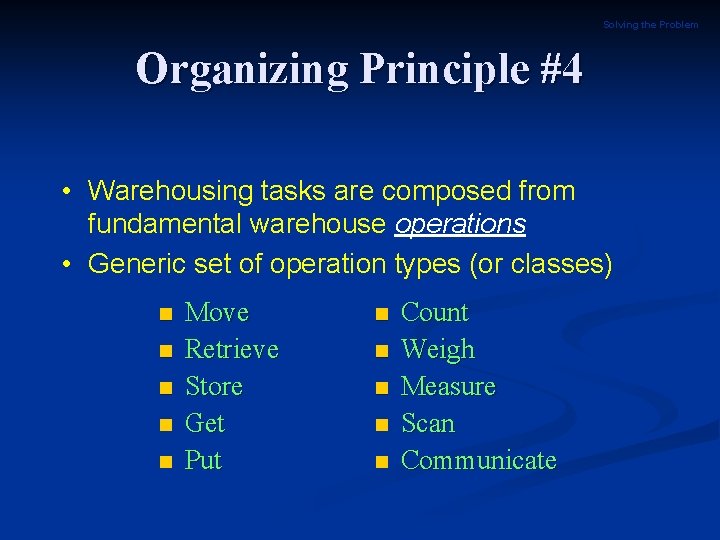
Solving the Problem Organizing Principle #4 • Warehousing tasks are composed from fundamental warehouse operations • Generic set of operation types (or classes) n n n Move Retrieve Store Get Put n n n Count Weigh Measure Scan Communicate
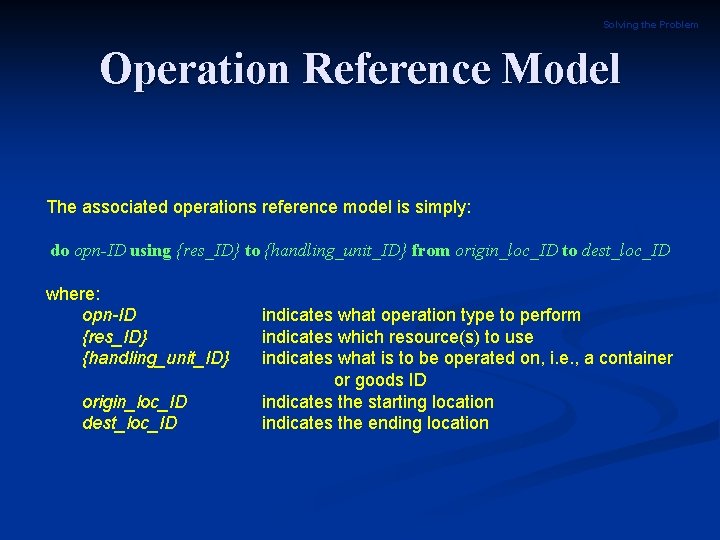
Solving the Problem Operation Reference Model The associated operations reference model is simply: do opn-ID using {res_ID} to {handling_unit_ID} from origin_loc_ID to dest_loc_ID where: opn-ID {res_ID} {handling_unit_ID} origin_loc_ID dest_loc_ID indicates what operation type to perform indicates which resource(s) to use indicates what is to be operated on, i. e. , a container or goods ID indicates the starting location indicates the ending location
Solving the Problem Assertion n The (time stamped) log of operations reports the complete state trajectory of the warehouse
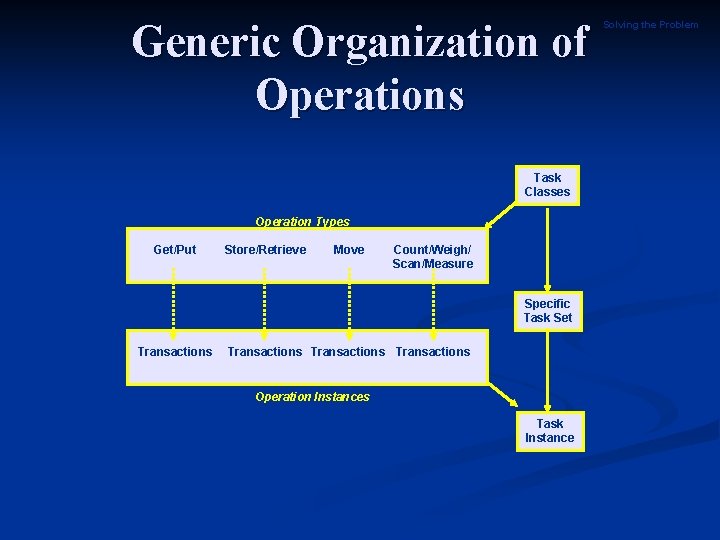
Generic Organization of Operations Task Classes Operation Types Get/Put Store/Retrieve Move Count/Weigh/ Scan/Measure Specific Task Set Transactions Operation Instances Task Instance Solving the Problem
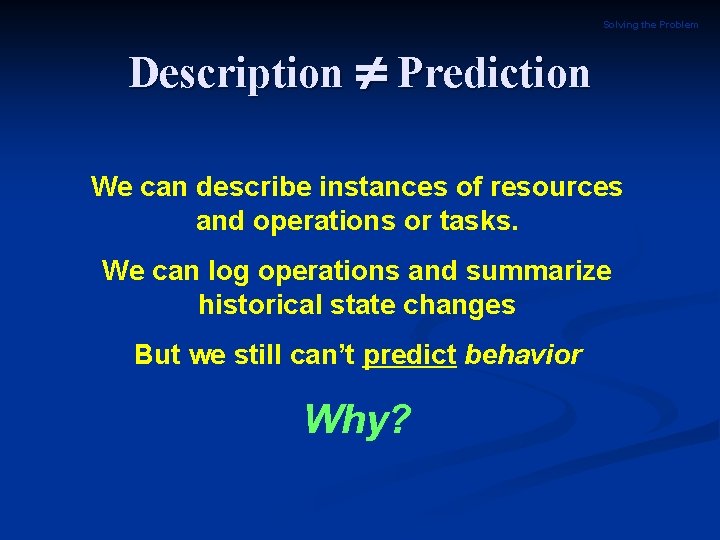
Solving the Problem Description Prediction We can describe instances of resources and operations or tasks. We can log operations and summarize historical state changes But we still can’t predict behavior Why?
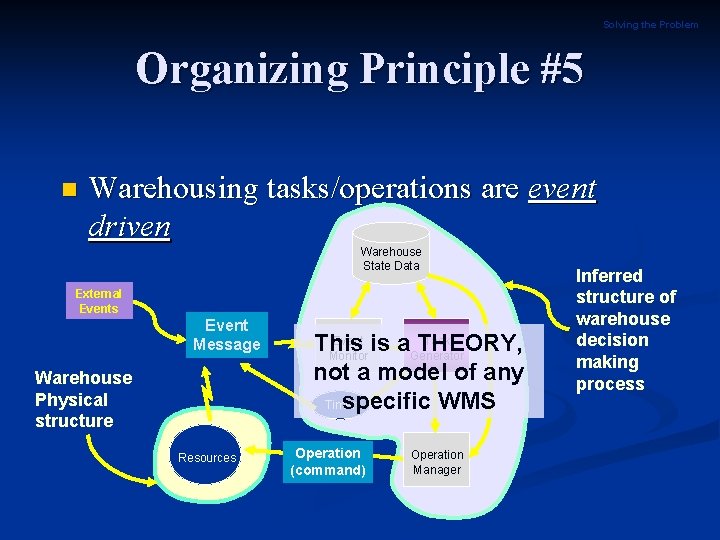
Solving the Problem Organizing Principle #5 n Warehousing tasks/operations are event driven Warehouse State Data External Events Event Message Warehouse Physical structure Resources Event is a THEORY, Task This Monitor Generator not a model of any specific WMS Timer Operation (command) Operation Manager Inferred structure of warehouse decision making process
Solving the Problem Bad News and Good News Bad: Task generators are specific to the warehouse design, because they are specific to a department instance! n Good: But there may be typical elements of task generators n
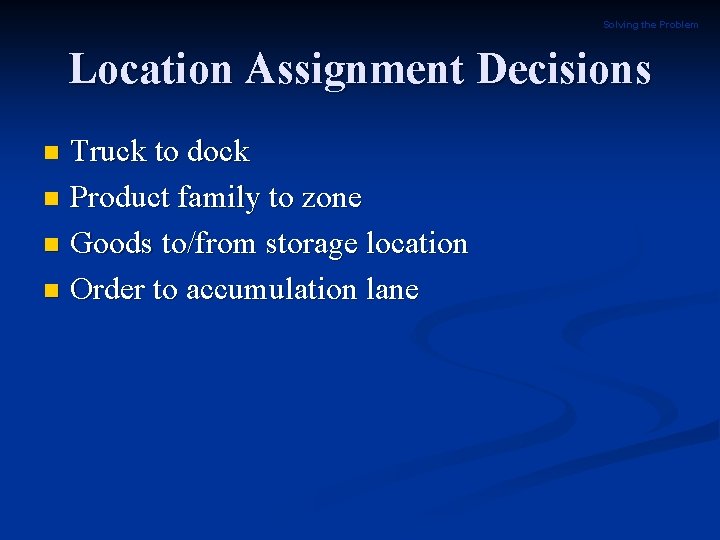
Solving the Problem Location Assignment Decisions Truck to dock n Product family to zone n Goods to/from storage location n Order to accumulation lane n
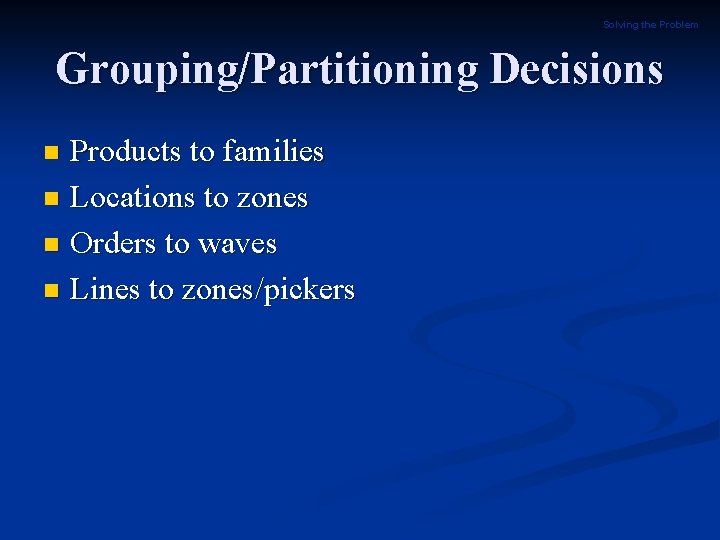
Solving the Problem Grouping/Partitioning Decisions Products to families n Locations to zones n Orders to waves n Lines to zones/pickers n
Solving the Problem Sequencing/Routing Decisions Transport routing n Pick sequencing/routing n Retrieval sequencing n Storage/retrieval interleaving n
Solving the Problem Is there an exhaustive class of decision types just as there are classes of resources and of tasks? This would be a good thing! What are the organizing principles?
- Slides: 23