
Fundamental Locomotion Skills of Childhood Chapter 12 Copyright
- Slides: 19
Fundamental Locomotion Skills of Childhood Chapter 12 Copyright © 2016 by Holcomb Hathaway Publishers
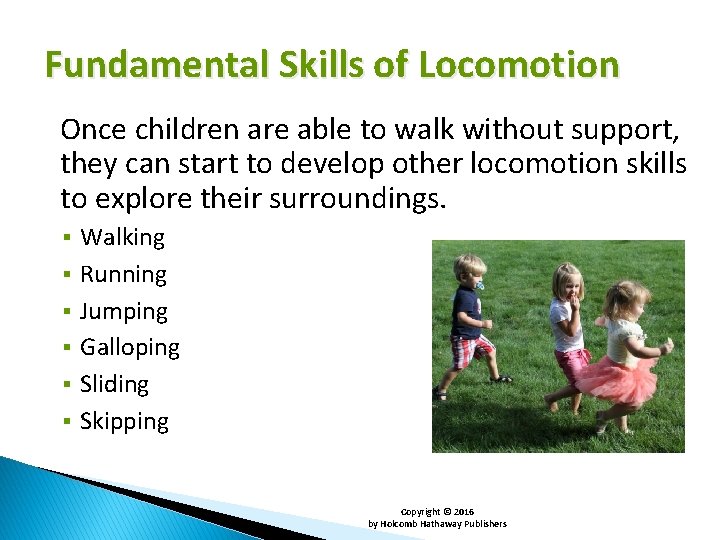
Fundamental Skills of Locomotion Once children are able to walk without support, they can start to develop other locomotion skills to explore their surroundings. § § § Walking Running Jumping Galloping Sliding Skipping Copyright © 2016 by Holcomb Hathaway Publishers
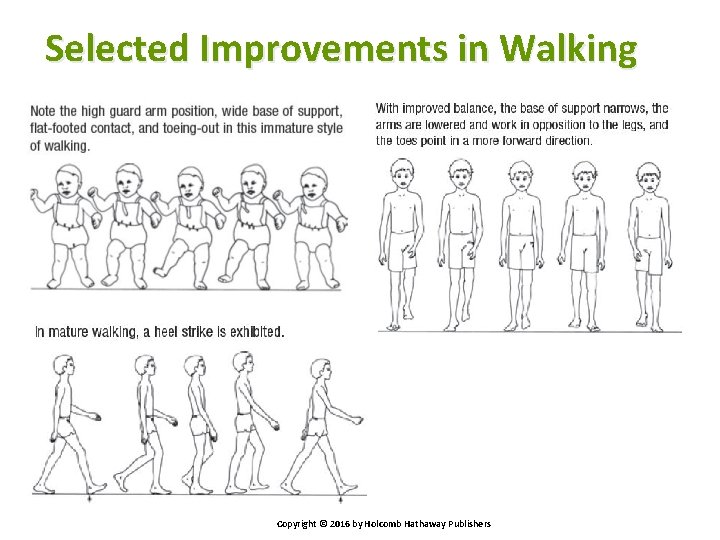
Walking Development � Gait cycle Swing phase § Support phase § Double support phase § � Balance control) (postural � Elements that improve as one becomes a more confident walker: Dynamic base § Foot angle § Speed § Static balance § Dynamic balance § Copyright © 2016 by Holcomb Hathaway Publishers
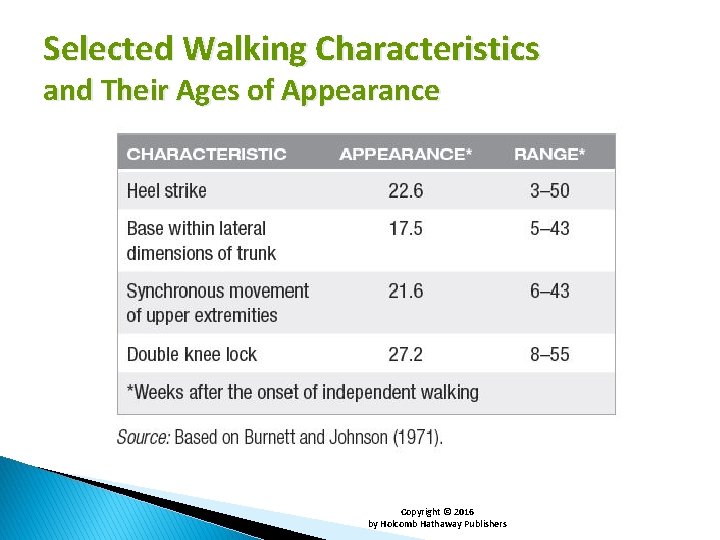
Selected Walking Characteristics and Their Ages of Appearance Copyright © 2016 by Holcomb Hathaway Publishers
Selected Improvements in Walking Copyright © 2016 by Holcomb Hathaway Publishers
Constraints on the Development of Independent Walking Muscular strength Balance Walking with external loads Clothing/footwear Copyright © 2016 by Holcomb Hathaway Publishers
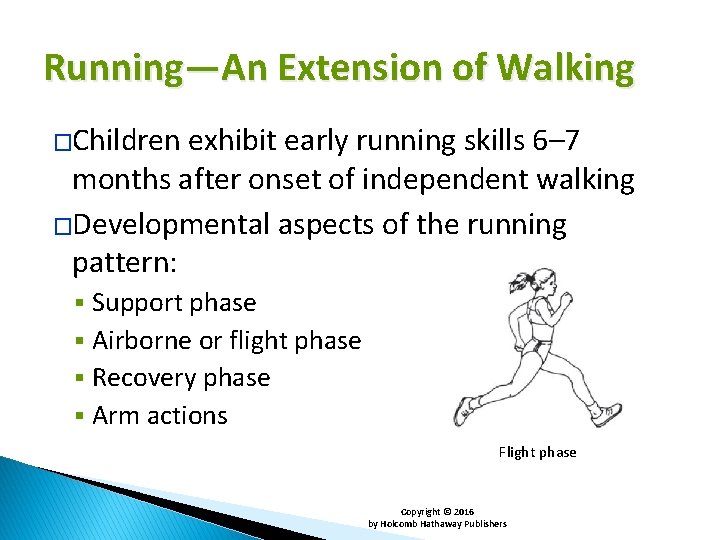
Running—An Extension of Walking �Children exhibit early running skills 6– 7 months after onset of independent walking �Developmental aspects of the running pattern: Support phase § Airborne or flight phase § Recovery phase § Arm actions § Flight phase Copyright © 2016 by Holcomb Hathaway Publishers
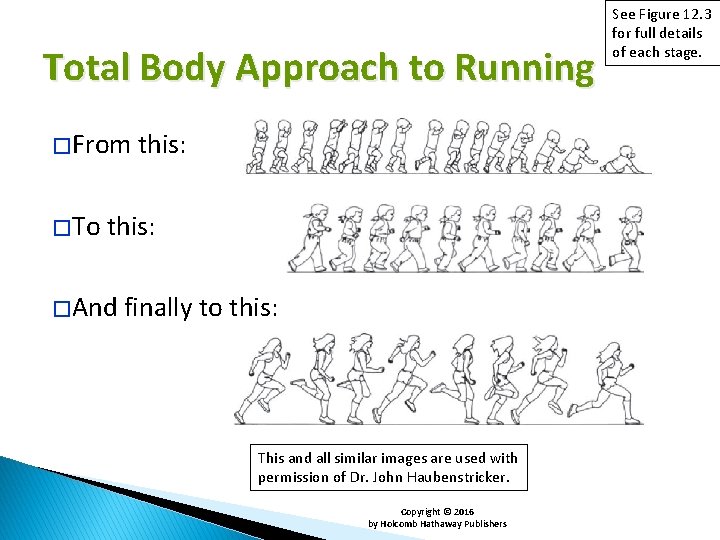
Total Body Approach to Running � From � To this: � And finally to this: This and all similar images are used with permission of Dr. John Haubenstricker. Copyright © 2016 by Holcomb Hathaway Publishers See Figure 12. 3 for full details of each stage.
Running Speeds �Fairly consistent year-to-year improvement for both boys and girls �Girls’ running speed peaked at 14– 15 years old; boys’ speed continued to improve beyond age 17 �For boys, speed improved 20% between the ages of 9 and 17; for girls, speed improved 8% Copyright © 2016 by Holcomb Hathaway Publishers
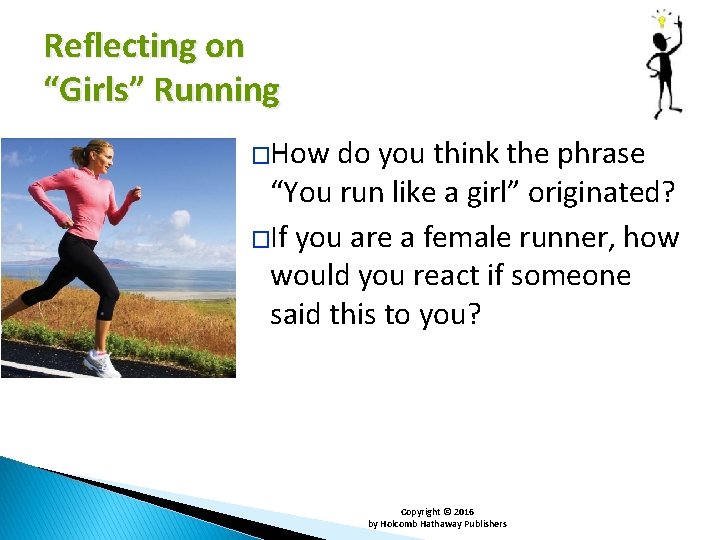
Reflecting on “Girls” Running �How do you think the phrase “You run like a girl” originated? �If you are a female runner, how would you react if someone said this to you? Copyright © 2016 by Holcomb Hathaway Publishers
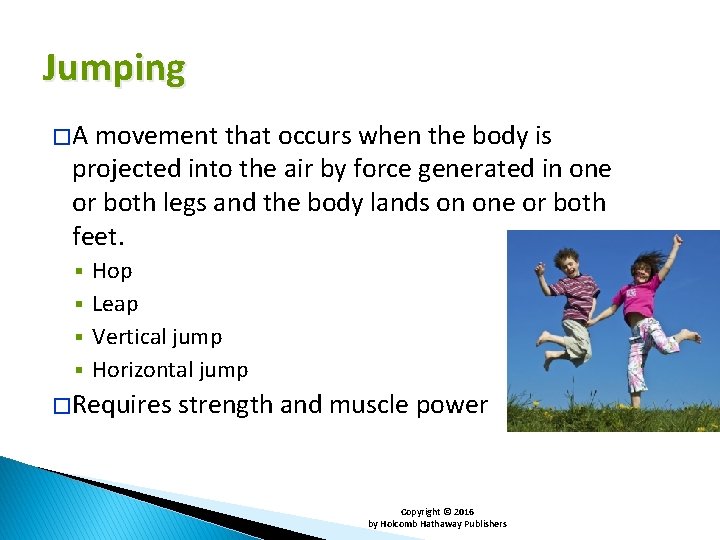
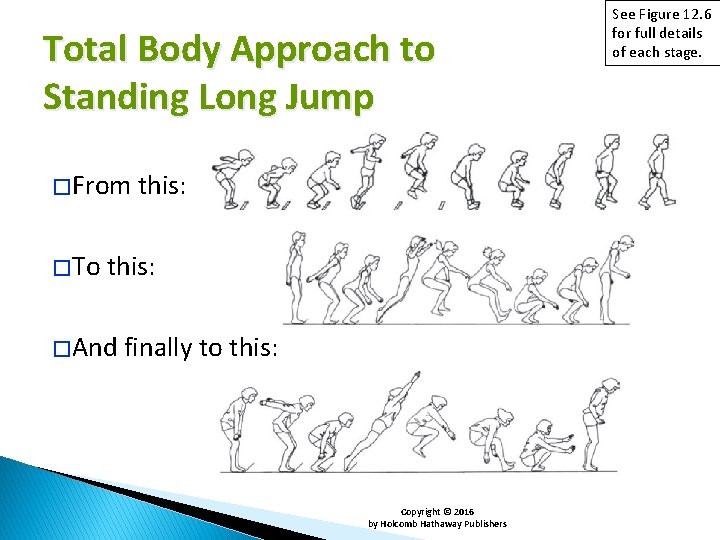
Jumping �A movement that occurs when the body is projected into the air by force generated in one or both legs and the body lands on one or both feet. Hop § Leap § Vertical jump § Horizontal jump § � Requires strength and muscle power Copyright © 2016 by Holcomb Hathaway Publishers
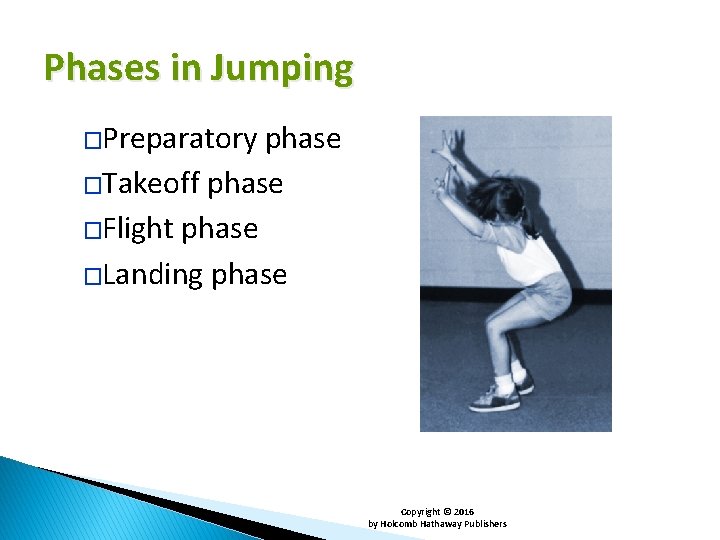
Phases in Jumping �Preparatory phase �Takeoff phase �Flight phase �Landing phase Copyright © 2016 by Holcomb Hathaway Publishers
Total Body Approach to Standing Long Jump � From � To this: � And finally to this: Copyright © 2016 by Holcomb Hathaway Publishers See Figure 12. 6 for full details of each stage.
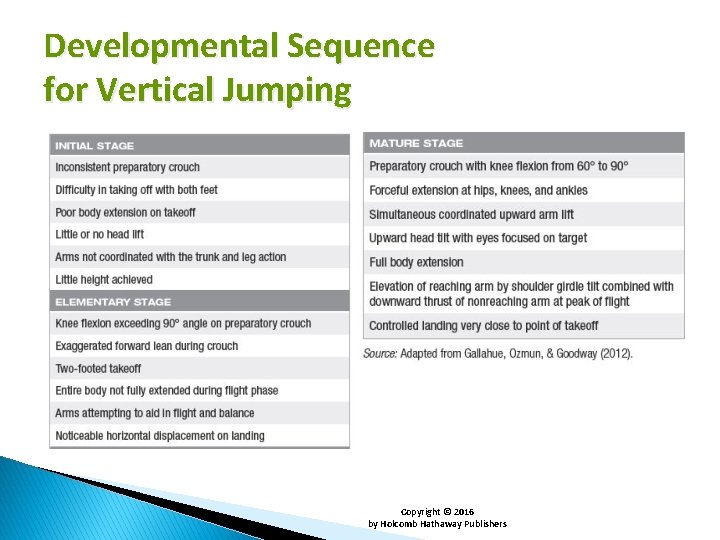
Developmental Sequence for Vertical Jumping Copyright © 2016 by Holcomb Hathaway Publishers
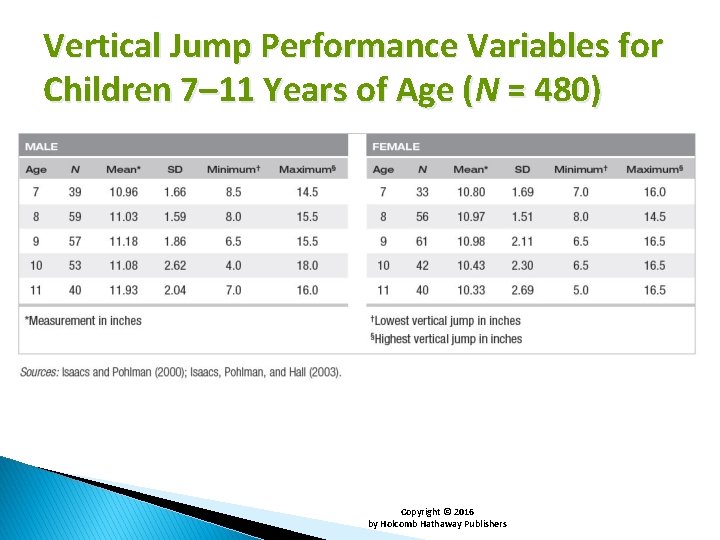
Vertical Jump Performance Variables for Children 7– 11 Years of Age (N = 480) Copyright © 2016 by Holcomb Hathaway Publishers
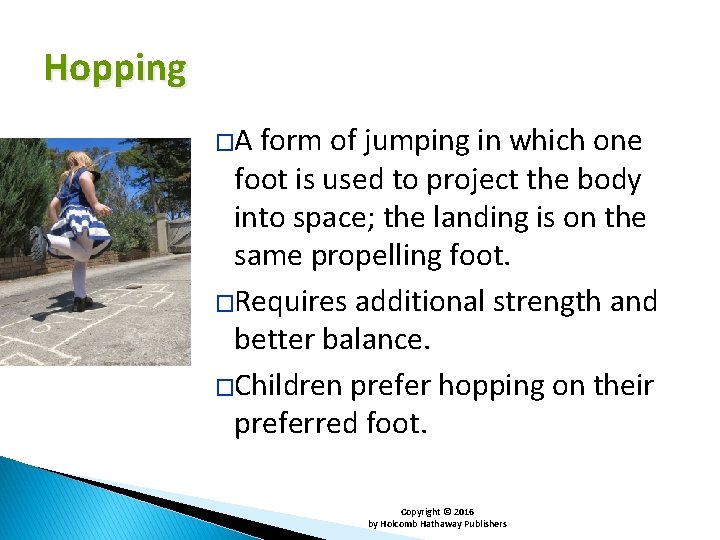
Hopping �A form of jumping in which one foot is used to project the body into space; the landing is on the same propelling foot. �Requires additional strength and better balance. �Children prefer hopping on their preferred foot. Copyright © 2016 by Holcomb Hathaway Publishers
Combining Fundamental Movements �Gallop: A forward step followed by a leap onto the trailing foot �Slide: Essentially the same as a gallop but performed sideways �Skip: A forward step followed by hop on the same foot; leading leg alternates As an adult, do you still gallop, slide, or hop? Do you enjoy performing these movements? Or do you associate them with childhood and children? Copyright © 2016 by Holcomb Hathaway Publishers
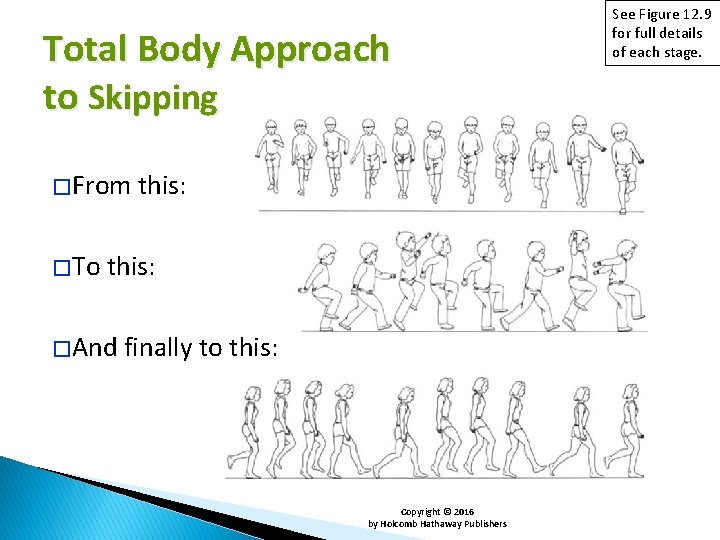
Total Body Approach to Skipping � From � To this: � And finally to this: Copyright © 2016 by Holcomb Hathaway Publishers See Figure 12. 9 for full details of each stage.
Video— Teaching a Child to Skip �Watch this video for a detailed breakdown of the various stages of skipping. �Have you ever given any thought to all the processes involved in what now seems so simple? Copyright © 2016 by Holcomb Hathaway Publishers