
Fundamental Concepts Resolutions The characteristics of remote sensing

- Slides: 19
Fundamental Concepts
Resolutions �The characteristics of remote sensing systems can be described by the following types of resolutions: �Spatial resolution, �Radiometric resolution, �Spectral resolution, and �Temporal resolution. These resolutions control our ability to interpret remote sensing data.
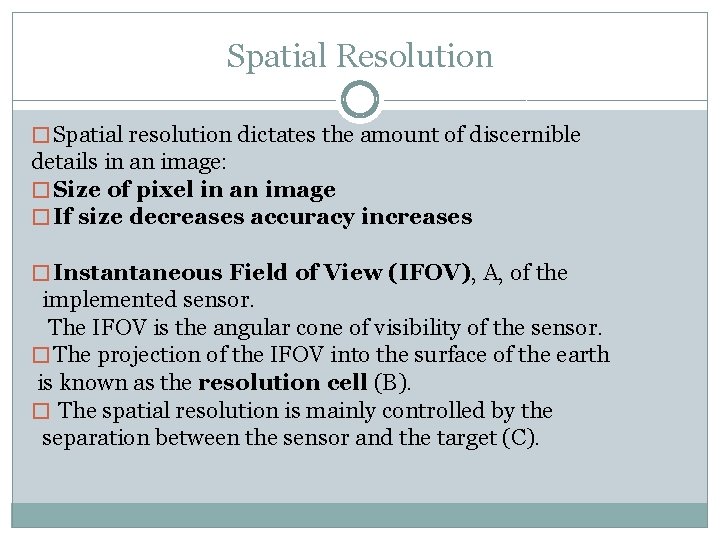
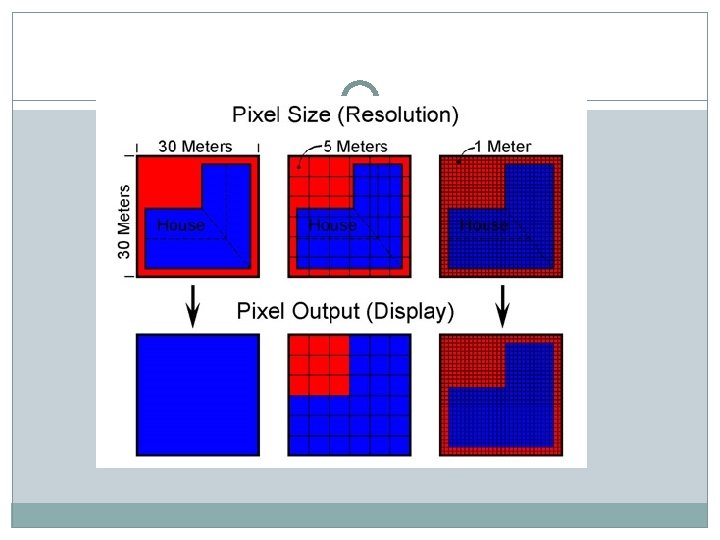
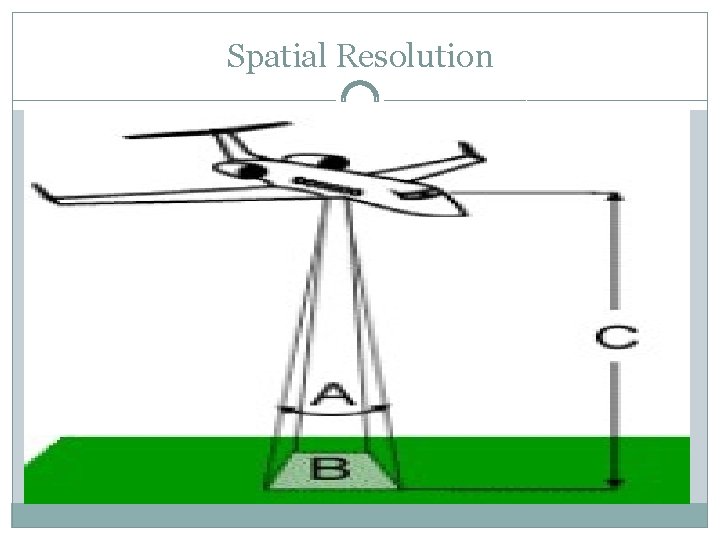
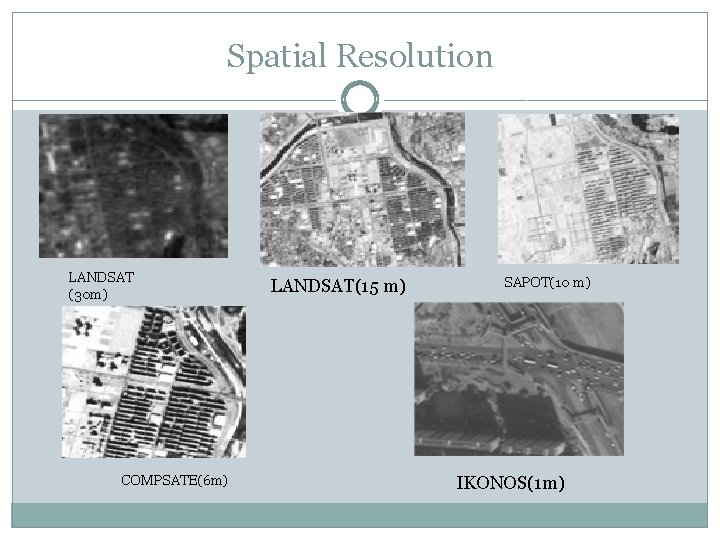
Spatial Resolution � Spatial resolution dictates the amount of discernible details in an image: � Size of pixel in an image � If size decreases accuracy increases � Instantaneous Field of View (IFOV), A, of the implemented sensor. The IFOV is the angular cone of visibility of the sensor. � The projection of the IFOV into the surface of the earth is known as the resolution cell (B). � The spatial resolution is mainly controlled by the separation between the sensor and the target (C).
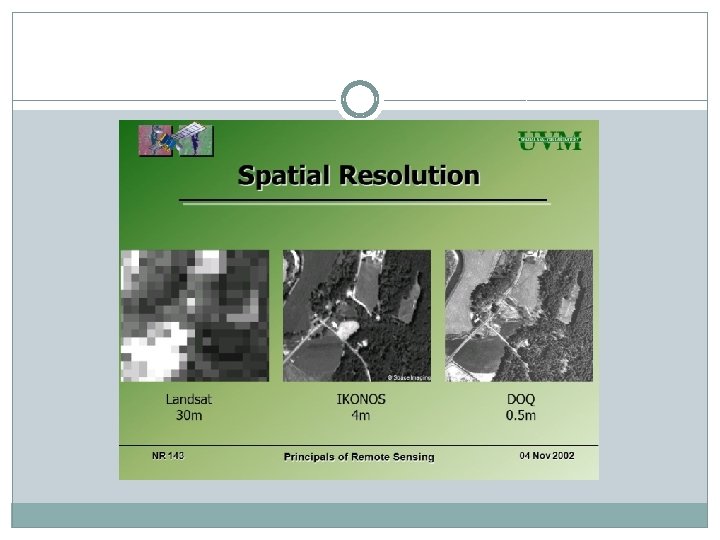
Spatial Resolution
Spatial Resolution LANDSAT (30 m) COMPSATE(6 m) LANDSAT(15 m) SAPOT(10 m) IKONOS(1 m)
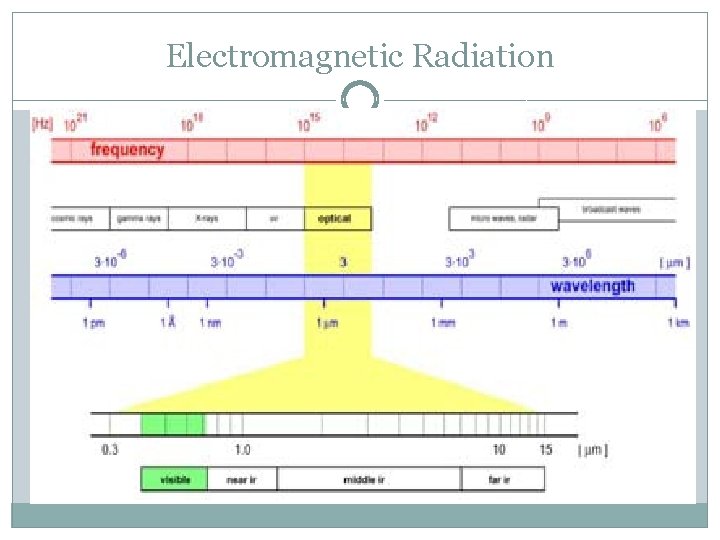
Electromagnetic Radiation
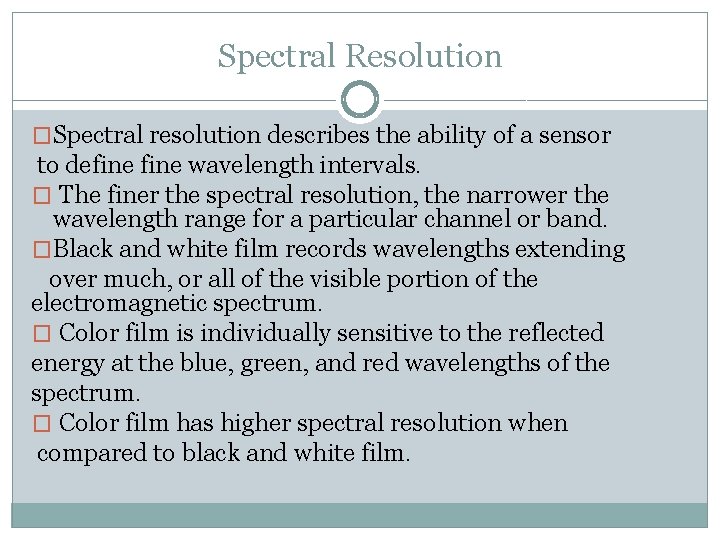
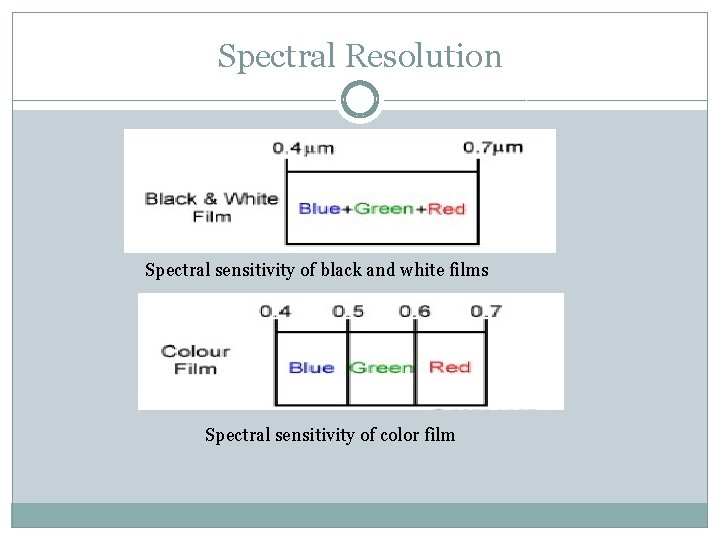
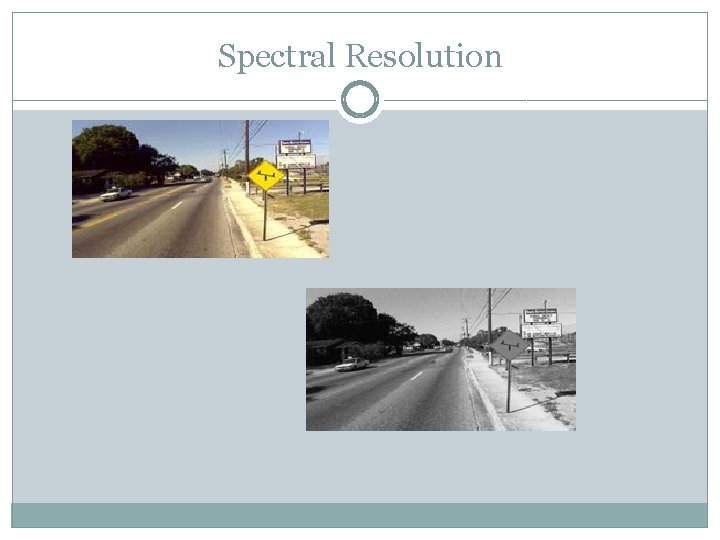
Spectral Resolution �Spectral resolution describes the ability of a sensor to define wavelength intervals. � The finer the spectral resolution, the narrower the wavelength range for a particular channel or band. �Black and white film records wavelengths extending over much, or all of the visible portion of the electromagnetic spectrum. � Color film is individually sensitive to the reflected energy at the blue, green, and red wavelengths of the spectrum. � Color film has higher spectral resolution when compared to black and white film.
Spectral Resolution Spectral sensitivity of black and white films Spectral sensitivity of color film
Spectral Resolution
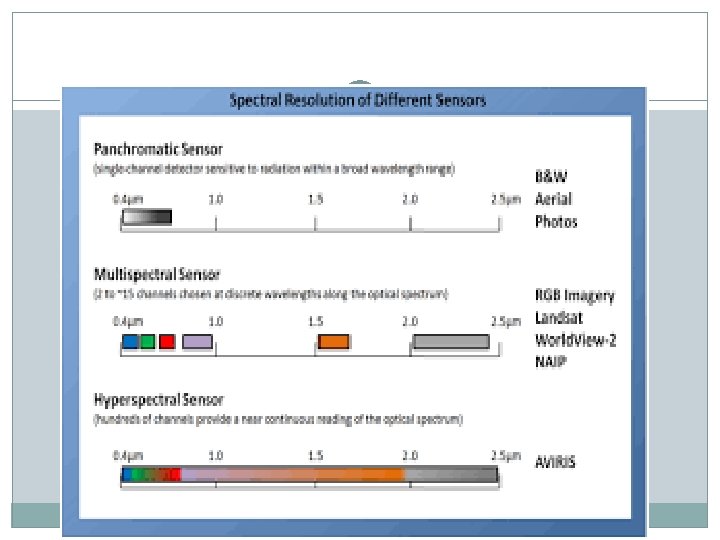
Spectral Resolution �multi-spectral sensors record energy over several separate wavelength ranges at various spectral resolutions. � Advanced multi-spectral sensors called hyper spectral sensors, detect hundreds of very narrow �spectral bands throughout the visible, near infrared, and mid-infrared portions of the electromagnetic spectrum. � Such sensors facilitate fine discrimination between different targets based on their spectral response in each of the narrow bands.
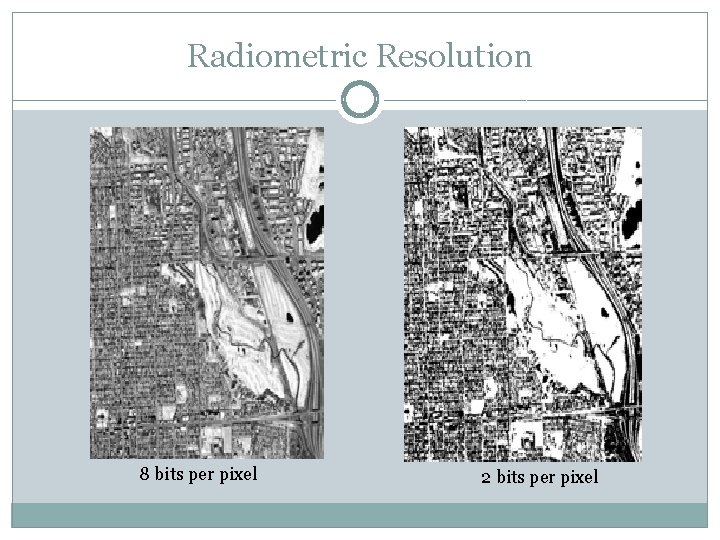
Radiometric Resolution �Radiometric resolution of an imaging system describes its ability to discriminate very slight differences in the recorded energy. � • The finer the radiometric resolution of a sensor, the more sensitive it is to detecting small differences in reflected or emitted energy. � For digital imagery, the radiometric resolution is defined by the number of bits used for coding the recorded grey values. �By comparing a 2 -bit image with an 8 -bit image, one can see that there is a large difference in the level of discernible details.
Radiometric Resolution 8 bits per pixel 2 bits per pixel
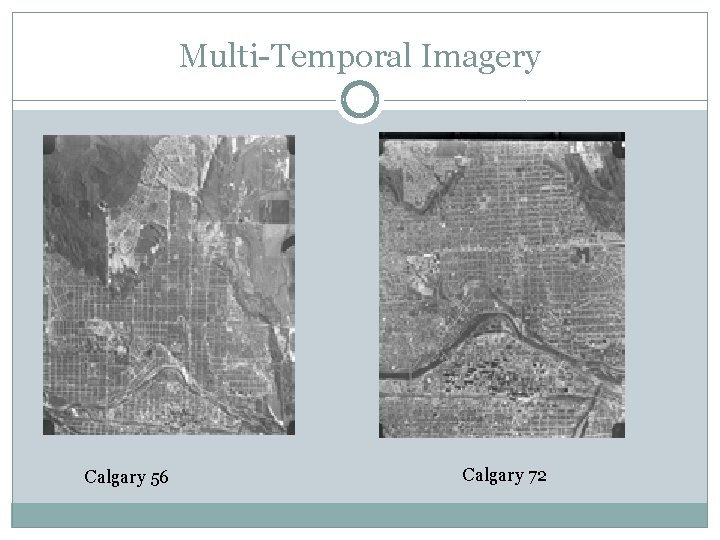
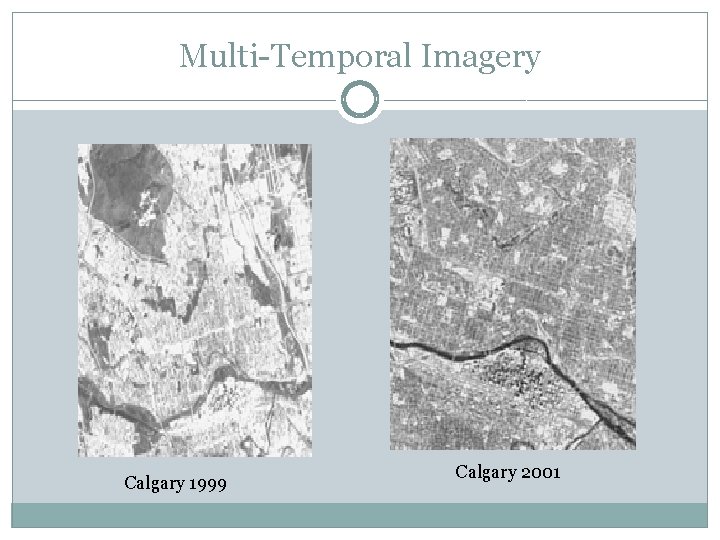
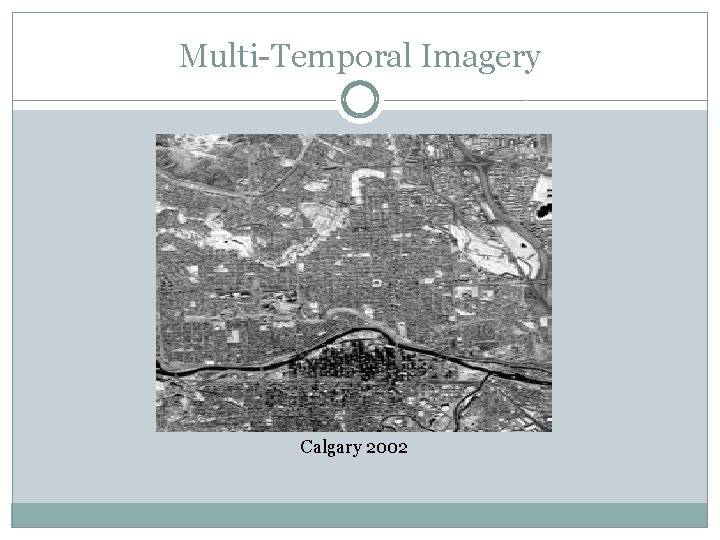
Temporal Resolution �Temporal resolution of a remote sensing system refers to the frequency with which it images the same area. � • Frequent imaging is important for: � Disaster & environmental management. � • For example, floods, oil slicks, spread of forest disease from one year to the next. � Change detection applications
Multi-Temporal Imagery Calgary 56 Calgary 72
Multi-Temporal Imagery Calgary 1999 Calgary 2001
Multi-Temporal Imagery Calgary 2002