
Fundamental concepts and principles of mechanics What is

- Slides: 15
Fundamental concepts and principles of mechanics
What is mechanics? § It is the branch of physics that is concerned with the motion of macroscopic objects. Types : 1. Statics : The branch of mechanics concerned with the bodies at rest and forces in equilibrium. 2. Kinematics: concerned with the study of movement without force. 3. Dynamics : Concerned with the study of movement of an object due to force.
The fundamental concepts: Ø The four fundamental concepts are used in mechanics: 1. Space 2. Time 3. Mass 4. Force
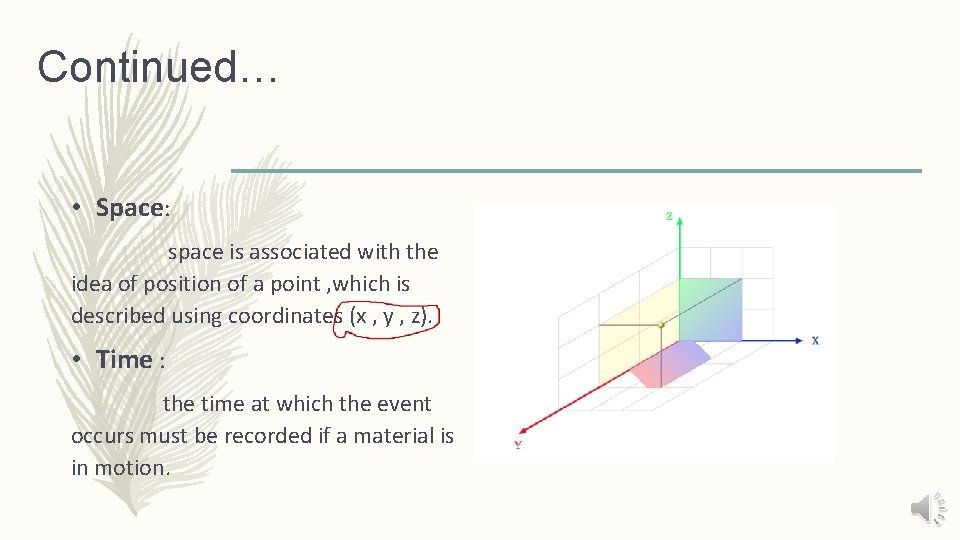
Continued… • Space: space is associated with the idea of position of a point , which is described using coordinates (x , y , z). • Time : the time at which the event occurs must be recorded if a material is in motion.
Continued… • Mass : Mass of the object is used to describe the relation between acceleration and force acting on a body. • Force : Force is any interaction that , when unopposed, will change the motion of an object. Base unit : kg m/s. s SI UNIT : Newton (N)
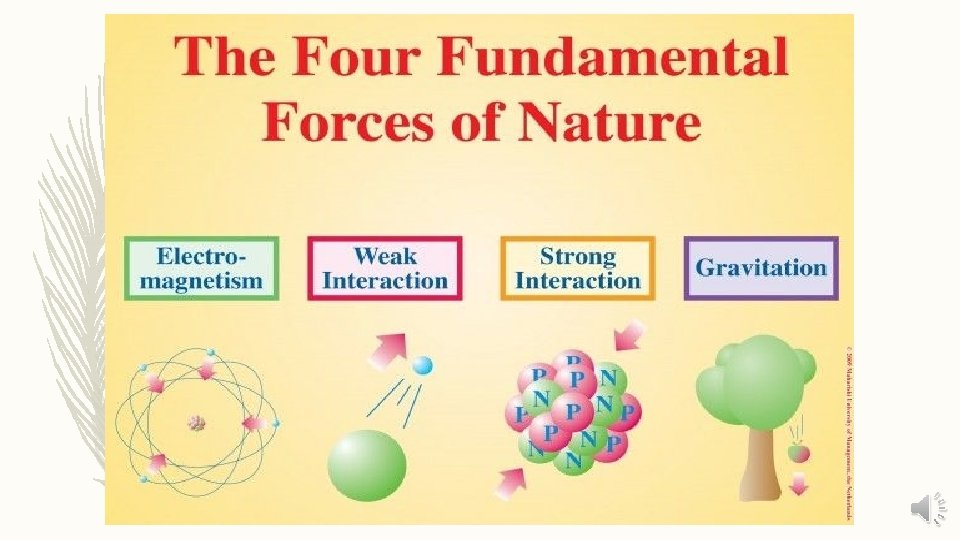
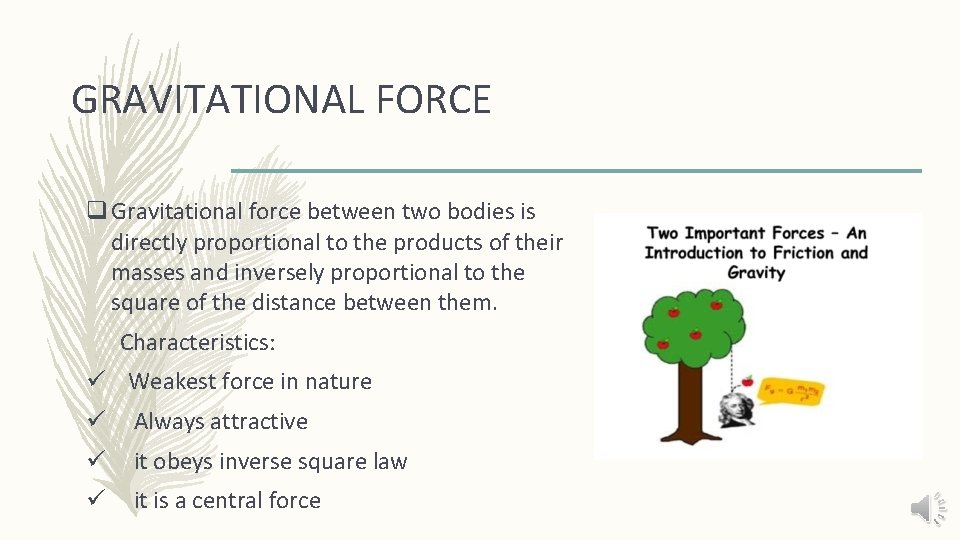
GRAVITATIONAL FORCE q Gravitational force between two bodies is directly proportional to the products of their masses and inversely proportional to the square of the distance between them. Characteristics: ü Weakest force in nature ü Always attractive ü it obeys inverse square law ü it is a central force
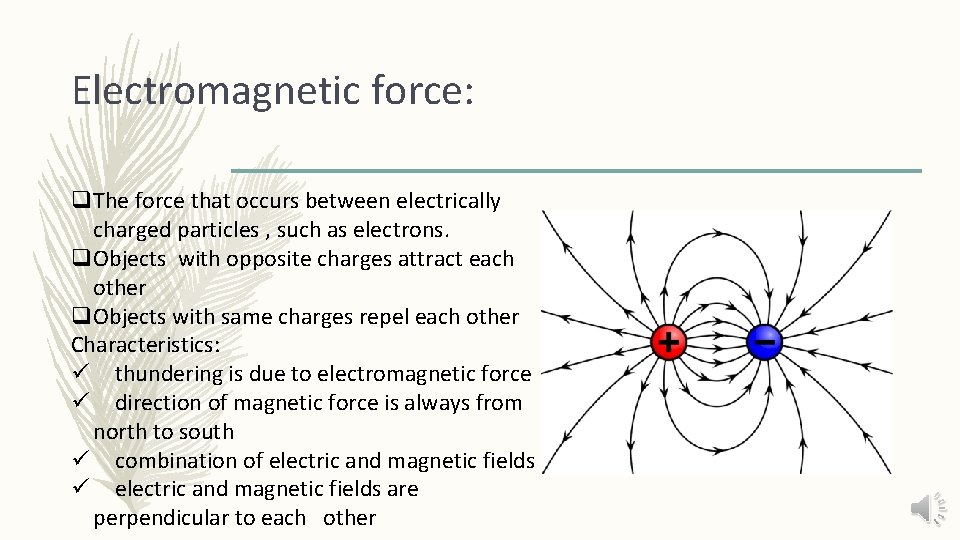
Electromagnetic force: q. The force that occurs between electrically charged particles , such as electrons. q. Objects with opposite charges attract each other q. Objects with same charges repel each other Characteristics: ü thundering is due to electromagnetic force ü direction of magnetic force is always from north to south ü combination of electric and magnetic fields ü electric and magnetic fields are perpendicular to each other
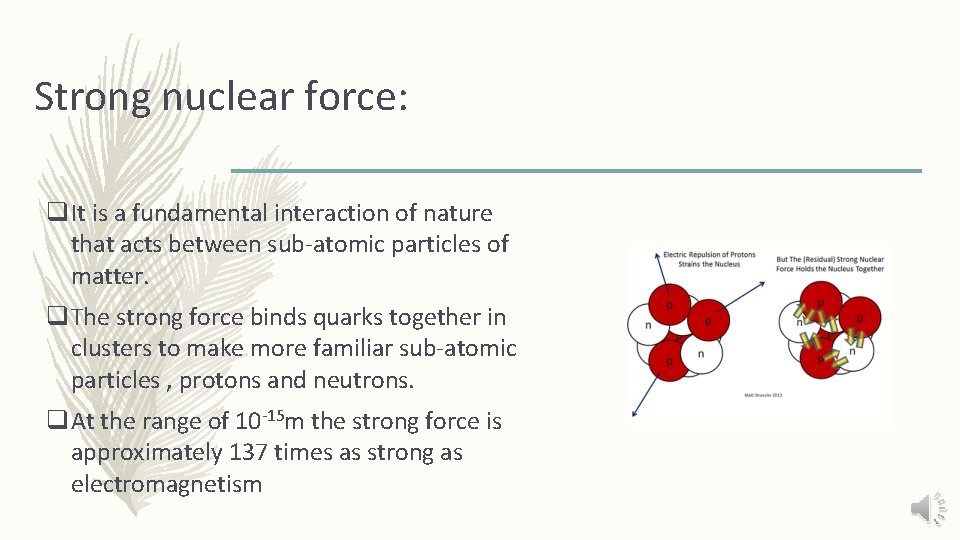
Strong nuclear force: q It is a fundamental interaction of nature that acts between sub-atomic particles of matter. q The strong force binds quarks together in clusters to make more familiar sub-atomic particles , protons and neutrons. q At the range of 10 -15 m the strong force is approximately 137 times as strong as electromagnetism
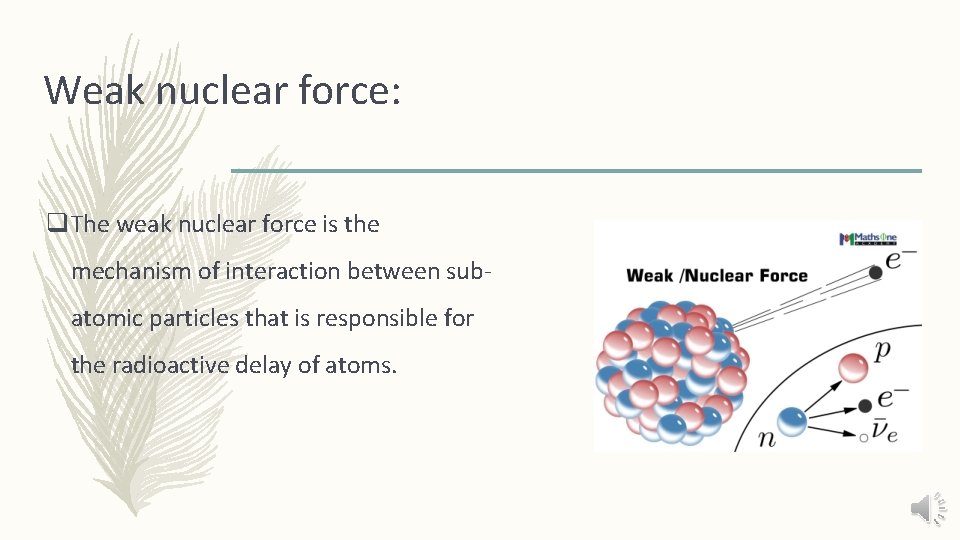
Weak nuclear force: q The weak nuclear force is the mechanism of interaction between subatomic particles that is responsible for the radioactive delay of atoms.
Properties of nuclear forces: v. These are attractive in nature but with a repulsive core v. The range of nuclear force is very short v. Nuclear force is identical for all nucleons v. At a distance of less than 0. 7 Fermi this force becomes repulsive
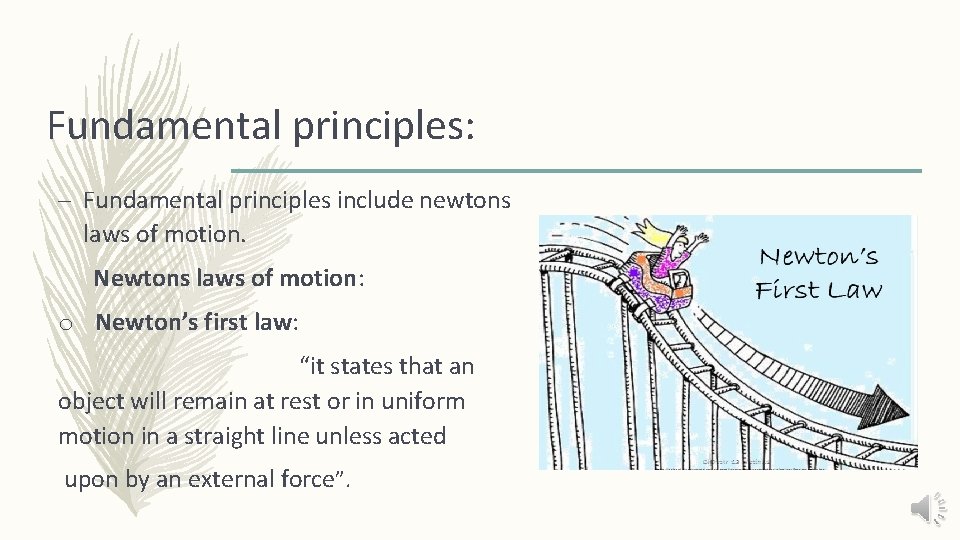
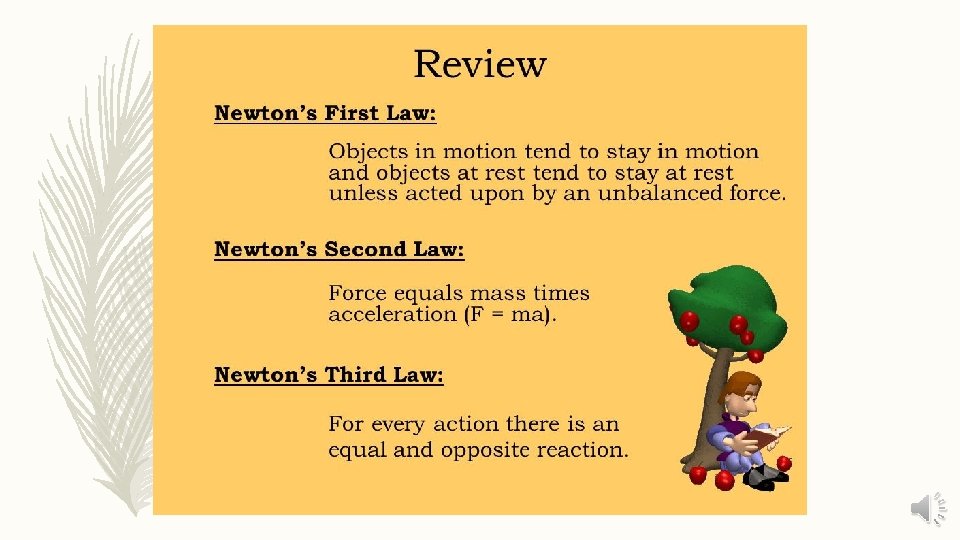
Fundamental principles: – Fundamental principles include newtons laws of motion. Newtons laws of motion: o Newton’s first law: “it states that an object will remain at rest or in uniform motion in a straight line unless acted upon by an external force”.
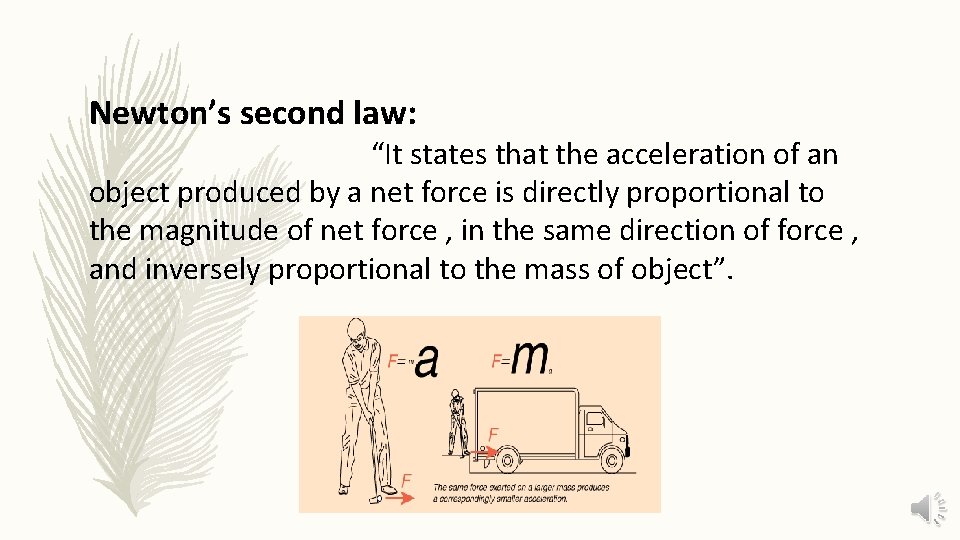
Newton’s second law: “It states that the acceleration of an object produced by a net force is directly proportional to the magnitude of net force , in the same direction of force , and inversely proportional to the mass of object”.
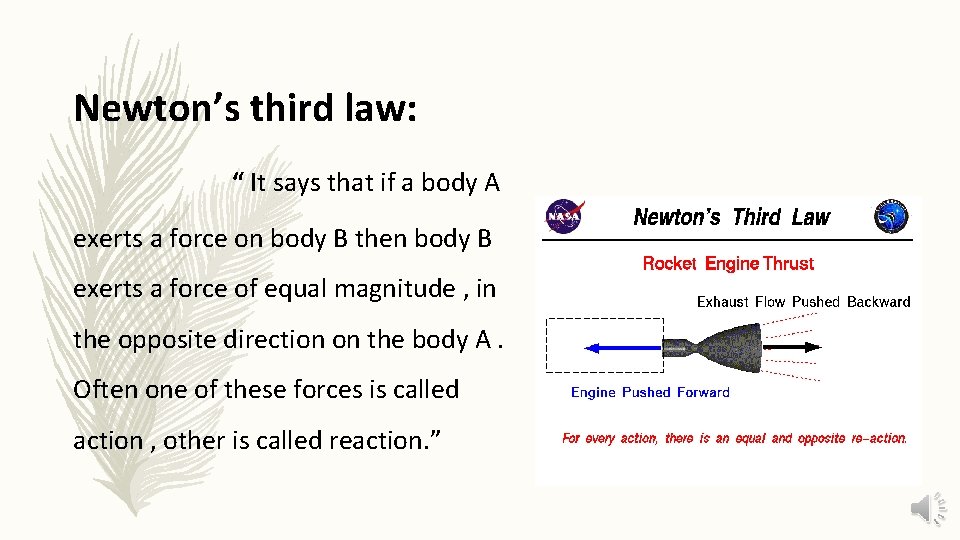
Newton’s third law: “ It says that if a body A exerts a force on body B then body B exerts a force of equal magnitude , in the opposite direction on the body A. Often one of these forces is called action , other is called reaction. ”