
Functions of the stomach The Stomach is a
- Slides: 7
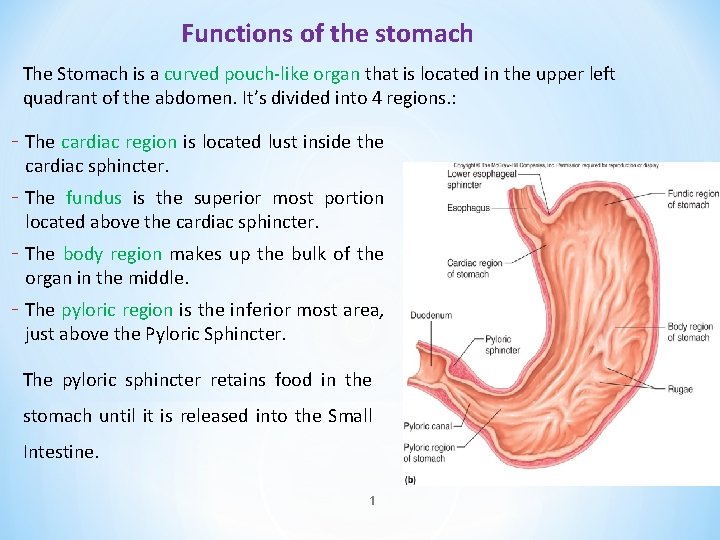
Functions of the stomach The Stomach is a curved pouch-like organ that is located in the upper left quadrant of the abdomen. It’s divided into 4 regions. : - The cardiac region is located lust inside the cardiac sphincter. - The fundus is the superior most portion located above the cardiac sphincter. - The body region makes up the bulk of the organ in the middle. - The pyloric region is the inferior most area, just above the Pyloric Sphincter. The pyloric sphincter retains food in the stomach until it is released into the Small Intestine. 1
Functions of the stomach Major Functions of the Stomach: • Storage of ingested food • Mechanical breakdown of ingested food • Disruption of chemical bonds in food material by acid and enzymes • Production of intrinsic factor, a glycoprotein required for absorption of vitamin B 12 in small intestine 2
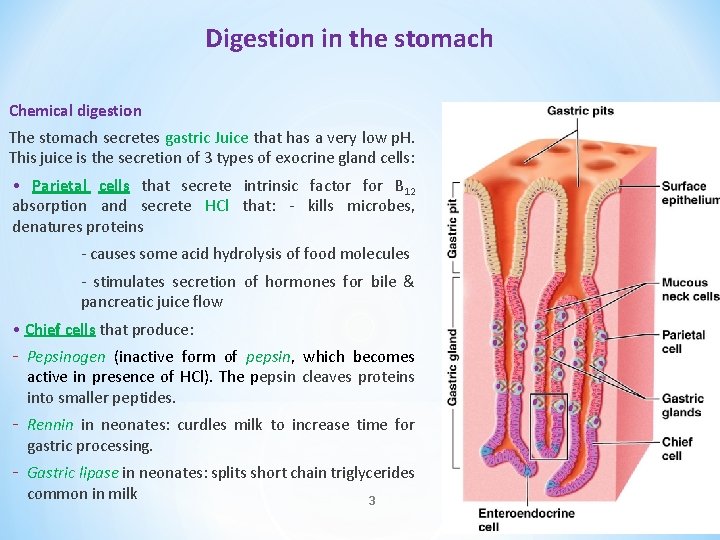
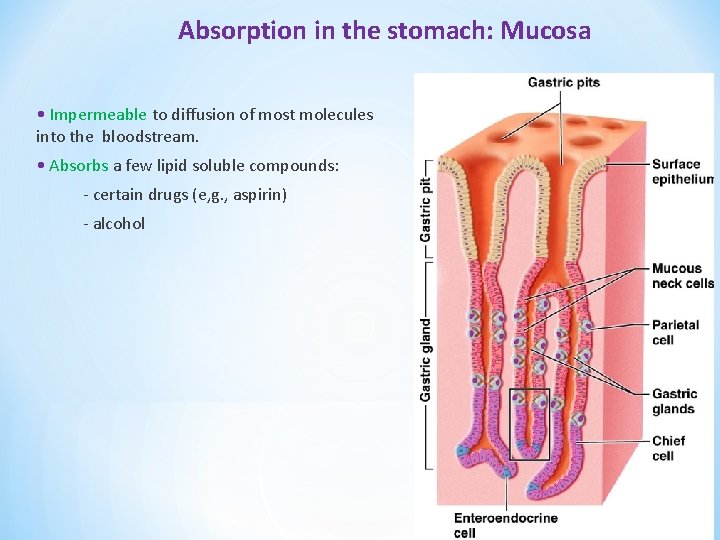
Digestion in the stomach Chemical digestion The stomach secretes gastric Juice that has a very low p. H. This juice is the secretion of 3 types of exocrine gland cells: • Parietal cells that secrete intrinsic factor for B 12 absorption and secrete HCl that: - kills microbes, denatures proteins - causes some acid hydrolysis of food molecules - stimulates secretion of hormones for bile & pancreatic juice flow • Chief cells that produce: - Pepsinogen (inactive form of pepsin, which becomes active in presence of HCl). The pepsin cleaves proteins into smaller peptides. - Rennin in neonates: curdles milk to increase time for gastric processing. - Gastric lipase in neonates: splits short chain triglycerides common in milk 3
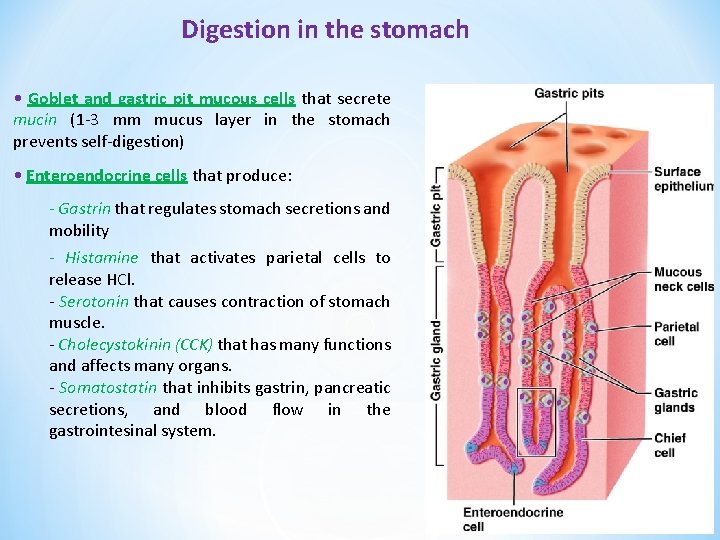
Digestion in the stomach • Goblet and gastric pit mucous cells that secrete mucin (1 -3 mm mucus layer in the stomach prevents self-digestion) • Enteroendocrine cells that produce: - Gastrin that regulates stomach secretions and mobility - Histamine that activates parietal cells to release HCl. - Serotonin that causes contraction of stomach muscle. - Cholecystokinin (CCK) that has many functions and affects many organs. - Somatostatin that inhibits gastrin, pancreatic secretions, and blood flow in the gastrointesinal system.
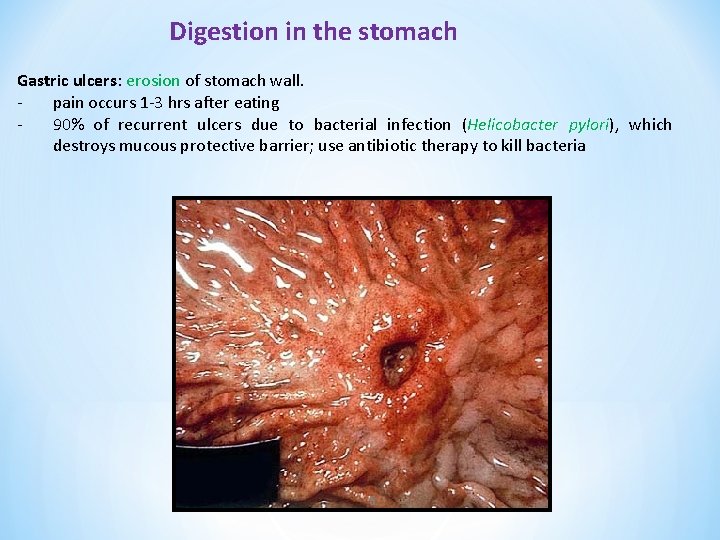
Digestion in the stomach Gastric ulcers: erosion of stomach wall. pain occurs 1 -3 hrs after eating 90% of recurrent ulcers due to bacterial infection (Helicobacter pylori), which destroys mucous protective barrier; use antibiotic therapy to kill bacteria 5
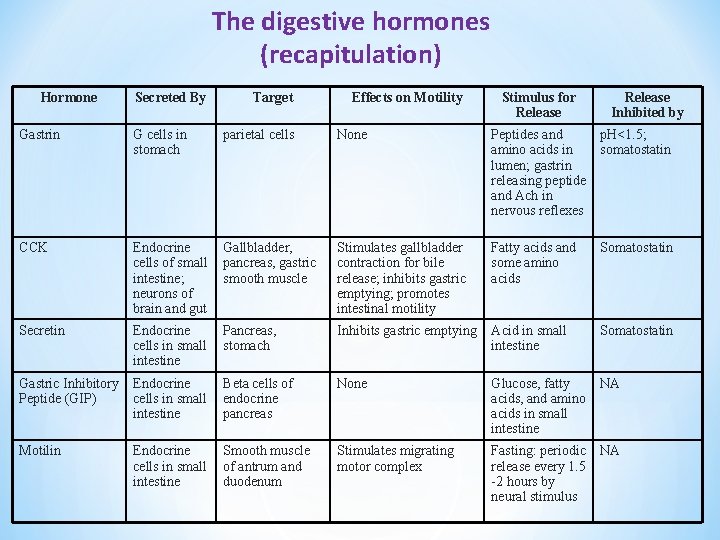
The digestive hormones (recapitulation) Hormone Secreted By Target Effects on Motility Stimulus for Release Inhibited by Gastrin G cells in stomach parietal cells None Peptides and p. H<1. 5; amino acids in somatostatin lumen; gastrin releasing peptide and Ach in nervous reflexes CCK Endocrine cells of small intestine; neurons of brain and gut Gallbladder, pancreas, gastric smooth muscle Stimulates gallbladder contraction for bile release; inhibits gastric emptying; promotes intestinal motility Fatty acids and some amino acids Somatostatin Secretin Endocrine cells in small intestine Pancreas, stomach Inhibits gastric emptying Acid in small intestine Somatostatin Gastric Inhibitory Peptide (GIP) Endocrine cells in small intestine Beta cells of endocrine pancreas None Glucose, fatty acids, and amino acids in small intestine NA Motilin Endocrine cells in small intestine Smooth muscle of antrum and duodenum Stimulates migrating motor complex Fasting: periodic release every 1. 5 -2 hours by neural stimulus NA
Absorption in the stomach: Mucosa • Impermeable to diffusion of most molecules into the bloodstream. • Absorbs a few lipid soluble compounds: - certain drugs (e, g. , aspirin) - alcohol