
Functions of soils and the threats to soils

- Slides: 42
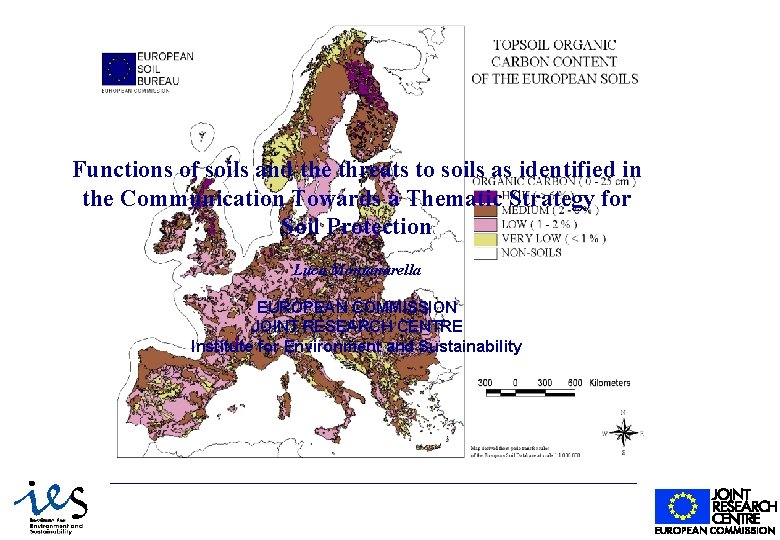
Functions of soils and the threats to soils as identified in the Communication Towards a Thematic Strategy for Soil Protection Luca Montanarella EUROPEAN COMMISSION JOINT RESEARCH CENTRE Institute for Environment and Sustainability 1/31/2022
Bruxelles, le 16. 4. 2002 COM(2002) 179 final COMMUNICATION FROM THE COMMISSION TO THE COUNCIL, THE EUROPEAN PARLIAMENT, THE ECONOMIC AND SOCIAL COMMITTEE AND THE COMMITTEE OF THE REGIONS Towards a Thematic Strategy for Soil Protection http: //europa. eu. int/comm/environment/agriculture/soil_protection. htm 1/31/2022
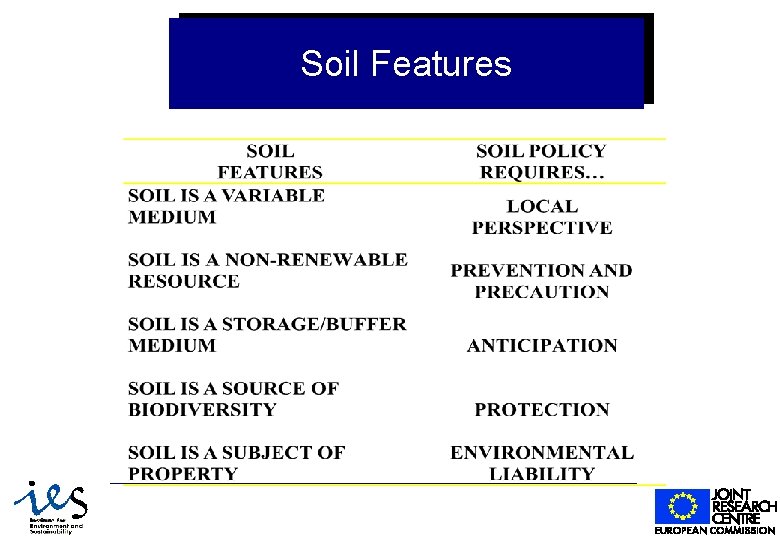
Soil Features 1/31/2022
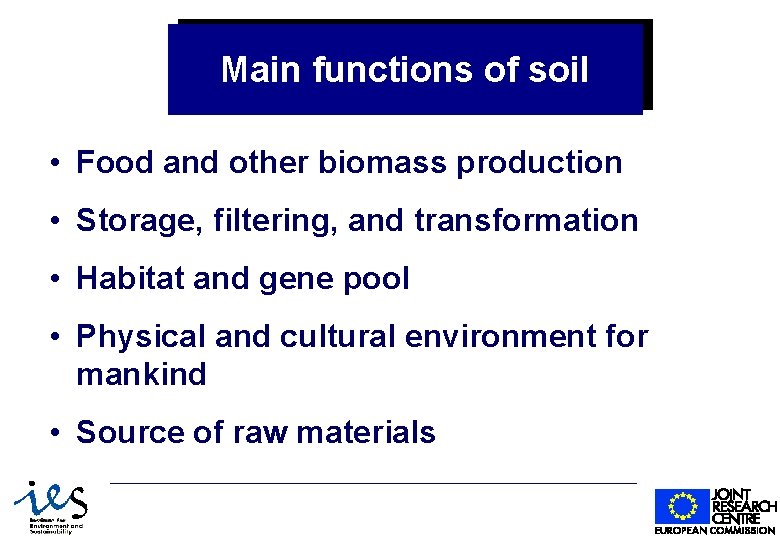
Main functions of soil • Food and other biomass production • Storage, filtering, and transformation • Habitat and gene pool • Physical and cultural environment for mankind • Source of raw materials 1/31/2022
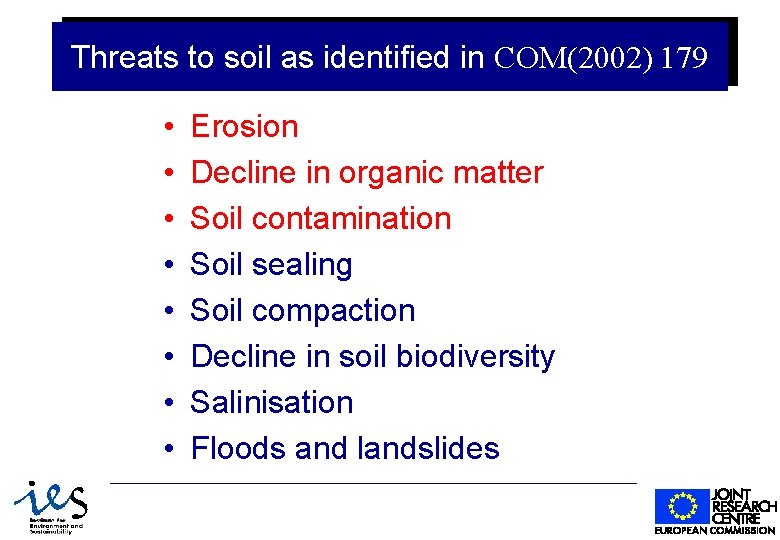
Threats to soil as identified in COM(2002) 179 • • 1/31/2022 Erosion Decline in organic matter Soil contamination Soil sealing Soil compaction Decline in soil biodiversity Salinisation Floods and landslides
1/31/2022
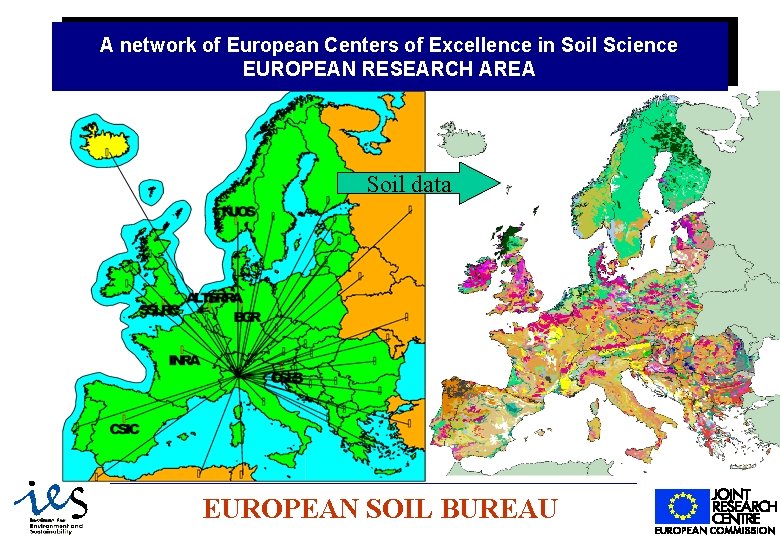
A network of European Centers of Excellence in Soil Science EUROPEAN RESEARCH AREA Soil data 1/31/2022 EUROPEAN SOIL BUREAU
1/31/2022
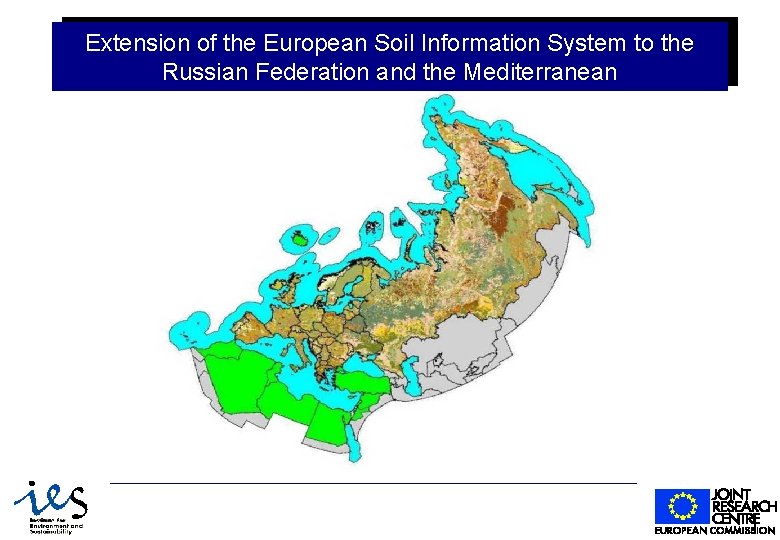
Extension of the European Soil Information System to the Russian Federation and the Mediterranean 1/31/2022
1/31/2022
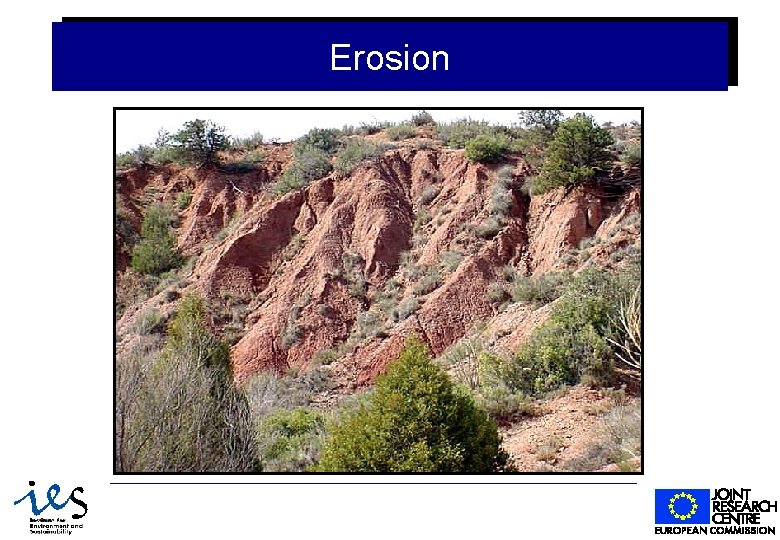
Erosion 1/31/2022
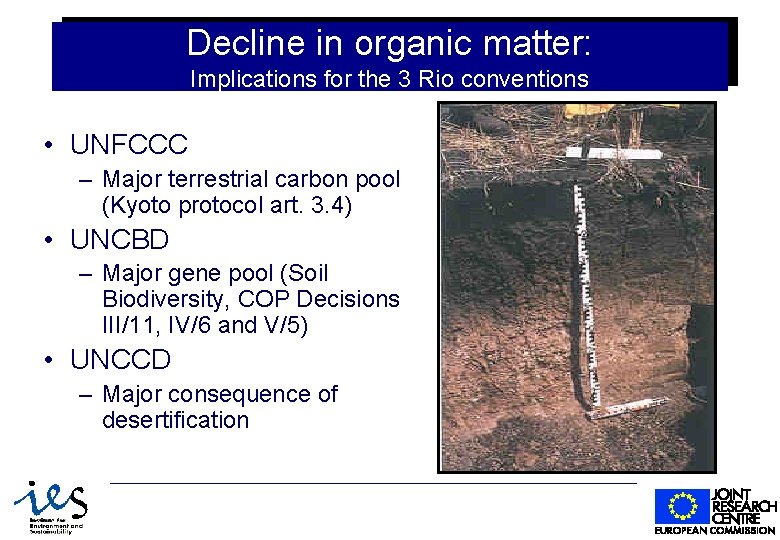
Decline in organic matter: Implications for the 3 Rio conventions • UNFCCC – Major terrestrial carbon pool (Kyoto protocol art. 3. 4) • UNCBD – Major gene pool (Soil Biodiversity, COP Decisions III/11, IV/6 and V/5) • UNCCD – Major consequence of desertification 1/31/2022
1/31/2022
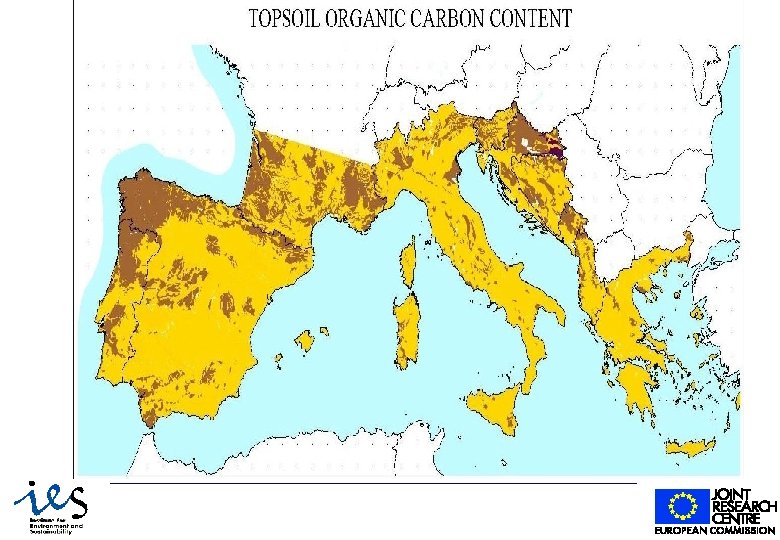
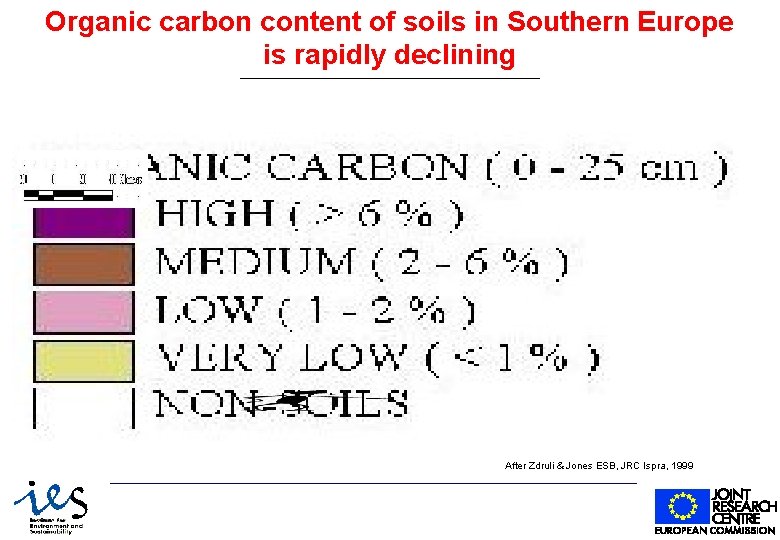
Organic carbon content of soils in Southern Europe is rapidly declining After Zdruli & Jones ESB, JRC Ispra, 1999 1/31/2022
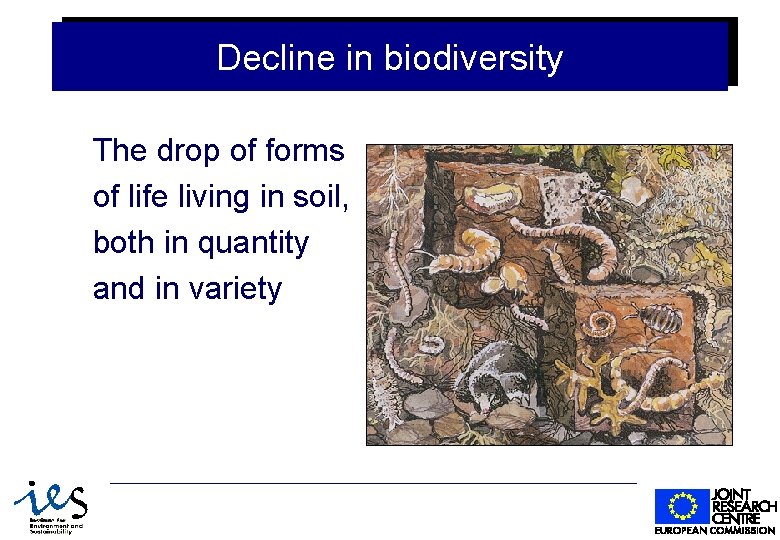
Decline in biodiversity The drop of forms of life living in soil, both in quantity and in variety 1/31/2022
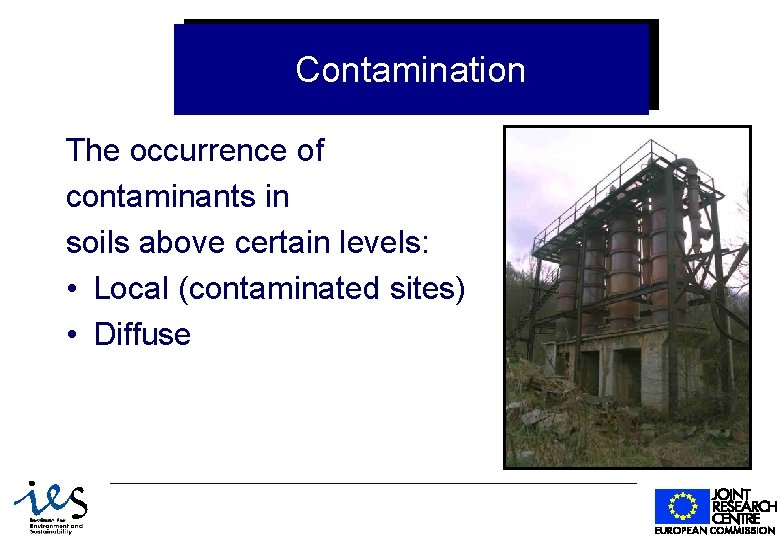
Contamination The occurrence of contaminants in soils above certain levels: • Local (contaminated sites) • Diffuse 1/31/2022
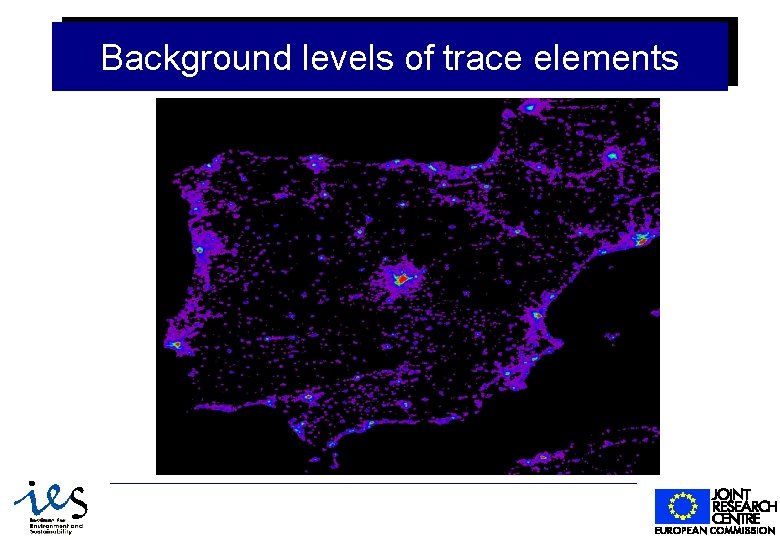
Background levels of trace elements 1/31/2022
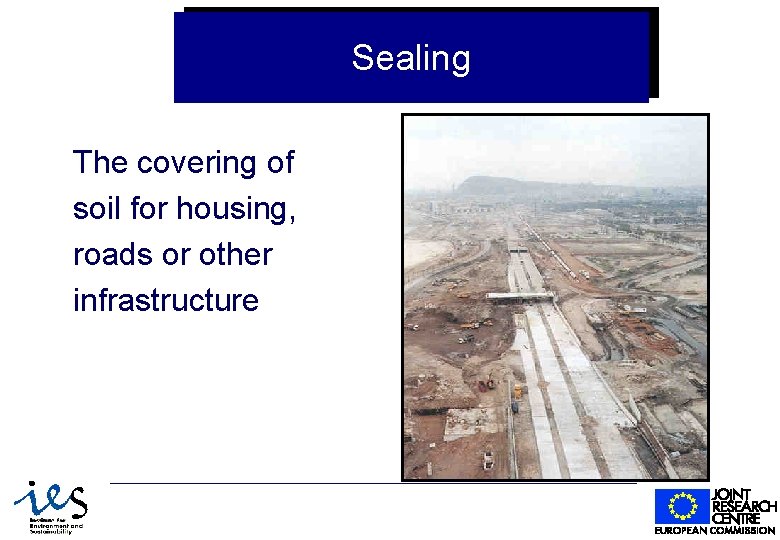
Sealing The covering of soil for housing, roads or other infrastructure 1/31/2022
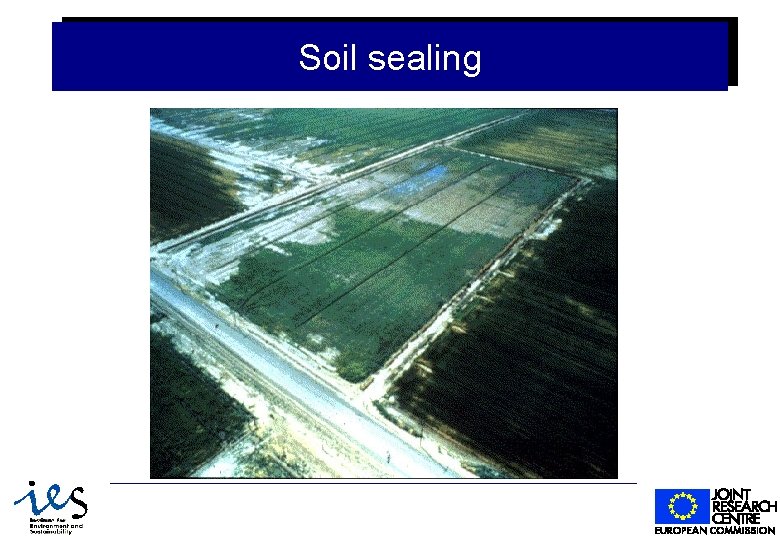
Soil sealing 1/31/2022
Project LACOAST in coastal areas Increase in build-up areas 1975 -1990 Source: EEA 2002 1/31/2022
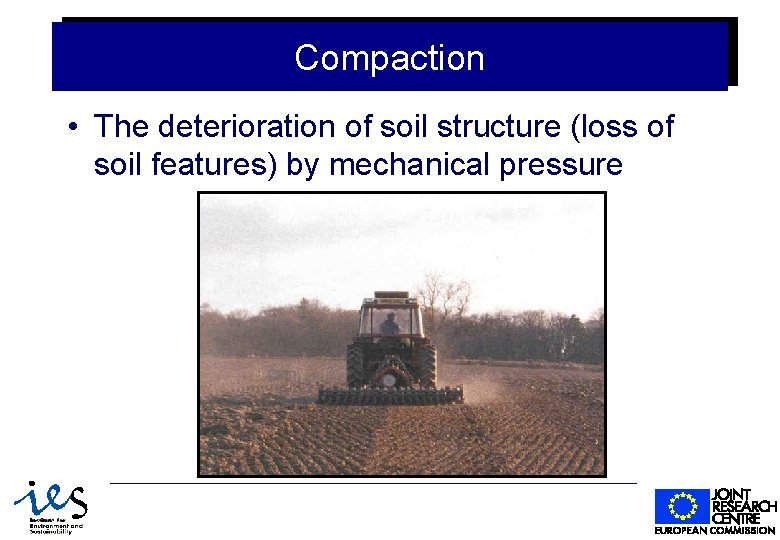
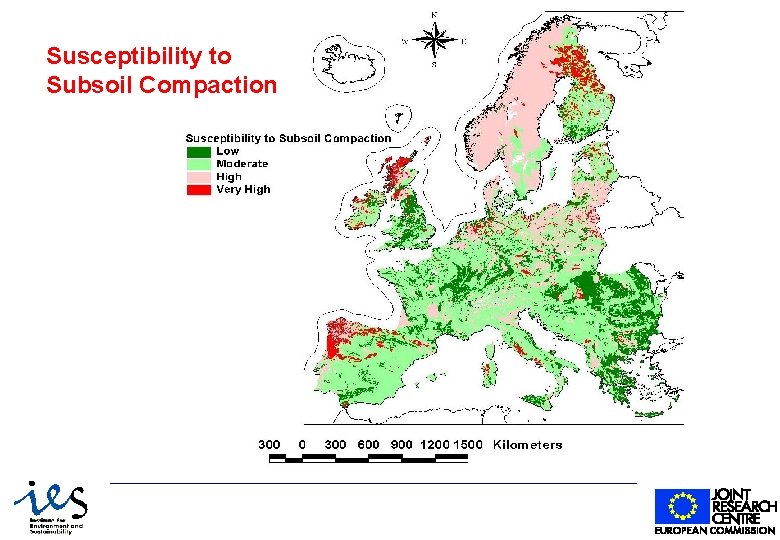
Compaction • The deterioration of soil structure (loss of soil features) by mechanical pressure 1/31/2022
Susceptibility to Subsoil Compaction 1/31/2022
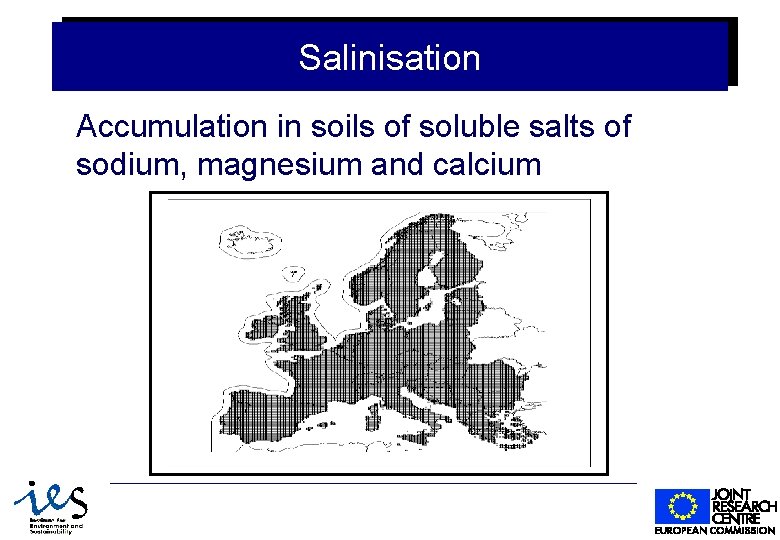
Salinisation Accumulation in soils of soluble salts of sodium, magnesium and calcium 1/31/2022
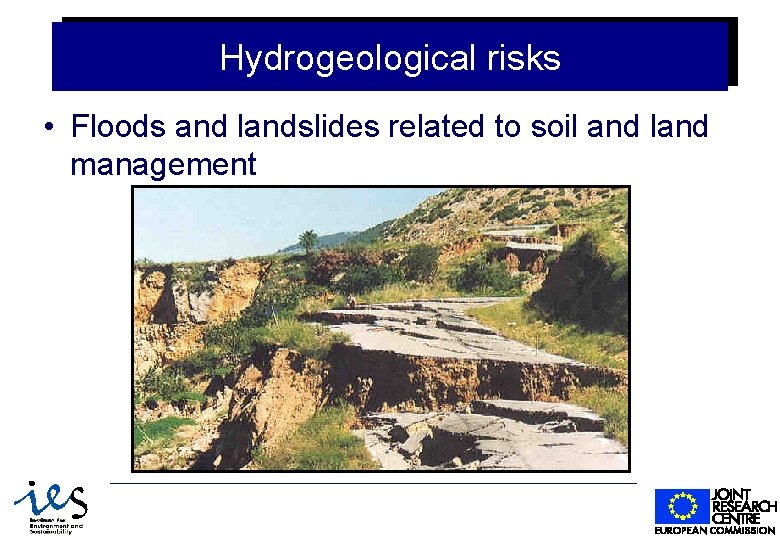
Hydrogeological risks • Floods and landslides related to soil and land management 1/31/2022
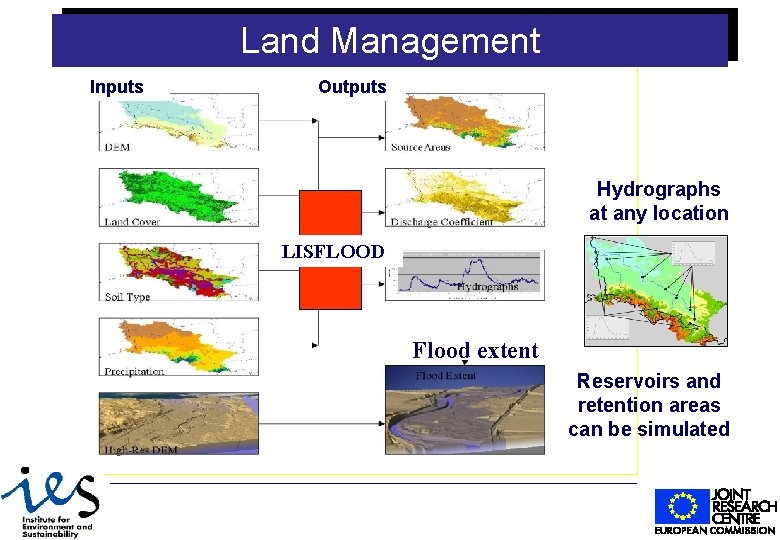
Land Management Inputs Outputs Hydrographs at any location LISFLOOD Flood extent Reservoirs and retention areas can be simulated 1/31/2022
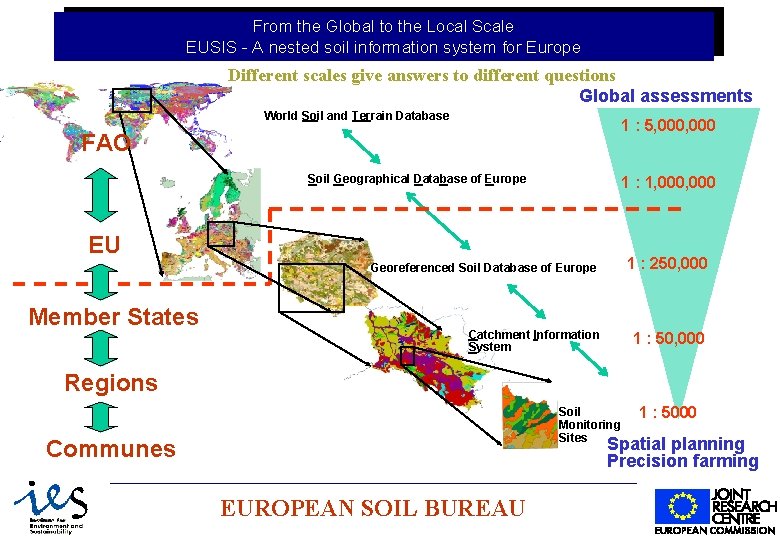
From the Global to the Local Scale EUSIS - A nested soil information system for Europe Different scales give answers to different questions Global assessments World Soil and Terrain Database 1 : 5, 000 FAO Soil Geographical Database of Europe 1 : 1, 000 EU Member States Georeferenced Soil Database of Europe 1 : 250, 000 Catchment Information System 1 : 50, 000 Regions Soil Monitoring Sites Spatial planning Precision farming Communes 1/31/2022 1 : 5000 EUROPEAN SOIL BUREAU
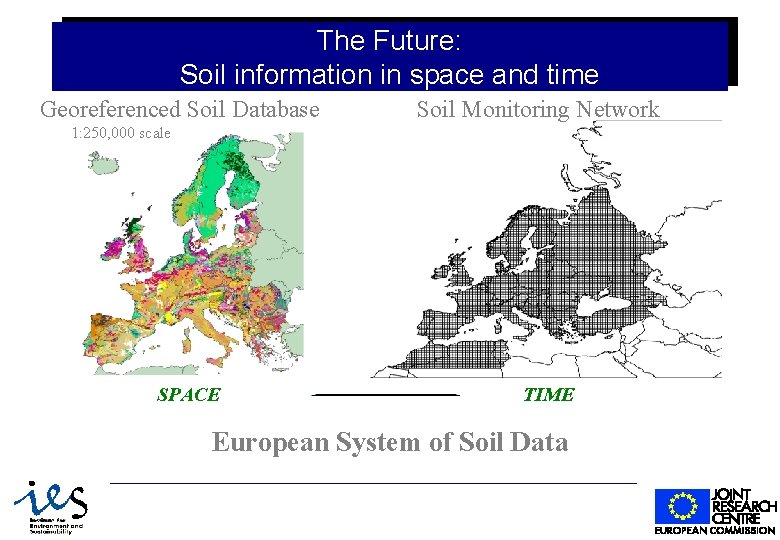
The Future: Soil information in space and time Georeferenced Soil Database Soil Monitoring Network 1: 250, 000 scale SPACE TIME European System of Soil Data 1/31/2022
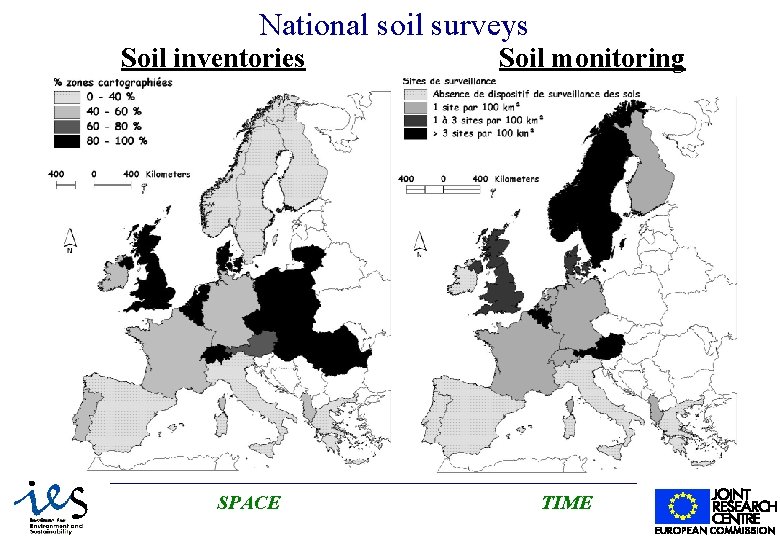
National soil surveys Soil inventories 1/31/2022 SPACE Soil monitoring TIME
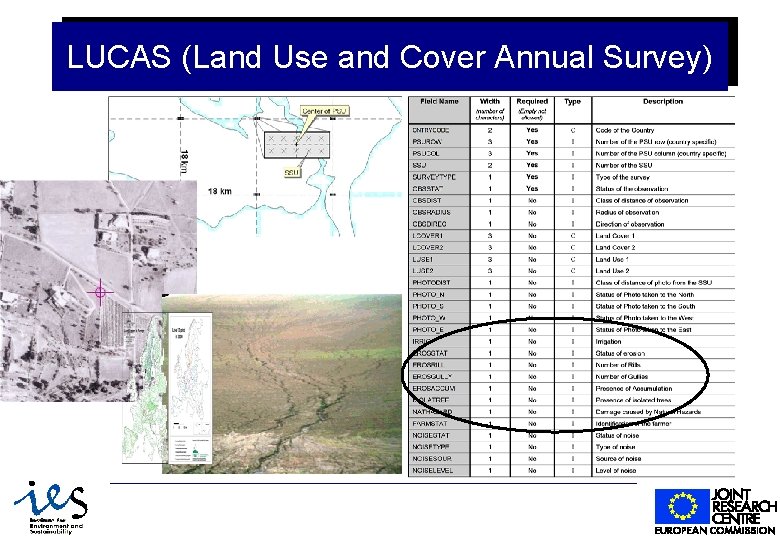
LUCAS (Land Use and Cover Annual Survey) 1/31/2022
ICP Forest Soil Monitoring Network 1/31/2022
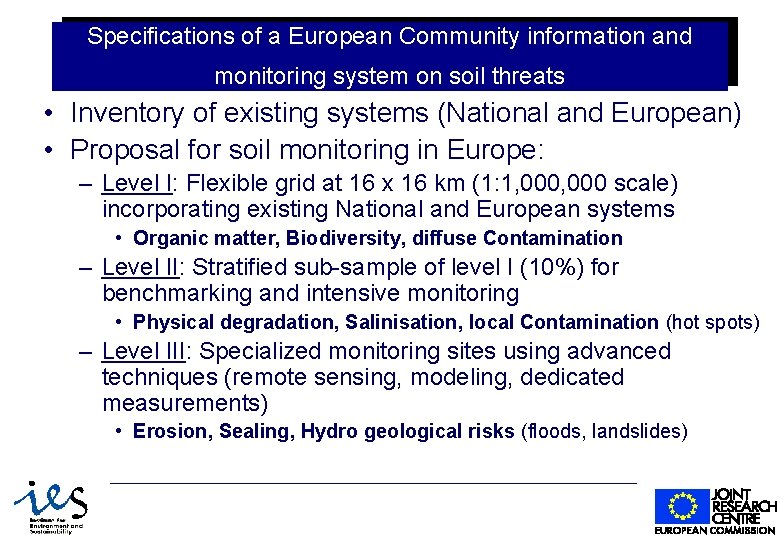
Specifications of a European Community information and monitoring system on soil threats • Inventory of existing systems (National and European) • Proposal for soil monitoring in Europe: – Level I: Flexible grid at 16 x 16 km (1: 1, 000 scale) incorporating existing National and European systems • Organic matter, Biodiversity, diffuse Contamination – Level II: Stratified sub-sample of level I (10%) for benchmarking and intensive monitoring • Physical degradation, Salinisation, local Contamination (hot spots) – Level III: Specialized monitoring sites using advanced techniques (remote sensing, modeling, dedicated measurements) • Erosion, Sealing, Hydro geological risks (floods, landslides) 1/31/2022
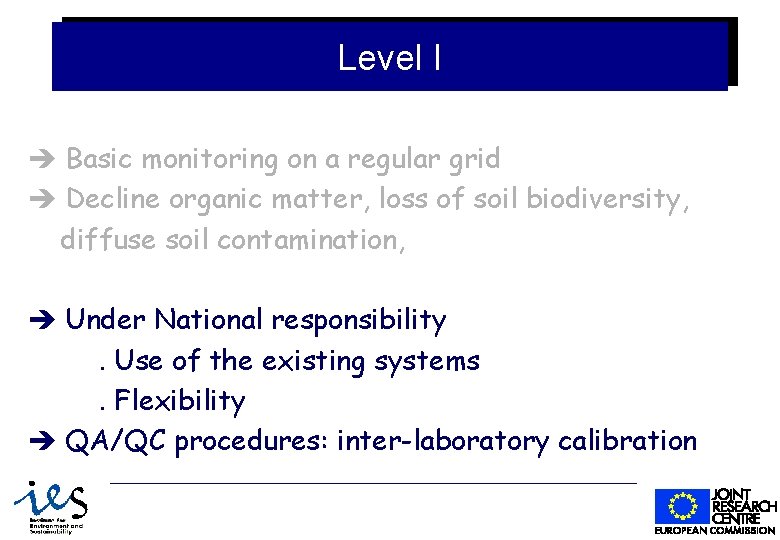
Level I: Grid-based Basic monitoring on a regular grid Decline organic matter, loss of soil biodiversity, diffuse soil contamination, Under National responsibility. Use of the existing systems. Flexibility QA/QC procedures: inter-laboratory calibration 1/31/2022
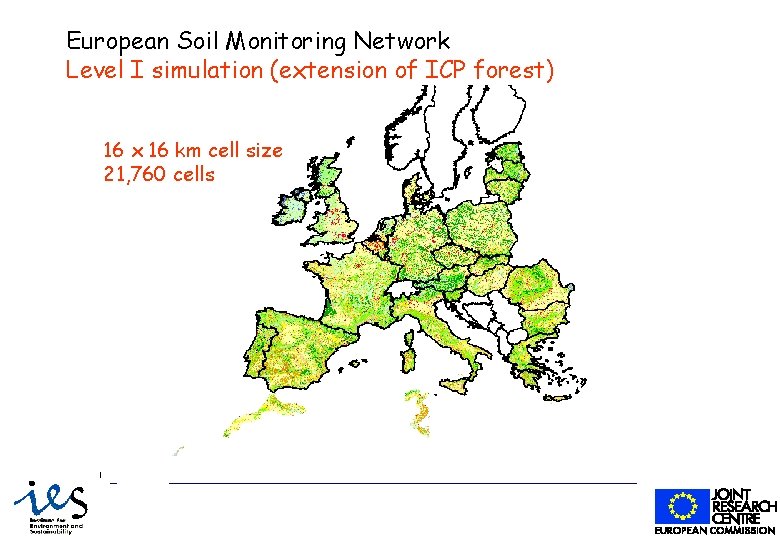
European Soil Monitoring Network Level I simulation (extension of ICP forest) 16 x 16 km cell size 21, 760 cells 1/31/2022
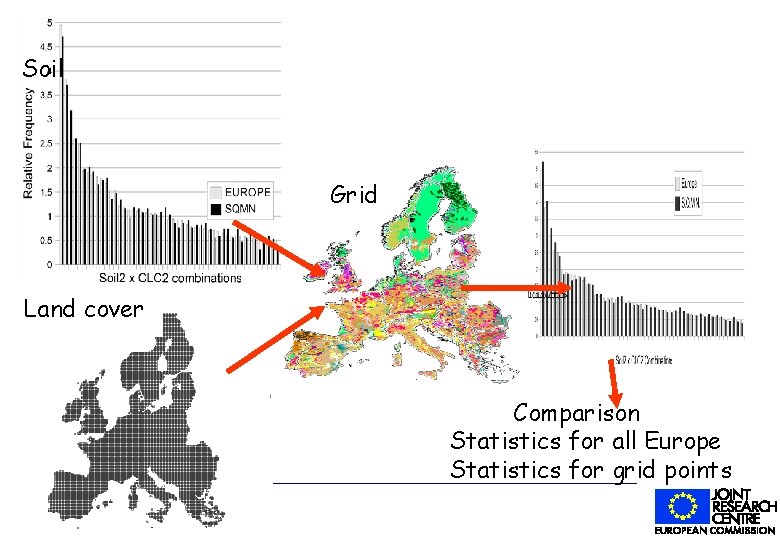
Soil Grid Land cover Comparison Statistics for all Europe Statistics for grid points 1/31/2022
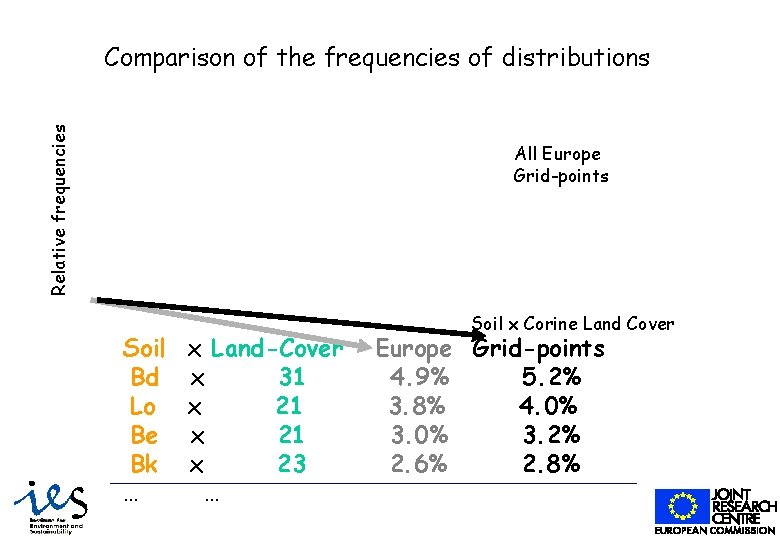
Relative frequencies Comparison of the frequencies of distributions 1/31/2022 All Europe Grid-points Soil Bd Lo Be Bk … x Land-Cover x 31 x 21 x 23 … Soil x Corine Land Cover Europe Grid-points 4. 9% 5. 2% 3. 8% 4. 0% 3. 2% 2. 6% 2. 8%
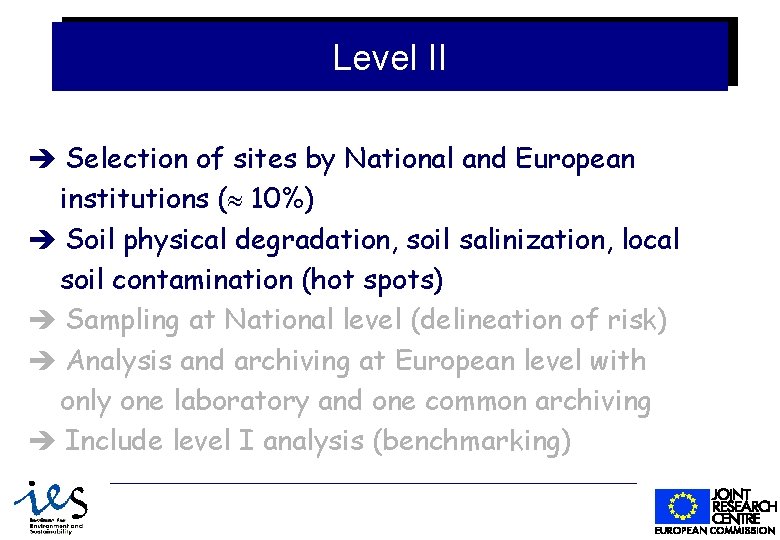
II sites Level II: Level Reference Selection of sites by National and European institutions ( 10%) Soil physical degradation, soil salinization, local soil contamination (hot spots) Sampling at National level (delineation of risk) Analysis and archiving at European level with only one laboratory and one common archiving Include level I analysis (benchmarking) 1/31/2022
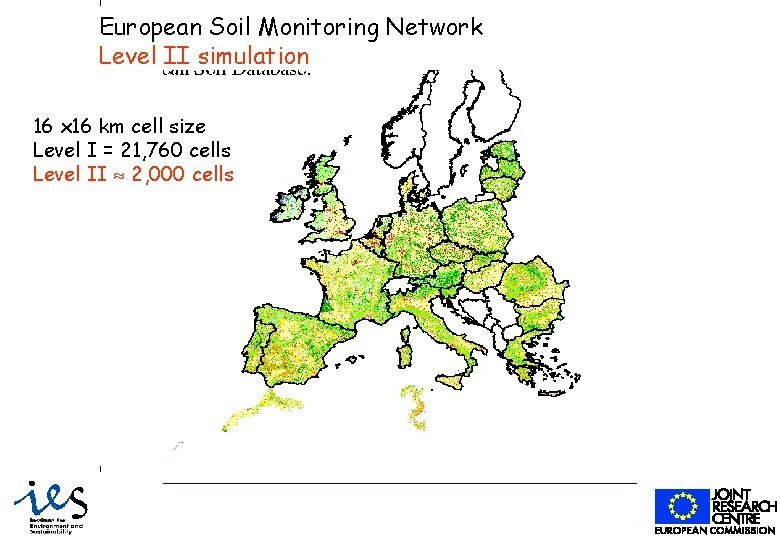
European Soil Monitoring Network Level II simulation 16 x 16 km cell size Level I = 21, 760 cells Level II 2, 000 cells 1/31/2022
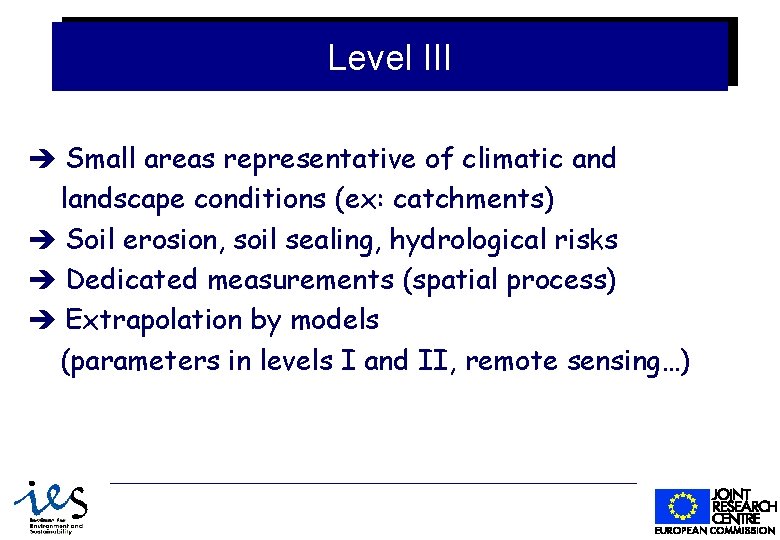
III sites Level III: Level Specialised Small areas representative of climatic and landscape conditions (ex: catchments) Soil erosion, soil sealing, hydrological risks Dedicated measurements (spatial process) Extrapolation by models (parameters in levels I and II, remote sensing…) 1/31/2022
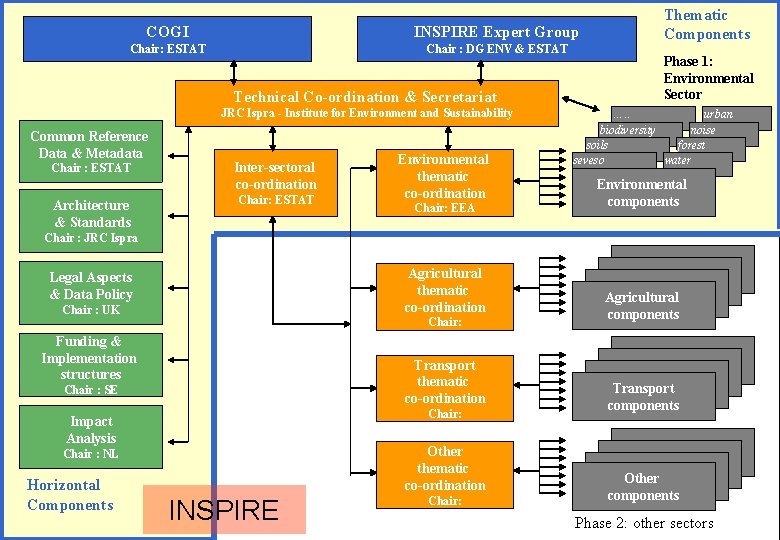
COGI INSPIRE Expert Group Chair: ESTAT Chair : DG ENV & ESTAT Technical Co-ordination & Secretariat JRC Ispra - Institute for Environment and Sustainability Common Reference Data & Metadata Chair : ESTAT Inter-sectoral co-ordination Architecture & Standards Chair: ESTAT Environmental thematic co-ordination Chair: EEA Thematic Components Phase 1: Environmental Sector …. . urban biodiversity noise soils forest seveso water Environmental components Chair : JRC Ispra Agricultural thematic co-ordination Legal Aspects & Data Policy Chair : UK Chair: Funding & Implementation structures Transport thematic co-ordination Chair : SE Chair: Impact Analysis Other thematic co-ordination Chair : NL Horizontal Components 1/31/2022 INSPIRE Chair: Agricultural components Transport components Other components Phase 2: other sectors
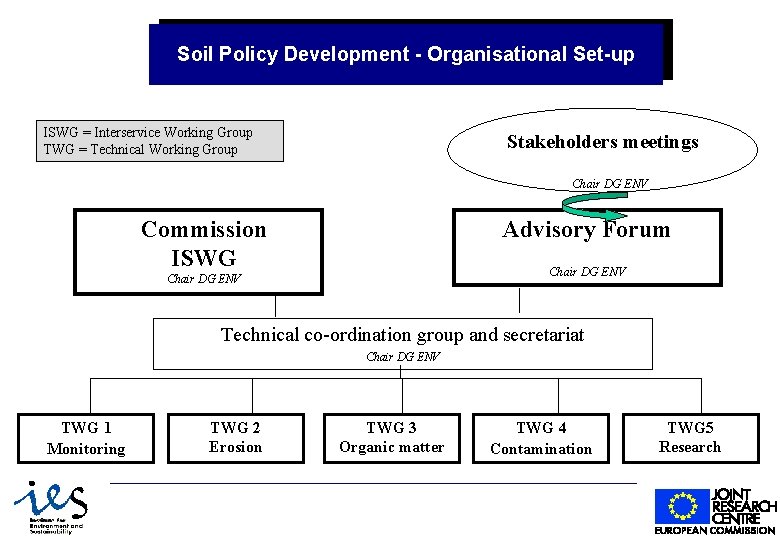
Soil Policy Development - Organisational Set-up ISWG = Interservice Working Group TWG = Technical Working Group Stakeholders meetings Chair DG ENV Commission ISWG Advisory Forum Chair DG ENV Technical co-ordination group and secretariat Chair DG ENV TWG 1 Monitoring 1/31/2022 TWG 2 Erosion TWG 3 Organic matter TWG 4 Contamination TWG 5 Research
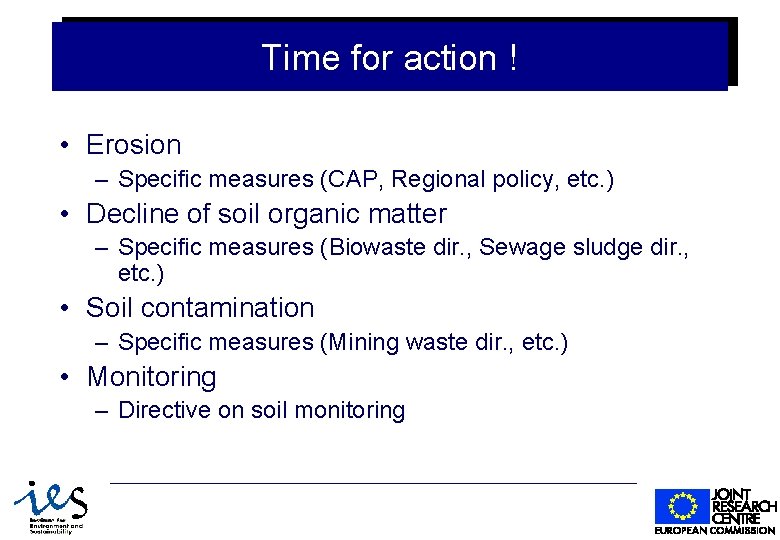
Time for action ! • Erosion – Specific measures (CAP, Regional policy, etc. ) • Decline of soil organic matter – Specific measures (Biowaste dir. , Sewage sludge dir. , etc. ) • Soil contamination – Specific measures (Mining waste dir. , etc. ) • Monitoring – Directive on soil monitoring 1/31/2022
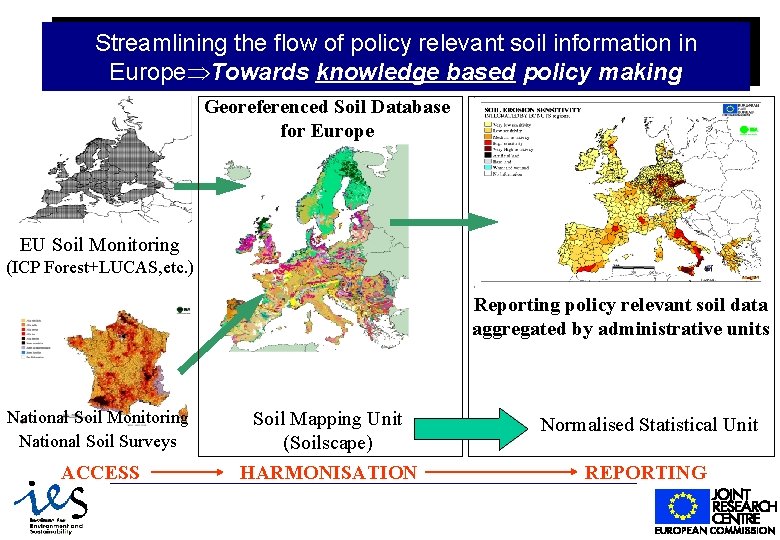
Streamlining the flow of policy relevant soil information in Europe Towards knowledge based policy making Georeferenced Soil Database for Europe EU Soil Monitoring (ICP Forest+LUCAS, etc. ) Reporting policy relevant soil data aggregated by administrative units National Soil Monitoring National Soil Surveys ACCESS 1/31/2022 Soil Mapping Unit (Soilscape) HARMONISATION Normalised Statistical Unit REPORTING