
Functions of Skeletal System Essential Questions What are
- Slides: 29
Functions of Skeletal System
Essential Questions • What are the functions of the skeletal system? • What is process of bone formation?
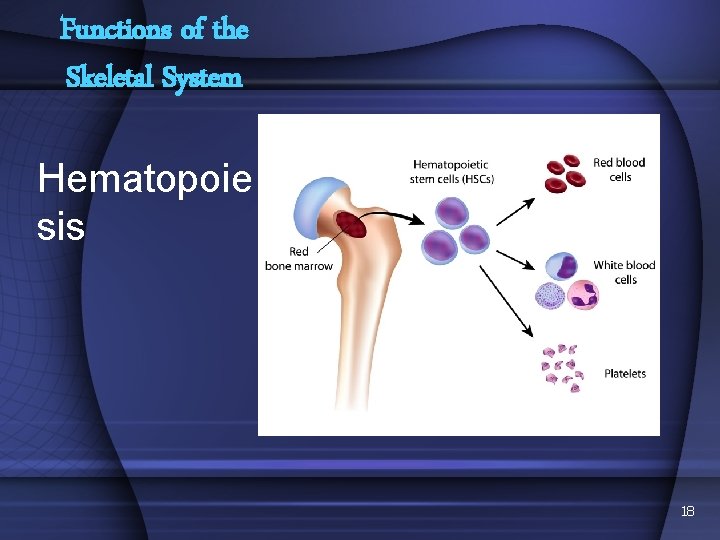
Functions of Skeletal • Support System • Protect • Movement • Storage • Bone Formation • Hematopoiesis
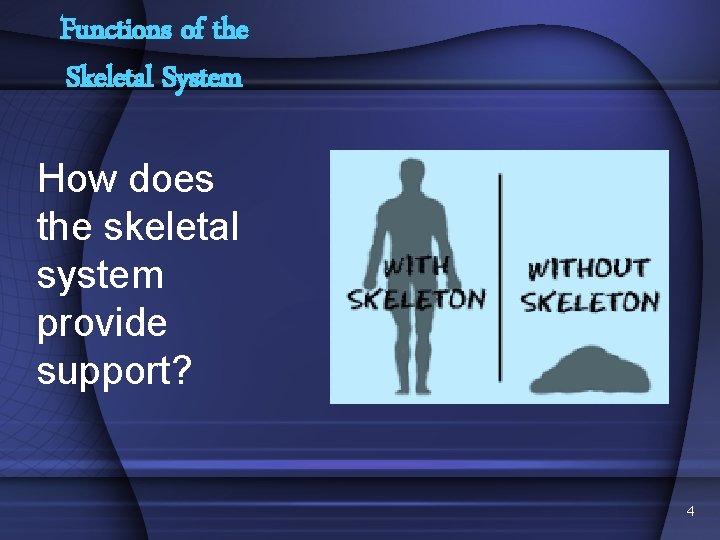
Functions of the Skeletal System How does the skeletal system provide support? 4
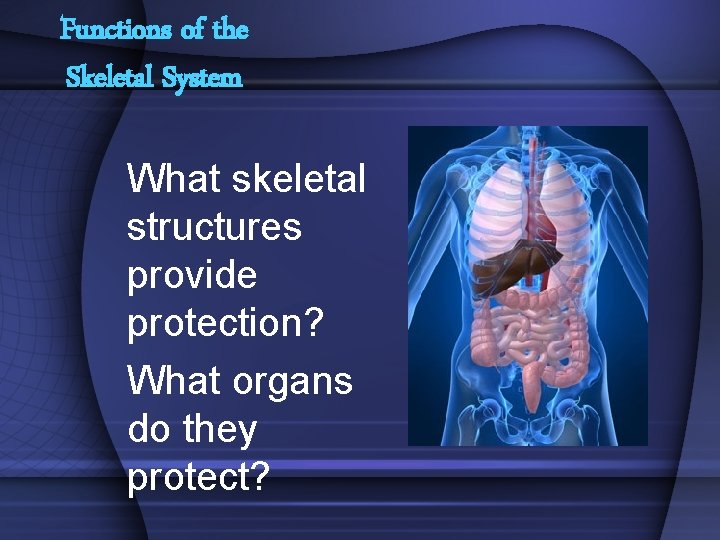
Functions of the Skeletal System What skeletal structures provide protection? What organs do they protect?
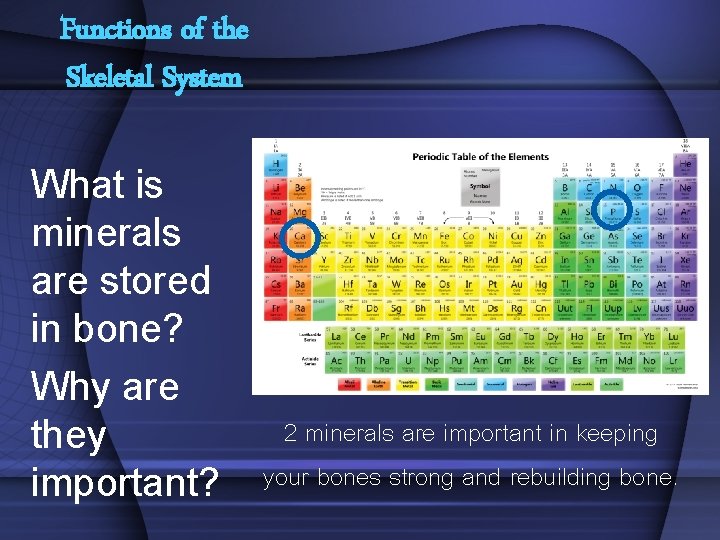
Functions of the Skeletal System What is minerals are stored in bone? Why are they important? 2 minerals are important in keeping your bones strong and rebuilding bone.
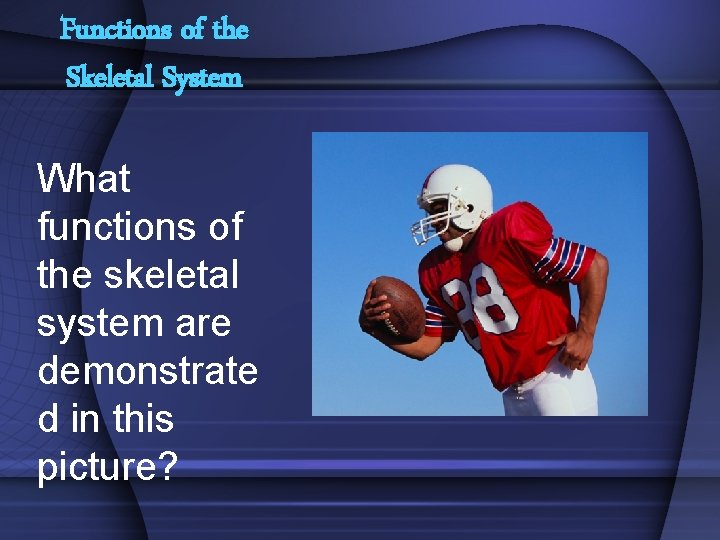
Functions of the Skeletal System What functions of the skeletal system are demonstrate d in this picture?
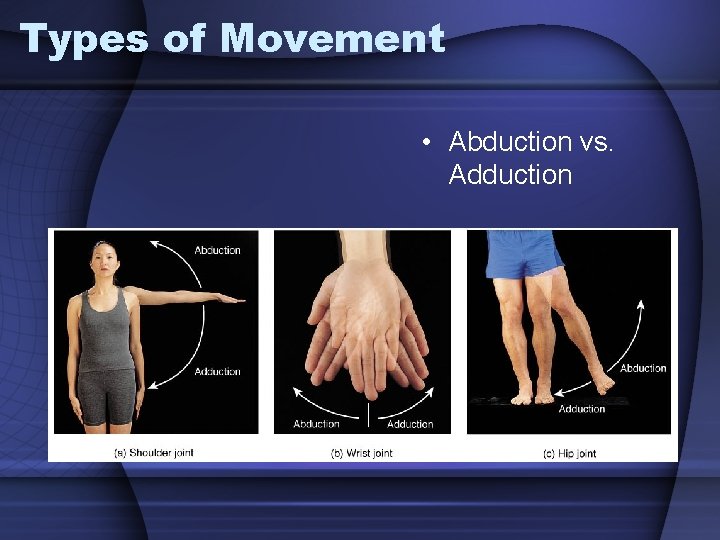
Types of Movement • Abduction vs. Adduction
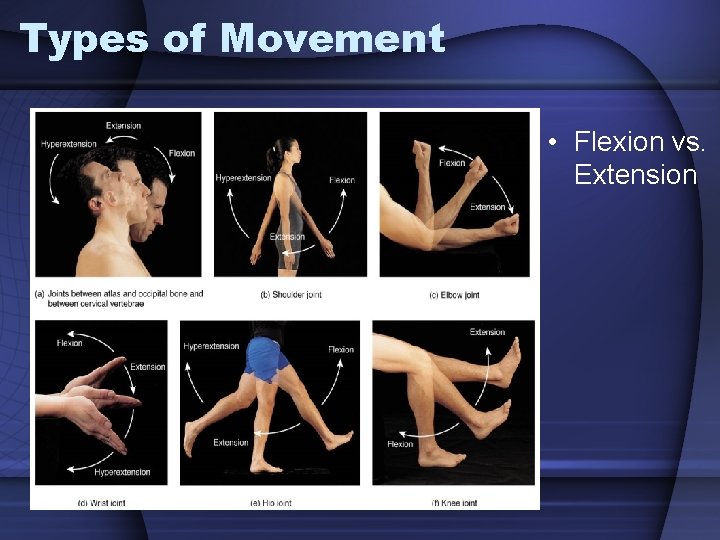
Types of Movement • Flexion vs. Extension
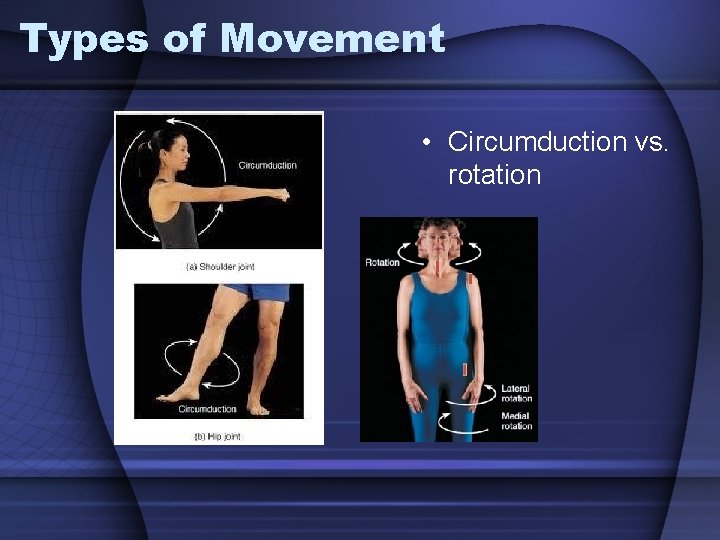
Types of Movement • Circumduction vs. rotation
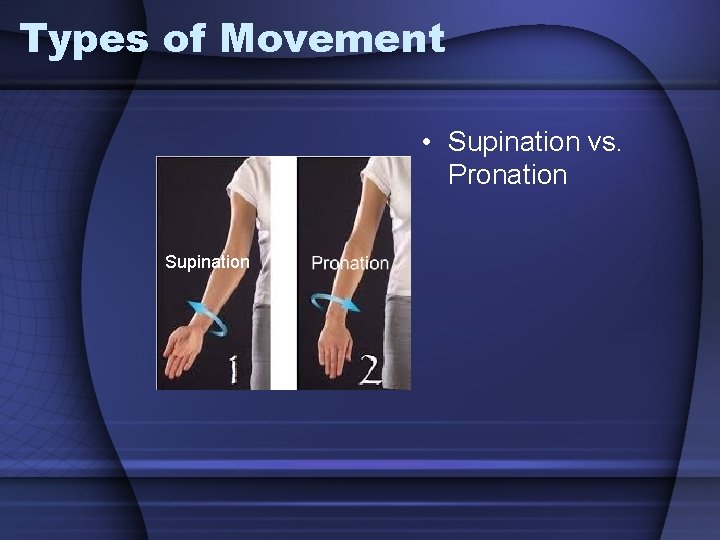
Types of Movement • Supination vs. Pronation Supination
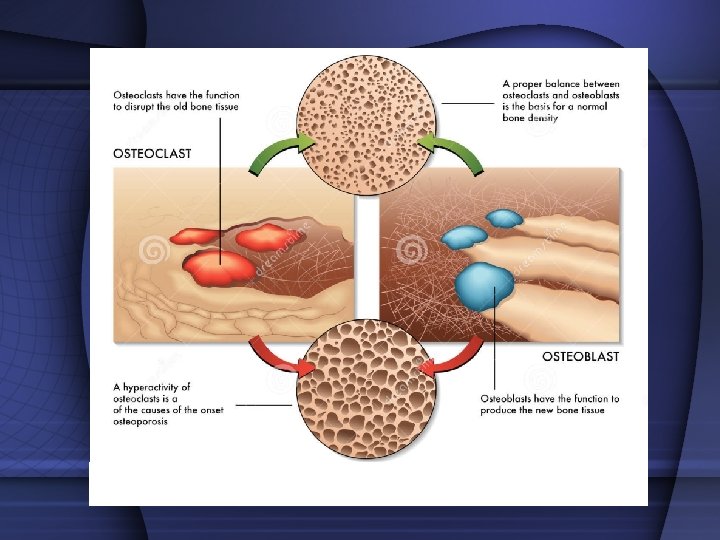
Bone Formation • What is osteoblasts? – Cells that make new bone – Make osteocytes (bone cells) • Why are they important? – Help you grow – Help with bone repair • What do is osteoclast? – Cell allows for absorption minerals such as Calcium and Phosphorus.
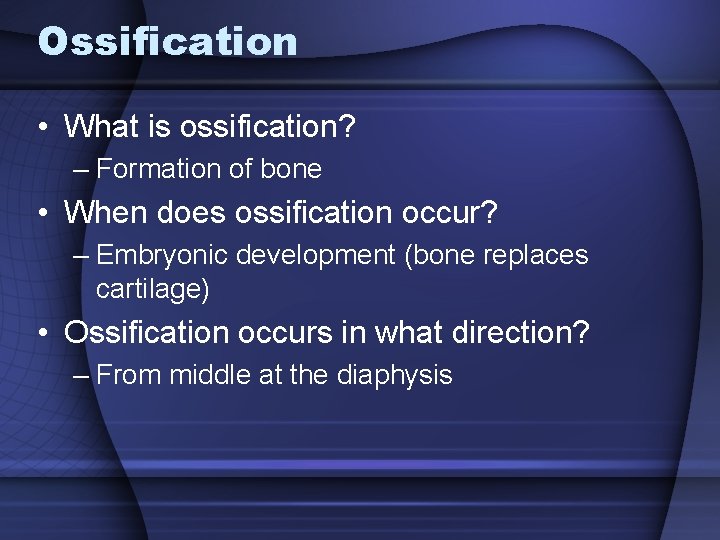
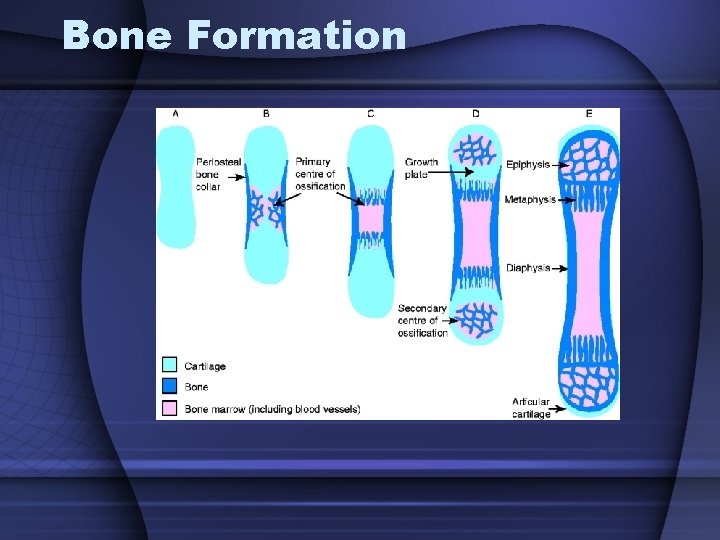
Ossification • What is ossification? – Formation of bone • When does ossification occur? – Embryonic development (bone replaces cartilage) • Ossification occurs in what direction? – From middle at the diaphysis
Bone Formation
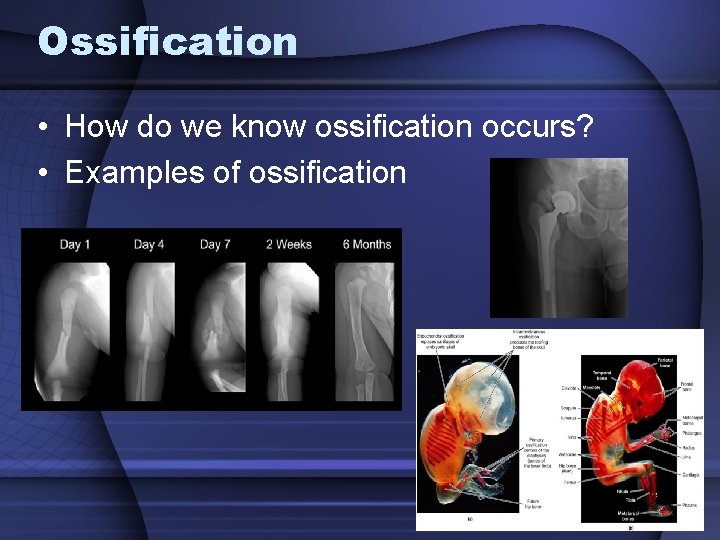
Ossification • How do we know ossification occurs? • Examples of ossification
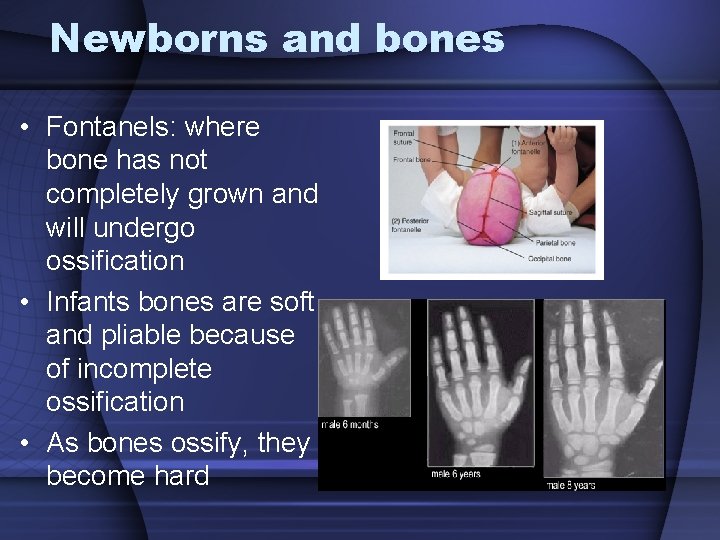
Newborns and bones • Fontanels: where bone has not completely grown and will undergo ossification • Infants bones are soft and pliable because of incomplete ossification • As bones ossify, they become hard
Functions of the Skeletal System Hematopoie sis 18
TYPES OF JOINTS
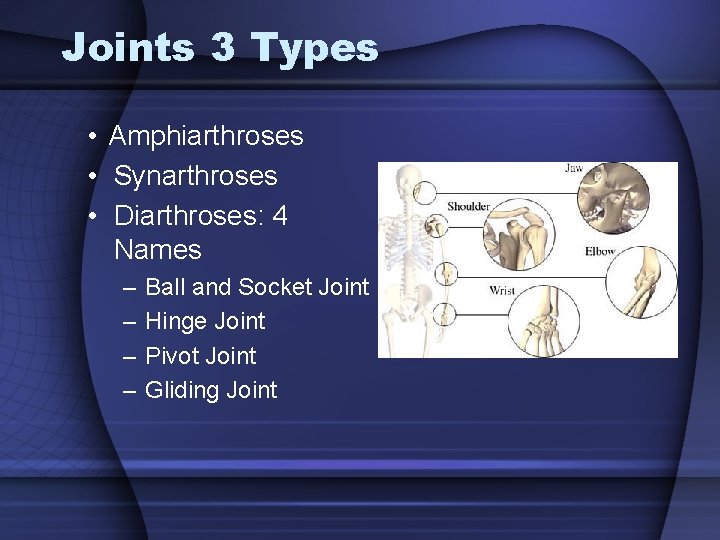
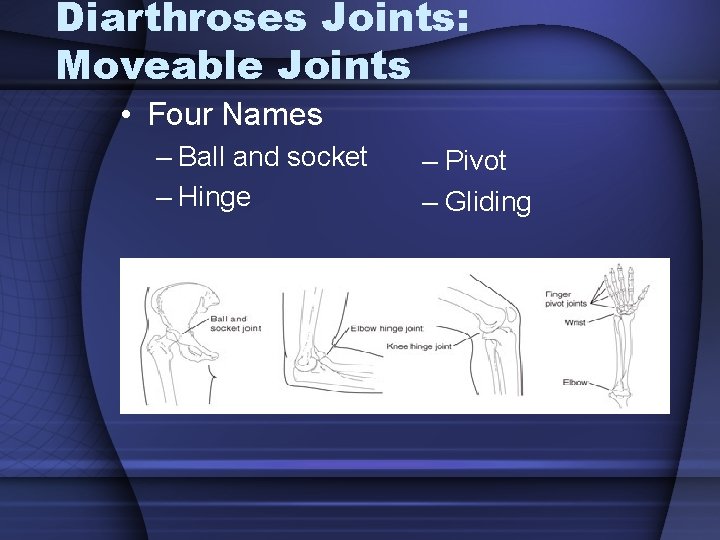
Joints 3 Types • Amphiarthroses • Synarthroses • Diarthroses: 4 Names – – Ball and Socket Joint Hinge Joint Pivot Joint Gliding Joint
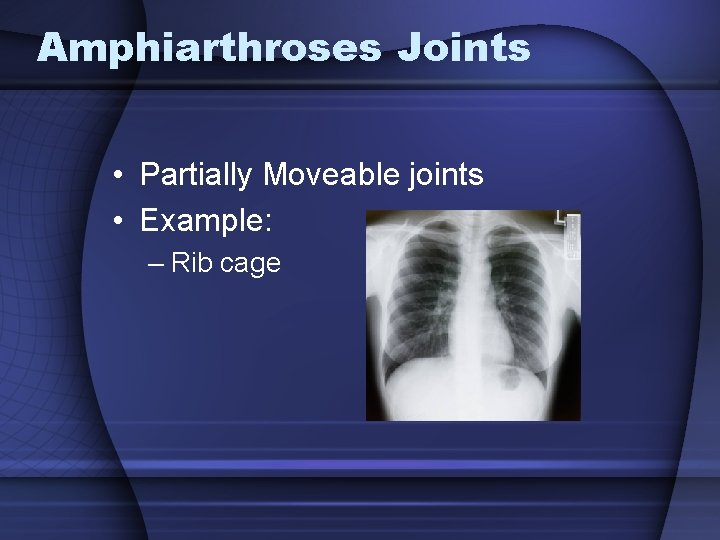
Amphiarthroses Joints • Partially Moveable joints • Example: – Rib cage
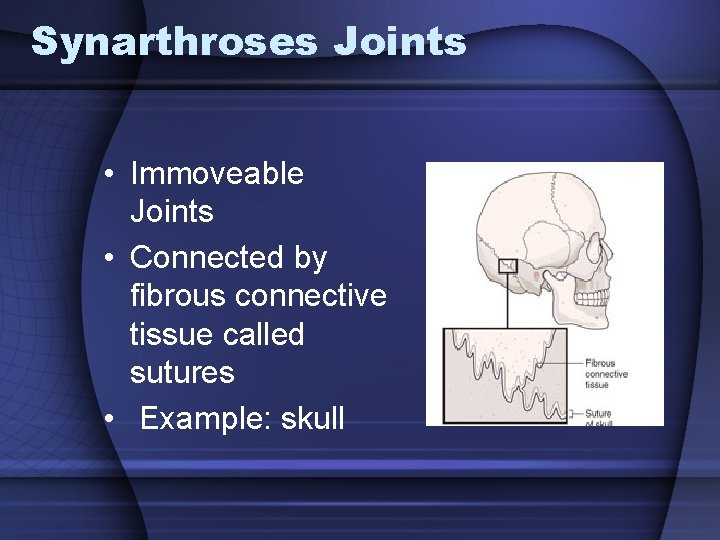
Synarthroses Joints • Immoveable Joints • Connected by fibrous connective tissue called sutures • Example: skull
Diarthroses Joints: Moveable Joints • Four Names – Ball and socket – Hinge – Pivot – Gliding
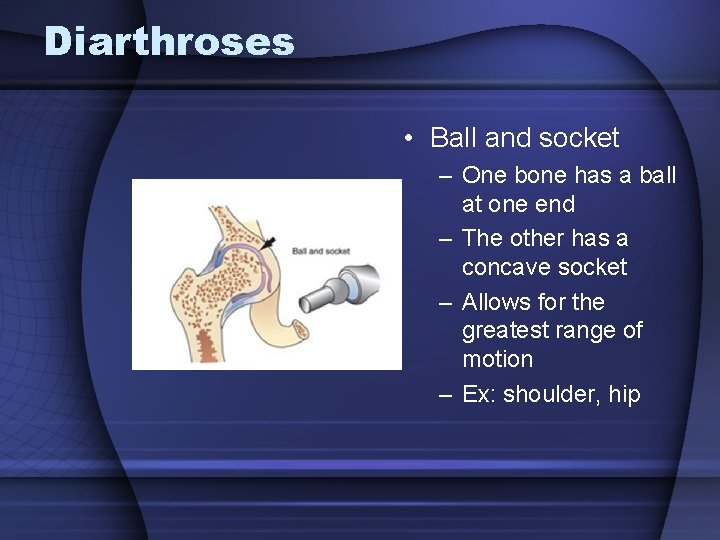
Diarthroses • Ball and socket – One bone has a ball at one end – The other has a concave socket – Allows for the greatest range of motion – Ex: shoulder, hip
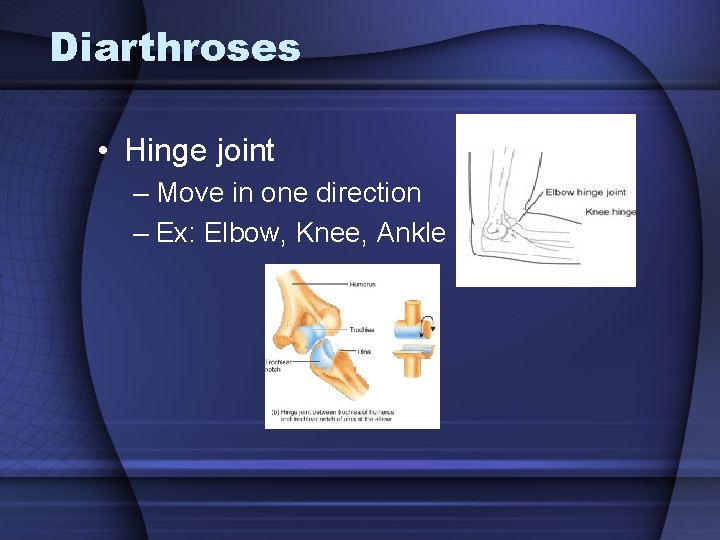
Diarthroses • Hinge joint – Move in one direction – Ex: Elbow, Knee, Ankle
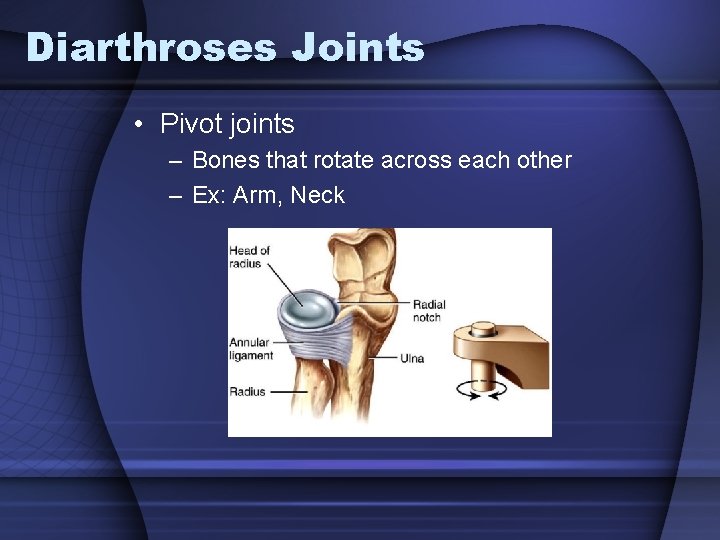
Diarthroses Joints • Pivot joints – Bones that rotate across each other – Ex: Arm, Neck
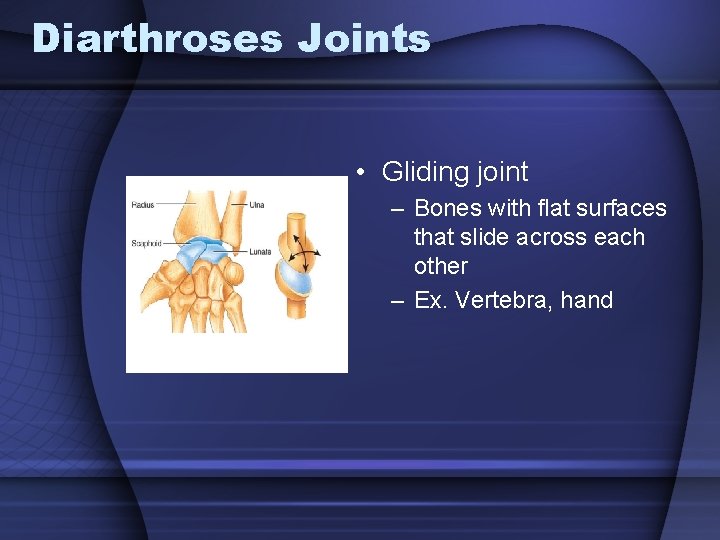
Diarthroses Joints • Gliding joint – Bones with flat surfaces that slide across each other – Ex. Vertebra, hand
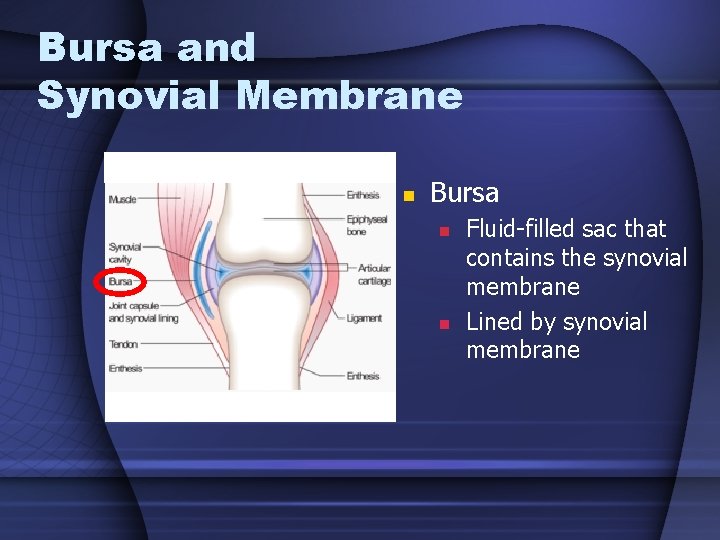
Bursa and Synovial Membrane n Bursa n n Fluid-filled sac that contains the synovial membrane Lined by synovial membrane
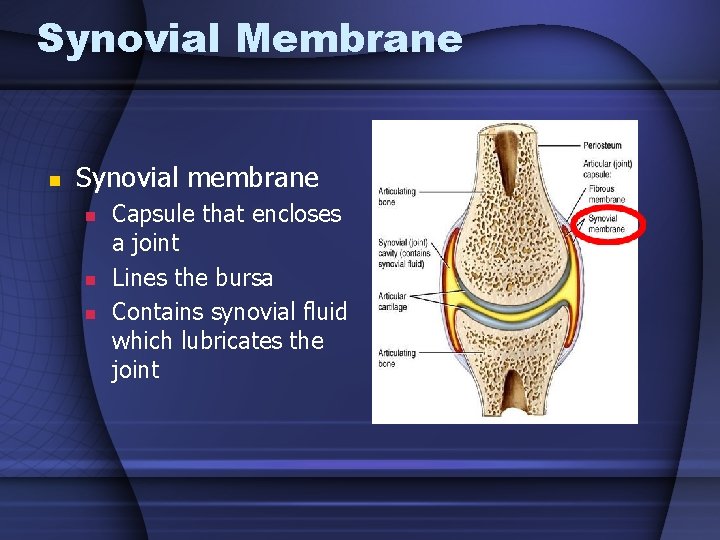
Synovial Membrane n Synovial membrane n n n Capsule that encloses a joint Lines the bursa Contains synovial fluid which lubricates the joint