
Functions of bone skeleton Support and protection Blood
Functions of bone (skeleton) Support and protection Blood cell formation Mineral storage (calcium especially) Site for muscle attachment body movement
Living tissue in bone: • • Bone tissue Cartilage Dense connective tissue Blood and nervous tissue

Bones classified by shape: long, short, flat, irregular, round • • a. Long bones—femur and humerus b. Short bones—tarsals and carpals c. Flat bones—ribs, scapulae, and bones of the skull d. Irregular bones—vertebrae and many facial bones • and some say sesamoid--round bones such as kneecap (patella)
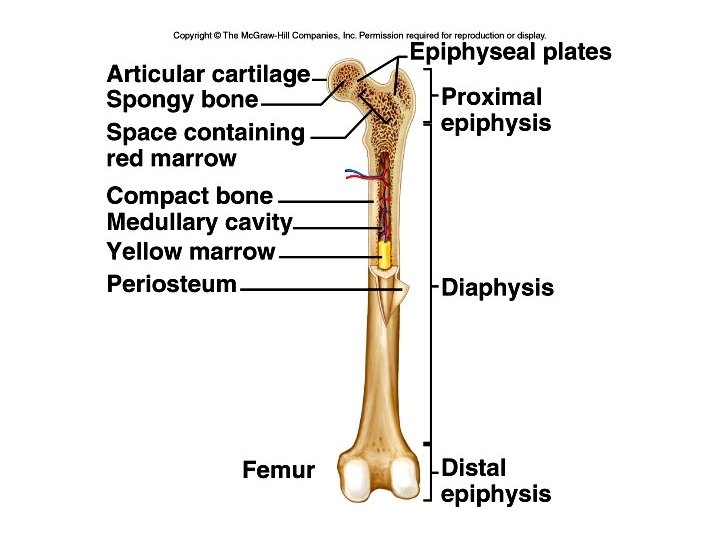

Compact bone is comprised of tightly packed tissue that is strong, solid, and resistant to bending. Spongy bone consists of numerous branching bony plates. Irre
Compact and Spongy bone Compact bone is comprised of tightly packed tissue that is strong, solid, and resistant to bending. Spongy bone consists of numerous branching bony plates. Irregular interconnected spaces occur between these plates, thus reducing the weight of the bone.
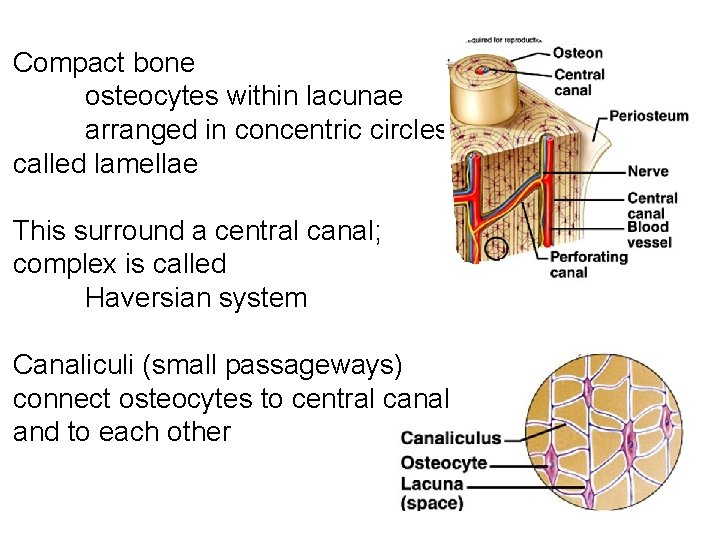
Compact bone osteocytes within lacunae arranged in concentric circles called lamellae This surround a central canal; complex is called Haversian system Canaliculi (small passageways) connect osteocytes to central canal and to each other
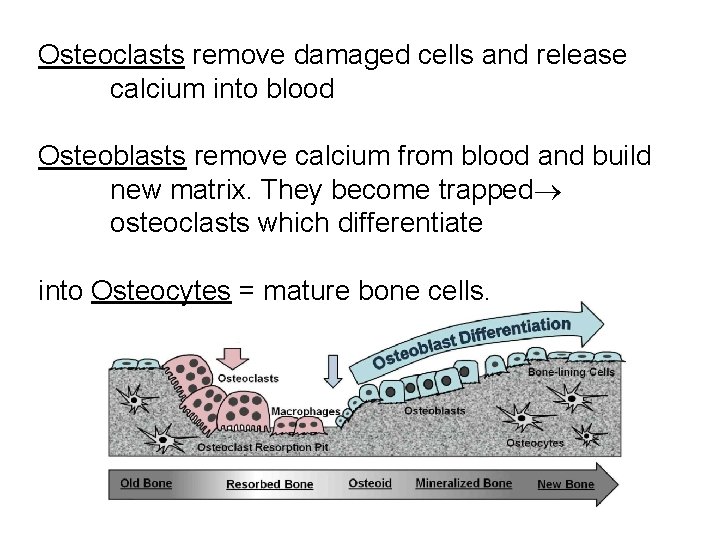
Osteoclasts remove damaged cells and release calcium into blood Osteoblasts remove calcium from blood and build new matrix. They become trapped osteoclasts which differentiate into Osteocytes = mature bone cells.
Nutritional factors • Foods rich in Vitamin D are necessary for proper absorption of calcium in the small intestine. If this is lacking, rickets can develop or osteomalacia in adults. Vitamin A is necessary for bone resorption during normal development. • Vitamin C is needed for collagen synthesis. Lacking either Vitamin A or C can hinder normal bone growth.
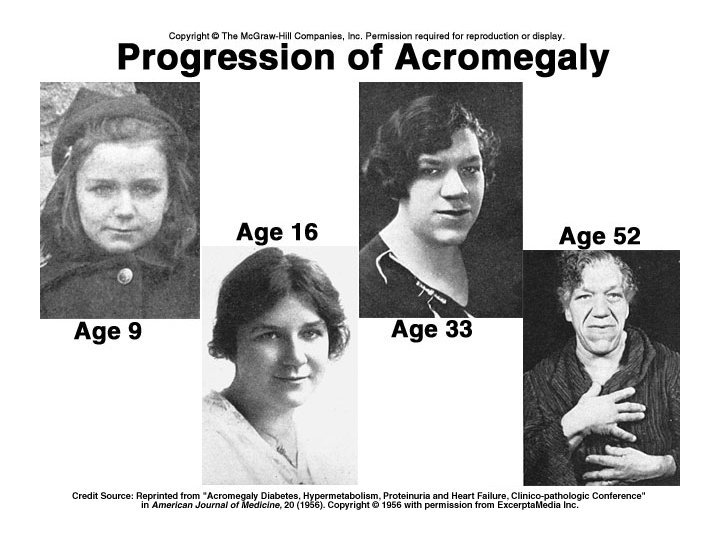
Growth hormone regulates skeletal growth stimulates cell division in epiphyseal disks in long bones Growth stops when epiphyseal disks are converted to bone When excess growth hormone is produced in childhood gigantism In adulthood- acromegaly. Bones can’t grow but soft tissue can
Physical exercise pulling on muscular attachments to bone stimulates bone growth. The pulling stresses the bone and stimulates the bone tissue to thicken and strengthen
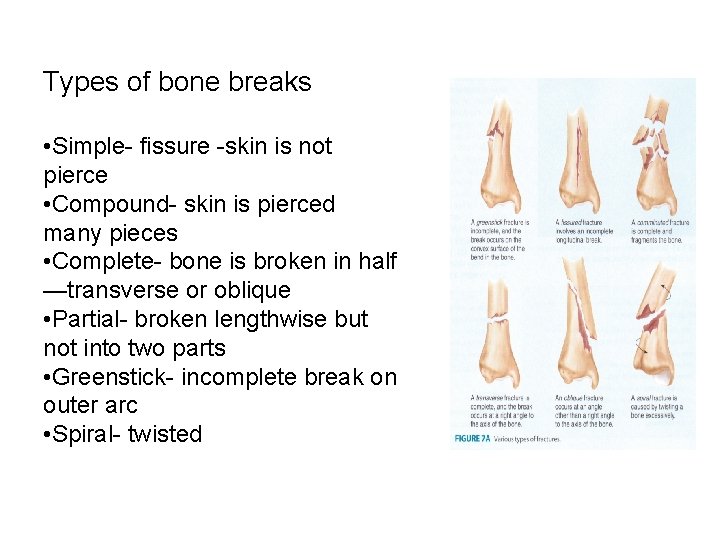
Types of bone breaks • Simple- fissure -skin is not pierce • Compound- skin is pierced many pieces • Complete- bone is broken in half —transverse or oblique • Partial- broken lengthwise but not into two parts • Greenstick- incomplete break on outer arc • Spiral- twisted
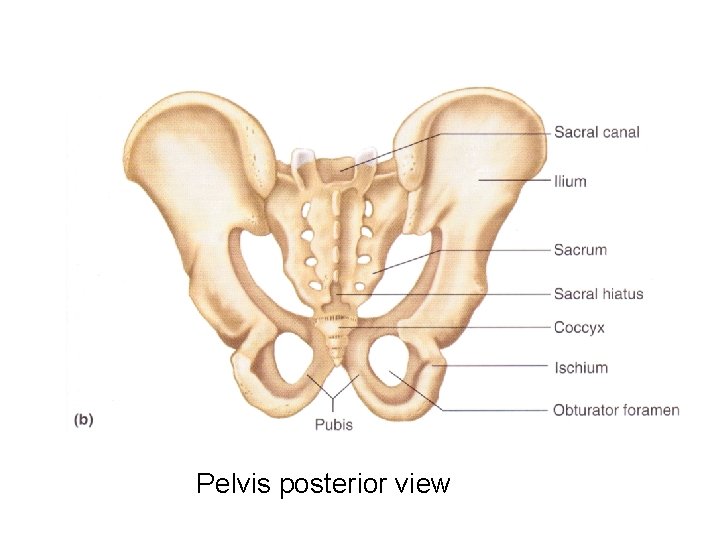
Pelvis posterior view
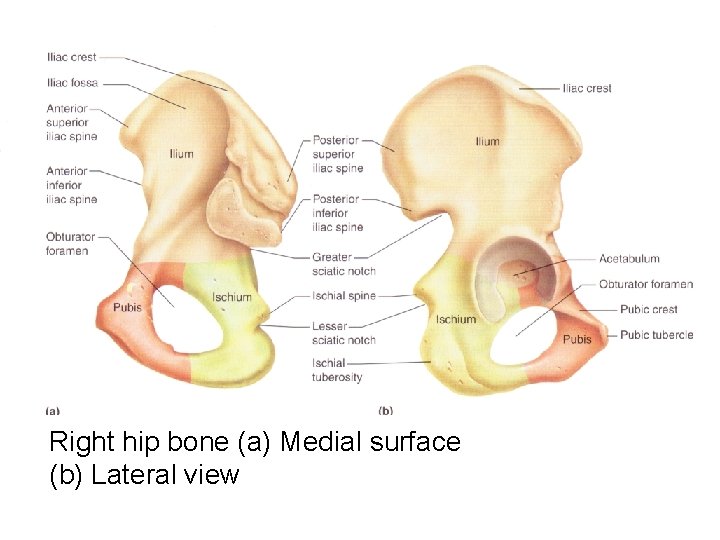
Right hip bone (a) Medial surface (b) Lateral view
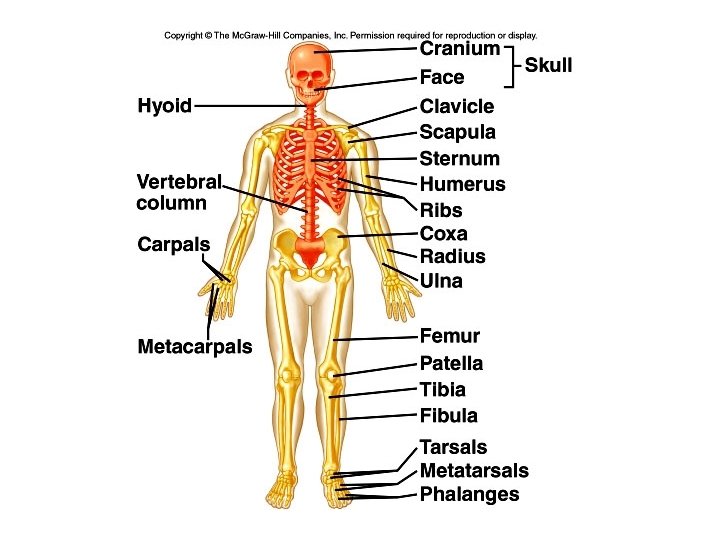
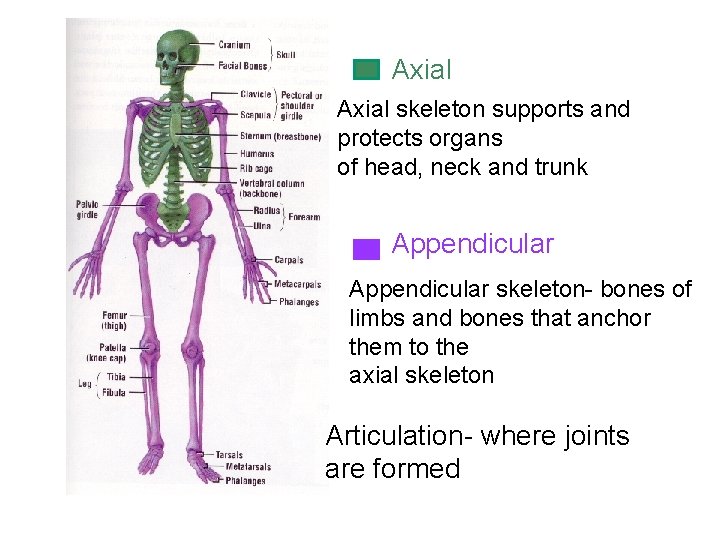
Axial skeleton supports and protects organs of head, neck and trunk Appendicular skeleton- bones of limbs and bones that anchor them to the axial skeleton Articulation- where joints are formed
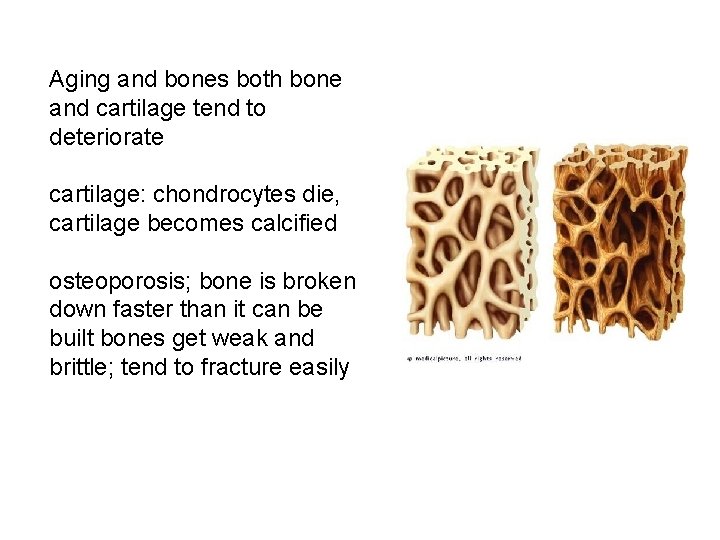
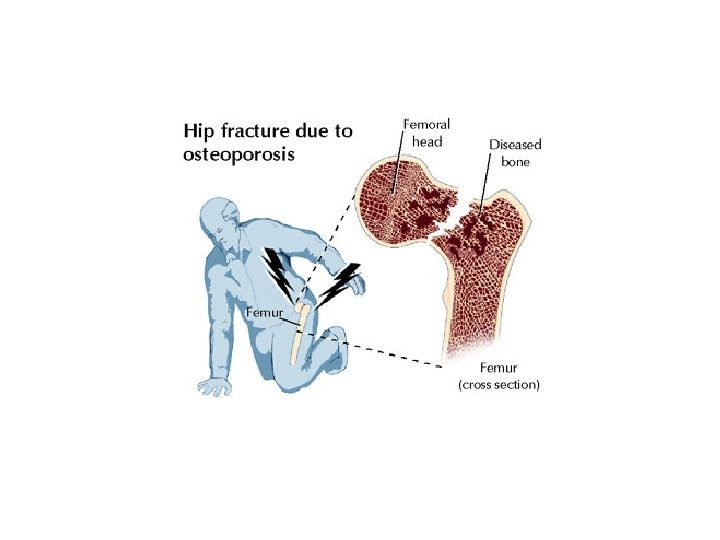
Aging and bones both bone and cartilage tend to deteriorate cartilage: chondrocytes die, cartilage becomes calcified osteoporosis; bone is broken down faster than it can be built bones get weak and brittle; tend to fracture easily
- Slides: 21