
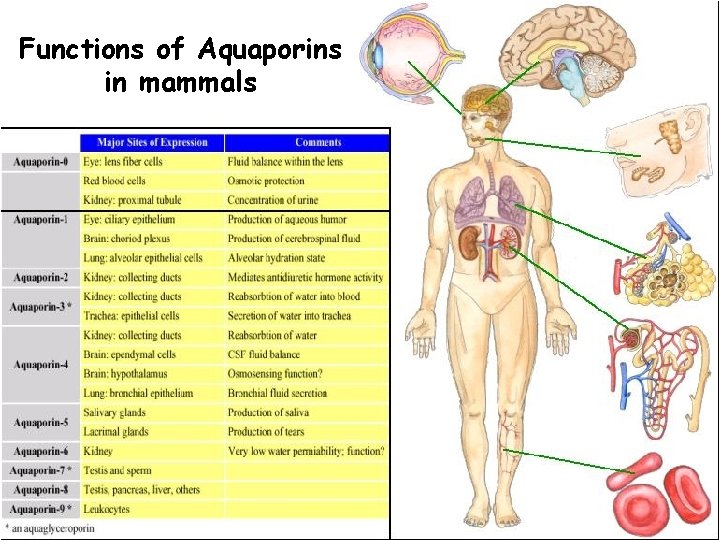
Functions of Aquaporins in mammals Nephron Kidney Cortex
- Slides: 23
Functions of Aquaporins in mammals
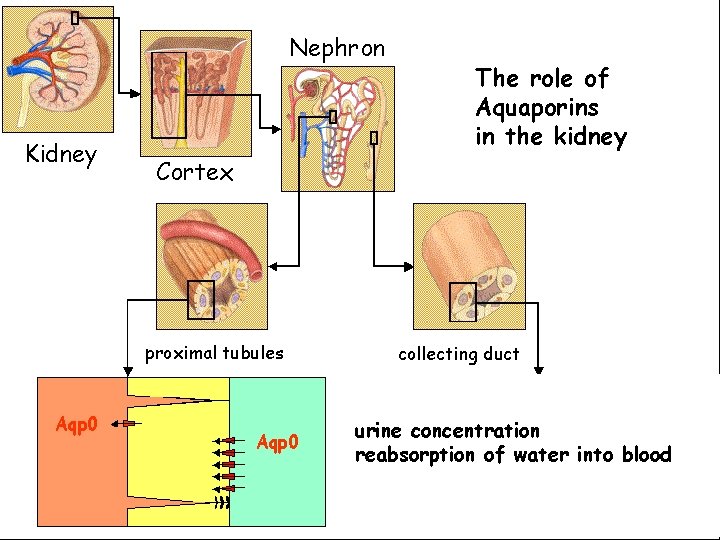
Nephron Kidney Cortex proximal tubules Aqp 0 The role of Aquaporins in the kidney Aqp 0 collecting duct urine concentration reabsorption of water into blood
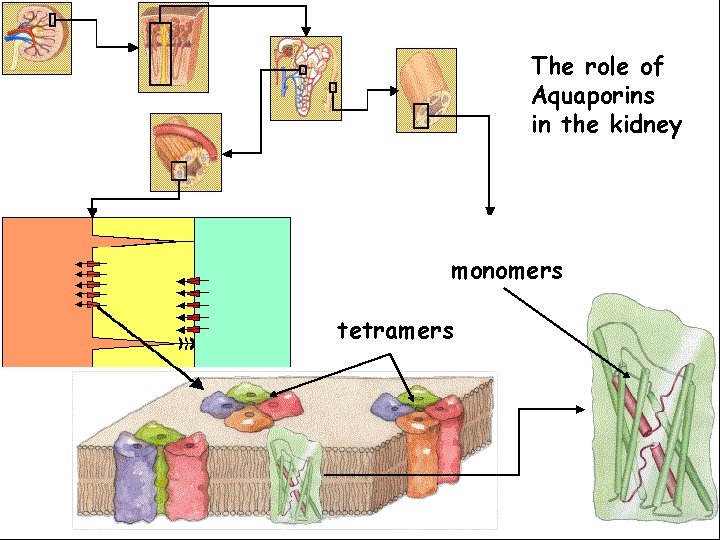
The role of Aquaporins in the kidney monomers tetramers
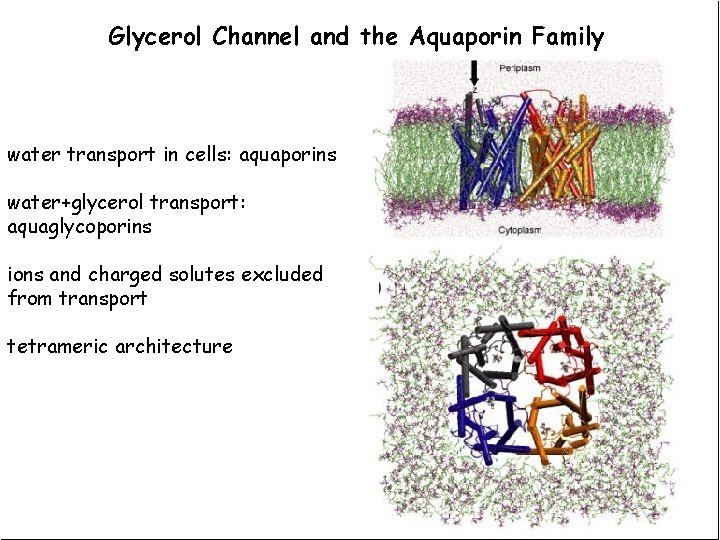
Glycerol Channel and the Aquaporin Family water transport in cells: aquaporins water+glycerol transport: aquaglycoporins ions and charged solutes excluded from transport tetrameric architecture
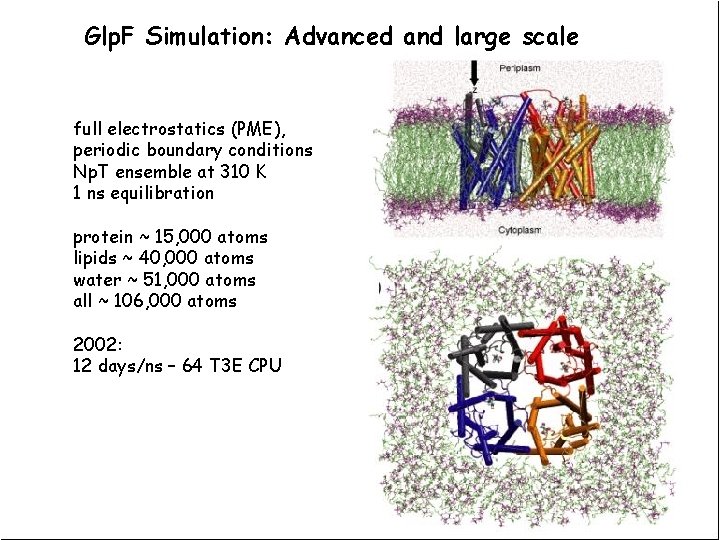
Glp. F Simulation: Advanced and large scale full electrostatics (PME), periodic boundary conditions Np. T ensemble at 310 K 1 ns equilibration protein ~ 15, 000 atoms lipids ~ 40, 000 atoms water ~ 51, 000 atoms all ~ 106, 000 atoms 2002: 12 days/ns – 64 T 3 E CPU
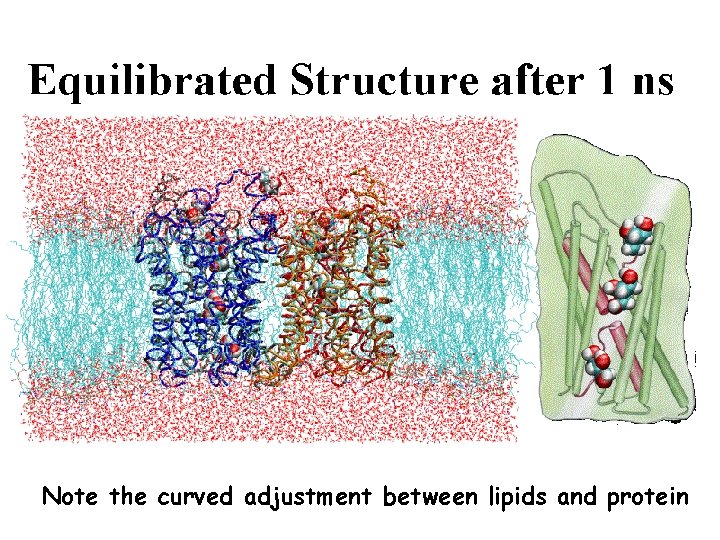
Note the curved adjustment between lipids and protein
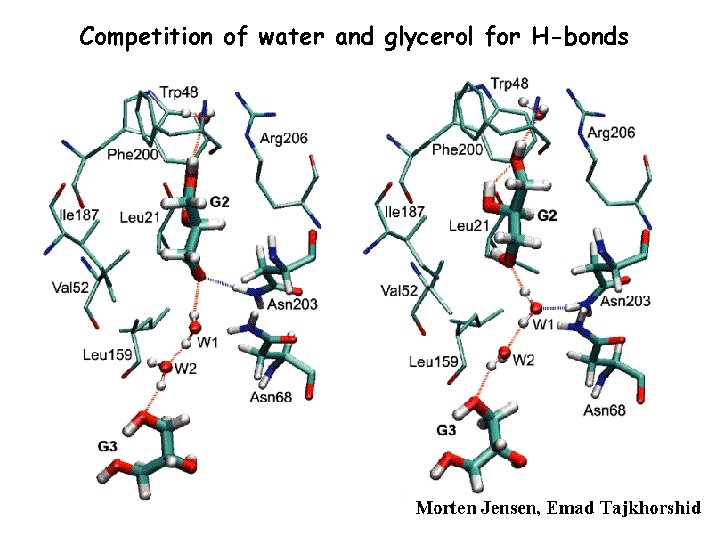
Competition of water and glycerol for H-bonds
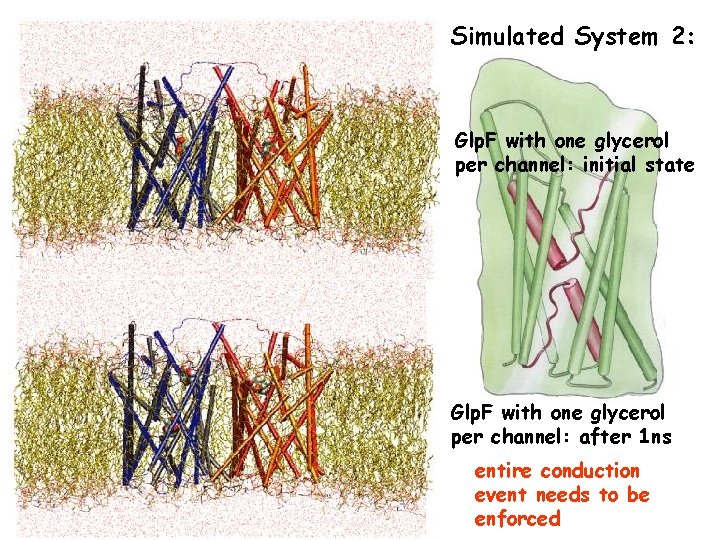
Simulated System 2: Glp. F with one glycerol per channel: initial state Glp. F with one glycerol per channel: after 1 ns entire conduction event needs to be enforced
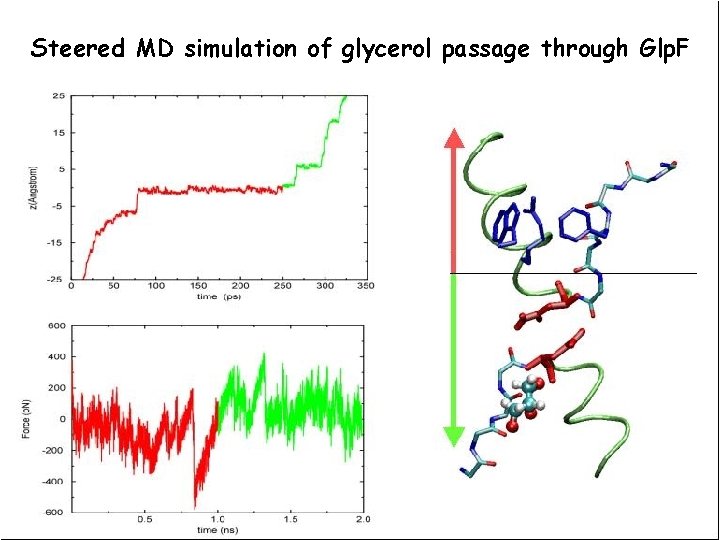
Steered MD simulation of glycerol passage through Glp. F
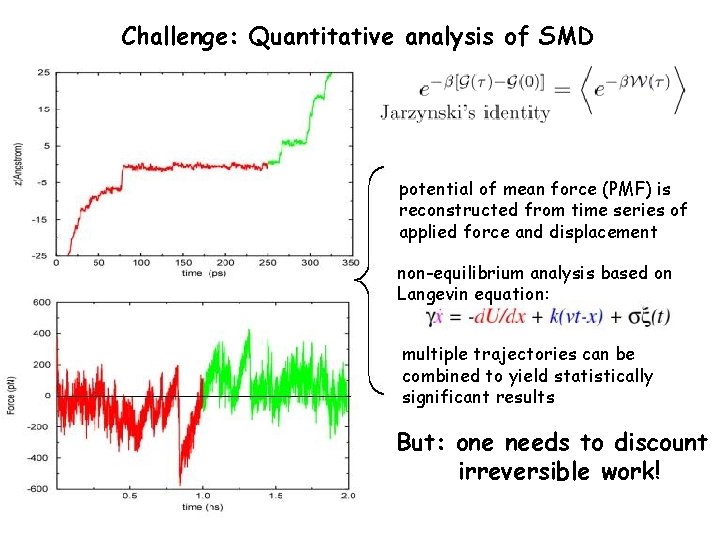
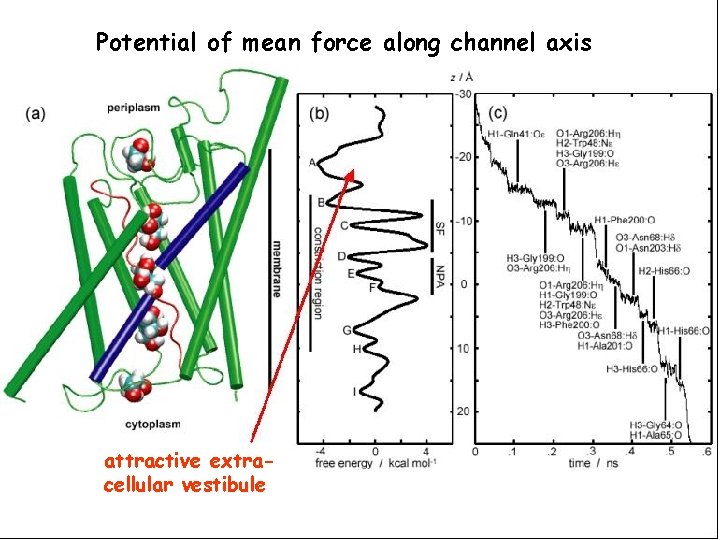
Challenge: Quantitative analysis of SMD potential of mean force (PMF) is reconstructed from time series of applied force and displacement non-equilibrium analysis based on Langevin equation: multiple trajectories can be combined to yield statistically significant results But: one needs to discount irreversible work!
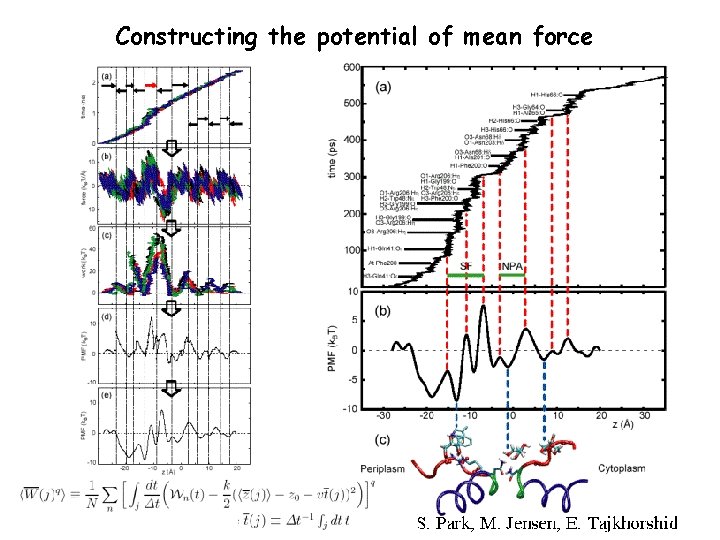
Constructing the potential of mean force
Potential of mean force along channel axis attractive extracellular vestibule
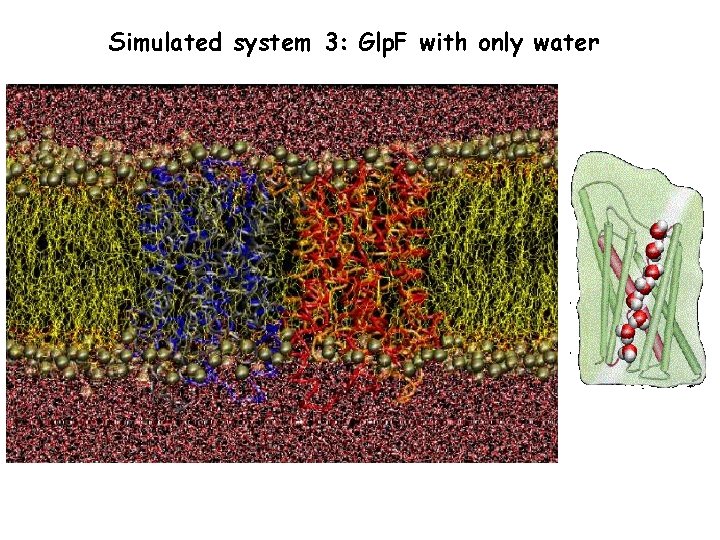
Simulated system 3: Glp. F with only water
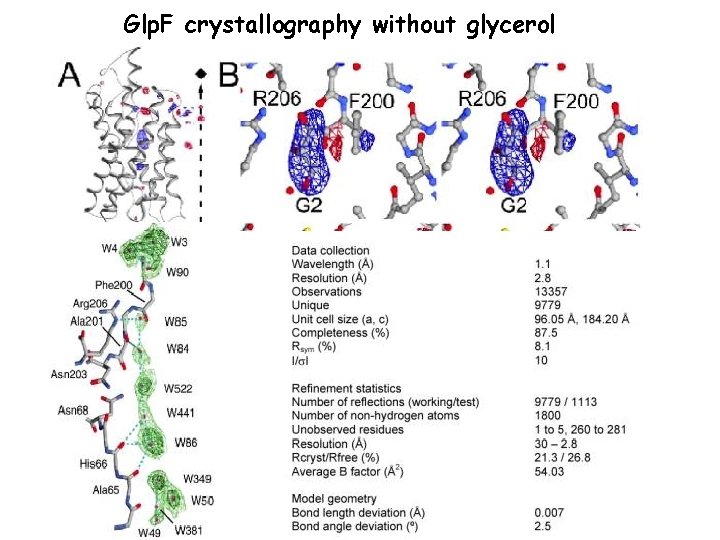
Glp. F crystallography without glycerol
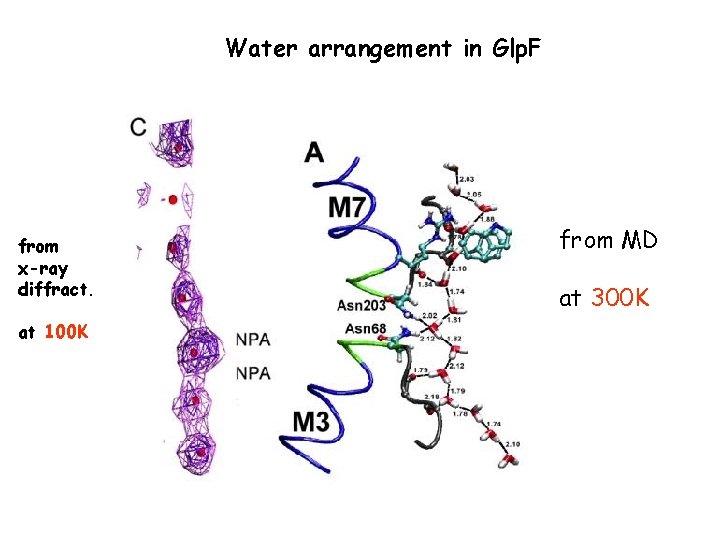
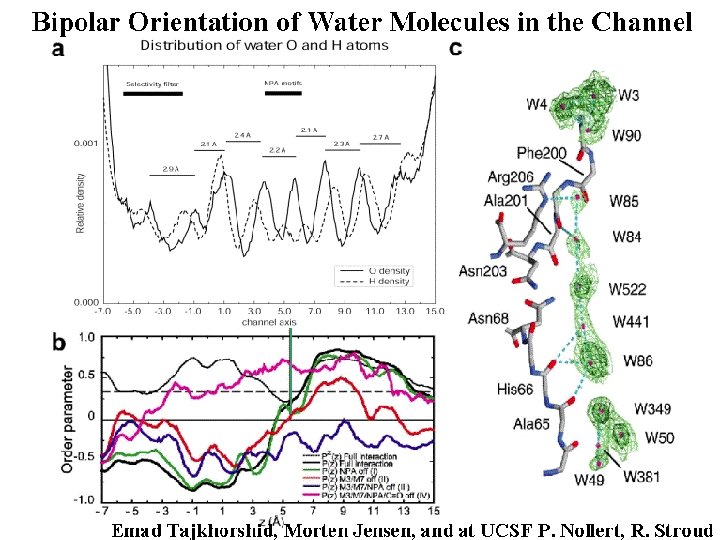
Water arrangement in Glp. F from x-ray diffract. at 100 K from MD at 300 K
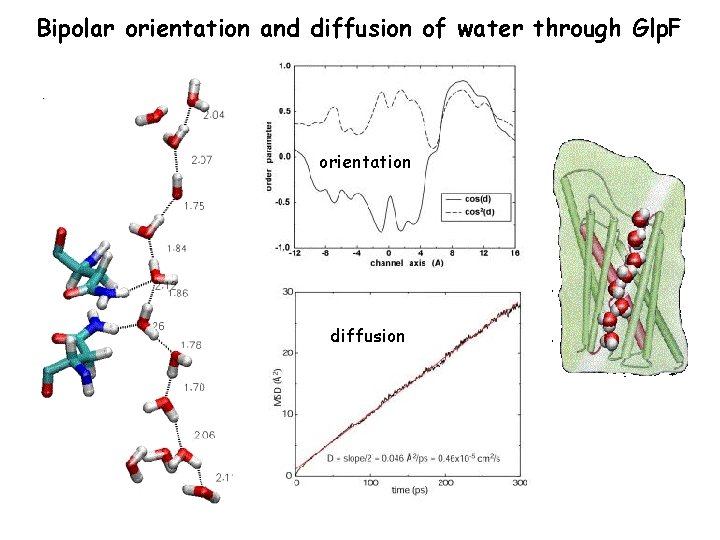
Bipolar orientation and diffusion of water through Glp. F orientation diffusion
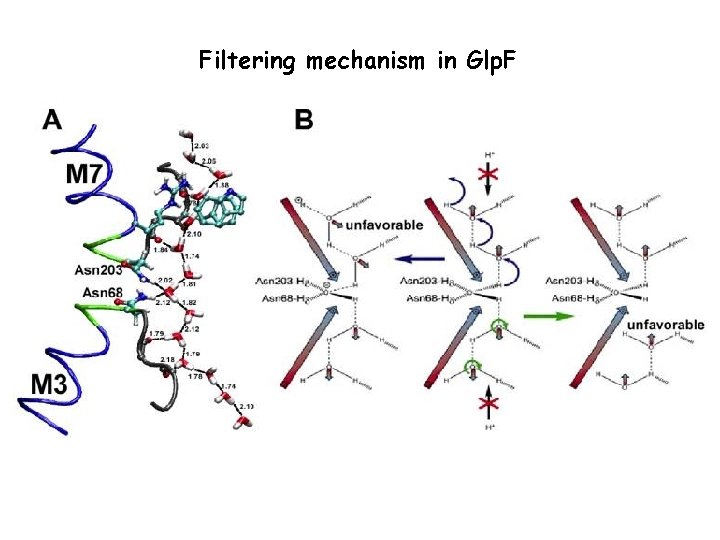
Filtering mechanism in Glp. F
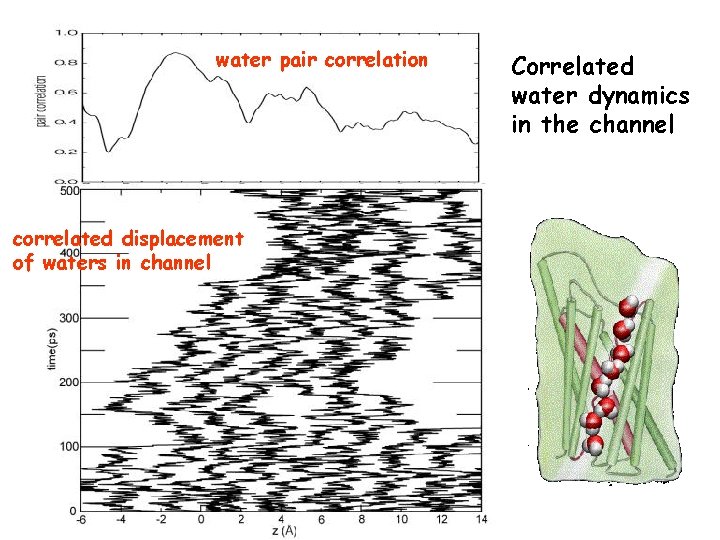
water pair correlation correlated displacement of waters in channel Correlated water dynamics in the channel
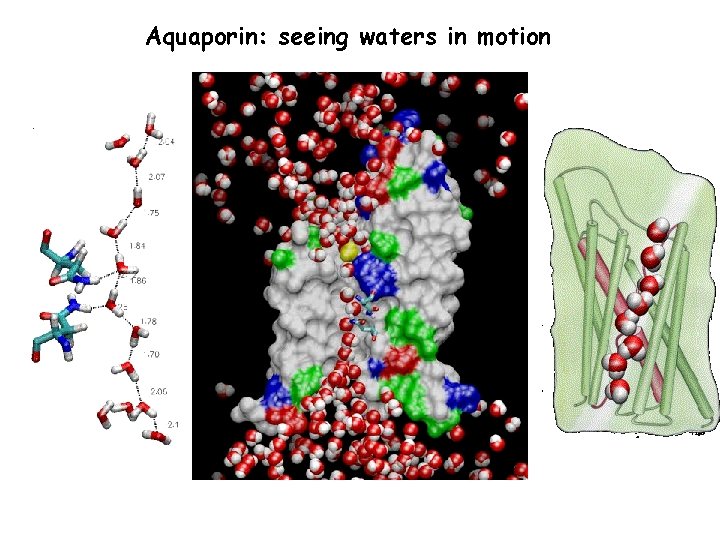
Aquaporin: seeing waters in motion
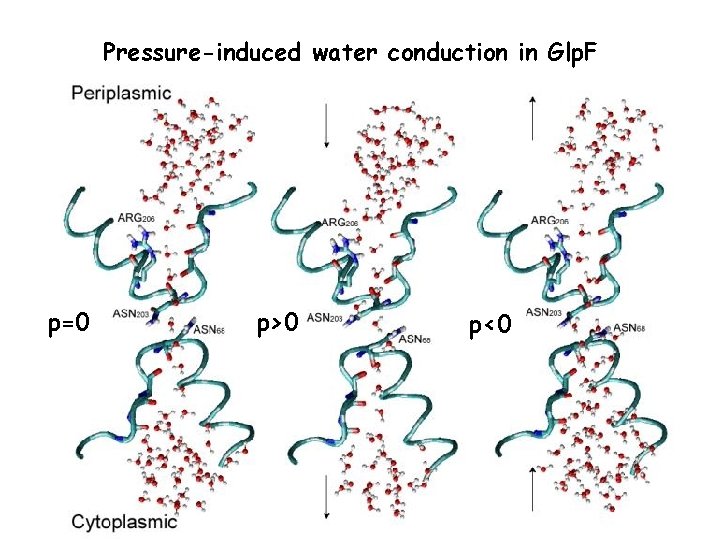
Pressure-induced water conduction in Glp. F p=0 p>0 p<0
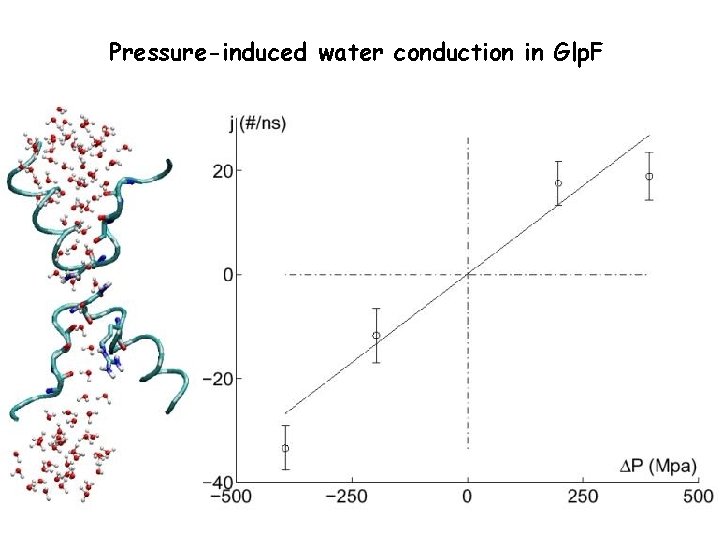
Pressure-induced water conduction in Glp. F