
Functions CHAPTER 3 Lesson 3 1 GRAPHING RELATIONSHIPS

- Slides: 9
Functions CHAPTER 3
Lesson 3. 1 GRAPHING RELATIONSHIPS
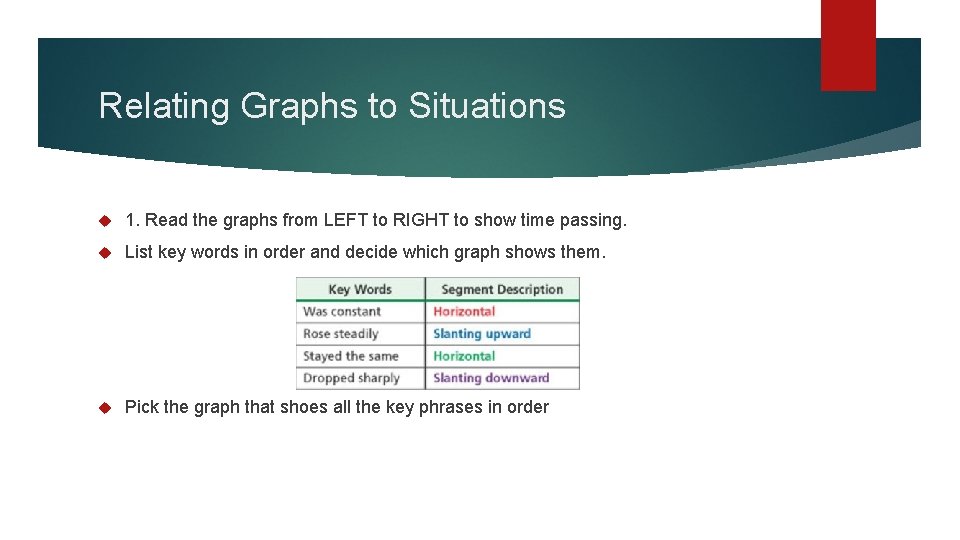
Relating Graphs to Situations 1. Read the graphs from LEFT to RIGHT to show time passing. List key words in order and decide which graph shows them. Pick the graph that shoes all the key phrases in order
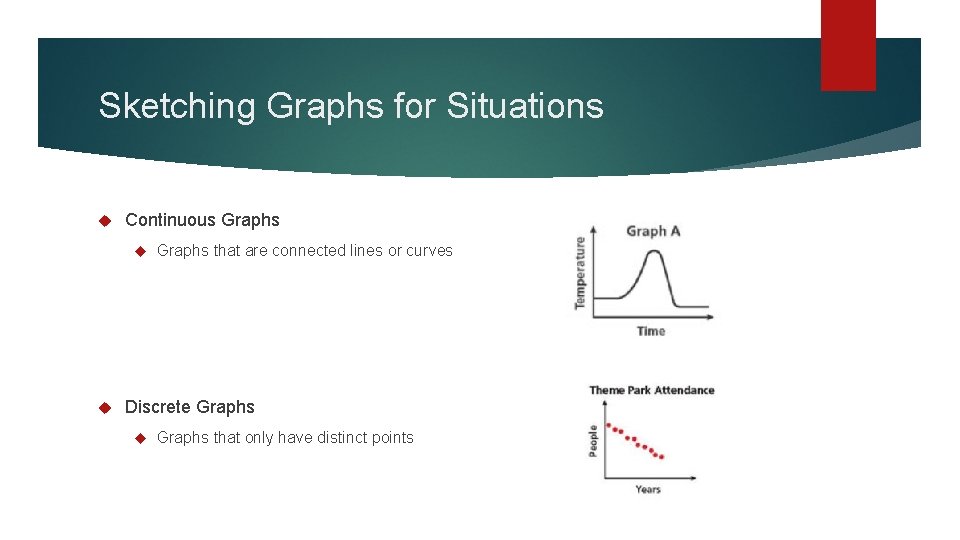
Sketching Graphs for Situations Continuous Graphs that are connected lines or curves Discrete Graphs that only have distinct points
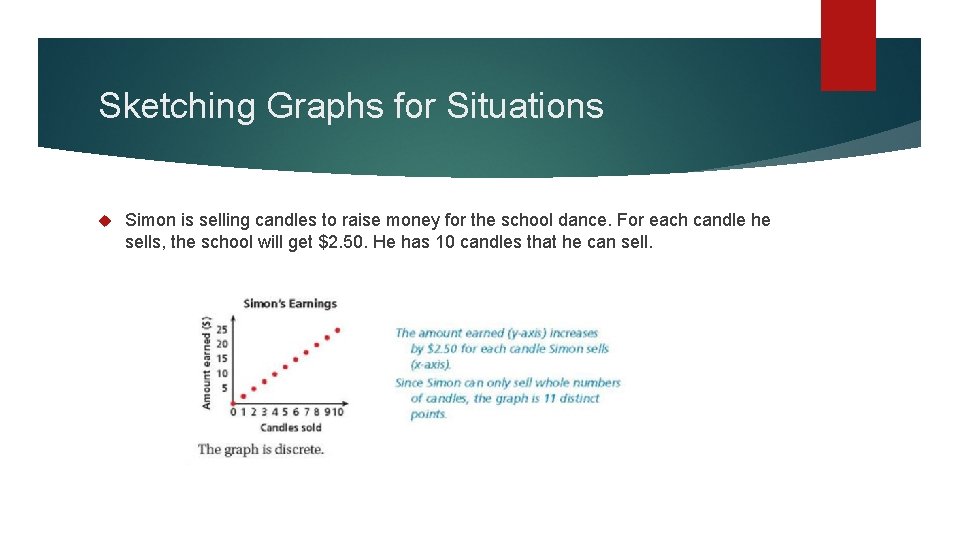
Sketching Graphs for Situations Simon is selling candles to raise money for the school dance. For each candle he sells, the school will get $2. 50. He has 10 candles that he can sell.
Lesson 3. 2 RELATIONS AND FUNCTIONS
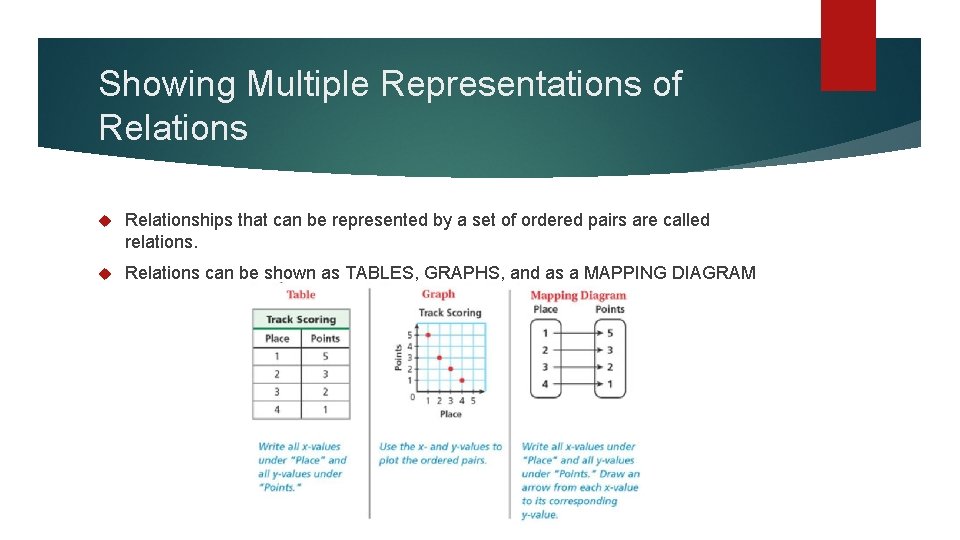
Showing Multiple Representations of Relationships that can be represented by a set of ordered pairs are called relations. Relations can be shown as TABLES, GRAPHS, and as a MAPPING DIAGRAM
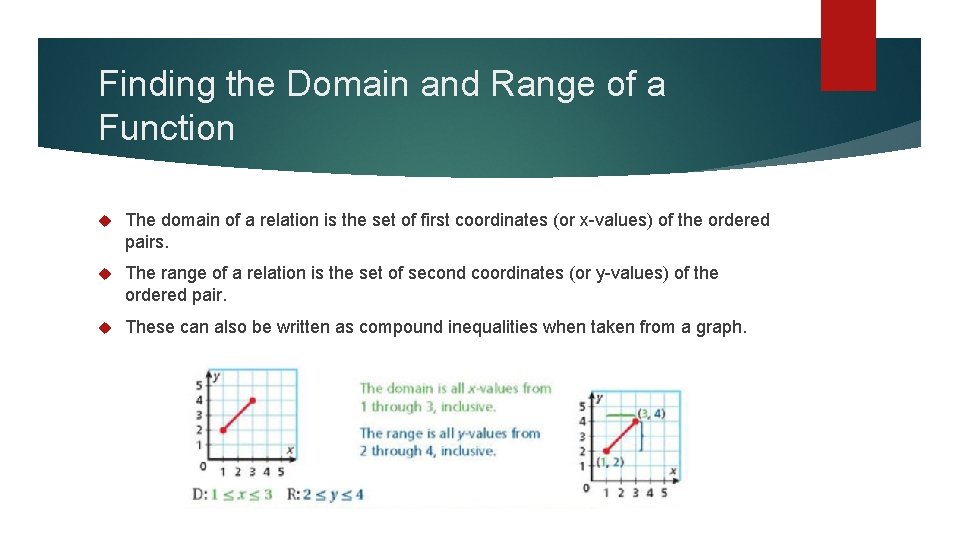
Finding the Domain and Range of a Function The domain of a relation is the set of first coordinates (or x-values) of the ordered pairs. The range of a relation is the set of second coordinates (or y-values) of the ordered pair. These can also be written as compound inequalities when taken from a graph.
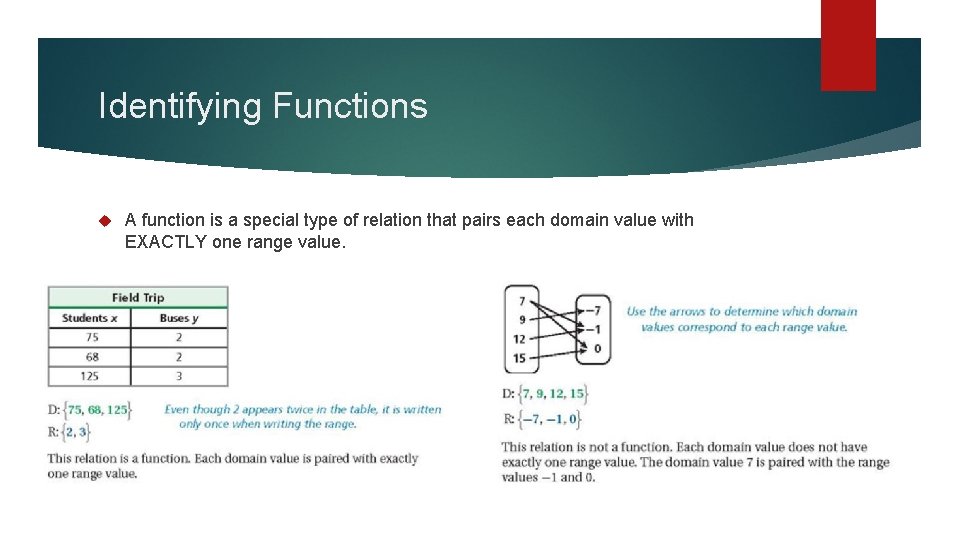
Identifying Functions A function is a special type of relation that pairs each domain value with EXACTLY one range value.